1. Case Background: Why Grain Storage Requires a More Stable Level Measurement Solution
In grain purchasing and storage, feed processing, grain and oil processing, and agricultural warehouse management, grain level measurement is a task that seems basic but is actually very important. Whether it is a small steel silo, a transfer bin, a buffer bin, or a raw grain temporary storage silo, managers need to know the grain height inside the silo in time so they can arrange feeding, discharging, inventory accounting, and production scheduling. Reliable level measurement helps enterprises obtain accurate silo inventory data and improve production coordination. If the level data is inaccurate, it may cause silo overflow, empty silo misjudgment, conveyor equipment idling, production line supply interruption, and other problems, directly affecting storage efficiency and operating costs. Therefore, selecting a stable and cost-effective radar level meter has become an important solution for improving grain silo management.
Traditional grain level measurement methods mainly include manual measurement, plumb bob level meters, rotary paddle level switches, and some low-frequency radar instruments. Manual measurement is low in cost, but it is inefficient, unsafe, and unable to provide continuous online monitoring. Plumb bob level meters have mechanical wear and maintenance issues. Rotary paddle instruments are mostly used for point-level alarms and are difficult to use for continuous level data. For small grain silos and small to medium-sized grain processing enterprises that want to achieve automated management, choosing an economical, practical, easy-to-install, and stable radar level instrument has become an important way to improve storage management.
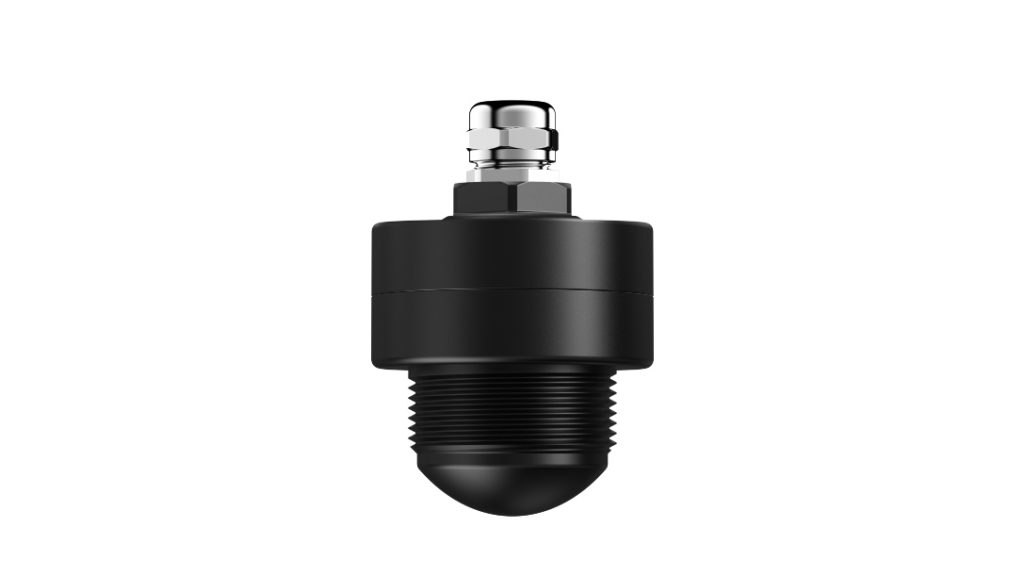
This case study focuses on JWrada-21 for grain measurement and analyzes its application value in small-range grain level measurement scenarios with relatively simple operating conditions. JWrada-21 is a compact, economical, and practical 80GHz millimeter-wave radar level meter. Its maximum level measurement range can reach 30 meters, and it provides high-precision measurement and excellent anti-interference performance. Although JWrada-21 is widely used in hydrological monitoring, water management, and other industries, it can also be used as a cost-effective radar level measurement solution for grain silos, buffer bins, small silos, and other non-complex operating conditions.
2. Project Overview: Level Management Pain Points in Small and Medium-Sized Grain Silos
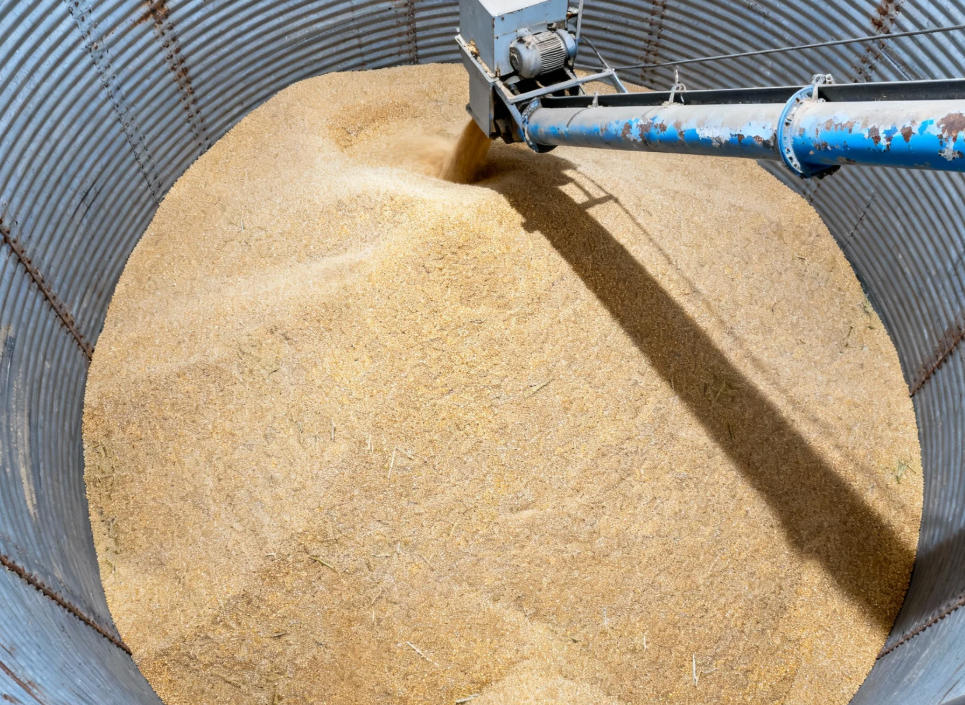
A grain processing enterprise is mainly engaged in the purchasing, storage, cleaning, and primary processing of corn, wheat, and soybeans. Multiple grain temporary storage silos and production buffer bins are installed in the plant area to support the operation of conveyors, bucket elevators, cleaning screens, and packaging equipment. Since the enterprise is moderate in scale, the silo height is generally no more than 20 meters. There is no high temperature, high pressure, or strong corrosive environment inside the silos, and the overall operating conditions are relatively simple. However, in actual production, the enterprise had long faced the problem of unclear level information.
Before the renovation, operators mainly relied on manual observation and experience to judge the remaining amount of grain in the silos. Sometimes they needed to open the observation port on the silo top to check the level, or estimate inventory based on feeding time, discharging speed, and equipment operating time. This method had obvious shortcomings. On the one hand, manual judgment produced large errors and could not meet the needs of refined inventory management. On the other hand, checking from the silo top involved safety risks, especially at night, on rainy days, or during busy production periods when manual inspection was not timely enough.
In addition, grain itself has certain special characteristics. The surface of grain particles is relatively loose. During feeding, a material pile angle is easily formed, and during discharging, a funnel-shaped material surface may appear. Different grains also vary in dielectric properties, particle size, and moisture content, which can affect level measurement performance. For small silos, the space on the silo top is limited, and the installation position may not always be ideal. There may also be support beams, feeding pipes, chutes, and other structures inside the silo. If the instrument beam is too wide, it can easily be disturbed by the silo wall or internal structures.
The enterprise hoped to achieve continuous level monitoring for multiple grain silos through one low-cost renovation. The specific goals included reducing manual silo-climbing inspections, improving level data accuracy, visualizing inventory trends inside the silo, assisting production scheduling, avoiding full-silo overflow and low-level material shortage, and controlling the cost of each measurement point to facilitate later expansion to more silos. After comparing multiple measurement solutions, the enterprise selected JWrada-21 as the radar level measurement instrument for its grain silos.
3. Selection Logic: Why JWrada-21 Is Suitable for Grain Level Measurement
Grain level measurement is different from liquid level measurement. A liquid surface is usually relatively flat, while a grain surface often has slopes, angles of repose, and local depressions. Therefore, when selecting a radar level instrument, it is necessary to focus on beam angle, echo recognition capability, installation adaptability, and economic performance.
JWrada-21 adopts 80GHz millimeter-wave radar technology. One important feature of 80GHz radar is its narrower beam and more concentrated energy. When radar waves are transmitted downward from the silo top, the narrow beam can point more accurately at the grain surface and reduce the scanning range covering the silo wall, feeding port, brackets, and chutes, thereby reducing the influence of false echoes. This is especially important for grain silos with small diameters and moderate heights.
JWrada-21has a maximum measuring range of up to 30 meters, which can cover the height requirements of most small and medium-sized grain silos. In this case, the grain silo height was less than 20 meters, so the instrument had sufficient range margin. Adequate range not only ensures measurement coverage but also helps obtain stable echoes at different level heights.
From the installation perspective, JWrada-21 has a compact structure and is suitable for scenarios with limited silo-top space. Some grain silo top platforms are narrow, and the reserved openings are small. If the instrument is too large, it will increase the cost of installation brackets and opening modification. The compact design of Radar 21 reduces on-site construction difficulty and makes rapid deployment easier.
From the cost perspective, grain storage projects usually do not involve only one measuring point, but rather multi-silo management. If each silo is equipped with a high-specification and complex radar level meter, the total investment will be high. JWrada-21 is positioned as economical and practical. In grain level measurement scenarios with relatively simple operating conditions and small ranges, it can meet stable measurement needs while controlling the project budget, making it more suitable for phased promotion by small and medium-sized enterprises.
From the maintenance perspective, JWrada-21 uses non-contact measurement. The instrument does not directly contact the grain, so there is no mechanical wear and no sensor damage caused by friction with grain particles. Compared with plumb bob instruments, it has no frequently moving mechanical structure. Compared with contact point-level switches, it can output continuous level data, making it more suitable for digital storage management.
4. Installation Implementation: Avoiding the Feeding Impact Area to Obtain Stable Material Surface Echoes
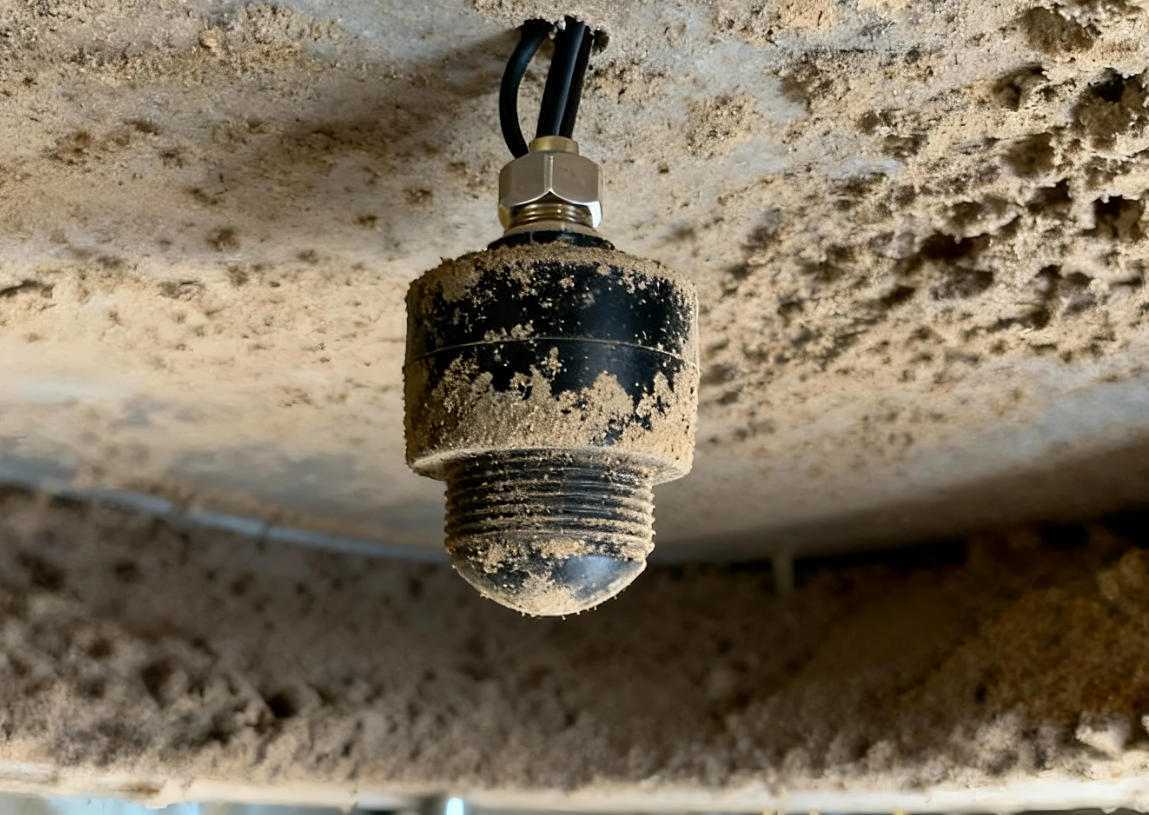
In this project, technicians first conducted an on-site survey of the silo structure, including silo height, silo diameter, feeding port location, discharging port location, silo-top opening conditions, and internal structure distribution. Since grain forms an obvious material flow from the feeding port when entering the silo, if JWrada-21 is installed directly above the feeding impact area, the echo may be affected by falling material. Therefore, the installation point was selected away from the feeding flow while staying as close as possible to an area that could represent the average level.
For cone-bottom silos and cylindrical silos, the grain surface is not always horizontal. During feeding, a higher central pile may form, and during discharging, the central area may sink. To make the radar level measurement value closer to the actual inventory change trend, the installation position must be optimized based on the silo shape and feeding/discharging method. In this case, JWrada-21 was installed on the silo top at a position offset from the feeding port, avoiding strong material flow while allowing stable irradiation of the main material surface area.
After installation, technicians set the empty-silo distance and full-silo distance according to the silo height and calibrated the instrument based on the actual on-site level. During commissioning, they focused on observing the echo curve under low-level, medium-level, and high-level conditions to confirm whether the effective echo was stable. For interference echoes that might be generated by the silo wall, support components, or feeding pipes, parameter optimization was used to suppress them, enabling the instrument to prioritize recognition of grain surface echoes.
During the grain feeding test, JWrada-21 continuously tracked the rising level trend. During discharging, the level drop data also remained smooth without obvious jumps. Since the operating conditions in this project were relatively simple and the dust inside the silo was not extreme, the advantages of JWrada-21’s 80GHz millimeter-wave measurement were well demonstrated. Finally, the instrument output signal was connected to the on-site control system for level display, inventory trend recording, and high-low level alarms.
5. Application Results: From Experience-Based Judgment to Data-Based Inventory Management
After JWrada-21 was put into operation, the enterprise’s grain storage management method changed significantly. In the past, operators had to rely on manual inspection and experience-based estimation to judge the remaining amount in the silo. Now, managers can view the real-time level data of each silo through the system and understand grain inventory change trends. This change not only improves work efficiency but also enhances the accuracy of production planning.
First, the frequency of manual inspections was significantly reduced. After JWrada-21 realized continuous online measurement, operators no longer needed to frequently climb to the silo top to check the level, reducing the risk of working at height and reducing manual inspection time. This advantage is even more obvious in multi-silo management scenarios.
Second, feeding and discharging scheduling became more orderly. With radar level data, the enterprise can quickly determine which silo is close to full and which silo is approaching low level, thereby reasonably arranging the operation of conveyors, bucket elevators, and packaging equipment. Before the silo becomes full, the system can trigger an early alarm to prevent overflow. When the level is low, it can remind operators to replenish material and prevent production line interruption.
Third, inventory management became more visualized. Although a single radar level meter cannot directly replace a weighing system, continuous level data can reflect the change trend of grain inside the silo and provide reference for inventory estimation and production records. For small and medium-sized grain processing enterprises, this visualized data is sufficient to support daily scheduling and management optimization.
Fourth, equipment maintenance pressure decreased. The non-contact measurement method of JWrada-21 avoids direct contact between mechanical components and grain, eliminating the need to worry about cable wear, jamming, or abnormal mechanical action as with plumb bob instruments. After stable operation of the instrument, maintenance personnel only need to conduct periodic inspections.
Fifth, the renovation investment became easier to accept. Because JWrada-21 has an economical and practical product positioning, the enterprise can first install and test it on key silos, and then gradually expand it to other silos. This phased renovation method reduces one-time investment pressure and improves project implementation efficiency.
6. Comparison with Traditional Solutions: Where the Differentiated Value of JWrada-21 Lies
In grain level measurement, different instrument solutions have different characteristics. Manual measurement has the lowest cost, but it cannot achieve real-time monitoring and lacks safety and accuracy. Plumb bob level meters can adapt to some solid material scenarios, but they contain mechanical structures and may suffer from wear and jamming during long-term operation. Rotary paddle level switches are suitable for high and low level alarms, but they cannot provide continuous level changes. Ordinary low-frequency radar instruments can be used in some large silos or complex silo bodies, but when the beam is wider, they are more easily affected by the silo wall and internal structures.
The differentiated value of JWrada-21 is that it does not aim to be an all-purpose high-end level meter for complex working conditions. Instead, it provides a stable, lightweight, and economical radar level solution for small-range and relatively simple operating conditions. For grain silos with a height of no more than 30 meters, uncomplicated internal structures, and non-extreme dust conditions, JWrada-21 can achieve continuous measurement with relatively low system complexity.
This matches the real needs of many grain enterprises. They do not necessarily need overly high-specification complex instruments, but they need a continuous level measurement solution that is safer than manual measurement, more intuitive than point-level switches, and easier to maintain than mechanical instruments. JWrada-21 achieves a balance between performance and cost, making it suitable for grain temporary storage silos, production buffer bins, finished granular material silos, and similar applications.
7. Application Expansion: Which Grain and Silo Scenarios Are Suitable for JWrada-21
Around keywords such as “radar level,” “grain level measurement,” “80GHz radar level meter,” “grain silo level meter,” and “grain silo level monitoring,” the application scenarios of JWrada-21 can be further expanded. It can be used in corn silos, wheat silos, soybean silos, rice silos, feed pellet silos, grain processing buffer bins, temporary storage silos before packaging, production line transfer bins, and other applications.
In these scenarios, users usually focus on several core questions: whether the instrument is easy to install, whether the measurement is stable, whether frequent maintenance is required, whether it is suitable for multi-point deployment, and whether the overall cost is controllable. JWrada-21’s compact structure, 30-meter measuring range, 80GHz millimeter-wave technology, and economical, practical positioning respond directly to these search needs.
It should be noted that if the site involves extremely heavy dust, severe material adhesion, high temperature and high pressure, strong vibration, complex stirring, or an oversized silo diameter, professional selection should be carried out based on site conditions. JWrada-21 is more suitable for small-range grain level measurement projects with relatively simple structures, budget sensitivity, and high stability requirements.
8. Case Summary: JWrada-21 Makes Grain Silo Level Management More Lightweight
This case shows that JWrada-21 can not only serve hydrological monitoring and water management but also deliver value in suitable grain level measurement scenarios. As a compact, economical, and practical 80GHz millimeter-wave radar level meter, JWrada-21 provides a lightweight radar level solution for small and medium-sized grain storage projects with its maximum 30-meter measuring range, high-precision measurement, and excellent anti-interference performance.
For grain processing enterprises, the significance of JWrada-21 is not merely “measuring a height.” It helps enterprises shift from manual experience-based management to data-based inventory management. Through continuous level monitoring, enterprises can reduce manual inspections, optimize feeding and discharging scheduling, lower the risk of overflow and material shortage, and lay a foundation for future storage automation upgrades.
As the grain storage industry gradually develops toward digitalization, automation, and refined management, economical, practical, flexible-to-install, and easy-to-maintain radar level instruments will have broader application potential. For small-range and simple-condition grain level measurement needs, JWrada-21 provides an option that balances performance, cost, and ease of promotion. It is especially suitable for small and medium-sized grain enterprises that want to upgrade level monitoring with a reasonable budget.