1. What Is DCS?
DCS stands for Distributed Control System. It is also commonly known as a distributed control system or a distributed process control system. DCS is widely used in process industries such as petroleum, chemical processing, power generation, metallurgy, water treatment, food production, pharmaceuticals, building materials, and many other industrial sectors.
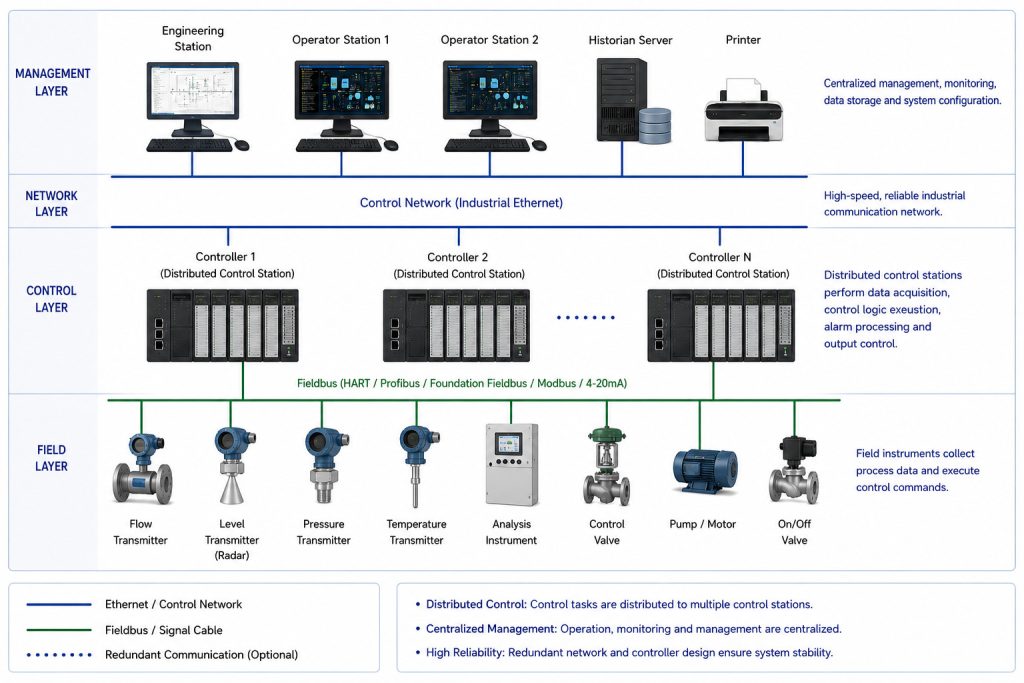
The core concept of DCS is “distributed control and centralized management.” In other words, control tasks are distributed among controllers located in different areas of the plant, while operation, monitoring, alarms, data analysis, and production management are carried out centrally through operator stations or engineering stations.
Simply put, DCS acts like the brain and nervous system of a factory. Field devices such as level meters, pressure transmitters, temperature sensors, flow meters, valves, pumps, and motors continuously send data to the DCS. The DCS then calculates, judges, and controls the process according to preset logic, and sends commands to actuators to achieve automated production.
Compared with traditional manual inspection or single-point instrument control, DCS offers many advantages, including continuous monitoring, centralized display, automatic alarms, historical records, interlock control, and remote management. For enterprises that require long-term continuous production, DCS can not only improve production efficiency, but also reduce the risk of human error and enhance the stability and safety of plant operation.
2. Main Components of a DCS System
A typical DCS system usually consists of the following parts:
2.1 Field Instrument Layer
The field instrument layer is the foundation for data acquisition in a DCS system. It includes level meters, pressure transmitters, temperature instruments, flow meters, analytical instruments, valve positioners, and other field devices.
In the level measurement industry, common instruments connected to DCS include radar level meters, ultrasonic level meters, submersible level transmitters, magnetostrictive level meters, RF admittance level meters, rotary paddle level switches, and tuning fork level switches.
2.2 Control Station or Controller
The control station is the core control unit of the DCS system. It is responsible for collecting field signals, executing control logic, processing alarms, and outputting control commands.
For example, when the liquid level in a storage tank reaches a high-high alarm value, the DCS can automatically close the inlet valve according to preset logic, or activate an audible and visual alarm to remind operators to take action.
2.3 Communication Network
A DCS system requires a communication network to connect field instruments, controllers, operator stations, and upper-level management systems.
Common communication methods include 4-20mA analog signals, HART protocol, RS485, Modbus, Profibus, Profinet, Foundation Fieldbus, Ethernet, and other industrial communication protocols. With the development of intelligent instruments, more and more level meters now support digital communication and remote parameter configuration, making DCS integration easier and more efficient.
2.4 Operator Station
The operator station is the interface between operators and the DCS system. Through a graphical interface, operators can view tank levels, silo levels, alarm status, trend curves, valve opening, pump operation status, and other process information. They can also perform necessary control operations through the operator station.
2.5 Engineering Station
The engineering station is mainly used for system configuration, logic programming, instrument parameter setting, screen editing, permission management, and maintenance diagnosis.
For large-scale projects, the engineering station helps engineers quickly configure level measurement points, set alarm limits, and optimize control strategies.
3. Differences Between DCS, PLC, and SCADA
In industrial automation, DCS, PLC, and SCADA are often mentioned together. All three can be used for monitoring and control, but their application focuses are different.
PLC is more suitable for discrete control and equipment-level control, such as packaging machinery, conveyor lines, and the start-stop control of single machines.
SCADA focuses more on remote monitoring and data acquisition. It is commonly used in water supply networks, oil and gas pipelines, environmental monitoring, and other systems that cover wide geographical areas.
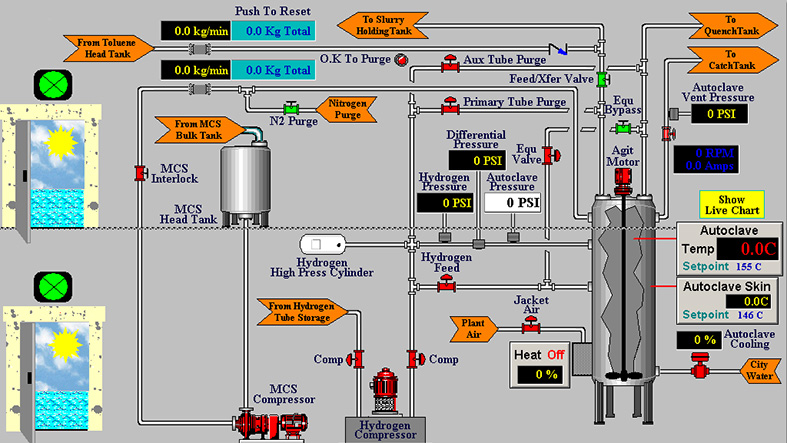
DCS is more suitable for continuous process control, such as chemical reactions, oil refining, power generation, tank farm management, and material conveying systems.
In level measurement applications, if the task is only to control the start and stop of a pump for a small water tank, a PLC may be sufficient. However, if dozens or even hundreds of storage tanks, reactors, silos, and buffer tanks need to be monitored at the same time, and the level data must work together with temperature, pressure, flow, valves, and interlock systems, DCS has greater advantages.
4. The Role of Level Meters in a DCS System
Level meters are extremely important field instruments in process industries. They are mainly used to measure the height, interface, or switching status of liquids, slurries, granules, powders, and bulk solids.
A DCS system depends on accurate, stable, and real-time level data from level meters to achieve safe production and refined process management.
In actual production, level meters connected to a DCS usually perform the following functions:
First, they display the real-time liquid level or material level in storage tanks, silos, and reactors.
Second, they provide high and low level alarms to prevent tank overflow, empty tanks, pump dry running, or material shortage.
Third, they participate in automatic control, such as automatically starting or stopping pumps, adjusting valve openings, or controlling feeding and discharging speed according to level changes.
Fourth, they record historical trends, helping enterprises analyze production fluctuations, inventory changes, and equipment abnormalities.
Fifth, they work with safety interlock systems to improve protection under dangerous operating conditions.
Therefore, a level meter is not an isolated instrument. It is an essential data source and safety control foundation in a DCS system.
5. Typical Applications of DCS in the Level Measurement Industry
5.1 Storage Tank Level Monitoring
Storage tank level monitoring is one of the most common applications of level meters connected to DCS. In petroleum, chemical, fertilizer, pharmaceutical, food and beverage, and water treatment industries, a large number of raw material tanks, finished product tanks, intermediate tanks, and hazardous chemical tanks require continuous level monitoring.
After radar level meters, magnetostrictive level meters, differential pressure level transmitters, or submersible level transmitters collect level signals, the DCS can display tank level, temperature, pressure, and inventory information in real time at the operator station.
When the level reaches the high limit, high-high limit, low limit, or low-low limit, the system automatically triggers an alarm. If necessary, it can also activate interlock actions to prevent overflow, leakage, pump dry running, and other risks.
5.2 Reactor Level Control
In chemical and pharmaceutical production, the liquid level in a reactor directly affects the batching ratio, reaction efficiency, product quality, and production safety.
After the level meter transmits the reactor level signal to the DCS, the DCS can work together with inlet valves, outlet valves, agitators, temperature control systems, and pressure control systems to achieve automatic feeding, quantitative control, and batch management.
For example, when the reactor level is lower than the set value, the DCS automatically opens the feed valve. When the level reaches the target value, the system closes the valve and moves to the next process step. This automated control method reduces manual intervention and improves batch consistency.
5.3 Material Level Measurement in Powder Silos
In industries such as cement, mining, grain, feed, plastics, metallurgy, and power generation, the monitoring of silo and bin levels is very important.
Powders, granules, and bulk solids often involve difficult conditions such as heavy dust, material adhesion, bridging, and uneven material surfaces. Therefore, radar level meters, plumb bob level meters, RF admittance level meters, rotary paddle level switches, and tuning fork level switches are commonly used.
After these level instruments are connected to the DCS, operators can understand silo inventory in real time. The DCS can also automatically control feeding, discharging, and conveying equipment according to material level data, helping avoid material shortage, overfilling, blockage, and equipment idling.
5.4 Automatic Level Control in Water Treatment
In sewage treatment plants, water supply plants, circulating water systems, and environmental protection projects, the combination of level meters and DCS can realize automatic control of water pools, tanks, lift pump stations, and chemical dosing systems.
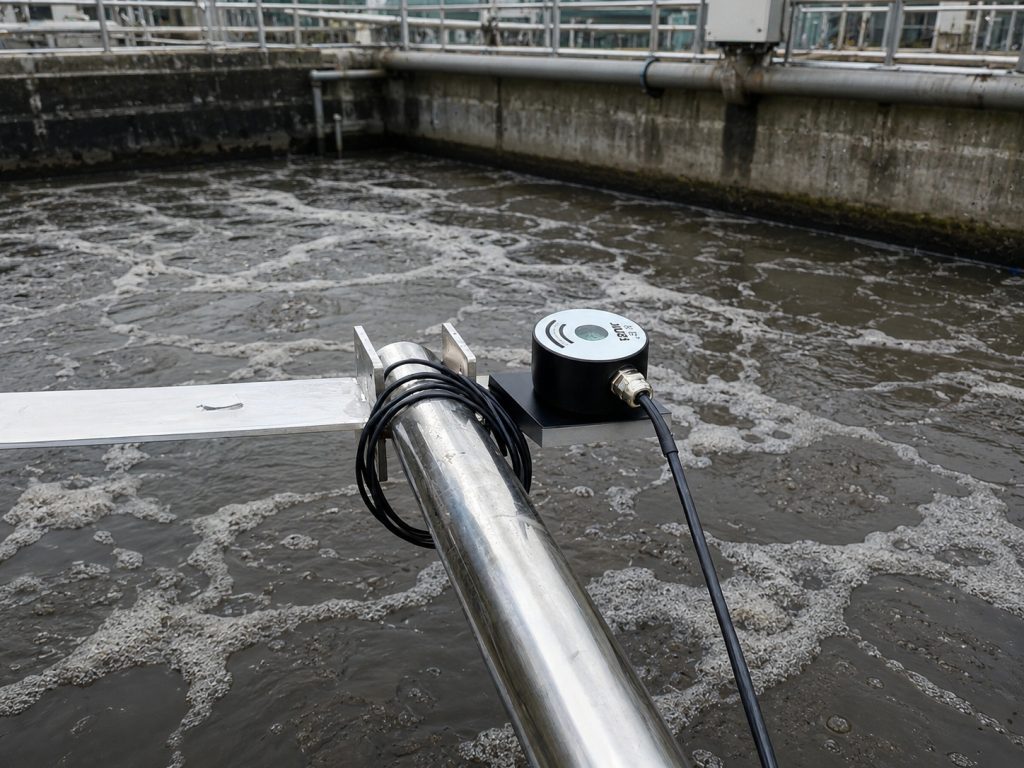
Common instruments include ultrasonic level meters, radar level meters, hydrostatic level transmitters, and float level switches.
The DCS automatically starts or stops pumps according to level changes, adjusts inlet and outlet valves, and triggers alarms for abnormal levels. This reduces manual inspection, improves operating efficiency, and lowers energy consumption and maintenance costs.
5.5 Boiler Drum Level Monitoring
Boiler drum level is a critical control parameter in power generation, chemical plants, and heating systems. If the drum level is too high, steam may carry water. If the level is too low, there may be a risk of dry burning.
After level signals are collected through differential pressure level transmitters, guided wave radar level meters, or electrode level gauges, the DCS can achieve continuous monitoring, three-element control, and high/low level alarms.
In such high-temperature and high-pressure applications, the stability, response speed, and signal reliability of the level meter are extremely important. The DCS is responsible for combining level signals with feedwater flow, steam flow, and control valve regulation to ensure safe and stable boiler operation.
5.6 Hazardous Chemical Storage and Safety Interlock
For flammable, explosive, toxic, or corrosive media, the combination of level meters and DCS is not only a production management requirement, but also a safety management requirement.
A tank level that is too high may cause overflow, while a level that is too low may result in pump dry running or air entering the system. The DCS can perform graded alarm management based on level meter signals and work together with emergency shut-off valves, transfer pumps, audible and visual alarms, and safety instrumented systems to form a complete safety protection chain.
6. Common Signal Types for Connecting Level Meters to DCS
6.1 4-20mA Analog Signal
The 4-20mA signal is one of the most common methods for connecting level meters to DCS. It has strong anti-interference capability, supports relatively long transmission distances, and offers good compatibility. It is suitable for most continuous liquid level and material level measurement applications.
The DCS collects the current signal through an analog input module and converts it into the actual level height or percentage.
6.2 HART Communication
The HART protocol can superimpose digital communication information on a 4-20mA analog signal. Through HART, the DCS or handheld communicator can read more diagnostic information from the level meter, such as echo curves, device status, fault codes, range settings, and medium parameters.
This is especially valuable for intelligent radar level meters and guided wave radar level transmitters.
6.3 RS485/Modbus Communication
RS485 and Modbus are often used for networking multiple instruments. For tank farms, silo groups, or water treatment systems, multiple level meters can be connected to the DCS or a gateway through a bus network. This helps reduce wiring costs and improve data acquisition efficiency.
6.4 Industrial Ethernet and Fieldbus
In large automation projects, communication methods such as Profibus, Profinet, Foundation Fieldbus, and EtherNet/IP are also used for intelligent instrument integration.
These communication methods can transmit more data and support device diagnosis and asset management. They are important foundations for smart factories and digital plants.
7. Value of DCS for the Level Measurement Industry
7.1 Improving the Use of Measurement Data
Traditional level meters only display the level locally or output a simple signal. After being connected to a DCS, however, level data can be used for trend analysis, inventory statistics, alarm management, automatic control, and production optimization.
As a result, the level meter changes from a single measuring tool into an important data source in a digital production system.
7.2 Enhancing Production Safety
High liquid level, low material level, pump dry running, tank overflow, and abnormal reactor feeding can all create safety risks.
DCS can monitor level meter signals in real time and take different control actions according to different alarm levels. This helps reduce the probability of accidents.
7.3 Increasing Automation
When level meters are linked with DCS, functions such as automatic feeding, automatic discharging, automatic water replenishment, automatic pump start-stop, and automatic tank switching can be realized.
Enterprises no longer need to rely heavily on frequent manual inspection and manual operation. The production process becomes more stable and efficient.
7.4 Reducing Operation and Maintenance Costs
DCS can record the operating status and historical data of level meters. This helps maintenance personnel identify sensor drift, signal abnormalities, material adhesion, antenna contamination, wiring faults, and other problems.
Through preventive maintenance, enterprises can reduce downtime and maintenance costs.
7.5 Supporting Digital Factory Construction
With the development of the Industrial Internet and intelligent manufacturing, level meters are no longer just field instruments. They are becoming part of the enterprise data system.
DCS can upload level data to MES, ERP, energy management systems, or cloud platforms, supporting inventory management, production scheduling, energy consumption analysis, and remote maintenance.
8. Key Points When Connecting Level Meters to DCS
8.1 Select the Right Type of Level Meter
Different media and working conditions require different types of level meters.
For example, an ultrasonic level meter or hydrostatic level transmitter can be selected for a clean water tank. A non-contact radar level meter is more suitable for corrosive media. Guided wave radar or differential pressure level transmitters may be considered for high-temperature and high-pressure vessels. For dusty silos, high-frequency radar level meters or plumb bob level meters may be more suitable.
8.2 Confirm Signal and Protocol Compatibility
During project design, it is necessary to confirm whether the output signal of the level meter matches the DCS input module. Common options include 4-20mA, HART, RS485, Modbus, Profibus, and other protocols.
If the communication protocols are not consistent, isolators, gateways, or signal conversion modules may be required.
8.3 Set Alarm Values Properly
After the level meter is connected to the DCS, alarm values such as high limit, high-high limit, low limit, and low-low limit should be set according to process requirements.
Alarm values should not be set randomly. They should avoid false alarms while leaving enough response time for safe operation.
8.4 Pay Attention to Explosion-Proof, Anti-Corrosion, and Protection Requirements
In petrochemical, coal chemical, pharmaceutical, and hazardous chemical storage applications, level meters must meet explosion-proof, anti-corrosion, ingress protection, and environmental requirements.
The DCS system should also be designed according to area classification, signal isolation, and relevant safety requirements.
8.5 Ensure Proper Commissioning and Maintenance
After installation, the level meter needs range setting, empty and full calibration, echo adjustment, linear correction, and DCS point verification.
During later maintenance, wiring, power supply, probes, antennas, process connections, and alarm records should be checked regularly to ensure long-term stable system operation.
9. Development Trends of DCS and Intelligent Level Meters
In the future, the integration between the level measurement industry and DCS systems will become even closer. Intelligent radar level meters, wireless level meters, remote diagnosis, cloud monitoring platforms, AI-based data analysis, and predictive maintenance are changing the way traditional instruments are used.
On one hand, level meters will provide more high-quality data. In addition to level height, they may also provide signal strength, echo quality, medium fluctuation, and device health status.
On the other hand, DCS will not only perform control tasks, but also become an important platform for production optimization and data analysis.
For level meter manufacturers, whether their products are easy to connect to DCS, support mainstream communication protocols, provide stable output, and offer self-diagnosis functions will become important factors in market competition.
For end users, choosing the right level meter and DCS integration solution can significantly improve plant automation, safety, and management efficiency.
10. Conclusion
DCS distributed control systems are the core automation platform of modern process industries, while level meters are an important foundation for DCS to obtain field level data.
Whether for storage tank level, reactor level, water tank level, silo level, powder inventory, or hazardous chemical storage, the combination of level meters and DCS can help enterprises achieve real-time monitoring, automatic control, safety alarms, and data management.
In the level measurement industry, the application of DCS not only increases the value of instrument data, but also promotes the development of traditional measuring instruments toward intelligence, digitalization, and system integration.
For enterprises planning level meter selection or DCS system upgrades, it is important to comprehensively consider medium characteristics, operating conditions, measurement accuracy, communication protocols, alarm interlocks, installation and maintenance, and future expansion requirements.
Only when field instruments and control systems work together effectively can industrial automation deliver its maximum value.