1. Why Does Pharmaceutical Manufacturing Require Reliable Level Switches?
The pharmaceutical manufacturing industry has extremely high requirements for production safety, process stability and product quality consistency. From API synthesis, solvent storage, liquid preparation, extraction, concentration and fermentation to formulation production, cleaning validation and wastewater treatment, almost every process requires reliable liquid level detection.
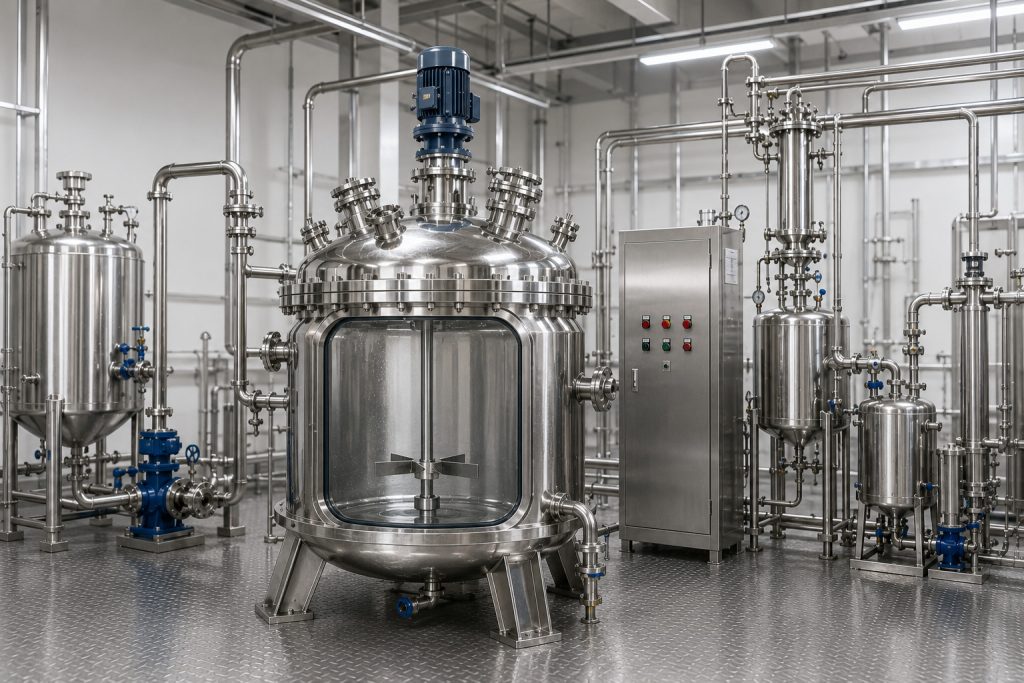
A level signal may seem like a simple “liquid present or absent” indication. However, in actual pharmaceutical production, it is directly related to whether a storage tank overflows, whether a pump runs dry, whether valves operate correctly, whether batch production proceeds smoothly, whether operators remain safe and whether product quality remains stable.
Compared with general industrial applications, level measurement in pharmaceutical manufacturing has several distinctive characteristics.
First, the types of media are complex. They may include pharmaceutical liquids, solvents, acids, alkalis, buffer solutions, syrup-like liquids, fermentation broth, cleaning solutions and waste liquids.
Second, some media are corrosive, volatile, flammable or toxic, which places higher requirements on instrument materials, sealing structures and safety certifications.
Third, pharmaceutical processes have strict hygiene requirements. Wetted parts should minimize contamination risks, residue buildup and cleaning dead zones.
Fourth, pharmaceutical companies usually operate continuous, automated or batch production systems. If a level switch produces false alarms, fails to alarm or becomes unstable, it may cause shutdowns, material loss, cleaning rework or even safety incidents.
Therefore, in the pharmaceutical manufacturing industry, a level switch is not merely a field instrument. It is an important part of production safety, quality control and automatic interlock systems. With its simple structure, reliable response, easy installation and strong adaptability, the tuning fork level switch has become one of the commonly used point level detection instruments in pharmaceutical plants.
2. Working Principle of a Tuning Fork Level Switch
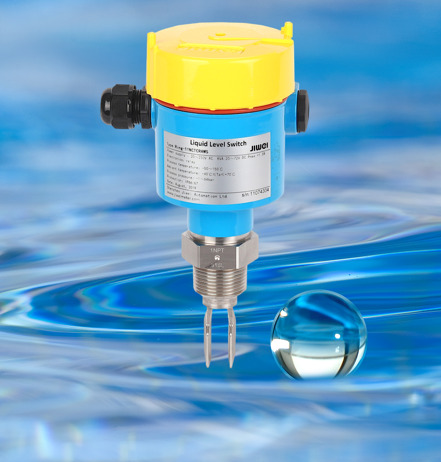
A tuning fork level switch is a point level detection instrument mainly used to determine whether liquid has reached a fixed position. Its core component is a vibrating fork similar in shape to a tuning fork.
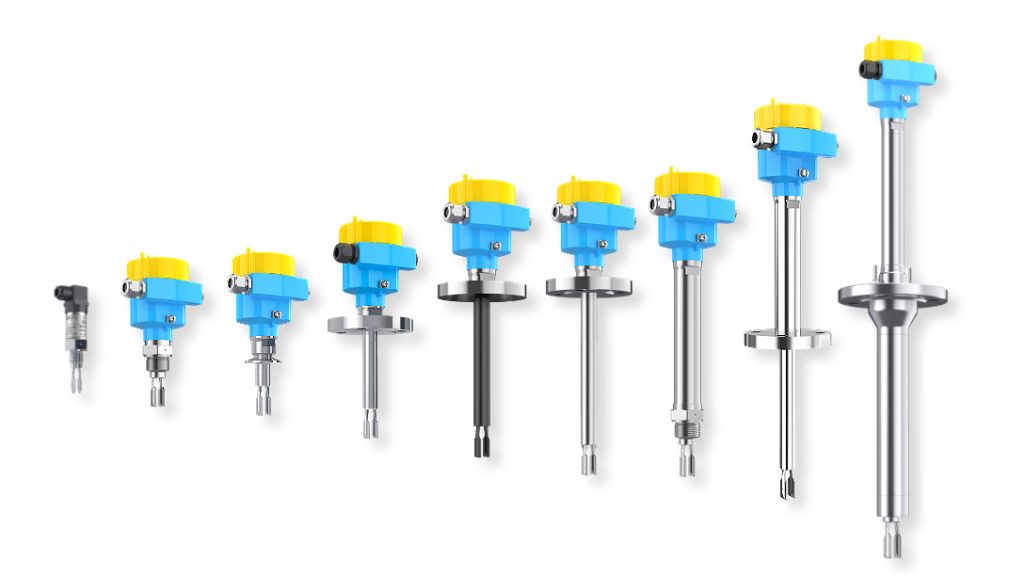
The instrument uses a piezoelectric element to drive the fork to vibrate at a certain frequency. When the fork is in air, it maintains a stable vibration. When liquid touches or immerses the fork, the vibration frequency changes. The electronic unit detects this change and converts it into a switching signal.
This operating principle makes tuning fork level switches highly suitable for high-level alarms, low-level alarms, pump protection, overflow prevention, empty tank protection, batch process control and safety interlocks.
For example, when the liquid level in a pharmaceutical storage tank reaches the high-level alarm point, the tuning fork level switch can output a signal to close the inlet valve or stop the transfer pump. When the liquid level in a preparation tank falls below the safe operating level, the switch can trigger pump shutdown to prevent dry running.
In many pharmaceutical processes, operators do not always need a continuous liquid level curve. What they need is an accurate, stable and repeatable switching signal at a critical level point. This is exactly where tuning fork level switches provide strong value.
3. Product Features of Jiwei Tuning Fork Level Switches for Pharmaceutical Applications
According to information from Jiwei Automations official website, the Ring-11 series tuning fork level switch offers strong adaptability for pharmaceutical manufacturing applications. Its advantages can be summarized as follows.
First, the short fork design makes installation easier. The Ring-11 tuning fork level switch uses a compact short fork structure, making it suitable for storage tanks, vessels, reactors, pipelines and equipment with limited installation space. Pharmaceutical workshops often have dense piping layouts and compact equipment arrangements. This is especially true for skid-mounted systems, liquid preparation units, CIP stations and small intermediate tanks. A short fork structure helps reduce installation difficulty and makes point level detection easier in confined spaces.
Second, it is suitable for a wide range of liquid media. Pharmaceutical plants handle many different liquids, including low-viscosity solvents, viscous pharmaceutical liquids, syrup-like liquids, cleaning solutions, acids, alkalis and wastewater. A tuning fork level switch detects liquids through changes in fork vibration frequency. It does not depend on a single physical property such as dielectric constant, conductivity or foam thickness. As a result, it can maintain good stability even in the presence of foam, bubbles, viscosity and vibration interference.
Third, multiple output options make it easy to connect to automation systems. Pharmaceutical manufacturers commonly use PLC, DCS, SIS or local control panels for interlock control. Jiwei tuning fork level switches support relay output, two-wire output, NAMUR output and transistor output. This makes them suitable for high and low level alarms, valve control, pump start-stop control and safety interlock systems.
In addition, certification and safety design are especially important in pharmaceutical applications. Pharmaceutical production frequently involves flammable solvents such as ethanol, methanol, acetone and ethyl acetate. Some areas may require explosion-proof instrumentation. A level switch with explosion-proof certification, functional safety certification and a high protection rating can improve suitability in hazardous areas and critical interlock applications.
4. Typical Applications of Tuning Fork Level Switches in Pharmaceutical Manufacturing
4.1 High and Low Level Alarms in Pharmaceutical Liquid Storage Tanks
Pharmaceutical liquid storage tanks are among the most common applications for level switches. Whether the tank stores raw material liquid, intermediate product, prepared solution or finished liquid, it usually requires high-level, low-level and even high-high-level alarms.
The high-level point is used to prevent overflow. The low-level point is used to remind operators to replenish liquid or to protect pumps from dry running.
After being installed on the side wall of a tank or through a top-mounted extension, the tuning fork level switch outputs a switching signal when the liquid reaches the set position. For pharmaceutical liquid storage, a stable high-level alarm helps prevent material overflow, cross-contamination and workshop cleaning risks. A reliable low-level alarm protects downstream transfer pumps and pipelines from damage caused by suction loss or dry running.
4.2 Level Control in Preparation Tanks and Mixing Vessels
In formulation production, oral liquid production, auxiliary systems for injection production and cleaning solution preparation, preparation tanks and mixing vessels require accurate control of filling, stirring, circulation and transfer steps.
Tuning fork level switches can be used to detect the minimum safe stirring level, maximum allowable filling level and completion of discharge.
For example, during liquid preparation, when the level reaches the set high point, the system can automatically stop feeding to prevent excessive material input. When the level is lower than the safe stirring line, the system can prevent the agitator from starting, avoiding dry operation or mechanical damage. At the end of material transfer, a low-level tuning fork switch can send a signal to the PLC, indicating that the transfer is complete and the next process step can begin.
This type of point level control is simple, direct and reliable. It is very suitable for automatic judgment of key process nodes in batch production.
4.3 Level Protection in Reactors and API Synthesis Units
API manufacturing often involves reactors, extraction tanks, crystallization vessels, distillation kettles and intermediate tanks. Some process media are corrosive, volatile or flammable. The reaction process may also involve foam, bubbles, temperature changes and agitation vibration.
Traditional float level switches may be affected by material buildup, jamming or mechanical wear. In contrast, tuning fork level switches have no complex moving mechanical parts, making them more suitable for long-term operation in demanding process environments.
When installed on reactors, tuning fork level switches can be used for high-level overflow prevention, low-level dry-run prevention, condensate collection detection and material transfer confirmation. For reaction systems involving safety interlocks, tuning fork level switches with functional safety certification are more suitable for critical alarm points and can provide additional protection for process safety.
4.4 Level Alarms in Flammable Solvent Storage Tanks
Pharmaceutical manufacturing commonly uses organic solvents such as ethanol, methanol, acetone, isopropanol and ethyl acetate. These media are usually flammable and volatile, which means that storage tank areas and transfer pipelines have higher requirements for explosion-proof instruments.
Tuning fork level switches can be used for high-level alarms, low-level alarms and pump protection in solvent storage tanks.
In solvent tank applications, the level switch must not only detect liquid level but also match the hazardous area classification, process temperature, process pressure, sealing structure and wetted material requirements. Jiwei Ring-11 series products with explosion-proof certification and various material options can be selected according to actual working conditions. Stainless steel, Hastelloy or corrosion-resistant coatings may be used for different solvents and corrosive environments.
4.5 Level Detection in CIP and SIP Cleaning Systems
Pharmaceutical manufacturers usually use CIP, or Cleaning in Place, systems. Some sterile or high-cleanliness processes also involve SIP, or Sterilization in Place.
Common tanks in CIP systems include acid tanks, alkali tanks, purified water tanks, water-for-injection tanks, recovery tanks and discharge tanks. Level switches can be used to monitor whether cleaning liquid is available, whether the recovery tank is full, whether there is liquid at the pump inlet and whether drainage has been completed.
CIP applications require instruments with sanitary structure, temperature resistance, corrosion resistance and cleaning adaptability. Sanitary or food-grade tuning fork level switches with clamp process connections are easy to install, remove and clean. A high surface finish helps reduce residue and contamination risks.
For pharmaceutical plants, sanitary design is not only useful for routine maintenance, but also helpful for cleaning validation and quality management.
4.6 Level Monitoring in Fermentation Tanks and Biopharmaceutical Processes
In biopharmaceutical production, enzyme production, vaccine manufacturing and fermentation-related processes, fermentation tanks and culture medium tanks may generate foam, bubbles and adhesive deposits.
Foam can affect some level detection methods, causing false alarms or unstable signals. Tuning fork level switches have good resistance to foam and bubble interference, making them suitable for key point level alarms, feed tank level detection, antifoam agent tank monitoring and waste liquid collection tank overflow prevention.
Of course, in high-foam fermentation applications, model selection should still consider foam density, liquid viscosity, material adhesion, installation position and cleaning method. For media that easily crystallize, adhere or form deposits, the installation angle should be carefully selected, and regular inspection and cleaning should be included in the maintenance plan.
4.7 Waste Liquid Collection and Environmental Treatment Systems
Pharmaceutical manufacturing produces waste acids, waste alkalis, solvent-containing waste liquids, cleaning wastewater and process wastewater. Level control in waste liquid systems is directly related to environmental compliance and site safety.
Tuning fork level switches can be installed in waste liquid tanks, collection pits, neutralization tanks and wastewater treatment units to provide high-level alarms, low-level protection and automatic discharge control.
Waste liquid media are often complex. They may be corrosive, foamy, contain suspended solids or have adhesive characteristics. For such applications, users should pay attention to wetted material, corrosion-resistant coating, protection rating and installation position.
Jiwei corrosion-resistant coated tuning fork level switches use coating options such as ECTFE, PFA and enamel, making them suitable for measuring strong acids, strong alkalis and other corrosive liquids. This provides a more reliable level alarm solution for pharmaceutical wastewater and waste liquid treatment systems.
5. Key Selection Points for Tuning Fork Level Switches in Pharmaceutical Applications
5.1 Medium Characteristics
Before selecting a model, users should clearly identify the medium name, density, viscosity, corrosiveness, foam condition, crystallization tendency, suspended solids and adhesion characteristics.
For low-density liquids, the minimum detectable density should be confirmed. For viscous pharmaceutical liquids, the viscosity range and cleanability of the fork should be considered. For highly corrosive media, Hastelloy or corrosion-resistant coated materials should be preferred.
5.2 Sanitary Requirements
For applications involving pharmaceutical liquids, purified water, water for injection, oral liquids, syrups, fermentation broth or any liquid that directly or indirectly affects product quality, users should pay close attention to wetted material, surface finish, process connection and cleaning convenience.
Clamp-type process connections, high surface finish and easy-to-clean structure are more suitable for high-hygiene pharmaceutical applications.
5.3 Temperature and Pressure
Pharmaceutical manufacturing includes room-temperature storage tanks as well as high-temperature cleaning, sterilization, reaction and solvent recovery processes.
During model selection, process temperature, ambient temperature and process pressure should be checked carefully. If high temperature, high pressure or vacuum conditions exist, users should select a corresponding temperature-resistant and pressure-resistant structure and confirm the sealing design.
5.4 Explosion-Proof and Functional Safety Requirements
When organic solvents, flammable gases or hazardous areas are involved, tuning fork level switches with appropriate explosion-proof certification should be selected.
For safety-critical points such as overflow prevention, emergency shutdown and pump protection, SIL functional safety certification should be considered. The instrument should also be configured according to the requirements of the company’s SIS or safety interlock system.
5.5 Output Signal and Control System Compatibility
Different pharmaceutical plants use different control systems. Common output signals include relay output, two-wire output, NAMUR output and transistor output.
During selection, users should confirm the input type of the PLC, DCS or safety barrier to avoid wiring incompatibility during installation. For safety instrumented systems, NAMUR output is often used for fault diagnosis and safety loop design. The final selection should follow the project specifications.
5.6 Installation Position and Maintenance Space
The tuning fork level switch should be installed at a position that truly represents the required liquid level. It should not be installed directly in the feed impact area, strong vortex area or locations where sediment easily accumulates.
For side installation, the fork orientation should be considered to avoid strong liquid impact or material buildup. For top installation, the correct insertion length should be selected according to the target level point.
Pharmaceutical workshops often have limited space. Therefore, wiring, removal, cleaning and validation space should also be considered during model selection and installation planning.
6. Advantages of Tuning Fork Level Switches Compared with Other Level Detection Technologies
Compared with float level switches, tuning fork level switches do not have mechanical floats that may become stuck. They are less affected by residue, dirt and mechanical wear, which improves long-term stability.
Compared with electrode level switches, tuning fork level switches do not depend on liquid conductivity, so they can be used in a wider range of media.
Compared with capacitive or RF admittance instruments, tuning fork level switches are easier to commission and less sensitive to changes in the dielectric constant of the medium.
Compared with radar level transmitters, tuning fork level switches are not used for continuous measurement. However, for fixed-point alarm and interlock control, they offer more direct switching signals and a more cost-effective solution.
Therefore, in pharmaceutical manufacturing, a practical and reliable solution is often the combination of a continuous level transmitter and tuning fork level switches. The continuous level transmitter is used for process monitoring and inventory management, while tuning fork level switches are used for key point alarms, independent protection and safety interlocks. Together, they improve the reliability of the entire level control system.
7. Application Value of Jiwei Tuning Fork Level Switches in Pharmaceutical Manufacturing
Based on the working conditions of the pharmaceutical industry, Jiwei tuning fork level switches provide value in several important areas.
First, they improve production safety. Through high-level alarms, overflow protection, low-level pump shutdown and safety interlock control, they reduce the risks of tank overflow, pump dry running, leakage and abnormal shutdown.
Second, they help protect product quality. Sanitary structure, stable point level detection and good cleaning adaptability help reduce contamination risks and batch fluctuations.
Third, they adapt to complex liquid media. For pharmaceutical liquids, solvents, acids, alkalis, syrups, cleaning solutions and waste liquids, users can flexibly select materials, process connections, explosion-proof ratings and output signals according to different working conditions.
Fourth, they help reduce maintenance costs. Tuning fork level switches have a simple structure and no complex moving mechanical parts, resulting in relatively low routine maintenance requirements. As a domestic instrument brand, Jiwei can also offer advantages in delivery, spare parts and after-sales support for long-term plant operation.
Fifth, they support automation upgrades. As pharmaceutical companies continue to promote smart manufacturing and digital workshop construction, field level signals must be reliably connected to PLC, DCS or SIS systems. As a basic but critical switching instrument, the tuning fork level switch provides reliable boundary conditions for automatic control systems.
8. Installation and Maintenance Recommendations for Pharmaceutical Sites
To ensure long-term stable operation of tuning fork level switches, pharmaceutical companies should pay attention to several installation and maintenance details.
Before installation, confirm whether the process conditions match the instrument specifications, including temperature, pressure, medium density, viscosity, corrosiveness and explosion-proof requirements.
During installation, avoid placing the fork directly under the feed inlet or in a strong impact area. Direct liquid impact may cause false action or mechanical damage.
For viscous, crystallizing or adhesive media, choose a position that is easy to clean and inspect. Regular inspection should be arranged according to the process shutdown and maintenance schedule.
For sanitary applications, ensure that the process connection meets cleaning requirements, that sealing materials comply with process specifications and that no cleaning dead zones are created.
For explosion-proof areas, wiring, grounding and sealing must be carried out strictly according to the explosion-proof product manual and on-site electrical standards.
For safety interlock applications, functional tests should be performed regularly to confirm that the instrument can correctly output alarm or interlock signals when the liquid reaches the set point.
In addition, pharmaceutical companies should include critical level switches in the instrument management system and preventive maintenance plan. Records should include installation position, model, wetted material, alarm setting, validation cycle and fault history. This helps support GMP management, equipment maintenance and quality audits.
9. Conclusion: Tuning Fork Level Switches Are Essential Instruments for Safe Pharmaceutical Production
The pharmaceutical manufacturing industry requires level detection instruments that do more than simply detect liquid. They must be accurate, stable, cleanable, verifiable, suitable for interlock control and reliable over long-term operation.
With dependable point level detection capability, tuning fork level switches play an important role in pharmaceutical liquid tanks, preparation tanks, reactors, CIP systems, solvent storage tanks, fermentation systems and waste liquid treatment units.
Based on the Ring-11 series tuning fork level switch from Jiwei Automations, features such as short fork design, low-density liquid detection, resistance to foam and vibration interference, multiple output options, sanitary configuration, explosion-proof design, corrosion-resistant options and high-pressure protection allow pharmaceutical companies to select suitable models for different working conditions.
For pharmaceutical manufacturers carrying out production line upgrades, domestic instrument replacement, automation transformation or safety instrumented system construction, choosing the right tuning fork level switch can improve the reliability of on-site level control and provide strong support for safe production, stable quality and long-term cost reduction.