1. Why Does Chemlok 6253 Glue Require Reliable Level Measurement?
Chemlok 6253 glue is widely used in automotive manufacturing, rubber-to-metal bonding, electronic component assembly, and various industrial adhesive processes. During storage, transportation, dosing, and production, accurate and stable level control is essential. If the level in a storage tank is too low, it may cause pump dry running, material interruption, unstable production rhythm, or process failure. If the level is too high, it may lead to overflow, contamination, material waste, and even safety risks.
Therefore, when measuring the level of Chemlok 6253 glue, users should not only consider whether the instrument can detect the material, but also whether it can provide accurate, stable, and low-maintenance performance over a long period of operation.
Unlike clean water, solvents, or other low-viscosity liquids, glue and adhesive materials usually have a certain viscosity and tend to adhere to probes, floats, rods, or tank walls. For traditional float-type level switches, glue adhesion may affect the movement of the float, causing jamming, delayed switching, or false alarms. For some capacitance or contact-type level instruments, material build-up, dielectric constant changes, bubbles, and foam may also result in signal drift or unstable output.
In applications such as glue storage tanks, metering tanks, reactors, pipelines, and pump protection systems, the level switch must operate reliably under complex process conditions. Long-term stability is often more important than one-time measurement accuracy.
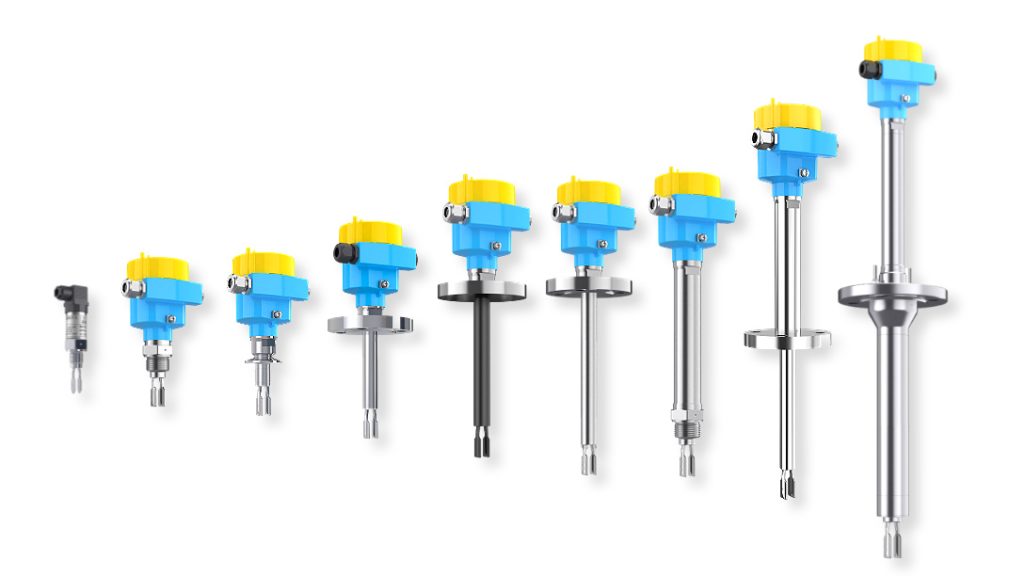
Choosing a level switch suitable for high-viscosity and adhesive media is therefore critical for improving the reliability of Chemlok 6253 glue level monitoring. Jiwei Ring-11 tuning fork level switch is designed for demanding industrial liquid level applications. It can be used for glue, slurry, chemical liquids, wastewater, acid and alkali solutions, and other media where foam, bubbles, vibration, adhesion, or process disturbance may be present.
2. Common Challenges in Glue Level Measurement
The level measurement of Chemlok 6253 glue is challenging mainly because of the following factors.
The first challenge is material adhesion. Glue has a certain viscosity and may gradually adhere to the sensor surface or mechanical moving parts during long-term operation. If the level switch depends on float movement, mechanical linkage, or electrode surface status, material build-up may reduce sensitivity or even cause the instrument to fail to switch when the actual level changes.
The second challenge is unstable process conditions. During storage, mixing, transportation, or dosing, glue may be affected by agitation, flow impact, bubbles, foam, splashing, or vibration. If the level instrument does not have strong anti-interference capability, it may generate false signals or frequent alarms. In continuous production lines, even one false alarm can lead to unnecessary shutdown, troubleshooting, and production loss.
The third challenge is maintenance cost. Once glue adheres to the measuring element, instruments with complex structures may need to be frequently removed, cleaned, and reinstalled. This not only increases labor cost, but may also interrupt production. For batch production and automated adhesive processes, ease of maintenance, installation flexibility, and long-term stability directly affect overall production efficiency.
The fourth challenge is control system compatibility. Different plants may use PLC, DCS, relay control circuits, safety barriers, or explosion-proof systems. The required output signal may vary from site to site. A suitable glue level switch should support multiple output options so that it can be easily integrated into existing control systems with minimal modification.

3. Working Principle of the Ring-11 Tuning Fork Level Switch
Jiwei Ring-11 tuning fork level switch adopts the vibration-based measurement principle. Its core sensing element is a tuning fork. The instrument drives the fork to vibrate at a specific frequency through a piezoelectric device. When the fork is not in contact with the liquid, it maintains a stable vibration frequency. When the liquid touches or immerses the fork, the resonance frequency changes significantly. The electronic circuit detects this frequency change and outputs a switching signal, thereby achieving high-level alarm, low-level alarm, empty tank protection, or pump protection control.
This working principle offers important advantages. It does not rely on buoyancy, electrical conductivity, or dielectric constant. As a result, it is less affected by foam, bubbles, slight material build-up, and changes in medium characteristics. For adhesive materials such as Chemlok 6253 glue, Ring-11 can determine whether the fork is covered by liquid through frequency changes, helping reduce the risk of jamming and false switching commonly found in mechanical level switches.
In addition, the Ring-11 tuning fork level switch has a compact fork length of only 40 mm. Its short fork design makes it suitable for tanks, vessels, pipelines, bypass chambers, and space-limited installation points. In glue transportation systems, when level protection is required in small containers, narrow pipelines, or pump inlet lines, the short fork structure can greatly improve installation flexibility.
4. Key Advantages of Ring-11 for Chemlok 6253 Glue Level Measurement
4.1 Suitable for High-Viscosity and Adhesive Media
For Chemlok 6253 glue level monitoring, the key requirement is to avoid false signals caused by adhesion. The Ring-11 tuning fork level switch detects level through vibration frequency changes. It does not require a float, mechanical linkage, or moving mechanical parts. Therefore, it helps reduce the risk of mechanical blockage caused by glue adhesion.
For applications such as high-level alarm, low-level alarm, and pump dry-run protection in glue storage tanks, Ring-11 can provide a more stable switching signal and improve process reliability.
4.2 40 mm Short Fork Design for Limited Installation Space
Many glue application sites have limited installation space, such as small metering tanks, adhesive pipelines, reactor sidewalls, buffer tanks, or compact equipment assemblies. If the probe is too long, it may be difficult to install or may interfere with agitators, tank walls, pipelines, or internal structures.
Ring-11 features an ultra-short 40 mm fork design, allowing it to perform reliable level detection in confined spaces. This makes it especially suitable for equipment integration, pipeline protection, and compact tank level control.
4.3 Strong Resistance to Foam, Bubbles, and Vibration
During mixing, transportation, or dosing, glue may generate bubbles, foam, surface fluctuation, or flow disturbance. If a level switch is easily affected by these factors, it may switch frequently or generate false alarms.
Ring-11 tuning fork level switch provides strong anti-interference performance. It can maintain stable detection in applications involving foam, bubbles, viscous liquids, and site vibration. This helps reduce unnecessary alarms and unplanned downtime in production.
4.4 Multiple Output Options for Easy Control System Integration
In real projects, different users may require different signal outputs. Some sites need relay output for alarm circuits, some require two-wire output, some explosion-proof or safety circuits require NAMUR output, while others use NPN or PNP transistor signals.
Ring-11 tuning fork level switch supports multiple output options, including relay, two-wire, NAMUR, and transistor outputs. This makes it easy to connect to PLC, DCS, alarm systems, pump protection circuits, and other control systems. It also helps reduce the cost and workload of system modification.
4.5 Multiple Materials and Coatings for Complex Chemical Environments
Glue production and application sites may also involve solvents, cleaning agents, acids, alkalis, or corrosive gases. Ring-11 can be supplied with various wetted materials and coatings, such as 316L stainless steel, Hastelloy C-22, ECTFE, PFA, and enamel.
For corrosive applications or processes requiring better anti-adhesion and corrosion resistance, users can select the appropriate process connection and wetted material according to medium properties, temperature, pressure, and installation requirements. This helps extend service life and improve long-term reliability.
4.6 SIL, CE, and Explosion-Proof Certifications for Safer Applications
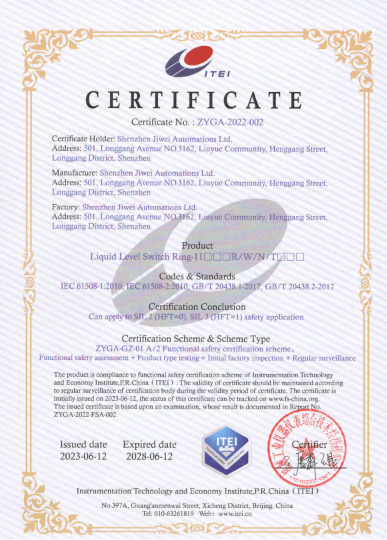
Glue and adhesive processes may involve flammable solvents, volatile gases, or safety interlock requirements. Ring-11 tuning fork level switch is available with SIL2/3 functional safety certification, CE certification, and intrinsic safety or flameproof explosion-proof certifications.
For glue storage tanks requiring high-level alarm, overflow prevention, low-level pump shutdown, or safety interlock, selecting a certified level switch helps improve system safety and compliance.
5. Typical Application Scenarios
5.1 High-Level Alarm for Glue Storage Tanks
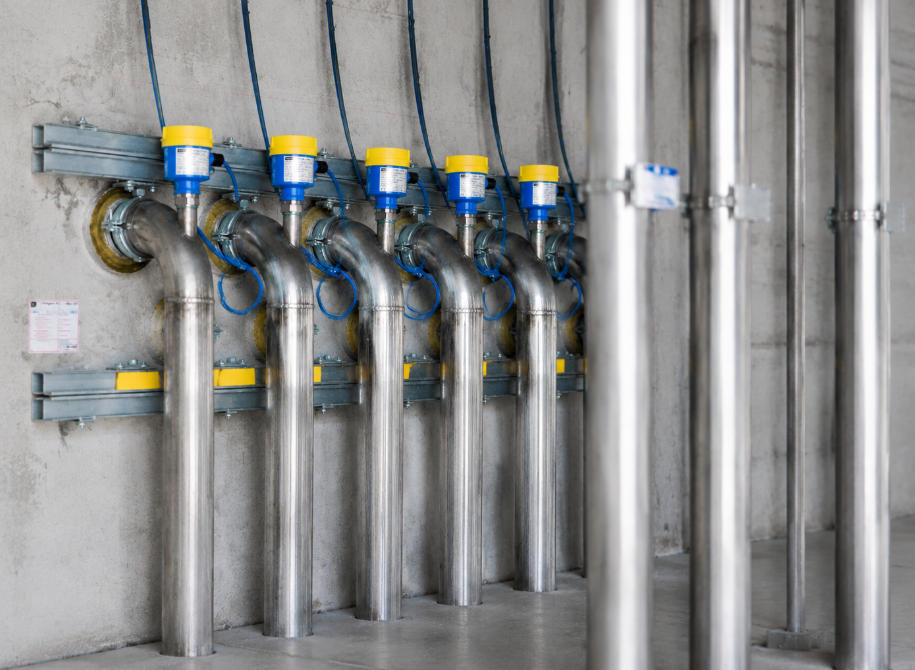
During the storage of Chemlok 6253 glue, high-level alarm is important for preventing overfilling and overflow. Ring-11 can be installed on the side wall or top of the storage tank at a specified height. When the glue reaches the set level, the switch outputs a signal to trigger an alarm, close a valve, stop feeding, or activate other control actions.
5.2 Low-Level Alarm and Pump Dry-Run Protection
If a glue transfer pump runs without sufficient material, it may suffer damage or cause production interruption. By installing Ring-11 at the low-level point of a storage tank or in the pump inlet pipeline, the system can detect insufficient liquid level in time and output a signal to stop the pump or remind operators to refill the tank.
5.3 Level Control for Glue Metering Tanks
In dosing and batch production processes, stable level control in the metering tank affects material ratio, dosing accuracy, and production rhythm. Ring-11 can be used for high and low level control in glue metering tanks, providing reliable point-level signals for automated control systems and reducing manual inspection.
5.4 Level Monitoring for Reactors and Intermediate Tanks
During glue preparation, mixing, and transfer, reactors and intermediate tanks may involve agitation, foam, bubbles, and surface fluctuation. Ring-11 tuning fork level switch offers strong anti-interference capability and is suitable for point-level detection in these complex vessels. It helps users achieve more stable process control.
6. Installation and Selection Recommendations
To ensure better performance of Ring-11 in Chemlok 6253 glue level measurement, users should pay attention to several key installation and selection points.
First, the fork surface should preferably be installed parallel to the medium flow direction to reduce flow impact and material build-up. Second, the instrument should not be installed directly at the inlet, outlet, or strong flushing position to avoid false switching or mechanical damage. Third, if the medium is corrosive, the wetted material should be carefully evaluated. Hastelloy, PFA, ECTFE, or enamel-coated versions can be considered depending on the process conditions.
Fourth, if the site is located in a hazardous area, the proper explosion-proof type should be selected according to the hazardous area classification, gas or dust environment, and safety circuit requirements. Options such as intrinsic safety, flameproof design, or NAMUR output may be required. Fifth, when the switch is used for pump protection or safety interlock, the control logic should include proper delay, alarm, and shutdown settings to avoid unnecessary shutdown caused by short-term level fluctuation.
During model selection, users should confirm key process parameters, including medium density, viscosity, temperature, pressure, process connection, installation space, power supply, output signal, and certification requirements. For special media such as Chemlok 6253 glue, it is recommended to communicate with Jiwei technical engineers at the early stage of the project to obtain a more suitable model and installation solution.
7. Why Choose Jiwei Ring-11 Tuning Fork Level Switch?
Shenzhen Jiwei Automations Ltd. focuses on the research, development, production, and sales of level measurement instruments. Its product portfolio includes tuning fork level switches, vibrating rod level switches, radar level meters, magnetic level gauges, ultrasonic level meters, float level meters, and other industrial level measurement products.
For industrial users who need to replace imported brands, reduce procurement costs, and maintain reliable performance, Jiwei provides cost-effective domestic level measurement solutions.
Ring-11 tuning fork level switch is designed for complex liquid level applications. It combines a compact short fork structure, reliable vibration-based measurement principle, multiple output options, various material choices, and multiple certifications. Whether used for Chemlok 6253 glue storage tank level control or for high-viscosity liquids, corrosive liquids, and safety interlock applications in chemical, pharmaceutical, environmental protection, food, automotive, and manufacturing industries, Ring-11 can provide stable, reliable, and easy-to-maintain level monitoring support.
8. Conclusion
The key to Chemlok 6253 glue level measurement is not simply choosing an instrument that can output a switching signal. The real requirement is to select a level control solution that can adapt to adhesion, foam, bubbles, vibration, corrosion, and safety demands over long-term operation.
Jiwei Ring-11 tuning fork level switch, with its vibration-based detection principle, 40 mm short fork design, strong anti-interference performance, multiple output options, and certifications such as SIL, CE, and explosion-proof approvals, provides a reliable solution for high and low level alarm, pump protection, overflow prevention, and automated control of glue and adhesive media.
For users looking for a Chemlok 6253 glue level measurement solution, glue level switch, or high-viscosity liquid level control device, Ring-11 tuning fork level switch is a product worth serious consideration. With proper model selection and standard installation, enterprises can improve level monitoring accuracy, reduce maintenance costs, minimize downtime risk, and further enhance the safety, continuity, and automation level of their production processes.
FAQ
1. Can Ring-11 tuning fork level switch measure Chemlok 6253 glue?
Yes. Ring-11 is suitable for various complex liquid applications. For high-viscosity and adhesive media such as glue, it can be used for high-level alarm, low-level alarm, and pump protection. Final model selection should be based on viscosity, temperature, pressure, installation method, and other process conditions.
2. Will glue adhesion on the fork affect measurement?
Compared with float-type level switches, tuning fork level switches do not have floats, linkages, or other moving mechanical parts, so they are less affected by mechanical jamming. Ring-11 has good adaptability to general material build-up and adhesive conditions. If the glue has severe adhesion, field testing and a proper maintenance plan are recommended.
3. Is Ring-11 suitable for hazardous areas?
Yes. Ring-11 is available with intrinsic safety and flameproof explosion-proof certifications, making it suitable for certain hazardous industrial environments. The correct model should be selected according to hazardous area classification, medium characteristics, and control system requirements.
4. Which output type should be selected for glue storage tank level control?
For standard alarm or control circuits, relay output can be selected. For PLC or DCS systems, two-wire, transistor, or NAMUR output can be selected according to the system interface. For explosion-proof or safety barrier circuits, the system design requirements should be confirmed first.
5. How should Ring-11 be installed for more reliable glue level detection?
It is recommended to avoid inlet, outlet, and strong flushing positions. The fork surface should be installed as parallel as possible to the medium flow direction. Side mounting or top mounting can be selected according to the tank structure. For high-viscosity glue, sufficient maintenance space should be reserved for future inspection and cleaning.