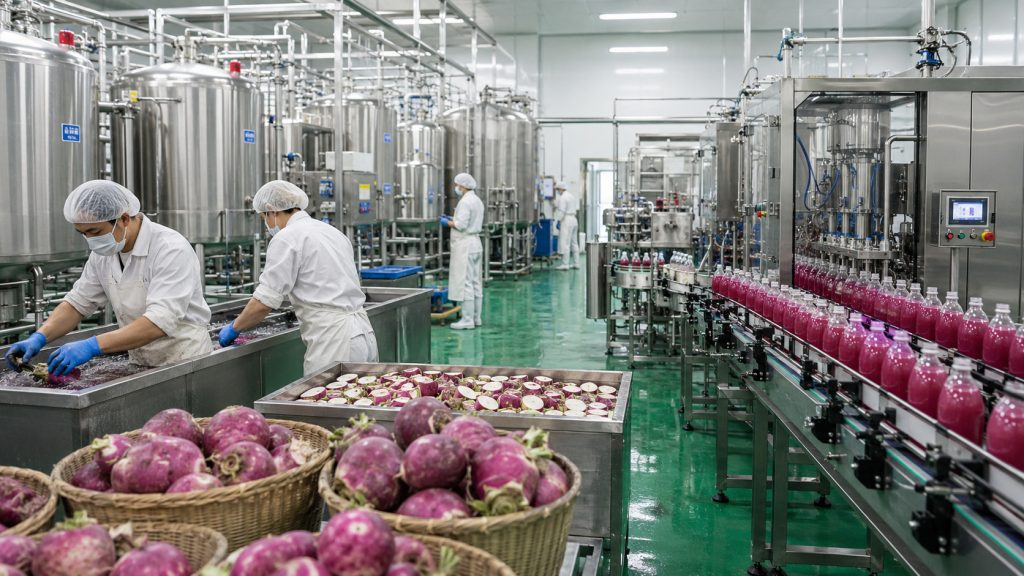
Tibetan turnip, also known as Brassica rapa, is a distinctive agricultural product widely grown on the Qinghai-Tibet Plateau. As the high-altitude specialty food industry continues to develop, Tibetan turnip is increasingly processed into plant-based beverages, compound fruit and vegetable drinks, dairy beverages, and functional drinks.
Although level control is only one part of the automation system used in Tibetan turnip beverage production, it directly affects ingredient accuracy, equipment safety, and filling continuity. During the blending, buffering, and pipeline transfer processes, the beverage may contain foam, bubbles, changing viscosity, and small amounts of residual plant fiber. These conditions can cause conventional level detection devices to generate false alarms or require frequent maintenance.
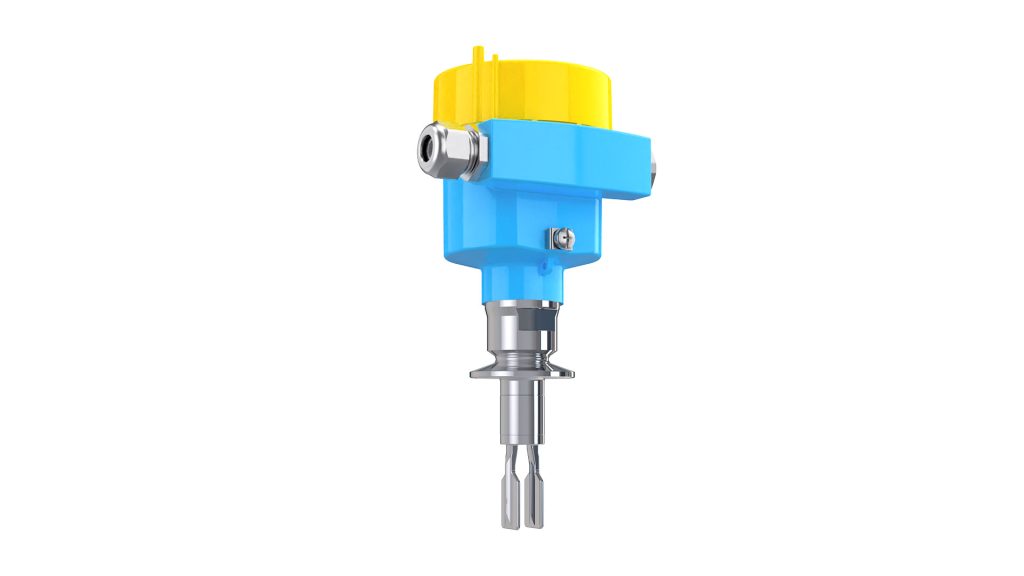
During an automation upgrade project, a manufacturer of high-altitude specialty beverages selected the Jiwei Ring-11 hygienic tuning fork level switch to detect high liquid levels in blending tanks, low liquid levels in filling buffer tanks, and no-liquid conditions in critical transfer pipelines. The solution provides overflow prevention, pump dry-run protection, and automatic process interlocking.
1. Tibetan Turnip Beverage Processing and Level Detection Requirements
The production process for Tibetan turnip beverages varies according to the formulation. A typical process includes raw material selection, washing, peeling or slicing, blanching, extraction, filtration, blending, homogenization, sterilization, cooling, and filling.
Some Tibetan turnip beverages also contain goji berry concentrate, highland barley extract, pear syrup, fructose syrup, white sugar, acidity regulators, and other ingredients. These formulations require several types of processing equipment, including extraction tanks, blending tanks, sterilization systems, buffer tanks, and transfer pumps.
Level switches perform several important functions in these systems.
First, they provide high-level alarms for blending tanks. When the beverage reaches a predetermined position, the level switch sends a signal to stop the feed pump or close the inlet valve, preventing the material from overflowing.
Second, they provide low-level detection in buffer tanks. When the liquid drops below the safe operating level, the switch stops the transfer pump or pauses the filling machine, protecting the pump from dry running and preventing underfilled containers.
Third, they detect the presence or absence of liquid in transfer pipelines. During supply interruptions, pipeline draining, product changeovers, or CIP cleaning, the level switch helps the control system determine whether liquid is present in the pipe.
Finally, a point level switch can provide an independent safety interlock. Even if a continuous level transmitter, flowmeter, or weighing system develops a fault, the point level switch can still produce a clear switching signal when the liquid reaches the specified position.
2. Challenges in Tibetan Turnip Beverage Level Detection
2.1 Foam Generated During Agitation and Feeding
After entering the blending tank, Tibetan turnip extract must be thoroughly mixed with purified water, syrup, and other ingredients. Foam and bubbles can form when the agitator is operating or when ingredients are introduced from the top of the tank.
A level detector that is highly sensitive to foam may activate before the actual liquid reaches the alarm point. This can cause the feeding process to stop too early, resulting in an incorrect batch volume. Alternatively, an unstable detector may fail to identify the real liquid surface, increasing the risk of tank overflow.
2.2 Variations in Beverage Composition and Viscosity
A beverage manufacturer may produce clear Tibetan turnip drinks, compound botanical beverages, fruit-based formulations, and milk-containing products on the same production line. The sugar content, suspended solids, density, and viscosity may vary between recipes.
If a level switch is highly dependent on conductivity, dielectric constant, or other medium-specific properties, it may need to be recalibrated after every product changeover. Frequent adjustment increases operational complexity and creates an additional risk of incorrect parameter settings.
2.3 Adhesion of Fine Plant Particles
Even after filtration and homogenization, Tibetan turnip beverages may contain small plant particles or suspended solids. If a probe has a complex structure, rough surfaces, or hygienic dead spaces, the product may accumulate on the wetted parts.
Long-term buildup can affect level detection and make CIP cleaning more difficult. For this reason, food and beverage manufacturers must carefully evaluate the wetted material, surface finish, process connection, and cleanability of a level switch.
2.4 Demanding Cleaning and Sterilization Conditions
After production, blending tanks, buffer tanks, and transfer pipelines are normally cleaned through a CIP system. Some processes also use hot-water flushing, high-temperature sterilization, or chemical disinfectants.
The level switch must withstand not only normal beverage temperatures but also the temperature changes and pressure fluctuations that occur during cleaning. A poorly designed process connection may retain beverage residues and create a hygiene risk for subsequent production batches.
3. Hygienic Tuning Fork Level Switch Selection
Based on the properties of the Tibetan turnip beverage and the hygienic requirements of the production line, the Ring-11 hygienic tuning fork level switch was selected.
The instrument uses piezoelectric elements to drive the tuning fork at its natural resonant frequency. When the fork is in air, it vibrates at its normal frequency. When the rising beverage covers the fork, the resonant frequency decreases significantly. The internal electronics detect this change and convert it into a switching signal that can be transmitted to a PLC or relay control circuit.
Because the operating principle is based on a change in vibration frequency, the instrument only needs to determine whether the fork is covered by liquid. It does not continuously calculate the liquid level and does not rely on the mechanical movement of a float. This makes it suitable for high-level alarms, low-level alarms, overflow prevention, and pump dry-run protection.
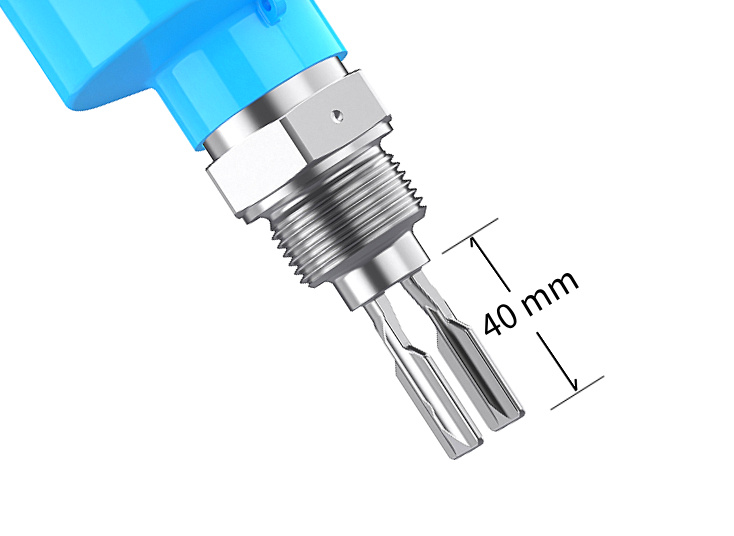
The Ring-11 hygienic tuning fork level switch uses a sanitary clamp process connection. Its wetted surface finish is Ra below 0.5 μm, while the fork length is only 40 mm. The compact design allows it to be installed in storage vessels, processing chambers, small buffer tanks, and certain pipelines with limited installation space.
According to the published technical specifications, the instrument can detect liquids with a density of at least 0.5 g/cm³. Under the specified test conditions, it is suitable for liquid viscosities ranging from 0.1 to 10,000 mPa·s and can tolerate medium flow velocities of up to 6 m/s.
Different output options are available, including relay, two-wire electronic, NAMUR, and NPN or PNP transistor outputs. This allows the level switch to be connected to different PLCs, distributed control systems, isolation barriers, and local control circuits. With an IP66/IP67 enclosure rating, the instrument can be configured according to the process temperature, pressure, power supply, and hazardous-area requirements.
For a Tibetan turnip beverage production line, the instrument offers several practical advantages.
First, it can operate in liquids containing foam and bubbles, reducing the possibility of false switching caused by agitation and recirculation in the blending tank.
Second, it can accommodate a relatively wide range of viscosity. When the manufacturer changes between different Tibetan turnip beverage formulations, minor changes in sugar concentration or product consistency do not normally require repeated adjustment of the level switch.
Third, the 40 mm compact fork occupies very little space, making the device suitable for small buffer tanks and selected pipeline applications.
Fourth, the sanitary clamp connection simplifies installation, removal, inspection, and cleaning while helping to reduce product residue around the process connection.
4. Application in the Blending Tank
Tibetan turnip extract, purified water, syrup, and other ingredients are added to the blending tank according to the recipe and mixed by an agitator. Because the tank receives ingredients repeatedly during each batch, an excessively high liquid level is one of the main operating risks.
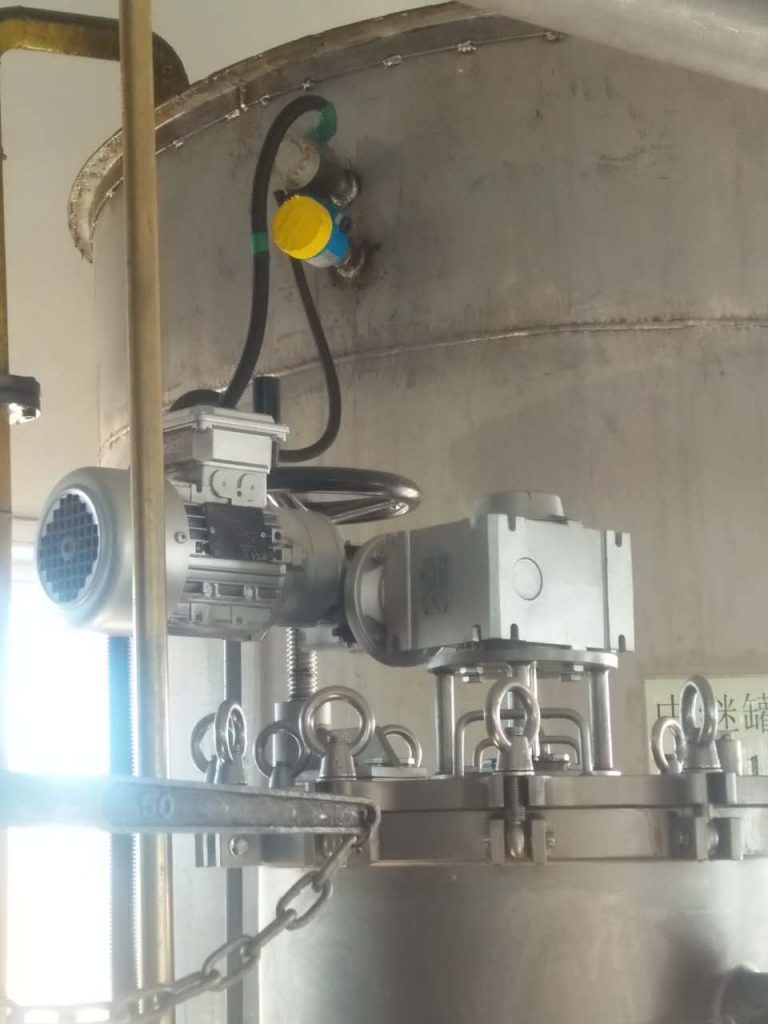
A Ring-11 hygienic tuning fork level switch was installed near the upper section of the blending tank as an independent high-level alarm.
During normal filling, the fork remains in air and the instrument maintains its uncovered state. When the beverage rises to the high-level alarm point and covers the fork, the vibration frequency changes. The switch immediately sends a signal to the PLC.
After receiving the high-level signal, the PLC closes the inlet valve, stops the raw material transfer pump, and displays a high-level alarm on the operator interface. Even if the continuous level transmitter develops a measurement error, the tuning fork level switch still provides an independent layer of overflow protection.
The high-level switch should not be installed directly below the tank roof. The inlet valve and feed pump require a certain amount of time to stop, and the material remaining in the pipeline may continue to flow into the tank. Therefore, sufficient free space must be reserved above the high-level alarm point.
The final installation height should be determined according to the feed rate, pipeline length, valve closing time, and tank cross-sectional area.
5. Application in the Filling Buffer Tank
After homogenization and sterilization, the Tibetan turnip beverage is normally transferred to a filling buffer tank before being pumped to the filling machine. If the buffer tank level becomes too low while the pump continues to run, air may enter the pipeline. This can cause pump dry running, unstable flow, and inconsistent filling volumes.
A hygienic tuning fork level switch was installed in the lower section of the buffer tank for low-level detection.
During normal supply conditions, the fork is covered by the beverage. As the level falls below the safe operating point, the fork becomes exposed and returns to its original resonant frequency. The instrument then sends a low-level signal to the PLC.
The control system stops the filling supply pump and sends a pause command to the filling machine. Once the buffer tank receives additional product and the level returns to a safe position, the system can restart the equipment according to the programmed sequence.
The low-level switch must be installed above the minimum safe liquid level required at the pump inlet. Its purpose is not to remove the final amount of beverage from the tank, but to issue a protective signal before the pump begins to run dry.
When real-time level monitoring is also required, a continuous level transmitter can be used for process control, while the tuning fork level switch provides an independent low-level safety interlock. This creates a combined system of continuous measurement and point level protection.
6. Application in Beverage Transfer Pipelines
During product transfer, changeover, cleaning, and draining, the production line must determine whether liquid is present in the pipeline.
Because of its short fork design, the Ring-11 hygienic tuning fork level switch can be used for no-liquid detection in selected pipelines, depending on the pipe diameter and installation conditions.
The switch is installed in a critical section of the transfer line. When the pipe contains beverage, the fork is covered by liquid. When the upstream supply is interrupted or the pipeline is drained, the fork returns to its uncovered vibration state. The control system uses this signal to stop downstream pumps.
This arrangement can prevent centrifugal pumps from running dry and can also help the automation system identify pipeline draining and CIP changeover conditions.
However, not every pipeline is suitable for direct installation of a tuning fork level switch. The pipe diameter, flow velocity, pressure, temperature, and available installation space must be evaluated during selection.
For small-diameter pipes or high-flow applications, the effect of the fork on the flow area must be considered. The fork should also be positioned so that it is not exposed to direct impact from high-velocity liquid.
7. Key Installation Considerations
The long-term stability of a hygienic tuning fork level switch depends not only on product performance but also on the installation position and orientation.
First, the flat surfaces of the tuning fork should be aligned parallel to the direction of liquid flow. This reduces the mechanical force exerted on the fork.
Second, the instrument should be installed away from tank inlets, recirculation return points, and pipeline outlets. Direct impact from incoming liquid may cause temporary false switching and can increase mechanical stress during long-term operation.
Third, the process nozzle should not be excessively long. A long or narrow nozzle may retain beverage, preventing the fork from responding quickly to the actual liquid level. It may also create an area that is difficult for the CIP cleaning solution to reach.
The Ring-11 installation instructions specify that the fork surfaces should be parallel to the direction of medium movement and that the switch should not be installed close to a liquid inlet or outlet.
After installation, the system should be tested under empty-tank, filling, full-level, draining, and CIP conditions. The PLC input, alarm indicator, inlet valve, transfer pump, and filling machine interlocks should all be checked individually.
A functional test using the actual Tibetan turnip beverage should also be conducted before full production begins. This confirms that foam, operating temperature, suspended particles, and formulation changes do not interfere with switching performance.
8. Results of the Application
After commissioning, the hygienic tuning fork level switches established three key layers of protection across the Tibetan turnip beverage production line.
The high-level switch in the blending tank stops the feeding process and reduces the risk of product overflow, material waste, and additional cleaning work.
The low-level switch in the buffer tank protects the supply pump from dry running and reduces the possibility of filling interruptions or underfilled containers.
The no-liquid switch in the transfer pipeline helps the control system identify supply interruptions and draining conditions, improving the automation of product changeovers and CIP operations.
Because the instrument detects a change in vibration frequency, it can continue to provide stable switching when the density or viscosity of the Tibetan turnip beverage varies within the permitted operating range. The sanitary clamp connection and smooth wetted surfaces also make it easier to integrate the level switch into the existing CIP cleaning process.
Compared with level devices containing floats, connecting rods, or other moving mechanical components, the tuning fork level switch does not have a transmission mechanism that can easily become stuck. Routine maintenance mainly involves checking the fork for product buildup, inspecting the process seal, verifying electrical connections, and testing the alarm and interlock functions.
9. Selection Recommendations for Tibetan Turnip Beverage Applications
A hygienic tuning fork level switch should not be selected solely according to the name of the liquid. Detailed process conditions must also be provided to the instrument manufacturer.
Important parameters include minimum beverage density, normal and maximum viscosity, sugar content, suspended solids concentration, maximum particle size, normal process temperature, sterilization temperature, CIP cleaning temperature, vessel pressure, pipeline flow velocity, installation method, process connection size, output signal, and hazardous-area classification.
A hygienic tuning fork level switch is generally suitable for well-filtered Tibetan turnip beverages containing only small suspended particles.
However, if the beverage contains large amounts of long plant fiber, large fruit particles, or materials that can form lumps, a sample test should be conducted in advance. This helps determine whether the product may become trapped between the two fork tines.
For beverages that cause severe coating, adhesion, or drying on the sensor, the required cleaning frequency and maintenance procedure must also be evaluated.
Normal process temperature and CIP cleaning temperature should be specified separately. The instrument should not be selected only according to the normal beverage transfer temperature while ignoring the effect of hot-water cleaning or high-temperature sterilization on the seals and electronic components.
Conclusion
Tibetan turnip beverage production involves extraction, blending, homogenization, sterilization, buffering, transfer, and filling. Reliable level control is essential for maintaining continuous operation and protecting processing equipment.
The Jiwei Ring-11 hygienic tuning fork level switch features a sanitary clamp connection, a compact 40 mm fork, and the ability to operate in liquids containing foam, bubbles, and varying viscosity. It can be used for high-level overflow prevention in blending tanks, low-level pump protection in buffer tanks, and no-liquid detection in transfer pipelines.
With correct instrument selection, proper installation, and well-designed PLC interlocks, a tuning fork level switch can reduce the risks of tank overflow, pump dry running, and filling interruptions. When combined with continuous level measurement, it provides a clean, stable, and dependable point level protection solution for Tibetan turnip beverage production lines.