1. Why Stable Level Measurement Is Essential for Environmental Recycling Reactors
In environmental recycling, hazardous waste treatment, oily sludge treatment, wastewater treatment, and industrial cleaning liquid recovery, reactors often play a critical role in mixing, oxidation, conditioning, demulsification, and pretreatment before sedimentation or separation. Taking oil-water mixture treatment as an example, oily wastewater from machining, petrochemical production, shipbuilding, metal cleaning, and industrial maintenance usually needs to go through centrifugation, chemical dosing, stirring reaction, and secondary separation before oil, water, and solid impurities can be effectively separated.
During this process, reactor level directly affects chemical dosing ratio, stirring efficiency, residence time, and downstream separation performance. It is also closely related to centrifuge feeding, storage tank transfer, and automatic interlock control. If level measurement is unstable, the system may face insufficient dosing, inaccurate reaction time, pump dry running, overflow, batch fluctuation, or even shutdown and maintenance. Therefore, selecting a level meter suitable for complex media and stirred environments is an important foundation for continuous, automated, and safe operation of environmental recycling equipment.
2. Common Challenges in Stirred Reactor Level Measurement
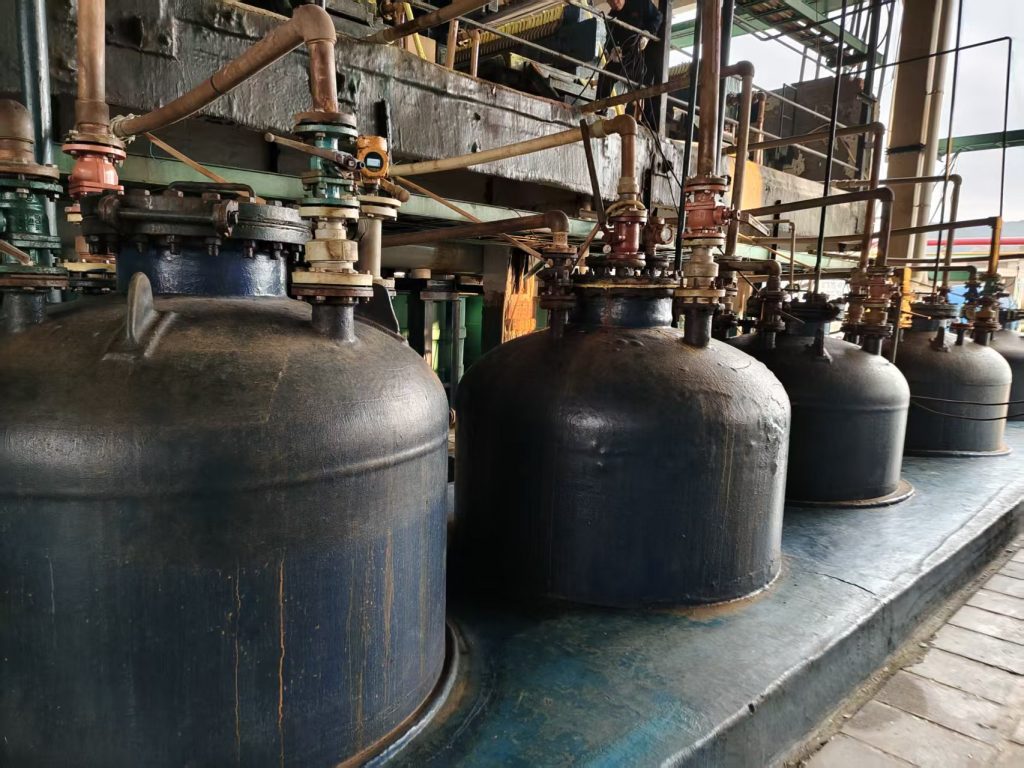
Compared with ordinary water tanks or clean liquid vessels, level measurement in environmental recycling reactors is much more complex.
First, the medium composition often changes. Oil-water mixtures, emulsions, liquid waste containing solids, chemical agents, and oxidants may be mixed in the same vessel. The dielectric constant, density, viscosity, and surface condition can vary significantly from batch to batch, causing changes in the echo intensity received by the instrument.
Second, agitators cause surface fluctuation. During reactor operation, the liquid surface may form vortices, waves, foam, or splashing. Traditional contact level instruments are easily affected by buildup, adhesion, and mechanical wear. Some non-contact instruments may also be disturbed by false echoes.
Third, the internal structure of the tank can be complicated. A reactor may contain an agitator shaft, baffles, dosing pipes, spray pipes, coils, manholes, and support structures. These internal components may reflect radar signals and generate multiple echoes. If the instrument does not have strong signal processing capability, it may mistakenly identify internal structure reflections as the real liquid surface.
Fourth, low-level measurement requires high reliability. Many environmental recycling processes require accurate level monitoring near the bottom of the reactor to control emptying, transfer, and cleaning. However, at low levels, the echo distance is short, and the tank bottom may also reflect signals. This places higher demands on the beam focusing capability and algorithm recognition capability of the radar level meter.
3. Why 80GHz Radar Level Meters Are Recommended
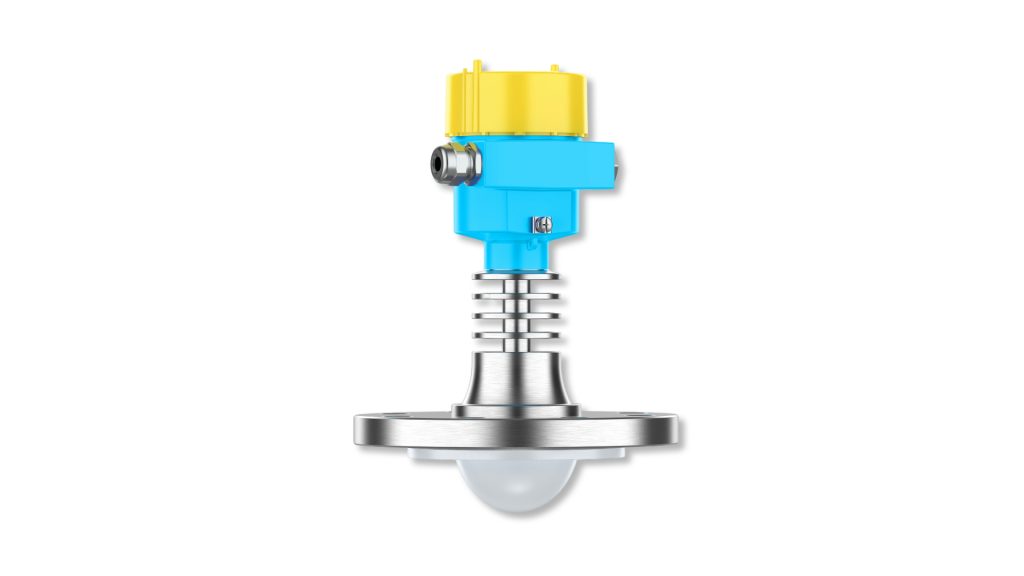
For reactor level measurement, Jiwei recommends using JWrada® series 80GHz radar level meters. Compared with traditional contact instruments, radar level meters use non-contact measurement. The sensor does not directly contact oil-water mixtures, emulsions, or corrosive waste liquids, which helps reduce adhesion, contamination, wear, and maintenance. For oily, foamy, slightly vaporous, or fluctuating liquid surfaces, non-contact measurement is also more suitable for long-term stable operation.
The main advantage of 80GHz high-frequency radar is its narrow beam angle, concentrated energy, and high resolution. A narrow beam helps avoid agitator shafts, tank walls, baffles, and dosing pipes, reducing false echoes. High-frequency signals are also better at identifying liquid surface details, making them suitable for small and medium-sized reactors, narrow mounting openings, complex internal structures, and applications that require measurement close to the tank bottom.
For environmental recycling companies, radar level meters are also easy to connect to automatic control systems. Through 4–20mA/HART, RS485/Modbus, and other output signals, reactor level data can be transmitted to PLC, DCS, remote monitoring systems, or smart water management platforms, enabling automatic control of feeding, dosing, stirring, discharge, alarms, and interlocks.
4. Jiwei JWrada®-31: An Economical Solution for Small-Range Reactors
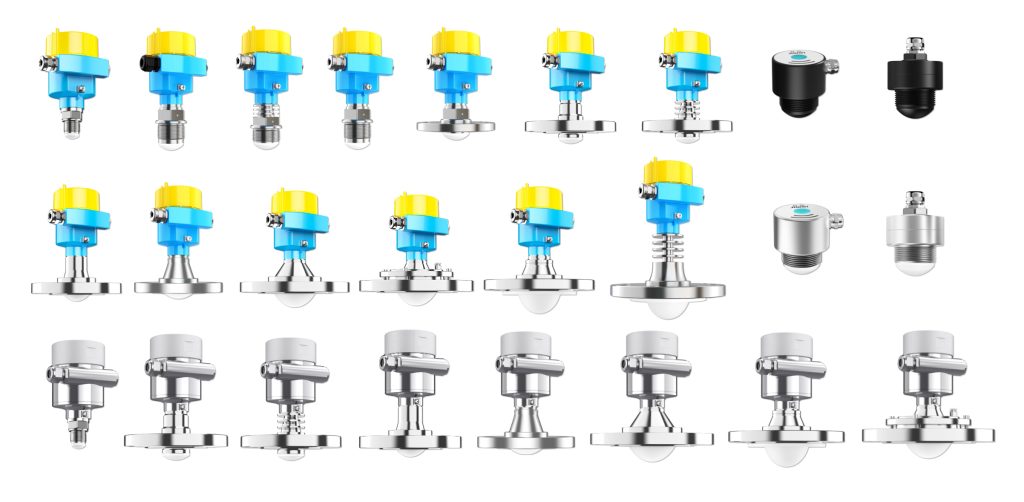
If the reactor has a small measuring range, low process pressure, normal operating temperature, and is located in a non-explosion-proof or general industrial area, the Jiwei JWrada®-31 radar level meter is a suitable choice. This product adopts 80GHz FMCW radar technology and is designed for small-range continuous level measurement. It is especially suitable for small tanks, dosing tanks, reactors, and mixing tanks in pharmaceutical, food, energy, water treatment, and environmental protection equipment.
In oil-water mixture reactors, the non-contact measurement of JWrada®-31 can prevent medium adhesion from affecting the sensor. Its compact structure is convenient for installation on reactor tops with limited space. Its intelligent echo learning and adaptive algorithm help identify false echoes and multiple echoes while tracking the real level change. When there are stirring fluctuations, internal tank structures, or low-level measurement requirements, this algorithm capability is important for stable signal output.
For common environmental recycling reactors with measuring ranges of around 3 m, 5 m, or 6 m, JWrada®-31 can serve as an economical and practical continuous level monitoring solution. It meets automation control requirements while reducing later maintenance frequency.
5. Jiwei JWrada®-32: A General-Purpose Choice for Explosion-Proof and Complex Conditions
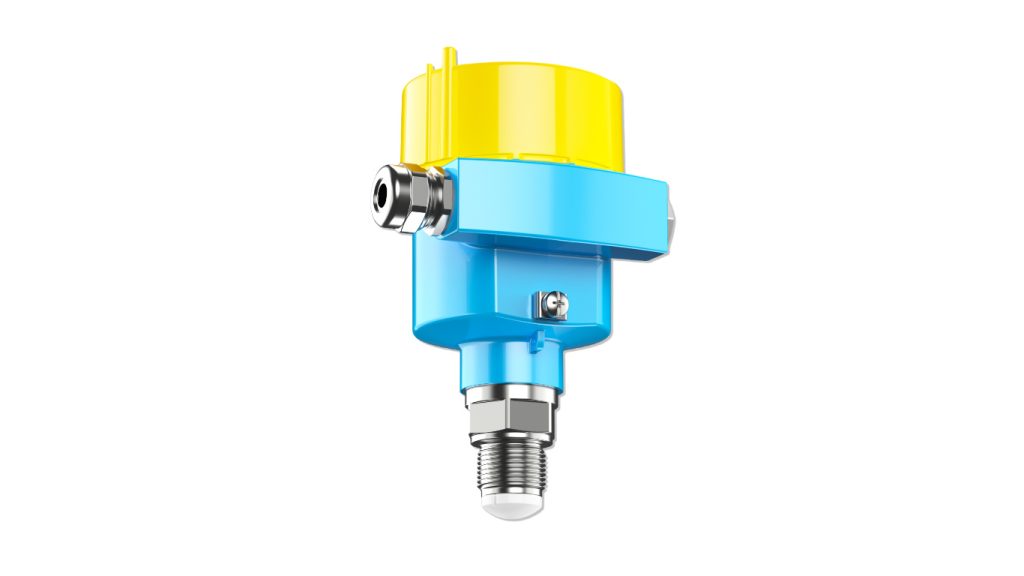
When the reactor handles oily wastewater, solvent waste liquid, flammable or explosive media, or when the site has explosion-proof requirements, JWrada®-32 radar level meter can be selected. This series also uses 80GHz radar technology and offers stronger versatility. It is suitable for complex industrial applications in petroleum, chemical, mining, environmental recycling, and related industries.
JWrada®-32 is suitable for conventional liquid level measurement and can also be used for level measurement of powders and granules with relatively high dielectric constants. In oily wastewater treatment systems, there are often multiple measuring points, such as storage tanks, reactors, oily sludge tanks, buffer tanks, and dosing tanks. The multiple installation methods and signal output options of JWrada®-32 make it convenient for unified engineering selection and later maintenance.
In stirred reactors, the narrow beam and intelligent echo algorithm of JWrada®-32 can reduce the influence of agitators, vapor, dust, and electromagnetic interference. For environmental recycling projects that require explosion-proof certification, remote commissioning, and long-term stable operation, this product is more suitable as a standard main model.
6. Jiwei JWrada®-35: A Reinforced Solution for High Temperature, Corrosion, Vapor, and Foam
If the reactor contains strong acid, strong alkali, corrosive wastewater, high-temperature thermal oil, solvent vapor, or obvious foam, JWrada®-35 radar level meter is recommended. This product is designed for harsh conditions such as high temperature, high pressure, strong corrosion, vapor, foam, and dust. It is suitable for petroleum, chemical, metallurgy, power, and environmental hazardous waste treatment industries.
In environmental recycling, some waste liquids may contain acids, alkalis, oxidants, solvents, or complex additives. Contact instruments are easily affected by corrosion, crystallization, and buildup. JWrada®-35 uses non-contact measurement and can be equipped with corrosion-resistant materials and sealing structures, making it suitable for level monitoring in waste acid tanks, waste alkali tanks, corrosive liquid storage tanks, and reactors.
For dosing reactions, oxidation demulsification, heat treatment, or vapor environments, the anti-interference capability and high-temperature adaptability of JWrada®-35 help users obtain more stable level data and reduce the risks associated with manual inspection and opening the vessel.
7. High and Low Level Protection Should Also Be Configured
Automatic reactor control should not rely only on continuous level meters. To improve system safety, Jiwei recommends installing the Ring-11 tuning fork level switch at critical measuring points for high level alarm, low level alarm, pump protection, or overflow prevention interlock.
The Ring-11 tuning fork level switch detects changes in vibration frequency when the fork comes into contact with liquid and then outputs a switch signal. It is suitable for various liquids, slurries, and complex media. For oil-water mixtures, industrial wastewater, chemical liquids, foamy media, or vibrating environments, tuning fork level switches offer strong anti-interference capability and can form a combined solution of “continuous measurement + point level protection” together with radar level meters.
For example, installing a high-level tuning fork switch at the top of the reactor can prevent excessive feeding or foam overflow. Installing a low-level switch near the bottom or discharge pipeline can protect transfer pumps from dry running. In dosing tanks, buffer tanks, and temporary storage tanks, compact tuning fork level switches can also provide economical upper and lower limit control.
8. Recommended Measuring Point Configuration for Typical Processes
In a complete oil-water mixture treatment system, Jiwei can provide level and material level measurement solutions for multiple measuring points:
- Raw liquid storage tank: JWrada®-32 or JWrada®-35 can be used for continuous level measurement, suitable for oily wastewater, foam, slight vapor, and explosion-proof requirements.
- Stirred reactor: According to temperature, pressure, corrosion, and explosion-proof requirements, JWrada®-31, JWrada®-32, or JWrada®-35 can be selected for continuous level control.
- Dosing tank: JWrada®-31 or JWrada®-21/22/23 small-range radar water level meters can be used. Ring-21 compact tuning fork level switches can also be combined for upper and lower limit alarms.
- Buffer tank before centrifuge: A radar level meter is recommended to stabilize the feeding rhythm and reduce centrifuge load fluctuation.
- Oil recovery tank and clean liquid tank: Radar level meters or magnetic level gauges can be selected according to medium characteristics to achieve local indication and remote transmission.
- Drainage pit, sludge tank, and wastewater tank: Radar water level meters or ultrasonic level meters can be selected based on foam, vapor, installation height, and project budget.
Through systematic configuration of key measuring points, environmental recycling companies can reduce manual level inspection, manual pump start-stop operation, and manual batch judgment, thereby improving treatment efficiency and operational safety.
9. Installation Tips: How to Maximize Radar Level Meter Performance
When installing a radar level meter on a reactor, avoid the agitator shaft, feed inlet, spray opening, and internal baffles as much as possible. The instrument should not be installed directly above the feeding stream, otherwise the radar may measure the material stream surface instead of the actual liquid surface. For vessels with agitators, the radar beam should be kept away from the movement area of the agitator blades, and fixed interference echoes should be suppressed during on-site commissioning.
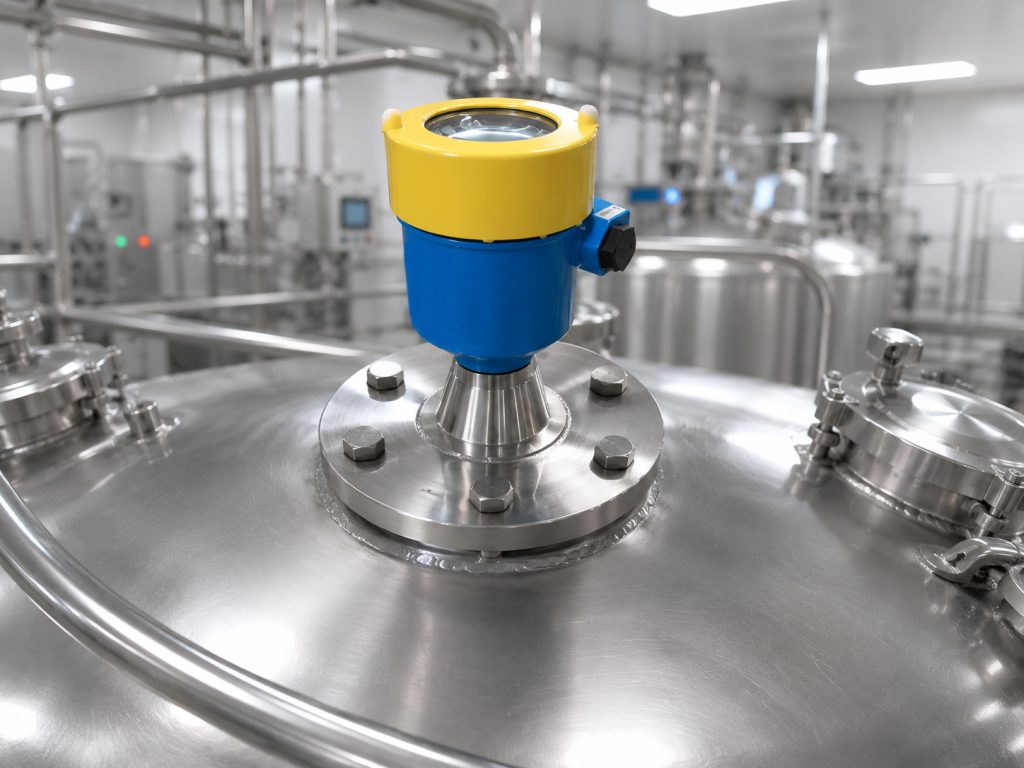
For cone-bottom vessels or tanks that require measurement close to the bottom, the installation position should be selected according to the vessel structure so that the radar signal can cover the effective liquid surface area as much as possible. If a long nozzle is used for installation, attention should be paid to the ratio of nozzle length to diameter to avoid excessive enclosure of the antenna, which may affect signal transmission and reception. If there is strong vapor, condensation, splashing, or corrosion on site, the appropriate antenna, sealing material, protection rating, and purging solution should be selected according to actual conditions.
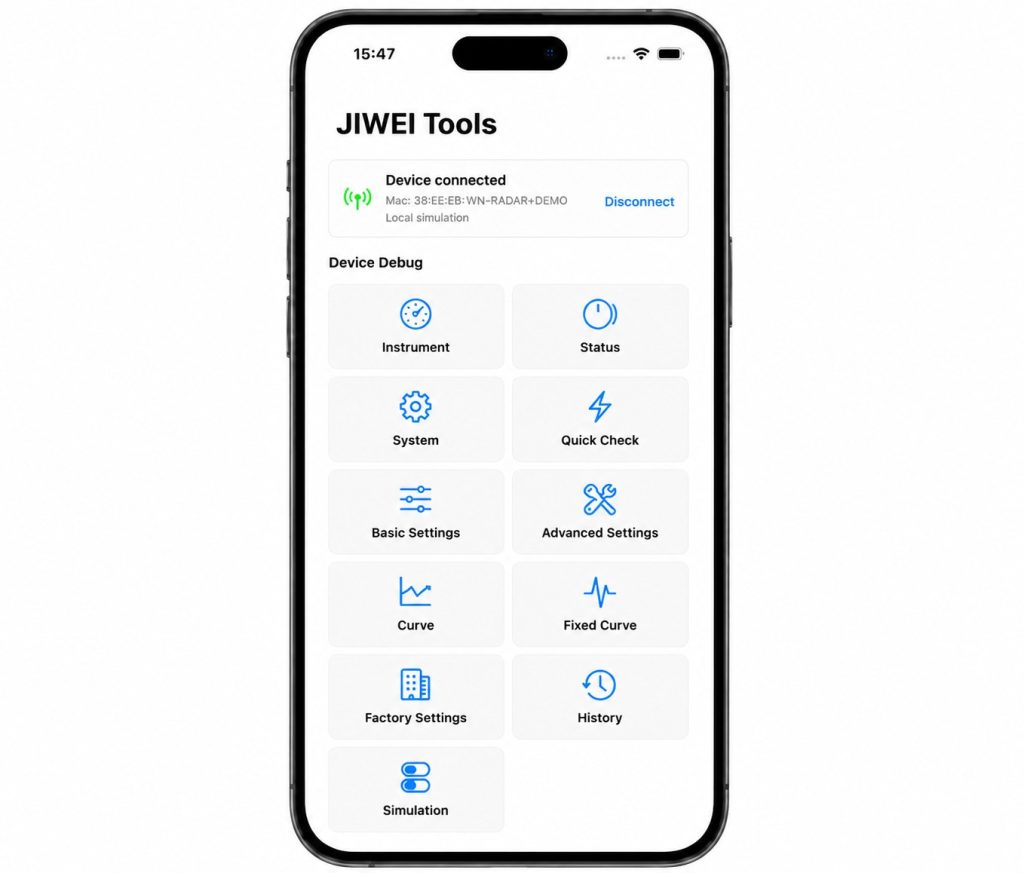
Jiwei JWrada® series supports Bluetooth wireless commissioning. On-site personnel can use the Jiwei intelligent control mini program or app for parameter setting, echo viewing, real-time monitoring, and maintenance management. For measuring points installed at height, in inconvenient locations, or in explosion-proof areas, wireless commissioning can reduce cover-opening operations and high-altitude work risks.
10. Value of the Jiwei Solution
Using Jiwei JWrada® radar level meters for reactor level measurement can bring multiple benefits to environmental recycling companies.
More stable measurement. 80GHz high-frequency radar has a concentrated beam, which helps avoid internal tank structures and agitator interference, making it suitable for complex reflection environments.
Easier maintenance. Non-contact measurement prevents the sensor from being in long-term contact with oil, emulsion, corrosive waste liquid, and sticky media, reducing cleaning and maintenance frequency.
More automated control. Continuous level signals can be connected to PLC, DCS, or remote platforms to enable automatic feeding, dosing, stirring, discharge, and alarm interlock control.
Higher safety. Radar level meters can be combined with Ring tuning fork level switches to provide dual protection through continuous monitoring and high/low level alarms.
More flexible selection. From small-range reactors to high-temperature, high-pressure, explosion-proof, and highly corrosive conditions, JWrada®-31, JWrada®-32, JWrada®-35, and other models can be selected according to actual requirements.
11. Recommended Model Selection
For conventional oil-water mixture reactors with a measuring range below 10 m, low temperature, and low pressure, JWrada®-31 radar level meter is recommended.
If the site has explosion-proof requirements, the medium is oily or solvent-based waste liquid, or the working condition is more complex, JWrada®-32 radar level meter is recommended.
If the medium is corrosive, or if there are high temperature, vapor, foam, strong acid, strong alkali, or other harsh conditions, JWrada®-35 radar level meter is recommended.
If high and low level alarms, pump protection, or overflow prevention interlocks are required, Ring-11 tuning fork level switch or Ring-21 compact tuning fork level switch can be used together with the radar level meter.
12. Conclusion
Reactor level measurement may seem like an ordinary measuring point, but it directly affects the continuity, safety, and automation level of environmental recycling processes. Faced with oil-water mixtures, emulsions, foam, agitation, internal tank structures, and changing medium reflections, traditional contact level instruments often struggle to maintain long-term stability.
Jiwei JWrada® 80GHz radar level meters provide a reliable continuous level measurement solution for environmental recycling reactors through non-contact measurement, narrow beam angle, high precision, intelligent echo processing, wireless commissioning, and multiple industrial output options. When combined with Ring series tuning fork level switches, the system can also achieve high and low level alarms, pump protection, and safety interlocks, helping users build a more stable, safer, and smarter level measurement system.
If you are looking for a level measurement solution for oil-water mixtures, industrial wastewater, stirred reactors, dosing tanks, waste liquid storage tanks, or hazardous waste treatment equipment, Jiwei Automation can provide professional radar level meter selection and application recommendations based on your medium, temperature, pressure, measuring range, installation conditions, and explosion-proof requirements.
FAQ: Common Questions About Reactor Level Measurement
1. Can oil-water mixtures be measured with a radar level meter?
Yes. The characteristics of oil-water mixtures, emulsions, and oily wastewater may change, so it is recommended to use an 80GHz radar level meter with a narrow high-frequency beam and intelligent echo processing capability to improve stability under complex working conditions.
2. Will the agitator affect the radar level meter?
The agitator may generate false echoes. However, by choosing a suitable installation position, avoiding the agitator shaft and blade area, and using echo learning and interference suppression functions, the influence can be significantly reduced.
3. Can the reactor level still be measured accurately at low levels?
Low-level measurement requires strong radar beam focusing and echo recognition capability. With the correct frequency, installation position, and parameter setting, radar level meters can be used to monitor liquid levels close to the reactor bottom.
4. Does a radar level meter need regular cleaning?
A non-contact radar level meter does not directly contact the medium, so maintenance is usually low. However, in environments with strong vapor, crystallization, splashing, or heavy dust, the antenna window should be inspected regularly according to site conditions.
5. Why should a tuning fork level switch be used together with a radar level meter?
A continuous level meter provides real-time level trends and automatic control, while a tuning fork level switch provides high/low level alarms and safety interlocks. The two instruments together improve system safety redundancy, especially for pump protection and overflow prevention.