1. Project Background: Why Do Grain Silos Need Reliable Rotary Paddle Level Switches?
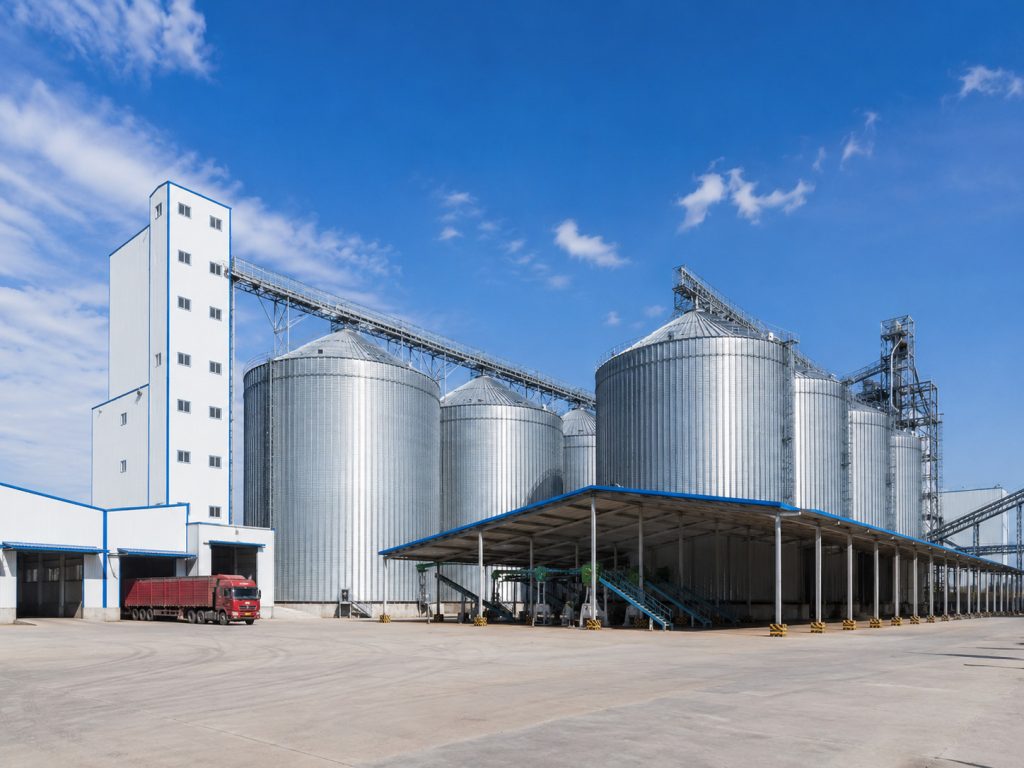
In grain storage, grain processing, feed production, and flour milling industries, silos play an essential role in production, storage, and material handling systems. Materials such as wheat, corn, soybeans, rice, flour, bran, soybean meal, and feed pellets are usually stored in bulk inside steel silos, concrete silos, buffer bins, or transfer hoppers.
Because silos are often tall and the internal material flow can be complex, manual level inspection is inefficient and may involve safety risks. As a result, more and more grain storage projects are adopting automatic level detection solutions.
A grain storage company needed to monitor high level, low level, and overflow prevention points in multiple grain silos, flour transfer bins, and feed pellet silos during an expansion project. The main materials on site included corn, wheat, soybeans, flour, and feed pellets. These materials included both granular and powder forms. The silo environment involved dust, outdoor installation points, and significant temperature changes.
Previously, the company had used simple mechanical alarm devices. However, these devices sometimes caused false alarms, unstable signals, and frequent maintenance, which affected the continuous operation of the conveying system.
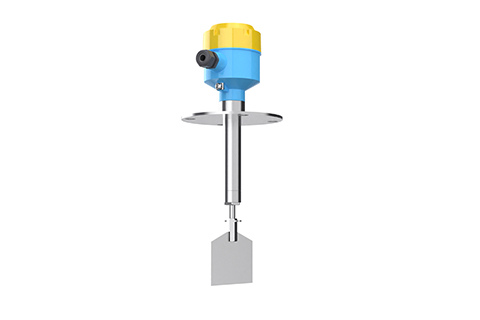
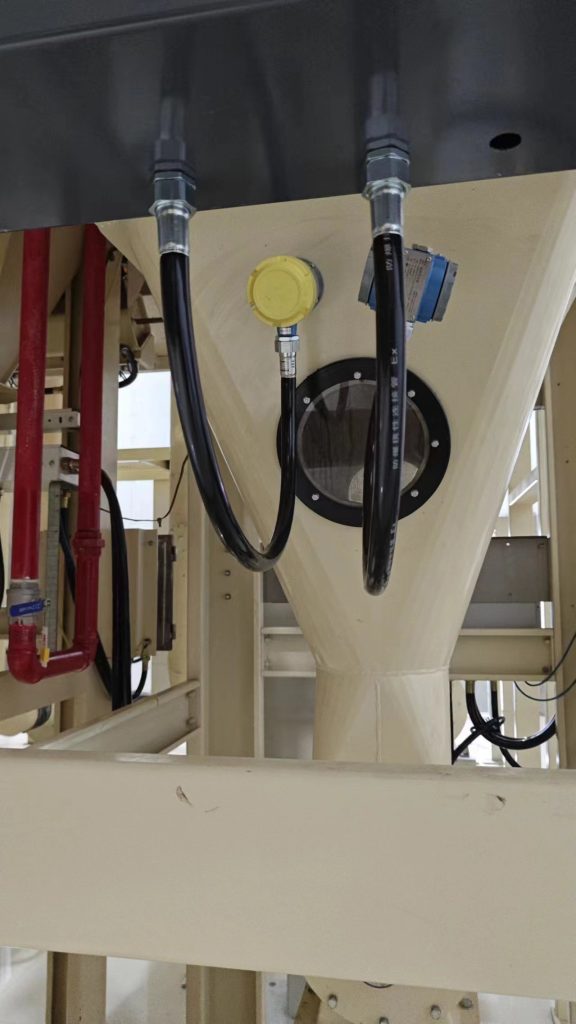
After comparison, the project selected the Jiwei Spin-11 rotary paddle level switch. The instruments were installed at the silo top, side wall, and near the discharge outlet for full-bin alarms, empty-bin alarms, and key level control points. After commissioning, the solution helped the company automatically monitor silo level status, reduce manual inspection frequency, and lower the risk of blockage, overflow, and material shortage.
2. Application Conditions: What Requirements Do Grain Silos Have for Level Switches?
Level detection in grain silos may seem simple, but the actual working conditions are often challenging. During feeding, discharging, and transferring, grain and powder materials may generate impact, accumulation, collapse, bridging, and dust.
In flour, bran, and other powder materials, dust may easily adhere to the sensing components. In corn, soybeans, and other granular materials, material impact during feeding may affect the shaft and paddle. If the level switch does not have a stable structure, good sealing, or sufficient impact resistance, it may suffer from jamming, wear, false operation, or even damage.
The project required the grain silo level switch to meet the following needs:
First, the detection signal had to be stable. Grain storage systems are often interlocked with belt conveyors, bucket elevators, drag conveyors, screw conveyors, and other equipment. A false level signal may cause the conveying system to stop or start incorrectly.
Second, the instrument had to be suitable for both granular and powder materials. Grain storage sites handle many types of materials, including free-flowing grains and low-density dusty powders. Therefore, the level switch must have strong adaptability.
Third, installation and maintenance had to be convenient. Grain storage projects usually include many silos and widely distributed measuring points. Some installation positions are located at great heights. If maintenance is complicated, long-term operation costs will increase.
Fourth, protection performance had to be reliable. Grain storage sites are dusty, and some silos are installed outdoors. The instrument housing must provide good dustproof and waterproof performance and adapt to temperature changes.
Fifth, explosion-proof requirements needed to be considered in key dusty areas. Grain processing and powder storage sites often require explosion-proof configurations according to safety standards. The level instrument should also meet the safety requirements of the site.
3. Solution: Spin-11 Rotary Paddle Level Switch for High and Low Level Alarms in Grain Silos
In this grain silo project, the Spin-11 rotary paddle level switch was mainly used in three positions.
3.1 High Level Alarm at the Silo Top
The Spin-11 rotary paddle level switch was installed on the upper side wall of grain silos and flour silos to detect whether the material had reached the upper limit.
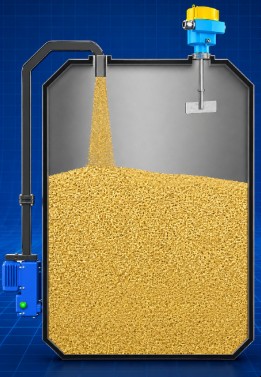
When grain was conveyed into the silo by a bucket elevator or conveying equipment, the material gradually accumulated. Once the material reached the high-level point and contacted the paddle, the paddle rotation was blocked. The level switch then output a switching signal. The system issued a full-bin alarm and could interlock with the feeding equipment to stop material input, preventing overflow, spillage, and excessive dust.
For grain storage companies, high level alarms are extremely important. Traditional manual inspection often has delays, especially during night operation or peak feeding periods. With the Spin-11 rotary paddle level switch, the system can output an alarm signal as soon as the material reaches the set level. This allows the control room to monitor silo status accurately and improve feeding control.
3.2 Low Level Alarm at the Silo Bottom
The Spin-11 rotary paddle level switch can also be installed at the lower part of the silo or near the discharge outlet for low level alarm detection.
When the material level drops below the set lower limit, the paddle is released from the material and resumes rotation. The level switch outputs the corresponding signal, reminding the system to refill material or switch silos. This prevents downstream equipment from running empty.
Low level alarms are especially important for feed production lines and grain processing lines. For example, in continuous batching, crushing, screening, or packaging processes, sudden material shortage in the upstream silo may cause equipment idling, inaccurate batching, or production interruption. By installing the Spin-11 rotary paddle level switch at the low-level point, the control system can receive shortage signals in advance and maintain production continuity.
3.3 Anti-Blockage and Material Shortage Detection in Transfer Hoppers
Grain processing sites often use multiple transfer hoppers to connect elevators, conveyors, screening machines, dust collectors, and packaging equipment. Transfer hoppers have smaller capacities and faster level changes. They may experience blockage if upstream feeding is excessive or material shortage if downstream discharge is too fast.
The Spin-11 rotary paddle level switch can be installed at key positions in transfer hoppers as a process control signal.
When the material reaches the set level, the switch outputs a signal and the control system can adjust the upstream conveying equipment. When the material drops below the set level, the system can start feeding or issue an alarm. In this way, the Spin-11 is not only a simple alarm switch, but also an important detection component in the interlock control of grain conveying systems.
4. Product Principle: Why Is the Rotary Paddle Type Suitable for Point Level Detection in Grain Silos?
The Spin-11 rotary paddle level switch adopts a typical rotary paddle measurement principle.
Under normal conditions, a micro motor drives the shaft and paddle to rotate slowly. When the material inside the silo rises and contacts the paddle, the paddle rotation is blocked by the material resistance. The internal detection mechanism then operates and outputs a switching signal. When the material level drops and moves away from the paddle, the paddle resumes rotation and the switch signal resets.
For grain silo applications, this measurement method is intuitive, stable, and widely applicable. Grains, beans, feed pellets, and flour materials all create resistance when they reach the detection point, allowing the instrument to determine whether material is present at that position.
Compared with continuous level transmitters, rotary paddle level switches are more suitable for high level alarms, low level alarms, and point-level interlock control. The structure is relatively simple, and the installation and maintenance costs are easier to control.
5. Product Advantages of the Spin-11 in Grain Silo Applications
5.1 Suitable for Grain, Beans, Flour, and Other Materials
The Spin-11A standard rotary paddle level switch is suitable for most solid granules and powders. Typical applications include feed, beans, grain, flour, and similar materials.
Grain storage sites often handle a variety of materials. One company may store wheat, corn, soybeans, rice, flour, and feed pellets at the same time. A level switch with strong material adaptability can simplify product selection and improve project efficiency.
5.2 Imported Motor and Microswitch for Reliable Operation
Grain silo level switches usually need to operate continuously for long periods. The reliability of moving components directly affects the service life of the instrument.
The Spin-11 uses imported motors and microswitches, helping improve switching stability and reduce false alarms caused by motor failure or contact failure. For grain storage systems that operate throughout the year, reliable core components help reduce unexpected shutdowns and maintenance work.
5.3 Dual-Bearing Design for Smooth Operation and Longer Service Life
Grain particles may create impact during feeding. If the shaft support of the level switch is unstable, long-term operation may cause uneven wear, vibration, or jamming.
The Spin-11 adopts a dual-bearing design, which supports smoother transmission and improves the durability of the mechanical structure. In dusty grain silo environments with particle impact, a stable bearing structure helps reduce maintenance frequency.
5.4 304/316L Stainless Steel Contact Material for Grain Industry Use
The grain storage and food processing industries have relatively high requirements for materials that come into contact with products.
The Spin-11 can use 304 or 316L stainless steel for contact parts. These materials provide good strength and corrosion resistance and are suitable for grain, flour, feed, and other storage environments. For grain processing companies that need long-term equipment cleanliness and stable operation, stainless steel contact material is a practical choice.
5.5 IP65 Protection Rating for Dusty and Outdoor Environments
Grain silo sites generate a large amount of dust. If the instrument housing is not well sealed, dust may enter the housing and affect the motor, microswitch, or terminals.
The Spin-11 provides an IP65 protection rating, making it suitable for dusty, humid, and outdoor installation environments. For installation points on steel silo tops or external silo walls, IP65 protection helps improve long-term reliability in harsh conditions.
5.6 Gas and Dust Explosion-Proof Options for Higher Safety Requirements
Grain processing and powder storage sites often need to consider dust explosion safety. The Spin-11 offers gas and dust explosion-proof configuration options for applications with explosion-proof requirements.
For flour silos, powder bins, and transfer bins after feed grinding, selecting an appropriate explosion-proof level switch helps meet project safety standards and site management requirements.
5.7 High-Temperature Type Available for More Process Scenarios
Most grain silos operate at normal temperature. However, near grain drying systems, hot-air conveying areas, or certain high-temperature process sections, the instrument may face higher process temperatures.
The Spin-11 offers both normal-temperature and high-temperature versions. The high-temperature type can meet more demanding environmental requirements. For companies that may expand applications to post-drying buffer silos, hot material bins, or other solid material silos, a wider temperature range helps standardize instrument selection.
5.8 Flexible Installation for Different Silo Structures
Grain silo structures vary widely. They may include steel silos, square bins, buffer bins, cone-bottom silos, and transfer hoppers.
The Spin-11 supports threaded or flange process connections. Paddle type and insertion length can also be selected according to site requirements. For different silo wall thicknesses, installation angles, material angles of repose, and level point heights, flexible installation options improve adaptability.
5.9 Easy Maintenance to Reduce Long-Term Operating Costs
The Spin-11 adopts an integrated anti-loosening design for the motor and mechanical control structure, making replacement and maintenance easier.
Grain silo projects often use many level instruments. If maintenance requires large-scale disassembly, it consumes labor and affects production. An easy-maintenance structure helps shorten inspection time and reduce long-term operating costs.
6. Application Results: More Stable Automatic Level Control in Grain Silos
After the Spin-11 rotary paddle level switches were put into operation, the grain silo project achieved noticeable improvements in operation and management.
First, full-bin alarms became more timely. In the past, manual inspection and experience-based judgment often caused delays, especially during night shifts or peak feeding periods. After installing the Spin-11, the system could output an alarm signal as soon as the material reached the high-level point, allowing the feeding equipment to stop in time and reducing the risk of overflow.
Second, shortage alarms became more accurate. After the low-level switches were interlocked with downstream conveying, batching, or packaging systems, operators could detect insufficient material in advance and avoid equipment idling or production interruption.
Third, site maintenance was reduced. The instruments operated smoothly, with good dust resistance and mechanical stability, reducing maintenance caused by jamming or false operation.
Fourth, central control management became more intuitive. The high and low level status of each silo could be connected to a PLC or DCS system. Operators could monitor whether each silo had reached the set level directly from the control room, improving the automation and informatization of the grain storage system.
7. Selection Suggestions for Grain Silo Level Switches
When selecting the Spin-11 rotary paddle level switch for grain silo applications, users should consider the material, installation position, and control purpose.
For common granular and powder materials such as wheat, corn, soybeans, rice, feed pellets, and flour, the Spin-11A standard type is usually a suitable choice.
If the material particles are large, the impact is strong, or the installation position may be exposed to high material pressure, the Spin-11P protective type can be considered according to site conditions.
For installation at the silo top or high-level point, the level switch should be installed away from the direct feeding stream to avoid direct impact on the paddle. If the installation point cannot avoid the impact area, suitable protection measures should be selected according to the material impact strength.
For low-level installation, the silo cone angle, discharge flow direction, and material angle of repose should be considered to ensure that the paddle reflects the actual effective material level.
For flour silos, powder bins, and feed transfer bins with heavy dust, explosion-proof models should be selected according to site safety requirements.
For outdoor grain silos, users should pay attention to protection rating, cable sealing, and rain protection to ensure long-term stable operation.
8. Conclusion: Spin-11 Provides a Reliable Choice for Grain Silo Level Monitoring
The core purpose of grain silo level monitoring is to help users know whether there is material inside the silo, whether the silo is nearly full, and whether the silo is nearly empty.
For common grain materials such as wheat, corn, soybeans, rice, flour, bran, and feed pellets, the Spin-11 rotary paddle level switch provides a practical solution for high and low level alarms. With its stable rotary paddle detection principle, imported motor and microswitch, dual-bearing structure, 304/316L stainless steel contact material, IP65 protection rating, optional explosion-proof configuration, and flexible installation methods, the Spin-11 can meet the requirements of grain storage and grain processing sites.
In the automation upgrade of grain storage systems, choosing a reliable level switch can reduce manual inspection, lower the risk of overflow, blockage, material shortage, and false alarms, and improve production continuity.
For companies seeking to improve grain silo safety, reliability, and automation, the Jiwei Spin-11 rotary paddle level switch is a practical, stable, and easy-to-maintain point level detection solution.