Introduction
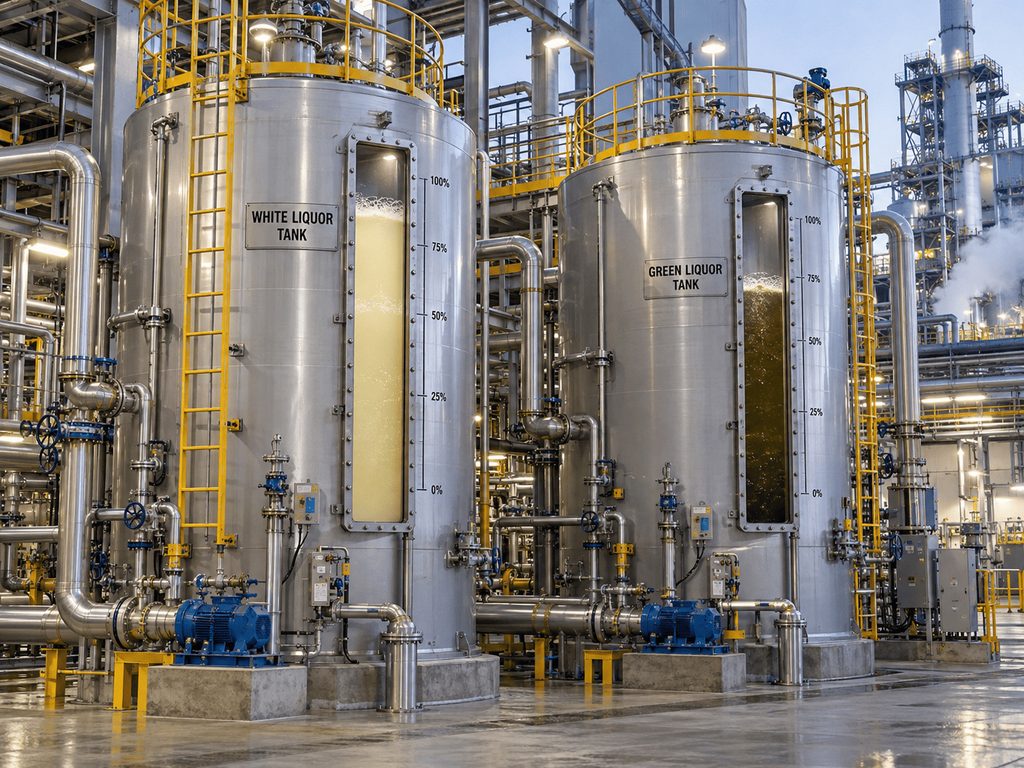
White liquor and green liquor are essential process liquids in the chemical recovery cycle of a kraft pulp mill.
Compared with ordinary process water, these applications can involve high alkalinity, elevated temperature, vapor, suspended solids, scaling, deposits, and aggressive chemical exposure. Reliable white liquor tank level measurement and green liquor tank level measurement is therefore important for pump control, inventory monitoring, overflow prevention, and stable process operation.
Non-contact radar is attractive because it measures the liquid surface from above and does not require a long sensing probe to remain continuously immersed in the liquor. However, instrument selection must still consider the actual liquor chemistry, concentration, temperature, pressure, tank design, process connection, and material compatibility.
Chemical Recovery in Kraft Pulping
In the kraft process, wood chips are cooked with alkaline chemicals to separate cellulose fibers from lignin.
The resulting black liquor contains dissolved organic material and inorganic pulping chemicals. After concentration and combustion in the recovery boiler, the inorganic smelt is dissolved to form green liquor.
Green liquor is then processed in the recausticizing area. Much of its sodium carbonate is converted back into sodium hydroxide by reaction with lime. After lime mud and other solids are separated, the resulting white liquor is returned to the cooking process.
Because green and white liquor pass through several connected vessels, stable level measurement helps keep recovery stages balanced.
What Is Green Liquor?
Green liquor is the alkaline solution produced after recovery-boiler smelt is dissolved. Its main sodium compounds typically include sodium carbonate and sodium sulfide.
Typical measurement points include:
- Smelt-dissolving tanks
- Raw green liquor tanks
- Green liquor clarifiers
- Clarified green liquor storage tanks
- Green liquor feed vessels
- Transfer tanks before the slaker
Raw green liquor may contain more suspended solids than clarified liquor. Temperature, solids loading, vapor, and inlet flow can also vary.
For this reason, a green liquor level sensor should be selected for the actual vessel rather than for the medium name alone.
What Is White Liquor?
White liquor is produced during recausticizing and reused as cooking liquor in kraft pulping.
It contains sodium hydroxide and sodium sulfide as important active cooking chemicals.
Common measurement locations include causticizing tanks, white liquor clarifiers, storage tanks, transfer tanks, and intermediate feed vessels.
Continuous level measurement helps the PLC or DCS coordinate transfer pumps and valves while maintaining enough inventory for downstream cooking operations.
Why Stable Level Measurement Matters
A liquor tank is usually part of an active transfer process rather than simple storage.
The level signal may be used for:
- Pump start and stop
- Valve control
- Inventory monitoring
- High- and low-level alarms
- Overflow prevention
- Pump dry-run protection
An unstable signal can cause false alarms, unnecessary pump cycling, or poor transfer control. A high level increases overflow risk, while a low level can cause pump suction problems or interrupt downstream supply.
Main Measurement Challenges
High Alkalinity and Chemical Compatibility
White and green liquor are alkaline process liquids, but their exact composition and concentration vary by mill and process stage.
Process-facing components such as antennas, flanges, gaskets, seals, chambers, floats, and linings must therefore be checked against the real process conditions.
A statement such as “stainless steel is suitable for alkaline service” is not enough. Compatibility depends on concentration, temperature, sulfide content, impurities, pressure, and cleaning method.
Elevated Temperature
Recovery-area liquor can operate above ambient temperature.
Maximum temperature can affect seals, gaskets, material compatibility, vapor generation, condensation, and instrument service life. Both normal and maximum temperatures should therefore be confirmed.
Vapor and Condensation
Hot liquor can create a humid vapor space.
Radar uses electromagnetic waves rather than sound, so it is generally less dependent on gas-space temperature and vapor composition than ultrasonic measurement.
Heavy condensation or deposits directly on the antenna can still weaken the useful signal.
Scaling and Deposits
Scaling is an important concern in recausticizing systems.
Deposits can form on tank walls, piping, nozzles, and instrument surfaces. They may coat contact probes, obstruct mounting nozzles, or create changing interference echoes.
The sensor should therefore be selected for real operating conditions, not only for a clean new vessel.
Suspended Solids
Raw green liquor may contain dregs or other suspended solids, while causticizing systems also handle lime-related solids.
These materials can increase contamination and maintenance for submerged or moving sensing elements.
Why Use Non-Contact Radar?
A top-mounted radar level meter measures the distance from the antenna to the liquid surface.
Reduced Process Contact
The measuring antenna does not require a long probe to remain immersed in the liquor.
This can reduce coating and deposit problems on submerged sensing elements. The process-facing antenna, flange, gasket, or seal still requires chemical-compatibility review.
Independent of Liquid Density
Hydrostatic systems determine level from pressure and density.
Radar measures the physical distance to the liquid surface, so density does not directly enter the level calculation. This can be useful when liquor concentration changes during operation.
Better Suitability for Vapor
Ultrasonic instruments depend on sound propagation through the gas space.
Radar uses electromagnetic waves and is generally less sensitive to changes in gas temperature or composition.
Narrow Beam with 80 GHz Radar
Modern 80 GHz FMCW radar can provide a narrow, focused beam.
This is useful when tanks contain pipes, support structures, agitators, overflow arrangements, or nearby walls. A focused beam makes it easier to select a clear measuring path and reduce unwanted reflections.
Installation Recommendations
Correct installation is critical.
Avoid the Filling Stream
Do not mount the radar directly above the main liquor inlet when another suitable position is available. Incoming flow can create splashing, turbulence, and temporary false echoes.
Keep a Clear Beam Path
Check the complete beam path down to the minimum operating level. Pipes or supports may enter the beam farther down the tank.
Review the Mounting Nozzle
Confirm nozzle diameter, length, flange size, and possible buildup before selecting the antenna and process connection.
Minimize Splashing and Buildup
Non-contact measurement does not mean the antenna can be ignored. Direct splashing and heavy deposits should be minimized.
Use Echo Learning Correctly
False-echo learning or echo mapping can help identify stationary reflections from fixed structures. It should support good installation rather than compensate for a poor mounting point.
When Can a Magnetic Level Indicator Be Useful?
A magnetic level indicator, or MLI, can be useful when operators need direct local visual confirmation of tank level.
A typical MLI uses a side-mounted chamber and a magnetic float. As the vessel level changes, the float moves and drives the external indicator.
Advantages can include:
- Clear local indication
- No electrical power required for the basic display
- Optional remote transmitter
- Optional high- and low-level switches
However, an MLI is a contact-type system. The chamber and float are exposed to the liquor, so chemical compatibility, density, solids, viscosity, crystallization, and scaling must be evaluated.
For relatively clean white liquor service, an MLI may be practical when materials and process limits are confirmed. Dirty green liquor or severe scaling may require more maintenance.
Independent High-Level Protection
A radar transmitter normally provides the continuous process level to the PLC or DCS.
For important storage tanks, an independent high-high level switch can provide an additional overflow-protection signal. A low-level switch may also be used for pump protection.
This separates normal process control from independent alarm or interlock functions.
Information Required Before Instrument Selection
Before selecting a radar, MLI, or point-level switch, provide:
- Exact process medium
- Liquor concentration or analysis data
- Normal and maximum temperature
- Normal and maximum pressure
- Tank material
- Tank height and diameter
- Minimum and maximum operating level
- Solids or dregs content
- Scaling tendency
- Flange or nozzle dimensions
- Internal structures
- Agitation or inlet-flow conditions
- Required output signal
- Hazardous-area requirement, if applicable
This information is more useful than tank height alone.
Jiwei Level Measurement Options for Kraft Recovery
Jiwei offers several technologies that can be considered for recovery-area level measurement.
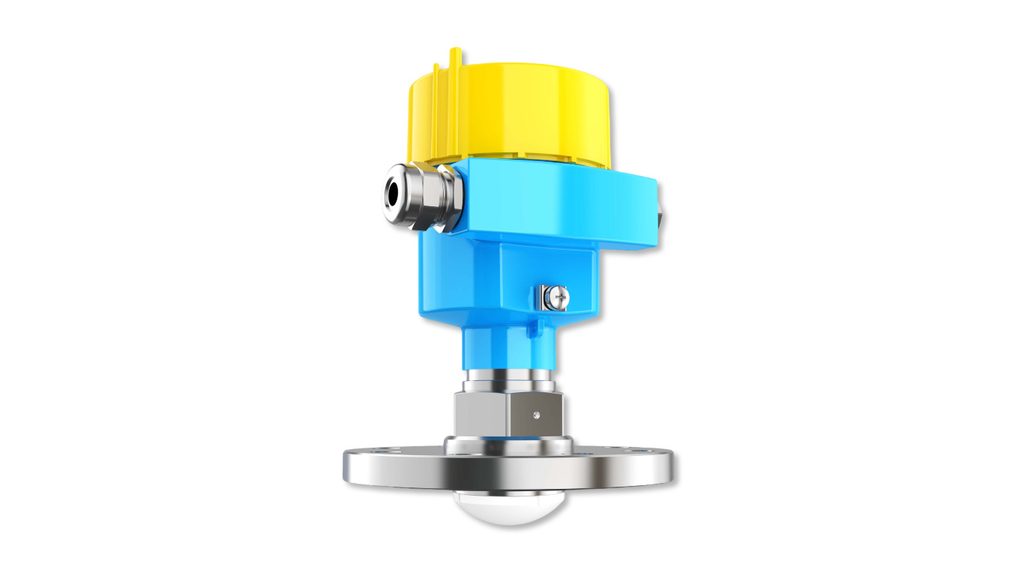
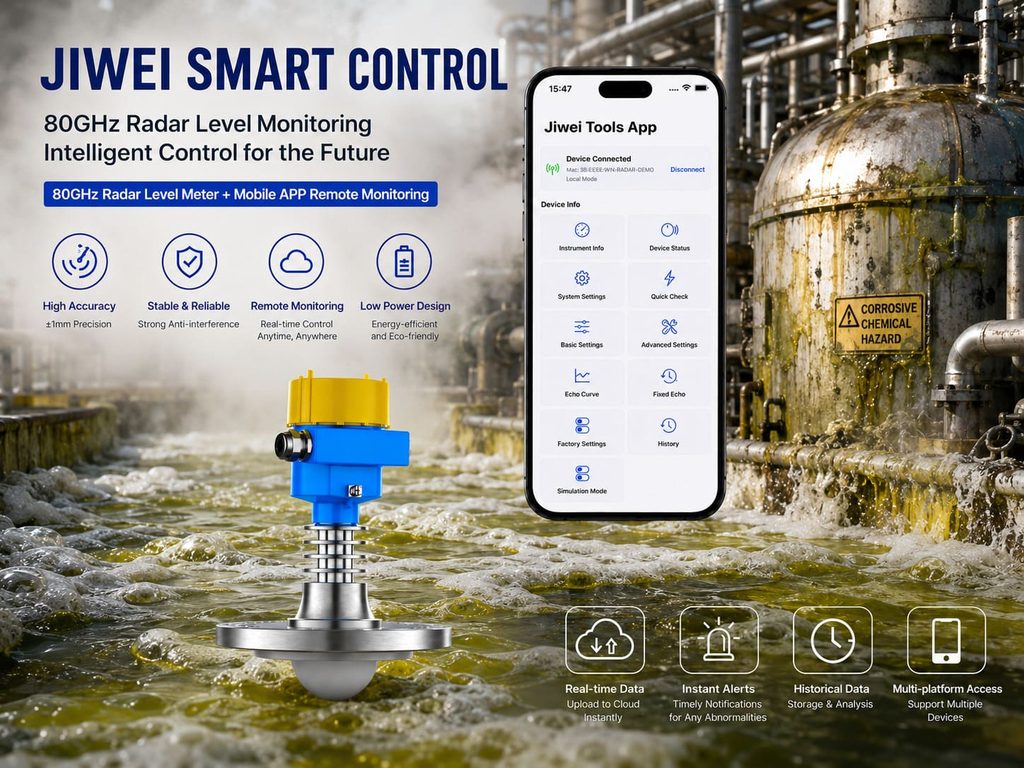
The JWrada-32 Radar Level Meter uses 80 GHz FMCW technology for non-contact continuous measurement. Its focused beam and echo-processing functions are useful where tanks contain pipes, supports, vapor, agitation, or other interference sources.
For more demanding corrosive-liquid applications, Jiwei also offers radar configurations designed for corrosive media. Final process-facing materials should still be selected only after the actual liquor chemistry, temperature, pressure, and connection are reviewed.
Where local visual indication is required, a Jiwei magnetic level indicator can be considered if chamber, float, lining, density range, temperature, and chemical compatibility match the process.
For independent high- or low-level detection, a liquid tuning-fork level switch can provide a separate alarm or interlock signal.
The objective is not to use the same instrument on every vessel. The better approach is to match the measurement principle and construction to each process point.
Maintenance Considerations
Non-contact radar can reduce direct exposure to the liquor, but it should not be described as maintenance-free.
Periodic inspection should check antenna cleanliness, nozzle buildup, gasket condition, corrosion or scaling, housing condition, echo quality, and configuration changes.
If an MLI is installed, the chamber, float movement, drains, vents, and external indicator should also be inspected.
Conclusion
White liquor and green liquor level measurement is an important part of reliable kraft chemical recovery.
These applications may combine high alkalinity, elevated temperature, vapor, scaling, deposits, suspended solids, and complex vessel geometry.
For many tanks, non-contact radar offers a practical solution because it measures from above, does not directly depend on liquid density, and is generally less sensitive to vapor-space conditions than acoustic measurement.
80 GHz radar adds the advantage of a narrow beam that can help avoid pipes, tank walls, supports, and other sources of false echoes.
However, successful measurement depends on more than radar frequency. Process-facing materials, seals, installation position, nozzle geometry, chemical compatibility, and commissioning settings all need to match the real process.
Magnetic level indicators can provide useful local indication where compatibility and cleanliness allow, while independent point-level switches can provide additional high- or low-level protection.
For final selection, provide the actual liquor composition, concentration, temperature, pressure, tank dimensions, vessel drawing, internal structures, and required control function.
Frequently Asked Questions
What is the best level sensor for a white liquor tank?
Non-contact radar is a strong option for many white liquor tanks. Temperature, pressure, chemistry, vapor, tank geometry, and material compatibility should still be confirmed.
Can radar measure green liquor?
Yes. Radar can be used in many green liquor tanks. Raw green liquor may contain more solids and deposits than clarified liquor, so the exact measurement point should be evaluated.
Is radar affected by liquor density?
Radar measures distance to the liquid surface and does not calculate level from liquid density.
Can vapor affect radar level measurement?
Radar is generally less dependent on vapor-space temperature and composition than ultrasonic measurement. Heavy condensation or buildup on the antenna can still affect performance.
Is a magnetic level indicator suitable for white liquor?
It can be suitable when chamber, float, lining, density range, temperature, and chemical compatibility are confirmed. Scaling and solids must also be considered.
Can the same level meter be used for white liquor and green liquor?
Possibly, but it should not be assumed. The two services may differ in solids content, temperature, scaling, chemistry, and tank design.
Should a liquor tank use an independent high-level switch?
For important tanks, an independent high-high level switch can complement the continuous transmitter and provide an additional overflow-protection signal.