1. Project Background: Why Wastewater Level Monitoring Increasingly Relies on Radar Level Meters
In wastewater treatment plants, industrial park wastewater collection tanks, urban drainage pumping stations, and water management systems, wastewater level measurement and monitoring with a radar level meter is an essential part of ensuring safe operation and refined management. Wastewater often features complex components, foam, strong odors, corrosive substances, and obvious liquid surface fluctuations. During long-term use, traditional contact-type level instruments are prone to probe contamination, corrosion, frequent maintenance, and measurement drift. Once level data becomes inaccurate, it may lead to abnormal pump start-stop control, increased overflow risks, reduced wastewater treatment efficiency, and even unstable operation of the entire water management system.
Against this background, non-contact radar level meters have gradually become the preferred solution for wastewater level measurement. In particular, 80GHz millimeter-wave radar level meters, with advantages such as narrow beam angle, concentrated echo signal, strong anti-interference capability, and excellent installation adaptability, are widely used in wastewater tanks, regulating tanks, collection wells, open channels, pumping stations, and hydrological monitoring applications. This case study focuses on the use of Jiwei radar level meters for wastewater measurement and analyzes the application value and practical performance of Radar 21 in wastewater level monitoring projects.
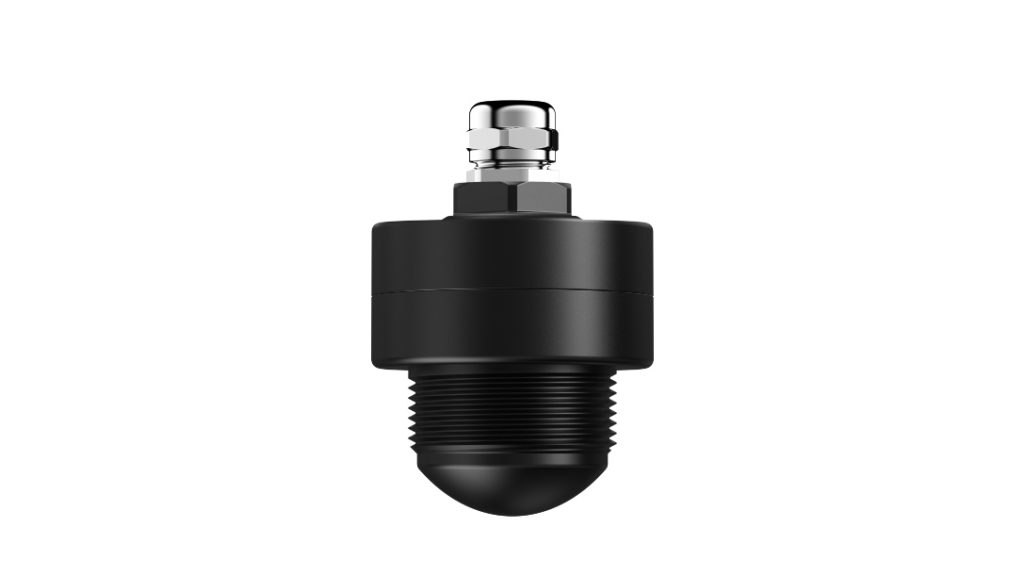
Radar 21 is a compact, economical, and practical 80GHz millimeter-wave radar level meter. Its maximum level measurement range can reach 30 meters, and it provides high-precision measurement and excellent anti-interference performance. The product is widely used in hydrological monitoring, water management, and other industries. It is also suitable for small-range material level measurement scenarios with relatively simple operating conditions. For wastewater treatment projects that require stable, reliable, and low-maintenance level data, Radar 21 offers a solution that balances performance and cost.
2. Site Conditions: Multiple Challenges in Wastewater Tank Level Measurement
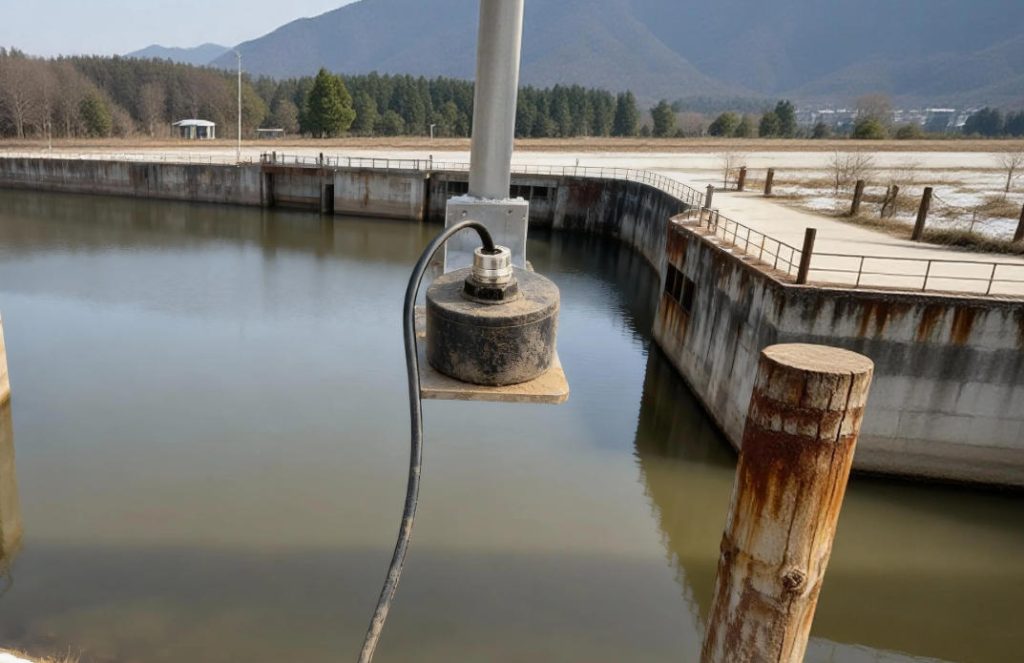
An industrial park wastewater treatment station is responsible for collecting and pretreating wastewater from multiple enterprises within the park. The site includes a wastewater collection tank, regulating tank, and lifting pump well. Wastewater is collected through the pipeline network and enters the collection tank before being transported by the lifting pump to subsequent treatment units. Since inflow volume is affected by enterprise production schedules, rainfall, discharge periods, and other factors, wastewater levels fluctuate frequently, and the liquid surface is not always stable.
At the early stage of the project, the site used submersible level transmitters and ultrasonic level meters for measurement. Although submersible level transmitters are easy to install, they are immersed in wastewater for long periods and are easily affected by sludge, oil stains, and corrosive media, causing blockage, scaling, and signal drift. Ultrasonic level meters are non-contact measuring devices, but in wastewater tanks with foam, vapor, strong odors, and condensation, their measurement stability may be affected. Especially when the liquid surface fluctuates significantly or there are obstacles inside the tank, ultrasonic echoes may attenuate, resulting in data jumps.
The main measurement difficulties at the site included the following:
First, the wastewater composition was complex. Wastewater contained suspended solids, oil stains, chemical agents, and small amounts of corrosive gases, making contact-type instruments vulnerable to contamination and damage.
Second, the liquid surface was unstable. When water entered the tank, liquid surface disturbance was obvious, and foam and ripples appeared in some areas, affecting echo recognition by traditional instruments.
Third, installation space was limited. Some pump wells and wastewater tank tops had small reserved openings, and the instrument installation position was restricted, requiring a level meter with compact structure and strong installation adaptability.
Fourth, low maintenance costs were required. The wastewater treatment station had limited staffing, and the user wanted to reduce instrument cleaning, calibration, and shutdown maintenance frequency.
Fifth, data needed to be connected to the automation system. The level measurement results were used not only for on-site display but also transmitted to the PLC or water management platform for automatic pump start-stop control, alarm interlocking, and operation analysis.
Based on the site conditions and user requirements, the project ultimately selected Jiwei Radar 21 80GHz millimeter-wave radar level meter as the wastewater tank level measurement instrument.
3. Solution Selection: Why Choose Radar 21 80GHz Millimeter-Wave Radar Level Meter
In wastewater level measurement projects, instrument selection is not simply a matter of comparing prices. Measurement stability, installation convenience, anti-interference capability, maintenance cost, and long-term operational reliability must all be considered. Radar 21 was suitable for this project mainly for the following reasons.
First, Radar 21 adopts 80GHz millimeter-wave radar technology. Compared with traditional low-frequency radar, 80GHz radar has a narrower beam angle and more concentrated energy. It can aim at the liquid surface more accurately and reduce interference caused by internal obstacles such as tank walls, brackets, ladders, and pipelines. In scenarios such as wastewater tanks and pump wells, where space is limited and internal structures are complex, the narrow beam advantage is especially obvious.
Second, Radar 21 provides non-contact measurement. The instrument does not need to come into direct contact with wastewater, avoiding problems such as sludge covering the probe, oil contamination, or corrosion by corrosive media. For wastewater, sewage, rainwater, circulating water, and other level measurement scenarios, non-contact radar level meters can significantly reduce maintenance frequency and improve long-term operational stability.
Third, Radar 21 has a maximum level measurement range of up to 30 meters, covering the range requirements of most wastewater treatment tanks, regulating tanks, pumping station collection wells, and hydrological monitoring applications. In this project, the actual range of the wastewater collection tank and lifting pump well was less than 30 meters, giving the instrument sufficient margin and ensuring more stable measurement.
Fourth, Radar 21 has strong anti-interference performance. Common wastewater site factors such as vapor, slight foam, liquid surface fluctuations, and complex odors have relatively little impact on radar waves. Compared with ultrasonic level meters that rely on acoustic wave propagation, millimeter-wave radar is less affected by changes in temperature, pressure, and gas composition, making it more suitable for long-term continuous monitoring.
Fifth, Radar 21 features a compact structure and economical practicality, making it suitable for large-scale deployment in water management projects. For water management, pumping station renovation, municipal drainage, and industrial wastewater monitoring projects, the number of instruments is often large. Users care about both performance and total project cost. Radar 21 meets high-precision measurement and anti-interference requirements while also offering strong cost-effectiveness. It is highly suitable for small-range level measurement scenarios with relatively simple operating conditions but high requirements for stability.
4. Installation and Commissioning: From Site Adaptation to Stable Operation
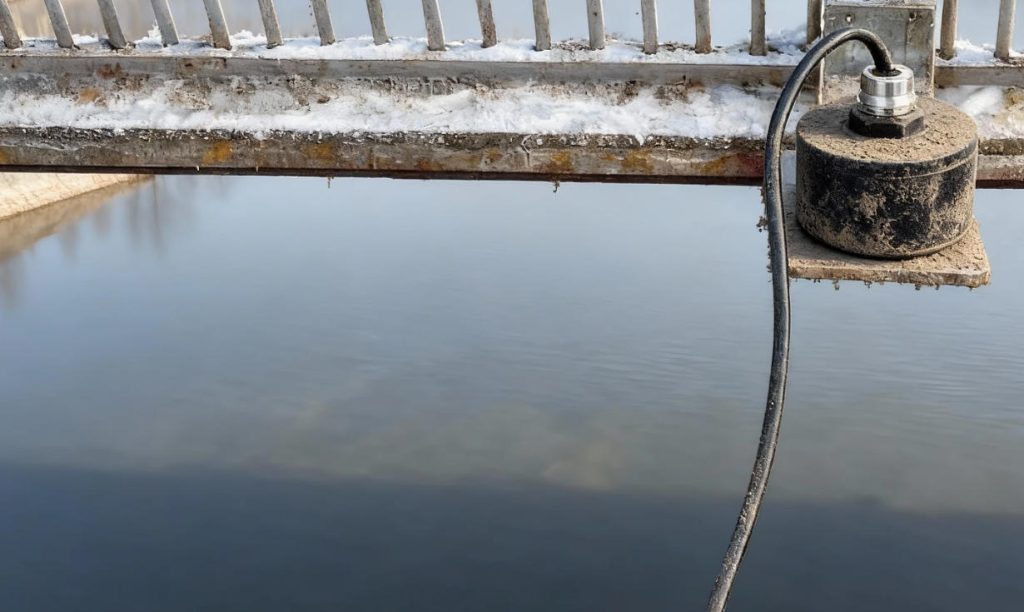
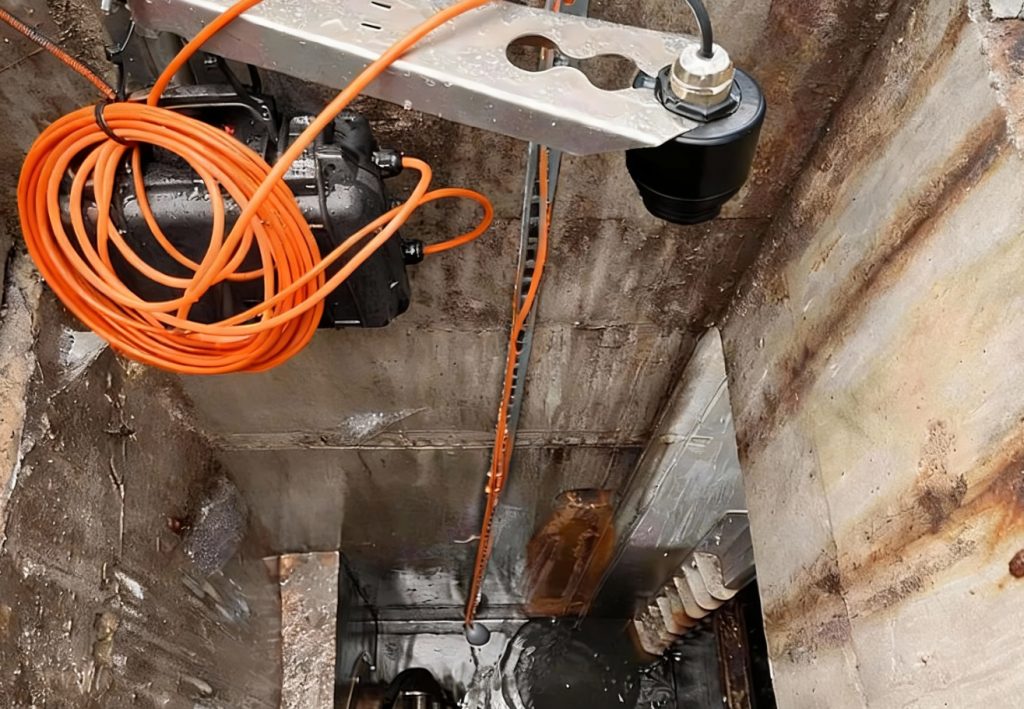
In this case, Radar 21 was installed at the reserved mounting opening on the top of the wastewater collection tank. Before installation, technicians confirmed the tank structure, highest level, lowest level, blind zone, inlet location, pump suction inlet location, and internal obstacles. To obtain a more stable echo signal, the instrument installation position was kept away from the water inlet impact area and areas with severe turbulence, while ensuring that the radar beam could vertically irradiate the liquid surface.
During installation, the advantages of Radar 21’s compact structure became apparent. Due to limited site space, some positions were not suitable for large instruments. Radar 21 is small in size and flexible in installation, allowing it to fit existing openings and brackets and reduce on-site modification work. After the instrument was fixed, technicians completed parameter settings according to tank depth, measurement range, and output requirements, then connected the level signal to the on-site control system.
During commissioning, technicians focused on checking data changes under empty tank, low level, medium level, and high level conditions. By comparing manual ruler measurements with system display data, Radar 21 showed stable measurement results and timely data response, meeting the requirements of automatic pumping station control and level alarm. For potential interference such as tank wall reflection and bracket echoes, technicians optimized the installation angle and parameter settings to make the effective liquid surface echo clearer.
After a period of operation, on-site feedback showed that Radar 21 level meter data had minimal fluctuation, and pump start-stop control became more stable. Previous issues such as false alarms and incorrect pump starts or stops caused by level data jumps were significantly reduced. Operation and maintenance personnel no longer needed to frequently clean probes or enter the site to check the level meter status, greatly reducing overall maintenance workload.
5. Application Results: More Stable Wastewater Level Measurement and More Efficient Water Management
After Radar 21 was put into operation, the project achieved clear application results.
First, wastewater level measurement stability improved significantly. The 80GHz millimeter-wave radar level meter could accurately capture liquid surface echoes. Even when the wastewater surface had certain fluctuations, slight foam, or vapor, it still maintained continuous and reliable data output. This was especially important for automatic pump start-stop control and high-low level alarms.
Second, non-contact measurement reduced instrument maintenance. Traditional contact-type level meters are easily affected by sludge, impurities, and oil stains in wastewater environments. Radar 21 is installed on the tank top and does not contact the medium, avoiding frequent probe cleaning and replacement. For wastewater treatment stations, lower maintenance costs mean higher operating efficiency.
Third, pumping station control became more precise. With stable level data, the system could accurately control pump start-stop according to the set liquid level, avoiding frequent pump starts or dry running and reducing equipment wear and energy consumption. At the same time, high-level alarms became more reliable, helping reduce the risk of wastewater overflow.
Fourth, project renovation costs were controllable. As a compact, economical, and practical 80GHz millimeter-wave radar level meter, Radar 21 met the requirements for measurement accuracy and anti-interference capability while keeping overall investment reasonable. This advantage is especially significant for water management projects requiring multi-point deployment.
Fifth, data management improved. After the stable level signal output by the radar level meter was connected to the control system, it could be used for trend analysis, operation records, remote monitoring, and alarm management, providing basic data support for digital and intelligent operation and maintenance of wastewater treatment stations.
6. Scenario Expansion: Which Wastewater and Water Management Applications Are Suitable for Radar 21
This case shows that Radar 21 is suitable not only for industrial park wastewater tank level measurement but also for many water management and hydrological monitoring scenarios. Typical applications include regulating tank level monitoring in wastewater treatment plants, urban drainage pumping station level measurement, rainwater pumping station water level monitoring, river water level monitoring, open channel level measurement, industrial wastewater collection tank level control, and circulating water tank level monitoring.
For users searching for keywords such as “radar level meter for wastewater measurement,” “80GHz millimeter-wave radar level meter,” “wastewater level meter selection,” “sewage tank level measurement solution,” and “water management level monitoring equipment,” the core concerns usually focus on three aspects: whether the measurement is stable, whether maintenance is convenient, and whether the cost is reasonable. Radar 21 meets these needs well.
Radar 21 also has application value in small-range material level measurement with relatively simple operating conditions. For example, in small silos, powder silos, and granular material silos, if the internal structure is not complex and dust is not extremely heavy, Radar 21 can also be selected for non-contact material level measurement according to site conditions. However, under severe dust, high temperature, high pressure, or complex stirring conditions, professional selection should still be carried out based on specific medium characteristics and installation conditions.
7. Case Summary: Radar 21 Provides a Cost-Effective Solution for Wastewater Level Monitoring
Wastewater level measurement may seem simple, but it places high requirements on instrument stability, anti-interference capability, and long-term reliability. Foam, sludge, vapor, corrosive gases, and liquid surface fluctuations in wastewater environments can all affect level instruments. Compared with contact-type level meters and some traditional non-contact instruments, 80GHz millimeter-wave radar level meters demonstrate stronger adaptability in wastewater level monitoring.
As a compact, economical, and practical 80GHz millimeter-wave radar level meter, Jiwei Radar 21 features a maximum measurement range of 30 meters, high-precision measurement, strong anti-interference capability, flexible installation, and low maintenance requirements. This case demonstrates that Radar 21 can effectively solve problems in wastewater tank level measurement, including data jumps, frequent maintenance, restricted installation, and unstable control, providing reliable level data for wastewater treatment stations and water management systems.
As the water management industry accelerates digital and intelligent upgrades, stable and accurate level monitoring data has become an important foundation for refined management. Radar 21 not only improves the reliability of wastewater level measurement but also helps users reduce operation and maintenance costs, optimize pumping station control, and enhance safety management. For wastewater treatment, hydrological monitoring, and water management projects that require an economical and practical 80GHz radar level meter, Radar 21 is a level measurement solution worth considering.