1. Why Does the Oil Industry Need Highly Reliable Level Measurement?
The oil industry has a long and complex production chain, covering crude oil extraction, oil and gas gathering, refining, finished oil storage, terminal loading and unloading, LPG storage and transportation, and petrochemical processing. Every stage requires stable and reliable liquid level or material level measurement. A level value may appear to be just a simple height reading, but in practice it is directly related to inventory accounting, pump protection, process balance, overflow prevention, safety interlocks, and production efficiency.
In oil, refining, and petrochemical sites, measurement conditions are often far more complex than those in ordinary industrial environments. Crude oil, heavy oil, residual oil, fuel oil, kerosene, diesel, solvent oil, liquefied petroleum gas, and various petrochemical intermediates may involve high temperature, high pressure, steam, foam, vapor, low dielectric constant, adhesion, coking, corrosion, agitation, liquid surface fluctuation, and interference from internal tank structures. Traditional contact-type instruments can still be used in certain applications, but in high-viscosity, volatile, coking-prone, flammable, explosive, or difficult-to-maintain conditions, they may suffer from jamming, drift, false alarms, and frequent maintenance.
For this reason, non-contact radar level measurement is becoming increasingly important in the oil industry. Radar level meters do not directly contact the medium and are not dependent on changes in density or viscosity. They can adapt to steam, dust, temperature fluctuation, and complex tank structures. The Jiwei JWrada-34 radar level meter adopts 80GHz millimeter-wave radar technology, combined with an intelligent echo algorithm, explosion-proof design, and Bluetooth wireless commissioning, providing a high-precision, low-maintenance, and intelligent continuous level measurement solution for complex oil industry applications.
2. Product Positioning of the JWrada-34 Radar Level Meter
JWrada-34 is a high-performance model in Jiwei’s JWrada radar level meter series, designed for complex working conditions, harsh environments, and high-reliability applications. It uses 80GHz millimeter-wave radar measurement technology, featuring a concentrated beam, strong anti-interference capability, high measurement accuracy, high-temperature adaptability, and excellent compatibility with complex media. It can be used for continuous measurement of liquids, powders, granules, and low-dielectric materials.
From the perspective of oil industry applications, the value of JWrada-34 is mainly reflected in five aspects. First, its non-contact measurement reduces the impact of adhesion and corrosion on the instrument. Second, its 80GHz high-frequency radar provides a narrower beam, making it more suitable for avoiding internal structures such as heating coils, ladders, reinforcing ribs, spray pipes, and supports. Third, its intelligent echo algorithm helps identify false echoes, multi-layer echoes, and fluctuating liquid surfaces. Fourth, its explosion-proof design meets the safety requirements of hazardous areas in oil and petrochemical plants. Fifth, Bluetooth wireless commissioning and remote monitoring reduce the difficulty of on-site maintenance.
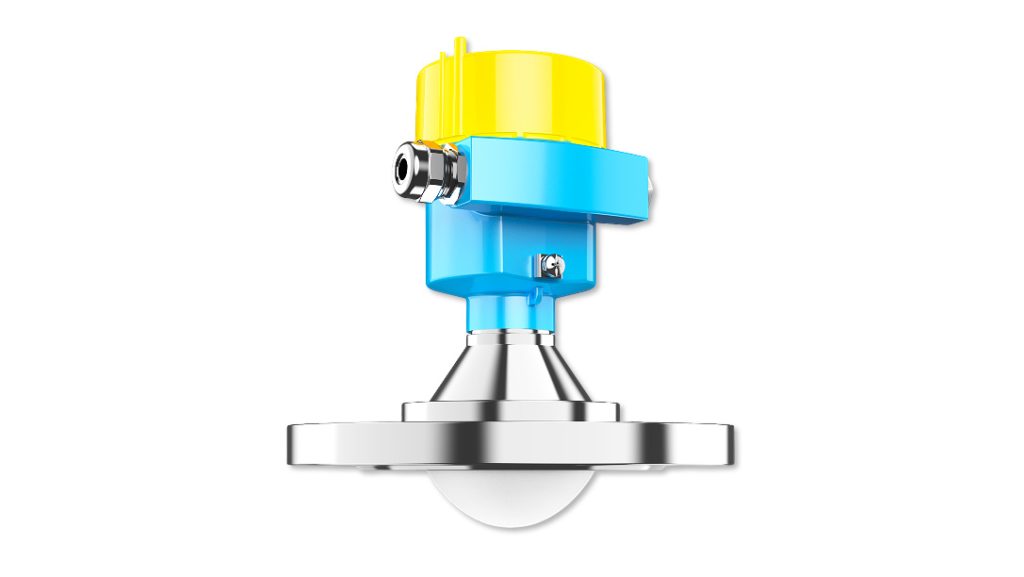
In large oil depots, refineries, LPG stations, petrochemical plants, and energy chemical projects, JWrada-34 can be used not only as a single storage tank level instrument, but also as a key process measurement node connected to DCS, PLC, SCADA, or tank farm automation systems.
3. Application of JWrada-34 in Crude Oil Storage Tanks
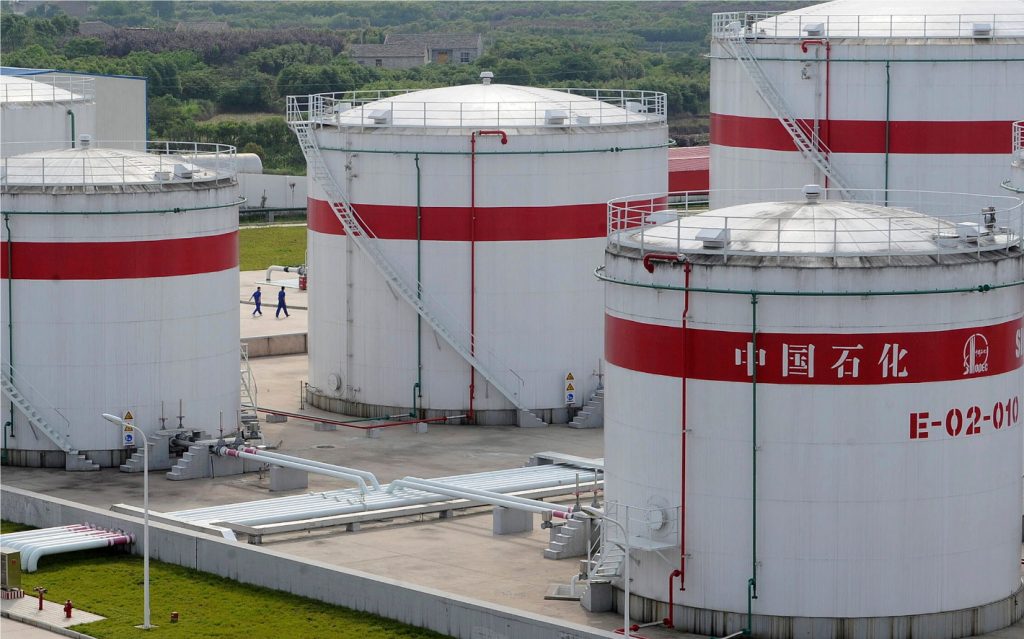
Crude oil storage tanks are among the most typical level measurement applications in the oil industry. Crude oil has complex components and may contain water, wax, sulfur, sediment, and sand. It may also generate vapor and surface fluctuations due to temperature changes. For large vertical storage tanks, level measurement is not only used for daily inventory management, but also for material transfer control, overflow prevention, and production scheduling.
JWrada-34 adopts a non-contact radar measurement method. After being installed on the tank roof, it measures the distance from the instrument to the liquid surface using radar waves, and then converts this distance into a liquid level value. Since the antenna does not directly contact the crude oil, it can reduce maintenance problems caused by contamination, corrosion, and adhesion. Compared with manual gauging, continuous radar level measurement provides real-time data, reduces human reading errors, and improves tank farm automation.
Large crude oil tanks often contain heating coils, floating roofs, reinforcing beams, inspection ladders, inlet and outlet pipelines, and other metal structures. These structures may generate interfering reflections. The 80GHz high-frequency radar beam of JWrada-34 is narrow and highly focused, helping to avoid obstacles and lock onto the true liquid surface. Combined with intelligent echo processing, the instrument can identify and suppress false echoes, improving long-term operational stability.
4. Application of JWrada-34 in Heavy Oil, Residual Oil, and Fuel Oil Tanks
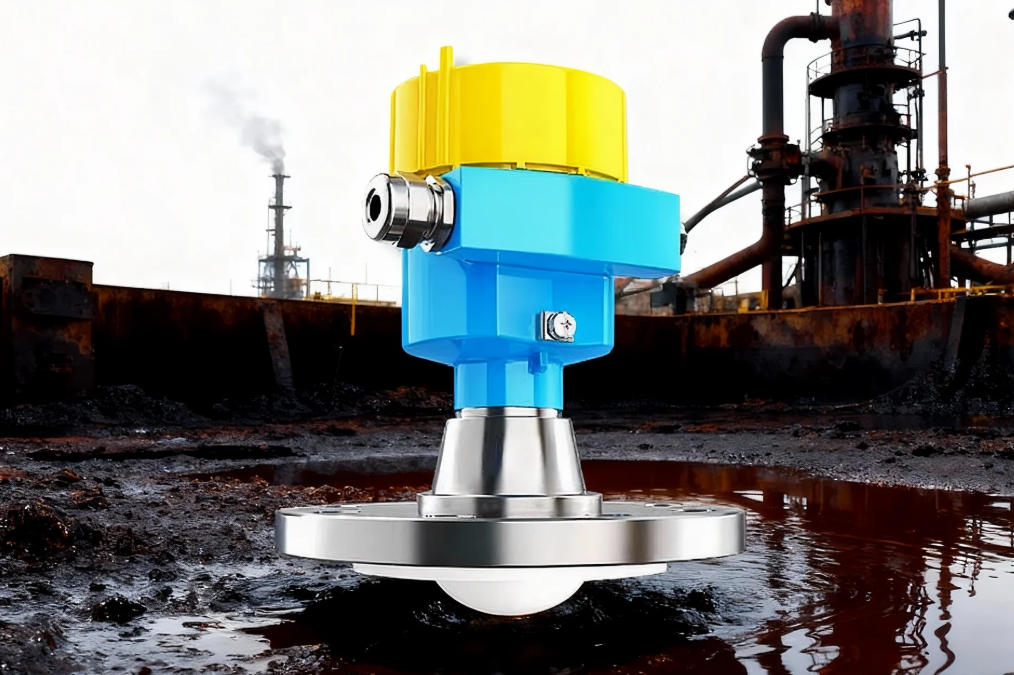
Heavy oil, residual oil, vacuum residue, and fuel oil are among the more challenging media to measure in refineries. These high-viscosity materials often require steam tracing or thermal insulation. Their liquid surfaces may not be smooth, and foam, wax layers, coking, sludge deposits, and vapor disturbance may be present. After long-term operation, contact-type instruments are prone to material buildup, mechanical jamming, and delayed measurement response.
The non-contact structure of JWrada-34 is well suited for these high-viscosity media. Since the instrument does not extend into the medium, it can reduce the influence of heavy oil adhesion, coking deposits, and sludge accumulation on the measuring components. For refinery heavy oil tanks that require long-term stable operation, reducing maintenance frequency is itself a major advantage.
Another challenge in heavy oil tanks is the “soft surface” problem. The surface of high-viscosity media may be uneven, and oil film, foam, wax layers, or ripples may weaken or scatter the radar echo. With 80GHz high-frequency measurement and intelligent echo tracking, JWrada-34 can continuously search for the true level signal in complex echo environments, reducing the risk of level jumps, signal loss, and false alarms.
For refineries and oil depots, heavy oil tank level data is usually involved in material transfer, inventory, heating, and pumping management. A stable level signal helps operators determine material trends inside the tank, avoid dry running of pumps, prevent tank overflow, and reduce switching errors, thereby improving the safety of storage and transfer systems.
5. Application of JWrada-34 in Refinery Process Units
Refinery process units contain many vessels that require continuous level measurement, such as reflux drums, tower bottom tanks, side draw tanks in atmospheric and vacuum distillation units, fractionation drums and slurry oil tanks in catalytic cracking units, condensate tanks in coking units, and intermediate vessels in hydrogenation, reforming, desulfurization, and desalting units.
These applications often involve high temperature, steam, foam, vapor, changes in medium composition, and liquid surface disturbance. JWrada-34 can perform continuous measurement under conditions involving steam, foam, dust, and strong interference, making it suitable for monitoring hot oil, solvents, condensate, and certain petrochemical intermediates in refining processes.
In atmospheric and vacuum distillation systems, level measurement stability is closely related to column material balance and pump operating safety. JWrada-34 can provide continuous level signals to the DCS system, supporting reflux control, tower bottom level control, and pump start-stop protection. In catalytic cracking, coking, and heavy oil processing units, medium viscosity and temperature changes are more significant, making the non-contact advantages of radar level meters even more valuable.
In high-temperature applications, temperature adaptability is critical. JWrada-34 is designed for high-temperature environments and is suitable for process vessels involving hot oil, solvents, and strong steam interference. For refinery units, reducing field instrument failures and false alarms helps improve long-cycle operation.
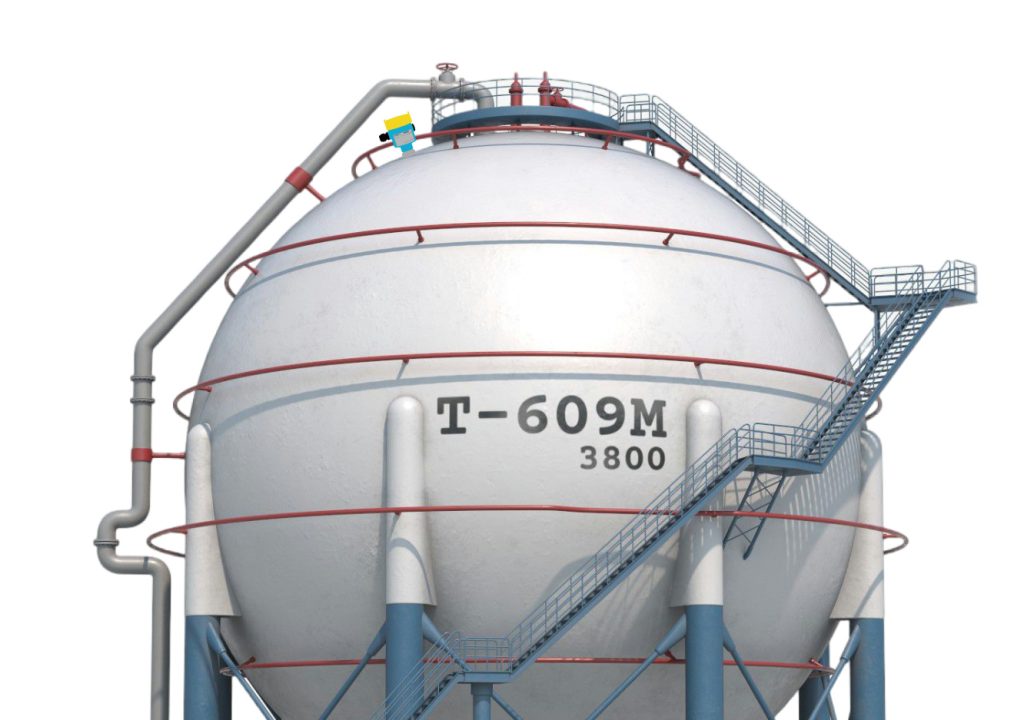
6. Application of JWrada-34 in LPG Spherical Tanks and Horizontal Tanks
LPG, or liquefied petroleum gas, usually consists of propane, butane, or their mixtures. It is flammable, volatile, pressure-stored, and associated with high safety risks. Common LPG storage tanks include spherical tanks, horizontal pressure tanks, and small storage tanks. These applications require high safety, sealing performance, stability, and explosion-proof capability in level measurement.
LPG has a relatively low dielectric constant, which may result in a weak liquid surface echo. In addition, the curved structure of spherical and horizontal tanks can easily produce multipath reflections. The 80GHz narrow beam of JWrada-34 helps reduce interference from curved tank walls and allows the radar energy to focus more accurately on the liquid surface. Its intelligent echo algorithm helps identify valid level signals from weak echoes and complex reflections, improving measurement stability.
In LPG spherical tanks, level data usually works together with pressure, temperature, and safety interlock systems to form a complete storage tank monitoring system. JWrada-34 can provide continuous level signals for inventory management, loading and unloading control, high-level alarms, and safety protection. For LPG horizontal tanks, the measuring range may be shorter, but repeatability and stability are highly important. The non-contact measurement and remote commissioning capabilities of radar level meters help reduce on-site maintenance risks.
Because LPG is a hazardous medium, field instruments must be selected according to hazardous area classification. JWrada-34 is available with explosion-proof configurations suitable for gas and dust hazardous environments, making it a strong candidate for continuous level measurement in oil and petrochemical hazardous areas.
7. Application of JWrada-34 in Compressor Knockout Drums
Compressor knockout drums are widely used in natural gas processing, coal chemical, refining, petrochemical, and energy chemical systems. They are designed to separate condensate, water, or hydrocarbon liquid before gas enters the compressor. If the liquid level in the knockout drum is too high, liquid may enter the compressor, causing liquid slugging, mechanical damage, or shutdown. If the level is too low, drainage control and separation efficiency may be affected.
Knockout drum conditions often involve intense gas-liquid exchange, foam, rapid liquid surface fluctuation, pressure changes, and compact installation space. JWrada-34 can be used for continuous level monitoring in such complex vessels, providing a data basis for high-level alarms, high-high level interlocks, and automatic drainage control.
Compared with point level switches, continuous radar level meters can display level trends, allowing operators to detect abnormal liquid accumulation, poor drainage, or process fluctuation in advance. For critical compressor systems, stable level measurement is not only a process control issue, but also an equipment protection and production safety issue.
JWrada-34 supports wireless commissioning and remote monitoring. Field engineers can view echo curves, adjust parameters, and diagnose faults. For knockout drums installed at height, in confined spaces, or in hazardous areas, this maintenance method can significantly reduce on-site operation difficulty.
8. Application of JWrada-34 in Oil Loading, Unloading, and Tank Farm Automation
Oil loading and unloading systems include terminal ship loading, railway loading, truck loading, pipeline transfer stations, and tank farm receiving and dispatching operations. During loading and unloading, the liquid level changes rapidly, vaporization is obvious, and the liquid surface may fluctuate or foam. Level measurement must be real-time, continuous, and stable; otherwise, loading efficiency and safety control may be affected.
JWrada-34 can be connected to tank farm automation systems to realize real-time storage tank level monitoring, transfer process tracking, overflow prevention, and inventory data management. Through communication methods such as 4–20mA/HART or RS485/Modbus, level data can be transmitted to PLC, DCS, SCADA, or upper-level management platforms for centralized monitoring and data recording.
For large oil depots, manual inspection and manual gauging are inefficient and involve risks such as working at height and entering hazardous areas. Radar level meters combined with wireless commissioning and remote monitoring can help enterprises reduce on-site operations and improve instrument maintenance efficiency. Especially in multi-tank, multi-medium, and multi-shift operations, stable online level data can improve overall management performance.
9. How Do the Technical Advantages of JWrada-34 Match Oil Industry Conditions?
9.1 80GHz High-Frequency Radar for Complex Tank Structures
Oil storage tanks and refinery vessels often contain heating coils, reinforcing ribs, spray pipes, inspection ladders, supports, and other metal structures. The 80GHz millimeter-wave radar of JWrada-34 has a narrow beam and strong focusing capability, helping to avoid obstacles, reduce false echoes, and improve true surface recognition.
9.2 Non-Contact Measurement to Reduce Maintenance Costs
In heavy oil, residual oil, hot oil, and corrosive media, contact-type instruments are easily affected by adhesion, coking, corrosion, and wear. JWrada-34 does not directly contact the medium, reducing maintenance issues caused by changes in medium properties and making it suitable for long-term continuous operation.
9.3 Intelligent Echo Algorithm for Steam, Foam, and Weak Echoes
Foam, steam, vapor, and low-dielectric liquids in oil applications can lead to unstable echoes. JWrada-34 is equipped with an intelligent echo learning algorithm that supports false echo identification, multi-layer echo separation, and dynamic target tracking, helping maintain stable measurement output under complex conditions.
9.4 Explosion-Proof Design for Hazardous Areas
Oil and petrochemical sites involve flammable and explosive risks, making explosion-proof certification a key factor in instrument selection. JWrada-34 is available with explosion-proof configurations suitable for gas and dust hazardous environments, and can be used in refineries, tank farms, LPG stations, and petrochemical units with high safety requirements. Final model selection should be confirmed according to hazardous area classification, medium properties, and project design standards.
9.5 Bluetooth Wireless Commissioning for Efficient Maintenance
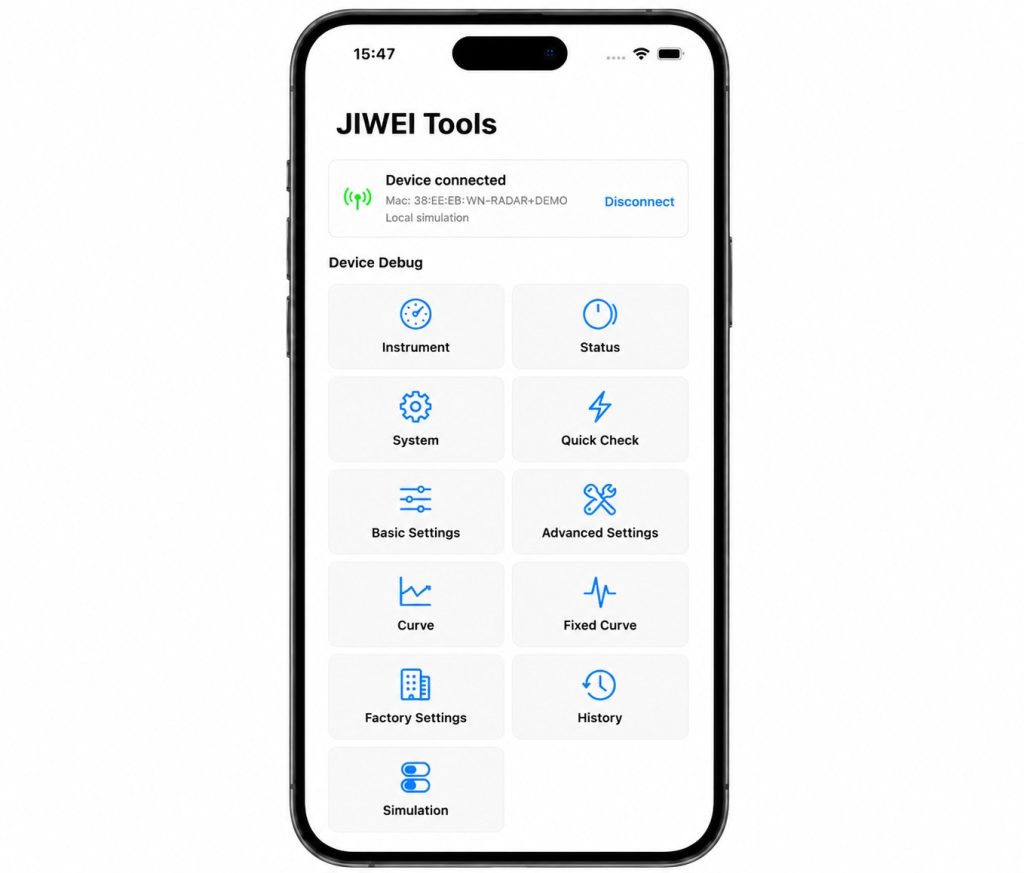
JWrada-34 has a built-in Bluetooth module and can be wirelessly commissioned through a mobile app or WeChat mini program. It supports parameter configuration, real-time monitoring, and remote assistance. For high tank roofs, high-temperature zones, hazardous areas, and locations that are difficult to access, wireless commissioning can reduce cover opening, climbing, and close-range operation, improving commissioning efficiency and personnel safety.
10. Selection and Installation Recommendations for JWrada-34
When using JWrada-34 in the oil industry, selection should be based on specific working conditions. Key parameters include medium name, dielectric constant, temperature, pressure, measuring range, tank height, tank diameter, foam presence, steam presence, agitation, heating coils, explosion-proof requirements, and whether HART or Modbus communication is required.
During installation, the instrument should be positioned away from inlet streams, agitators, strong reflective metal structures, and locations too close to the tank wall. The radar beam should be able to steadily illuminate the liquid surface. For spherical tanks, horizontal tanks, and vessels with complex internal structures, field commissioning should be carried out with reference to the echo curve. If necessary, an adjustable flange can be used to optimize the beam angle.
For high-temperature, heavy oil, coking, or dusty conditions, suitable process connections, sealing materials, and purging methods should be selected according to actual site conditions.
For new projects, it is recommended to plan the radar level meter mounting nozzle, maintenance space, cable routing, explosion-proof wiring, and system communication method during the design stage. For retrofit projects replacing old instruments, attention should be paid to the original mounting size, blind zone, internal obstacles, and control system interface to avoid measurement problems caused by unsuitable installation conditions.
11. Practical Value of JWrada-34 for Oil Enterprises
For oil enterprises, the value of JWrada-34 is not limited to accurate measurement. More importantly, it helps achieve safer, more stable, and lower-maintenance process management. It can reduce manual gauging and field inspection, lower the frequency of hazardous area operations, reduce instrument failures caused by buildup, corrosion, and jamming, provide continuous and stable level signals to DCS and PLC systems, and improve instrument management efficiency through remote commissioning and intelligent diagnostics.
Against the background of long-cycle refinery operation, tank farm automation upgrades, imported instrument replacement, and digital plant development, JWrada-34 provides a high-performance, intelligent, and engineering-friendly domestic radar level measurement solution for the oil industry.
12. Conclusion
Level measurement in the oil industry is complex and critical. Crude oil tanks require stable inventory data. Heavy oil tanks require resistance to adhesion and coking. Refinery units need to handle high temperature, steam, and surface fluctuation. LPG tanks require explosion-proof safety and weak echo recognition. Compressor knockout drums require fast and reliable level protection.
Facing these challenges, the Jiwei JWrada-34 radar level meter provides a reliable continuous level measurement solution for oil storage and transportation, refining, and petrochemical production through its 80GHz millimeter-wave technology, non-contact measurement, intelligent echo algorithm, explosion-proof design, high-temperature adaptability, and Bluetooth wireless commissioning.
For enterprises carrying out automation upgrades, tank farm renovation, refinery process optimization, or domestic replacement of imported instruments, JWrada-34 is a radar level measurement solution worth serious consideration for complex oil industry applications.
FAQ: Common Questions About JWrada-34 in Oil Industry Applications
Q1: Is JWrada-34 suitable for heavy oil and residual oil measurement?
Yes. Heavy oil and residual oil usually have high viscosity, high temperature, and adhesion or coking risks. JWrada-34 adopts non-contact radar measurement, which can reduce the influence of material buildup and mechanical jamming. It is suitable for heavy oil tanks, hot oil tanks, and residual oil tanks.
Q2: Can JWrada-34 be used in LPG storage tanks?
Yes, it can be used in LPG spherical tanks and horizontal tanks when the working conditions meet selection requirements. Since LPG has a low dielectric constant, high volatility, and hazardous characteristics, explosion-proof rating, pressure, temperature, installation method, and output signal should be carefully confirmed during project selection.
Q3: What are the advantages of JWrada-34 compared with traditional level instruments?
Its main advantages include non-contact measurement, 80GHz high-frequency narrow beam, intelligent echo identification, resistance to steam and foam interference, explosion-proof design, wireless remote commissioning, and reduced maintenance requirements. It is especially suitable for complex oil and petrochemical applications.
Q4: Can JWrada-34 be connected to DCS or PLC systems?
Yes. JWrada-34 supports communication methods such as 4–20mA/HART and RS485/Modbus, allowing it to be connected to DCS, PLC, SCADA, and tank farm automation systems.
Q5: What should be considered when selecting JWrada-34?
Key factors include medium properties, measuring range, temperature, pressure, explosion-proof rating, tank structure, installation position, presence of foam or steam, agitation or internal structures, and required communication method. The final configuration should be confirmed according to the actual working conditions and Jiwei’s technical selection recommendations.