1. What Is SIL Certification?
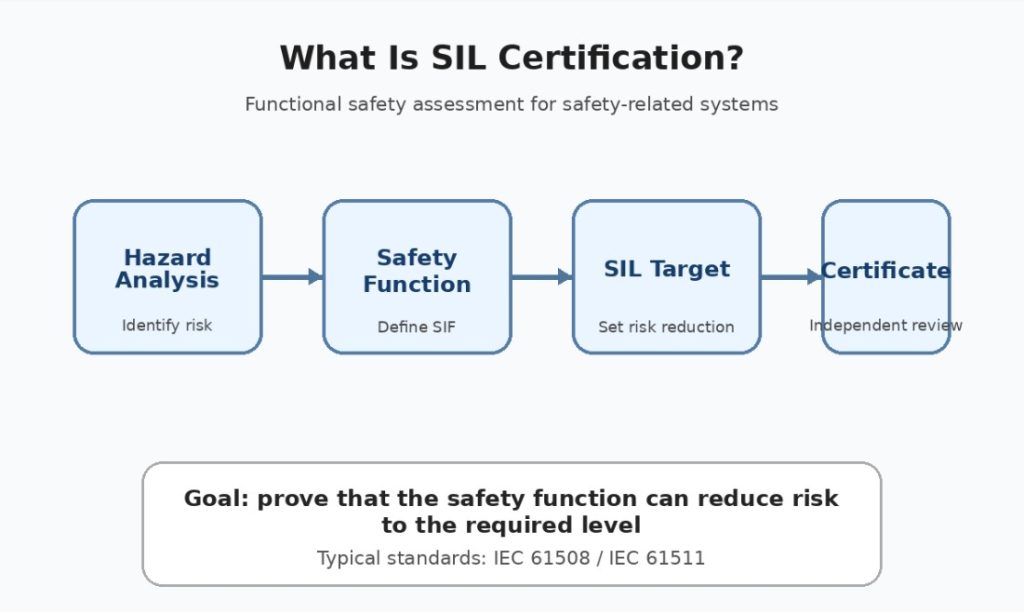
SIL is the abbreviation of Safety Integrity Level. SIL certification is not an ordinary product qualification certificate. Instead, it is a type of functional safety assessment and certification for safety-related systems, equipment, or safety functions. Simply put, SIL certification focuses on whether a safety function can operate reliably as required when a hazardous situation occurs, and whether it can reduce risk to an acceptable level.
In industrial sites, many devices must not only “operate normally,” but also “shut down safely” under abnormal conditions. For example, when the pressure of a chemical plant becomes too high, the safety system needs to open a relief valve or cut off the feed in time. When an abnormal condition occurs in a combustion system, the interlock system must quickly cut off the gas supply. When the liquid level in a storage tank is too high, the system must trigger an alarm or close a valve. These actions are all part of functional safety.
According to IEC materials, functional safety is part of overall safety. It depends on whether the system or equipment can correctly respond to inputs. Safety integrity is related to the probability that a safety-related system can perform a specified safety function under defined conditions and within a defined period of time.
2. Why Is SIL Certification Needed?
In industries such as petrochemical, natural gas, power generation, metallurgy, pharmaceuticals, machine safety, and combustion control, equipment failure may cause fire, explosion, toxic medium leakage, personal injury, environmental pollution, or major economic losses. A normal control system is mainly responsible for production operation, while the core task of a safety-related system is to prevent hazardous events from occurring or to reduce the consequences when a hazardous event occurs.
The value of SIL certification is that it uses a standardized method to verify whether a safety function is reliable enough. In other words, a company cannot simply claim that “this system is safe.” It needs to prove that the system has achieved a certain SIL level through risk analysis, hardware assessment, software assessment, failure probability calculation, testing verification, and third-party evaluation.
For equipment manufacturers, obtaining SIL certification helps improve product credibility and makes it easier to enter petrochemical, process industry, and international engineering projects. For end users, choosing products that are SIL certified or have SIL capability can reduce project safety risks and support later acceptance, audit, and compliance management.
3. What Does SIL Level Mean?
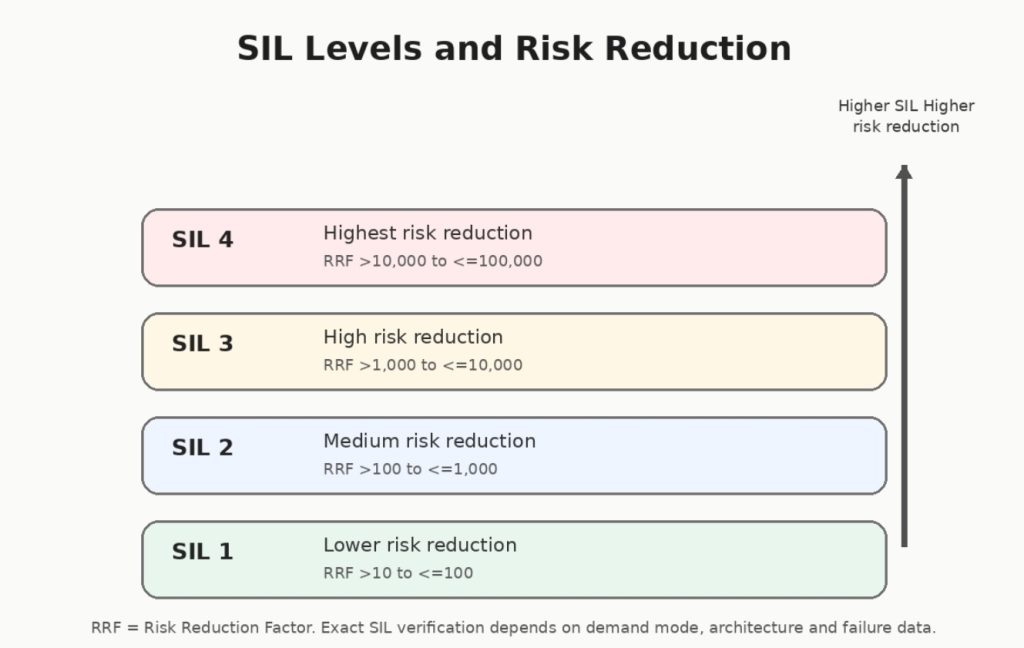
SIL levels are usually divided into four levels: SIL 1, SIL 2, SIL 3, and SIL 4. Generally speaking, the higher the SIL level, the higher the risk reduction capability required for the safety function. At the same time, the requirements for system design, hardware reliability, software development, diagnostic coverage, testing, and management become stricter.
IEC materials clearly state that SIL is a discrete level used to specify the safety integrity requirements of a safety function. There are four possible levels. SIL 4 represents the highest safety integrity, while SIL 1 represents the lowest safety integrity. At the same time, the higher the SIL level, the stronger the risk reduction capability of the safety function.
It should be noted that a higher SIL level is not always better. The required SIL level should be determined based on the result of risk assessment. Low-risk scenarios may only require SIL 1 or SIL 2. High-risk scenarios with serious consequences may require SIL 3. SIL 4 is usually used in extremely high-risk fields and is relatively uncommon in the process industry. Blindly pursuing a higher SIL level will increase cost, design complexity, and maintenance difficulty, and may even affect system availability.
4. What Is the Relationship Between SIL Certification and Functional Safety?
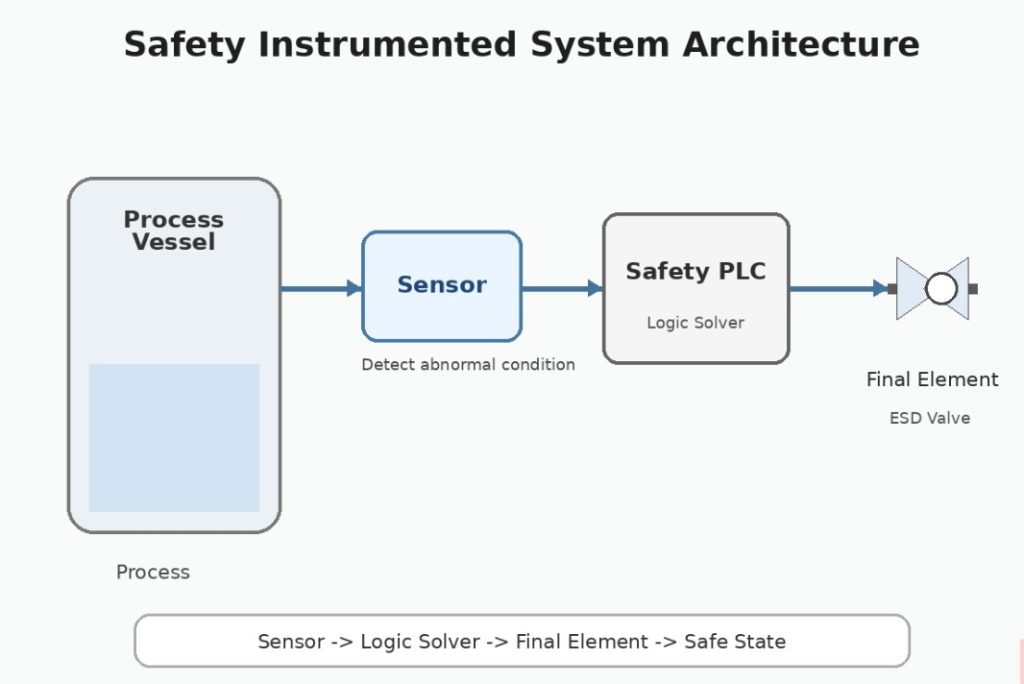
To understand SIL certification, it is necessary to first understand functional safety. Functional safety focuses on whether a system can correctly perform a safety function under hazardous conditions. For example, after a sensor detects abnormal signals such as overtemperature, overpressure, or high liquid level, the safety controller must correctly make a judgment, and the final element must act in time to bring the equipment into a safe state.
A typical safety instrumented function usually includes three parts: sensor, logic controller, and final element. The sensor is responsible for detecting the hazard. The logic controller is responsible for judgment and outputting the interlock command. The final element is responsible for performing the action, such as closing a valve, cutting off power, stopping a pump, or opening a relief device.
The essence of SIL certification is to verify this safety function and confirm whether it meets the corresponding standard requirements throughout the entire lifecycle, including design, manufacturing, installation, operation, maintenance, and decommissioning.
5. What Are the Common Standards for SIL Certification?
The most common standards for SIL certification include IEC 61508 and IEC 61511.
IEC 61508 is a fundamental international standard in the field of functional safety. It is mainly used for electrical, electronic, and programmable electronic safety-related systems. Many industry standards are developed based on IEC 61508, including standards for machinery, power drives, process industries, nuclear power, and other fields.
IEC 61511 is mainly applied to safety instrumented systems in the process industry, namely SIS systems. According to IEC information, IEC 61511-1:2016 specifies requirements for the specification, design, installation, operation, and maintenance of safety instrumented systems so that they can be reliably used to achieve or maintain a safe state of a process.
In actual projects, if the subject is a single product such as an instrument, sensor, actuator, or safety PLC, the assessment often refers to IEC 61508. If the subject is a complete chemical plant, safety interlock system, or SIS project, IEC 61511 is usually used together for design, verification, and management.
6. What Does SIL Certification Usually Include?
SIL certification is not a simple one-time test. It is a systematic process. Common content includes risk analysis, SIL determination, hardware reliability analysis, software assessment, functional safety management audit, document review, site testing, failure probability calculation, and final certification report.
During the assessment process, methods such as HAZOP, LOPA, FTA, FMEA, and FMEDA are often used. Functional safety assessment may involve FTA, FMEA/FMEDA, HAZOP, LOPA, safety loop failure probability, SIL verification, and parameter verification such as PFDavg, PFH, MTTFs, HFT, CCF, and SFF.
Among these parameters, PFDavg is usually used to describe the average probability of failure on demand in low-demand mode. PFH is often used to describe the dangerous failure frequency in high-demand or continuous operation mode. HFT refers to hardware fault tolerance. SFF refers to safe failure fraction. CCF is related to common cause failure. These parameters together affect whether a safety function can achieve the target SIL level.
7. Which Products or Systems Need SIL Certification?
Not all industrial products must have SIL certification. Generally speaking, SIL certification or SIL capability assessment should be considered when a product or system participates in a safety protection function and its failure may cause personal injury, environmental accidents, or major property losses.
Common products related to SIL certification include pressure transmitters, temperature transmitters, level meters, flowmeters, gas detectors, safety PLCs, safety relays, solenoid valves, shut-off valves, actuators, combustion control systems, emergency shutdown systems, ESD systems, fire and gas systems, F&G systems, safety instrumented systems, and SIS systems.
For example, in a chemical storage tank, if a radar level meter is only used for ordinary display, SIL certification may not be required. However, if it participates in a high-level interlock and is responsible for preventing tank overflow accidents, then it may become part of a safety instrumented function and need to meet the corresponding SIL requirements.
8. What Is the Difference Between SIL, SIS, and SIF?
Many people confuse SIL, SIS, and SIF, but they have different meanings.
SIL means Safety Integrity Level. It indicates the risk reduction capability that a safety function needs to achieve.
SIS means Safety Instrumented System. It is a system used to implement one or more safety instrumented functions.
SIF means Safety Instrumented Function. It is a specific safety function designed for a particular hazardous scenario.
For example, when the pressure of a reactor becomes too high, the system needs to open a relief valve and stop the feed. This action logic is a SIF. The sensor, safety controller, and valve used to implement this function form the SIS. After risk assessment, this SIF may be required to meet SIL 2 or SIL 3.
9. What Is the Typical SIL Certification Process?
A complete SIL certification or functional safety assessment usually includes the following steps.
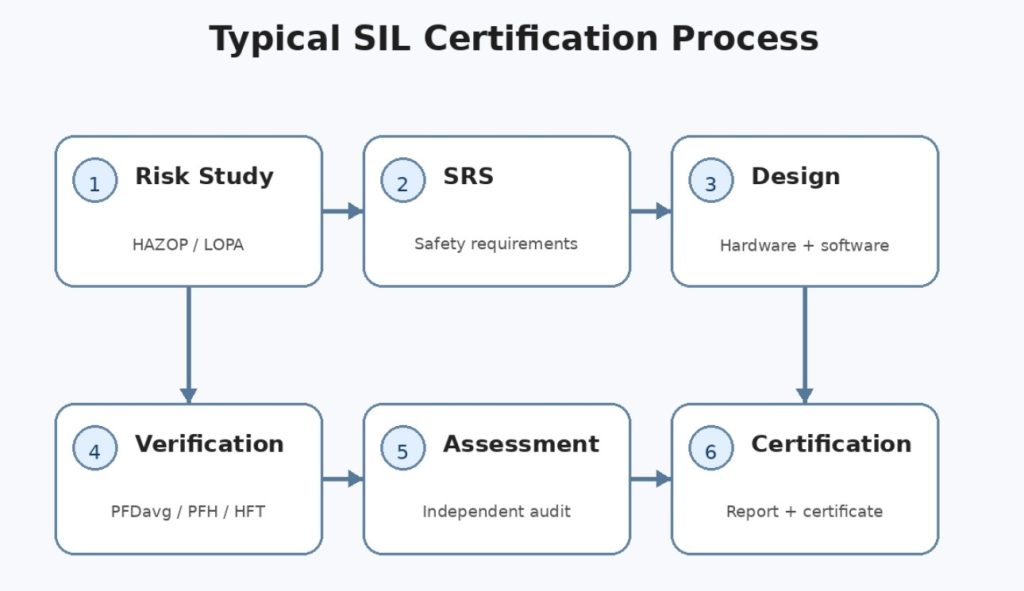
First, risk identification and hazard analysis are carried out to identify possible hazardous events in the system. Second, methods such as HAZOP and LOPA are used to determine which safety functions are required and what SIL target each safety function should achieve. Third, a Safety Requirements Specification, also known as SRS, is prepared to define the safety function, response time, failure handling method, proof test interval, and maintenance requirements. Fourth, hardware and software design is carried out, and sensors, logic controllers, and final elements that meet SIL requirements are selected. Fifth, SIL verification and calculation are performed to confirm whether parameters such as PFDavg, PFH, HFT, and SFF meet the target level. Sixth, a third-party organization conducts document review, testing assessment, and certification, and finally issues an assessment report or certificate.
It should be noted that SIL certification does not only evaluate the product itself. It also depends on whether the product is correctly applied. If a product has SIL 2 capability, but the site installation, commissioning, proof test interval, or maintenance method does not meet the requirements, the entire safety function may still fail to achieve SIL 2.
10. What Should You Pay Attention to When Selecting SIL-Certified Products?
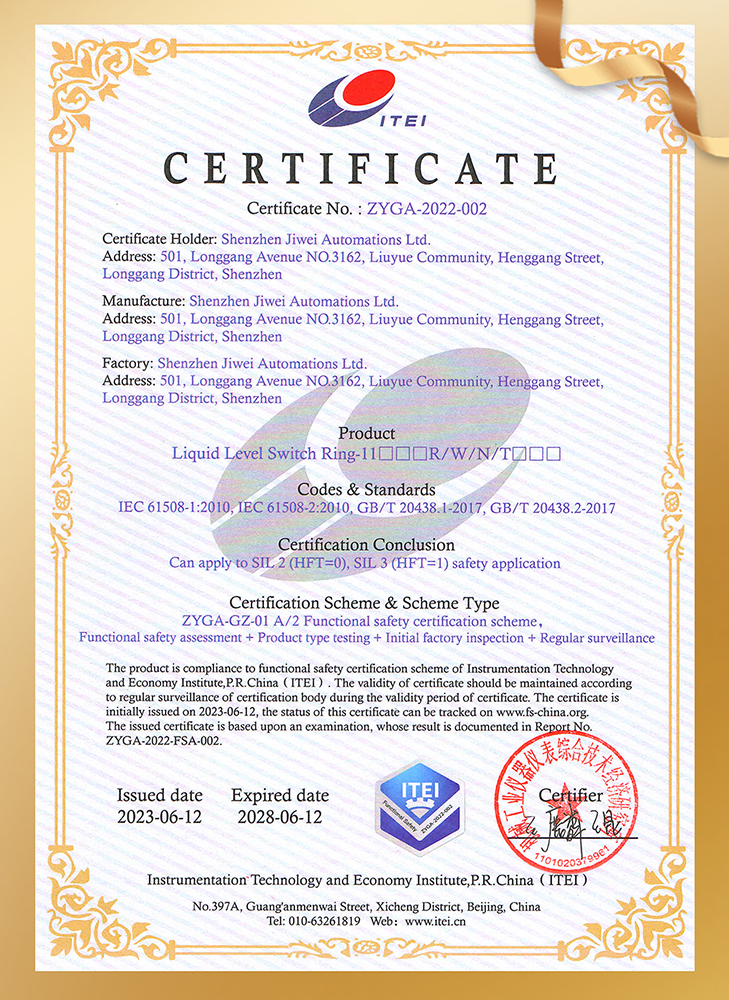
When selecting SIL-certified products, you should not only look at whether “SIL 2” or “SIL 3” is written on the brochure. Procurement and engineering personnel should carefully confirm the certificate scope, certification standard, applicable version, product model, hardware version, software version, application restrictions, diagnostic coverage, failure rate data, and proof test interval requirements.
At the same time, it is necessary to confirm whether the product has “SIL capability” or whether the entire safety function has completed SIL verification. A single device with a SIL certificate does not mean that the entire system automatically reaches the same SIL level. SIL verification needs to consider the entire loop, including the sensor, logic controller, final element, system architecture, redundancy design, common cause failure, and maintenance testing.
For high-risk industries, it is recommended that process, safety, instrumentation, automation, equipment manufacturers, and third-party assessment organizations participate together in the early stage of the project. This helps avoid rework later caused by certificate mismatch, insufficient parameters, or designs that do not meet standard requirements.
11. Frequently Asked Questions About SIL Certification
1. Is SIL Certification Mandatory?
Not necessarily. Whether SIL certification is mandatory depends on industry regulations, project specifications, owner requirements, and risk assessment results. In many international engineering, petrochemical, and high-risk projects, SIL certification is often used as a technical access requirement.
2. Does a Higher SIL Level Mean Safer?
Not completely. A higher SIL level means higher risk reduction requirements, but it does not mean that the highest level should be selected for every scenario. The correct approach is to determine the appropriate SIL level based on risk assessment.
3. Can a Product with a SIL Certificate Be Directly Used in an SIS System?
It can be used as an important basis, but it cannot simply be regarded as proof that the entire system is qualified. It is still necessary to make a comprehensive judgment based on site conditions, loop structure, installation method, proof test interval, and SIL verification results.
4. Is SIL Certification the Same as Explosion-Proof Certification?
No. Explosion-proof certification mainly focuses on whether equipment may become an ignition source in an explosive atmosphere. SIL certification mainly focuses on whether a safety function can operate reliably under hazardous conditions. Their application scenarios may overlap, but the evaluation objects and standard systems are different.
Conclusion
SIL certification is a very important type of assessment and certification in the field of functional safety. It does not focus on equipment appearance, ordinary performance, or a single test result. Instead, it focuses on whether a safety function can reliably reduce risk throughout the entire lifecycle. For industries such as petrochemical, natural gas, power generation, pharmaceuticals, metallurgy, combustion control, and industrial automation, SIL certification can help companies identify risks more scientifically, design safety functions, verify system reliability, and improve project compliance.
In one sentence, SIL certification is a standardized method used to prove that a safety function has the required risk reduction capability. In practical applications, companies should not only pay attention to whether a product has SIL capability, but also whether the entire safety loop has been correctly designed, verified, installed, tested, and maintained. Only by combining standards, products, system design, and site management can SIL certification truly protect personnel safety, equipment safety, and production continuity.