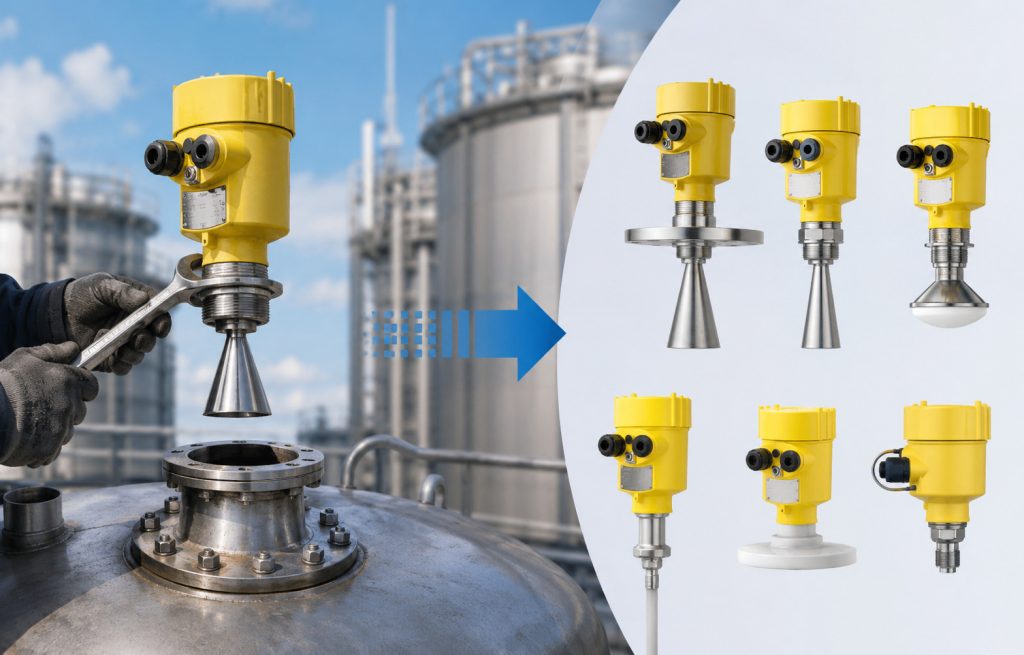
Replacing an installed VEGA level instrument is not simply a matter of finding another sensor with the same range and process connection. A successful replacement must preserve measurement performance, process safety, control-system compatibility, and long-term maintainability. The best alternative is therefore the instrument that matches the real application conditions while reducing lifecycle risk.
For plants seeking a reliable VEGA level sensor alternative, modern level instrumentation offers practical options for continuous measurement, point level detection, liquids, bulk solids, high-temperature processes, and hazardous areas. Product families such as JWrada radar level transmitters, Tube-11 vibrating rod switches, Fork-11 tuning fork switches, Ring-11 liquid level switches, Cape-11 RF admittance switches, Spin-11 rotary paddle switches, and Uson ultrasonic transmitters can cover many common replacement projects.
This guide explains how to replace VEGA level instruments systematically, select the correct measurement principle, and avoid costly engineering mistakes.
Why Replace VEGA Level Instruments?
Replacement may become necessary when an installed unit is obsolete, damaged, difficult to repair, or subject to a long delivery time. A plant may also want to standardize spare parts, reduce procurement costs, improve technical support, or upgrade an older ultrasonic or low-frequency radar device.
The decision should be based on total lifecycle value rather than purchase price alone. A low-cost sensor is not economical if it causes unstable readings, false alarms, emergency shutdowns, or frequent maintenance. At the same time, a premium imported device may be unnecessary for a straightforward water tank or powder hopper.
A suitable alternative should provide stable measurement, mechanical and electrical compatibility, appropriate certification, straightforward commissioning, and dependable service support.
Step 1: Identify the Existing Instrument’s Function
First determine what the current sensor actually does. A continuous level transmitter measures the changing level throughout a tank or silo and sends an analog or digital signal to a PLC, DCS, or SCADA system. Common technologies include radar, guided wave radar, ultrasonic, hydrostatic, and capacitive measurement.
A point level switch detects whether material is present at a specific position. It may provide high-level protection, low-level pump protection, overflow prevention, empty-silo detection, or process interlocking. Common technologies include tuning fork, vibrating rod, RF admittance, rotary paddle, and float switching.
Do not replace a continuous transmitter with a point level switch, or vice versa, without redesigning the control philosophy. Also confirm whether the instrument is used for indication, inventory control, process control, or an independent safety function.
Step 2: Collect Complete Process Data
A reliable replacement starts with a complete application data sheet. Record the measured medium, minimum and maximum level, tank dimensions, temperature, pressure, density, viscosity, corrosiveness, and dielectric properties. Note whether the process includes steam, foam, dust, condensation, buildup, agitation, fast filling, internal structures, or strong vibration.
Also confirm the process connection, mounting position, wetted materials, hazardous-area classification, power supply, output signal, and communication protocol.
This step is essential because two vessels with the same height may require completely different sensors. A clean water reservoir, a foaming chemical reactor, and a dusty cement silo cannot be treated as equivalent applications.
Step 3: Replace VEGA Radar Sensors with 80 GHz Radar Alternatives
For many continuous level applications, an 80 GHz FMCW radar level transmitter is the strongest alternative to a VEGA radar sensor. High-frequency radar produces a narrow beam, making it easier to avoid tank walls, ladders, heating coils, filling pipes, and other false-echo sources. Radar is also generally less affected than ultrasonic measurement by temperature changes, air movement, vacuum, pressure, and vapor.
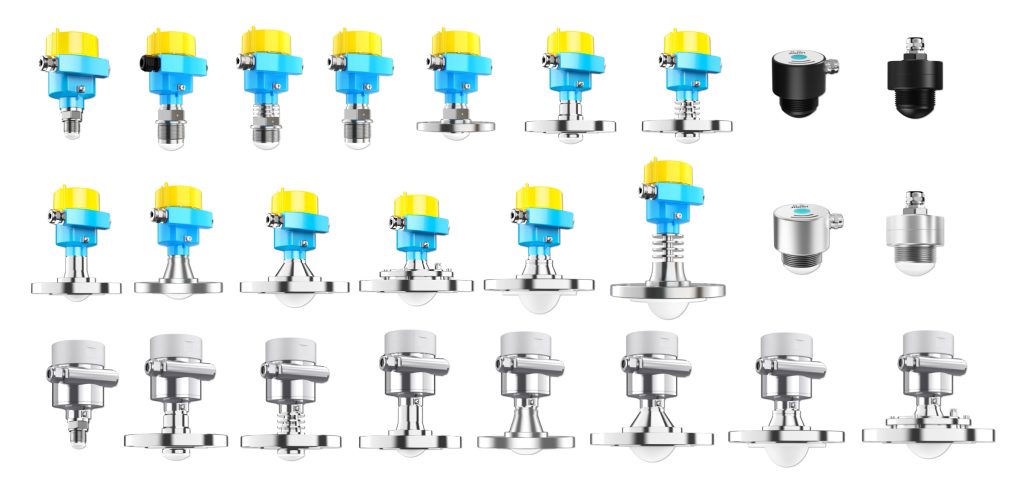
The JWrada series provides non-contact radar options for liquids and bulk solids. Depending on the model, available features include 80 GHz technology, compact and long-range configurations, two-wire 4–20 mA/HART output, Bluetooth commissioning, explosion-protected versions, high-temperature designs, and focused lens antennas.
Compact models suit water tanks, pumping stations, open channels, and small vessels. Standard industrial models can serve process tanks and medium-height silos, while long-range versions are better for tall, dusty storage silos and difficult bulk-solid surfaces.
When replacing a VEGAPULS instrument, compare more than nominal range. Check antenna size, beam angle, dead zone, process seal, temperature and pressure ratings, flange dimensions, housing material, hazardous-area approval, and echo-processing capability. For corrosive liquids, verify every wetted material. For hygienic service, confirm surface finish and connection requirements.
Radar is often the preferred upgrade when an older ultrasonic device suffers from steam, air turbulence, temperature gradients, or long blanking distances. Heavy buildup directly on the antenna can still reduce performance, so correct mounting remains important.
Step 4: Replace VEGA Ultrasonic Transmitters Selectively
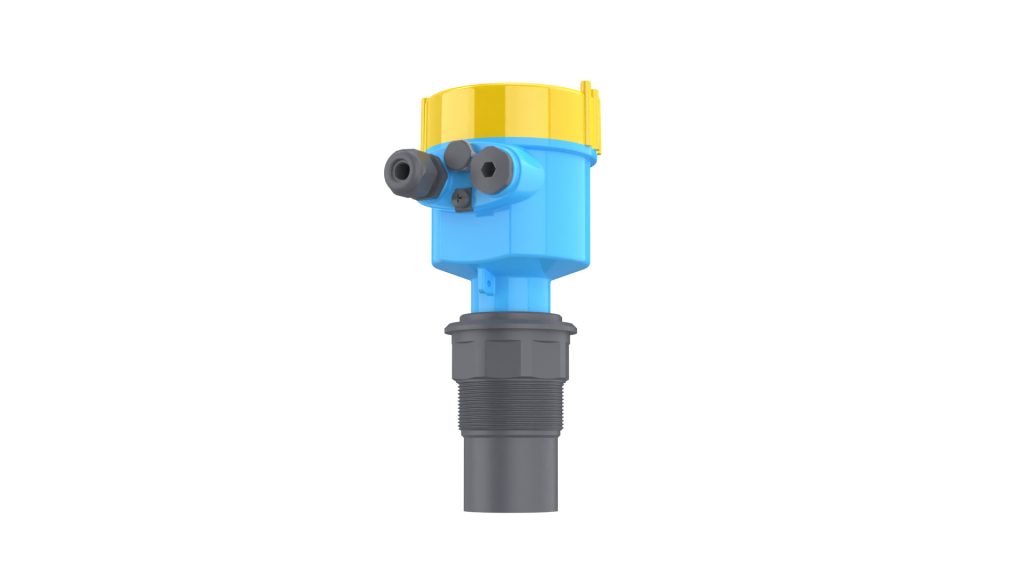
Ultrasonic level measurement remains cost-effective for open tanks, wastewater pits, water storage, and non-pressurized vessels. The Uson series includes standard, explosion-protected, and separate-transducer configurations.
Because ultrasonic measurement relies on sound traveling through the gas space, it can be affected by vapor composition, temperature gradients, strong air movement, foam, dust, or condensation. These limitations do not make the technology unreliable; they define where it should be used.
When replacing a VEGASON device, retain ultrasonic measurement when the application is clean, the gas space is stable, and the target surface produces a strong echo. Upgrade to 80 GHz radar when heavy steam, changing gas composition, severe foam, high dust, vacuum, pressure, or demanding accuracy makes ultrasonic performance uncertain.
Step 5: Replace VEGA Vibrating Switches for Bulk Solids
Bulk-solid point level applications commonly require high-level alarms, low-level detection, or protection against overfilling and empty running. Vibrating rod and tuning fork switches offer dependable operation without rotating drive mechanisms.
The Tube-11 vibrating rod level switch uses a dual-rod vibration structure for powders and granular solids. It is available in standard, cable-extension, explosion-protected, interface, high-temperature, and ultra-high-temperature versions. Specialized air- or water-cooled designs can support process temperatures up to 400°C.
The Fork-11 tuning fork level switch is particularly suitable for very light powders and fine bulk solids. In suitable configurations, it can detect material with bulk density as low as 0.008 g/cm³. Typical applications include expanded foam beads, fumed silica, fine chemical powders, flour, and lightweight plastic materials that may not generate enough resistance for a rotary paddle switch.
When replacing a VEGAVIB or similar switch, compare minimum detectable density, insertion length, mounting direction, process temperature, buildup, vibration resistance, fail-safe mode, output type, and hazardous-area approval. For tall silos, a cable-extension version may simplify installation. In high-impact filling zones, protect the probe from direct material flow.
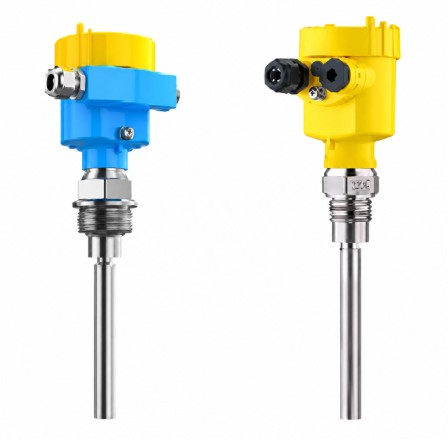
Step 6: Replace VEGA Liquid Tuning Fork Switches
Liquid tuning fork switches are widely used for overfill protection, dry-run protection, pump control, pipeline detection, and high- or low-level alarms. The Ring-11 liquid level switch is a compact alternative for tanks, vessels, and pipes. Its short fork is useful where installation space is limited, and suitable versions can detect liquids with density down to approximately 0.5 g/cm³.
Configurations include standard, stainless-steel housing, hygienic, corrosion-resistant, explosion-protected, high-temperature, and ultra-high-temperature designs.
When replacing a VEGASWING instrument, verify minimum liquid density, viscosity, temperature, pressure, fork length, mounting clearance, wetted material, coating, output type, fail-safe behavior, and required safety approvals.
Foam, bubbles, turbulence, and changing conductivity usually have less influence on a vibrating fork than on conductivity-based switches. Heavy viscous coating, however, can bridge the fork and affect switching. For sticky products, confirm fork geometry, mounting orientation, and cleaning practice.
Step 7: Use RF Admittance for Sticky Powders and Buildup
Capacitive and RF admittance switches are useful when material coating or probe buildup is a major concern. The Cape-11 family includes standard, guarded, rope, and ultra-high-temperature versions. It is particularly relevant for fly ash, coal ash, fine powders, and applications requiring a long or flexible probe.
A guarded RF admittance design helps distinguish actual material contact from buildup on the probe, reducing false switching when correctly selected and calibrated.
When replacing a VEGACAP or capacitive point level device, review the material’s dielectric constant, vessel conductivity, probe length, buildup, grounding, installation geometry, and calibration procedure. RF admittance is not a universal choice for large ore, slag, or highly abrasive chunks that may damage the probe. A vibrating rod, protected paddle, or non-contact radar may be more suitable.
Step 8: Consider Rotary Paddle Switches for Simple Solids
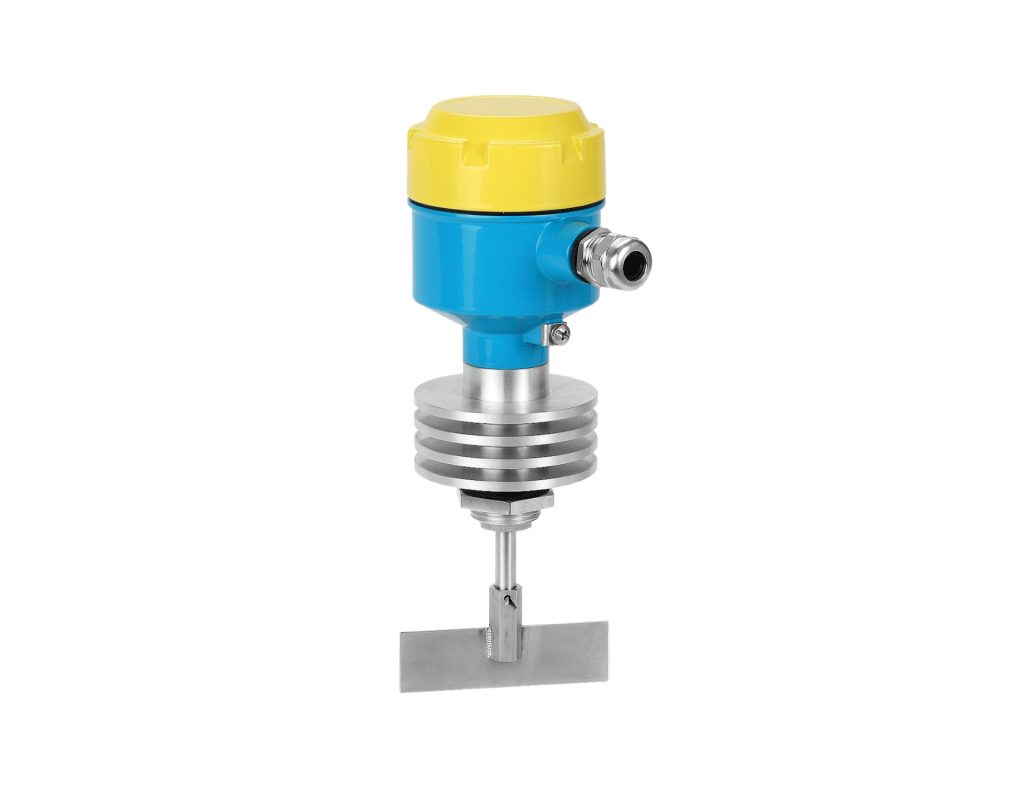
A rotary paddle switch is a practical, economical solution for many dry powders and granules. The Spin-11 series uses a motor-driven paddle. When material covers the paddle, rotation stops and the output changes state; when material falls away, the paddle rotates again.
This technology suits grain, feed, plastic pellets, and general bulk-solid hoppers. Guarded versions offer better protection in higher-density material, while collapsible paddles can simplify installation.
Do not select a rotary paddle only because it is inexpensive. Confirm that the bulk density is high enough to stop the paddle and that material will not harden around the shaft. Very light powders may require Fork-11, while sticky or caking products may be better handled by RF admittance.
Step 9: Verify Mechanical, Electrical, and Safety Compatibility
Even when the measurement principle is correct, installation details can cause failure. Compare thread size, flange standard, flange rating, insertion length, nozzle diameter, and nozzle height. A radar mounted inside a tall, narrow nozzle may experience false reflections, while a tuning fork installed too close to the vessel wall may not switch correctly.
Confirm power and output as well. Common signals include two-wire 4–20 mA, HART, RS-485, Modbus, relay, transistor, NAMUR, and two-wire electronic switch outputs. The replacement must match the input card, barrier, isolator, or control relay. Two devices with the same number of wires do not necessarily behave the same way.
Review cable entries, grounding, ingress protection, housing orientation, and ambient temperature. Finally, verify hazardous-area certification. Gas and dust approvals are not interchangeable, and intrinsic-safety and flameproof installations follow different rules.
Step 10: Validate the Replacement Before Full Rollout
For critical applications, begin with one representative installation rather than changing every device at once.
During commissioning, verify empty and full references, false-echo suppression, damping, alarm direction, fail-safe behavior, output scaling, and control-system indication. For point level switches, perform a functional test at the actual switching level. For radar instruments, inspect the echo curve during filling and emptying when diagnostic tools are available.
Monitor the trial through startup, normal production, cleaning, product changes, temperature variation, and maximum filling rate. Record signal loss, false alarms, buildup, or drift.
After successful validation, create a replacement standard containing the approved model, configuration, drawings, wiring, parameters, certificates, and spare-parts list. This turns a one-time substitution into a repeatable plant-wide strategy.
Common Replacement Mistakes
The most common mistake is choosing by price or appearance alone. Other errors include ignoring minimum bulk density, overlooking pressure and temperature limits, reusing an unsuitable nozzle, selecting the wrong output, and assuming all explosion-proof certificates are equivalent.
Another mistake is forcing one technology into every application. Radar is powerful but not always necessary. Ultrasonic can be ideal for clean water. A rotary paddle can work well for ordinary pellets. A tuning fork is better for very light powder, while RF admittance may be preferable in coating conditions.
Documentation also matters. A reliable instrument should be supported by technical data, wiring instructions, dimensional drawings, certificates, commissioning guidance, and responsive application engineering.
Practical VEGA Replacement Matrix
Use this principle-based matrix as a starting point:
- VEGA non-contact radar: JWrada 80 GHz radar level transmitter.
- VEGA ultrasonic transmitter: Uson ultrasonic transmitter, or JWrada radar for difficult gas-space conditions.
- VEGA vibrating rod for solids: Tube-11.
- VEGA tuning fork for low-density solids: Fork-11.
- VEGA liquid tuning fork: Ring-11 or compact Ring-21.
- VEGA capacitive point level device: Cape-11 RF admittance.
- Simple bulk-solid point detection: Spin-11 rotary paddle.
- Local visual indication: Magnetic level indicator or float-based device where conditions permit.
This is not a model-by-model equivalence chart. Final selection must be based on process data, certification, output, and installation requirements.
Frequently Asked Questions
Can a Chinese Instrument Directly Replace a VEGA Level Sensor?
Yes, in many applications, but selection should be engineered rather than based only on thread size or range. Confirm the principle, medium, temperature, pressure, certification, output, and mounting geometry.
Is 80 GHz Radar Suitable for Liquids and Solids?
Yes. With the correct antenna, range, signal processing, and installation, 80 GHz radar can measure liquids, powders, and granular solids. It is especially useful where a narrow beam must avoid internal obstructions.
When Should Ultrasonic Be Replaced with Radar?
Consider radar when steam, dust, foam, temperature gradients, pressure, vacuum, or air movement causes unstable ultrasonic readings. Ultrasonic remains economical for clean, open, stable applications.
Which Switch Is Best for Very Light Powder?
A high-sensitivity tuning fork such as Fork-11 is generally more suitable than a standard rotary paddle. Always confirm the minimum detectable bulk density.
What Is the Best Option for High-Temperature Solids?
A high-temperature vibrating rod or tuning fork can be used, depending on the material and switching requirement. Specialized Tube-11 and Fork-11 versions support demanding temperatures, including cooled designs up to 400°C.
How Can Replacement Risk Be Reduced?
Use a complete application data sheet, review certificates and wiring, test one instrument under real operating conditions, document the settings, and expand only after successful validation.
Conclusion
The right way to replace VEGA level instruments is to match the technology to the process rather than search for a visually identical device. Define whether the application requires continuous measurement or point level detection, then evaluate the medium, density, dielectric properties, temperature, pressure, dust, vapor, foam, buildup, installation geometry, output, and hazardous-area requirements.
JWrada radar transmitters, Uson ultrasonic transmitters, Tube-11 vibrating rod switches, Fork-11 tuning fork switches, Ring-11 liquid level switches, Cape-11 RF admittance switches, and Spin-11 rotary paddle switches provide reliable alternatives for many industrial level applications. Their value is greatest when each product is used within its correct operating window.
A careful replacement program can reduce procurement dependency, simplify spare-parts management, and deliver stable long-term measurement. The final decision should always be based on verified application data, documented compatibility, and field validation.procurement dependency, simplify spare-parts management, and deliver stable long-term measurement. The final decision should always be based on verified application data, documented compatibility, and field validation.