Introduction
Broke recovery is an important part of modern paper and board production. During paper machine operation, off-spec paper, edge trim, startup waste, and material generated during web breaks can often be returned to the production process instead of being discarded.
Before this material can be reused, it must normally be repulped and transferred through the broke handling system. The resulting fiber suspension is commonly collected in a broke chest before being screened, blended, thickened, or returned to the stock preparation process.
For plant operators, maintaining a suitable level in the broke chest is essential.
However, broke chest level measurement is more difficult than measuring clean water. The stock contains fibers and suspended solids, agitators create continuous surface movement, foam may develop during repulping, and internal pipes or mixer components can generate unwanted measurement signals.
These conditions can make conventional level measurement technologies unstable or maintenance-intensive.
For this reason, non-contact radar, especially 80 GHz radar level measurement, is increasingly considered for broke chests and similar pulp applications.
This article explains what makes broke chest measurement difficult, how radar technology addresses these challenges, and what engineers should consider when selecting and installing a level meter.
What Is Broke in a Paper Mill?
In paper manufacturing, “broke” generally refers to paper or board that is generated during production but cannot continue directly to the finished product.
Typical sources include:
- Paper machine web breaks
- Edge trim
- Reel and winder trim
- Startup and shutdown waste
- Off-specification paper
- Reel change waste
- Coated paper rejects
- Wet-end broke
- Dry-end broke
Instead of disposing of this material, mills normally recover as much usable fiber as practical.
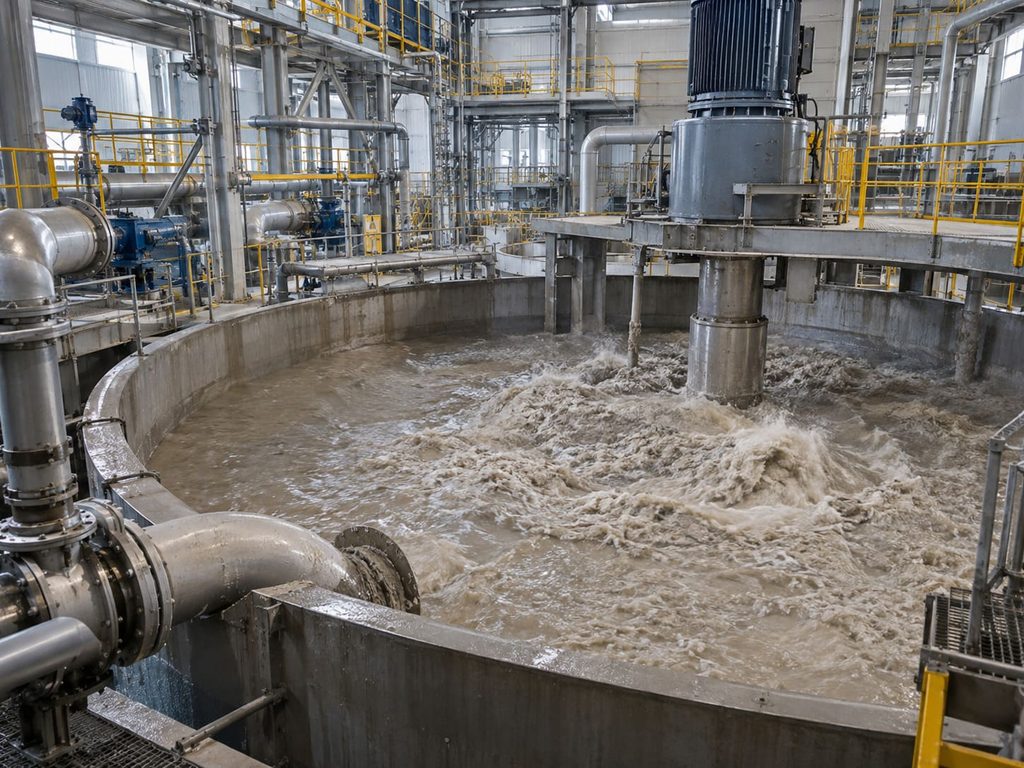
The broke is sent to a pulper, where water and mechanical action break the paper back into a fiber suspension. Depending on the paper grade and broke source, additional deflaking, screening, cleaning, or thickening may be required before the recovered stock is returned to production.
The broke chest acts as an important buffer between these process stages.
Because the incoming quantity of broke can change suddenly, particularly during a paper machine web break, the broke handling system must be able to accommodate significant variations in material flow.
Reliable level measurement is therefore essential for automatic control.
Why Is Broke Chest Level Measurement Important?
A broke chest is more than a storage tank.
It helps balance irregular broke generation with the relatively controlled demand of downstream stock preparation.
When the level is measured reliably, the PLC or DCS can use the signal to control transfer pumps, inlet flows, outlet flows, and alarms.
If the level becomes too high, there may be a risk of overflow or insufficient capacity to receive additional broke during a production disturbance.
If the level becomes too low, the discharge pump may lose suction or the broke supply to downstream processes may become unstable.
An unreliable level signal can also create unnecessary control actions.
For example, fluctuating readings may cause:
- Frequent pump starts and stops
- Unstable valve movement
- False high-level alarms
- False low-level alarms
- Incorrect process inventory
- Poor coordination with stock preparation
- Increased operator intervention
The objective is therefore not simply to detect whether material exists in the tank. A continuous level transmitter should provide a stable indication of the actual process level despite changing surface conditions.
Why Is a Broke Chest Difficult to Measure?
1. High Fiber Content
Broke stock contains cellulose fibers and may also contain fillers, coating materials, additives, fines, and other suspended solids.
These fibers can accumulate on instruments that remain directly immersed in the process.
Depending on sensor design, fibrous material may wrap around probes or collect on mechanical components.
Over time, buildup can increase maintenance requirements and may affect measurement performance.
This is one of the main reasons why non-contact measurement is attractive in pulp and paper applications.
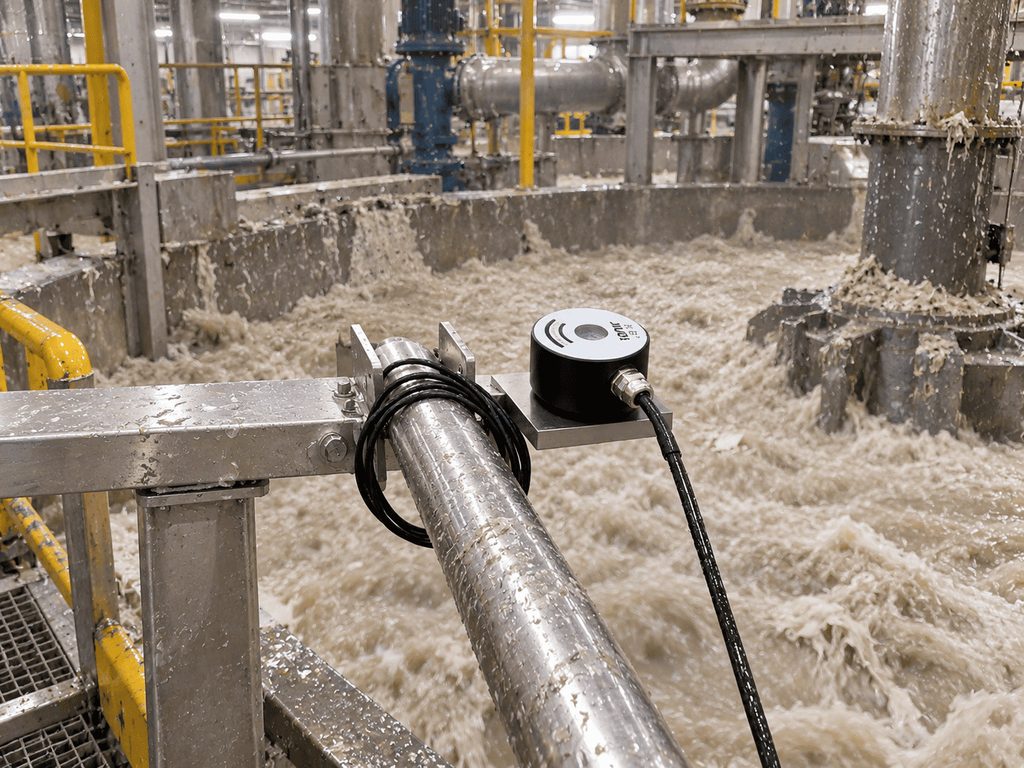
A radar level meter is normally installed above the stock surface, so the measuring antenna does not need to remain continuously submerged in the pulp.
2. Strong Agitation
Broke chests frequently use agitators to keep fibers suspended and maintain a relatively uniform stock consistency.
Without proper mixing, fibers and other components may separate or settle.
From a level measurement perspective, however, agitation creates another problem: the stock surface is constantly moving.
Instead of seeing a perfectly flat liquid surface, the instrument may encounter:
- Waves
- Vortices
- Local depressions
- Peaks
- Splashes
- Rapid short-term surface changes
A level measurement system must distinguish these temporary surface movements from actual changes in tank inventory.
This requires both appropriate signal processing and correct installation.
3. Foam and Entrained Air
Repulping and agitation can introduce air into the stock.
Depending on the furnish, chemicals, contamination, and operating conditions, foam may form above the broke slurry.
Foam is an important consideration for any non-contact level technology.
It is not technically correct to state that radar is always completely unaffected by foam.
The effect depends on factors such as:
- Foam thickness
- Moisture content
- Bubble size
- Foam density
- Foam stability
- Reflectivity of the stock below the foam
A thin, wet foam layer may cause little difficulty, while extremely thick or dry foam can weaken the useful reflected radar signal.
The actual process conditions should therefore be evaluated before selecting the instrument.
4. Changing Stock Properties
Broke composition is not always constant.
Wet-end broke may behave differently from dry-end broke. Coated paper may introduce coating pigments and chemicals. Different paper grades can also change the proportion of fibers, fillers, additives, and water entering the broke system.
This variation can influence viscosity, consistency, foam formation, and surface behavior.
A suitable broke chest level sensor should therefore tolerate normal process variation without requiring continuous recalibration.
5. Complex Tank Internals
Many broke chests are not empty cylindrical vessels.
Inside the tank there may be:
- Agitator shafts
- Mixer blades
- Internal pipes
- Support beams
- Reinforcing structures
- Inlet pipes
- Overflow pipes
- Cleaning equipment
These structures are important because they can reflect radar energy.
If the level meter has a wide measurement beam, several internal structures may fall within the measurement area and generate false echoes.
This is where high-frequency radar can provide a significant advantage.
Why Use 80 GHz Radar for Broke Chest Level Measurement?
An 80 GHz radar level meter uses high-frequency electromagnetic waves to measure the distance between the antenna and the stock surface.
Modern industrial radar instruments commonly use FMCW, or frequency-modulated continuous-wave, technology.
The instrument transmits radar signals toward the pulp surface and analyzes the reflected signal to calculate distance. Once the tank geometry is configured, this distance can be converted into level.
Several characteristics make 80 GHz radar particularly suitable for pulp and broke chest applications.
Advantage 1: Non-Contact Measurement
One of the most important benefits is that the radar antenna normally remains above the process material.
There is no requirement for a long probe to remain immersed in the fiber suspension.
This helps reduce problems associated with:
- Fiber wrapping
- Mechanical wear
- Stock deposits on submerged probes
- Contamination of moving sensing components
For paper mills operating continuously, reducing the need for instrument cleaning can be an important maintenance advantage.
Non-contact does not mean completely maintenance-free, however. Heavy splashing, condensation, or deposits can still accumulate on the antenna in some installations, so periodic inspection may still be required.
Advantage 2: Narrow Measurement Beam
One of the key characteristics of 80 GHz radar is its ability to provide a highly focused measuring beam with a relatively compact antenna.
This is especially useful in broke chests containing agitators and other internal structures.
Instead of illuminating a large portion of the tank, the radar can be positioned so that the measurement beam is directed toward a relatively unobstructed area of the pulp surface.
A narrower beam can help reduce reflections from:
- Tank walls
- Agitator shafts
- Internal pipes
- Structural supports
- Ladders
- Nearby nozzles
This makes high-frequency radar particularly valuable when upgrading existing vessels where available mounting locations are limited.
Advantage 3: Measurement Independent of Stock Density
Hydrostatic measurement calculates liquid level based on the pressure created by the liquid column.
As a result, variations in density can influence the relationship between measured pressure and actual level.
Radar works differently.
It measures the physical distance to the material surface rather than calculating level from hydrostatic pressure.
This can be useful in broke systems where stock consistency and composition change during production.
The level measurement still needs suitable echo quality, but changes in stock density do not directly enter into the distance calculation.
Advantage 4: Advanced False-Echo Suppression
A real industrial tank can generate many radar reflections at the same time.
The true stock surface may be only one of several echoes received by the instrument.
Fixed objects such as an agitator support, nozzle, pipe, or structural beam remain at approximately the same distance from the sensor, while the broke level rises and falls during operation.
Modern radar signal processing can help distinguish the moving product surface from fixed interference echoes.
False-echo learning or echo-mapping functions can also be used during commissioning to identify known stationary obstacles.
However, software should not be used as a substitute for good installation.
Whenever possible, the first priority should be choosing a mounting position with a clear measuring path.
Radar vs. Ultrasonic Level Measurement for Broke Chests
Both radar and ultrasonic instruments provide non-contact continuous level measurement.
However, their operating principles are different.
Ultrasonic sensors transmit acoustic waves through the air above the stock.
They can provide a practical and economical solution for relatively simple tanks.
Their performance, however, can be influenced by conditions affecting sound propagation, including temperature gradients, heavy vapor, condensation, and certain foam conditions.
Radar uses electromagnetic waves rather than sound.
For demanding pulp applications with changing atmospheric conditions and complex tank internals, radar can therefore offer greater measurement flexibility.
This does not mean that ultrasonic technology is unsuitable for every broke-related application.
The correct choice depends on tank size, process severity, required reliability, installation environment, and project budget.
Where Should the Radar Level Meter Be Installed?
Correct installation is one of the most important factors determining measurement performance.
Avoid Installing Directly Above the Agitator
The radar beam should not point directly at the agitator shaft or mixer assembly.
The agitator may create both strong fixed reflections and severe surface turbulence.
A mounting point with a clearer view of the stock surface should be selected.
Avoid the Broke or Stock Inlet
Incoming stock can create splashing, foam, and highly irregular surface conditions.
Installing directly above the filling stream can make measurement unnecessarily difficult.
Whenever possible, position the radar away from the main inlet.
Check the Complete Beam Path
The beam should be evaluated from the antenna down to the lowest expected operating level.
A tank may appear clear near the top while a pipe, support, or agitator component enters the beam farther down.
For this reason, a vessel drawing is particularly useful when selecting the installation point.
Evaluate the Mounting Nozzle
Long and narrow nozzles can affect radar performance.
The radar antenna should be matched to the available process connection and nozzle dimensions.
Whenever possible, the antenna should have a clear view into the tank rather than being recessed deeply inside an unsuitable nozzle.
Consider Splashing and Buildup
Although radar is non-contact, the antenna should still be located where direct splashing is minimized.
Heavy deposits on the antenna can weaken the transmitted or received signal.
Continuous Radar Measurement and Independent Level Alarms
A continuous radar level transmitter normally provides the main process measurement to the PLC or DCS.
The signal can be used for:
- Level indication
- Pump start and stop
- Transfer control
- Inventory monitoring
- High-level warning
- Low-level warning
For more critical applications, a paper mill may also use an independent point level switch.
For example, a separate high-high level switch can provide an additional overflow alarm independent of the continuous radar transmitter.
A low-level switch may also be used for pump protection.
Continuous level measurement and point level detection perform different functions and can complement each other in a well-designed control system.
What Information Is Needed Before Selecting a Broke Chest Level Sensor?
For reliable instrument selection, provide more than just the tank height.
Useful application information includes:
- Tank height and diameter
- Minimum and maximum operating level
- Type of broke
- Approximate stock consistency
- Agitator type and position
- Inlet and outlet positions
- Expected foam conditions
- Process temperature
- Tank pressure
- Existing mounting nozzle
- Internal pipes or structures
- Required output signal
- PLC or DCS communication requirements
- Hazardous-area requirements, if applicable
- Existing measurement problems
Photographs and tank drawings can also help determine whether the proposed radar mounting position has a clear measurement path.
Jiwei JWrada-32 for Broke Chest Applications
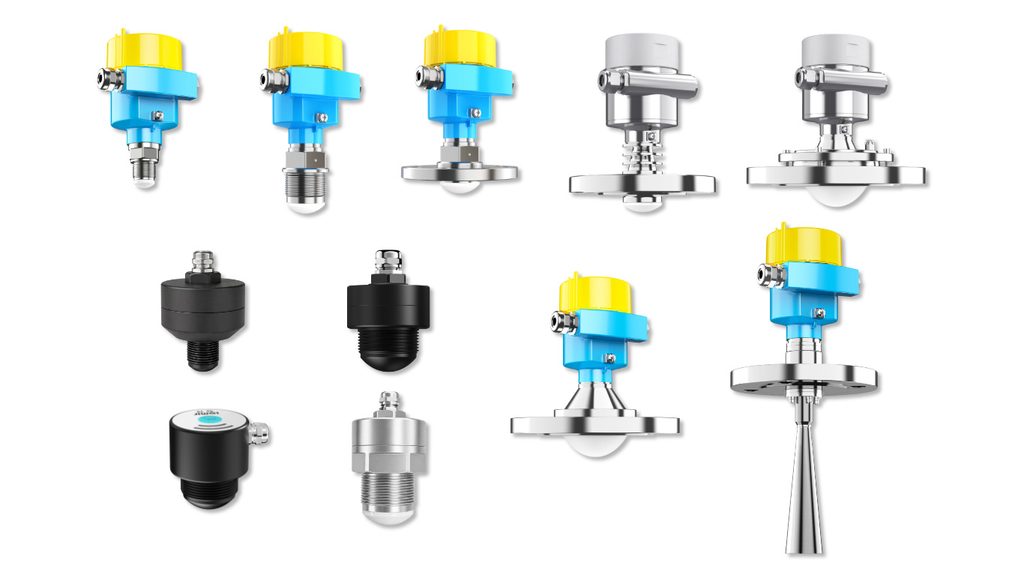
For conventional pulp and paper process tanks, the Jiwei JWrada-32 Radar Level Meter can be considered where non-contact continuous level measurement is required.
The instrument uses 80 GHz FMCW radar technology and a focused lens antenna to provide a narrow measurement beam.
For broke chests containing agitators, pipes, and other internal structures, this focused beam can make it easier to select a clear measuring path and reduce unwanted reflections.
The instrument can provide continuous level information to the plant automation system for process monitoring and control.
However, product selection should always be based on the actual operating conditions.
Tank dimensions, pulp consistency, foam, temperature, process connection, agitation, and internal structures should be reviewed before determining the final radar configuration.
Conclusion
Broke chest level measurement is a typical example of why paper mill level applications require more consideration than ordinary water tanks.
Fibrous stock, agitation, foam, changing furnish, buildup, and complex tank internals can all create challenges for level instrumentation.
Non-contact 80 GHz radar addresses many of these problems by keeping the measuring element above the stock and using a focused measurement beam to reduce interference from surrounding structures.
Advanced echo processing can further improve measurement stability where fixed false reflections are present.
However, reliable performance still depends on correct engineering.
The best results come from combining the right radar configuration with a suitable installation position, clear beam path, correct commissioning, and realistic evaluation of foam and buildup.
For a broke chest application, provide the tank dimensions, stock conditions, agitator position, foam information, process connection, and vessel drawing before selecting the instrument.
This allows the level measurement solution to be matched to the actual paper mill process rather than simply choosing a sensor according to measuring range.
Frequently Asked Questions
What is the best level sensor for a broke chest?
Non-contact radar is a strong option for many broke chests because the measuring element does not remain immersed in the fibrous stock. However, tank geometry, agitation, foam, stock consistency, temperature, and installation conditions should be evaluated before final selection.
Can radar measure paper broke slurry?
Yes. Radar can be used for continuous level measurement in many paper broke and pulp slurry applications. A clear beam path and suitable mounting location are especially important where agitators and internal structures are present.
Does foam affect radar level measurement?
Foam can affect radar measurement. The influence depends on foam thickness, density, moisture content, and stability. Severe foam conditions should be evaluated during application engineering and commissioning.
Why is 80 GHz radar useful in a broke chest?
80 GHz radar can provide a narrow, focused beam. This makes it easier to avoid agitator shafts, pipes, tank walls, and other internal structures that could create unwanted reflections.
Can a radar level meter be installed above an agitator?
It can be installed on a tank containing an agitator, but the radar should normally not point directly toward the agitator shaft or mixer structure. The preferred mounting position provides a clear view of the stock surface.
Is ultrasonic measurement suitable for a broke chest?
Ultrasonic measurement can work under suitable conditions, especially in relatively simple applications. Radar may provide advantages where vapor, condensation, foam, severe agitation, or complex internal structures make acoustic measurement more difficult.
Does a broke chest also need a high-level switch?
For critical applications, an independent high-high level switch can complement the continuous radar transmitter and provide an additional overflow protection layer.