
Fasteners are essential components in almost every industrial machine, process system, and mechanical assembly. Although fasteners are often small compared with the equipment they connect, the correct selection of bolts, nuts, screws, washers, and other fastening components has a direct impact on mechanical strength, equipment reliability, maintenance, and service life.
In industrial environments, fasteners may be exposed to vibration, high temperature, pressure, moisture, chemicals, dust, corrosion, and repeated mechanical loads. Therefore, selecting an industrial fastener is not simply a matter of choosing the correct size. Engineers also need to consider material, thread type, load requirements, operating temperature, corrosion resistance, installation method, and the environment in which the equipment will operate.
This guide explains the main types of fasteners used in industrial equipment, common fastener materials, typical applications, and the key factors to consider when selecting fasteners for industrial machinery and process equipment.
What Are Fasteners in Industrial Equipment?
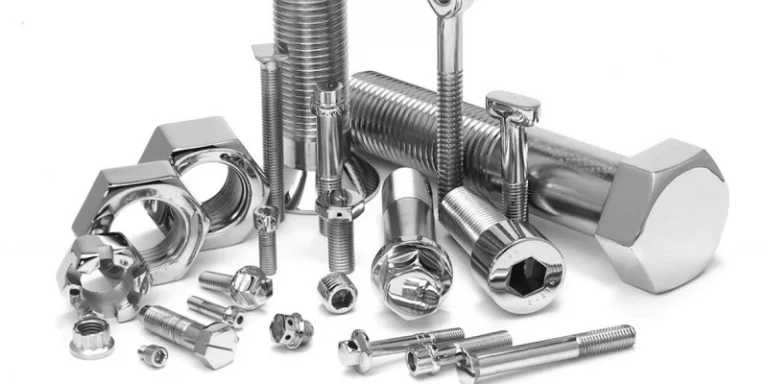
Industrial fasteners are mechanical components used to join, secure, position, or assemble two or more parts. Unlike welding or permanent bonding, many fasteners allow equipment components to be assembled and disassembled when maintenance or replacement is required.
Common industrial fasteners include:
- Bolts
- Nuts
- Screws
- Washers
- Studs
- Threaded rods
- Rivets
- Pins
- Clamps
- Specialty fastening components
The choice of fastener depends on the mechanical design and operating conditions of the equipment.
For example, a structural machine frame may require high-strength bolts and nuts, while a process flange may require corrosion-resistant stainless steel bolts. Equipment operating at elevated temperatures may require fasteners specifically selected for thermal stability and resistance to creep or loss of preload.
For this reason, industrial fastener selection should always be considered as part of the overall mechanical design rather than as an isolated purchasing decision.
Why Are Fasteners Important in Industrial Equipment?
Fasteners perform several important functions in industrial equipment.
1. Mechanical Connection
The primary purpose of a fastener is to hold components together. Properly selected bolts, screws, and nuts can create a strong mechanical connection capable of handling tensile, shear, and combined loads.
2. Equipment Stability
Fasteners help maintain the position and alignment of machine components. Loose or incorrectly selected fasteners can lead to movement, misalignment, vibration, and premature component failure.
3. Maintenance and Repair
Many industrial machines need regular inspection and maintenance. Bolted connections make it possible to remove covers, flanges, housings, brackets, and other components without permanently damaging the equipment.
4. Sealing and Pressure Retention
Fasteners are particularly important in equipment containing liquids, gases, or pressurized media. Flange bolts, for example, provide the clamping force required to maintain a seal between mating surfaces and gaskets.
5. Resistance to Industrial Environments
Industrial equipment may operate outdoors or in environments containing water, chemicals, salt, dust, or corrosive gases. The fastener material and surface treatment must therefore be compatible with the operating environment.
Common Types of Industrial Fasteners
Different industrial applications require different types of fastening components. Understanding their functions can help engineers select the appropriate solution.
Bolts
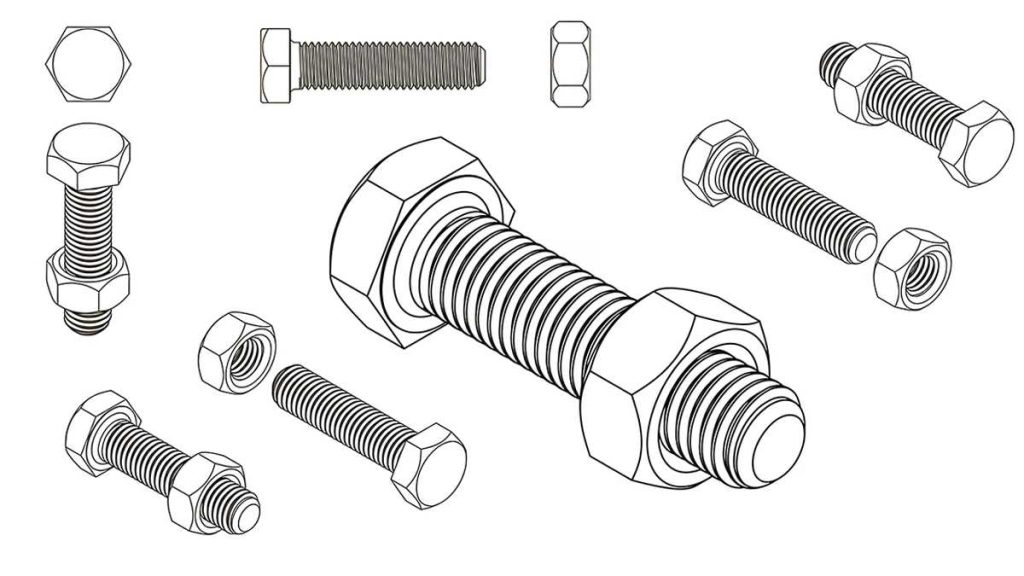
Bolts are among the most widely used fasteners in industrial equipment. They normally work together with nuts or threaded holes to create a removable mechanical connection.
Common bolt designs include:
- Hex bolts
- Flange bolts
- Socket head cap screws
- U-bolts
- Eye bolts
- Anchor bolts
Bolts are widely used in machinery frames, equipment housings, structural assemblies, pipelines, pumps, valves, motors, and process equipment.
Nuts
Nuts are generally used together with bolts or threaded studs. Their purpose is to create and maintain clamping force.
Common industrial nut types include:
- Hex nuts
- Flange nuts
- Lock nuts
- Nyloc nuts
- Heavy hex nuts
- Slotted nuts
The nut should normally match the bolt diameter, thread type, material, and strength requirements.
Screws
Screws are threaded fasteners that can be installed directly into a threaded hole or, depending on the design, create their own thread in the mating material.
Machine screws, socket head screws, set screws, and self-tapping screws are commonly used in industrial equipment.
Screws are often preferred where installation space is limited or where a separate nut is difficult to install.
Washers
Washers are frequently installed underneath bolt heads or nuts. They can distribute the clamping load over a larger surface area and help protect the connected material.
Common types include:
- Flat washers
- Spring washers
- Lock washers
- Sealing washers
- Fender washers
The appropriate washer depends on the connection design and the purpose of the joint.
Studs and Threaded Rods
Studs are threaded rods that can provide strong and repeatable connections, especially for equipment requiring frequent assembly and disassembly.
Studs are widely used in pressure vessels, piping flanges, valves, pumps, engines, and other industrial equipment.
Common Fastener Materials
Fastener material is one of the most important considerations when selecting industrial fasteners.
Carbon Steel
Carbon steel fasteners offer high strength and are commonly used in general industrial machinery and structural applications.
They are often treated with coatings such as zinc plating to improve corrosion resistance.
However, carbon steel may not be suitable for highly corrosive environments without adequate protection.
Stainless Steel
Stainless steel fasteners are widely used where corrosion resistance is important.
Common grades include:
- 304 stainless steel
- 316 stainless steel
- 316L stainless steel
316 and 316L stainless steel are frequently selected for chemical processing, marine environments, food-processing equipment, water treatment systems, and other applications where improved corrosion resistance is required.
Alloy Steel
Alloy steel fasteners are designed for applications requiring higher mechanical strength or improved performance under demanding conditions.
They are often used in heavy machinery, automotive equipment, pressure-related applications, and industrial structures.
Brass and Other Specialty Materials
Brass and other non-ferrous materials may be selected for applications requiring specific electrical, corrosion, or environmental characteristics.
Specialty alloys may also be required for high-temperature or highly corrosive industrial applications.
Surface Treatments for Industrial Fasteners
Surface treatment can significantly influence fastener performance.
Common treatments include:
Zinc Plating
Zinc-plated fasteners provide improved corrosion resistance compared with untreated carbon steel and are widely used in general industrial applications.
Hot-Dip Galvanizing
Hot-dip galvanized fasteners have a relatively thick zinc coating and are commonly used for outdoor structures and applications exposed to weather.
Black Oxide
Black oxide is commonly used for certain steel fasteners where appearance, dimensional control, and moderate corrosion protection are required.
Specialized Coatings
Industrial applications may require specialized coatings designed to improve resistance to corrosion, chemicals, high temperature, or galling.
The coating should be compatible with the operating environment and installation requirements.
Industrial Applications of Fasteners
Fasteners are used throughout almost every industrial sector.
Manufacturing Equipment
Machine tools, conveyors, robots, assembly machines, and production equipment all depend on mechanical fastening systems.
Pumps and Valves
Fasteners are used to secure housings, covers, flanges, brackets, and other components in pumps and valves.
For equipment handling corrosive fluids, stainless steel or other corrosion-resistant materials may be preferred.
Piping Systems
Bolts and nuts are commonly used to connect pipe flanges. The fastener system must provide sufficient clamping force to maintain the gasket seal.
Pressure Vessels
Pressure vessels require carefully specified fastening components because the connection may be exposed to significant pressure, temperature, and mechanical loads.
Chemical Processing Equipment
Chemical processing facilities may expose fasteners to aggressive chemicals and corrosive atmospheres. Material compatibility is therefore a critical selection factor.
Water and Wastewater Treatment
Fasteners used in water treatment systems may be exposed to continuous moisture and potentially corrosive chemicals. Stainless steel and appropriately protected carbon steel are common options depending on the application.
Energy and Power Equipment
Power generation and energy infrastructure can involve high temperatures, vibration, pressure, and demanding mechanical loads. Fastener specifications must be selected according to the equipment design and applicable standards.
How to Choose Fasteners for Industrial Equipment
Selecting the correct industrial fastener requires more than matching bolt diameter and length.
1. Determine the Required Load
First identify the loads acting on the connection.
These may include:
- Tensile load
- Shear load
- Bending load
- Vibration
- Impact
- Repeated or cyclic loading
The fastener must have sufficient strength for the expected operating conditions.
2. Consider Operating Temperature
Temperature can affect the mechanical properties of fastener materials.
For high-temperature equipment, engineers should consider thermal expansion, strength retention, oxidation, and potential loss of preload.
3. Evaluate Corrosion Conditions
Determine whether the fastener will be exposed to:
- Water
- Humidity
- Salt
- Chemicals
- Process fluids
- Outdoor weather
- Corrosive gases
The fastener material and coating should be selected accordingly.
4. Select the Correct Thread
Thread compatibility is essential.
Important parameters include:
- Thread diameter
- Thread pitch
- Metric or imperial thread
- Coarse or fine thread
- Thread form
- Thread tolerance
For example, an M10 fastener is not interchangeable with a fastener having a different diameter or incompatible thread pitch.
5. Check Fastener Grade and Strength
Fastener strength classes or grades indicate important mechanical properties.
The fastener should be compatible with the strength requirements of the joint and the materials being connected.
Using a fastener with insufficient strength may cause deformation, loosening, or failure.
6. Consider Vibration
Industrial machinery often generates vibration. Pumps, motors, compressors, conveyors, and rotating equipment are typical examples.
In high-vibration applications, engineers may need to consider locking nuts, locking washers, thread-locking solutions, proper preload, or other anti-loosening methods.
7. Consider Installation and Maintenance
The fastener should be practical to install and inspect.
Limited access, available tools, required torque, maintenance frequency, and replacement requirements can all influence the final fastener selection.
Fastener Preload and Torque
Proper tightening is critical to the performance of a bolted connection.
When a bolt is tightened, it creates a clamping force between the connected components. This force is commonly referred to as preload.
If the fastener is under-tightened, the connection may loosen during operation.
If it is over-tightened, the bolt or connected component may be damaged.
For critical industrial connections, manufacturers should specify an appropriate tightening method and torque based on the fastener, lubrication condition, joint design, and application.
Torque should not be treated as a universal value because the relationship between torque and preload can vary significantly depending on friction and installation conditions.
Common Industrial Fastener Problems
Improper fastener selection or installation can create several common problems.
Fastener Loosening
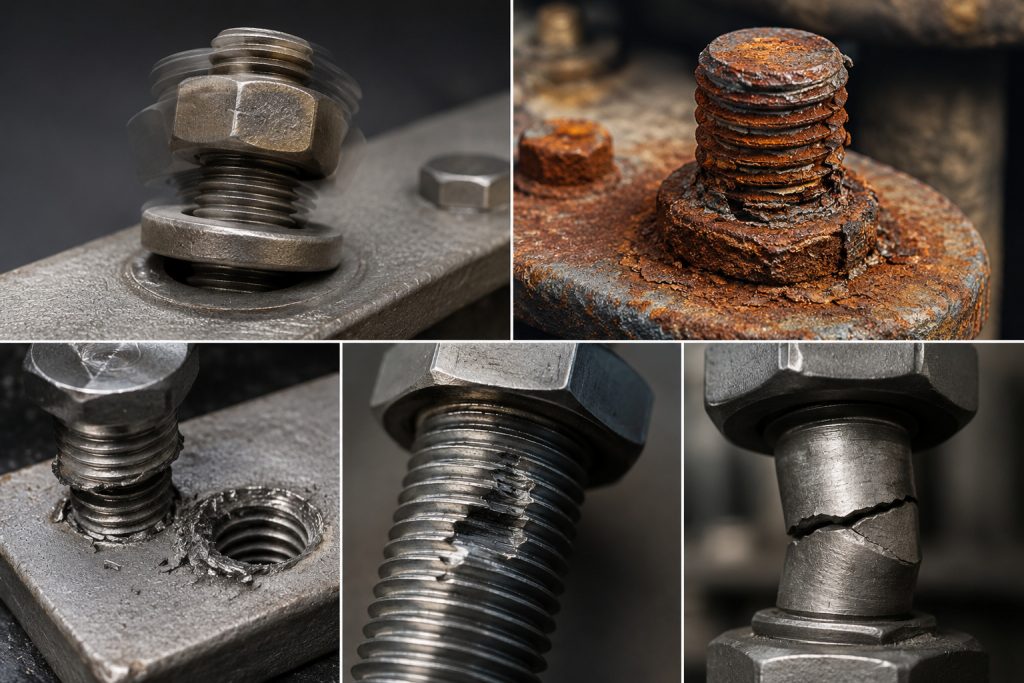
Vibration and insufficient preload can cause fasteners to loosen during operation.
Corrosion
Using unsuitable materials or coatings can result in corrosion, reduced cross-sectional area, and eventual mechanical failure.
Thread Damage
Cross-threading, excessive tightening, or incompatible components can damage threads and make maintenance difficult.
Galling
Some stainless steel fasteners can experience galling during installation, particularly when threads are subjected to high friction.
Appropriate material combinations, lubrication, installation procedures, and controlled tightening can help reduce the risk.
Fatigue Failure
Repeated cyclic loading can cause fatigue cracks even when the applied load is below the fastener’s static strength.
For equipment subject to continuous vibration or cyclic loading, fatigue resistance should be considered during joint design.
Industrial Fasteners and Equipment Reliability
A fastening system should not be considered separately from the equipment it supports.
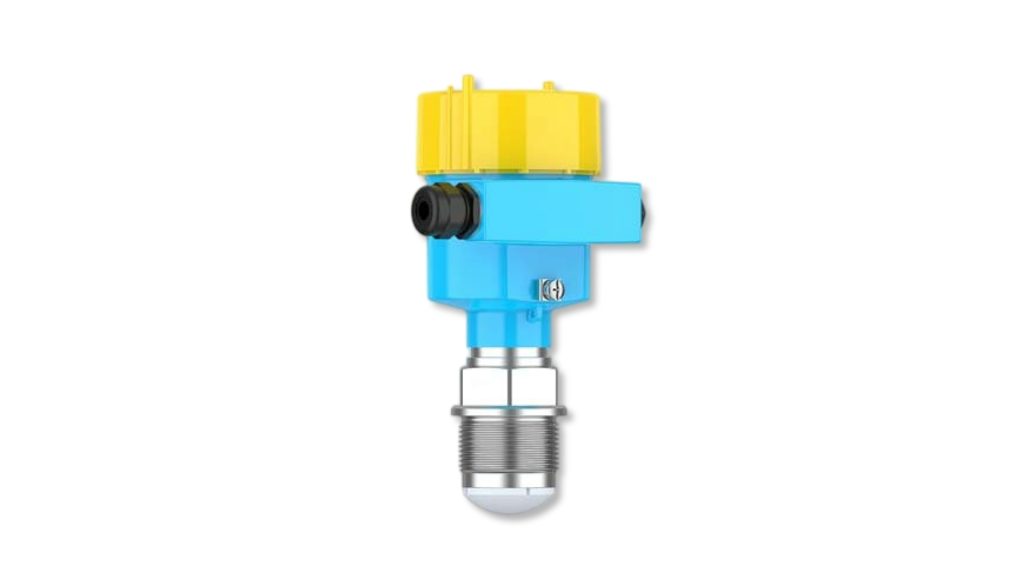
For example, an industrial level measurement instrument may be mounted to a tank using threaded connections, brackets, clamps, or flanges. The connection needs to remain mechanically stable while the equipment is exposed to temperature changes, vibration, pressure, and environmental conditions.
Similar requirements exist for sensors, valves, pumps, motors, control cabinets, process instruments, and pipeline components.
A properly selected fastener helps maintain mechanical integrity and reduces the likelihood of unexpected maintenance.
Fastener Selection Checklist
Before purchasing or specifying industrial fasteners, engineers can review the following factors:
- What components need to be connected?
- What mechanical loads will the joint experience?
- What are the operating temperature and pressure?
- Is the environment corrosive?
- What fastener material is appropriate?
- What strength grade is required?
- What thread standard and size are needed?
- Is vibration present?
- Is a locking mechanism necessary?
- What tightening torque or installation procedure is required?
- Will the connection need frequent disassembly?
- Are there applicable industry or equipment standards?
Answering these questions can significantly reduce the risk of selecting an unsuitable fastener.
Conclusion
Fasteners may be relatively small components, but they play a critical role in the safety, stability, and service life of industrial equipment. Bolts, nuts, screws, washers, studs, and other fastening components are used in machinery, piping systems, pumps, valves, pressure equipment, water treatment systems, energy facilities, and manufacturing equipment.
The best industrial fastener is not necessarily the strongest or most expensive option. It is the fastener that provides the required mechanical performance while remaining compatible with the equipment’s materials, operating environment, temperature, vibration, corrosion conditions, installation method, and maintenance requirements.
When selecting fasteners for industrial equipment, engineers should evaluate the complete connection system rather than focusing only on dimensions. Proper material selection, thread compatibility, strength, corrosion resistance, tightening procedure, and vibration resistance all contribute to a reliable mechanical connection.
For industrial equipment manufacturers and engineering companies, establishing clear fastener specifications and standardized selection procedures can also simplify procurement, maintenance, and quality control over the entire equipment lifecycle.