1. Why Do Wastewater Tanks Need Stable and Reliable Level Measurement?
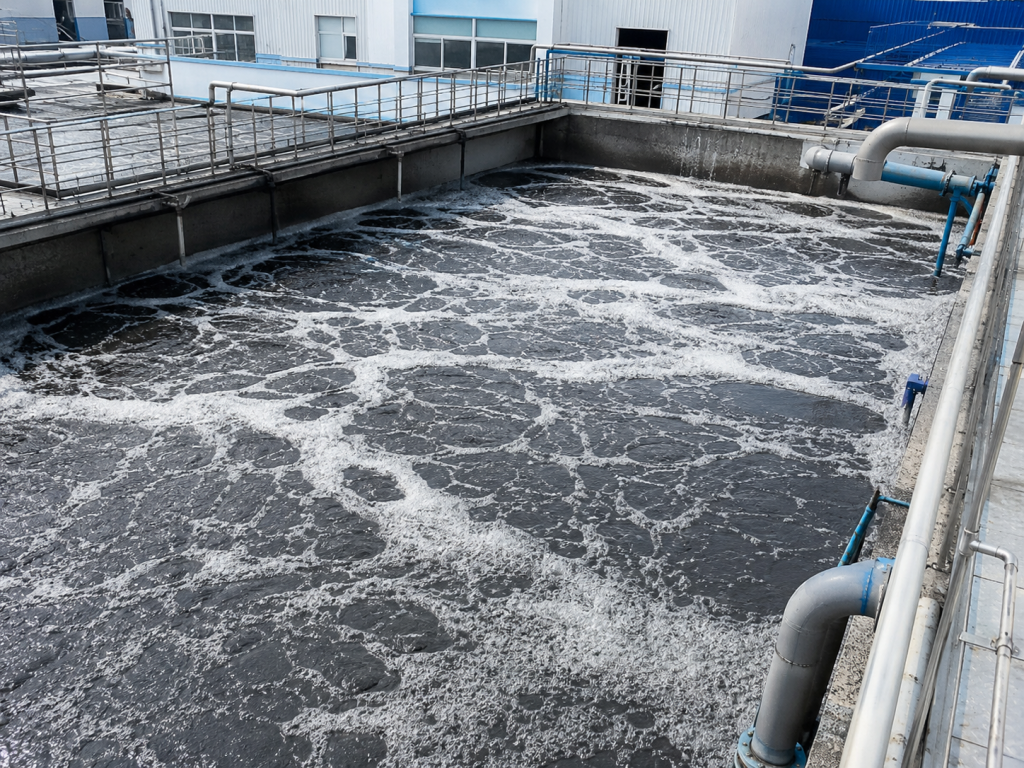
In wastewater treatment systems, wastewater tank level monitoring may seem like a basic process, but it directly affects influent regulation, lift pump start-stop control, chemical dosing, overflow protection, sludge discharge, and site safety. Whether in municipal wastewater treatment plants, industrial wastewater stations, or wastewater treatment systems in chemical, food, pharmaceutical, electroplating, printing, and dyeing industries, unstable level measurement may lead to pump dry running, tank overflow, fluctuating treatment loads, inaccurate dosing, and even environmental compliance risks.
The operating conditions of wastewater tanks are usually more complex than those of clean water tanks. The medium may contain suspended solids, oil, foam, sludge, corrosive components, and sediments. Some tanks may also be exposed to humid environments, condensation, odors, and corrosive gases. Therefore, a wastewater tank level meter must not only measure the liquid level but also provide good reliability, anti-interference capability, material compatibility, and maintenance convenience.
Among various level measurement instruments, float level indicators are widely used in wastewater tanks, sewage tanks, collection wells, equalization tanks, and chemical dosing tanks because of their simple structure, stable signal output, convenient installation, and suitability for continuous level monitoring and remote control. For projects that require level signals to be connected to PLC, DCS, instrument panels, or pump control cabinets, float level indicators with 4-20mA output are especially practical.
2. Working Principle of a Float Level Indicator
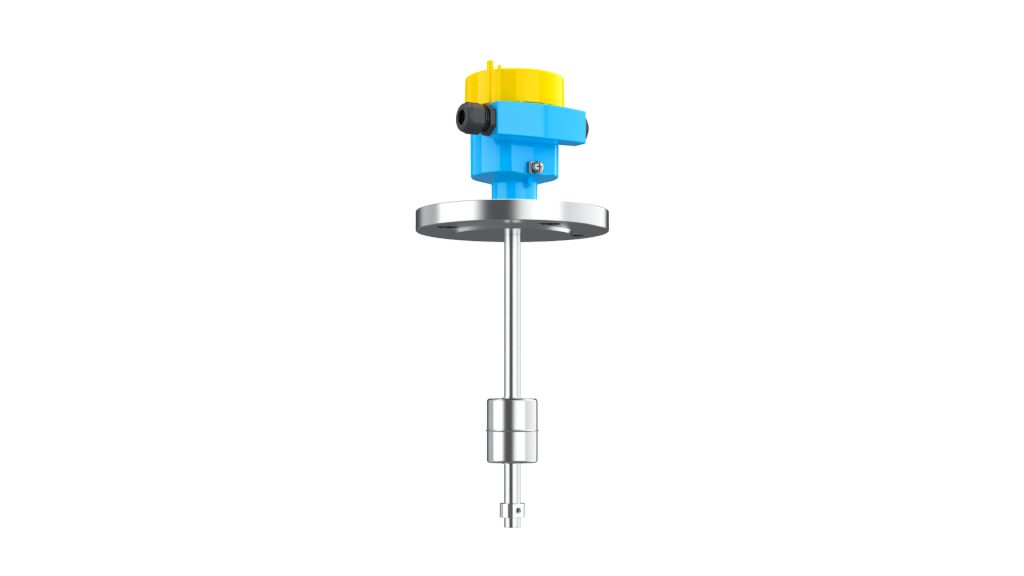
A float level indicator usually works based on Archimedes’ buoyancy principle. When the liquid level in the wastewater tank rises or falls, the float moves up and down with the liquid surface. The magnetic component inside the float interacts with the reed switch or resistance chain inside the guide rod, causing the internal resistance value of the sensor to change continuously. The transmitter then converts this change into a standard current signal, such as 4-20mA, for remote level display, monitoring, and automatic control.
Unlike a point-type float switch, a continuous float level indicator provides real-time liquid level trends rather than simply indicating “high level” or “low level.” This is very important for equalization tanks, lift pump stations, buffer tanks, and intermediate tanks in wastewater treatment systems. Operators can use the level change to judge influent flow, pump operation status, and system load. The automation system can also use the level signal to realize pump start, pump stop, high-level alarm, low-level protection, and interlock control.
3. Typical Applications of Float Level Indicators in Wastewater Tanks
3.1 Continuous Level Monitoring in Equalization Tanks
The function of an equalization tank is to balance water quality and water quantity, preventing instantaneous influent impact on downstream treatment units. A float level indicator installed in the equalization tank can continuously output level signals, allowing the control system to monitor the water level in real time. When the level reaches the upper limit, the system can start the lift pump. When the level drops to the low-level setpoint, the system can stop the pump to prevent dry running. In this way, the float level indicator helps the wastewater treatment system maintain a relatively stable operating rhythm.
3.2 Pump Control in Collection Tanks and Lift Pump Stations
Collection tanks and lift pump stations are key parts of wastewater treatment projects that require accurate level control. If the liquid level is too high, wastewater may overflow. If the level is too low, the pump may run dry and become damaged. A float level indicator can transmit continuous level signals to the control cabinet, enabling one-duty-one-standby pump operation, multiple pump rotation, segmented start-stop control, and abnormal level alarms. Compared with manual inspection, automatic level control reduces the pressure on site operators and improves pump station efficiency.
3.3 Level Measurement in Industrial Wastewater Tanks
Industrial wastewater has complex compositions and may contain acids, alkalis, salts, oil, solvents, or other corrosive substances. For general industrial wastewater, a float level indicator made of 304 or 316L stainless steel can be selected. For wastewater tanks containing strong acids, alkalis, or highly corrosive liquids, a corrosion-resistant coated product should be preferred. In Jiwei’s Float-11 series, the Float-11A standard type is suitable for most liquid level measurement applications, while the Float-11P acid and alkali resistant type adopts ECTFE or PTFE coating, making it more suitable for strongly corrosive liquid conditions.
3.4 Level Control in Chemical Dosing Tanks and Chemical Storage Tanks
Chemical storage tanks for PAC, PAM, pH adjustment agents, disinfectants, and other chemicals used in wastewater treatment also require stable level monitoring. If the chemical level is too low, dosing may be interrupted, affecting effluent quality. If the chemical level is too high, overflow and waste may occur. A float level indicator can be used for continuous level display in chemical tanks and can also work with the control system to provide low-level reminders, refill prompts, and dosing interlocks. For corrosive chemicals, the acid and alkali resistant float level indicator should be selected according to the properties of the medium.
3.5 Monitoring in Sludge Tanks, Return Flow Tanks, and Intermediate Tanks
Sludge tanks and return flow tanks may contain high concentrations of suspended solids, making level measurement susceptible to buildup, sedimentation, and foam. When a float level indicator is used in such applications, special attention should be paid to the installation position and maintenance cycle. If there are many floating objects or sticky substances on site, a guide pipe, protective sleeve, or more suitable installation point may be considered to prevent the float from being blocked. With proper selection and installation, a float level indicator can still provide stable monitoring in intermediate tanks, return flow tanks, and buffer tanks.
4. Application Advantages of Jiwei Float-11 Series Float Level Indicators
In wastewater tank applications, the advantages of Jiwei’s Float-11 series float level indicators are mainly reflected in the following aspects.
4.1 Continuous Level Signal Output
Wastewater treatment automation systems usually need to connect level signals to PLC, DCS, or control cabinets. The 4-20mA standard signal has strong versatility, convenient remote transmission, and easy integration, making it suitable for remote wastewater tank monitoring, level display, and pump control interlocking. For wastewater stations requiring digital upgrades or unattended operation, continuous level signals are more valuable than single-point alarms.
4.2 Material Options for Different Wastewater Media
Wastewater tank media vary greatly, and one material cannot cover all conditions. Jiwei’s Float-11A standard type uses 304 or 316L stainless steel and is suitable for most common liquid level measurement applications. The Float-11P acid and alkali resistant type adopts ECTFE or PTFE coating, making it suitable for highly corrosive liquid measurement. For industrial wastewater, acid-base wastewater, chemical dosing tanks, and other applications, selecting the correct wetted material can significantly extend the service life of the instrument.
4.3 Protection Rating Suitable for Humid Sites
Wastewater treatment sites are usually humid. Some tanks are located outdoors or in semi-open areas, where instruments may be exposed to water vapor, rainwater, condensation, and corrosive gases for a long time. The Jiwei Float-11 series adopts a sealed design, and the protection rating of the complete instrument can reach IP66/IP67, which helps improve reliability in humid and complex environments.
4.4 Convenient On-Site Reading and Maintenance
Daily operation and maintenance of wastewater stations require quick judgment of tank level status. A float level indicator with a high-brightness LED display head allows site personnel to read level data conveniently. The display head can be configured horizontally or vertically according to the installation direction, adapting to different tank structures, platforms, and nozzle layouts, thereby improving inspection convenience.
4.5 Suitable for Some Explosion-Proof Applications
Some industrial wastewater stations, chemical wastewater tanks, or treatment areas containing volatile media may require explosion-proof instruments. Jiwei’s Float-11 series has explosion-proof and intrinsically safe related certifications, providing more options for projects with safety requirements. Whether an explosion-proof model is required should be determined according to the site’s hazardous area classification, medium properties, and project design standards.
5. Key Selection Points for Wastewater Tank Float Level Indicators
5.1 Clarify the Measurement Purpose
Before selecting a model, it is necessary to confirm whether the purpose is continuous level monitoring or only high and low level alarm. If real-time level display, pump start-stop control, and signal transmission to the central control system are required, a continuous output float level indicator should be selected. If the purpose is only overflow prevention or dry-run protection, a level switch solution may also be used. However, in wastewater treatment projects with a higher degree of automation, a continuous level meter is usually more beneficial for refined management.
5.2 Confirm the Corrosiveness of the Medium
For domestic sewage and general industrial wastewater, 304 or 316L stainless steel standard models can be considered. If the medium contains strong acids, strong alkalis, high salt, chloride ions, or corrosive chemicals, the ECTFE/PTFE coated acid and alkali resistant float level indicator should be preferred. During selection, the medium name, concentration, temperature, pH value, and whether it contains solid particles should be provided to determine material compatibility.
5.3 Confirm Measuring Range and Tank Structure
The measuring range of Jiwei’s Float-11 series covers common tank level requirements, but each project should still be confirmed according to tank depth, installation nozzle position, dead zone, maximum level, minimum level, and control points. For deeper tanks, the guide rod length should be determined properly. For narrow collection wells, attention should be paid to float diameter, installation space, and maintenance space.
5.4 Consider Medium Density and Float Matching
A float level indicator works by buoyancy, so the density of the medium affects float movement and measurement stability. During selection, it is necessary to confirm whether the density of wastewater or chemicals meets the instrument requirements. If the medium density is low or fluctuates greatly, a matching float specification should be selected to achieve better measurement performance.
5.5 Evaluate the Influence of Foam, Floating Objects, and Sludge
Foam, oil, plastic fragments, fibers, and sludge flocs are common in wastewater tanks. If the float is covered by buildup or blocked for a long time, measurement accuracy may be affected. Therefore, the installation position should avoid influent impact zones, areas with strong aeration, and places where floating objects accumulate. If necessary, a protective sleeve, guide pipe, or regular cleaning system can be used.
6. Installation and Maintenance Suggestions
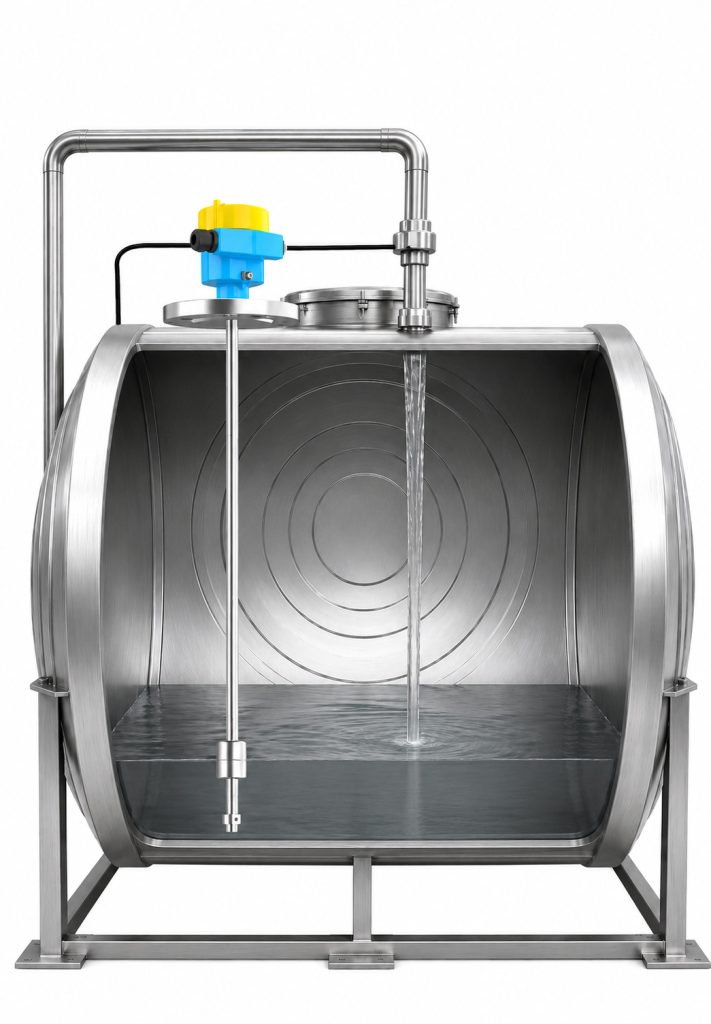
A float level indicator should be installed vertically in a wastewater tank whenever possible to ensure that the float can move smoothly up and down. The installation position should avoid mixers, aeration heads, inlet pipes, and pump suction areas to reduce water flow impact and foam interference. If the liquid surface fluctuates greatly, mechanical protection or a damping structure can be used to improve stability.
For maintenance, regularly check whether the float surface has sludge, oil, or fiber entanglement; whether the guide rod has scaling, corrosion, or deformation; whether the junction box seal is intact; and whether the signal output is stable. For highly corrosive or high-sludge-concentration applications, the maintenance cycle should be shortened according to site experience. Good installation and maintenance often ensure long-term stable wastewater tank level measurement more effectively than simply pursuing high technical parameters.
7. Combined Use of Float Level Indicators and Other Level Instruments
In wastewater treatment projects, float level indicators do not necessarily have to be used alone. For open large tanks, rivers, rainwater wells, and similar scenarios, radar level meters or ultrasonic level meters offer the advantage of non-contact measurement. For bypass display on storage tanks, magnetic flap level gauges can be considered. For key high and low level alarms, level switches can be used as redundant protection. The advantage of float level indicators lies in their mature structure, stable continuous output, moderate cost, and easy integration into control systems, making them suitable for routine level monitoring in many wastewater tanks, collection tanks, and chemical tanks.
Therefore, in actual projects, the selection should be based on medium properties, tank structure, installation conditions, control requirements, and budget. For ordinary wastewater tanks, the Float-11A standard type can be used as a continuous level monitoring solution. For corrosive wastewater tanks or acid-base chemical tanks, the Float-11P acid and alkali resistant type is more targeted.
8. Frequently Asked Questions
1. Is a float level indicator suitable for wastewater tanks?
Yes. Float level indicators can be used for level measurement in wastewater tanks, collection tanks, equalization tanks, industrial wastewater tanks, and chemical tanks. However, if there are many floating objects, oil, or sludge on site, the installation position should be optimized and regular cleaning should be performed.
2. Should I choose a standard type or an acid and alkali resistant type for wastewater tanks?
For domestic sewage or general industrial wastewater, a 304/316L stainless steel standard type can be considered. If the medium contains strong acids, strong alkalis, or corrosive components, an ECTFE/PTFE coated acid and alkali resistant type is recommended.
3. Can a float level indicator control pumps?
Yes. After outputting the level signal, the float level indicator can be connected to a control cabinet, PLC, or secondary instrument to realize pump start-stop control, high and low level alarms, dry-run protection, and interlock control.
4. Will the float get stuck in a wastewater tank?
If there are many floating objects, fibers, or sludge deposits on site, the float may indeed be affected. Therefore, it should be installed away from areas where debris accumulates. A protective sleeve, guide pipe, or regular maintenance can help reduce the risk of blockage.
5. Why is level meter selection important in wastewater treatment projects?
A level meter is closely related to pump control, overflow protection, stable dosing, and continuous system operation. Improper selection may cause false alarms, frequent pump start-stop, level control failure, or increased maintenance costs. Choosing a float level indicator suitable for wastewater conditions helps improve the reliability and automation level of the wastewater treatment system.
9. Conclusion
The core value of applying float level indicators in wastewater tanks is to provide stable, continuous, and remotely transmissible level signals for wastewater treatment systems. Through proper selection, standardized installation, and regular maintenance, float level indicators can effectively serve equalization tank level monitoring, lift pump station control, industrial wastewater tank management, chemical dosing tank monitoring, and high-low level alarm applications.
Based on the features of Jiwei Automation’s Float-11 series, the Float-11A standard type is suitable for most common liquids and industrial wastewater measurement, while the Float-11P acid and alkali resistant type is more suitable for highly corrosive acid-base liquids and water treatment chemicals. For users building or upgrading wastewater treatment systems, choosing the right float level indicator can not only improve the accuracy and stability of level monitoring but also provide a reliable foundation for pump protection, automatic control, and long-term operation and maintenance.