1. Intrinsically Safe and Flameproof: Key Considerations for Explosion-Proof Level Instrument Selection
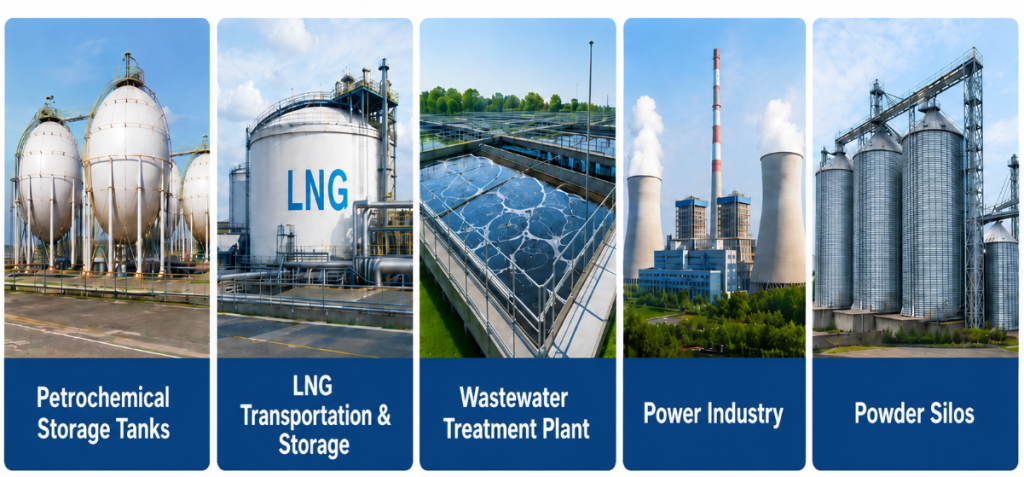
In industries such as petrochemical, LNG, coal chemical, pharmaceutical, wastewater treatment, power generation, oil storage, and powder silo management, level measurement is not only related to process control but also directly connected to production safety. Whether a storage tank overflows, a pump runs dry, a reactor level becomes abnormal, or a silo experiences blockage, inaccurate or failed level measurement can cause shutdowns, equipment damage, leakage, fire, or even explosion.
Therefore, in areas where explosive gases, vapors, combustible dust, or flammable media may exist, ordinary level instruments cannot be used directly. Explosion-proof level meters must be selected according to the hazardous area classification, medium characteristics, installation requirements, and control system needs. Among common explosion-proof protection methods, “intrinsically safe” and “flameproof” are the two most frequently compared options.
Many engineering, procurement, and maintenance teams often ask: What is the difference between intrinsically safe and flameproof? Should an explosion-proof level meter be intrinsically safe or flameproof? How should radar level meters, ultrasonic level transmitters, tuning fork level switches, and float level meters be selected for hazardous applications?
2. What Is Intrinsically Safe Protection?
Intrinsically safe protection, often referred to as “Ex i,” limits electrical energy at the circuit level. Under normal operation or specified fault conditions, the electrical sparks or thermal effects generated by the instrument circuit are not strong enough to ignite the surrounding explosive mixture.
In simple terms, an intrinsically safe instrument does not rely on a heavy enclosure to contain an explosion. Instead, it prevents ignition by ensuring that the electrical energy inside the circuit remains below the ignition threshold. Intrinsically safe instruments are widely used for low-power detection, signal acquisition, and automation control, including level switches, level transmitters, pressure transmitters, temperature transmitters, and some radar level instruments.
The advantages of intrinsically safe level instruments include high safety performance, low-energy signal loops, and convenient integration with automation systems. They are especially suitable for applications requiring frequent maintenance, commissioning, or remote signal transmission. However, intrinsically safe protection is not determined by the instrument alone. Safety barriers, isolators, wiring methods, grounding, and cable parameters must also comply with intrinsic safety requirements. Otherwise, the overall loop may fail to meet the required explosion-proof standard.
3. What Is Flameproof Protection?
Flameproof protection, commonly marked as “Ex d,” follows a different principle. A flameproof instrument uses a strong explosion-proof enclosure to contain components that may generate sparks, arcs, or high temperatures. Even if ignition occurs inside the enclosure, the housing can withstand the internal explosion pressure and prevent flames from spreading to the external explosive atmosphere through flamepaths, threaded joints, cable entries, and other structural designs.
In other words, flameproof protection does not mean that ignition can never occur inside the device. It means that any internal explosion is safely contained within the enclosure and cannot ignite the surrounding hazardous environment. Flameproof instruments usually have stronger housings and stricter requirements for enclosure strength, sealing, flamepath design, fasteners, and cable glands.
Flameproof level meters are commonly used in petroleum, chemical, wastewater, oil tank farms, and hazardous liquid storage applications. For example, a flameproof ultrasonic level transmitter can be used for non-contact level measurement in open tanks, sump pits, biochemical reaction tanks, sedimentation tanks, and other locations where explosive gases may be present. After installation, special attention should be paid to cable sealing glands, enclosure cover tightening, reliable grounding, and maintenance procedures to ensure that the flameproof performance remains effective.
4. Intrinsically Safe vs Flameproof: It Is Not About Which Is Better, but Which Is More Suitable
There is no absolute answer to whether intrinsically safe or flameproof protection is better. The right choice depends on the working conditions.
From the protection principle, intrinsic safety limits electrical and thermal energy, while flameproof protection relies on a robust enclosure to contain internal ignition. From the system design perspective, intrinsically safe instruments require safety barriers, isolators, and intrinsically safe loop design, while flameproof instruments place greater emphasis on enclosure structure, cable entries, sealing, and installation quality. From the application perspective, intrinsically safe protection is often used for low-power signal instruments, while flameproof protection is suitable for devices requiring higher power supply capability or stronger field enclosure protection.
For level measurement applications, intrinsically safe solutions are often preferred in highly hazardous gas environments where the instrument is primarily used for signal detection. Flameproof solutions are often selected when the site requires a robust housing, high ingress protection, or certified Ex d equipment. For complex applications, level instruments with both intrinsic safety and flameproof certifications can make project selection, procurement, and standardization easier.
5. Why Are Level Instruments Important in Hazardous Areas?
Level instruments are used to measure the liquid level or material level in vessels, storage tanks, open channels, pipelines, and silos. They can be divided into continuous level measurement instruments and point level detection instruments. Continuous measurement instruments include radar level meters, ultrasonic level transmitters, float level meters, and magnetic level gauges. Point level detection instruments include tuning fork level switches, vibrating rod level switches, rotary paddle level switches, and RF admittance level switches.
In hazardous areas, level instruments play three important roles. First, they help prevent tank overflow and avoid leakage of flammable, explosive, toxic, or corrosive media. Second, they protect pumps, valves, compressors, and other equipment from dry running, overheating, or abnormal operation. Third, they provide reliable signals to DCS, PLC, and SIS systems for automatic interlocking, alarm, and remote monitoring.
For example, in LNG pipelines, level switches must adapt to low-density liquids, high pressure, explosion-proof requirements, and compact installation spaces. In chemical reactors, level instruments may face foam, vapor, viscous media, corrosion, and agitation interference. In wastewater pump stations or sump pits, level transmitters must combine non-contact measurement, corrosion resistance, moisture protection, and explosion-proof performance. In powder silos, level instruments must also deal with dust buildup, false echoes, bridging, material impact, and dust explosion protection requirements.
6. Typical Applications of Explosion-Proof Level Instruments Based on Jiwei Products
Jiwei’s level measurement product range includes radar level meters, ultrasonic level transmitters, tuning fork level switches, float level meters, vibrating rod level switches, rotary paddle level switches, RF admittance level switches, and magnetic level gauges. These products cover liquid level, material level, continuous measurement, and point level detection applications. For hazardous areas requiring intrinsically safe or flameproof protection, different level instruments can be selected according to the medium and installation conditions.
6.1 Explosion-Proof Radar Level Meters: Suitable for Complex Tanks, Dust, and High-Requirement Continuous Measurement
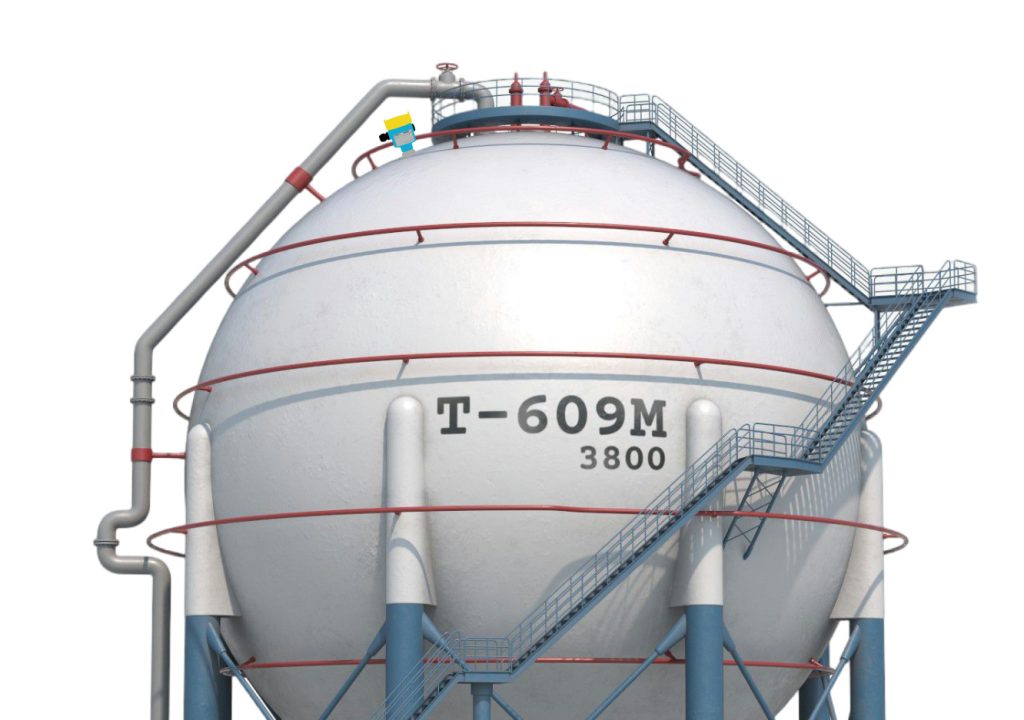
Radar level meters are non-contact continuous level measurement instruments. They are suitable for storage tanks, reactors, silos, oil tanks, solid material bins, and other vessels. High-frequency radar level meters have a narrow beam angle and strong focusing capability, making them more reliable in environments with vapor, dust, agitation, internal structures, or complex tank geometry.
Jiwei’s JWrada® radar level meter series includes models using 80GHz FMCW radar technology for continuous level measurement of liquids and bulk solids. In hazardous areas such as petroleum, chemical, and mining industries, radar level meters with intrinsic safety, flameproof, and dust explosion-proof certifications can meet both accurate measurement and safety requirements. Applications may include crude oil, refined oil, coal tar, crude benzene, chemical liquids, powders, and granular solids. The final selection should consider dielectric constant, measuring range, temperature, pressure, and installation method.
6.2 Flameproof Ultrasonic Level Transmitters: Suitable for Open Tanks and Corrosive Liquids
Ultrasonic level meters calculate level by emitting sound waves and receiving echoes. They offer non-contact measurement, easy installation, and relatively low maintenance costs. In wastewater treatment plants, municipal drainage pump stations, sump pits, biochemical tanks, and sedimentation tanks, explosion-proof ultrasonic level transmitters are required if flammable or corrosive gases may be present.
Jiwei’s Uson-21 flameproof ultrasonic level transmitter adopts a flameproof enclosure design and is suitable for environments containing explosive gases. Its non-contact measurement reduces the risk of direct contact between the probe and the medium. With temperature compensation, echo processing, corrosion-resistant probe materials, and RS-485 communication options, it can be applied in corrosive liquids, wastewater tanks, and open channels. For environmental protection and municipal engineering projects requiring remote monitoring, flameproof ultrasonic level transmitters can provide a balance of safety, economy, and ease of maintenance.
6.3 Explosion-Proof Tuning Fork Level Switches: Suitable for High/Low Level Alarms and Pump Protection
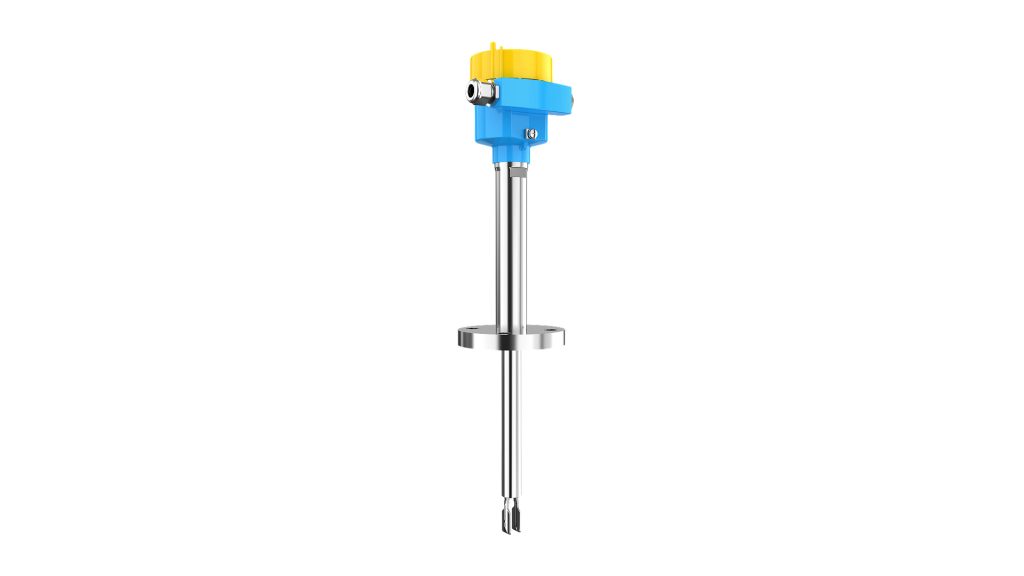
A tuning fork level switch is a point level detection instrument. It detects the presence or absence of liquid by monitoring changes in the vibration frequency of the fork. It is commonly used for high-level alarms, low-level alarms, pump dry-run protection, pipeline liquid detection, and safety interlocking.
In explosion-proof applications, tuning fork level switches are particularly suitable as independent safety boundary instruments. For example, a storage tank may use a radar level meter for continuous level measurement and an explosion-proof tuning fork level switch for high-high level alarm. A tuning fork switch can also be installed at a pump inlet to detect whether liquid is present and prevent dry running. For LNG, LPG, chemical solvents, pesticides, fragrances, acids, alkalis, and other media, the proper model should be selected according to density, viscosity, temperature, pressure, and corrosion conditions.
Jiwei’s Ring-11 explosion-proof tuning fork level switch can be used in LNG pipelines, pump protection systems, chemical storage tanks, reactors, and pesticide plants. Its short fork design is suitable for small pipelines and limited installation spaces. Its resistance to foam, bubbles, vibration, and liquid property changes helps improve the stability of point level detection. For applications with high safety interlocking requirements, tuning fork level switches with SIL certification, intrinsic safety certification, and flameproof certification are more suitable for integration into safety instrumented systems.
6.4 Explosion-Proof Float Level Meters: Suitable for Stable Level Transmission and Intuitive Measurement
Float level meters work based on the principle of buoyancy. As the liquid level changes, the float moves up and down, and the movement is converted into an electrical signal through magnetic coupling or other mechanisms. Float level meters have a straightforward structure and are suitable for liquid level measurement in tanks and vessels. They can also provide 4–20mA output for remote monitoring and control.
For acids, alkalis, corrosive liquids, or general liquid storage tanks, different wetted materials such as stainless steel or coated materials can be selected according to the medium. Float level meters with both flameproof and intrinsically safe certifications are suitable for hazardous areas requiring stable level transmission and local indication. Compared with radar and ultrasonic instruments, float level meters are contact-type instruments. Therefore, selection should focus on liquid density, viscosity, crystallization, buildup, corrosion, and available installation space.
7. Key Selection Points for Explosion-Proof Level Instruments
When selecting intrinsically safe or flameproof level instruments, users should not focus only on price and measuring range. The following factors should be considered together.
First, identify the hazardous area classification. Different zones have different requirements for equipment protection level, explosion-proof type, gas group, dust category, and temperature class. Before selecting a level instrument, it is necessary to determine whether the site contains explosive gas or combustible dust, and whether it belongs to Zone 0, Zone 1, Zone 2, or dust Zone 20, Zone 21, or Zone 22.
Second, analyze the medium characteristics. Is the medium liquid or solid? Is it flammable, explosive, corrosive, viscous, foaming, crystallizing, or prone to buildup? Is the dielectric constant high enough? Does dust adhere easily? These factors directly affect the choice of radar, ultrasonic, tuning fork, float, or other level measurement technologies.
Third, review process conditions. Temperature, pressure, vacuum, vapor, agitation, foam, condensation, dust, and material impact all influence whether the instrument should be high-temperature, high-pressure, corrosion-resistant, flameproof, intrinsically safe, or dust explosion-proof.
Fourth, clarify the measurement purpose. Continuous level control is usually handled by radar level meters, ultrasonic level transmitters, float level meters, or similar instruments. High/low level alarms, pump protection, and safety interlocking are better handled by tuning fork level switches, vibrating rod level switches, and other point level instruments. In many high-risk applications, a combination of continuous measurement and independent point level alarm is recommended to improve system redundancy and safety.
Fifth, check output signals and system integration. Common outputs include 4–20mA, HART, RS-485/Modbus, relay, NAMUR, and transistor output. If the instrument needs to be connected to DCS, PLC, or SIS systems, the signal type, power supply, isolator, safety barrier, and explosion-proof loop design should be confirmed in advance.
Sixth, verify certification and documentation. Explosion-proof level instruments should have certificates matching the site requirements. Product nameplates, explosion-proof markings, manuals, installation instructions, and wiring diagrams must be complete. For export projects or international engineering projects, CE, EAC, SIL, and other certifications may also be required.
8. Conclusion: Select Intrinsically Safe or Flameproof Instruments Based on Actual Working Conditions
Intrinsically safe and flameproof protection are two important explosion-proof methods. Intrinsic safety limits energy at the source to prevent ignition, while flameproof protection uses a strong enclosure to contain possible internal ignition. For level measurement applications, the key is to select the right solution based on hazardous area classification, medium characteristics, process conditions, measurement purpose, and control system requirements.
In chemical storage tanks, LNG pipelines, oil tank farms, wastewater pump stations, power plant boilers, and powder silos, explosion-proof level instruments are not just measuring devices. They are part of the overall industrial safety system. Radar level meters can provide continuous monitoring, flameproof ultrasonic level transmitters are suitable for open tanks and corrosive environments, explosion-proof tuning fork level switches can be used for high/low level alarms and pump protection, and explosion-proof float level meters are suitable for stable level transmission.
For users selecting explosion-proof liquid level meters, material level meters, or level switches, the real question should not be simply “Is intrinsic safety better than flameproof protection?” Instead, the focus should be: Which explosion-proof type, measurement principle, certification level, and installation solution best match the actual working conditions? Only when the explosion-proof method, measurement technology, and field application are properly matched can level measurement be safe, reliable, stable, and maintainable over the long term.