
In industrial sites such as chemical plants, metallurgy facilities, power plants, building material factories, environmental protection projects, cement plants, food processing plants, and pharmaceutical workshops, level meters are widely used measuring instruments. They are mainly used to detect the liquid level, material level, or interface position inside storage tanks, silos, reactors, boilers, ash bins, buffer tanks, and other vessels.
When selecting a level meter, many users focus on measuring range, accuracy, medium type, pressure, explosion-proof rating, and signal output. However, one seemingly ordinary but extremely important component is often overlooked: the heat sink.
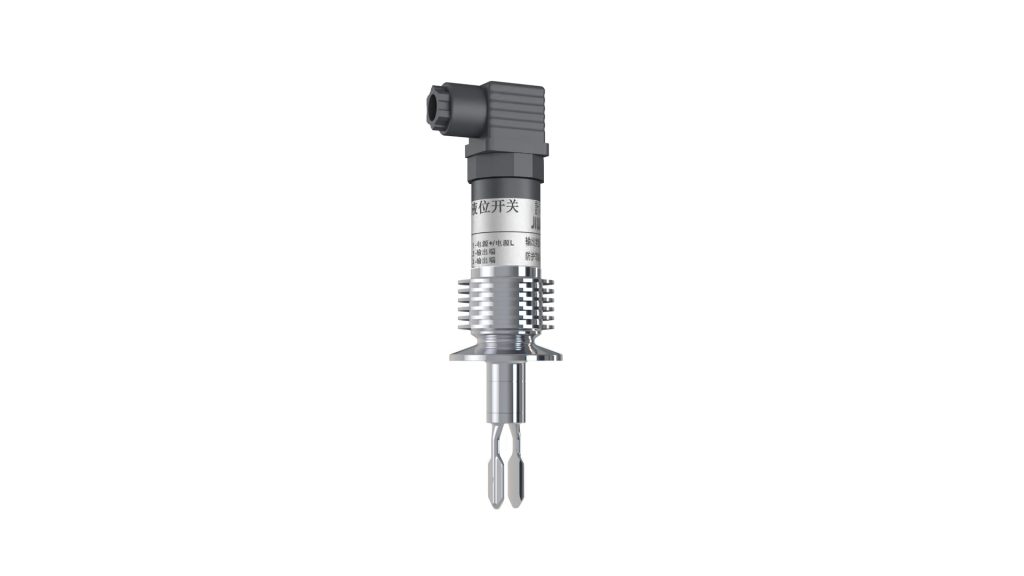
Especially in high-temperature level measurement applications, a finned metal structure is often installed above the process connection or between the process connection and the instrument housing. This is the heat sink of the level meter, also known as a heat dissipation device, cooling extension, thermal isolation section, or high-temperature cooling structure.
So why does a level meter need a heat sink? What exactly does the heat sink do? Which applications require a heat sink? This article explains the function, working principle, structure, application scenarios, and selection points of level meter heat sinks.
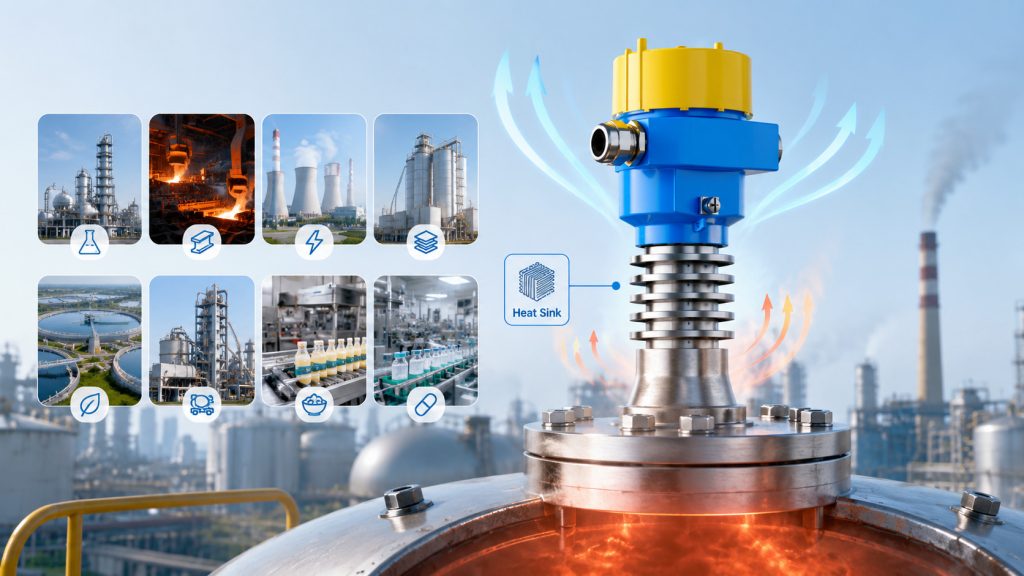
1. What Is a Level Meter Heat Sink?
A level meter heat sink is a heat dissipation and protection structure installed between the process connection of the level meter and its electronic unit. It is usually made of stainless steel, aluminum alloy, or other heat-resistant metal materials, and is commonly designed with multiple fin-like layers.
By increasing the contact area between the metal surface and the surrounding air, the heat sink can quickly release heat from the tank, pipeline, or high-temperature medium into the ambient environment. This helps reduce the temperature transferred to the electronic housing, sensor components, seals, and internal circuits of the instrument.
Simply put, the heat sink acts as a “thermal buffer zone” for the instrument. When the tank or medium below is hot, heat can be conducted upward through the flange, threaded connection, probe rod, antenna, or mounting parts. Without a proper heat dissipation structure, high temperature may directly reach the instrument head, causing electronic components to age faster, measurement signals to drift, sealing parts to fail, or even the entire instrument to malfunction.
The purpose of the heat sink is to disperse, release, and weaken heat during transmission, helping the core components of the level meter remain within a safe temperature range.
2. Why Does a Level Meter Need a Heat Sink?
Industrial level measurement environments are often complex. In some applications, the medium temperature is not high, and a standard level meter can meet the requirements. However, in high-temperature applications involving steam, thermal oil, asphalt, molten salt, hot water, coal powder, clinker, cement powder, boiler ash, reactor materials, and other hot media, the instrument is exposed to long-term heat conduction and thermal radiation. In such cases, a heat sink becomes highly important.
First, the heat sink protects electronic components. Modern level meters usually contain electronic modules, microprocessors, circuit boards, displays, terminals, and signal output units. Although these parts have a certain level of temperature resistance, they are not designed to operate continuously under excessive heat. High temperatures can accelerate component aging, affect signal stability, and in severe cases cause startup failure or frequent alarms.
Second, the heat sink improves measurement stability. The accuracy of a level meter is affected not only by the sensor itself, but also by temperature changes. High temperature may change the physical properties of certain materials, causing seals to expand, connection parts to deform, or signal noise to increase. By using a heat sink, the temperature rise of the instrument head can be reduced, minimizing the influence of temperature fluctuation on measurement results.
Third, the heat sink extends the service life of the instrument. Many users find that the same model of level meter can work for many years in normal-temperature conditions, but may fail frequently in high-temperature environments. This does not necessarily mean the instrument quality is poor. In many cases, the problem is that heat conduction and thermal protection were not fully considered during selection. A properly configured heat sink can effectively reduce damage to internal components, sealing structures, and the instrument housing.
Fourth, the heat sink helps reduce maintenance costs. Replacing instruments in high-temperature applications is often troublesome. It may require shutdown, pressure release, cooling, or special work permits. Once a level meter fails due to overheating, it not only increases spare-part costs but may also affect continuous production. Selecting a high-temperature level meter with a heat sink from the beginning is often more economical than frequent later maintenance.
3. Working Principle of a Level Meter Heat Sink
The working principle of a level meter heat sink is not complicated. It mainly involves three processes: heat conduction, heat convection, and thermal radiation.
When heat from a high-temperature medium or tank is transferred upward through the process connection, the heat sink first absorbs part of the heat. Since heat sinks are usually made of metals with good thermal conductivity, the heat is quickly distributed to each fin. The finned structure greatly increases the heat dissipation area, allowing heat to exchange with the surrounding air more efficiently.
In a naturally ventilated environment, the air around the heat sink becomes warm and rises, while cooler air flows in to replace it, forming natural convection. The smoother the airflow, the better the cooling effect. If there is wind, ventilation, or auxiliary cooling at the site, the heat dissipation efficiency can be further improved.
In addition, the heat sink also radiates heat outward from its surface. Although thermal radiation is not the main heat dissipation method, it still provides some assistance in high-temperature applications. The number of fins, thickness, spacing, length, material, and installation direction all affect the actual cooling performance.
4. Which Level Meters Commonly Use Heat Sinks?
Not all level meters require heat sinks. However, in high-temperature level measurement, the following instruments are commonly equipped with heat dissipation structures.
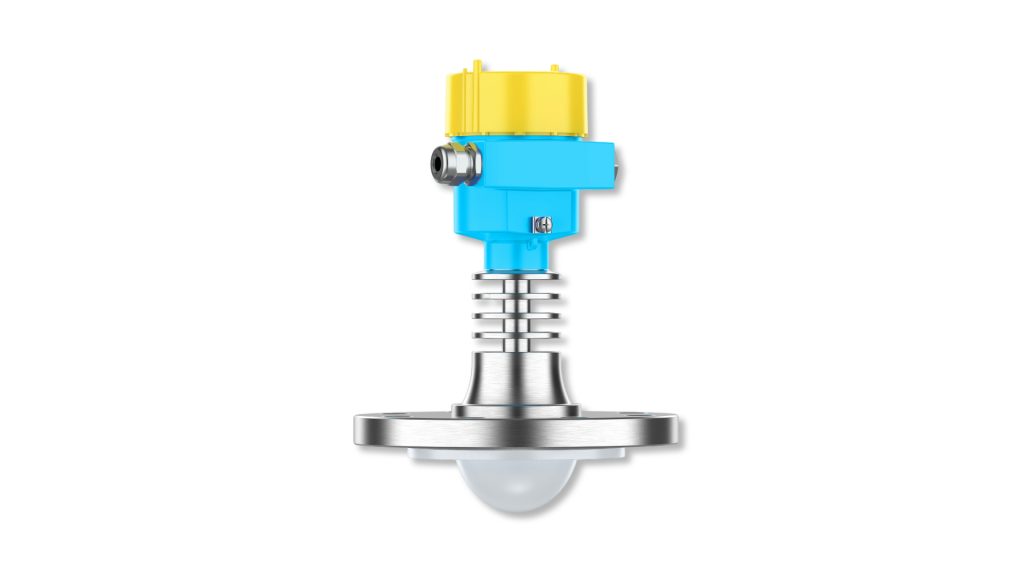
Radar Level Meter Heat Sink
Radar level meters are widely used for continuous level measurement of liquids, slurries, powders, and granular materials. In high-temperature tanks, reactors, steam environments, or hot material silos, the antenna and flange of a radar level meter may be exposed to high temperatures. A radar level meter heat sink can effectively reduce the temperature of the instrument head and protect the electronic module and high-frequency components.
In cement plants, steel plants, power plant ash silos, chemical reactors, and similar applications, high-temperature radar level meters are often used together with heat sinks, purging devices, or extended antennas to handle dust, high temperature, condensation, and material buildup.
Guided Wave Radar Level Meter Heat Sink
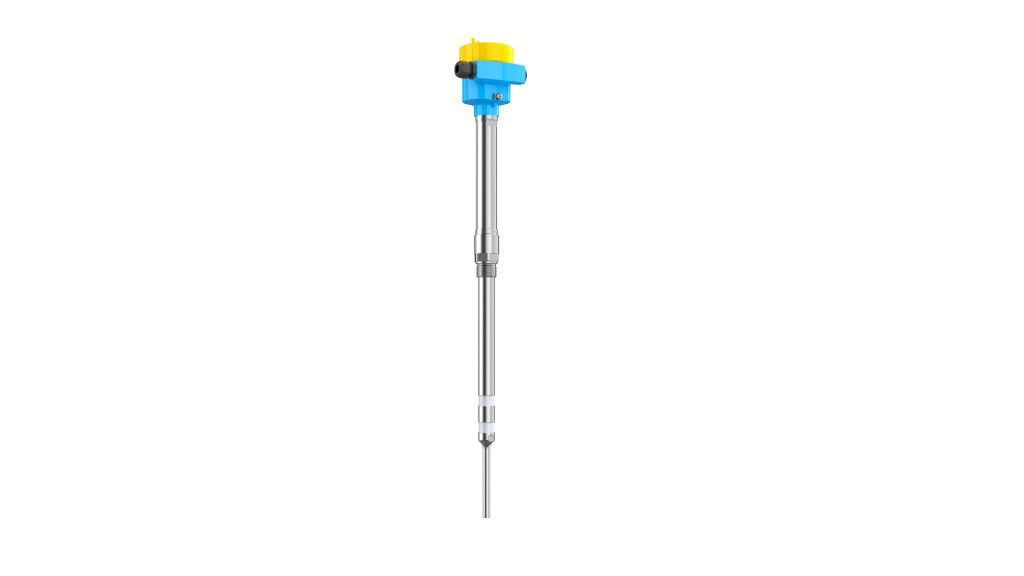
Guided wave radar level meters transmit electromagnetic wave signals through a probe rod or cable. They are suitable for small tanks, interface measurement, low-dielectric-constant media, and vessels with complex internal structures. Since the probe is in direct contact with the medium, heat from the high-temperature medium can easily be conducted upward along the probe. Therefore, in hot liquids, steam environments, or thermal oil tanks, guided wave radar level meters often need heat sinks.
RF Admittance Level Switch Heat Sink
RF admittance level switches are commonly used for level measurement of powders, granules, liquids, and viscous media. Their probes come into contact with the medium. When the medium temperature is high, heat may be transferred to the instrument head through the probe and mounting connection. Adding a heat sink can reduce the risk of overheating in the electronic unit and improve long-term operational stability.
Rotary Paddle Level Switch Heat Sink
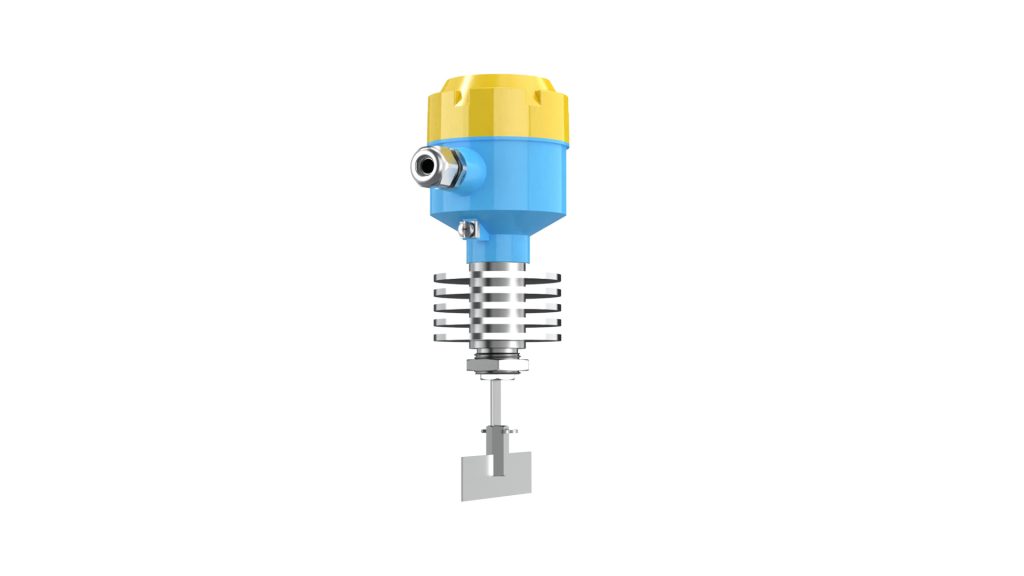
Rotary paddle level switches are often used for point level detection in powder silos, granular material bins, and bulk solid storage vessels. In applications involving cement, lime, coal powder, plastic pellets, feed, mineral powder, and other materials, some silos may have high internal temperatures. For high-temperature powders or hot material bins, rotary paddle level switches can use extended shafts, thermal isolation structures, or heat sinks to protect the motor and microswitch.
Tuning Fork Level Switch Heat Sink
Tuning fork level switches are suitable for point level detection of liquids, powders, and granular materials. In high-temperature liquids, hot dust, or steam environments, heat sinks can reduce the influence of heat on piezoelectric components, electronic circuits, and wiring chambers, making the switch signal more stable and reliable.
5. Which High-Temperature Applications Require Level Meter Heat Sinks?
Level meter heat sinks are mainly used in applications where the medium temperature is high, tank thermal radiation is strong, ambient temperature is elevated, or the installation position has poor ventilation.
Common applications include chemical reactor level measurement, high-temperature storage tank monitoring, thermal oil tank level measurement, steam condensate tank level measurement, asphalt tank level measurement, boiler drum and auxiliary systems, ash silo level measurement in power plants, clinker and raw material silos in cement plants, high-temperature material bins in steel plants, metallurgical furnace material silos, waste incineration systems, drying equipment level detection, food sterilization equipment, and cooking equipment liquid level control.
In these applications, the level meter may face not only high temperature but also dust, pressure, corrosion, material buildup, vibration, condensation, steam impact, and other challenges. Although the heat sink cannot solve every problem, it is one of the most basic and important protective measures in high-temperature level measurement.
6. Key Points for Selecting a Level Meter Heat Sink
Choosing a level meter heat sink is not just about appearance. It should be evaluated according to actual working conditions.
First, the medium temperature and ambient temperature should be clearly confirmed. The higher the medium temperature, the more important the heat sink length, number of fins, and temperature resistance become. If the ambient temperature is also high, such as in outdoor tank farms during summer, boiler rooms, areas near kilns, or enclosed workshops, the cooling effect may be reduced. In such cases, sunshades, radiation protection, or forced ventilation may also be needed.
Second, the process connection should be considered. Different level meters may use threaded connections, flanges, clamps, sanitary fittings, or other mounting methods. The heat sink must match both the instrument and the vessel connection to ensure mechanical strength, sealing performance, and installation stability. For high-pressure or vacuum applications, sealing structure and pressure rating must be carefully checked.
Third, material compatibility is important. Although the heat sink usually does not directly contact the medium, it is connected to the process connection, instrument housing, and site environment. In applications with corrosive gases, acid or alkali vapor, salt spray near coastal areas, or outdoor rain exposure, materials with better corrosion resistance and suitable surface treatment should be selected.
Fourth, explosion-proof and ingress protection requirements should be confirmed. In petrochemical plants, coal chemical facilities, oil tank farms, and dust explosion hazardous areas, level meters must meet relevant explosion-proof requirements. As part of the instrument structure, the heat sink must not affect the explosion-proof performance, grounding continuity, or enclosure protection rating of the complete instrument.
Fifth, installation space should be checked in advance. A heat sink increases the overall height of the level meter. If the tank top has limited space, dense pipelines, insulation layers, guardrails, platforms, or other obstacles, the installation dimensions must be confirmed beforehand to avoid installation difficulties or maintenance problems.
7. Installation and Use Recommendations for Level Meter Heat Sinks
To ensure good heat dissipation, the heat sink should be installed where surrounding air can circulate freely. It should not be completely wrapped with thick insulation cotton, plastic covers, or other materials. If the tank body needs insulation, the heat sink should normally be kept outside the insulation layer. Otherwise, its cooling ability will be significantly reduced.
For outdoor level meters, sunshades or rainproof covers may be added according to site conditions. However, the cover should not be too closed, otherwise it may block air convection and reduce cooling performance.
For silo tops with heavy dust, dust accumulated on the heat sink surface should be cleaned regularly. A thick dust layer can reduce heat dissipation efficiency.
During routine instrument inspection, the temperature of the heat sink and instrument head can be included as a check item. If the instrument housing feels abnormally hot, the display becomes unstable, the signal fluctuates significantly, or alarms occur frequently, users should check whether the heat sink is blocked, improperly installed, covered by insulation, exposed to excessive ambient temperature, or insufficiently selected for the application.
8. Is a Bigger Heat Sink Always Better?
Many users believe that the larger the heat sink, the safer the instrument. This is not always true. The size of the heat sink should be determined based on medium temperature, ambient temperature, instrument temperature rating, installation method, and available space.
A heat sink that is too small may fail to reduce temperature effectively. However, an oversized heat sink may increase the installation height and mechanical load. In areas with strong vibration or elevated mounting positions, it may also create structural stability risks.
Therefore, when selecting a high-temperature level meter, users should provide complete application parameters to the manufacturer, including medium name, medium temperature, ambient temperature, pressure, installation method, tank material, insulation condition, presence of steam, explosion-proof requirements, measuring range, and site space limitations. Based on these details, the manufacturer can recommend a suitable level meter model and heat sink structure.
9. Common Misunderstandings About Level Meter Heat Sinks
The first misunderstanding is assuming that a high-temperature-rated instrument does not need a heat sink. In fact, the process-end temperature resistance and the electronic-housing temperature resistance of many level meters are not the same. The process connection may withstand high temperature, but that does not mean the electronic unit can operate under the same temperature for long periods.
The second misunderstanding is wrapping the heat sink inside the insulation layer. Tank insulation is designed to reduce heat loss, while the heat sink is designed to release heat. If the heat sink is completely covered, its heat dissipation function will be weakened or even lost.
The third misunderstanding is ignoring ambient temperature. Medium temperature is not the only factor. Outdoor exposure in summer, poor workshop ventilation, and strong thermal radiation from nearby equipment can all increase the temperature of the instrument.
The fourth misunderstanding is focusing only on price and ignoring service life. A high-temperature level meter with a heat sink may have a slightly higher initial cost. However, for continuous high-temperature production sites, it can reduce instrument failures, shutdown risks, and maintenance frequency. In many cases, the overall cost is lower in the long run.
10. Conclusion: A Small Heat Sink Can Make a Big Difference
A level meter heat sink is not just an appearance accessory. It is an important component that protects the instrument, stabilizes signals, and extends service life in high-temperature level measurement.
For radar level meters, guided wave radar level meters, RF admittance level meters, rotary paddle level switches, tuning fork level switches, and other instruments, whenever high-temperature media, strong thermal radiation, or poor ventilation conditions exist, the need for a heat sink should be carefully evaluated.
In actual selection, users should not only consider the price and accuracy of the level meter, but also pay close attention to medium temperature, ambient temperature, installation method, explosion-proof requirements, material corrosion resistance, and maintenance convenience.
A properly selected level meter heat sink can improve measurement reliability, reduce failure rates, and lower maintenance costs in high-temperature applications.
If your site involves high-temperature storage tanks, hot material silos, steam environments, dusty level measurement, or corrosive media, it is recommended to consult the supplier about heat sink configuration when selecting a level meter. A suitable heat sink can help the level meter operate more stably, last longer, and perform more safely in harsh industrial environments.