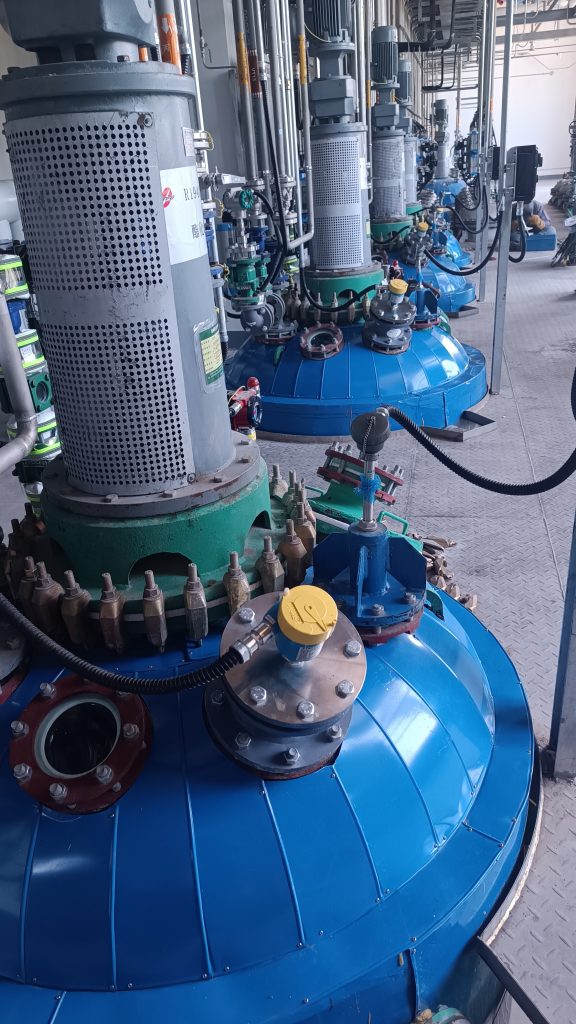
In industries such as chemicals, pharmaceuticals, environmental protection, food processing, and papermaking, storage tanks, reactors, pipelines, and process vessels frequently contain acids, alkalis, solvents, pharmaceutical liquids, and industrial wastewater.
When conventional level switches remain in contact with these corrosive liquids for extended periods, their probes may corrode, seals may deteriorate, and output signals may become unstable. These problems can increase maintenance costs, interrupt production, and create potential safety risks.
A corrosion-resistant tuning fork level switch is a point level detection instrument designed specifically for corrosive liquid applications. It determines whether the sensing fork is covered by liquid by monitoring changes in its vibration frequency.
The instrument can be used for high-level alarms, low-level alarms, pump start-stop control, dry-run protection, and overfill prevention in tanks, process vessels, and other industrial equipment.
Unlike level switches that depend on buoyancy or moving mechanical components, tuning fork level switches have a compact structure and contain no mechanical transmission parts that are easily worn. Their performance is generally unaffected by changes in liquid conductivity or dielectric constant, making them particularly suitable for industrial applications that require reliable, long-term operation.
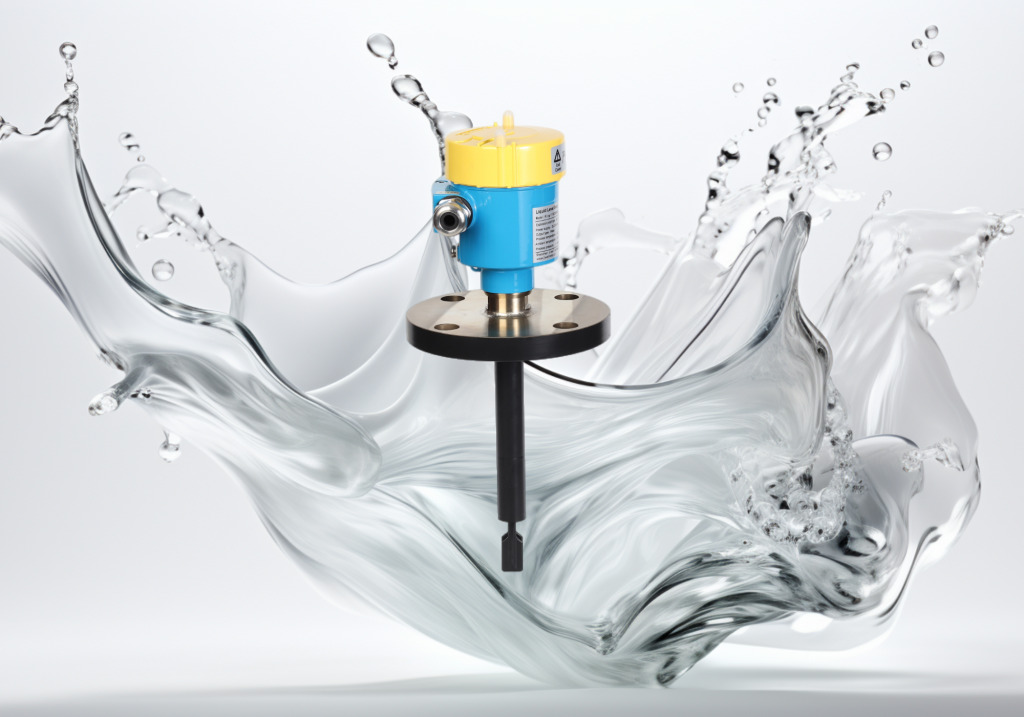
1. How Does a Corrosion-Resistant Tuning Fork Level Switch Work?
The sensing fork of a tuning fork level switch is driven by piezoelectric elements and continuously vibrates at its natural resonance frequency.
When the fork is exposed to air, it maintains its normal vibration frequency and amplitude. Once the liquid reaches and covers the fork, the damping effect of the liquid causes the vibration frequency and amplitude to change.
The electronic detection unit identifies this change and generates a switching signal. The signal can then be transmitted to a PLC, DCS, relay, alarm panel, or other control system to activate a level alarm or process interlock.
The main difference between a corrosion-resistant tuning fork level switch and a standard model lies in the materials or protective coatings used on its wetted components.
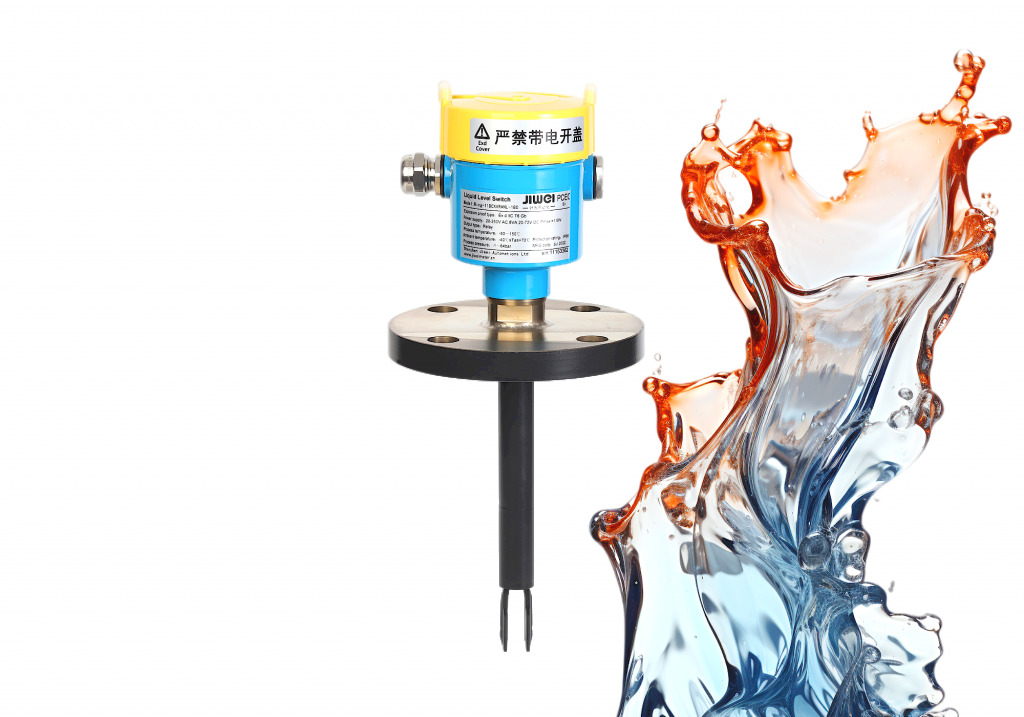
For example, the sensing fork and process connection of the Jiwei Ring-11 coated corrosion-resistant tuning fork level switch can be supplied with ECTFE, PFA, or enamel coating options, depending on the chemical properties of the process medium.
These protective solutions retain the advantages of tuning fork vibration technology while reducing the risk of corrosion caused by strong acids, strong alkalis, and other aggressive liquids.
2. Key Advantages of Corrosion-Resistant Tuning Fork Level Switches
2.1 Suitable for a Wide Range of Corrosive Liquids
In hydrochloric acid, sulfuric acid, alkaline solutions, pharmaceutical liquids, industrial wastewater, and certain organic chemicals, material compatibility directly affects the operating life of a level instrument.
A corrosion-resistant tuning fork level switch uses carefully selected sensing fork materials, process connections, seals, and protective coatings to withstand the target process medium. This helps reduce the risk of perforation, leakage, coating deterioration, and performance degradation caused by chemical corrosion.
However, “corrosion-resistant” does not mean that one material is suitable for every chemical medium.
Before selecting a product, users should identify the exact medium, concentration, operating temperature, process pressure, and the presence of particles or impurities. The appropriate wetted material or coating should then be selected according to its chemical compatibility with the application.
2.2 Reliable Performance in Foam, Bubbles, and Turbulence
The surface of an industrial liquid is rarely completely stable. Foam, bubbles, agitation, turbulence, and continuous level fluctuations may all be present inside a process vessel.
A tuning fork level switch determines the point level mainly by detecting whether the fork is covered by liquid. When installed correctly, it can reduce the influence of false surfaces, light foam, and air bubbles on the measurement result.
For liquids with a certain degree of viscosity, stable point level detection can also be achieved by confirming the viscosity range, selecting a suitable fork design, choosing the correct mounting direction, and maintaining appropriate cleaning conditions.
2.3 Compact Design and Flexible Installation
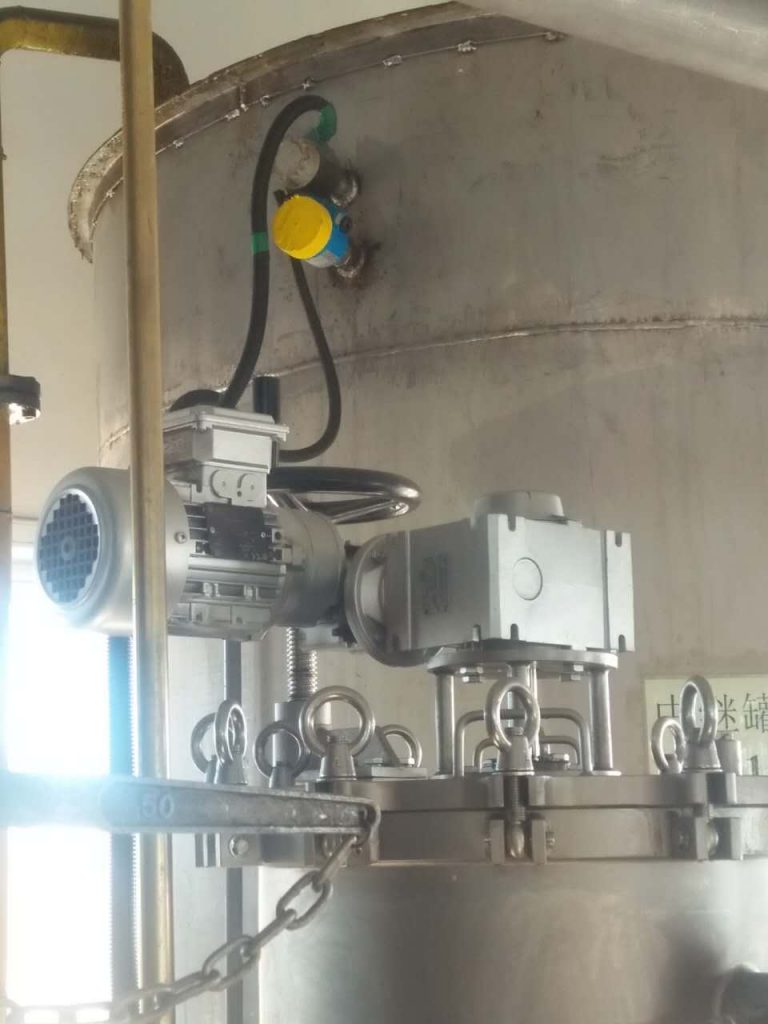
Installation space on storage tanks, reactors, and process pipelines is often limited.
The Ring-11 tuning fork level switch features a compact fork design and can be installed horizontally or vertically, depending on the process conditions. It is suitable for high- and low-level detection in tanks, vessels, and certain pipeline applications.
Users can choose threaded connections, flange connections, or extension tubes according to the dimensions of the vessel, the required alarm position, and the available process connection. This allows the sensing point to be positioned accurately at the desired level.
2.4 Easy Integration with Process Control Systems
Different industrial sites may require different power supplies and signal outputs.
A corrosion-resistant tuning fork level switch can be configured with relay, two-wire, NAMUR, or transistor output options, depending on the control system. It can be connected to PLCs, DCS platforms, safety barriers, pump control panels, and audible or visual alarm devices.
For hazardous areas containing flammable gases or combustible dust, the selected instrument should carry the appropriate intrinsic safety or explosion-proof certification. The certification must match the hazardous area classification, gas group, dust group, and temperature class of the installation site.
2.5 Suitable for Combined Corrosion, High-Temperature, and High-Pressure Conditions
In reactors, solvent-removal vessels, and chemical storage tanks, corrosive media are often accompanied by elevated temperatures, pressure fluctuations, vacuum conditions, or flammable atmospheres.
In these applications, selecting a protective coating based only on the name of the process medium is not sufficient. Engineers must also consider the process temperature, process pressure, sealing material, flange rating, extension design, heat dissipation, and pressure protection requirements.
For challenging applications, the Ring-11 tuning fork level switch can be configured with corrosion-resistant coatings, high-temperature options, Hastelloy wetted parts, explosion-proof protection, and high-pressure designs.
These configurations provide more targeted liquid level detection solutions for demanding industrial processes.
3. Typical Applications of Corrosion-Resistant Tuning Fork Level Switches
3.1 Chemical and Petrochemical Industry
The chemical industry is one of the most important application areas for corrosion-resistant tuning fork level switches.
The instrument can be installed in acid and alkali storage tanks, raw material tanks, reactors, intermediate vessels, separators, and solution preparation tanks. It may be configured as either a high-level or low-level alarm.
When the liquid reaches the preset detection point, the level switch sends an output signal to control a feed valve, discharge valve, or transfer pump. This can help prevent tank overfilling, pump dry running, material shortages, and equipment damage.
For highly corrosive, high-temperature, or flammable media, the corrosion-resistant material, process connection, temperature and pressure ratings, and explosion-protection method must all be evaluated during product selection.
3.2 Pharmaceutical and Fine Chemical Industry
Pharmaceutical and fine chemical production processes place high demands on operating stability, equipment materials, and process safety.
Corrosion-resistant tuning fork level switches can be used for point level detection in pharmaceutical liquid tanks, solvent tanks, preparation vessels, reactors, and cleaning systems.
Their switching signals can be easily connected to automatic control systems to support feed control, discharge control, pump protection, and high- or low-level alarms.
In addition to corrosion resistance, users should confirm the surface cleanliness requirements, sealing materials, and whether a hygienic process connection is required.
A standard corrosion-resistant configuration should not automatically be regarded as a food-grade or hygienic design.
3.3 Food and Beverage Industry
Common liquids in food and beverage production include syrups, fruit juices, seasoning liquids, cleaning solutions, and acidic or alkaline CIP chemicals.
A corrosion-resistant tuning fork level switch can be installed in raw material tanks, mixing vessels, CIP systems, batching equipment, and filling buffer tanks. It can help maintain a continuous material supply while reducing the risk of overfilling, material shortages, and pump dry running.
When the instrument comes into direct contact with food ingredients, users should pay particular attention to hygienic design, surface finish, process connection, and cleaning procedures.
When the instrument is mainly used to detect CIP cleaning liquids, greater attention should be given to the chemical compatibility of the coating, gaskets, and sealing materials with the acidic or alkaline cleaning solution.
3.4 Wastewater Treatment and Environmental Applications
Industrial wastewater may contain acids, alkalis, salts, oils, suspended solids, and a variety of chemical additives.
Corrosion-resistant tuning fork level switches can be used in equalization tanks, chemical dosing tanks, neutralization tanks, wastewater collection vessels, and dosing systems.
Typical functions include high-level alarms, low-level pump shutdown, and dry-run protection.
For wastewater containing heavy sediment, fibers, or materials that easily form deposits, the sensing fork should not be installed in a dead zone of the vessel. Sufficient space should also be provided for inspection and cleaning to prevent deposits from interfering with fork vibration.
3.5 Papermaking, Printing, and Surface Treatment Industries
Chemical solutions, coating liquids, and cleaning agents used in papermaking, as well as inks, paints, pickling solutions, plating liquids, and treatment chemicals used in printing and surface treatment, may corrode conventional metal probes.
A corrosion-resistant tuning fork level switch with properly selected wetted materials can be used for high- and low-level detection in storage tanks and process vessels.
This helps maintain a stable liquid supply and reduces production interruptions caused by material shortages, overfilling, or unplanned shutdowns.
4. How to Select a Corrosion-Resistant Tuning Fork Level Switch
The long-term reliability of a corrosion-resistant level switch depends heavily on accurate product selection.
First, complete information about the process medium should be provided. General descriptions such as “acid,” “alkali,” or “wastewater” are usually insufficient for determining the correct wetted material.
Users should provide the exact name of the medium, its concentration, mixture ratio, and any possible impurities.
Second, the normal operating temperature, maximum temperature, working pressure, and vacuum conditions should be confirmed.
Temperature changes can affect not only the corrosiveness of the liquid but also the suitability of the protective coating, sealing components, and electronic parts.
Third, the process connection and fork length should be selected according to the dimensions of the vessel and the mounting position.
Horizontal installation is commonly used for fixed-point level alarms. Vertical installation may use an extension tube to position the sensing fork deeper inside the vessel.
For pipeline applications, the pipe diameter, flow velocity, and orientation of the sensing fork should also be considered.
Fourth, users should confirm the power supply, output signal, fail-safe mode, and explosion-protection requirements.
A high-level overfill alarm and a low-level dry-run protection system may require different fail-safe logic. The actual control requirement should therefore be clearly specified before ordering.
Finally, the tendency of the process medium to crystallize, form scale, or adhere to surfaces should be evaluated.
If the sensing fork becomes covered with a thick or heavy deposit, its vibration characteristics may be affected. The installation position should therefore be optimized, and an appropriate inspection and cleaning schedule should be established.
5. Installation and Operating Guidelines
When installing a corrosion-resistant tuning fork level switch, the fork surfaces should be positioned appropriately in relation to the direction of liquid flow. This helps reduce direct impact and mechanical stress on the sensing fork.
The instrument should be installed away from feed inlets, areas of severe turbulence, and agitators. This prevents continuous material impact from damaging the fork or causing unstable switching.
For horizontal mounting, the installation should allow liquid to drain freely from the fork and prevent residual liquid from accumulating around the sensing element.
Before commissioning, the process connection, seals, electrical wiring, and grounding should be inspected carefully. The switching function should then be tested under actual or simulated level conditions.
During operation, users should regularly inspect the protective coating for damage, check the sealing area for leakage, examine the fork for deposits, and confirm that the output signal remains stable.
For highly corrosive, high-temperature, or safety-critical applications, a scheduled inspection and maintenance program is recommended.
6. Jiwei Ring-11: A Reliable Choice for Corrosive Liquid Level Detection
Jiwei specializes in the development, manufacturing, and application of industrial level measurement instruments.
Its product portfolio includes tuning fork level switches, tuning fork level switches for solids, vibrating rod level switches, RF admittance level switches, radar level transmitters, and magnetic level gauges.
For challenging applications involving corrosion, elevated temperatures, high pressure, foam, viscous liquids, or hazardous environments, the Ring-11 tuning fork level switch can be supplied with corrosion-resistant coatings, Hastelloy components, high-temperature configurations, explosion-proof protection, and high-pressure designs.
The configuration can be selected according to the process medium and control requirements of the installation.
In an actual industrial project, choosing a corrosion-resistant level switch should not be based only on price or a single technical specification.
More importantly, users should verify chemical compatibility, operating limits, installation conditions, signal requirements, and safety standards.
Providing complete process information at the beginning of a project allows the manufacturer to recommend a more appropriate configuration. This can reduce maintenance costs, extend instrument service life, and lower the risk of unplanned production shutdowns.
Conclusion
A corrosion-resistant tuning fork level switch offers a compact design, clear switching response, low maintenance requirements, and reliable performance under challenging process conditions.
It is an effective solution for high- and low-level alarms, pump protection, and overfill prevention in corrosive liquid applications.
For strong acids, strong alkalis, industrial wastewater, pharmaceutical liquids, and chemical solvents, product selection should consider the wetted material, chemical concentration, process temperature, pressure, connection type, explosion-protection rating, and the tendency of the medium to adhere or form deposits.
To select a suitable corrosion-resistant tuning fork level switch for a storage tank, reactor, or process pipeline, users can provide Jiwei with details such as the medium name, concentration, operating temperature, process pressure, installation method, and required output signal.
Based on this information, Jiwei can recommend a more appropriate Ring-11 solution for reliable corrosive liquid level detection.