In sulfuric acid production, chemical raw material storage and transportation, phosphate fertilizer manufacturing, metallurgy, fine chemicals, and other process industries, hot concentrated sulfuric acid storage tanks, buffer vessels, and process pipelines often require high-level alarms, low-level alarms, or pump dry-run protection.
Compared with ordinary media such as water or oil at ambient temperature, level detection in hot concentrated sulfuric acid is challenging not simply because of the high temperature. The real difficulty lies in the combined effects of high temperature, severe corrosion, concentration fluctuations, pressure, and repeated thermal cycling.
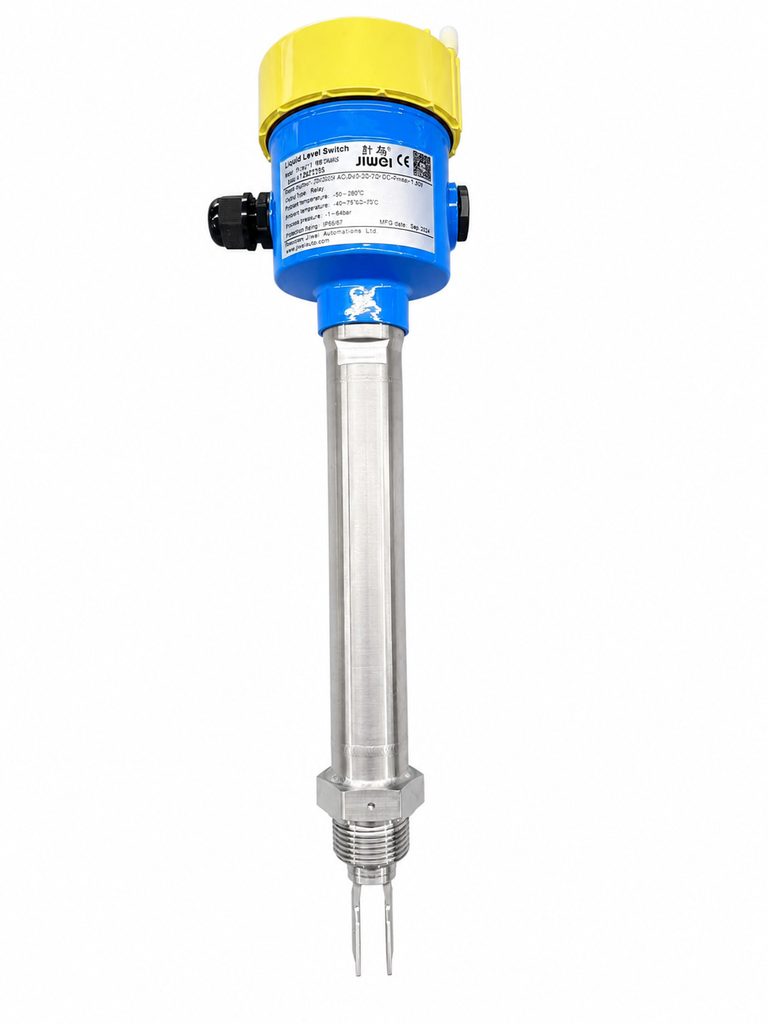
The Ring-11 tuning fork level switch detects point level by monitoring changes in vibration frequency. When the tuning fork comes into contact with liquid, its resonant frequency changes, and the electronics convert this change into a switching signal. With a fork length of approximately 40 mm, it can be used for point-level detection in storage tanks, vessels, and pipelines, and is available in high-temperature versions and with different corrosion-resistant options.
For hot concentrated sulfuric acid applications, correct selection should never be reduced to simply choosing a “high-temperature model.” The following factors should be evaluated together.
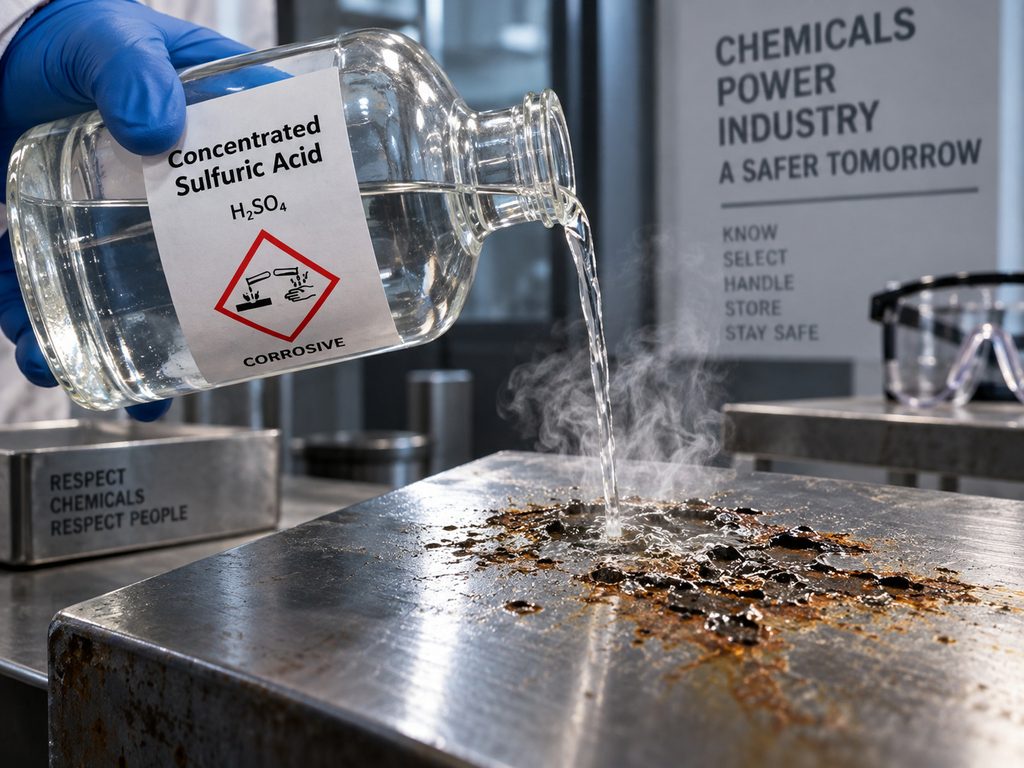
1. Confirm the Actual Sulfuric Acid Concentration First
When selecting a level switch for hot concentrated sulfuric acid, the first parameter to confirm is not the instrument model but the actual sulfuric acid concentration by mass and its expected variation range.
For example, a process may normally operate with 98% sulfuric acid, while during startup, shutdown, cleaning, water ingress, dilution, or process fluctuations, the concentration may fall to 95%, 90%, or even lower.
For metallic materials, sulfuric acid corrosion does not increase linearly with acid concentration. Certain stainless steels may exhibit acceptable resistance under specific high-concentration and relatively low-temperature conditions, but their corrosion behavior can change significantly when temperature rises or when the acid becomes diluted.
Therefore, the following information should ideally be provided during instrument selection:
- Normal sulfuric acid concentration
- Minimum concentration
- Maximum concentration
- Normal operating temperature
- Maximum short-term temperature
- Possible process conditions during startup and shutdown
One particularly important point is that a material suitable for 98% sulfuric acid at room temperature should not automatically be assumed to be suitable for 98% sulfuric acid at 100°C, 150°C, or higher temperatures.
The corrosion resistance of stainless steel in sulfuric acid is strongly dependent on both concentration and temperature. Material selection therefore becomes especially critical in hot concentrated sulfuric acid service.
2. Do Not Treat “280°C High-Temperature Resistance” and “Sulfuric Acid Corrosion Resistance” as the Same Specification
The high-temperature version of the Ring-11 can handle process temperatures of up to approximately -50 to 280°C. However, the 280°C rating primarily represents the temperature capability of the high-temperature instrument structure.
It does not mean that every corrosion-resistant coating, sealing material, or process connection can continuously operate in concentrated sulfuric acid at 280°C.
This is one of the most common misunderstandings when selecting instrumentation for high-temperature corrosive applications.
For example, the mechanical and electronic design of a level switch may be capable of withstanding a process temperature of 250°C. However, if the wetted tuning fork has a corrosion-resistant polymer coating, the actual allowable operating temperature must also take into account:
- Coating material
- Sulfuric acid concentration
- Exposure duration
- Process pressure
- Thermal cycling
- Long-term chemical compatibility
Therefore, two conditions must be satisfied simultaneously when selecting a Ring-11 for hot concentrated sulfuric acid:
Instrument temperature rating ≥ actual process temperature
and
Wetted materials must provide adequate corrosion resistance at the actual sulfuric acid concentration and temperature.
Neither condition should be considered independently.
If the actual process temperature exceeds 280°C, a standard high-temperature configuration should not be applied directly. An ultra-high-temperature design with an active cooling structure may be required. Such designs use cooling tubes or jackets to reduce the temperature reaching critical probe components and electronic parts.
3. Carefully Confirm the Wetted Materials of the Fork, Extension Tube, and Process Connection
The standard Ring-11 tuning fork, extension tube, high-temperature extension tube, and process connection can be manufactured from 316L stainless steel. Corrosion-resistant coating options such as ECTFE and PFA are also available, with published coating thicknesses of approximately 0.5 mm.
However, for hot concentrated sulfuric acid, simply seeing “316L” on a specification sheet is not enough to confirm suitability.
Whether 316L can be used depends on several factors, including:
- Sulfuric acid concentration
- Process temperature
- Fluid velocity
- Impurities
- Exposure conditions
- Possibility of local dilution
- Startup and shutdown conditions
In particular, if sulfuric acid is locally diluted, the temperature changes significantly, or the equipment experiences frequent startup and shutdown cycles, corrosion conditions may differ considerably from those under steady-state operation.
Where corrosion risk is higher, PFA- or ECTFE-coated configurations should be evaluated.
PFA is a fluoropolymer with excellent chemical resistance and relatively high temperature capability. However, when PFA is used as a coating on a level switch, its permissible operating temperature must be assessed according to the actual instrument construction and process environment rather than simply adopting the theoretical maximum temperature of the raw PFA resin.
Similarly, ECTFE offers strong chemical resistance to many aggressive acids, including high-concentration sulfuric acid. Nevertheless, its properties and long-term service life can still be affected by elevated temperatures.
For continuous hot concentrated sulfuric acid service above 100°C, and particularly above 150°C, the exact coating configuration should therefore be reviewed individually.
4. Corrosion Protection Must Cover More Than Just the Tuning Fork
Another common mistake is to focus only on the tuning fork while overlooking other wetted parts.
In reality, the entire wetted path should be reviewed, including:
- Tuning fork
- Fork root
- Extension tube
- Process connection
- Flange sealing surface
- Gasket
If the tuning fork itself has a corrosion-resistant coating while the fork root or process connection exposes an incompatible metallic material, localized corrosion may develop at these weak points.
The flange gasket should also be checked to ensure that it is compatible with the actual sulfuric acid concentration, temperature, and pressure.
At elevated temperatures, thermal expansion and contraction place additional demands on sealing reliability. Therefore, a gasket selected only on the basis of room-temperature sulfuric acid service may not be adequate for a high-temperature application.
5. Check Process Pressure Together With Temperature
Published specifications for the Ring-11 indicate a process pressure range of approximately -1 to 64 bar. However, for hot concentrated sulfuric acid service, the maximum pressure value on the instrument datasheet should not be considered in isolation.
The following values should be confirmed:
- Normal vessel or pipeline pressure
- Maximum operating pressure
- Design pressure
- Possible transient pressure
- Vacuum conditions, if applicable
The allowable pressure ratings of the flange, process connection, coating, and sealing arrangement at the actual operating temperature must also be considered.
For high-temperature and highly corrosive media, an appropriate engineering safety margin should normally be maintained.
This is particularly important on pressurized sulfuric acid pipelines. A leak at a process connection in hot concentrated sulfuric acid service can have significantly more serious consequences than a leak involving water or another nonhazardous liquid.
For this reason, the reliability of the complete process connection should take priority over simply comparing the maximum pressure ratings of different level switches.
6. Keep the Installation Point Away From Inlets and High-Velocity Flow
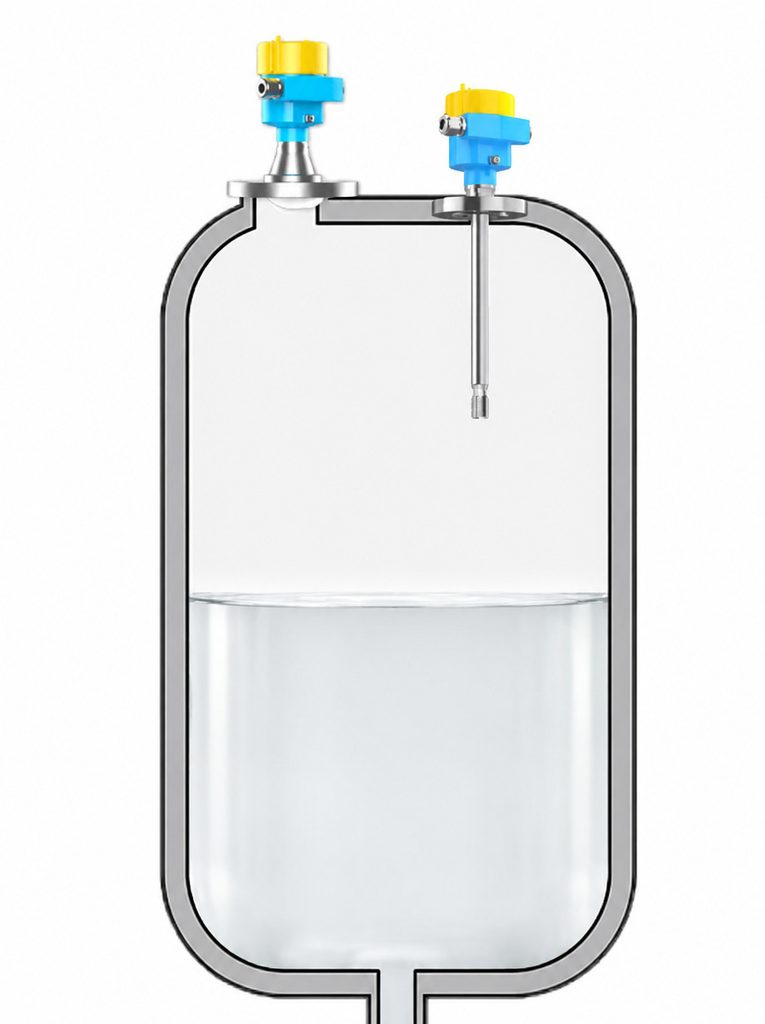
The Ring-11 can be mounted horizontally, vertically, or at an angle, but installation position becomes especially important in hot concentrated sulfuric acid applications.
The tuning fork should preferably be installed away from:
- Tank filling inlets
- Recirculation outlets
- High-velocity flow zones
- Strong turbulence
- Areas with direct mechanical impact
Direct impact from a high-velocity liquid stream can cause mechanical vibration and may increase the risk of false switching. It can also accelerate wear of corrosion-resistant coatings and shorten service life.
The orientation of the fork should also be selected to minimize flow resistance, material buildup, and interference caused by fluid movement.
For media that tend to leave deposits or residues, vertical installation may help reduce accumulation on the tuning fork.
The probe should also not be installed too deeply inside a narrow nozzle or dead pocket. Otherwise, even after the liquid level inside the main vessel has changed, residual liquid or trapped gas inside the nozzle may prevent the switch from accurately detecting the true vessel level.
7. Check the Ambient Temperature Around the Electronics, Not Just the Process Temperature
Hot concentrated sulfuric acid tanks often generate significant thermal radiation and conductive heat transfer around the instrument connection.
Although the Ring-11 high-temperature version is designed for elevated process temperatures, the electronic housing has its own permissible ambient temperature range. Published data indicate an enclosure ambient temperature range of approximately -40 to 70°C.
Therefore, when the tank wall temperature is high or the level switch is installed close to thermal insulation, special attention should be paid to the actual temperature around the electronics.
A high-temperature extension structure can be used to increase the distance between the electronic housing and the hot process connection.
At the same time, the electronic housing should generally not be completely buried inside the vessel insulation.
In other words:
A suitable process temperature rating does not automatically mean that the electronic housing temperature is acceptable.
Overheating of the electronic module is another common cause of instrument failure in high-temperature applications.
8. Select the Correct High/Low Mode and Output Signal
The Ring-11 can be used for both high-level overflow protection and low-level or pump dry-run protection.
When installed near the upper part of a sulfuric acid storage tank for overfill prevention, the switch should be configured according to the appropriate high-level alarm logic.
When installed at a low point or near a pump suction line to prevent dry running, the low-level switching logic should be selected accordingly.
Depending on the configuration, Ring-11 output options can include:
- Relay output
- Two-wire output
- NAMUR output
- NPN/PNP transistor output
Relay versions can support 20–253 V AC or 20–72 V DC, while two-wire versions can operate from 10–36 V DC and transistor outputs from approximately 6–48 V DC.
The output type should be selected according to the interface requirements of the site’s PLC, DCS, or safety instrumented system.
If the measurement point forms part of an important safety interlock, such as a high-high level shutdown on a concentrated sulfuric acid tank, the overall safety instrumented function must also be considered.
Although the Ring-11 is available with SIL2/SIL3-related certification capabilities, installing a SIL-certified level switch does not automatically make the entire safety loop SIL3.
The overall SIL capability must still be evaluated based on the complete safety function, including:
- Sensor
- Logic solver
- Final control element
- Voting architecture
- Diagnostic coverage
- Proof-test interval
- Failure rates
What Information Should Be Provided Before Selecting a Ring-11 for Hot Concentrated Sulfuric Acid?
To reduce the risk of incorrect selection, the following process information should ideally be provided during technical confirmation:
- Normal sulfuric acid concentration
- Minimum and maximum concentration
- Normal operating temperature
- Maximum short-term temperature
- Normal operating pressure
- Design pressure
- Tank or pipeline installation
- High-level or low-level application
- Required insertion length
- Installation orientation
- Process connection size and rating
- Need for PFA or ECTFE corrosion-resistant coating
- Power supply
- Required output signal
- Hazardous-area classification
- Whether the switch is connected to an SIS safety interlock
The more complete the process information is, the easier it becomes to determine whether the application requires a standard high-temperature version, a high-temperature corrosion-resistant configuration, or a specially engineered solution.
Frequently Asked Questions
1. Can a 316L Ring-11 be used directly in 98% sulfuric acid?
Not necessarily.
Suitability cannot be determined from the sulfuric acid concentration alone. The corrosion resistance of 316L stainless steel depends strongly on temperature, acid concentration, flow conditions, and impurities.
For hot sulfuric acid service, material compatibility should be verified for the actual operating conditions.
2. If the high-temperature Ring-11 is rated up to 280°C, can a PFA-coated version also be used directly in sulfuric acid at 280°C?
No.
The 280°C rating refers to the temperature capability of the high-temperature instrument structure. Corrosion-resistant coatings have their own thermal and chemical compatibility limitations.
Both the temperature rating and the corrosion resistance of the wetted materials must be verified simultaneously.
3. Will foam or bubbles in sulfuric acid affect a tuning fork level switch?
The Ring-11 detects point level through changes in vibration frequency and can generally tolerate foam, bubbles, and many demanding liquid conditions better than measurement principles that depend strongly on dielectric properties or optical interfaces.
However, the tuning fork should still be kept away from dead zones where large quantities of gas bubbles may accumulate.
4. What are the most important parameters when selecting a level switch for hot concentrated sulfuric acid?
There is no single decisive parameter.
The most important factors are the combination of:
sulfuric acid concentration, maximum process temperature, wetted material, corrosion-resistant coating, process pressure, and installation position.
Conclusion
When selecting a Ring-11 tuning fork level switch for hot concentrated sulfuric acid, the basic principle can be summarized as follows:
First determine the actual process conditions, then confirm the wetted-material compatibility, and finally select the appropriate temperature rating and instrument configuration.
Two common mistakes should be avoided.
The first is assuming that 316L stainless steel is inherently resistant to all concentrations and temperatures of concentrated sulfuric acid.
The second is assuming that because a high-temperature instrument structure can withstand up to 280°C, its corrosion-resistant coating can also operate continuously in concentrated sulfuric acid at the same temperature.
A reliable selection should evaluate sulfuric acid concentration, normal and abnormal temperatures, pressure, wetted materials, corrosion-resistant coatings, process connections, and installation conditions as an integrated system.
For critical installations involving continuously operating hot concentrated sulfuric acid, startup and shutdown dilution, thermal cycling, upset conditions, and long-term corrosion behavior should also be taken into account.
Only by matching the level switch to the complete process environment can reliable high-level alarms, low-level protection, and safety interlocks be achieved over the long term.