
Magnetic level gauges used in chemical processing, power generation, pharmaceutical manufacturing, metallurgy, and cryogenic storage often require thermal insulation, heat tracing, or cold insulation.
Common insulation methods include mineral wool, fiberglass, ceramic fiber, insulation tape, metal cladding, and vacuum jackets designed for high-temperature or cryogenic applications.
After these structures are installed, users often ask an important question:
Will thermal insulation or a vacuum jacket weaken the magnetic field and cause inaccurate level indication?
In most cases, fiberglass, ceramic fiber, insulation wool, air gaps, and vacuum layers do not directly block the magnetic field of a magnetic level gauge.
The two factors that require the most attention are:
- Whether the insulation or jacket significantly increases the distance between the magnetic float and the indicator;
- Whether carbon steel or another ferromagnetic material is positioned within the magnetic flux path.
Therefore, magnetic level gauges are not generally affected by insulation itself. However, unsuitable materials, excessive spacing, and improper structural design can reduce the reliability of the magnetic indicator.
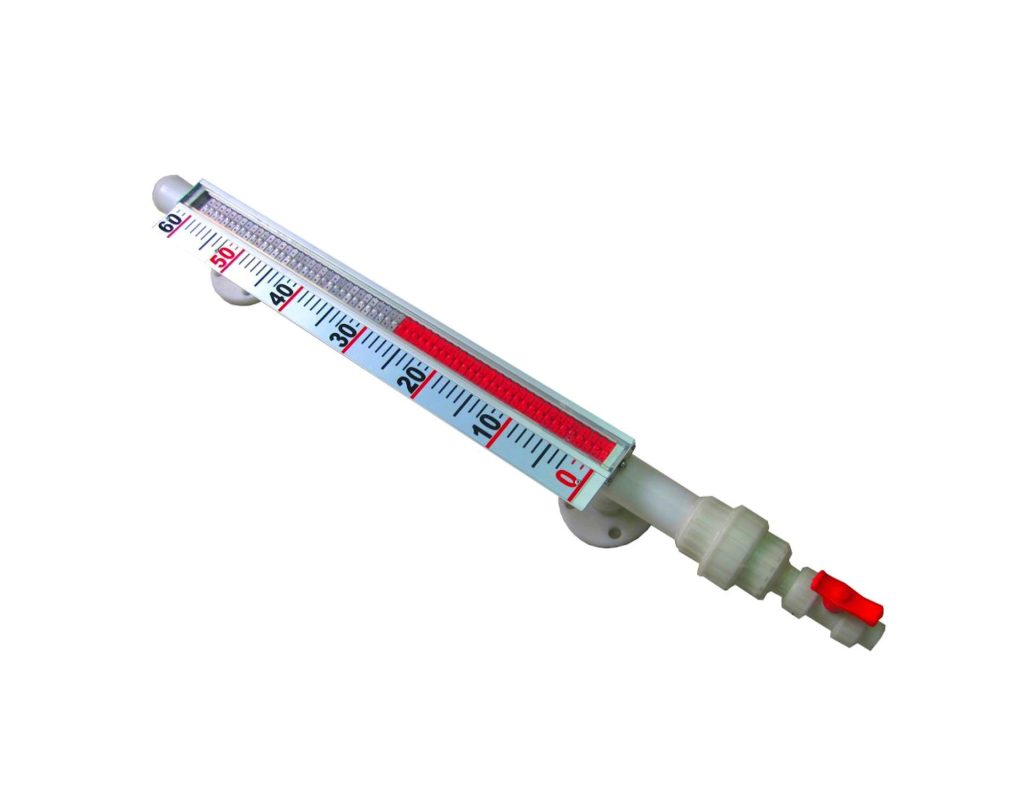
1. Why Does a Magnetic Level Gauge Require a Magnetic Field?
A magnetic level gauge typically consists of a measuring chamber, a magnetic float, and an external flag or roller indicator.
As the liquid level inside the vessel changes, the float moves upward or downward inside the chamber. A permanent magnet assembly inside the float generates a magnetic field that passes through the chamber wall and activates the magnetic flags in the external indicator.
The basic magnetic transmission path is:
Float magnet → chamber wall → external magnetic indicator
As long as the effective magnetic field reaching the indicator is strong enough, the flags will rotate correctly and display the liquid level.
For this reason, determining whether an insulation or jacket structure will affect the gauge requires more than checking whether an additional layer has been installed. The material, thickness, structure, and installation distance must all be considered.
2. Which Materials Can Affect the Magnetic Field?
Different materials interact with static magnetic fields in different ways.
Ferromagnetic Materials That Require Special Attention
The following materials should be used carefully within the magnetic field path of a magnetic level gauge:
- Carbon steel;
- Certain low-alloy steels;
- Martensitic stainless steel;
- Ferritic stainless steel;
- High-permeability magnetic alloys;
- Strongly magnetic protective covers, brackets, or enclosures.
These materials have relatively high magnetic permeability and may attract or redirect magnetic flux.
When a continuous ferromagnetic enclosure surrounds the measuring chamber or indicator, part of the magnetic flux may follow the metal structure instead of reaching the magnetic flags.
This can result in:
- Slow flag rotation;
- Flags failing to rotate at certain positions;
- Discontinuous level indication;
- Delayed response during rapid level changes;
- Unstable or incomplete flag indication.
Materials That Normally Do Not Block the Magnetic Field
Common non-ferromagnetic insulation materials generally have little direct effect on the magnetic field, including:
- Fiberglass;
- Ceramic fiber;
- Mineral wool;
- Non-magnetic insulation tape;
- Air gaps;
- Vacuum layers;
- Aluminum cladding;
- Properly selected austenitic stainless steel structures.
Traditional asbestos tape also does not normally act as a magnetic shield. However, asbestos presents serious occupational health and environmental risks. Projects should comply with local regulations and use approved alternatives such as fiberglass or ceramic fiber whenever possible.
Grades such as 304, 316, and 316L are generally considered weakly magnetic or non-magnetic in their annealed condition. However, cold working, forming, and welding may introduce localized magnetism.
For applications with a limited magnetic operating margin, the actual condition of the material should be evaluated rather than relying only on the stainless steel grade.
3. Can Thermal Insulation Affect the Indicator?
From a material perspective, ordinary insulation wool, fiberglass, and ceramic fiber do not normally absorb or shield the magnetic field generated by the float.
However, insulation can create an indirect problem:
It may increase the distance between the float magnet and the external indicator.
Magnetic field strength decreases as distance increases. If the indicator is repositioned outside a thick insulation layer, the operating distance between the float and the flags may exceed the original design limit.
This can cause the indicator to become less sensitive or fail to rotate reliably.
When insulating a magnetic level gauge, the following practices are recommended:
- Avoid installing excessively thick insulation between the chamber and the indicator;
- Provide a dedicated opening or mounting area for the indicator;
- Maintain the original designed distance between the indicator and the chamber whenever possible;
- Use high-temperature magnets and indicator components for elevated-temperature applications;
- Ask the manufacturer to verify the magnetic operating margin if the indicator distance must be increased.
The main concern is therefore not whether insulation blocks the magnetic field. The real concern is whether the insulation arrangement increases the magnetic operating distance beyond an acceptable range.
4. Does a Vacuum Jacket Block the Magnetic Field?
Vacuum jackets reduce heat transfer by minimizing conduction and eliminating most convection. They are commonly used for steam, hot thermal fluids, liquid nitrogen, liquefied gases, and other high-temperature or cryogenic media.
A vacuum layer does not attract or redirect magnetic flux in the same way as a ferromagnetic material.
Therefore:
The vacuum itself does not normally block the static magnetic field of a magnetic level gauge.
Whether a vacuum-jacketed magnetic level gauge operates correctly depends mainly on:
- Inner chamber wall thickness;
- Width of the vacuum space;
- Outer jacket material;
- Distance between the outer jacket and the indicator;
- Magnetic strength of the float;
- Operating temperature.
Even if all materials are non-magnetic, the combined thickness of the inner chamber, vacuum space, outer jacket, and indicator mounting arrangement may substantially increase the distance between the float magnet and the magnetic flags.
A vacuum-jacketed magnetic level gauge should therefore be designed as an integrated instrument. A vacuum jacket should not simply be added to a standard magnetic level gauge without recalculating the magnetic coupling distance.
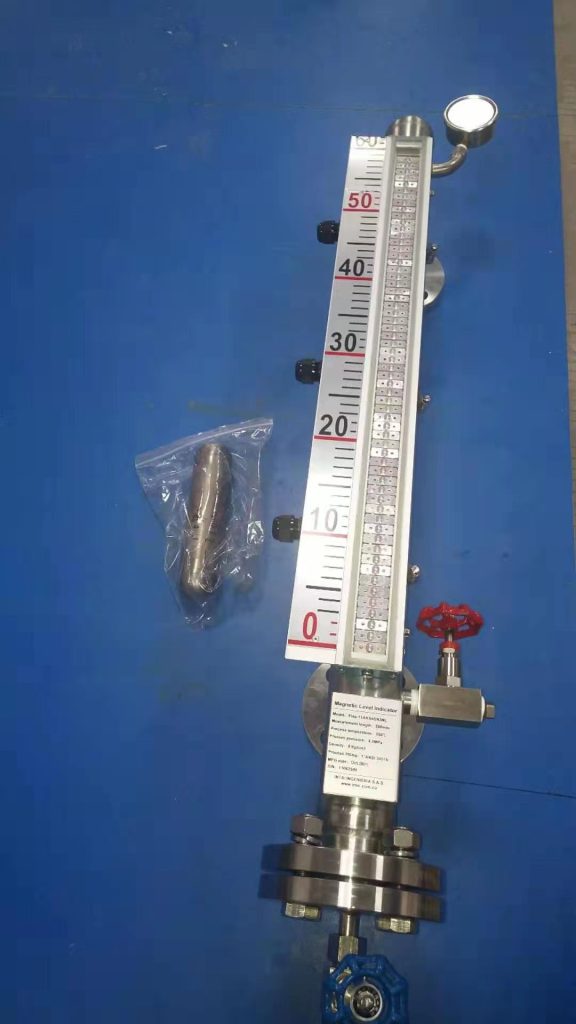
5. Why Is the Outer Jacket Material Important?
For jacketed magnetic level gauges, the outer jacket material may be more important than the vacuum layer itself.
Non-Magnetic or Weakly Magnetic Outer Jackets
When the outer jacket is manufactured from properly selected 304, 316, or 316L austenitic stainless steel, its effect on the magnetic circuit is usually limited.
In this case, magnetic field reduction is mainly caused by:
- Inner and outer wall thickness;
- Jacket spacing;
- Increased indicator installation distance.
Provided that the dimensions remain within the designed range and sufficient magnetic margin is available, the indicator should operate reliably.
Carbon Steel Outer Jackets
If the outer jacket is made from carbon steel, the magnetic flux may preferentially travel through the steel structure. This can reduce the effective magnetic field reaching the external indicator.
The risk becomes greater when the carbon steel outer jacket forms a continuous enclosure around the magnetic field path.
When carbon steel is required because of mechanical strength, process conditions, or cost considerations, the design should be evaluated specifically for the application.
Possible measures include:
- Increasing the magnetic strength of the float;
- Reducing the indicator mounting distance;
- Modifying the outer jacket structure;
- Avoiding a continuous, enclosed ferromagnetic path;
- Testing a prototype or completed gauge under representative operating conditions.
A standard magnetic configuration intended for an unjacketed level gauge should not automatically be used for a carbon-steel-jacketed design.
6. Display Problems Are Not Always Caused by Insulation
When magnetic flags fail to rotate, respond slowly, or display the level discontinuously, insulation is often suspected first.
However, several other conditions may cause similar symptoms.
Incorrect Float Orientation
Some magnetic floats have a clearly defined top and bottom orientation.
If the float is installed upside down, the magnetic pole position may not align correctly with the indicator, preventing normal flag operation.
Float Obstruction
Crystallization, deposits, metal particles, sludge, or viscous process media may restrict float movement.
In this situation, the indicator problem is only a symptom. The actual fault is inside the measuring chamber.
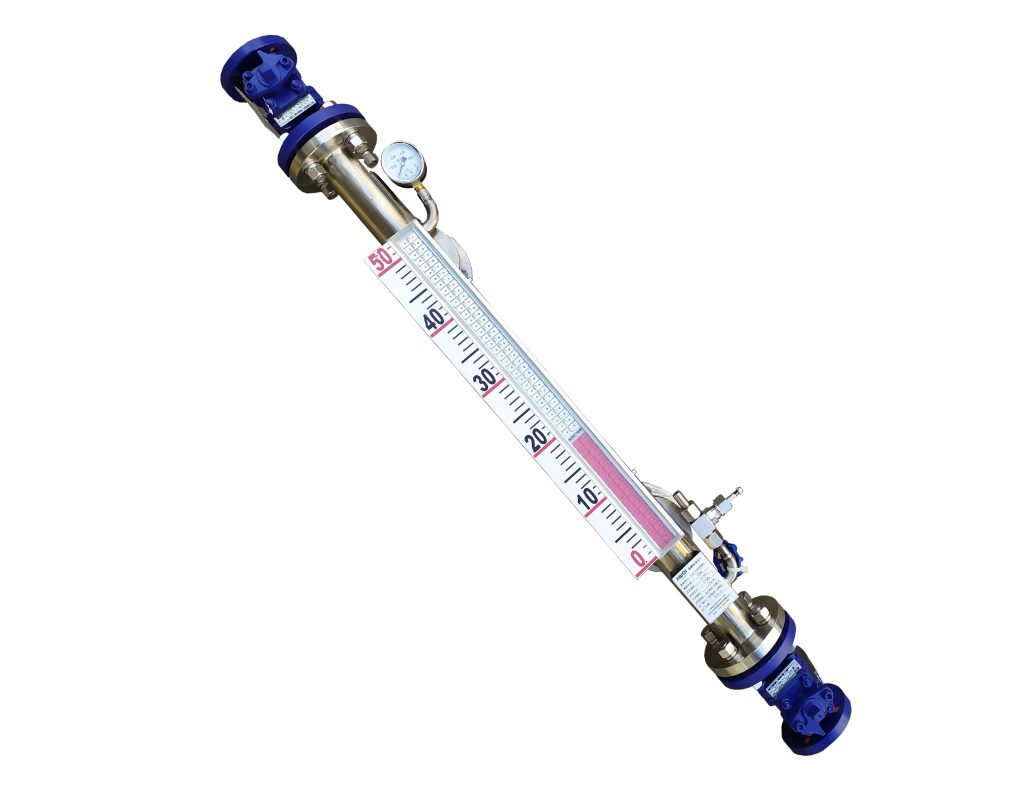
Incorrect Float Density
The float must be selected according to the density of the process liquid.
If the actual liquid density differs significantly from the design value, the float may not reach the correct operating position. In severe cases, it may sink or provide insufficient buoyancy.
Excessive Chamber Wall Thickness
A thicker chamber wall increases the distance between the float magnet and the external flags.
If the chamber material or pressure rating is changed without adjusting the magnetic configuration, the available magnetic field may become insufficient.
Carbon Steel Protective Covers
Carbon steel guards, brackets, enclosures, or protective covers added at the installation site may alter the magnetic flux path.
These components are frequently overlooked during troubleshooting.
Magnet Degradation at High Temperatures
Long-term exposure to excessive temperature may reduce the performance of the float magnet or the magnetic elements inside the indicator.
High-temperature applications require magnetic materials selected for the actual operating temperature. External insulation alone cannot protect an unsuitable magnet from thermal degradation.
Incorrect Indicator Spacing
Loose mounting hardware, mechanical deformation, or installation misalignment can increase the distance between the indicator and the chamber.
This may cause partial or unstable flag operation.
7. Design Recommendations for Insulated and Jacketed Magnetic Level Gauges
To maintain both thermal performance and reliable level indication, consider the following design and installation practices.
Insulation Design
Arrange insulation around the measuring chamber while maintaining a clear and continuous mounting area for the magnetic indicator.
Do not move the indicator outside a thick insulation layer unless the increased magnetic distance has been evaluated.
Protective Cladding Selection
Aluminum cladding, approved non-magnetic materials, or verified weakly magnetic stainless steel are generally preferable.
If carbon steel cladding is used, avoid placing it continuously around the critical magnetic field path between the float and the indicator.
Jacket Design
Vacuum jackets, steam jackets, and heating jackets should be designed together with the magnetic level gauge.
The manufacturer should evaluate pressure, temperature, chamber wall thickness, jacket spacing, outer jacket material, and indicator configuration as a complete system.
High- and Low-Temperature Applications
For high-temperature service, verify:
- Float magnet temperature rating;
- Indicator flag temperature resistance;
- Seal and gasket temperature limits;
- Insulation and heat-tracing requirements.
For cryogenic service, also consider:
- Frost and ice formation;
- Condensation;
- Low-temperature material toughness;
- Indicator visibility;
- Thermal contraction;
- Vacuum jacket integrity.
Functional Testing After Installation
After the insulation or jacket has been installed, conduct a full-range level test.
Verify that:
- All flags rotate continuously;
- No dead zones are present;
- The indicator follows rapid level changes;
- All flags return correctly when the liquid level decreases;
- The indication remains stable throughout the measuring range.
8. Frequently Asked Questions
Does Thicker Insulation Make a Magnetic Level Gauge More Likely to Fail?
Not necessarily.
Ordinary non-magnetic insulation materials do not normally block the magnetic field. However, thicker insulation may increase the distance between the float and the indicator.
If this distance exceeds the designed operating range, the reliability of the magnetic flags may decrease.
Does a Vacuum Weaken the Magnetic Field?
Normally, no.
A vacuum layer is not a magnetic shielding material. The main concerns are the inner and outer wall thicknesses, vacuum gap width, outer jacket material, and total distance between the float and the indicator.
Is a Carbon Steel Jacket Always Prohibited?
No, but it requires application-specific engineering.
Carbon steel can redirect magnetic flux, so a standard float magnet and indicator configuration may not be suitable.
The manufacturer may need to strengthen the magnetic system or modify the jacket structure.
Why Do Only Some Magnetic Flags Fail to Rotate?
Possible causes include:
- Localized interference from a carbon steel component;
- Indicator deformation;
- Uneven mounting distance;
- Sticking or damaged flags;
- Float magnet damage;
- Deposits or foreign material inside the measuring chamber.
Begin troubleshooting by inspecting the material and structure around the affected position.
Can the Indicator Be Completely Covered by Insulation?
This is generally not recommended.
The indicator should remain visible, accessible for maintenance, and close to its designed position relative to the measuring chamber.
A removable insulation jacket or a dedicated indicator opening is usually a better solution.
Conclusion
Standard insulation materials such as mineral wool, fiberglass, ceramic fiber, air gaps, and vacuum layers do not normally block the magnetic field of a magnetic level gauge.
Whether insulation or a jacket affects level indication mainly depends on two factors:
The additional distance introduced into the magnetic coupling path and the presence of ferromagnetic materials such as carbon steel.
Engineering evaluation should consider:
- Chamber wall thickness;
- Jacket dimensions;
- Outer jacket material;
- Float magnet strength;
- Indicator mounting distance;
- Operating temperature;
- Process liquid density;
- Required pressure rating.
For applications involving thick insulation, vacuum jackets, high temperatures, cryogenic media, or carbon steel protective structures, the magnetic level gauge should be specifically designed and functionally tested by the manufacturer.