In fine chemical, fragrance, pharmaceutical intermediate, and organic synthesis industries, ketone-based liquids are commonly used as raw materials, intermediates, or process media. In storage, transfer, and reaction processes involving ketone liquids, reliable level detection is essential for preventing tank overfill, protecting pumps from dry running, supporting process interlocks, and maintaining safe and stable plant operation.
Although point level detection may appear to be a relatively simple measurement task, chemical applications often present demanding operating conditions. A level switch must not only distinguish reliably between “wet” and “dry” conditions but also accommodate factors such as liquid density, process temperature, pressure, hazardous-area requirements, installation space, vibration, bubbles, and turbulence.
Traditional mechanical level switches may be affected by moving-part wear, product buildup, or mechanical vibration after extended operation. For this reason, selecting a reliable and low-maintenance point level detection solution is particularly important in chemical processing plants.
In a ketone liquid storage and transfer system, the Jiwei Ring-11 Tuning Fork Level Switch was selected for high-level alarm and pump protection applications. With its compact 40 mm fork, minimum detectable liquid density of 0.5 g/cm³, multiple output options, and hazardous-area configurations, the Ring-11 provides a practical solution for point level detection in demanding chemical processes.
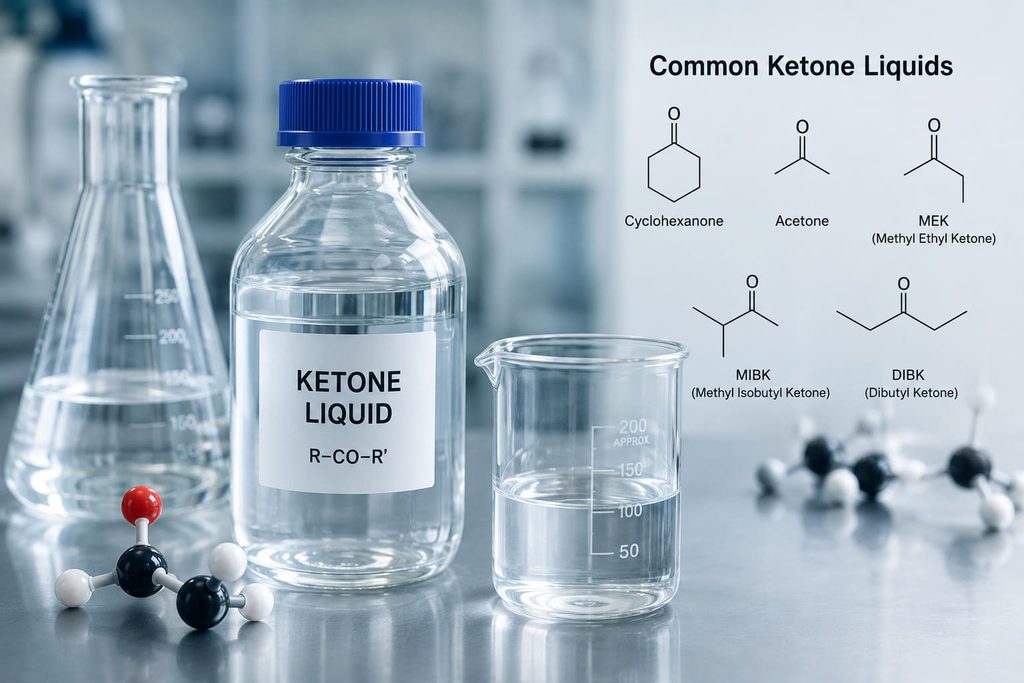
Challenges in Ketone Liquid Level Measurement
Ketone liquids are widely used in organic synthesis, fine chemicals, fragrances and flavors, coatings, solvents, and pharmaceutical manufacturing. Compared with ordinary water-based applications, their level measurement requires greater attention to both process conditions and plant safety.
One of the first factors to consider is liquid density.
A tuning fork level switch does not continuously measure the exact height of liquid inside a tank. Instead, it detects whether liquid is present at a specific point. When the liquid rises and covers the tuning fork, or falls below the fork, the instrument detects the change in vibration characteristics and switches its output accordingly.
Therefore, the density of the process liquid must fall within the operating range of the level switch to ensure reliable detection.
The Ring-11 Tuning Fork Level Switch is precisely tuned and suitable for liquids with densities as low as 0.5 g/cm³. This allows the instrument to handle not only water and water-based liquids but also a wide range of relatively low-density chemical liquids, providing greater flexibility for ketone liquid level applications.
Another important consideration is hazardous-area safety.
Some ketones and organic solvents are volatile and may be flammable under certain operating conditions. Instrument selection in these chemical processing areas must therefore consider much more than whether the device can detect the liquid.
Hazardous-area classification, process conditions, chemical properties, electrical requirements, and plant safety standards should all be evaluated before selecting a level switch.
The Ring-11 is available with intrinsically safe and explosion-proof configurations. It also supports SIL2/3 functional safety applications, depending on the selected configuration and project requirements.
For applications in which high- or low-level signals must be connected to a PLC, DCS, or safety instrumented system, these options provide additional flexibility for process control and safety system design.
Tank filling may also create turbulence, bubbles, foam, and localized liquid disturbances. If the selected measurement technology is highly sensitive to changes at the liquid surface, unstable or false switching may occur.
Therefore, a suitable level switch for ketone liquid applications must not only detect the liquid but also maintain stable operation under actual process conditions.
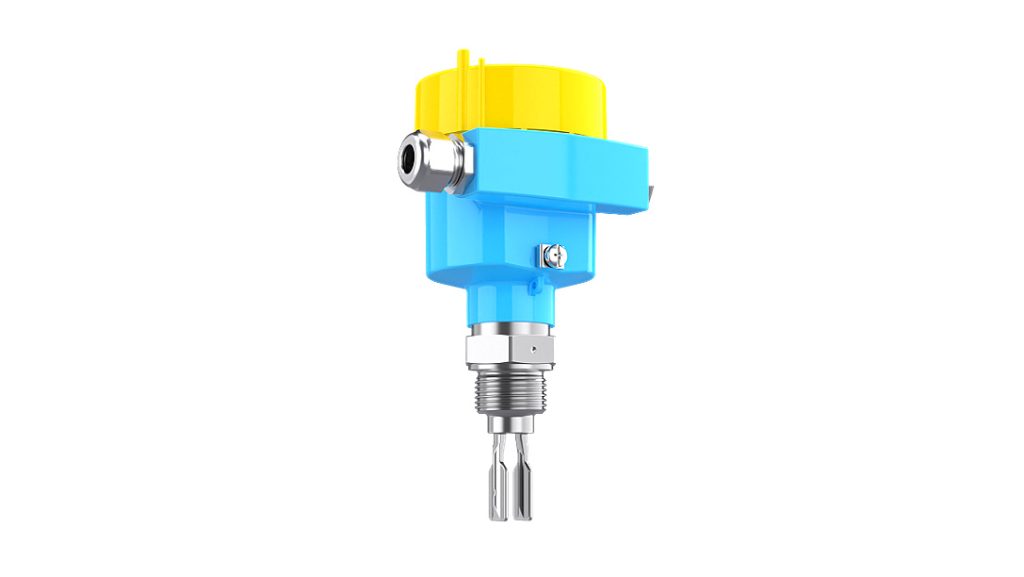
Why Choose the Ring-11 Tuning Fork Level Switch?
For this application, reliability, hazardous-area requirements, installation space, and maintenance requirements were among the primary considerations during instrument selection.
The Ring-11 Tuning Fork Level Switch was ultimately selected for point level detection.
Its operating principle is straightforward and reliable.
A piezoelectric element inside the instrument drives the tuning fork at its resonant frequency. When the fork is in air, it vibrates at a defined frequency. As the ketone liquid rises and covers the tuning fork, the vibration frequency changes.
The electronic module continuously monitors this frequency change and converts it into a switching signal.
In other words, the Ring-11 determines whether liquid is present by detecting the difference between the vibration characteristics of the fork in air and in liquid.
Unlike float level switches, it does not depend on the movement of mechanical floats. It also does not require the process liquid to be electrically conductive.
This vibration-based measurement principle allows the Ring-11 to operate reliably in applications involving foam, bubbles, turbulence, and mechanical vibration, making it particularly suitable for demanding chemical processing environments.
40 mm Compact Fork for Tanks and Pipelines
In this ketone liquid application, point level detection was required not only for tank high-level alarms but also for liquid presence detection in parts of the transfer system.
Available installation space was therefore another important factor during instrument selection.
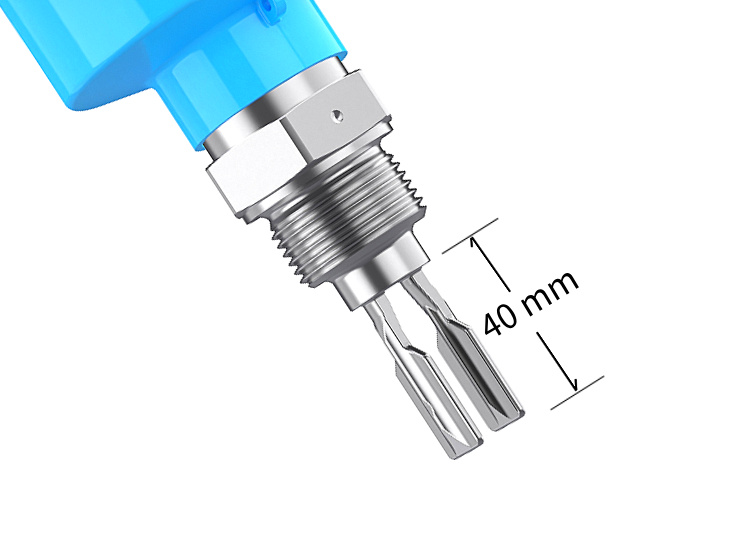
The Ring-11 features a compact tuning fork with a fork length of only 40 mm.
For large storage tanks, the short fork minimizes intrusion into the vessel. The compact design becomes even more valuable when the switch is installed in smaller pipes, bypass chambers, process equipment, or locations where internal space is limited.
For example, a Ring-11 can be installed at the inlet side of a ketone transfer pump to provide low-level or dry-run protection.
When liquid is present, the control system permits normal pump operation. If the liquid level drops and the tuning fork is no longer covered by the process medium, the switch changes its output state. The PLC or DCS can then generate an alarm or stop the pump according to the programmed interlock logic.
This helps reduce the risk of operating a transfer pump without sufficient liquid.
The Ring-11 is therefore not intended to tell operators exactly how many meters of liquid remain inside the tank. Its function is to answer a more specific question at a critical location:
Is liquid present or not?
This is the fundamental difference between a point level switch and continuous level measurement instruments such as radar level transmitters or ultrasonic level sensors.
High-Level Alarm for Ketone Storage Tanks
For ketone storage tanks, the Ring-11 can be installed near the upper section of the vessel to provide high-level alarm or overfill protection.
During normal filling, the liquid remains below the tuning fork and the switch stays in its normal state.
As the liquid continues to rise and reaches the installation point, the tuning fork becomes immersed. Its vibration frequency changes, and the electronic module detects this change and generates the corresponding switching signal.
The signal can be transmitted to a PLC or DCS to activate an audible or visual alarm. Depending on the process control philosophy and safety requirements of the plant, the signal may also be used to initiate additional actions, such as closing an inlet valve or stopping a transfer pump.
This independent point level protection can be particularly valuable in continuous chemical processing operations.
A continuous level transmitter may be used for routine level indication and process control, while a tuning fork level switch can be installed independently at a high-high level point.
Using different measurement technologies for process measurement and independent point level protection can help create a more comprehensive tank level monitoring strategy.
Key Advantages of the Ring-11 for Ketone Liquid Level Detection
In this type of chemical application, the Ring-11 offers several practical advantages.
Its 40 mm compact tuning fork allows installation in storage tanks, process vessels, pipelines, and other locations with limited installation space.
The instrument is suitable for liquids with densities as low as 0.5 g/cm³, enabling it to cover a broad range of chemical liquids.
Because the measurement principle is based on changes in vibration frequency, the switch does not depend on the electrical conductivity, color, or transparency of the liquid. It is also designed to operate reliably in the presence of foam, bubbles, turbulence, and vibration.
Another important advantage is its range of electrical output options.
Depending on the selected configuration, the Ring-11 can provide relay, two-wire, NAMUR, or transistor outputs. This makes integration with PLCs, DCS platforms, and other industrial control systems more convenient.
For chemical plants with functional safety or hazardous-area requirements, appropriate Ring-11 configurations are also available with SIL2/3 and explosion-protection options.
Material compatibility is another important consideration.
Depending on the corrosiveness and chemical characteristics of the process medium, Jiwei provides different wetted-material options, including 316L stainless steel, Hastelloy C-22, ECTFE, and PFA solutions.
For actual ketone applications, however, wetted materials should always be selected according to the exact chemical composition, concentration, process temperature, and pressure rather than assuming that one material is suitable for every ketone-based liquid.
Installation Considerations for the Ring-11
Correct installation is essential for maintaining the long-term reliability of a tuning fork level switch.
When installing the Ring-11 in a ketone storage tank or pipeline, the switching point should first be determined according to the process requirement.
For high-level overfill protection, the switch should be installed at the level where the high-level alarm or interlock is intended to activate.
For pump dry-run protection, the installation point should be selected according to the piping configuration and minimum safe liquid level.
The tuning fork should also be oriented appropriately relative to the direction of liquid movement to reduce flow resistance and unnecessary mechanical stress.
Installation directly in a tank inlet or other location exposed to high-velocity liquid impact should be avoided whenever possible.
During filling, continuous impact from the incoming liquid stream may create additional mechanical loading on the fork and may interfere with stable level detection.
For liquids that may leave deposits or buildup, the installation orientation and accessibility of the sensing fork should also be considered to prevent excessive accumulation from affecting normal vibration.
In addition, selecting a chemical level switch based only on the name of the process medium is not sufficient.
Engineers should confirm all relevant process conditions, including:
- Exact chemical composition
- Liquid density
- Process temperature
- Process pressure
- Viscosity
- Corrosiveness
- Wetted-material compatibility
- Process connection
- Hazardous-area classification
- Power supply
- Required signal output
- Control and safety system requirements
Only after these parameters have been evaluated should the final Ring-11 configuration be selected.
From Level Detection to Process Protection
In a ketone storage and transfer system, the primary purpose of the Ring-11 is not continuous level measurement. Its role is to provide reliable detection at critical switching points.
A high-level switch on a storage tank can help prevent overfilling during continuous transfer.
A low-level or liquid-presence switch installed in a pipeline or near a pump inlet can help identify insufficient liquid and reduce the risk of pump dry running.
In applications requiring process safety interlocks, the Ring-11 switching signal can also be integrated into the plant control system to participate in pump, valve, alarm, and shutdown logic.
Compared with some mechanical level switches that rely on moving components, a vibration tuning fork level switch has a relatively simple sensing structure and requires little routine maintenance.
Because its detection principle does not depend on liquid color, transparency, or electrical conductivity, it can also provide greater flexibility when process conditions vary.
By installing independent point level switches at critical locations, level instrumentation becomes more than a simple field measurement device. It becomes an important component of the overall process protection strategy.
How to Select a Tuning Fork Level Switch for Ketone Liquids
There are many different ketone compounds, and their density, volatility, corrosiveness, process temperature, and hazardous-area requirements can vary significantly.
For this reason, a Ring-11 configuration should never be selected solely because the process medium is described as a “ketone.”
For applications operating at moderate temperatures and pressures where the selected wetted materials are chemically compatible, a standard Ring-11 configuration may be suitable.
For reactors, process vessels, or storage tanks operating at elevated temperatures, the actual process temperature should be checked against the specifications of the selected model.
If the chemical medium presents a corrosion risk to conventional stainless steel, alternative wetted materials such as Hastelloy or fluoropolymer-based solutions including ECTFE or PFA may need to be evaluated.
For flammable or explosive environments, the instrument must also be selected according to the hazardous-area classification and applicable plant requirements.
Reliable level switch selection is therefore not about choosing the product with the highest individual specification.
It is about matching the instrument to the complete application:
Medium + Density + Temperature + Pressure + Material + Process Connection + Hazardous Area + Electrical Output + Control Strategy
When these factors are properly matched, the level switch can deliver more reliable performance throughout its service life.
Conclusion
Ketone storage and transfer applications may appear to require only a simple “liquid present/liquid absent” signal. In practice, however, reliable point level detection is closely connected with tank overfill prevention, pump protection, process interlocking, and chemical plant safety.
The Jiwei Ring-11 Tuning Fork Level Switch uses vibration frequency change for point level detection. Its compact 40 mm tuning fork, capability to detect liquids with densities as low as 0.5 g/cm³, resistance to common process disturbances such as foam, bubbles, and vibration, and availability of multiple electrical output options make it suitable for a wide range of chemical liquid applications.
Depending on project requirements, the Ring-11 can also be configured for hazardous-area and SIL-related applications.
When applied to ketone storage tanks, process vessels, reactors, or transfer pipelines, correct selection of wetted materials, process connections, electrical outputs, and explosion-protection configurations enables the Ring-11 to perform functions such as high-level alarm, low-level detection, overfill protection, and pump dry-run protection.
For fine chemicals, fragrances, pharmaceutical intermediates, organic synthesis, and other chemical processing industries, successful level instrument selection is not simply about choosing a product with higher specifications.
The key is to select a level switch that genuinely matches the process medium and operating conditions.
When properly selected and installed, the Ring-11 Tuning Fork Level Switch can provide a reliable, low-maintenance, and practical point level detection solution for demanding ketone liquid applications.