In industrial production, municipal water supply, wastewater treatment, environmental monitoring, water conservancy projects, and storage tank management, liquid level is a highly important process parameter. How much water is left in a tank? Is the level in a wastewater well too high? Has the liquid in a storage tank reached the alarm point? Is the river water level rising abnormally? All these questions rely on accurate liquid level measurement.
Among various level measurement instruments, the submersible level transmitter is widely used because of its simple installation, broad applicability, and cost-effectiveness. Many people describe it as “a sensor placed directly into water.” Although this description is easy to understand, it is not complete. A submersible level transmitter is essentially a liquid level measuring instrument based on the hydrostatic pressure principle. It is also commonly called a hydrostatic level transmitter, submersible level sensor, or submersible water level sensor.
It measures the pressure generated by the depth of liquid, converts that pressure into a liquid level value, and then outputs a standard electrical signal to a display instrument, PLC, DCS, or IoT data acquisition terminal.

1. What Is a Submersible Level Transmitter?
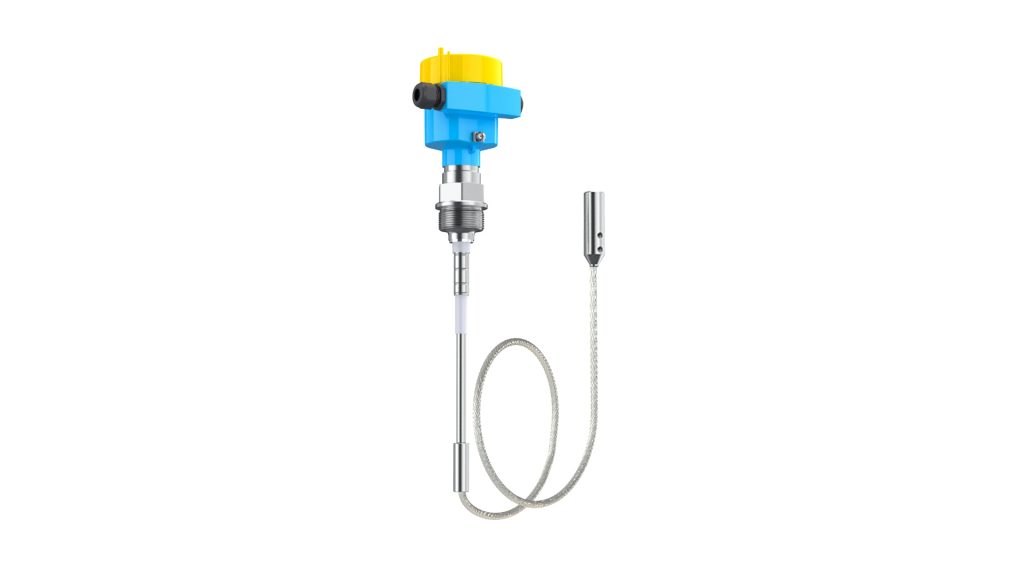
A submersible level transmitter is a liquid level measuring device that can be directly placed into the measured liquid. It is usually composed of a sensing probe, vented cable, sealing structure, signal processing circuit, and outer housing. During use, the sensor probe is lowered into a water tank, well, reservoir, river, or storage tank near the bottom. The instrument continuously measures the liquid level according to the pressure changes caused by liquid depth.
Unlike radar level transmitters and ultrasonic level meters, which are non-contact instruments, a submersible level transmitter is a contact-type level measuring instrument. It must come into direct contact with the medium. Therefore, when selecting a model, it is necessary to consider the corrosiveness, temperature, density, impurities, sediment, and installation environment of the measured liquid.
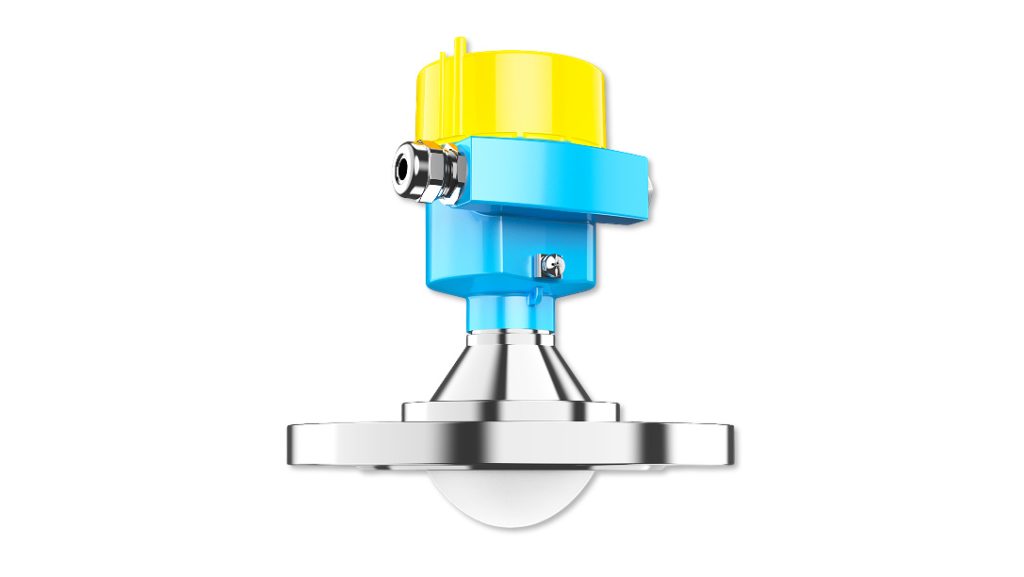
Common output signals of submersible level transmitters include 4-20mA, 0-10V, RS485, and Modbus. Among them, the 4-20mA signal is the most widely used in industrial sites because it has strong anti-interference capability, supports long-distance transmission, and is suitable for connection to automatic control systems.
2. Working Principle of a Submersible Level Transmitter
The core working principle of a submersible level transmitter is the hydrostatic pressure principle. In simple terms, the deeper the liquid, the greater the pressure at the bottom. After the sensor detects this pressure, it can calculate the corresponding liquid level height.
The basic relationship can be understood as:
Liquid pressure = liquid density × gravitational acceleration × liquid level height
In other words, when the liquid density remains relatively stable, pressure is proportional to the liquid level height. The pressure sensor inside the submersible level transmitter converts pressure changes into electrical signals. The internal circuit then performs temperature compensation, linear correction, and signal amplification. Finally, the transmitter outputs the corresponding liquid level data.
For example, if the liquid level in a water tank rises from 1 meter to 3 meters, the pressure on the sensor at the bottom also increases. After detecting the increase in pressure, the level transmitter outputs a higher level value. The control system can then display the current water level or control pumps, valves, and alarms accordingly.
It should be noted that a submersible level transmitter measures pressure. Therefore, liquid density affects the measurement result. For clean water, groundwater, and general wastewater, whose density is close to that of water, measurement is relatively straightforward. However, for acids, alkalis, salt water, oil, slurry, or other high-density liquids, the density difference should be considered during selection and calibration.
3. Main Components of a Submersible Level Transmitter
A typical submersible level transmitter usually includes the following parts.
1. Pressure sensor probe
This is the core component of the transmitter. It senses the pressure generated by the liquid. The probe is commonly made of stainless steel, titanium alloy, PTFE anti-corrosion material, or other corrosion-resistant materials, depending on the measured medium.
2. Vented cable
Many submersible level transmitters use gauge pressure measurement. A vent tube inside the cable connects the sensor to atmospheric pressure, helping eliminate the effect of atmospheric pressure changes on measurement results. The vented cable is responsible not only for signal transmission but also for pressure balance.
3. Sealing structure
Because the sensor is immersed in liquid for long periods, sealing performance is extremely important. High-quality submersible level transmitters usually adopt multiple sealing structures to prevent water vapor or liquid from entering the sensor body.
4. Signal processing circuit
The signal processing circuit converts the weak signal generated by the pressure sensor into a standard output signal, such as 4-20mA or RS485 digital communication.
5. Weight, protective cover, or mounting accessories
In applications with strong water flow, agitation, floating objects, or deep wells, weights, protective covers, mounting brackets, or protective pipes may be required to keep the probe stable.
4. Advantages of Submersible Level Transmitters
Submersible level transmitters are widely used because they are practical, reliable, and economical.
First, they are easy to install. In most cases, the user only needs to lower the probe into the liquid and secure the cable. There is no need to open complicated mounting holes at the top of a tank, and no complicated commissioning is usually required.
Second, they have a wide range of applications. Clean water tanks, fire water tanks, wastewater pools, rainwater wells, groundwater monitoring wells, reservoirs, rivers, regulating tanks, and sedimentation tanks can all use submersible level transmitters.
Third, they support continuous level measurement. A submersible level transmitter can output real-time level changes, making it suitable for automatic control, remote monitoring, and level alarm systems.
Fourth, they offer high cost performance. Compared with some radar level transmitters, magnetic level gauges, or servo level gauges, submersible level transmitters are usually more affordable and easier to maintain.
Fifth, they are less affected by foam, vapor, and mist. In environments with heavy water vapor, mist, or foam, ultrasonic level meters may be disturbed. A submersible level transmitter directly measures liquid pressure, so it is less affected by the space above the liquid surface.
5. Common Applications of Submersible Level Transmitters
1. Water tank and reservoir level measurement
This is one of the most common applications. Domestic water tanks, fire water reservoirs, industrial circulating water tanks, and cooling water tanks all need real-time water level monitoring. With a submersible level transmitter, automatic pump start-stop control, high and low level alarms, and remote monitoring can be easily achieved.
2. Wastewater treatment industry
In wastewater treatment plants, pumping stations, regulating tanks, collection wells, and sedimentation tanks, liquid level changes are directly related to safe equipment operation. Submersible level transmitters can be used for wastewater level measurement. However, the correct protective structure should be selected according to wastewater corrosiveness, suspended solids content, and scaling conditions.
3. Municipal drainage and rainwater monitoring
Urban drainage networks, rainwater wells, underpasses, and pumping stations often require water level monitoring to prevent urban flooding. Submersible level transmitters can be combined with wireless data acquisition terminals to realize remote water level monitoring.
4. Water conservancy and river level monitoring
In rivers, reservoirs, channels, and sluice stations, submersible water level sensors can monitor water level changes over the long term. They provide data support for flood control, water resource management, and ecological monitoring.
5. Industrial storage tank level measurement
For atmospheric storage tanks, underground tanks, or containers where top-mounted instruments are inconvenient, submersible level transmitters can also be used for level measurement. However, if the medium is highly corrosive, high-temperature, highly viscous, or easy to crystallize, model selection must be handled carefully.
6. How to Select the Right Submersible Level Transmitter
Correct selection is the key to stable operation. Many field problems are not caused by poor instrument quality, but by mismatched range, material, output signal, or installation method.
1. Determine the measuring range
The range should be selected according to the actual maximum liquid level. For example, if the maximum depth of a water tank is 5 meters, a 0-5m range or a range with a suitable margin can be selected. If the range is too large, resolution may decrease. If the range is too small, overpressure damage may occur.
2. Determine the medium type
Clean water, wastewater, acid and alkali liquids, oil, salt water, and slurry have different material requirements. For ordinary clean water, a stainless steel probe is usually suitable. For corrosive media, an anti-corrosion submersible level transmitter may be required.
3. Determine the output signal
If the transmitter is connected to a PLC or secondary display instrument, 4-20mA is a common choice. If it is connected to an intelligent data acquisition terminal or requires digital communication, RS485 Modbus output can be selected.
4. Determine the power supply
Common power supplies include 24V DC. Low-power models are also available for remote monitoring projects powered by solar panels or batteries.
5. Consider cable length
The cable length should be greater than the actual installation depth, with extra length reserved for wiring and fixing. The vented cable must not be blocked, sharply bent, or allowed to let water enter the junction box, otherwise measurement accuracy may be affected.
6. Consider protection and anti-clogging design
For wastewater, slurry, or liquids containing impurities, a product with anti-clogging design, a protective cover, or an easy-to-clean structure should be selected.
7. Installation Precautions
Although submersible level transmitters are easy to install, installation details are very important.
The probe should be placed in a relatively stable liquid area. Avoid locations close to inlets, outlets, strong agitation zones, or pump suction points. Water flow impact may cause pressure fluctuations and affect the stability of the level reading.
The cable should be firmly fixed to prevent the probe from swinging in the liquid. If the tank is deep or the water flow is strong, a weight or protective pipe can be used for fixing. The bottom of the probe should not directly touch sludge or sediment at the bottom of the tank, as this may cover the sensing diaphragm and affect pressure sensing.
The junction box should be installed in a dry and ventilated place, with proper rainproof and moisture-proof protection. For cables with vent tubes, the vent hole must remain open and should not be blocked by moisture, dust, adhesive tape, or sealing glue.
In addition, submersible level transmitters should be protected from strong electromagnetic interference. Signal cables should be kept away from high-power motors, frequency converters, and high-voltage cables. Shielded cables and proper grounding should be used when necessary.
8. Common Faults and Troubleshooting
Inaccurate level display
Possible causes include incorrect range setting, medium density changes, probe covered by sludge, blocked vent tube, or zero drift. First check the installation position and probe condition, then perform calibration if needed.
Large signal fluctuation
This may be caused by water flow impact, probe movement, electromagnetic interference, or loose wiring. The probe should be fixed, shielding and grounding should be checked, and the transmitter should be kept away from turbulent areas.
No signal output
Possible causes include abnormal power supply, incorrect wiring, broken cable, or transmitter damage. Use a multimeter to check the power supply and output circuit.
Level always displays full range
This may be caused by sensor overpressure, clogged diaphragm, water ingress, or incorrect parameter settings. Remove the transmitter for inspection and return it for testing if necessary.
Measurement value drifts slowly
This may be related to moisture entering the junction box, a wet or blocked vent tube, temperature changes, or sensor aging. The sealing and ventilation structure should be checked carefully.
9. Differences Between Submersible Level Transmitters and Other Level Instruments
Compared with ultrasonic level meters, submersible level transmitters are less affected by vapor, foam, and tank headspace, but they must contact the liquid. Ultrasonic level meters are non-contact instruments and are more suitable for applications where the instrument should not touch the liquid.
Compared with radar level transmitters, submersible level transmitters are usually lower in cost and easier to install. Radar level transmitters are more suitable for high-temperature, high-pressure, highly corrosive, volatile, or complex operating conditions.
Compared with float level switches, submersible level transmitters can provide continuous liquid level data, while float switches are mostly used for high and low level alarm switching.
Compared with magnetic level gauges, submersible level transmitters are more suitable for open or semi-open applications such as water tanks, wells, rivers, and reservoirs. Magnetic level gauges are more commonly used for side-mounted level indication on storage tanks.
Therefore, choosing a level instrument should not be based only on price. The medium, installation conditions, accuracy requirements, maintenance cost, and control system requirements should all be considered.
10. Who Should Use a Submersible Level Transmitter?
If your site involves clean water tanks, water storage tanks, groundwater wells, rainwater wells, wastewater tanks, fire water reservoirs, rivers, or ordinary atmospheric storage tanks, and you need continuous liquid level measurement, a submersible level transmitter is usually a very practical choice.
For engineering companies, submersible level transmitters are easy to install and convenient for wiring, making them suitable for large-scale projects. For factory maintenance teams, they are relatively easy to maintain and troubleshoot. For environmental and water conservancy monitoring projects, submersible level transmitters can also be used together with wireless transmission modules, solar power systems, and cloud platforms to achieve remote water level monitoring.
11. Common Misunderstandings About Submersible Level Transmitters
Many users believe that “as long as the range is the same, all submersible level transmitters can be used interchangeably.” This is a common misunderstanding. In reality, different media, temperatures, and installation environments have very different requirements. A standard model suitable for clean water may not be suitable for highly corrosive wastewater or high-salinity liquids.
Some users also believe that “the longer the cable, the better.” In fact, the cable length should meet the installation requirements with a proper margin. An excessively long cable may make installation more difficult and may introduce interference if it is not arranged properly.
Another common mistake is ignoring regular maintenance. Although a submersible level transmitter has a relatively simple structure, impurities may attach to the probe surface after long-term use in wastewater, slurry, or scaling media. If it is not cleaned for a long time, measurement accuracy may decline.
12. Maintenance Recommendations
To extend the service life of a submersible level transmitter, regularly check whether sludge, scale, or debris has accumulated on the probe surface. When cleaning, do not scrape the pressure diaphragm with sharp tools, as this may damage the sensor.
The junction box and cable connections should also be inspected regularly to ensure there is no water ingress, looseness, or corrosion. For outdoor installations, lightning protection, rain protection, and sun protection should be provided. For important applications, the measured value can be regularly compared with manual level readings, and calibration should be performed if deviations are found.
If the medium is prone to crystallization, sedimentation, or corrosion, the maintenance interval should be shortened, and a probe material and protective structure more suitable for the working conditions should be selected.
13. Frequently Asked Questions
1. Can a submersible level transmitter measure wastewater?
Yes. However, a suitable model should be selected for wastewater applications. If the wastewater contains large amounts of sludge, oil, or corrosive substances, anti-clogging, anti-corrosion, and easy-cleaning structures should be considered.
2. Can a submersible level transmitter measure oil?
Yes. However, model selection should consider oil density, temperature, and explosion-proof requirements. Since the density of oil is usually different from that of water, calibration and conversion should be handled carefully.
3. Does a submersible level transmitter need calibration?
Yes. New instruments are usually calibrated before leaving the factory, but it is still recommended to check them after installation according to the actual site level. Long-term use also requires regular verification.
4. Can a submersible level transmitter be connected to a PLC?
Yes. A 4-20mA submersible level transmitter is very suitable for connection to a PLC analog input module. RS485 digital output can also be selected according to system requirements.
5. Is higher accuracy always better?
Not necessarily. Accuracy should match the actual application. Ordinary water tank level control usually does not require extremely high accuracy, while metering, environmental monitoring, and hydrological projects may require higher accuracy.
Conclusion: A Practical and Reliable Solution for Liquid Level Measurement
Overall, a submersible level transmitter is a relatively simple, easy-to-install, and widely applicable liquid level measuring instrument. It uses the hydrostatic pressure principle to achieve continuous level measurement and is suitable for water tanks, reservoirs, wastewater wells, rivers, groundwater wells, water conservancy projects, and atmospheric storage tanks.
In real applications, accurate and long-lasting performance depends not only on buying a level transmitter, but also on proper selection, installation, commissioning, and maintenance. As long as the measuring range, material, output signal, installation position, and site conditions are properly matched, a submersible level transmitter can provide stable and reliable data for level monitoring, automatic control, and safety management.
For users looking for a liquid level measurement solution, the submersible level transmitter is a highly practical option worth considering. Whether it is used in industrial automation, municipal drainage, wastewater treatment, water conservancy monitoring, or environmental protection projects, it can deliver efficient, continuous, and stable liquid level measurement at a reasonable cost.