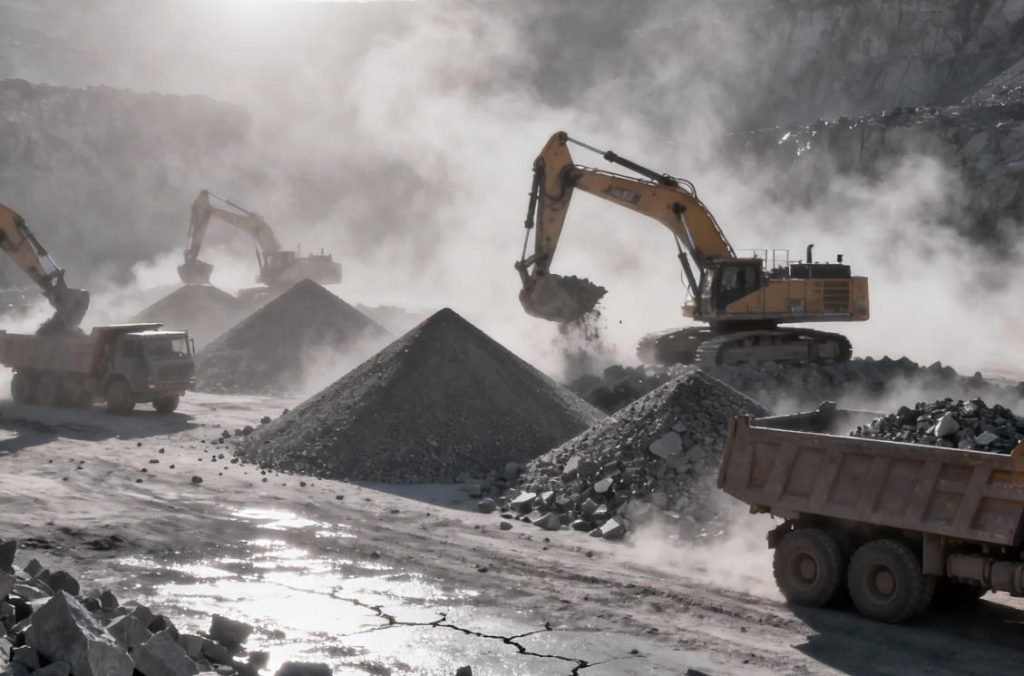
Open-pit mining operations require continuous and accurate monitoring of material levels throughout the crushing, conveying, and storage processes. Reliable level data allows the control system to adjust feeding rates promptly and reduce the risk of silo overfilling, material blockages, and equipment overload.
However, open-pit mines often involve heavy dust, strong mechanical vibration, irregular material surfaces, and significant temperature variations between day and night. Conventional level measurement technologies may be affected by these conditions, resulting in unstable echoes, fluctuating readings, or frequent maintenance requirements. Radar Level Transmitters
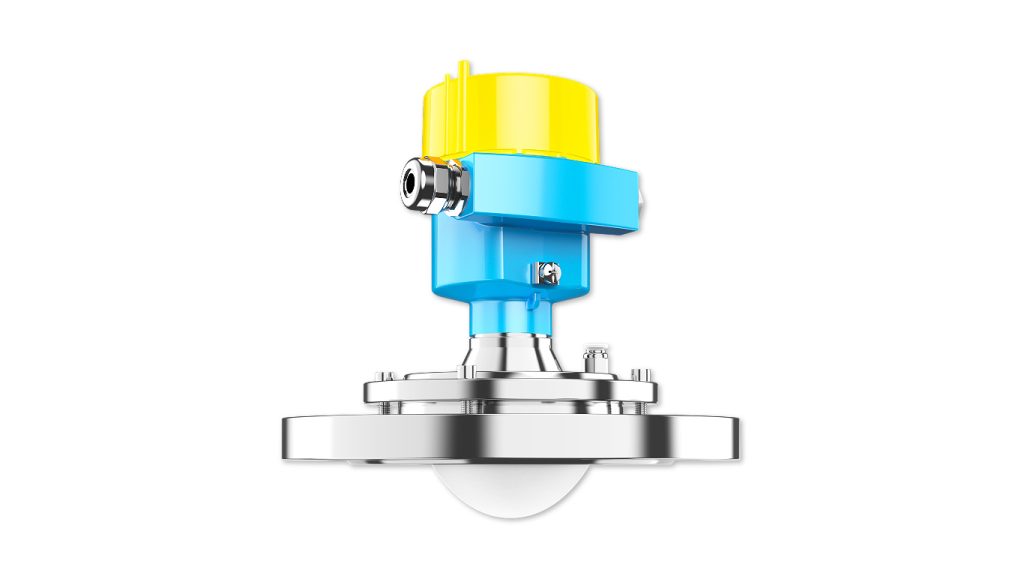
Designed for these demanding applications, the JWrada®-35 radar level transmitter uses 80 GHz high-frequency radar technology. It can be installed at crusher feed points, buffer silos, intermediate storage bins, and ore stockpiles to provide continuous, non-contact level measurement.
What Are the Main Challenges of Level Measurement in Open-Pit Mining?
Materials handled in open-pit mines may include basalt, diabase, and other hard ores. These materials often vary considerably in particle size and create uneven surfaces after piling. Feeding, dumping, and crushing operations also generate large amounts of airborne dust.
The main challenges of mining level measurement include the following.
1. High Dust Concentrations
Ore dumping can create continuous clouds of dust, particularly around crusher feed hoppers and buffer silos. In these locations, airborne dust concentrations may remain high for extended periods.
Measurement technologies that depend on sound propagation may be affected by dust, air currents, and temperature variations.
2. Irregular Material Surfaces
Solid ores do not form flat, horizontal surfaces. Instead, the material may create peaks, valleys, inclined surfaces, or localized collapses.
The level instrument must therefore provide reliable echo recognition to distinguish the actual material surface from complex reflections.
3. Strong Impact and Vibration
Large pieces of ore can generate considerable impact when entering a silo. Crushers, feeders, and conveyors also produce continuous mechanical vibration.
These conditions place greater demands on the mechanical strength and signal stability of the measuring instrument.
4. Changing Outdoor Conditions
Level instruments installed outdoors may be exposed to sunlight, rain, low temperatures, high temperatures, and condensation.
The selected instrument must therefore provide suitable environmental protection, long-term stability, and convenient installation and maintenance.
Why Are 80 GHz Radar Level Transmitters Suitable for Open-Pit Mining?
The JWrada®-35 uses 80 GHz millimeter-wave radar technology. Its antenna transmits electromagnetic waves toward the material surface and calculates the distance between the instrument and the material based on the reflected signal.
The distance measurement is then converted into real-time level data.
Compared with contact-based or acoustic measurement technologies, high-frequency radar level transmitters offer several advantages in mining applications.
Narrow Beam Angle Reduces Structural Interference
An 80 GHz radar transmitter produces a narrow and focused beam. This allows the measurement signal to target a specific area of the material surface while reducing interference from silo walls, support structures, beams, and internal fittings.
In buffer silos with limited internal space or complicated structures, a narrow radar beam can improve the identification of valid echoes.
Reliable Measurement in High-Dust Environments
Radar measurement uses electromagnetic waves rather than sound waves traveling through the air. As a result, dust, air movement, and ambient temperature changes generally have less influence on signal transmission.
Even during continuous filling operations that generate heavy airborne dust, the radar level transmitter can continue detecting reflections from the ore surface.
This makes radar technology particularly suitable for high-dust level measurement.
Non-Contact Measurement Reduces Mechanical Wear
The radar level transmitter is normally installed at the top of the silo and does not need to come into direct contact with the ore.
This helps reduce maintenance problems caused by material impact, mechanical wear, or the jamming of contact-based components.
Non-contact measurement can also reduce routine inspection and maintenance requirements in elevated or difficult-to-access mining silos.
Technical Features of the JWrada®-35 for Mining Level Measurement
The JWrada®-35 can be used for level measurement in powders, solid bulk materials, dusty environments, and applications involving vapor.
It provides a measuring range of up to 150 meters and supports signal outputs including 4–20 mA/HART and RS485/Modbus.
Its main features for open-pit mining applications include the following.
1. Intelligent Echo Processing
Ore silos may produce multiple reflections from the material surface, silo walls, and internal structures.
The JWrada®-35 features false-echo identification, multi-echo separation, and target-tracking functions. These capabilities help the instrument continuously distinguish the valid material echo as operating conditions change.
2. Bluetooth Wireless Configuration
The transmitter supports Bluetooth configuration, allowing operators to review operating conditions and adjust parameters from a safer location.
This reduces the need to access the instrument repeatedly at the top of the silo.

3. Remote Diagnostics and Parameter Optimization
Using remote cloud-based configuration capabilities, engineers can assist site personnel by reviewing real-time operating conditions, radar echo curves, and diagnostic information.
Measurement parameters can then be adjusted according to the material properties, silo structure, and installation position.
Remote technical support is particularly useful for open-pit mines located in remote areas where maintenance resources may be limited. It can reduce unnecessary site visits and improve troubleshooting efficiency.
4. Suitable for Outdoor Industrial Environments
The JWrada®-35 is available with IP66/67 and IP68 protection ratings.
It also supports various process connections and installation methods, including flange, bracket, and suspended mounting options, depending on the silo structure and application requirements.
Typical Applications in Open-Pit Mining
Crusher Feed Hopper Level Measurement
Excessive material at a crusher feed point may cause blockages or overload the equipment. Insufficient material, on the other hand, may reduce production efficiency.
Installing a radar level transmitter above the crusher feed hopper enables continuous monitoring of the accumulated material level.
The measurement signal can be transmitted to the control system to coordinate the operation of upstream conveyors, feeders, and the crusher.
Buffer Silo Level Monitoring
Buffer silos regulate the flow of material between upstream and downstream equipment.
Reliable level data helps the control system determine the amount of material remaining in the silo and adjust conveying speeds accordingly.
This can reduce the risk of the silo becoming completely empty or overfilled.
Intermediate Storage Silo Level Measurement
Intermediate storage silos are often large, and the material surface may become significantly inclined.
A narrow-beam radar transmitter with an adjustable antenna angle can direct the signal toward the main material surface while minimizing interference from the silo wall and incoming material stream.
Ore Stockpile Measurement
Large stockpiles or storage areas with multiple loading points may require several radar measurement positions.
Data from different locations can help operators evaluate ore distribution and estimate available inventory.
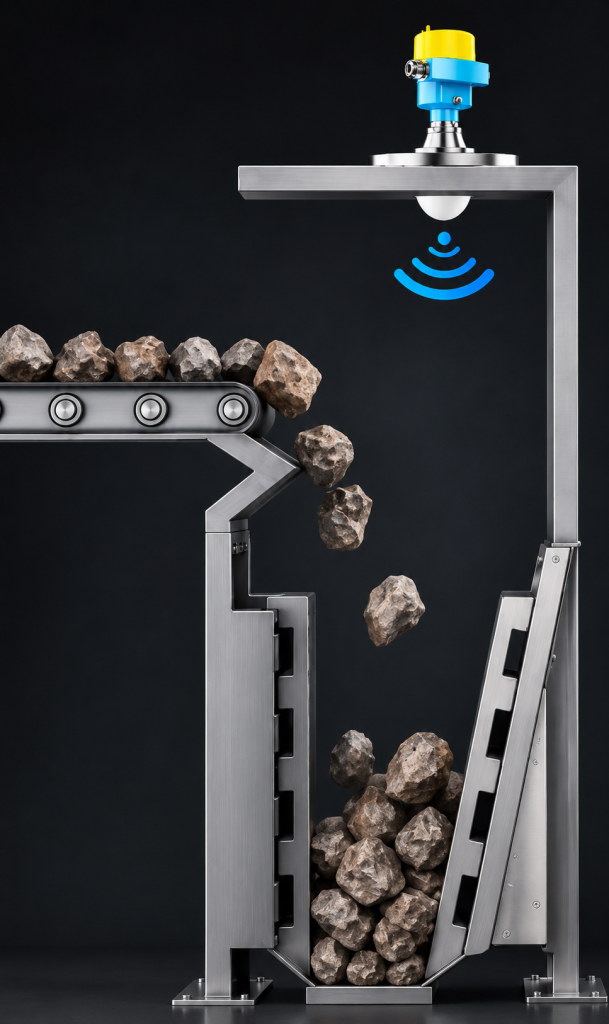
What Should Be Considered When Installing a Radar Level Transmitter?
In addition to instrument performance, the installation position has a major influence on measurement reliability.
The following points should be considered when installing a radar level transmitter in an open-pit mining application.
1. Avoid the Incoming Material Stream
Do not install the radar transmitter directly above the falling material.
Otherwise, the instrument may measure the moving material stream instead of the actual accumulated material surface.
2. Maintain a Suitable Distance from the Silo Wall
For solid-material level measurement, the transmitter should generally be installed at least 200 mm away from the vessel wall.
The final installation position should also take into account the silo diameter, internal structures, and measuring distance.
3. Aim the Antenna Toward the Main Material Surface
In conical silos or applications with inclined material surfaces, an adjustable mounting bracket can be used to optimize the antenna angle.
The radar beam should avoid the silo wall and point toward a representative area of the material surface.
4. Provide Protection Against Sunlight and Moisture
For instruments exposed to continuous direct sunlight, a sun shield is recommended.
The cable should also include a downward drip loop before entering the housing to reduce the risk of rainwater or condensation entering the instrument.
5. Check the Echo Curve Before Commissioning
After installation, the instrument should be configured according to the empty distance, full distance, material dielectric properties, and actual echo curve.
False-echo mapping and parameter optimization should be completed before the measurement is placed into normal operation.
What Benefits Can the JWrada®-35 Provide?
By continuously monitoring ore levels, the JWrada®-35 provides real-time information for open-pit mining process control.
Potential benefits include:
- Detecting high material levels and reducing the risk of overfilling;
- Identifying low levels and helping prevent interruptions to downstream equipment;
- Regulating feeders and conveyors to maintain a stable material flow;
- Reducing unplanned shutdowns caused by unstable signals or false alarms;
- Improving troubleshooting efficiency through diagnostics and remote configuration;
- Reducing maintenance and wear associated with contact-based measurement components.
Frequently Asked Questions
Should an Open-Pit Mine Use a Radar or Ultrasonic Level Transmitter?
Radar level transmitters are generally better suited to applications involving high dust concentrations, strong air movement, or significant temperature variations.
However, final instrument selection should also consider the measuring range, silo structure, material dielectric properties, available installation space, and control system interface.
Can a Radar Level Transmitter Measure an Irregular Ore Surface?
Yes. High-frequency radar can detect reflections from irregular material surfaces.
However, the installation position and antenna direction are important. For applications with pronounced material peaks, multiple filling points, or complicated internal structures, the instrument should be commissioned using the actual echo curve.
Can Dust Accumulate on the Radar Antenna?
Some dust accumulation may occur during long-term operation in high-dust environments.
Periodic inspection may therefore still be required. Selecting a suitable installation position, avoiding the incoming material stream, and choosing the appropriate antenna and protection structure can help reduce the effect of dust buildup.
Is a Protective Cover Required for Outdoor Installation?
The instrument itself provides an appropriate enclosure protection rating.
However, in environments with intense sunlight, continuous rainfall, or large temperature variations, installing a sun shield and ensuring proper cable waterproofing can improve long-term operating conditions.
Conclusion
Level measurement in open-pit mining must handle more than heavy dust and strong vibration. It must also accommodate irregular material surfaces, changing outdoor temperatures, and complicated silo structures.
With 80 GHz non-contact measurement, a narrow radar beam, intelligent signal processing, Bluetooth configuration, and remote diagnostic capabilities, the JWrada®-35 provides a continuous level monitoring solution for crusher feed hoppers, buffer silos, intermediate storage bins, and ore stockpiles.
For each project, the transmitter model and installation position should be selected according to the silo dimensions, material characteristics, filling method, and internal structures.
Echo analysis and parameter optimization should then be completed during commissioning to achieve stable and reliable mining level measurement.