1. Why Are PROFIBUS and PROFINET Often Compared?
In industrial automation systems, PLCs, DCS systems, remote I/O modules, sensors, actuators, frequency converters, valve positioners, level meters, material level meters and pressure transmitters all require stable and reliable data communication. The choice of communication protocol directly affects system real-time performance, scalability, maintenance efficiency and future upgrade costs.
PROFIBUS and PROFINET are both important technologies in industrial communication. They are closely related to the PI technology system. PROFIBUS represents a mature fieldbus technology, while PROFINET is an important industrial Ethernet standard. They are not simply an old and new replacement relationship. Instead, they are two communication solutions developed for different industrial stages and different system requirements.
When engineers design automation systems, upgrade equipment or select industrial instruments, they often face questions such as: Should an existing PROFIBUS system be upgraded to PROFINET? Should a new project use PROFIBUS or PROFINET? Which communication method is more suitable for field instruments? To answer these questions, it is necessary to understand the fundamental differences between the two protocols in architecture, performance and application scenarios.
2. What Is PROFIBUS?
PROFIBUS is a widely used industrial fieldbus communication technology. It is mainly used to connect PLCs, DCS systems, remote I/O modules, drives, sensors, actuators and field instruments. Its core value is to connect multiple field devices through one bus, reducing traditional point-to-point wiring and improving system integration and maintenance efficiency.
Common types of PROFIBUS mainly include PROFIBUS DP and PROFIBUS PA. PROFIBUS DP is more commonly used in discrete manufacturing, remote I/O and drive control applications, and is suitable for automation systems requiring fast data updates. PROFIBUS PA is mainly used in process automation industries such as chemical, pharmaceutical, water treatment and petrochemical applications. It is suitable for environments requiring intrinsic safety and field instrument power supply through the bus.
From the communication perspective, PROFIBUS uses a typical master-slave communication mode. The master is usually a PLC, DCS or controller, while the slaves are field devices. The master accesses each slave device according to a set cycle, and the slave returns data when polled. This structure is clear, stable and reliable, making it suitable for industrial sites with a relatively fixed number of devices and clearly defined communication logic.
Another advantage of PROFIBUS is its rich engineering experience. Because it was introduced earlier, it is still widely used in many existing production lines, process control systems and retrofit projects around the world. For factories that have been operating for many years, PROFIBUS systems are mature and stable, with available spare parts, experienced maintenance personnel and established maintenance procedures. Therefore, PROFIBUS still has strong practical value in many applications.
3. What Is PROFINET?
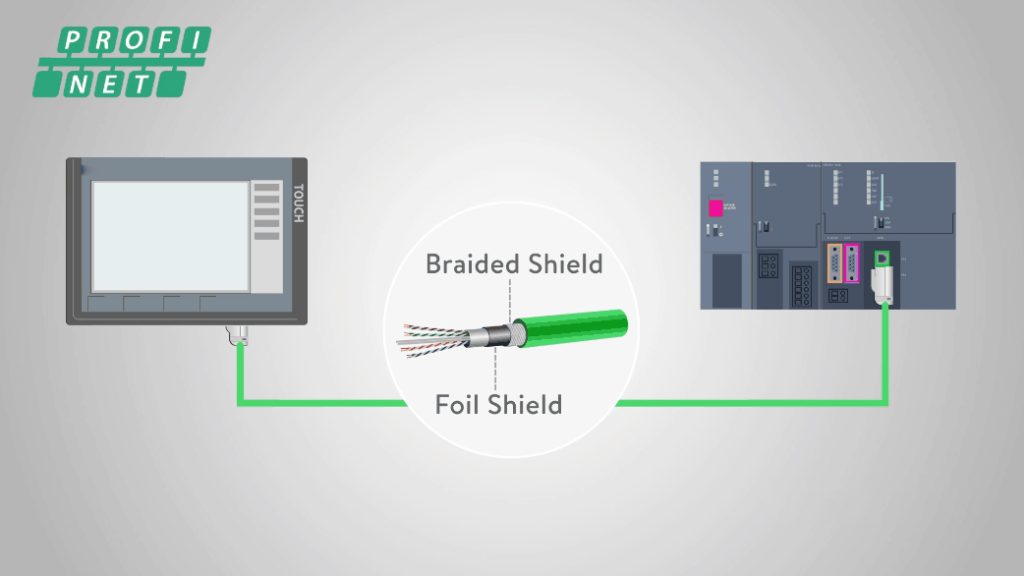
PROFINET is an industrial Ethernet-based automation communication protocol used for data exchange between controllers and field devices. Unlike PROFIBUS, which relies on traditional fieldbus technology, PROFINET is based on standard Ethernet technology and can take advantage of Ethernet in bandwidth, topology, network expansion and IT integration.
In industrial applications, PROFINET is commonly used for high-speed communication between PLCs and remote I/O modules, servo drives, frequency converters, robots, smart instruments, industrial switches and upper-level systems. It supports real-time control data transmission and is also more suitable for transmitting diagnostic information, device status, parameter configuration and larger amounts of data.
The advantage of PROFINET is not only higher speed, but also a more flexible system architecture. It supports multiple network structures such as line, star, tree and ring topologies, and can be expanded through industrial Ethernet switches. For new automation lines, smart factories, digital workshops and systems requiring large-scale data acquisition, PROFINET is usually more suitable for future expansion.
4. Key Differences Between PROFIBUS and PROFINET
4.1 Different Technical Architecture
PROFIBUS is a fieldbus technology based mainly on serial communication. It connects multiple field devices on the same bus and focuses on stable and deterministic communication between field devices. It is suitable for traditional automation control architectures.
PROFINET is an industrial Ethernet technology. It is based on standard Ethernet and adds real-time communication, device models, diagnostic mechanisms and engineering configuration standards for industrial control scenarios. It can connect field devices and also integrate better with upper-level systems, data platforms and industrial networks.
Simply put, PROFIBUS is more like a traditional field-level communication network, while PROFINET is more like a high-speed industrial network for smart manufacturing and industrial digitalization.
4.2 Different Physical Layers and Cables
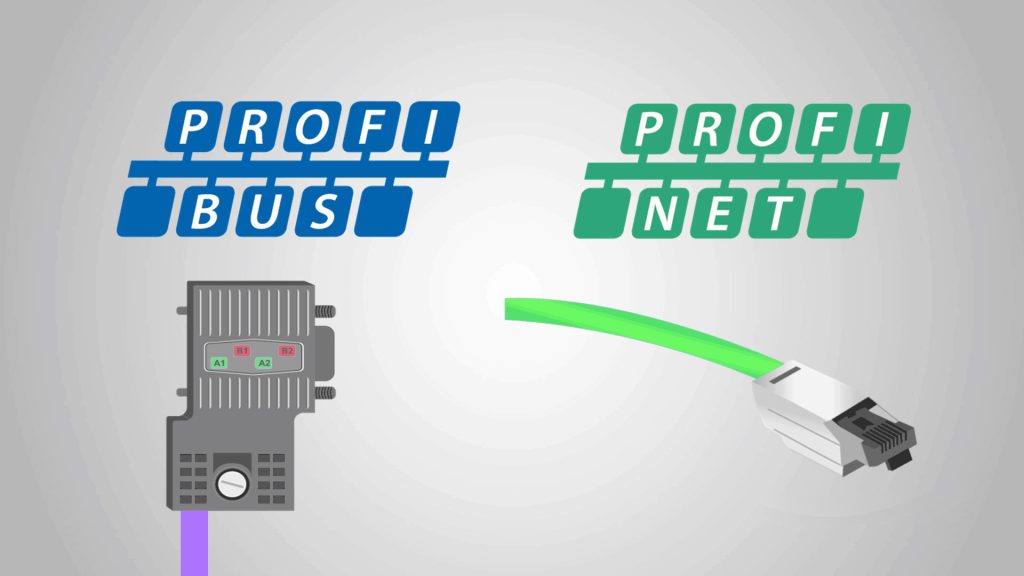
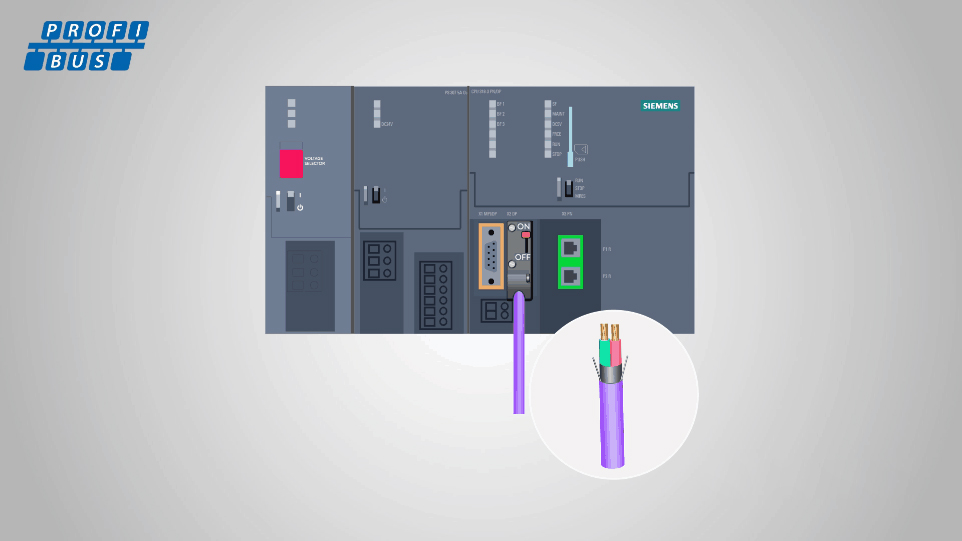
PROFIBUS DP usually uses RS-485 communication, and the common field cable is a purple PROFIBUS cable. PROFIBUS PA uses MBP technology, which allows communication and power supply through the same pair of wires. This gives PROFIBUS PA advantages in process automation and intrinsic safety applications.
PROFINET uses industrial Ethernet cables, with common interfaces such as RJ45 or M12. Field cables are usually green. Since PROFINET is based on Ethernet, engineers can use industrial switches, network diagnostic tools and Ethernet test tools for system planning and maintenance.
4.3 Different Communication Speeds
Communication speed is one of the most obvious differences between the two technologies. PROFIBUS has a maximum communication rate of up to 12 Mbit/s. In some applications, a lower speed may be selected according to cable length and system stability.
PROFINET commonly operates at 100 Mbit/s and can be extended to higher speeds. However, in real engineering applications, theoretical speed is not the only factor to consider. PROFIBUS can still operate stably in systems with small data volumes, a fixed number of devices and simple control logic. PROFINET is more suitable for systems with larger data volumes, more devices and higher requirements for diagnostics and expansion.
4.4 Different Network Topologies
PROFIBUS usually uses a line or bus topology. Devices are connected in sequence, and proper termination resistors must be set at both ends of the network. If the termination resistor is incorrect, connectors are loose or shielding and grounding are poor, communication instability, station loss or data errors may occur.
PROFINET has a more flexible topology. It supports line, star, tree and ring structures. Through industrial Ethernet switches, the system can more easily expand the number of devices and support regional management and fault location. For large production lines, multi-device systems and distributed control projects, PROFINET provides stronger network planning flexibility.
4.5 Different Device Identification Methods
In a PROFIBUS network, each device usually requires a unique station address. The address can be configured through software or set through DIP switches on the device. Address conflicts or incorrect address settings are common issues during field commissioning.
PROFINET device identification is closer to Ethernet systems. Devices usually include a MAC address, IP address and device name. The device name is very important in PROFINET engineering configuration, because the controller identifies and assigns devices according to the device name. Compared with traditional address-based methods, PROFINET is more suitable for complex network management and system diagnostics.
4.6 Different Data Exchange Mechanisms
PROFIBUS uses a master-slave mode. The master controls the communication cycle, and slaves respond to the master’s requests. This method is simple and deterministic, but bandwidth and data flow are relatively fixed.
PROFINET uses a data exchange mechanism more suitable for Ethernet. Controllers and devices can exchange cyclic real-time data and also transmit diagnostics, parameters, alarms and acyclic data. For modern automation systems requiring large amounts of status information, device health diagnostics and remote maintenance, PROFINET has stronger data carrying capability.
5. Advantages and Applications of PROFIBUS
The biggest advantages of PROFIBUS are maturity, stability and rich engineering experience. In many production lines and process control systems that have been in operation for years, PROFIBUS has been fully verified. Maintenance personnel are familiar with its wiring methods, address settings, termination resistors and troubleshooting procedures.
For projects with fewer devices, smaller communication data volumes and relatively fixed system structures, PROFIBUS remains a reliable choice. Typical applications include traditional chemical plants, old production line retrofits, process instrument communication, remote I/O systems and frequency converter control.
In process automation, PROFIBUS PA still has certain advantages. Because it is suitable for field instrument applications requiring intrinsic safety, bus power supply and low-speed stable communication, it continues to be used in chemical, petrochemical, pharmaceutical and water treatment industries.
6. Advantages and Applications of PROFINET
The advantages of PROFINET mainly include high bandwidth, flexible topology, real-time communication, system scalability and information integration capability. As industrial field devices become smarter, simply transmitting switch signals or small amounts of analog data is no longer enough. Modern factories need to collect more operating data, diagnostic data, alarm information and maintenance information. PROFINET is better suited to this trend.
In smart manufacturing, automated production lines, robot systems, motion control, packaging machinery, automotive manufacturing, lithium battery equipment, logistics conveying systems, intelligent warehousing and large-scale process control systems, PROFINET can provide better network expansion and data communication capabilities.
For new projects, if the controller, remote I/O, drives, smart instruments and upper-level systems all support PROFINET, it is usually recommended to give priority to PROFINET. This is beneficial for future expansion, device diagnostics, system maintenance and digital upgrades.
7. Will PROFIBUS Be Completely Replaced by PROFINET?
From the perspective of technology development, PROFINET will continue to grow in new automation systems because it is more suitable for industrial Ethernet, smart manufacturing and digital management. However, this does not mean that PROFIBUS will immediately disappear from industrial sites.
In many factories, existing PROFIBUS systems are still running stably. Spare parts are available, and maintenance personnel are familiar with the system structure. If the production line does not require a large-scale upgrade, replacing the entire communication system only to adopt a newer technology may not be economical. In such cases, a phased upgrade is usually more reasonable.
For example, existing PROFIBUS field devices can be retained and connected to a PROFINET control system through gateways, proxies or communication conversion modules. In this way, old devices can continue to provide value while the plant gradually builds an industrial Ethernet architecture.
Therefore, PROFIBUS and PROFINET are likely to coexist for a long time. PROFIBUS will continue to serve many mature existing systems, while PROFINET will be used more in new systems and intelligent upgrade projects.
8. Should Industrial Instruments Use PROFIBUS or PROFINET?
For industrial instruments such as level meters, material level meters, radar level meters, pressure transmitters, flow meters, temperature instruments and switch instruments, the choice of communication protocol should depend on the overall site system architecture, not only on the instrument itself.
If the existing control system is already a PROFIBUS network, and the project only involves replacing a single instrument or adding a few measuring points, choosing instruments that support PROFIBUS will make integration easier and reduce engineering modification work.
If it is a new project, or if the factory is carrying out digital upgrades, remote monitoring, intelligent diagnostics or data acquisition system construction, devices that support PROFINET are more beneficial for future expansion. PROFINET can carry more device status information and diagnostic data, helping improve instrument maintenance efficiency.
If the site has existing PROFIBUS devices but plans to upgrade to PROFINET, gateways or proxy solutions can be considered. This allows older devices to continue working while gradually building an industrial Ethernet architecture.
9. PROFIBUS vs PROFINET Comparison Summary
| Comparison Item | PROFIBUS | PROFINET |
|---|---|---|
| Technology Type | Fieldbus | Industrial Ethernet |
| Common Applications | Traditional automation, process control, remote I/O | Smart manufacturing, high-speed control, data integration |
| Physical Layer | RS-485, MBP, etc. | Standard Ethernet |
| Communication Speed | Usually up to 12 Mbit/s | Commonly 100 Mbit/s or higher |
| Topology | Mainly line/bus topology | Line, star, tree, ring |
| Device Identification | Station address | Device name, IP address, MAC address |
| System Expansion | Relatively limited | Flexible expansion |
| Maintenance Focus | Address, termination resistor, cable shielding | Network planning, switches, IP address and device name |
| Suitable Scenarios | Existing systems, stable control, process instruments | New systems, smart factories, high-data-volume applications |
10. FAQ
10.1 Which Is Better, PROFIBUS or PROFINET?
There is no absolute answer. The best choice depends on the application. PROFIBUS is mature and stable, making it suitable for many existing systems and traditional fieldbus applications. PROFINET has higher bandwidth and more flexible topology, making it more suitable for new projects and digital factories.
10.2 Should New Projects Choose PROFIBUS or PROFINET?
For new automation systems, if the controller, I/O modules, drives and smart instruments all support PROFINET, PROFINET is usually recommended. It is more beneficial for system expansion, data acquisition and future maintenance.
10.3 Do Old PROFIBUS Systems Need to Be Upgraded Immediately?
Not necessarily. If the system runs stably and maintenance costs are manageable, it can continue to be used. If the factory needs to add many devices, connect to upper-level systems or carry out digital upgrades, a phased transition to PROFINET can be considered.
10.4 Can PROFIBUS Devices Be Connected to a PROFINET System?
Yes. Through gateways, proxies or communication converters, many PROFIBUS devices can be connected to a PROFINET control system, enabling integration between old and new systems.
10.5 What Are the Advantages of PROFINET for Industrial Instruments?
Industrial instruments that support PROFINET can be more easily connected to industrial Ethernet systems. They can transmit measured values, alarm information, diagnostic status and device parameters, making them suitable for intelligent maintenance and remote monitoring.
11. Conclusion: Choose the Right Industrial Communication Solution Based on System Requirements
PROFIBUS and PROFINET are two important technologies in industrial automation communication. PROFIBUS represents a mature and reliable fieldbus system, suitable for existing systems, traditional process control and stable operation scenarios. PROFINET represents the development direction of industrial Ethernet and is more suitable for high-speed communication, multi-device connection, intelligent diagnostics and digital factory construction.
For enterprises, choosing between PROFIBUS and PROFINET should not be based only on communication speed or whether the technology is new or old. The decision should consider the existing system architecture, device compatibility, retrofit cost, maintenance capability, data requirements and future expansion plans.
For old system maintenance, PROFIBUS still has practical value. For new system construction or intelligent upgrades, PROFINET usually offers stronger long-term advantages. By planning the communication architecture properly, enterprises can ensure stable production while laying a solid foundation for future industrial automation upgrades and digital management.