In iron ore mining, crushing, screening, and conveying processes, buffer silos, transfer bins, and storage silos play an important role in temporary material storage, balancing material flow, and maintaining continuous production.
Accurate and continuous monitoring of iron ore levels directly affects the stable operation of crushers, belt conveyors, feeders, and other downstream equipment.
Compared with liquid level measurement, however, iron ore level measurement is significantly more challenging. Iron ore consists of particles of different sizes, and large amounts of dust are generated during loading and unloading. The material surface is also rarely flat. Conical piles, depressions, and multiple peaks often form inside the silo.
In addition, internal structures such as chutes, reinforcing ribs, support beams, and other metal components may generate strong false echoes and interfere with radar signals.
During the modernization of the crushing and conveying system at a large mining operation, similar challenges were encountered. The site handled iron ore and other mineral materials, while the existing level measurement methods were no longer sufficient for continuous and automated production.
After analyzing the operating conditions and carrying out on-site testing, the JWrada-34 radar level meter was installed on iron ore buffer silos and transfer bins to provide continuous and reliable level monitoring.
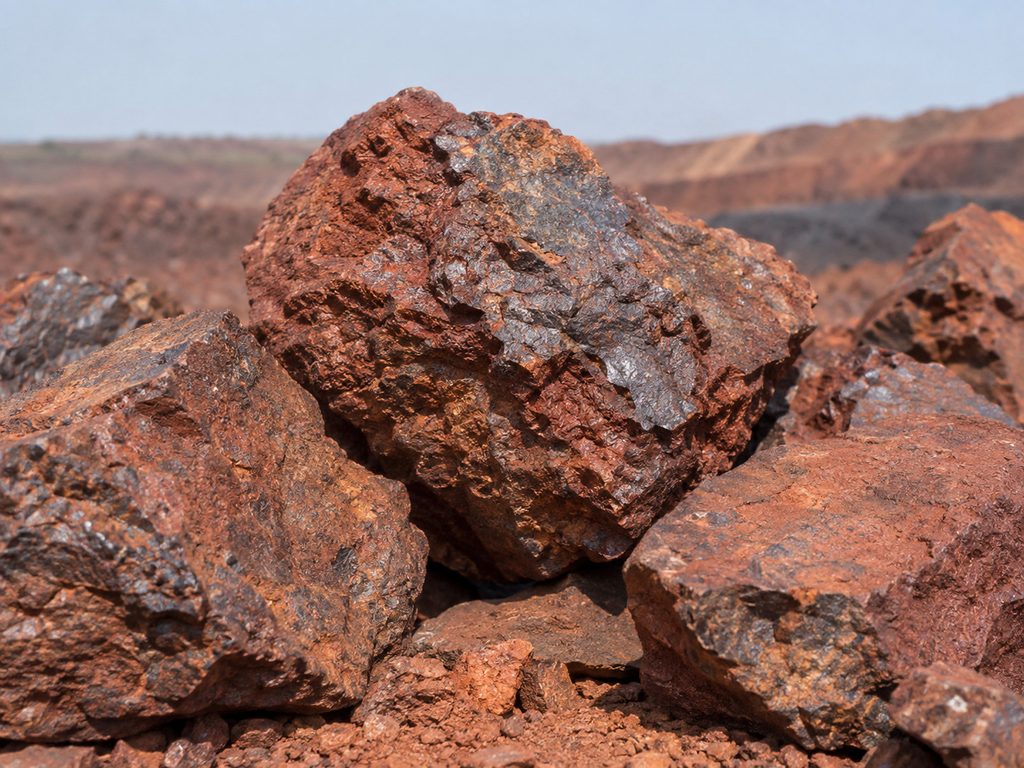
1. Why Is Iron Ore Level Measurement So Challenging?
Iron ore is a typical bulk solid material.
Throughout mining operations, from the moment the ore enters the crusher to the time the crushed material falls into a buffer silo and is transported to the next production stage, dust, vibration, and material impact are almost always present.
Heavy Dust
One of the most significant challenges is the high concentration of dust.
Crushing, screening, and high-speed material loading generate large amounts of fine iron ore particles. When belt conveyors continuously feed material into a silo, dense dust clouds may form inside the vessel.
For some conventional level measurement technologies, these dusty conditions can weaken the measurement signal or cause unstable readings.
Uneven Material Surfaces
Unlike liquids, iron ore does not naturally form a horizontal surface.
When material enters through a single inlet, it normally forms a cone-shaped pile. As the feeding point, discharge rate, and particle size change, the surface may develop multiple peaks and depressions.
If the measuring beam is too wide, signals may be reflected from several different areas at the same time, making it difficult to determine the true material level.
Interference from Internal Metal Structures
Iron ore storage and transfer silos commonly contain internal components such as chutes, beams, reinforcing ribs, and supports.
When the radar beam reaches these metal surfaces, strong reflections may be produced. These false echoes can interfere with the real echo from the iron ore surface and increase the difficulty of signal identification.
Strong Vibration and Material Impact
Crushers, vibrating screens, motors, and conveying equipment can cause continuous vibration throughout the steel structure.
At the same time, falling iron ore can create significant mechanical impact.
For contact-type level measurement devices, these conditions may accelerate wear and increase maintenance requirements.
Therefore, reliable iron ore level measurement is not simply a matter of measuring distance. The instrument must be capable of continuously identifying the real material surface in an environment characterized by heavy dust, strong vibration, irregular surfaces, and complex reflections.
2. Why Was the JWrada-34 Radar Level Meter Selected?
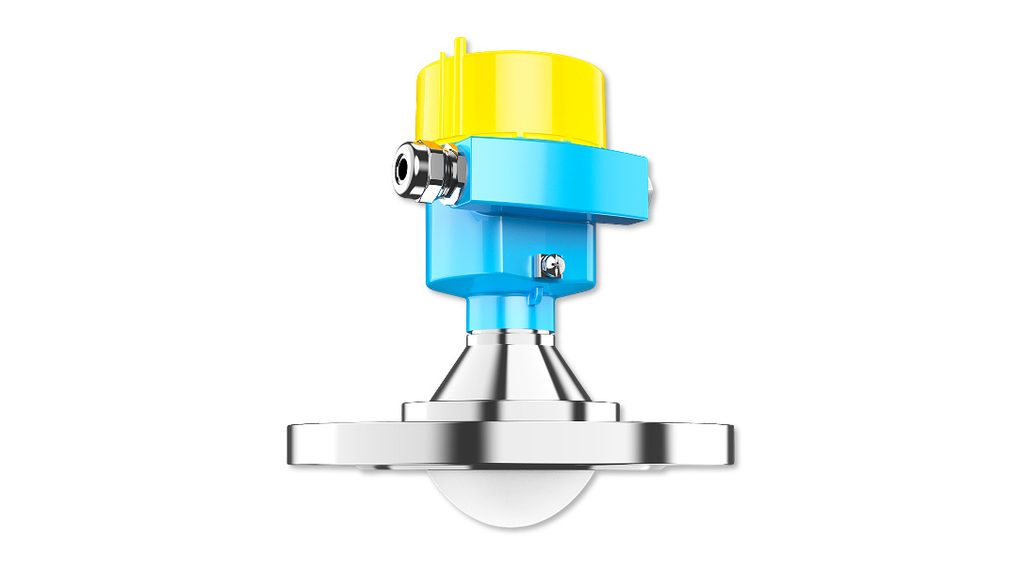
To address the operating conditions of the iron ore silos, the JWrada-34 radar level meter based on 80 GHz FMCW technology was selected.
Compared with lower-frequency radar instruments, an 80 GHz radar can generate a narrower and more focused measuring beam.
This is particularly important in mineral silos containing steel beams, silo walls, chutes, and other internal structures. A narrower beam can be directed more precisely toward the target material surface, reducing the probability that unwanted structures enter the main measurement area.
This characteristic is especially valuable when measuring iron ore.
Since the material surface is normally uneven, the objective is to measure a representative section of the main material surface rather than the filling stream, silo wall, or a nearby structural beam.
If the radar beam is too wide, several reflected signals may be received simultaneously. A high-frequency narrow beam improves spatial resolution and helps the instrument focus on the effective iron ore surface.
The JWrada-34 uses 80 GHz FMCW, or Frequency Modulated Continuous Wave, radar technology.
The antenna continuously transmits high-frequency electromagnetic waves toward the material. When the waves reach the iron ore surface, they are reflected back to the antenna.
The instrument analyzes the frequency difference between the transmitted and received signals to calculate the distance between the antenna and the material surface. Based on the total silo height, the system then determines the actual material level.
With a maximum measuring range of up to 150 meters, the JWrada-34 can be used not only in conventional buffer silos but also in large storage silos and other long-range bulk solids applications.
3. Intelligent Echo Processing for Complex Iron Ore Surfaces
A higher radar frequency alone cannot solve every measurement problem inside an iron ore silo.
When chutes, support beams, silo walls, and irregular material surfaces are present simultaneously, the radar may receive several different echoes.
These signals may include the real material surface echo, reflections from fixed structures, and multiple reflections generated inside the silo.
The JWrada-34 uses intelligent echo processing to distinguish between different signal sources.
Fixed internal structures can be identified through false-echo suppression or interference mapping, reducing their influence on the actual measurement.
As the iron ore level continuously changes during filling and discharge, the instrument tracks the effective material echo and maintains a stable output signal.
This capability is particularly important for automated mining systems.
For example, when an upstream belt conveyor continuously feeds an iron ore buffer silo, the material level gradually rises. Once the downstream feeder starts operating, the level begins to fall.
If the level signal repeatedly jumps or becomes unstable, the PLC cannot reliably control the conveying equipment.
A stable and continuous measurement signal allows the control system to determine the actual amount of material inside the silo and make more accurate operational decisions.
4. Installation of the JWrada-34 on Iron Ore Silos
The performance of a radar level meter depends not only on the instrument itself but also on proper installation.
For iron ore applications, the radar should generally not be installed directly above the filling stream.
The reason is straightforward: if fast-moving iron ore continuously passes through the radar beam, the instrument may detect the falling material instead of the actual material surface.
The measuring point should therefore be selected based on the filling direction, silo geometry, and typical material distribution.
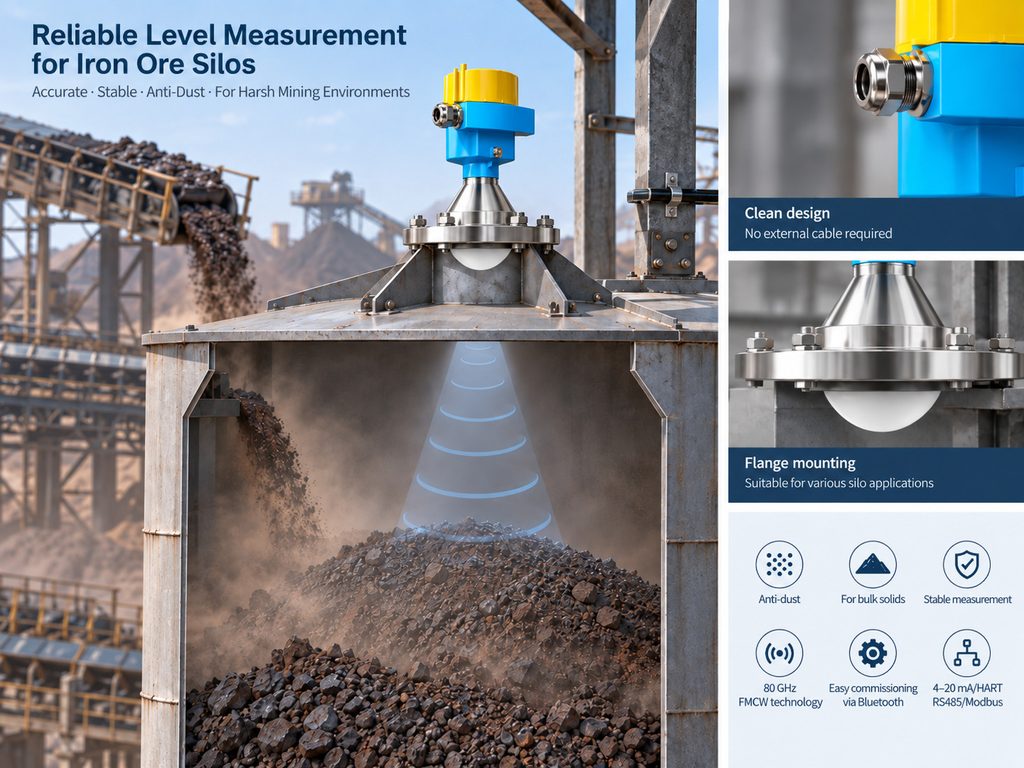
The JWrada-34 can be installed using flange, bracket, or suspension mounting arrangements depending on the site conditions.
When the iron ore surface is significantly inclined, an adjustable or universal flange can be used to change the antenna direction so that the main radar beam points toward a representative area of the material surface.
Antenna Cleaning in Dusty Environments
Antenna contamination should also be considered in extremely dusty applications.
Fine iron ore dust may gradually accumulate on exposed surfaces.
The JWrada-34 can be equipped with a purging arrangement to help keep the antenna area clean and reduce the influence of long-term dust accumulation on radar transmission and reception.
Multiple Measuring Points for Large Silos
For very large iron ore storage silos, a single measuring point may not accurately represent the complete material distribution.
Depending on the silo diameter, feeding method, and required inventory accuracy, several radar level meters may be installed at different positions.
Multiple measuring points provide a better understanding of the material profile and overall storage condition.
Therefore, radar level measurement in an iron ore silo should not be considered simply as installing one instrument on the roof.
The measuring beam, filling direction, material surface profile, and internal structures should all be considered as part of an integrated measurement solution.
5. Performance in High-Dust Iron Ore Applications
After installation and commissioning, the JWrada-34 provided continuous monitoring of the iron ore levels in the buffer silos and transfer bins.
During continuous feeding, large amounts of dust were generated inside the silos.
The 80 GHz narrow beam, combined with intelligent echo processing, allowed the radar to continue identifying the main material surface even when the internal environment became heavily dusty.
At the same time, vibration from crushers, conveyors, and other machinery did not directly affect the non-contact radar measuring principle.
Unlike mechanical or contact-type devices, the radar sensor was not exposed to continuous impact or abrasion from the iron ore.
For the mining operation, the most important benefit was not simply obtaining a numerical level reading.
The key improvement was the ability to continuously visualize the operating condition of the silo.
Operators could determine in real time whether the iron ore level was high, medium, or low.
When the level approached the preset high limit, the upstream conveying rate could be adjusted to reduce the risk of overfilling or material overflow.
When the level dropped toward the low limit, additional material could be supplied in advance to prevent downstream equipment from running without sufficient feed.
As a result, silo management gradually shifted from manual observation to real-time data-based control.
6. Integration with PLC, DCS, and SCADA Systems
Modern mining operations require more than local level indication.
The JWrada-34 supports 4–20 mA/HART and RS485/Modbus communication options, allowing it to be integrated with existing automation systems.
Real-time iron ore level data can therefore be transmitted to PLC, DCS, or SCADA systems and displayed in a centralized control room.
Once integrated with the process control system, the level measurement can also participate in equipment interlocking and automatic production control.
For example, when an iron ore buffer silo reaches the high-level alarm point, the control system can notify operators or reduce the speed of the upstream conveyor.
If the level reaches a high-high alarm point, additional interlocking actions can be triggered according to the process requirements.
Likewise, a low-level signal can be used to adjust the feeding rate and reduce production fluctuations caused by insufficient material supply.
In large mining operations with multiple iron ore silos, continuous level data can also support inventory management, production scheduling, and material balance calculations.
This makes radar level measurement an important source of process data for digital and intelligent mining systems.
7. Bluetooth Commissioning Reduces the Need for Working at Height
Iron ore silos are often tall structures, with radar instruments installed on the silo roof.
If technicians must climb to the top of the silo every time they need to modify parameters, inspect echo curves, or check the operating status of the instrument, commissioning becomes less efficient and working-at-height risks increase.
The JWrada-34 supports Bluetooth wireless commissioning.
Using a mobile device, technicians can perform functions such as range configuration, parameter adjustment, echo curve inspection, instrument status monitoring, and fault diagnosis.
This is particularly useful in mining environments where high dust levels, noise, and dense mechanical equipment can make access difficult.
Technicians can inspect the instrument from a safer location and reduce the need for repeated climbing and opening of the housing.
When several identical silos are equipped with the same radar level meters, standardized parameter settings can also simplify commissioning and maintenance.
8. Non-Contact Measurement Reduces Wear from Iron Ore
Iron ore particles are hard and abrasive.
During crushing and conveying, high-speed material flow can cause significant wear to any device that comes into direct contact with the material.
If a sensor extends into the silo and remains in contact with the iron ore, long-term impact, abrasion, material buildup, or mechanical blockage may gradually increase maintenance requirements.
Radar level measurement avoids these problems because the sensor does not need to contact the material.
The antenna is installed at the top of the silo and measures distance using electromagnetic waves.
As a result, there are no measuring parts continuously exposed to abrasion from the iron ore.
This reduces mechanical wear and also lowers the probability of maintenance shutdowns caused by damaged, blocked, or buried measuring components.
For mining operations that depend on continuous production, preventing unnecessary silo shutdowns can be more important than simply improving measurement accuracy.
9. What Should Be Considered When Using Radar Level Meters for Iron Ore?
Although 80 GHz radar technology is well suited to challenging bulk solids applications, successful measurement still depends on correct instrument selection and installation.
During project planning, several key factors should be evaluated, including:
- Silo height and diameter
- Filling position
- Discharge method
- Iron ore particle size
- Maximum and minimum material levels
- Internal steel structures
- Dust concentration
- Surface angle and material distribution
- Required output signal and communication protocol
If the iron ore is mainly fed from one side of the silo, the material surface may remain inclined in one direction for long periods.
In this case, the antenna angle should be adjusted accordingly.
If a large metal chute is installed inside the silo, the main radar beam should avoid directly pointing toward the chute.
For applications with extremely high dust concentrations, an antenna purging system should also be considered.
It is also not recommended to select a radar level meter based only on its maximum measuring range.
In many applications, beam angle, installation position, echo processing capability, and overall suitability for the actual process conditions have a greater influence on measurement performance than the maximum range itself.
Conclusion
Iron ore level measurement may appear to be a relatively simple part of a mining process, but it directly affects crushing, conveying, storage, and feeding operations.
Heavy dust, strong vibration, uneven material surfaces, interference from internal metal structures, and the abrasive nature of iron ore make reliable level monitoring particularly challenging.
The JWrada-34 radar level meter uses 80 GHz FMCW technology, a narrow measuring beam, intelligent echo processing, non-contact measurement, optional purging, and adjustable installation options to provide reliable continuous level measurement for iron ore buffer silos, transfer bins, and large storage silos.
When the level data is further integrated into PLC, DCS, or SCADA systems, the radar level meter becomes more than a standalone measuring instrument.
It can support conveyor control, inventory management, process interlocking, production scheduling, and overall plant automation.
For mining operations seeking reliable iron ore level measurement under dusty and demanding conditions, the JWrada-34 provides a practical solution for improving process visibility, operational reliability, and automation efficiency.