1. Why the Beverage Industry Must Move Toward Fully Automated Production
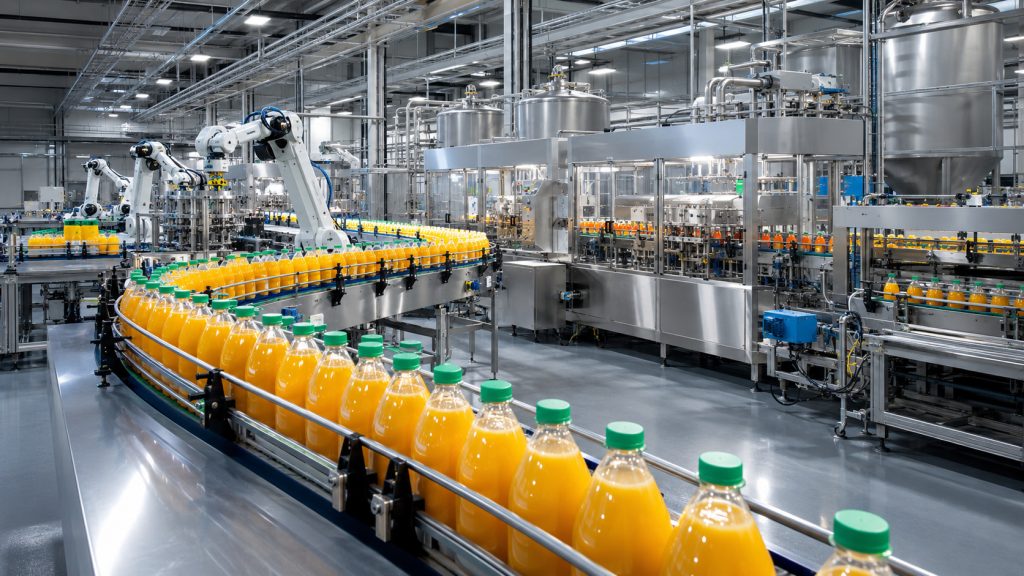
The beverage industry is shifting from large-scale manufacturing to refined and intelligent manufacturing. In the past, a beverage production line was considered competitive as long as it could perform stable filling, labeling, and packing. Today, however, the market changes faster, product SKUs are more diverse, and consumers have higher expectations for flavor, health, packaging, and delivery speed. Beverage companies must not only produce quickly, but also produce accurately, consistently, economically, and traceably.
Fully automated production in the beverage industry does not simply mean replacing workers with machines. It means creating a closed-loop system that integrates raw materials, batching, sterilization, CIP cleaning, filling, packaging, warehousing, and data management. Every tank, pipeline, pump, valve, and sensor on the production site needs to sense operating conditions in real time, execute commands automatically, and feed data back to the central control system. Only in this way can beverage factories truly achieve lean staffing, continuous operation, standardization, and intelligent production.
In this process, level meters are often underestimated. Many people see a level meter only as an instrument that measures how much liquid remains in a tank. In a fully automated production system, however, a level meter is a critical link between material status and control decisions. Without accurate, stable, and real-time level data, automatic batching, automatic replenishment, overflow prevention, dry-run protection, inventory management, and production scheduling cannot be truly reliable.
2. The Core Logic of Fully Automated Beverage Production: Let Data Drive the Process
Beverage production generally includes water treatment, syrup or concentrate storage, batching and mixing, homogenization, sterilization, temporary storage, filling, packaging, and finished goods warehousing. To achieve full automation, the key is not having advanced equipment at a single point, but connecting data across the entire process.
First, after raw materials enter the factory, they need to be managed through storage tanks, silos, and pipeline systems. Water, syrup, fruit juice concentrate, tea extract, dairy-based ingredients, additives, and cleaning solutions all have different properties, measurement requirements, and hygiene requirements. The automation system must know the real-time liquid level, temperature, pressure, and batch information of each storage tank before it can accurately arrange the next production step.
Second, batching requires high precision. The stability of a beverage’s taste often depends on the proportion of water, sugar, acidulants, flavors, concentrates, and other ingredients. The automation system uses flow meters, weighing modules, level meters, and valve control to achieve quantitative feeding, automatic mixing, and recipe execution. In this process, level meters help determine tank inventory, control the feeding and discharge rhythm, prevent incorrect material feeding, and ensure batch consistency.
Third, the production line must be linked with the CIP cleaning system. The food and beverage industry has very strict hygiene requirements. Equipment inner walls, pipelines, storage tanks, and valve manifolds need to be cleaned regularly. Level meters can be used to monitor cleaning solution tanks, acid and alkali tanks, recovery tanks, and discharge tanks. They help the system determine whether cleaning liquid is sufficient, whether recovered liquid has reached the set volume, and whether abnormal consumption has occurred. This protects food safety while reducing waste of water, steam, and chemicals.
Finally, filling and packaging also depend on stable material supply. If the liquid level in the buffer tank before filling is too low, the filling machine may run out of material. If the level is too high, overflow and contamination risks may occur. When level meters are connected with PLC, SCADA, and MES systems, the production system can automatically adjust pump speed, valve opening, and production rhythm based on real-time level data, keeping the entire line running smoothly.
3. Why Level Meters Are the “Sensing Core” of Beverage Automation
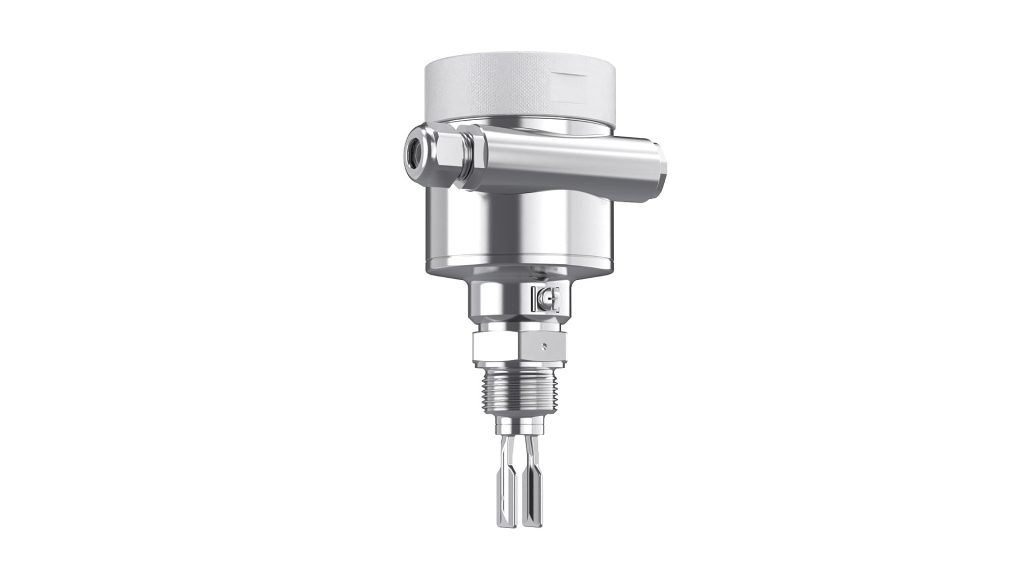
In beverage factories, level meters are mainly used for continuous level measurement, high and low limit alarms, inventory calculation, process interlocking, and safety protection. Common types include radar level meters, ultrasonic level meters, hydrostatic level transmitters, guided wave radar level meters, capacitive level meters, and tuning fork level switches. Different operating conditions require different measurement solutions.
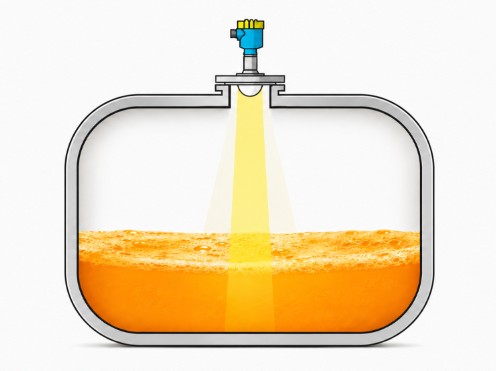
For example, in syrup tanks, fruit juice concentrate tanks, and tea beverage buffer tanks, liquids may contain foam, vapor, adhesion, or temperature fluctuations. If the measuring instrument has weak anti-interference capability, it may produce unstable readings, false alarms, or delayed control actions. Radar level meters use non-contact measurement and are less affected by changes in medium color, odor, and density, making them suitable for many food and beverage storage tanks and process tanks. For narrow tanks, rapidly changing liquid levels, and applications with high hygienic requirements, hygienic radar level meters are gaining increasing attention.
The value of a level meter is not only that it measures accurately, but also that it participates in control. When a level meter transmits real-time level data to a PLC or DCS system, the system can automatically decide whether to start a feeding pump, close an inlet valve, switch to a standby tank, trigger CIP cleaning, or pause the filling machine. In other words, level meter data directly affects production actions. The more stable it is, the more reliable the automation system becomes. The more intelligent it is, the more refined factory management can be.
4. Key Steps for Beverage Factories to Achieve Full Automation
The first step is to automate field equipment. Beverage companies need to integrate the water treatment system, batching system, sterilization system, filling system, packaging system, and CIP system into a unified control architecture. Pumps, valves, agitators, conveyors, sterilizers, filling machines, and other equipment should support automatic start-stop control, status feedback, and fault alarms. Instruments such as level meters, flow meters, pressure transmitters, and temperature sensors provide real process data.
The second step is to realize automatic linkage between tank farms and batching systems. Tank farm management is extremely important in the beverage industry, especially in multi-product and multi-batch production scenarios. By using level meters to monitor the liquid levels of raw material tanks, mixing tanks, buffer tanks, and finished product tanks in real time, the system can automatically calculate available production batches, remaining inventory, and replenishment timing. When the level of a tank falls below the set value, the system automatically reminds operators to replenish materials. When the level reaches the high limit, the system automatically closes the valve and triggers an alarm to avoid overflow and waste.
The third step is to establish a recipe management system. Fully automated production should not rely on manual feeding based on experience, but should execute standard recipes through MES or a recipe management module. The raw material ratio, mixing time, temperature curve, sterilization parameters, and filling specification of different beverage products can all be preset. Level meters play a process confirmation role in recipe execution, helping the system determine whether each step has reached the required condition and reducing human error.
The fourth step is to connect SCADA, MES, and ERP. SCADA is responsible for field monitoring, MES is responsible for production execution, and ERP manages orders, inventory, and costs. Once level meter data enters the digital platform, companies can link actual tank inventory with order planning, enabling automatic production scheduling, automatic material requisition, automatic cost accounting, and abnormality tracing. In this way, level data is no longer only workshop data; it becomes part of enterprise-level business data.
The fifth step is to introduce predictive maintenance and energy management. Modern level meters not only output measured values, but also provide diagnostic information such as echo quality, signal strength, contamination alerts, and fault status. Companies can use this data to determine whether an instrument needs cleaning, calibration, or replacement, thereby reducing unexpected downtime. At the same time, the system can analyze the relationship between level changes, pump operation, steam consumption, and cleaning frequency to optimize energy usage.
5. Application Value of Level Meters in Different Beverage Production Stages
In the raw water and water treatment stage, level meters monitor the liquid levels of raw water tanks, purified water tanks, softened water tanks, and reverse osmosis water tanks. The system can automatically start and stop pumps based on the liquid level, preventing pump dry running and ensuring stable water supply for subsequent batching and cleaning.
In syrup and concentrate storage, level meters help companies monitor the inventory of high-value raw materials. Syrup, fruit juice concentrate, and tea extract are often costly. Manual inventory checks can easily lead to large errors. Through continuous level measurement, companies can monitor inventory changes in real time, reducing production stoppages caused by material shortages and avoiding excessive procurement.
In mixing and blending tanks, level meters can work with agitators, inlet valves, and flow meters to enable automatic feeding, automatic mixing, and automatic transfer. When the liquid level reaches the set height, the system automatically stops feeding and enters the next process step, avoiding instability caused by manual judgment.
In CIP cleaning systems, level meters are used to monitor acid tanks, alkali tanks, hot water tanks, recovery tanks, and waste liquid tanks. The system can determine whether cleaning liquid is sufficient, whether the recovered liquid can continue to be used, and whether discharge has reached the control limit. This is important for both lowering cleaning costs and ensuring food safety.
In buffer tanks before filling, level meters directly affect filling continuity. Stable liquid level reduces filling pressure fluctuations and lowers the risk of missing bottles, underfilling, shutdowns, and rework. For high-speed beverage lines, even a few minutes of downtime can cause significant capacity loss, so accurate level monitoring has direct economic value.
6. What Should Beverage Companies Consider When Choosing Level Meters?
When selecting level meters, beverage companies should not focus only on price. They should evaluate hygiene standards, medium characteristics, installation conditions, communication methods, and maintenance costs.
First, hygienic design should be considered. Instruments that come into direct contact with beverages or are installed on food-grade tanks should be easy to clean, have minimal dead zones, resist corrosion, and be suitable for CIP/SIP conditions. Hygienic connections, food-grade materials, and reliable sealing are important foundations for food safety.
Second, process adaptability matters. Foam, vapor, condensation, agitation, adhesion, and temperature changes are common in beverage production, and all may affect measurement stability. For complex working conditions, radar level meters usually offer advantages over traditional contact-based or environmentally sensitive measurement methods. However, the final selection should still consider tank size, medium dielectric constant, installation position, and budget.
Third, digital communication capability should be evaluated. Future beverage factories need more than a 4–20 mA signal. They require richer data interfaces such as HART, IO-Link, PROFINET, and Ethernet-APL. Digital instruments can provide more diagnostic information, making remote commissioning, condition monitoring, and predictive maintenance easier.
Finally, long-term stability and service capability should be considered. Beverage production lines often run continuously, and shutdown maintenance can be expensive. When choosing a level meter, companies should prioritize stability, anti-interference performance, calibration convenience, and spare parts availability. A low-cost instrument that frequently triggers false alarms may ultimately create a higher total cost.
7. The Future of Fully Automated Beverage Production: From Automatic Control to Intelligent Decision-Making
The beverage factory of the future will not only be a place where machines run automatically. It will be a factory where systems optimize automatically. Level meters, flow meters, temperature sensors, vision inspection systems, robotic palletizers, AGV logistics, and MES platforms will jointly form a data network. The factory will be able to schedule production automatically based on orders, replenish materials automatically based on liquid levels, purchase materials automatically based on inventory, and arrange maintenance automatically based on equipment status.
In this system, level meters will become increasingly important. They are no longer just instruments mounted on tank tops, but fundamental data nodes of the smart factory. By accurately sensing material status, level meters help companies reduce manual intervention, lower raw material waste, improve production continuity, strengthen food safety traceability, and provide reliable support for digital management.
For beverage companies, achieving fully automated production should not begin with simply buying the most advanced equipment. It should begin with building a stable data foundation. Production line automation, tank farm automation, batching automation, CIP automation, and warehouse automation all depend on accurate, continuous, and traceable data. Level meters are among the most basic, frequently used, and critical sources of that data.
Conclusion
Competition in the beverage industry has shifted from pure capacity competition to a comprehensive competition of efficiency, quality, flexibility, and cost. Fully automated production is no longer a future concept; it is a practical path for beverage companies to improve competitiveness. By scientifically deploying process instruments such as level meters and deeply integrating them with PLC, SCADA, MES, and ERP systems, companies can achieve full-process automatic control from raw materials to finished products.
Those who build a stable automation sensing system earlier will move faster toward intelligent manufacturing. For beverage factories, a level meter may look like a small device, but it determines whether material flow is smooth, batching is accurate, production is continuous, and management is refined. It is an indispensable part of the beverage industry’s journey toward fully automated production.