Why Reliable Sand Level Detection Matters in No-Bake Foundries
No-Bake sand casting, also known as resin sand casting or air-set molding, is widely used for producing medium and large castings with complex geometries, heavy section thicknesses, and demanding dimensional requirements.
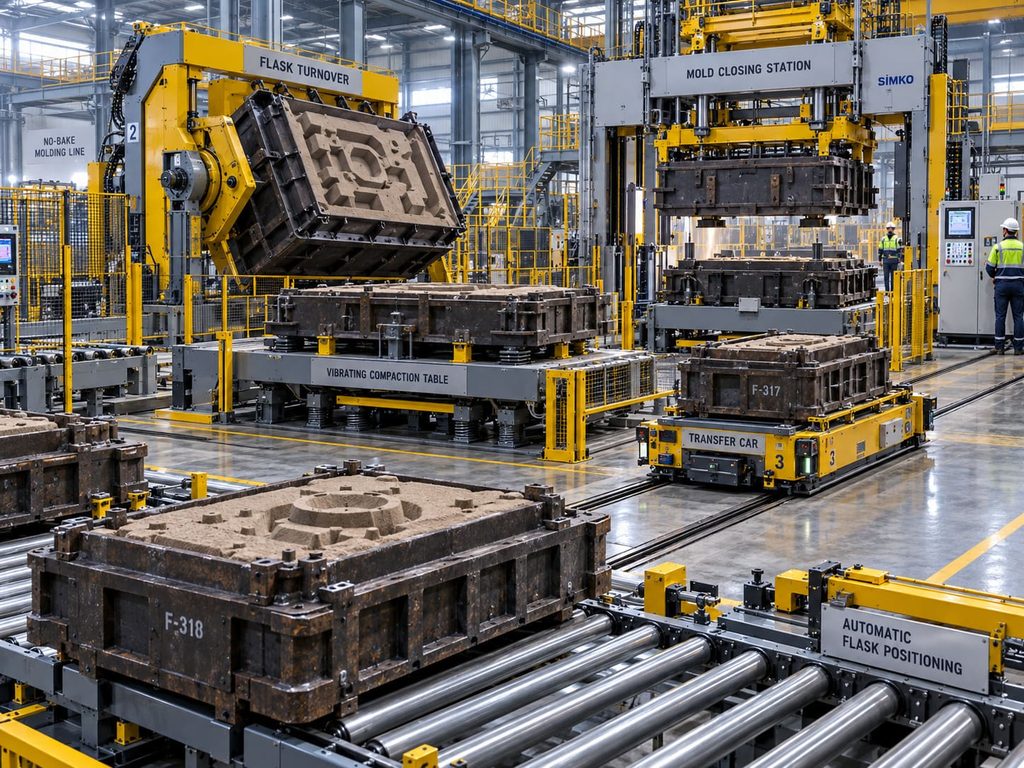
A typical No-Bake molding line may include new sand storage, reclaimed sand handling, sand cooling, screening, magnetic separation, sand reclamation, buffer hoppers, continuous sand mixers, molding stations, flask conveyors, turnover machines, mold closing systems, and pouring areas.
Among all these systems, sand storage and transfer equipment may appear simple, but they play a critical role in maintaining stable production.
If a sand silo runs empty without warning, the continuous mixer may no longer receive a stable sand supply. This can interrupt molding operations and affect production rhythm.
If a silo continues filling after reaching its safe capacity, the result may be overfilling, blocked conveying equipment, material spillage, or unnecessary downtime.
For this reason, modern No-Bake foundries increasingly use point level switches to monitor high and low material levels and connect those signals directly to PLC-based automation systems.
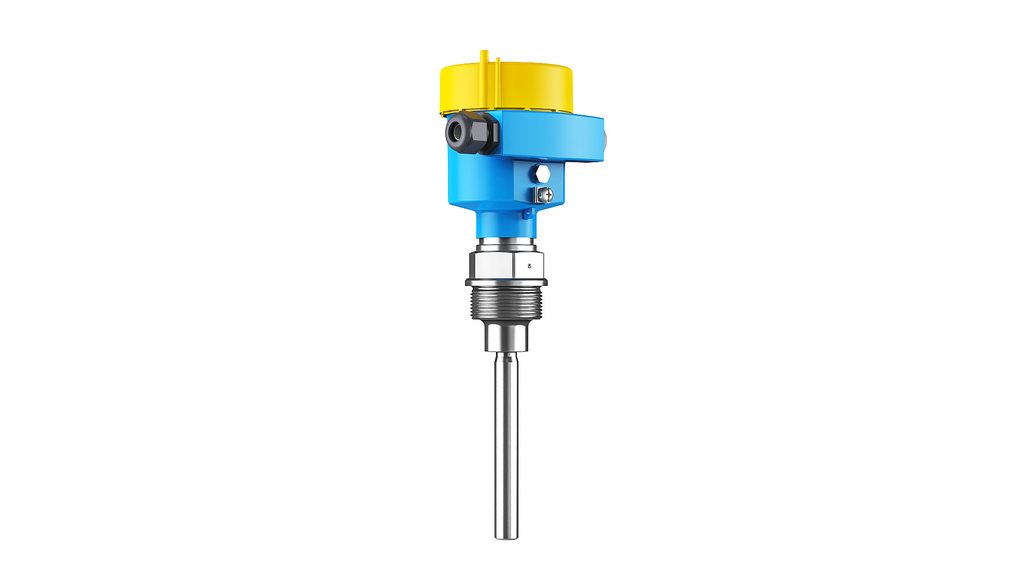
In one typical No-Bake molding line application, the Tube-11 vibrating rod level switch is used in new sand silos, reclaimed sand silos, and buffer hoppers ahead of the continuous mixer.
Its main purpose is simple but important: reliably detect whether sand has reached a specific level and provide a clear switching signal for alarm, interlock, or automatic feeding control.
The Application Background
The molding line in this type of application is designed for medium and large industrial castings.
After pouring and cooling, used sand is discharged through a shakeout system and then passes through crushing, screening, magnetic separation, cooling, and reclamation.
The reclaimed sand is stored in a dedicated silo before being returned to production.
Depending on the molding process, reclaimed sand may be mixed with a controlled amount of new sand before entering the continuous mixer.
Resin and catalyst are then added to the sand before the mixed material is delivered to the molding station.
Because the sand handling system is connected to nearly every stage of production, a problem in one silo can affect the entire line.
This makes reliable sand silo level detection essential for continuous No-Bake production.
Challenge 1: High Dust Levels in the Sand Handling System
Dust is unavoidable in most foundry sand systems.
During shakeout, crushing, screening, transfer, and reclamation, fine particles are generated continuously.
Even with an efficient dust collection system, the internal environment of a new sand silo or reclaimed sand silo can still contain suspended dust.
This can create problems for some conventional sensing technologies.
Optical devices may be affected by dust accumulation.
Mechanical switches with moving parts can become difficult to operate if material builds up around the mechanism.
In this type of application, a vibrating rod level switch offers a straightforward alternative.
The Tube-11 operates by monitoring the vibration characteristics of its sensing probe.
When the probe is free, it vibrates at its normal condition. When sand covers the probe, the vibration characteristics change.
The electronics detect this change and generate a switching output.
This allows the device to answer the most important control question in a sand silo:
Has the material reached this point or not?
For high and low level control, this simple point detection method is often more practical than installing a continuous level measurement system.
Challenge 2: Reclaimed Sand Properties Can Change During Production
Reclaimed sand is not always perfectly uniform.
Its temperature, fine content, residual binder level, grain condition, and bulk behavior may change according to production rate, casting type, reclamation efficiency, and the proportion of new sand added to the system.
For this reason, the level sensor should not depend on highly precise and constant material properties.
The Tube-11 vibrating rod level switch is designed for powder and granular solids and can be applied to sand and similar bulk materials.
Its minimum detectable material density is approximately 0.02 g/cm³, giving it a wide operating margin for typical foundry sand applications.
In practical use, the switch does not need to calculate the exact height of the sand surface.
Instead, it detects whether the material has reached a predetermined point.
This makes it suitable for:
- New sand silos
- Reclaimed sand silos
- Intermediate sand hoppers
- Mixer feed hoppers
- Fine powder storage points
- Process buffer bins
For No-Bake foundries, this type of point level detection provides a simple and reliable basis for automation logic.
Challenge 3: Falling Sand Can Create Strong Mechanical Impact
A sand silo is not a static storage vessel.
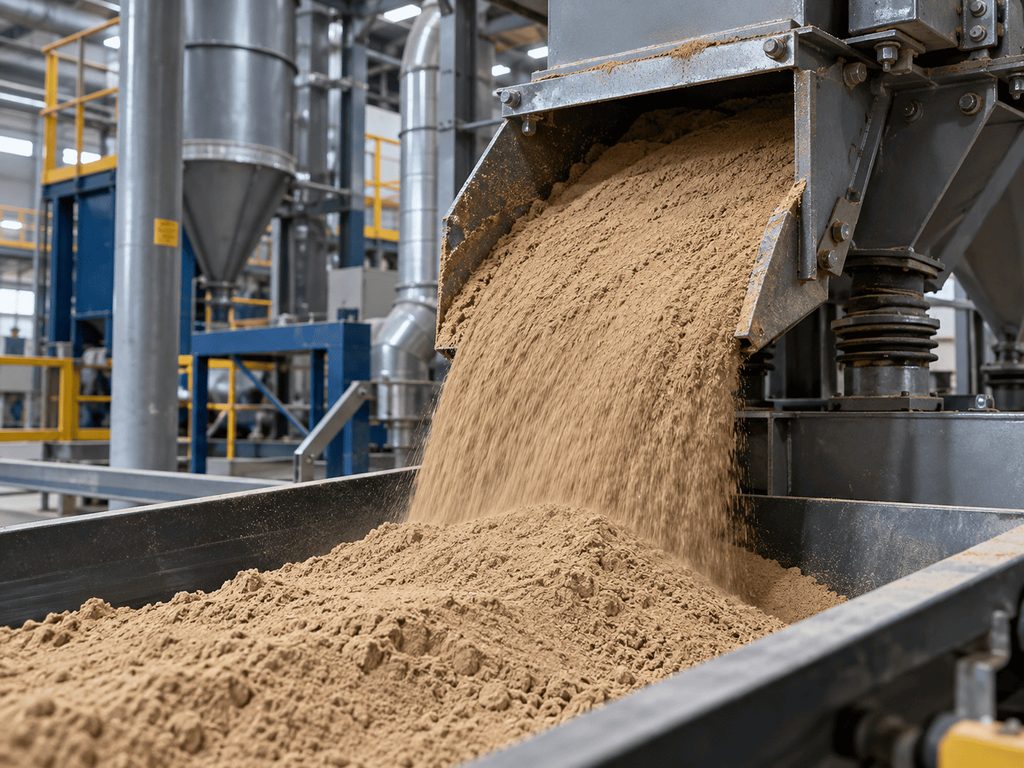
When pneumatic conveying systems, belt conveyors, bucket elevators, or screw conveyors continuously feed material into the silo, large quantities of sand may fall from above.
If the level switch is installed directly in the material impact zone, the sensing probe can be exposed to repeated mechanical stress.
This may reduce equipment life or affect measurement stability.
For this reason, installation position is extremely important.
The level switch should generally be installed away from the direct filling stream.
Where direct impact cannot be avoided, a protective baffle can be installed above the probe.
The baffle absorbs the main force of the falling material and helps protect the sensing element.
For horizontal side mounting, the probe can also be installed with a slight downward angle where appropriate.
This helps reduce the possibility of material accumulating on top of the sensor.
In foundry applications, correct installation is often just as important as selecting the right level switch.
Application Point 1: High and Low Level Detection in the New Sand Silo
New sand is used to compensate for process losses and maintain the required properties of the molding sand system.
A typical configuration uses two Tube-11 level switches in the new sand silo.
One is installed at the high level position.
The other is installed at the low level position.
When the sand drops below the low level switch, the PLC receives a low-level signal and can start the upstream feeding system.
As the silo fills, the sand eventually reaches the high-level switch.
The high-level signal tells the PLC to stop the feeding equipment.
The logic can be summarized as:
Low level → Start sand feeding → Silo fills → High level → Stop sand feeding
This automatic control prevents unnecessary manual monitoring and helps reduce the risk of both material shortage and overfilling.
Application Point 2: Reclaimed Sand Silo Monitoring
The reclaimed sand silo is one of the most important storage points in a No-Bake molding system.
If the reclamation process is interrupted and reclaimed sand inventory becomes too low, the continuous mixer may not receive enough material to maintain normal production.
A Tube-11 low-level switch can therefore be used as an early warning point.
When the sand level falls below the switch, the signal is transmitted to the PLC.
The control system can then trigger an alarm, notify the operator, or stop downstream equipment according to the plant’s control philosophy.
A high-level switch can also be installed to protect the silo from overfilling.
When the reclaimed sand reaches the upper limit, the upstream reclamation or conveying equipment can be stopped or redirected.
This creates a simple but effective interlock between the sand reclamation system and the storage silo.
Application Point 3: Buffer Hopper Before the Continuous Mixer
The continuous sand mixer is one of the key machines in a No-Bake molding line.
Resin and catalyst dosing usually depends on a stable sand supply.
If the mixer feed hopper suddenly runs empty, the sand flow becomes unstable and the chemical dosing process may no longer match the actual material flow.
For this reason, a Tube-11 vibrating rod level switch can be installed in the buffer hopper upstream of the mixer.
The level switch confirms whether sufficient sand is available before the mixing process continues.
If the hopper reaches low level, the PLC can generate an alarm or activate the upstream feeding system.
If the hopper becomes empty, the control system may also stop the mixer to prevent abnormal operation.
It is important to understand that the Tube-11 does not measure sand flow rate and does not control resin or catalyst dosage directly.
Its function is more fundamental:
It confirms whether material is present at a critical point.
That simple signal can then be used as part of a larger automated control strategy.
Why a Vibrating Rod Level Switch Works Well in No-Bake Molding Lines
Several characteristics make vibrating rod level switches suitable for foundry sand applications.
Suitable for Powder and Granular Solids
The Tube-11 is designed for powders and granular materials, making it suitable for silica sand, reclaimed foundry sand, and similar bulk solids.
This matches the material conditions commonly found in resin sand molding lines.
Compact Probe Design
The standard probe is approximately 125 mm long with a diameter of about 16 mm.
The relatively compact sensing element reduces the area exposed to falling material and makes installation possible even where available space is limited.
Simple Point Detection
Unlike continuous level transmitters, a point level switch does not require full silo height calibration.
It only needs to detect whether the material has reached a defined position.
This simplifies commissioning and makes the device especially useful where many storage bins or hoppers require basic high and low level protection.
Suitable for Harsh Industrial Environments
No-Bake foundries often involve dust, vibration, heat, and continuous machine operation.
Tube-11 versions are available with IP66/IP67 protection, and dust explosion-protected configurations can be selected where required.
For higher process temperatures, high-temperature versions can also be considered according to the actual installation conditions.
Key Installation Recommendations
Proper installation helps ensure long-term reliability.
First, the level switch should not be installed directly below the sand inlet.
Repeated impact from falling sand may create unnecessary mechanical stress.
Second, side-mounted units should be positioned to minimize material buildup.
A slight downward installation angle can help prevent sand from resting permanently on the probe.
Third, the high-level switch should not be installed too close to the absolute top of the silo.
When the switch signals “full,” there may still be material remaining in the conveyor or feed chute.
Adequate free space should therefore be left between the high-level sensor and the maximum safe fill level.
The same principle applies to the low-level switch.
It should be positioned high enough to provide sufficient time for the upstream feeding system to respond before the hopper becomes completely empty.
Finally, the sensor should be integrated properly into the PLC logic.
A reliable level control system depends on three elements working together:
Correct sensor selection + correct installation + correct control logic
Benefits for Foundry Automation
The value of the Tube-11 in a No-Bake molding line does not come from providing complex process data.
Its value comes from providing simple and reliable material status information.
By installing vibrating rod level switches at critical points, foundries can achieve:
- High-level overfill protection
- Low-level material shortage alarms
- Automatic sand feeding control
- Reclaimed sand silo monitoring
- Mixer feed hopper protection
- Conveyor and reclamation system interlocks
- Reduced dependence on manual silo inspection
- Improved production continuity
- More stable automated operation
In a highly automated molding line, these level signals become part of the overall process control system.
A small sensor can therefore play an important role in preventing larger production interruptions.
Conclusion
Modern No-Bake molding lines are becoming increasingly automated.
Sand mixers, reclamation systems, roller conveyors, flask turnover machines, transfer cars, mold closing stations, and PLC control systems all contribute to production efficiency.
However, these systems also depend on reliable information from smaller field devices.
The Tube-11 vibrating rod level switch can provide simple and dependable point level detection in new sand silos, reclaimed sand silos, and buffer hoppers.
Its vibrating principle, compact probe, suitability for powder and granular solids, and ability to operate in demanding industrial conditions make it well suited for foundry sand applications.
When combined with correct installation and PLC interlock logic, it can help prevent overfilling, detect material shortage, support automatic feeding, and improve the overall reliability of a No-Bake sand molding line.
For foundries planning a new resin sand molding system or upgrading an existing production line, reliable high and low level detection should be considered an essential part of the automation design rather than a minor accessory.