1. What Is a Rotary Paddle Level Switch?
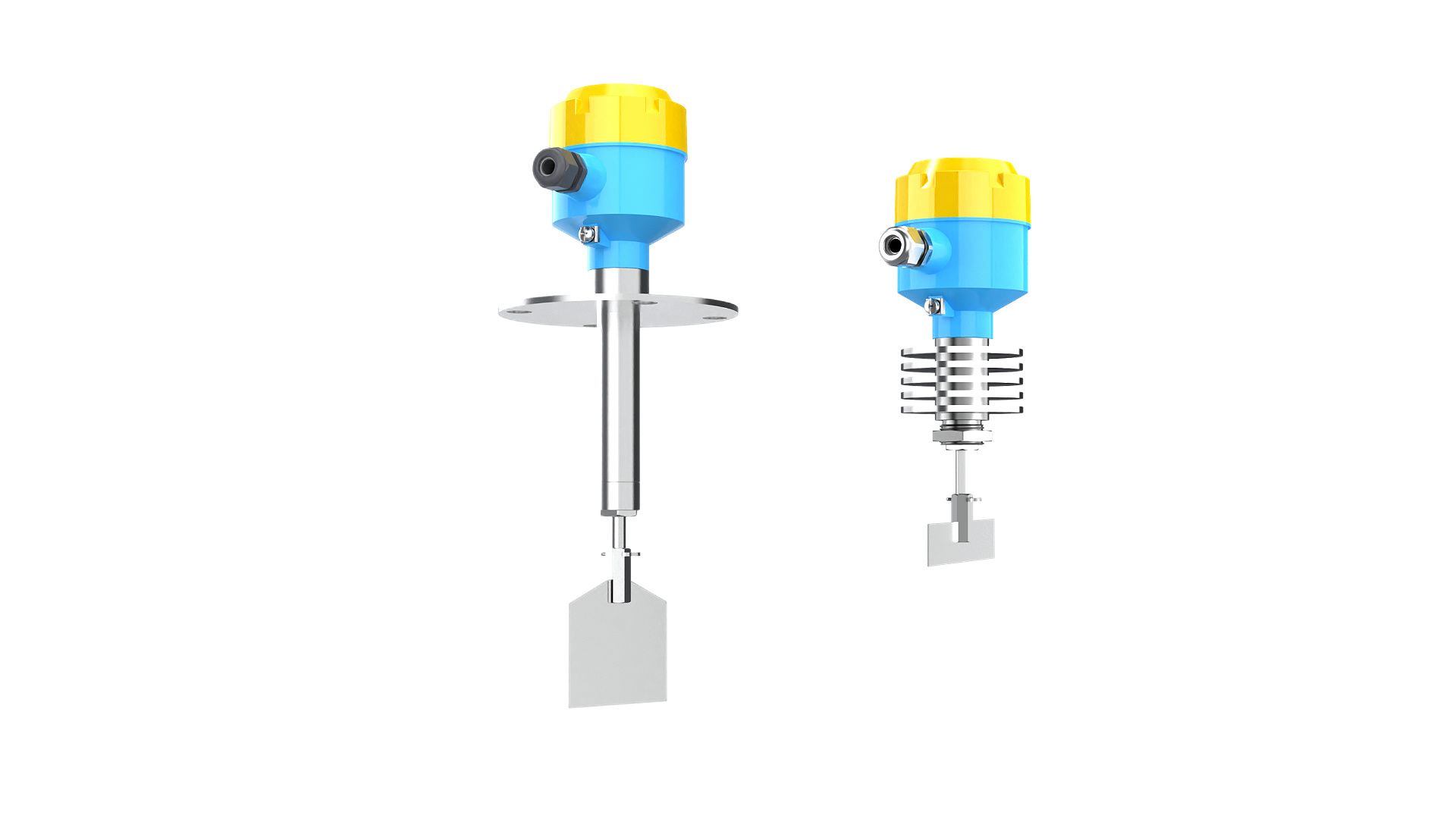
A rotary paddle level switch, also known as a rotary level indicator or rotary paddle level sensor, is an instrument used to detect the level of solid particles, powders, and bulk materials. Its basic working principle is not complicated: the internal motor drives the paddle blade to rotate slowly. When the material inside the silo rises and contacts the paddle, the rotation of the paddle is blocked by material resistance. The internal mechanism then outputs a switch signal, thereby achieving full silo alarm, material shortage alarm, or interlocking control.
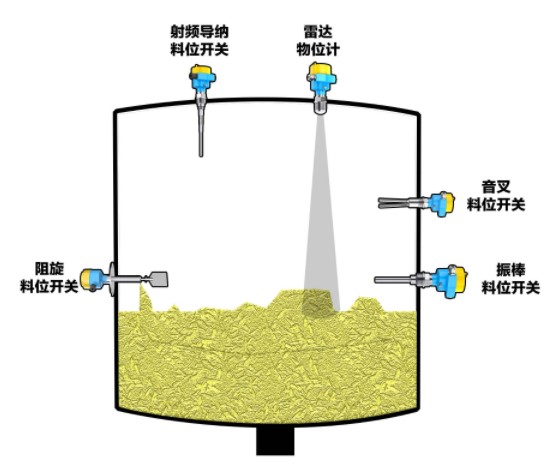
Unlike continuous level meters, rotary paddle level switches are mainly used for point level detection. In other words, they are usually installed at a fixed height to determine whether the material has reached that position. For example, when installed at the upper part of a silo, the device can be used as a high-level alarm; when installed at the lower part, it can be used as a low-level alarm; and when installed in the middle, it can assist in judging the material storage condition inside the silo.
2. Why Do Fly Ash Silos, Lime Powder Silos, and Mineral Powder Silos Need Level Detection?
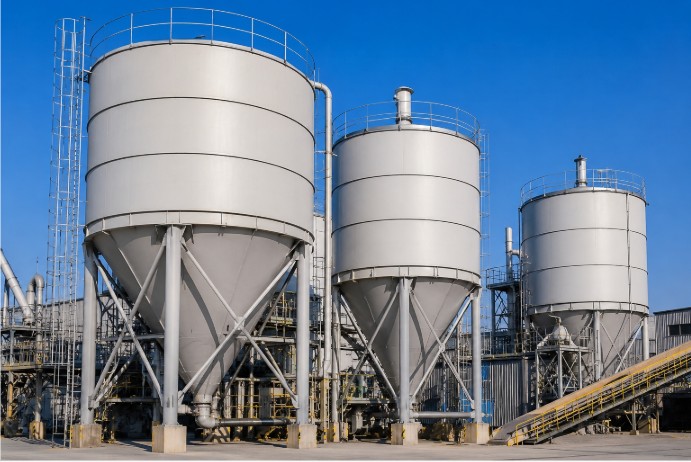
Fly ash, lime powder, and mineral powder are typical powder materials. During storage and conveying, they are prone to several common problems.
First, powder materials are likely to generate dust. If there is no reliable high-level alarm during silo feeding, overfilling may occur, causing powder to overflow from the silo. This not only pollutes the working environment but also leads to material waste.
Second, powder materials may absorb moisture and form lumps. Lime powder, in particular, has a certain degree of hygroscopicity. Changes in silo humidity, poor sealing, or long-term storage may cause material adhesion, arching, bridging, and unstable discharge.
Third, powder silos are usually connected with pneumatic conveying systems, screw conveyors, bucket elevators, packaging systems, or batching systems. Without an accurate low-level signal, equipment may run without material, batching may be interrupted, and the continuous operation of the entire production line may be affected.
Therefore, installing a suitable level switch in fly ash silos, lime powder silos, and mineral powder silos is not only for knowing whether there is material inside the silo. More importantly, it helps reduce downtime, prevent overflow, improve automation, and ensure on-site safety.
3. Application Advantages of Rotary Paddle Level Switches in Fly Ash Silos
Fly ash has fine particles and relatively good flowability, but it easily produces a large amount of dust during pneumatic conveying and material falling. For fly ash silos, rotary paddle level switches are commonly used for high-level alarm at the silo top and low-level alarm near the silo bottom.
The main advantage lies in stable and reliable performance. The rotary paddle level switch adopts a mechanical contact detection method, so it is not easily affected by dust concentration, airflow disturbance inside the silo, or changes in material color. For high-dust working conditions such as fly ash silos, some photoelectric or ultrasonic detection methods may be disturbed by dust, while the rotary paddle level switch can output a clear switch signal as long as the paddle contacts the material.
At the same time, rotary paddle level switches have a simple structure and low maintenance cost. Fly ash silos are often used in large numbers on industrial sites. The simpler the field instrument, the lower the pressure of later maintenance. After installation, routine inspection of the paddle, shaft seal, and wiring condition is usually enough to meet the requirements of most working conditions.
4. Application Advantages of Rotary Paddle Level Switches in Lime Powder Silos
The working condition of lime powder silos is relatively more complex. Lime powder has fine particle size, tends to absorb moisture, and may locally adhere or accumulate. Therefore, lime powder silos have certain requirements for dust resistance, anti-adhesion performance, and mechanical strength of level switches.
The advantage of rotary paddle level switches in lime powder silos is strong adaptability. According to the density and flowability of different lime powders, paddle blades with different shapes and sizes can be selected. For lighter and finer powders, a paddle with higher sensitivity can be selected; for materials with stronger adhesion or a certain risk of caking, a more durable structural design can be selected.
In addition, rotary paddle level switches provide intuitive switch signals, making them convenient to connect to PLC systems, DCS systems, or field control cabinets. When the lime powder silo reaches the high-level position, the system can automatically stop the feeding equipment. When a low-level alarm occurs, the system can remind operators to replenish material or start the conveying process. This simple and direct control logic is very suitable for automated management of powder storage silos.
5. Application Advantages of Rotary Paddle Level Switches in Mineral Powder Silos
The density of mineral powder is usually higher than that of fly ash and lime powder, and some mineral powders also have a certain degree of abrasiveness. Level detection in mineral powder silos needs to consider both material weight and long-term scouring or mechanical wear.
Rotary paddle level switches have good impact resistance and environmental adaptability in mineral powder silos. As long as the proper torque, motor structure, and paddle type are selected according to the actual material density, stable detection can be achieved. For high-level detection in mineral powder silos, rotary paddle level switches can effectively prevent excessive feeding. For low-level detection, they can help avoid downstream equipment operating without material and affecting production.
In mineral powder conveying systems, level signals can also be linked with dust collectors, conveying pumps, screw conveyors, discharge valves, and other equipment to form a more complete automatic control solution. Compared with manual inspection, rotary paddle level switches reduce human judgment errors and improve the operating efficiency of the production line.
6. Core Application Advantages of Rotary Paddle Level Switches
1. Strong Dust Resistance
Fly ash silos, lime powder silos, and mineral powder silos all share one common feature: heavy dust. Rotary paddle level switches do not rely on light, sound waves, or electromagnetic reflection. Instead, they determine the material level through the material blocking the rotating paddle. Therefore, they can still operate stably in high-dust environments.
2. Easy Installation and Wide Applicability
Rotary paddle level switches are usually installed by threaded connection or flange connection. They can be side-mounted, top-mounted, or equipped with an extended shaft according to the silo structure. Whether the silo is round, square, made of steel plate, or constructed from concrete, the device can be flexibly installed according to site conditions.
3. Simple Signal Output for Interlocking Control
Rotary paddle level switches generally output switch signals, which can be directly connected to alarms, PLC control systems, or electrical control cabinets. They are very convenient for high and low level alarm, automatic start-stop control, and equipment interlocking protection.
4. Low Maintenance Cost
The structure of a rotary paddle level switch is relatively simple. It mainly consists of a motor, transmission shaft, paddle blade, micro switch, and housing. Compared with some complex continuous level measuring instruments, it requires less technical skill for commissioning, and field maintenance is more straightforward.
5. High Cost Performance
For many powder silos, real-time continuous level display is not always necessary. In many cases, operators only need to know whether the silo is full or whether it is short of material. Under such working conditions, a rotary paddle level switch can achieve reliable detection at a relatively low cost, making it a very practical level switch solution for powder silos.
7. What Should Be Considered When Selecting a Rotary Paddle Level Switch?
When selecting a rotary paddle level switch for fly ash silos, lime powder silos, and mineral powder silos, the price should not be the only consideration. Material characteristics and actual site conditions must also be taken into account.
First, material density should be considered. Different powder materials have different densities, and the resistance applied to the paddle is also different. If the material is relatively light, a model suitable for low-density powder should be selected. If the material is heavier, higher torque and a stronger paddle structure should be considered.
Second, temperature and humidity should be considered. Some silos may contain high-temperature powder, humid air, or condensation water. In these cases, attention should be paid to the temperature resistance rating, protection grade, and sealing structure of the instrument.
Third, the installation position should be considered. The high-level switch should avoid the area directly impacted by incoming material to prevent false alarms or paddle damage. The low-level switch should consider material flow dead zones to avoid false alarms caused by bridging, arching, or material adhesion.
Fourth, field protection requirements should be considered. In powder industries, dust concentration is usually high. The protection of the instrument housing, wiring sealing, and shaft sealing structure are all important. If the site has explosion-proof requirements, products that meet the corresponding explosion-proof rating should be selected.
8. How to Extend the Service Life of a Rotary Paddle Level Switch?
To ensure long-term stable operation of rotary paddle level switches, both installation and maintenance are important. During installation, the paddle should be kept away from the direct material inlet as much as possible to prevent high-speed material impact from deforming the paddle. For materials that are easy to cake, the area around the paddle should be checked regularly to see whether hard lumps are blocking the rotation.
For working conditions with especially heavy dust, the junction box must be well sealed to prevent dust and moisture from entering the internal components. If the silo vibrates significantly, the installation interface should be checked to ensure it is firm. If necessary, additional support can be added, or a structure with better vibration resistance can be selected. For abrasive materials such as mineral powder, wear-resistant paddles or reinforced structures can be selected to extend the service cycle.
9. Conclusion
In general, the application advantages of rotary paddle level switches in fly ash silos, lime powder silos, and mineral powder silos are very clear. They offer strong dust resistance, simple structure, easy installation, stable signal output, low maintenance cost, and high cost performance. They are especially suitable for high-level alarm, low-level alarm, and automatic interlocking control in powder silos.
For powder storage systems handling fly ash, lime powder, mineral powder, and similar materials, choosing the right rotary paddle level switch can effectively reduce problems such as silo overflow, material blockage, equipment idle running, and material interruption. It can also improve the safety and continuity of production sites. With the continuous improvement of industrial automation, rotary paddle level switches will remain an economical, reliable, and practical choice for level detection in powder silos.