XPS board production generates a certain amount of edge trim and process scrap during trimming, sizing, and surface processing.
Depending on the recycling system used in the plant, this material may be crushed and temporarily stored or reprocessed into recycled PS pellets.
The recycled material can then be mixed back into the formulation at a controlled ratio.
Without reliable level control in the recycling section, the system may experience hopper overfilling, downstream material shortages, or unnecessary operation of crushing and conveying equipment.
For recycled material that has already been converted into regular, free-flowing plastic pellets, high and low point level control does not always require a sophisticated continuous measuring system.
A rotary paddle level switch can provide a simple and easy-to-understand solution.
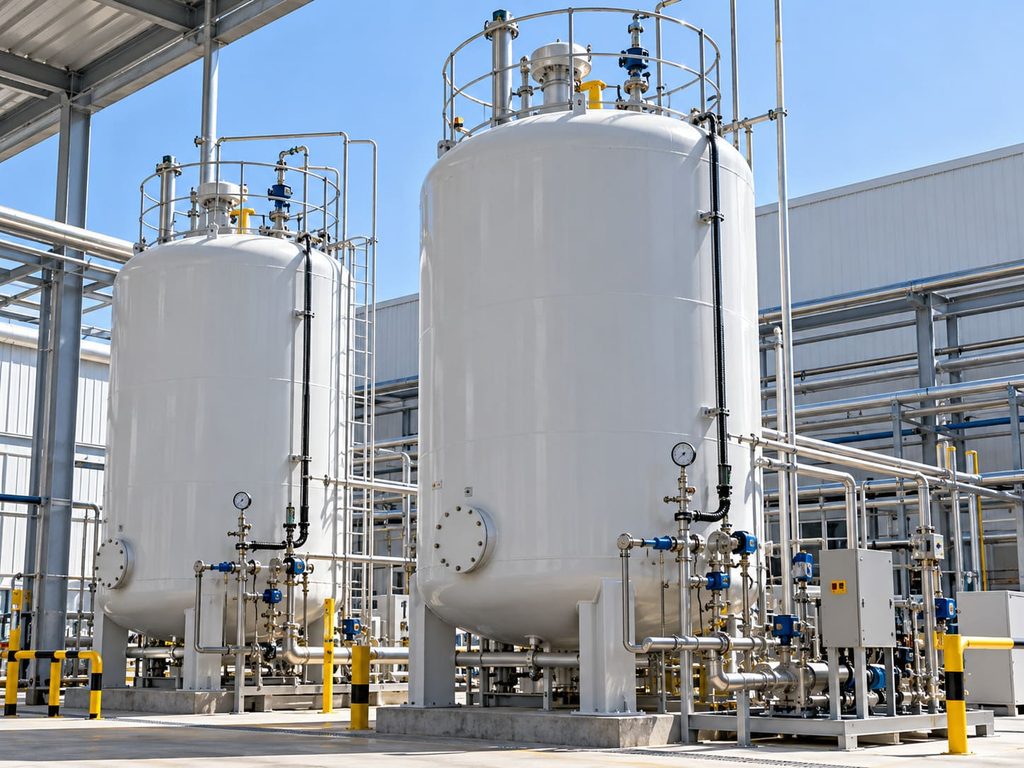
Why the Recycling System Needs Independent Level Signals
The XPS recycling system connects downstream trimming processes with the upstream raw material handling system.
Edge trim and production scrap may be transferred to a crusher and then transported by pneumatic conveying, screw conveyor, or other means to an intermediate storage hopper.
If the process includes a pelletizing stage, the recycled pellets may enter another buffer silo before being blended with virgin resin.
These storage points generally require two types of information.
The first is whether the upper filling limit has been reached so that upstream equipment can stop before overfilling occurs.
The second is whether sufficient material remains to support downstream operation.
If operators rely only on manual inspection, it is difficult to continuously monitor closed silos, especially during multi-shift production.
The amount of recycled material can also vary depending on board production rate, trim width, and recycle ratio.
Using the Spin-11A Rotary Paddle Level Switch for Recycled Plastic Pellets
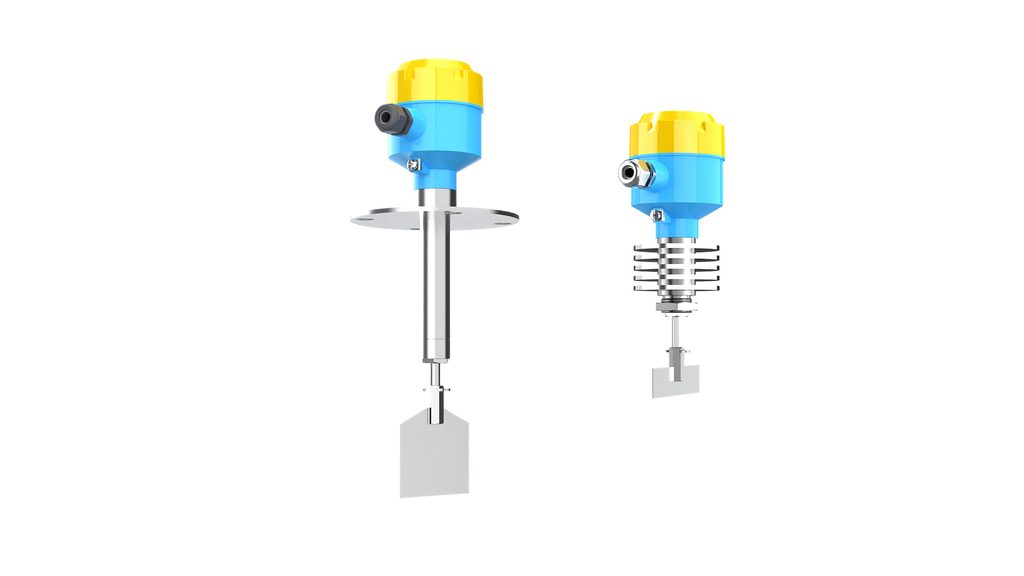
The Spin-11A standard rotary paddle level switch is designed for solid granular and powder materials, including resins, rubber materials, and plastic pellets.
Its operating principle is straightforward.
A motor drives the sensing paddle continuously.
When material reaches the sensing point and restricts paddle rotation, the internal mechanism changes the state of a microswitch and sends a level signal.
When the material drops away, the paddle rotates freely again and the output returns to its original state.
For free-flowing recycled PS pellets, one rotary paddle switch can be installed at the high level to provide a full alarm or stop upstream conveying.
Another switch can be installed at the low level to provide a shortage alarm or start replenishment.
Because the output logic is simple, it can be integrated into a PLC without complex signal processing.
“Recycled Material” Does Not Automatically Mean the Same Instrument Can Be Used
In an XPS recycling system, an important distinction must be made between regranulated pellets and light shredded foam.
If XPS scrap is only roughly shredded into very light, irregular pieces, the material may not create enough resistance to stop a rotary paddle reliably.
Irregular pieces may also wrap around the paddle, bridge inside the hopper, or become trapped around mechanical parts.
This type of application should not automatically use the same rotary paddle solution as a regular plastic pellet silo.
Material bulk density, particle size, shape, and flowability should first be evaluated.
A vibration-based level switch or another sensing principle may be more appropriate in some cases.
If the recycled material has already been pelletized and has a relatively uniform size and good flowability, a rotary paddle level switch becomes much more suitable.
The actual physical form of the material should therefore be confirmed before the instrument model is selected.
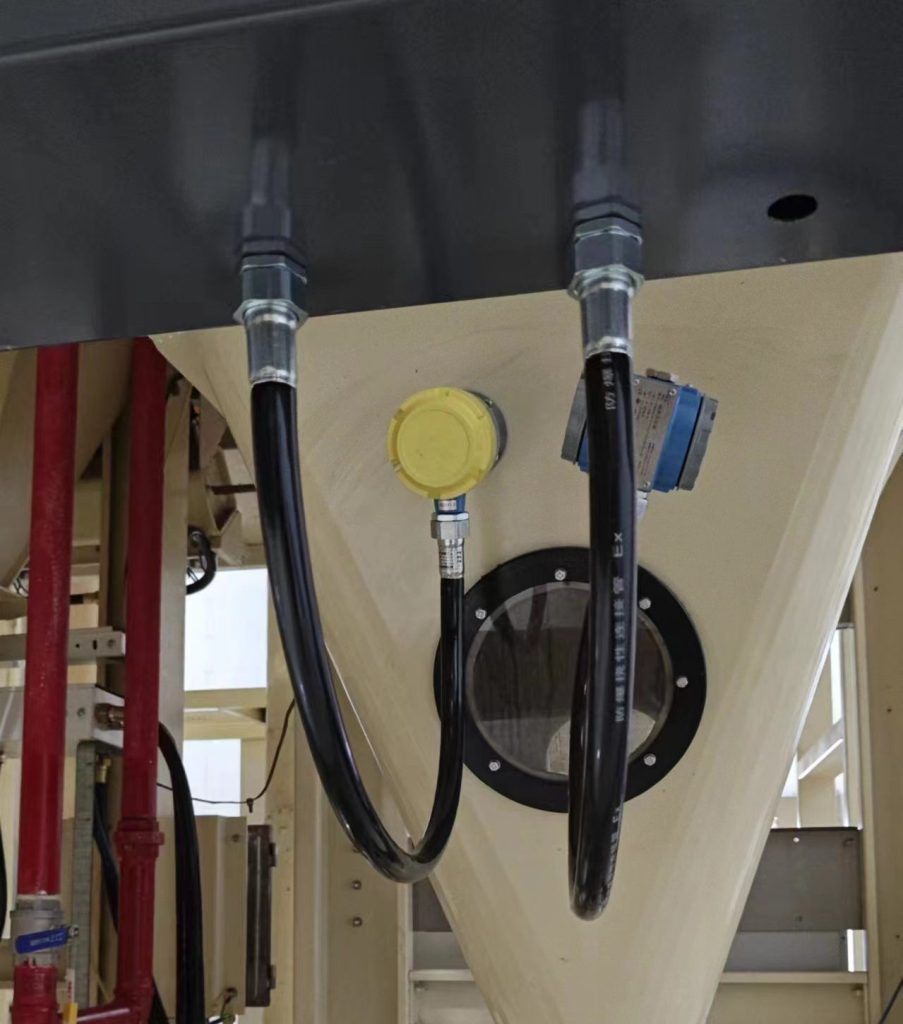
Leave Enough Space for the Paddle to Rotate Freely
A rotary paddle requires adequate space for free movement.
The instrument should not be installed too close to the hopper wall, liner, reinforcement, or internal structure.
For side mounting, enough clearance should be maintained around the paddle, and the instrument should be positioned away from the direct impact of falling material.
If the high-level switch is close to a pneumatic conveying inlet, the mounting direction should be adjusted to reduce continuous impact from high-speed pellets.
Where necessary, a suitable protective structure may be considered.
The low-level position should also take the hopper discharge pattern into account.
Near the outlet, material may move quickly and form a local depression.
If the level switch is mounted too close to the active flow channel, the signal may change too frequently.
If it is installed too high, the system may not provide sufficient warning before downstream equipment runs out of material.
The final position should therefore reflect both hopper geometry and material consumption rate.
Commissioning Should Check More Than Whether the Paddle Rotates
Before the rotary paddle level switch is put into service, both material-present and material-absent conditions should be simulated.
The signal should also be checked all the way through the PLC, HMI, alarm system, and final equipment interlock.
A common commissioning issue is not a mechanical fault with the level switch itself, but an incorrect interpretation of normally open and normally closed contacts.
This can result in a full hopper being displayed as empty or an interlock operating in the opposite direction.
Commissioning should therefore verify the complete signal chain rather than only confirming that the paddle is rotating.
Creating a More Complete Interlock Between the Recycling System and Main Production Line
A well-designed level control strategy allows the XPS recycling system to operate more independently.
For example, when the high-level switch is activated, the system can stop further material transfer and then shut down upstream conveying equipment in the correct sequence.
When the low-level switch is activated, the downstream blending system can be warned that recycled material is running low.
The control system may then adjust the recycled material ratio or temporarily switch to virgin resin, depending on the process design.
If the plant also needs accurate inventory data and recycled material utilization statistics, continuous level measurement or weighing can be added.
However, if the main objective is simply preventing overfilling and running empty, rotary paddle level switches can provide a practical and easy-to-maintain solution.
Application Value
XPS scrap recycling improves material utilization and can also affect production continuity.
When high and low level signals are integrated into the PLC, crushing, conveying, intermediate storage, and downstream blending can operate as a more coordinated system.
This reduces manual hopper checking and minimizes the need for operators to estimate material status based on experience.
For a new XPS project, the actual physical form of the recycled material in each hopper should be defined before selecting a level switch.
For an existing line, the hopper should first be inspected for bridging, buildup, and direct material impact before determining the final measuring solution.
Frequently Asked Questions
Can shredded XPS foam use a rotary paddle level switch?
Not always. Very light and irregular shredded material may not create enough resistance to stop the paddle and may also cause wrapping or bridging. The application should be evaluated individually.
Does a recycled material silo require continuous level measurement?
If only overfill prevention and low-level alarm are required, point level switches are often sufficient. If inventory calculation and recycling rate analysis are also needed, continuous measurement or weighing can be added.
Can the high-level switch directly stop the crusher?
The signal can be used as an interlock input, but the actual shutdown sequence should be defined by the process and electrical design to prevent residual material from causing blockage inside the system.