1. What Is a Stainless Steel Radar Level Meter?
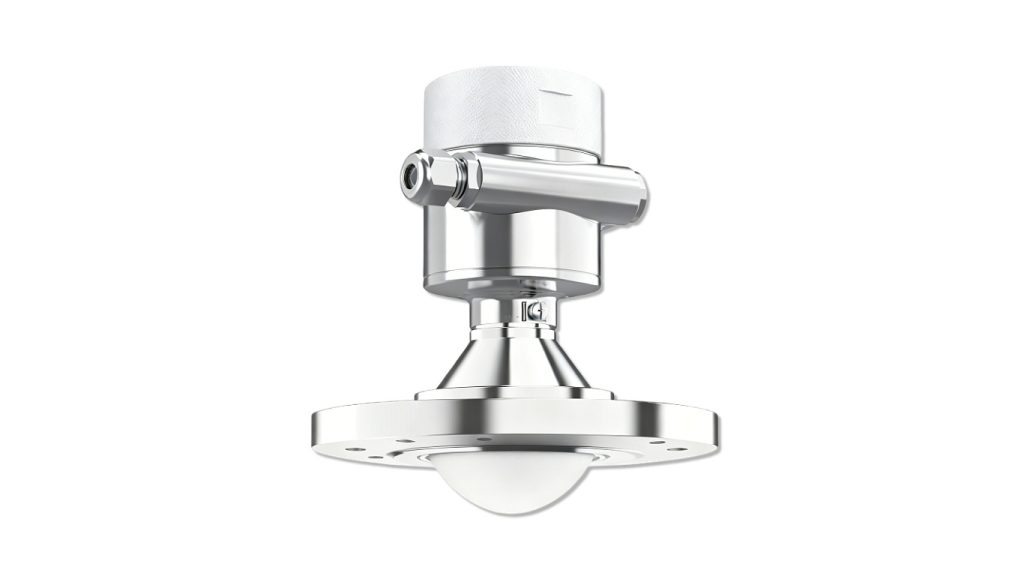
A stainless steel radar level meter is an industrial automation instrument that uses radar waves for continuous level measurement. It is also commonly known as a stainless steel radar liquid level meter, radar level meter, high-frequency radar level meter or non-contact radar level meter. By transmitting high-frequency electromagnetic waves toward the surface of the measured medium and receiving the reflected echo signal, the instrument calculates the distance between the meter and the material surface, thereby achieving continuous measurement of liquid level, material level or overall level.
In industrial sites such as chemical storage tanks, powder silos, cement silos, sewage pools, dosing tanks, food raw material tanks and mineral powder silos, level measurement is directly related to production safety, inventory management, automatic control and equipment operation efficiency. Compared with traditional contact-type level instruments, stainless steel radar level meters use non-contact measurement technology and do not need to directly contact liquids, powders or granular materials. This effectively reduces problems such as corrosion, adhesion, wear and material buildup.
For complex industrial environments, harsh working conditions and sites where maintenance is difficult, choosing a stable and reliable stainless steel radar level meter can help improve measurement accuracy, reduce maintenance costs and enhance automation management.
2. Working Principle of Stainless Steel Radar Level Meters
The working principle of a stainless steel radar level meter is straightforward. The instrument is installed on the top of a storage tank, silo or pool, and the radar antenna emits high-frequency radar waves downward. When the radar waves reach the material surface, they are reflected back. The instrument receives the echo signal and calculates the distance based on the travel time of the radar wave.
Simply put, a radar level meter measures the distance from the instrument to the material surface. When the total height of the tank or silo is known, the current material height, liquid level or remaining space can be calculated. Since radar waves are not dependent on the conductivity, density or pressure of the medium, radar level meters can be used in a wide range of applications.
High-frequency radar level meters usually feature a narrow beam angle, concentrated energy and strong anti-interference capability. Even when there are agitators, feeding inlets, ladders, brackets or wall buildup inside the tank, a properly installed radar level meter can still maintain stable measurement performance.
For powder silos with heavy dust, liquid tanks with steam, pools with obvious surface fluctuations and chemical media with strong corrosiveness, stainless steel radar level meters offer high application value.
3. Why Choose a Stainless Steel Radar Level Meter?
When users search for “radar level meter manufacturer,” “radar level meter price” or “stainless steel radar level meter selection,” one of the most common questions is: why choose stainless steel? What advantages does a stainless steel radar level meter have over ordinary radar level meters?
First, a stainless steel housing provides better corrosion resistance. Industrial sites often involve humidity, dust, acidic or alkaline gases, salt mist, high temperature and water spraying. Ordinary housings may age, deform or corrode after long-term use. Stainless steel, especially 316L stainless steel, has strong corrosion resistance and is suitable for chemical, environmental protection, food, pharmaceutical and water treatment industries.
Second, stainless steel radar level meters offer higher structural strength. For outdoor installation, high silos, vibration environments or dusty sites, the instrument housing must provide strong mechanical protection. A stainless steel housing can better protect internal electronic components and improve long-term reliability.
Third, stainless steel is easier to clean and maintain. In industries such as food, pharmaceutical and environmental protection, instrument material, surface cleanliness and corrosion resistance are very important. Stainless steel has a smooth surface and is less likely to accumulate dirt, which helps reduce maintenance workload.
Therefore, if the working environment is complex, or if users require longer service life and lower maintenance needs, stainless steel radar level meters are usually a more reliable choice.
4. Core Advantages of Stainless Steel Radar Level Meters
4.1 Non-Contact Measurement Reduces Medium Influence
One of the biggest advantages of stainless steel radar level meters is non-contact measurement. The instrument does not need to be inserted into the medium, and there are no floats, cables or probes in direct contact with the material. This helps avoid common problems such as buildup, corrosion, blockage and wear.
In applications involving corrosive liquids, viscous liquids, dusty materials, granular materials or high-temperature media, non-contact radar level meters offer obvious advantages.
4.2 High Measurement Accuracy and Stability
High-frequency radar level meters have strong signal processing capabilities and can provide continuous and stable level measurement. For applications that require real-time monitoring of storage tank liquid level, silo material level or pool water level, radar level meters can provide reliable data for automatic control systems.
Stable measurement results help enterprises achieve automatic feeding, automatic discharging, high and low level alarms, inventory statistics and remote monitoring.
4.3 Suitable for Complex Working Conditions
Stainless steel radar liquid level meters can be used in various complex environments, such as high dust, high humidity, steam, foam, corrosive gases, outdoor rain exposure and complex tank structures. Compared with many traditional level meters, radar level meters have stronger adaptability.
4.4 Easy Installation and Commissioning
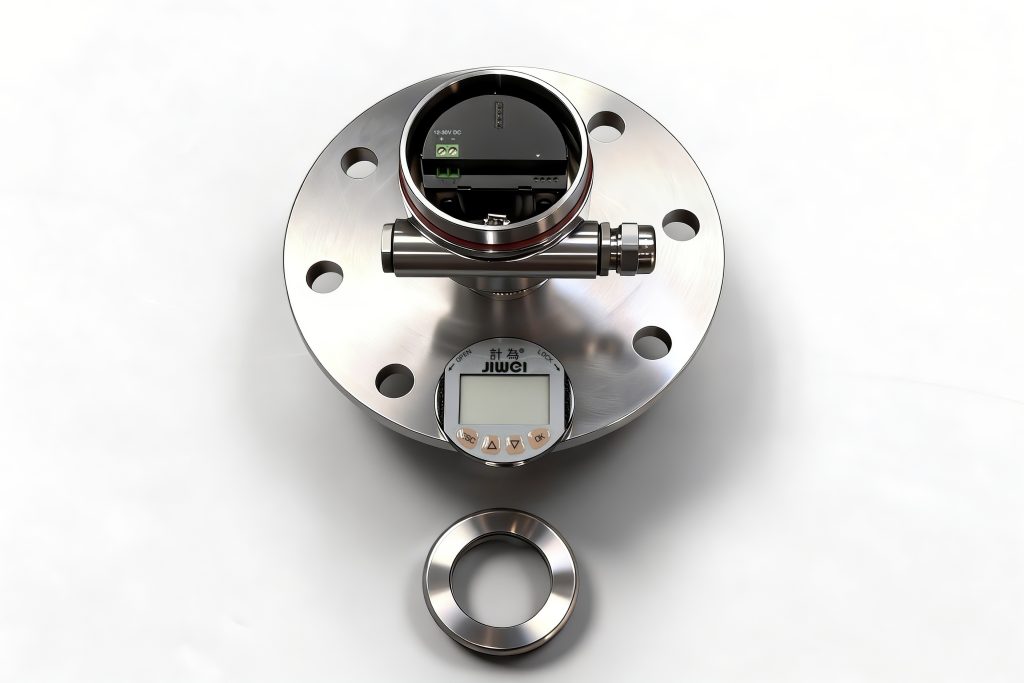
Modern stainless steel radar level meters often support local display, button operation and Bluetooth APP commissioning. Engineers can use a mobile phone or mobile terminal to set parameters, adjust ranges, view echo curves, configure alarms and perform status diagnostics, greatly improving on-site commissioning efficiency.
For silos or tanks installed at high positions or in locations that are difficult to access, Bluetooth commissioning can reduce climbing operations and improve safety.
4.5 Parameter Copying for Batch Projects
In cement plants, chemical plants, wastewater treatment plants and food factories, multiple radar level meters often need to be installed at the same time. If the instrument supports parameter copying, engineers can quickly copy the settings of one device to other devices, reducing repeated configuration time and avoiding manual input errors.
4.6 Low Maintenance Cost
Because stainless steel radar level meters have no moving parts in direct contact with the medium, they require relatively little maintenance. For continuous production enterprises, reducing instrument maintenance and downtime means lower operating costs and higher production efficiency.
4.7 Intelligent Upgrade Support
Some intelligent radar level meters support OTA upgrades and remote maintenance. Users can optimize software functions without replacing hardware, improving the long-term value of the instrument.
5. Which Industries Use Stainless Steel Radar Level Meters?
Stainless steel radar level meters have a wide range of applications. They can be used for liquid measurement as well as powder, granular and solid material measurement.
5.1 Chemical Industry
In the chemical industry, stainless steel radar liquid level meters can be used for acid and alkali storage tanks, solvent tanks, reactors, raw material tanks, finished product tanks and waste liquid pools. Since chemical media are often corrosive, volatile or hazardous, non-contact radar measurement can reduce direct contact between the instrument and the medium, improving safety and reliability.
5.2 Water Conservancy and Water Treatment
In reservoirs, rivers, pumping stations, regulating pools, sewage pools, clean water tanks and dosing tanks, stainless steel radar liquid level meters can be used for water level monitoring, level alarms and automatic control. They are suitable for outdoor environments and can meet the continuous measurement needs of water conservancy monitoring and environmental treatment.
5.3 Power Industry
Power plants include many level measurement points, such as ash silos, coal bunkers, slurry tanks, desulfurization towers and wastewater pools. Radar level meters can adapt to dust, steam and temperature changes, providing data support for stable power system operation.
5.4 Food and Pharmaceutical Industries
The food and pharmaceutical industries have high requirements for instrument materials, hygiene and stability. Stainless steel radar level meters have corrosion-resistant and easy-to-clean housings, making them suitable for raw material tanks, fermentation tanks, purified water tanks, powder silos and finished product storage tanks.
5.5 Building Materials and Cement Industry
Powder measurement applications such as cement silos, fly ash silos, lime silos, mineral powder silos and sand and gravel silos usually involve heavy dust, strong material impact and harsh environments. High-frequency radar level meters feature non-contact measurement and strong anti-interference capability, making them suitable for continuous powder level monitoring.
5.6 Mining and Metallurgy
Measurement applications involving mineral powder, slurry, coke, coal powder and granular materials require high instrument reliability. Stainless steel radar level meters help enterprises achieve silo inventory monitoring, production process control and safety alarms.
6. How to Select a Stainless Steel Radar Level Meter
When choosing a stainless steel radar level meter, users should not focus only on price. Proper selection based on actual working conditions is the key to accurate and stable long-term measurement.
First, clarify the measured medium. Is it liquid, powder, granular material or slurry? Is the medium corrosive, adhesive, volatile or conductive? Different media require different radar frequencies, antenna structures and installation methods.
Second, determine the measuring range. Users need to provide tank height, silo height, installation position, blind zone requirements and actual measuring distance. A range that is too small may affect measurement, while an unnecessarily large range may increase cost.
Third, understand the site environment. Are there high temperatures, high pressures, steam, foam, dust, agitators, feeding impact or wall buildup? These factors will affect instrument selection and installation location.
Fourth, confirm the output signal and communication method. Common output options include 4-20mA, RS485 and Modbus. Users should choose the appropriate signal output according to PLC, DCS or remote monitoring system requirements.
Fifth, pay attention to protection grade and explosion-proof requirements. If the instrument is installed in chemical hazardous areas, dust explosion-proof areas or outdoor environments, the product configuration should meet site safety requirements.
Sixth, consider the commissioning method. Stainless steel radar level meters that support Bluetooth APP commissioning, LCD display, parameter copying and remote diagnostics are more suitable for batch installation and long-term operation and maintenance.
7. Installation Precautions for Radar Level Meters
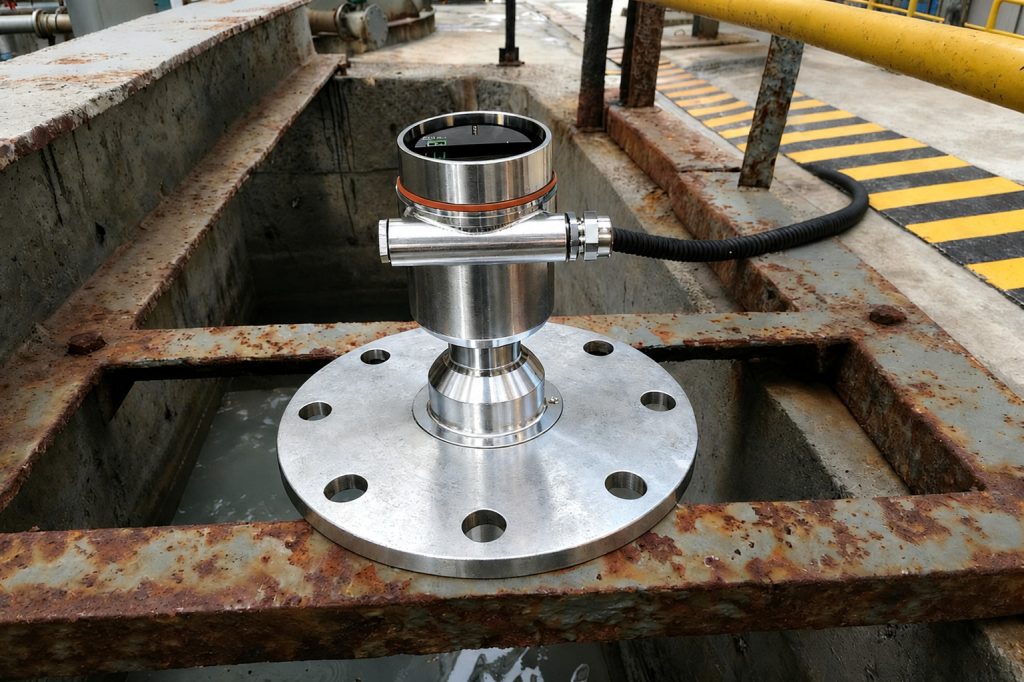
Although stainless steel radar level meters are easy to install, the installation position directly affects measurement performance. To obtain a stable echo signal, the instrument should be installed away from feeding inlets, agitators, brackets, ladders, reinforcing ribs and other interfering objects.
The instrument should be installed at a position that can accurately reflect the material level, avoiding direct radar reflection from the tank wall or internal obstacles. For cone-bottom silos, the installation point should be selected according to the material angle of repose and discharge method. For liquid tanks, strong turbulence areas and areas with heavy foam should be avoided as much as possible.
After installation, parameters such as empty tank height, full tank height, measuring range, output mode, alarm points and echo settings should be configured according to actual site conditions. For complex applications, it is recommended to view the echo curve through an APP or commissioning software and optimize parameters accordingly.
Standardized installation can significantly improve the measurement stability of stainless steel radar level meters and reduce later false alarms and maintenance issues.
8. What Factors Affect the Price of Stainless Steel Radar Level Meters?
Many users search for “radar level meter price” or “how much does a stainless steel radar level meter cost” hoping to get a fixed quotation. In reality, the price of a stainless steel radar level meter is affected by many factors.
The first factor is measuring range. Radar level meters with different ranges have different hardware configurations and application scenarios, so prices vary.
The second factor is material configuration. 316L stainless steel housing, special antenna, anti-corrosion structure, high-temperature type or explosion-proof configuration will all affect product price.
The third factor is functional configuration. Support for Bluetooth APP, LCD display, parameter copying, OTA upgrades, remote diagnostics and multiple communication protocols may also affect the price.
The fourth factor is the working condition. Ordinary water level measurement, corrosive chemical liquid measurement, high-dust powder silo measurement and explosion-proof area measurement all require different product configurations, so selection and pricing vary.
Therefore, when requesting a quotation, users should provide details such as medium name, measuring range, tank height, temperature and pressure, installation method, output signal and site environment. This allows the manufacturer to provide a more accurate selection solution and quotation.
9. How to Choose a Radar Level Meter Manufacturer
When selecting a stainless steel radar level meter manufacturer, it is recommended to focus on the following aspects.
First, check whether the manufacturer has experience in radar level measurement technology. A radar level meter is not simply an electronic product. Algorithms, antenna design, signal processing and field application experience are all important.
Second, check whether the product series is complete. A professional manufacturer can usually provide solutions for liquid level, material level, water level, powder, granular materials and corrosive media.
Third, check whether technical selection support is available. A good radar level meter manufacturer does not only sell products but also provides selection suggestions, installation guidance and commissioning support based on the user’s site conditions.
Fourth, check whether after-sales service is complete. Industrial instruments may encounter installation, parameter, echo and communication problems during use, and timely technical support is essential.
Fifth, check whether the product is easy to maintain. Products that support Bluetooth commissioning, parameter copying, local display, remote diagnostics and software upgrades are more suitable for long-term use.
Choosing a reliable stainless steel radar level meter manufacturer can reduce selection mistakes, lower project risks and improve equipment operation stability.
10. Frequently Asked Questions About Stainless Steel Radar Level Meters
10.1 Can a Stainless Steel Radar Level Meter Measure Powder?
Yes. Stainless steel radar level meters can measure not only liquids but also powders, granular materials and solid materials. For example, cement silos, fly ash silos, mineral powder silos, lime silos and grain silos can all use suitable radar level meters according to working conditions.
10.2 What Is the Difference Between a Radar Level Meter and an Ultrasonic Level Meter?
A radar level meter uses electromagnetic waves for measurement, while an ultrasonic level meter uses sound waves. Radar waves are generally less affected by temperature, pressure, steam and dust, so radar level meters are usually more stable in complex working conditions.
10.3 Is a Stainless Steel Radar Liquid Level Meter Suitable for Corrosive Liquids?
Yes. For corrosive liquids, stainless steel materials, anti-corrosion antennas or special process connections should be selected according to the characteristics of the medium. With proper selection, stainless steel radar liquid level meters can be used in various chemical storage tanks and waste liquid pools.
10.4 Does a Radar Level Meter Require Regular Maintenance?
Radar level meters are low-maintenance instruments, but it is still recommended to regularly check installation status, wiring, power supply, echo signal and surface cleanliness. In sites with extremely heavy dust, periodic inspection should be carried out according to actual conditions.
10.5 Is Installation of a Stainless Steel Radar Level Meter Complicated?
Installation is not complicated, but choosing the right installation position is important. Avoiding feeding inlets, agitators, tank wall obstacles and strong interference areas can help achieve more stable measurement results.
11. Conclusion: Stainless Steel Radar Level Meters Are an Efficient Choice for Industrial Level Measurement
A stainless steel radar level meter is a high-precision level measurement instrument suitable for complex industrial sites. It offers non-contact measurement, corrosion resistance, strong anti-interference capability, easy installation, low maintenance cost and intelligent functions. Whether used for liquid storage tanks, pool water levels, powder silos, granular material silos, mineral powder silos or cement silos, stainless steel radar level meters can provide stable and reliable continuous measurement data.
For industries such as chemical, water conservancy, power, environmental protection, food, pharmaceutical, building materials and mining, selecting the right stainless steel radar level meter can improve liquid level and material level measurement accuracy, enhance production automation and reduce manual inspection and equipment maintenance costs.
If you are looking for a radar level meter manufacturer, stainless steel radar liquid level meter, radar level meter or high-frequency radar level meter, it is recommended to make a comprehensive selection based on site medium, measuring range, temperature and pressure, installation environment, output signal and protection requirements. Only by choosing a product suitable for the actual working conditions can the value of radar level measurement technology be fully realized.