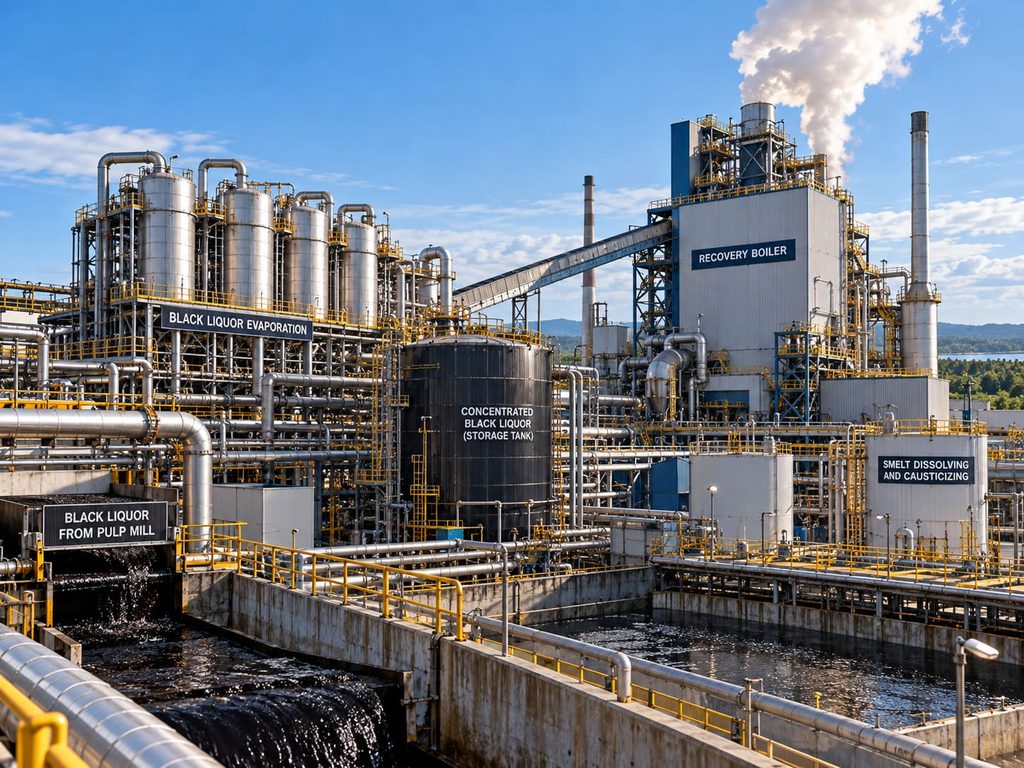
Black liquor is one of the more demanding liquids encountered in pulp and paper production.
Its combination of alkalinity, changing concentration, elevated temperature, foam, deposits, and variable process conditions can make apparently simple tank level measurement surprisingly difficult.
Selecting a level instrument for black liquor therefore requires more than asking for a transmitter with the correct measuring range.
Why Is Black Liquor Difficult to Measure?
Black liquor is generated during the kraft pulping process and may pass through several stages of concentration, storage, evaporation, and recovery.
Its physical properties can change substantially from one process stage to another.
One important variable is density. If a measurement technology depends strongly on liquid density, changes in concentration and temperature can influence the indicated level.
Foam is another challenge.
A foam or soap layer may form above the liquid surface. Depending on its thickness and properties, the instrument may detect the liquid surface, part of the foam layer, or an unstable combination of both.
Black liquor can also coat process equipment. Deposits may accumulate on probes, vessel walls, process connections, and instrument nozzles.
Why Non-Contact Measurement Is Attractive
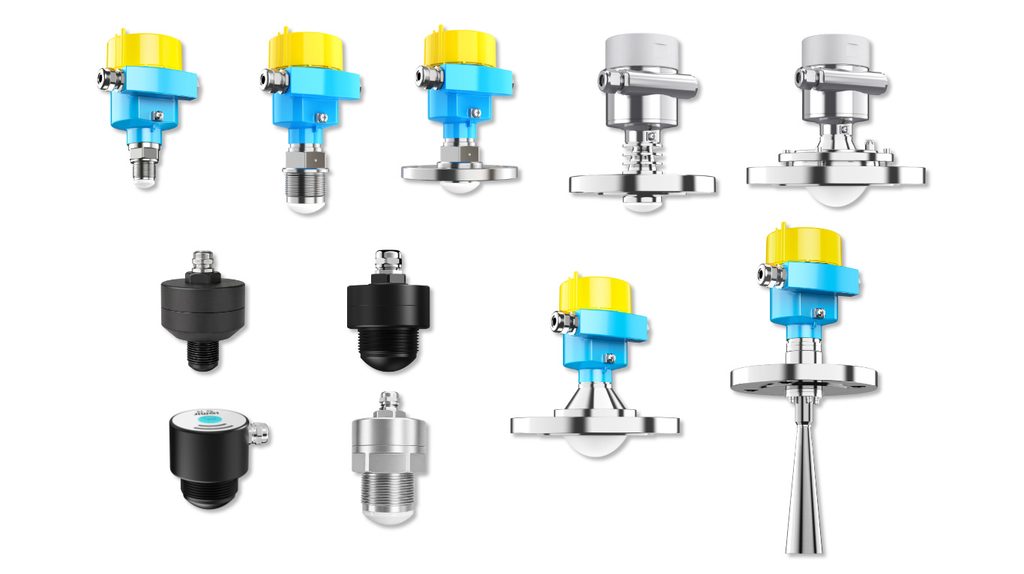
A non-contact radar level transmitter does not require a probe to extend through the black liquor.
This reduces direct exposure of the sensing element to a coating and scaling medium.
Radar measurement is also not based directly on liquid density, which can be advantageous when concentration varies.
However, radar should not be described as completely immune to every black liquor condition.
Dense foam, heavy deposits on the antenna, an unsuitable nozzle, or strong internal reflections can still affect measurement.
The application should therefore be evaluated using the actual tank and process conditions.
Installation Matters
The radar should have a clear measurement path toward a representative part of the liquid surface.
Avoid mounting directly above the inlet because incoming liquor can create splashing, turbulence, and temporary product accumulation.
Agitators, internal pipes, heating equipment, structural members, and vessel walls should also be considered.
Where buildup is expected around the mounting nozzle, the design should minimize locations where liquor can collect and dry.
Depending on the process, insulation, cleaning, purging, or other measures may be considered to keep the antenna area usable.
What About Pressure-Based Measurement?
Hydrostatic and differential-pressure instruments can be effective in many industrial applications.
For black liquor, however, changing density should be considered carefully because the relationship between pressure and liquid height depends on density.
If concentration changes significantly, a pressure-based system may require compensation or may produce a level error.
This does not mean pressure measurement is unsuitable in every black liquor application. It means that density variation must be part of the engineering evaluation.
What About Ultrasonic Measurement?
Ultrasonic instruments offer non-contact measurement, but the acoustic signal travels through the vapor space above the liquid.
Steam, temperature gradients, heavy foam, and condensation can affect acoustic propagation.
For difficult black liquor tanks, the gas-space conditions should therefore be reviewed before selecting ultrasonic technology.
Point Level Protection
Continuous measurement provides the operating level, but critical tanks may also require independent high-level or low-level detection.
A separate point level switch can be used for overflow alarms or pump protection.
For contact-type switches, material compatibility and buildup behavior are particularly important. A sensor that works well in clean water may not remain reliable when continuously exposed to sticky, scaling black liquor.
Selection Information
A proper black liquor level instrument specification should include liquor concentration, density range, normal and maximum temperature, pressure, expected foam thickness, agitation, buildup tendency, tank dimensions, nozzle geometry, internal structures, and required output signal.
Material compatibility must also be confirmed for all wetted components.
Conclusion
Black liquor tank level measurement is challenging because several process variables change at the same time.
Foam, concentration, density, temperature, vapor, and deposits can all influence measurement performance.
Non-contact radar is worth considering because it reduces direct contact with the liquor and does not calculate level from density. Reliable operation, however, still depends on correct antenna selection, installation, commissioning, and maintenance.
The best results come from treating black liquor level measurement as an application-engineering problem rather than simply selecting an instrument from a measuring-range table.