1. Project Background: Why Do Milk Tanks Need More Reliable Level Switches?
In dairy processing plants, milk passes through multiple stainless steel milk tanks or dairy storage tanks during raw milk receiving, temporary storage, standardization, pasteurization, cooling, and pre-filling buffering. The level status of each tank directly affects production continuity, formula stability, and food safety management.
Milk is a typical food-grade liquid medium, which places strict hygiene requirements on contact-type instruments. In actual production, however, the inside of a milk tank is not a “calm” measuring environment. Feeding may cause liquid surface fluctuations, stirring can generate foam, heat exchange may lead to condensation, and CIP cleaning exposes the tank to cleaning solutions, hot water, steam, or high-temperature flushing. If the level switch is not stable enough, false alarms, delayed alarms, or missed alarms may occur, resulting in overflow, pump dry running, material waste, or even production shutdown.
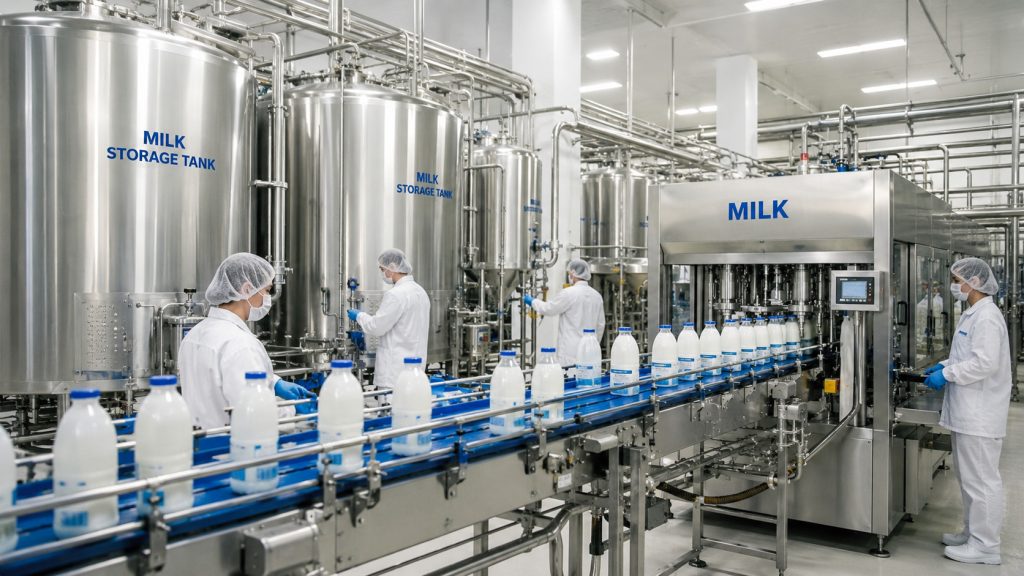
During the expansion of a dairy production line, a dairy factory needed to add high level alarms, low level alarms, and pump protection interlock points to several milk storage tanks. Some of the existing level detection devices occasionally malfunctioned due to foam, wall adhesion, and residual liquid after cleaning. Operators had to manually inspect the tanks to confirm the liquid level, which increased labor intensity and reduced the automation level of the production system.
After comparing food-grade level switches, float switches, capacitive level switches, and tuning fork level switches, the project finally selected the Jiwei Ring-11 food-grade tuning fork level switch as the point level control solution for the milk tanks.
2. Site Conditions: Main Challenges in Milk Storage Tank Level Measurement
2.1 High Hygiene Requirements
Milk, yogurt, and dairy beverages are highly sensitive to sanitary conditions. Level switches installed on tanks must adopt a structure suitable for food-grade applications, avoid sanitary dead zones, and reduce the risk of material residue and contamination. For milk tanks, the material of wetted parts, surface finish, and process connection method must all meet the requirements of food-grade production environments.
2.2 Foam and Liquid Surface Fluctuations
Milk often generates foam during feeding, stirring, circulation, and cleaning transitions. For many level detection instruments, foam may interfere with the signal and cause false level readings or false alarms. If the device is too sensitive to foam, bubbles, or liquid property changes, it may mistakenly identify foam as the actual liquid level, resulting in false high-level alarms. Liquid surface fluctuations may also cause frequent signal switching, affecting the stable judgment of PLC or DCS systems.

2.3 Limited Installation Space on the Tank
Stainless steel storage tanks in dairy plants are often equipped with agitators, spray balls, vent ports, cleaning pipelines, temperature probes, and manholes. Available installation space on the tank top or tank side is limited. If the probe of a level switch is too long, it may interfere with internal structures or affect cleaning coverage. Therefore, a compact level switch with a short fork body and flexible installation is more suitable for high and low level detection in milk tanks.
2.4 CIP Cleaning Requires Stable Instrument Performance
Dairy production lines usually require CIP cleaning. During the cleaning process, the tank may contain alkaline solution, acidic solution, hot water, high-temperature flushing, or residual liquid during drainage. The level switch must work reliably not only during milk production, but also after CIP cleaning, avoiding false alarms caused by wall adhesion, residues, or condensation.
3. Solution: Ring-11 Food-Grade Tuning Fork Level Switch for High and Low Level Alarms in Milk Tanks
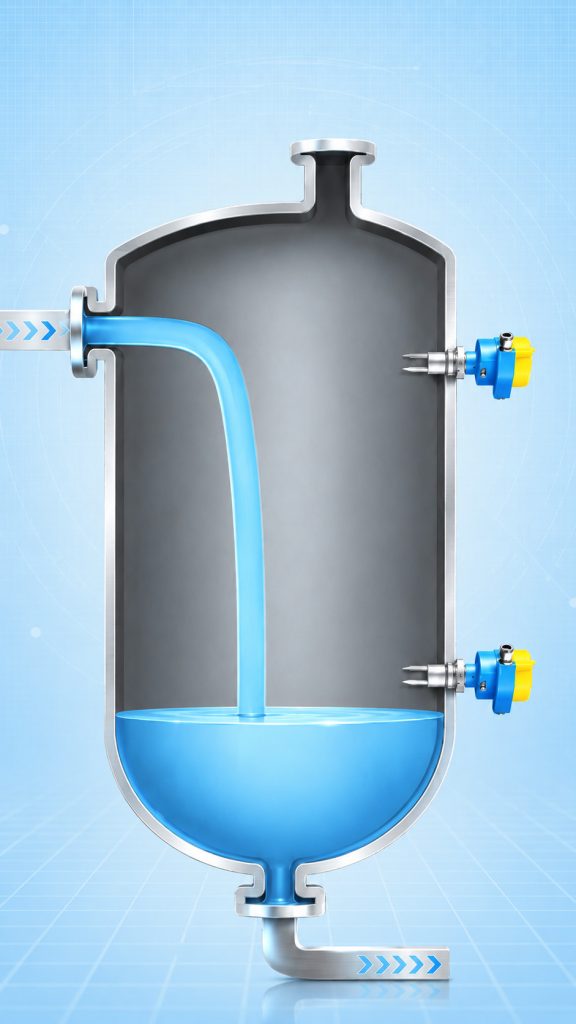
To address these conditions, the project installed Ring-11 food-grade tuning fork level switches on the side walls of milk storage tanks for high level alarms, low level alarms, and pump protection interlocks. The instrument was installed on the reserved interface of the stainless steel tank through a clamp-type process connection, with the fork body extending directly into the tank at the specified level point.
When the milk level rises and contacts the tuning fork, the vibration frequency of the fork changes. The internal detection circuit identifies this change and outputs a switch signal. When the level drops and the fork leaves the medium, the signal returns to the corresponding state.
In the control system, the high level point is used to prevent overfilling of the milk storage tank. When the liquid level reaches the high level switch position, Ring-11 outputs an alarm signal. The system can then close the inlet valve or remind operators in the control room to take action.
The low level point is used to prevent insufficient material in the tank. When the level drops to the low level switch position, the system can issue a low level alarm to prevent material shortages in subsequent filling, transfer, or mixing processes.
The pump protection point is installed at the lower part of the tank or in the outlet pipeline. It helps determine whether there is enough medium before the pump, reducing the risk of dry running and protecting the transfer pump and production line.
4. Core Advantages of Ring-11 in Milk Tank Applications
4.1 Food-Grade Structural Design for Dairy Production Environments
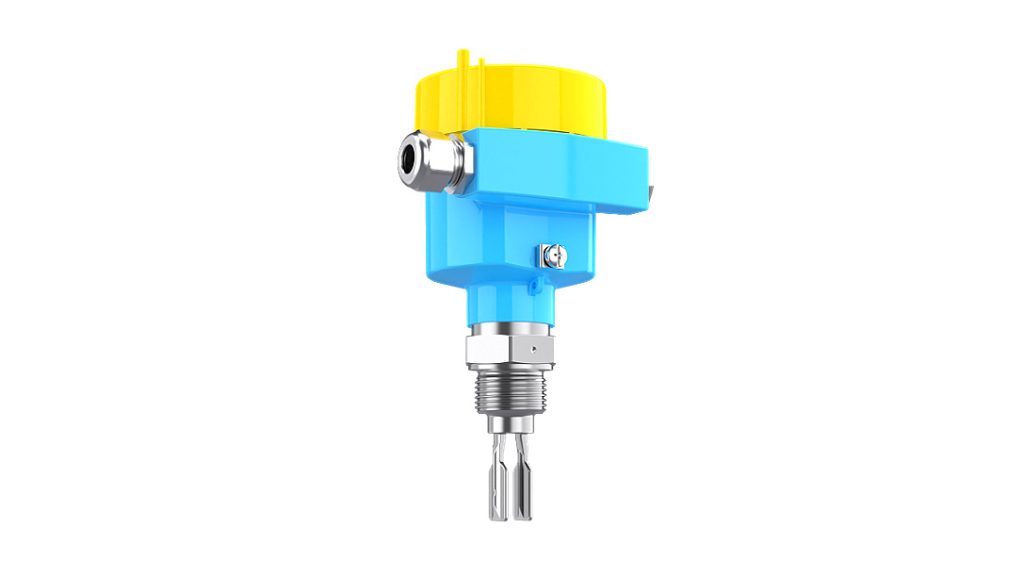
The Ring-11 food-grade tuning fork level switch adopts a clamp-type process connection, making it easy to match food-grade stainless steel tank interfaces. The wetted parts have a high surface finish, which helps reduce material adhesion and residue, meeting the hygiene, safety, and cleaning requirements of milk, yogurt, dairy beverages, and other dairy products.
For dairy companies, a level switch must not only measure accurately, but also be safe and reliable for food production. The Ring-11 food-grade version is designed for food, beverage, and pharmaceutical applications, making it suitable for process environments with strict hygiene requirements.
After installation on the milk tank, it can be used for daily level alarms and can also adapt to CIP cleaning processes, helping enterprises reduce hygiene risks caused by unsuitable instrument structures.
4.2 40 mm Short Fork Design for Compact Installation Spaces
Installation interfaces on milk tanks are often limited, especially when adding level detection points on tank sides or pipelines. The Ring-11 adopts a short fork design with a fork length of only 40 mm. It can be flexibly installed on storage tanks, process vessels, or pipelines, reducing the possibility of interference with agitators, spray balls, or internal tank structures.
In this project, some milk tanks had short reserved interfaces. Traditional long-probe level switches might have affected internal cleaning coverage or even collided with internal structures. By using Ring-11, the required tank modification was reduced, installation became easier, and commissioning time was shortened.
4.3 Resistance to Foam, Bubbles, and Liquid Fluctuation Interference
Foam is common during milk feeding and stirring. For many level detection instruments, foam can cause signal interference and false alarms. Ring-11 works based on the principle of tuning fork vibration frequency change. When the fork contacts the actual liquid medium, the vibration state changes significantly, allowing the instrument to output a reliable switching signal.
Compared with some detection methods that are easily affected by dielectric constant, foam thickness, or liquid surface conditions, tuning fork level switches offer better stability in complex liquid applications.
In milk tank applications, Ring-11 can handle common interferences such as foam, bubbles, viscous liquids, and vibration. This helps reduce the probability of false high-level alarms and missed low-level alarms. For dairy production lines that require continuous operation, reducing one false alarm means avoiding one unnecessary shutdown check; preventing one missed alarm may help avoid overflow or pump dry running.
4.4 Suitable for Low-Density Liquids and Various Dairy Media
Dairy factories store not only raw milk, but also skim milk, formulated milk, dairy beverages, diluted cream, yogurt base, and auxiliary liquids of different concentrations. These media vary in density, viscosity, and fluidity, which places higher demands on the adaptability of level switches.
The Ring-11 tuning fork level switch is precisely tuned and can measure liquids with densities as low as 0.5 g/cm³. It can cover the point level detection requirements of milk and various dairy liquid media.
For dairy plants with multiple production lines and various materials, Ring-11 helps reduce the complexity of level switch selection among different tanks and improves spare part compatibility.
4.5 Multiple Signal Outputs for Easy Connection to PLC/DCS Systems
Modern dairy plants commonly use PLC, DCS, or SCADA systems for centralized control. Ring-11 supports multiple output options, including relay, two-wire, NAMUR, and transistor outputs. This allows flexible selection based on the requirements of the field control system.
For new projects, engineers can select the proper output type according to the design specifications. For upgrades of existing production lines, Ring-11 can be more easily connected to existing control cabinets, alarm systems, or interlock circuits.
In this case, the Ring-11 high level signal was connected to the PLC and interlocked with the inlet valve. The low level signal was linked to the outlet pump operation logic, while the pump protection point was used to prevent the transfer system from continuing to run without material. Through simple and reliable switching signals, milk tank level status was integrated into the automation control system, upgrading the process from manual confirmation to automatic interlocking.
4.6 Multiple Certifications and Reliable Design for Enhanced Production Safety
Although dairy production does not usually involve hazardous explosive environments like petrochemical plants, food companies still place great importance on equipment stability, safety, and compliance. The Ring-11 series features multiple certifications and safety design advantages, making it suitable for industrial sites with high reliability requirements.
For dairy companies, choosing a certified and reliable level switch helps improve equipment management and supports project acceptance, quality system audits, and long-term maintenance.
A reliable point level switch can also serve as an important supplement to continuous level measurement instruments. Even if the tank is already equipped with a radar level meter or another continuous measuring instrument, high-high level alarms and low-low level protection should still use independent point level switches as safety redundancy.
When used for high and low level alarms in milk tanks, Ring-11 provides an additional layer of process protection for dairy production.
5. Installation and Commissioning Points
When installing the Ring-11 tuning fork level switch in a milk tank, the installation position should be selected according to the tank structure, inlet and outlet direction, agitator position, and spray cleaning coverage.
The high level switch is usually installed on the upper side wall of the tank or near the maximum allowable level to provide overflow prevention. The low level switch is installed at the lower safe level point of the tank to provide shortage alarms. The pump protection point can be installed according to the pump inlet position and pipeline layout.
During installation, the switch should be kept away from the direct impact area below the inlet to avoid high-speed liquid flow hitting the fork. It should also avoid positions where long-term wall adhesion or sedimentation may occur.
For milk tanks with agitators, the fork direction should be properly aligned with the flow direction of the medium to reduce mechanical impact and abnormal vibration. During commissioning, water or the actual medium can be used for action testing to confirm that the high and low alarm points are consistent with the control system logic.
After CIP cleaning, it is recommended to observe the switching status during the initial operation stage to confirm that cleaning residues, foam, or condensation do not cause abnormal alarms. For critical storage tanks, the Ring-11 alarm signal can be included in the control system trend records, making it easier to analyze production rhythm, cleaning cycles, and material switching status.
6. Application Results: From Manual Inspection to Automatic Interlocking
After the Ring-11 food-grade tuning fork level switches were put into operation, the stability of milk tank level control in the dairy plant improved significantly.
The high level alarm point could output a signal in time when the filling level approached the upper limit, reducing overflow risk. The low level alarm point helped operators identify insufficient material in advance, lowering the probability of material interruption in downstream processes. The pump protection interlock improved the safety of the transfer system and reduced equipment wear caused by dry running.
More importantly, the on-site operation mode changed. In the past, operators had to frequently inspect the tank area to check the level status, especially during peak production or cleaning transitions. They needed to repeatedly confirm whether there was still material in the tank and whether the feeding level had reached the upper limit.
After applying Ring-11, key level points achieved automatic alarm and interlock control. Operators shifted from passive inspection to exception handling, improving overall production management efficiency.
For dairy companies, the value of a level switch is not only reflected in the price of a single instrument, but also in its comprehensive benefits: reducing false alarms, preventing overflow, protecting pumps, lowering shutdown risks, and improving automation. With its food-grade design, short fork structure, anti-interference capability, and multiple output options, Ring-11 provides a safe, hygienic, and efficient solution for milk tank level control.
7. Why Is Ring-11 Recommended for Milk Tank Level Control?
From the perspective of dairy industry applications, a level switch suitable for milk tanks should have at least five key features: hygienic and reliable structure, flexible installation, resistance to foam interference, stable signal output, and easy integration into automation systems.
The Ring-11 food-grade tuning fork level switch is designed around these key requirements.
First, it adopts a process connection and wetted part design suitable for food industry applications, making it applicable to the level detection of milk, yogurt, dairy beverages, and other media.
Second, its 40 mm short fork body allows it to fit more compact storage tank and pipeline installation positions.
Third, the tuning fork detection principle helps maintain stable performance under foam, bubbles, viscous liquids, and vibration conditions.
Fourth, multiple output options allow flexible connection to PLC, DCS, and central alarm systems.
Fifth, the Ring-11 series features multiple certifications and reliable design, meeting the long-term stable operation requirements of food enterprises.
In milk tank applications, Ring-11 can be used not only as an independent high and low level alarm switch, but also together with radar level meters and other continuous measurement instruments to form a complete level control solution combining continuous measurement and point level protection.
The continuous level meter provides real-time level display, while Ring-11 handles critical point alarms and safety interlocks. The two complement each other and can significantly improve automation and safety management for dairy storage tanks.
8. Conclusion: Making Milk Tank Level Control Safer, More Hygienic, and More Stable
The requirements for level measurement in dairy production have evolved from simple “material present or absent” detection to comprehensive demands for hygiene, stability, safety, and automation interlocking.
As a key piece of equipment in the dairy production process, the reliability of milk tank level control directly affects material loss, equipment safety, production continuity, and product quality.
The application of the Jiwei Ring-11 food-grade tuning fork level switch in milk tanks fully demonstrates the advantages of tuning fork level switches in food-grade storage tank point level control.
It can adapt to complex conditions such as foam, bubbles, liquid surface fluctuations, CIP cleaning, and limited installation space in milk tanks. Through reliable high and low level alarms and pump protection signals, it helps dairy companies reduce manual inspections, lower false alarm rates, and prevent overflow and pump dry running.
For companies upgrading dairy production lines, automating milk storage tanks, or selecting food-grade level switches, Ring-11 is a solution worth considering. It not only meets the practical needs of milk tank level control, but also provides solid support for safer, cleaner, and more efficient automated dairy production.