
In level measurement applications involving powders, granules, slurries, and viscous liquids, material buildup on the probe is a common issue that can affect measurement reliability. Materials such as cement, fly ash, flour, resin, sludge, and sticky liquids may gradually adhere to the sensing probe during long-term operation.
If a level instrument cannot distinguish between actual material reaching the probe and residual material coating the probe surface, false alarms, failure to reset, or switching-point drift may occur.
One of the key reasons why RF admittance level sensors offer strong resistance to material buildup is the use of a guard electrode, also known as a shielding electrode or coat guard.
So, what exactly does the guard electrode do? And how does it help reduce the influence of buildup on level detection? This article explains its function from the perspectives of working principle, probe structure, and practical applications.
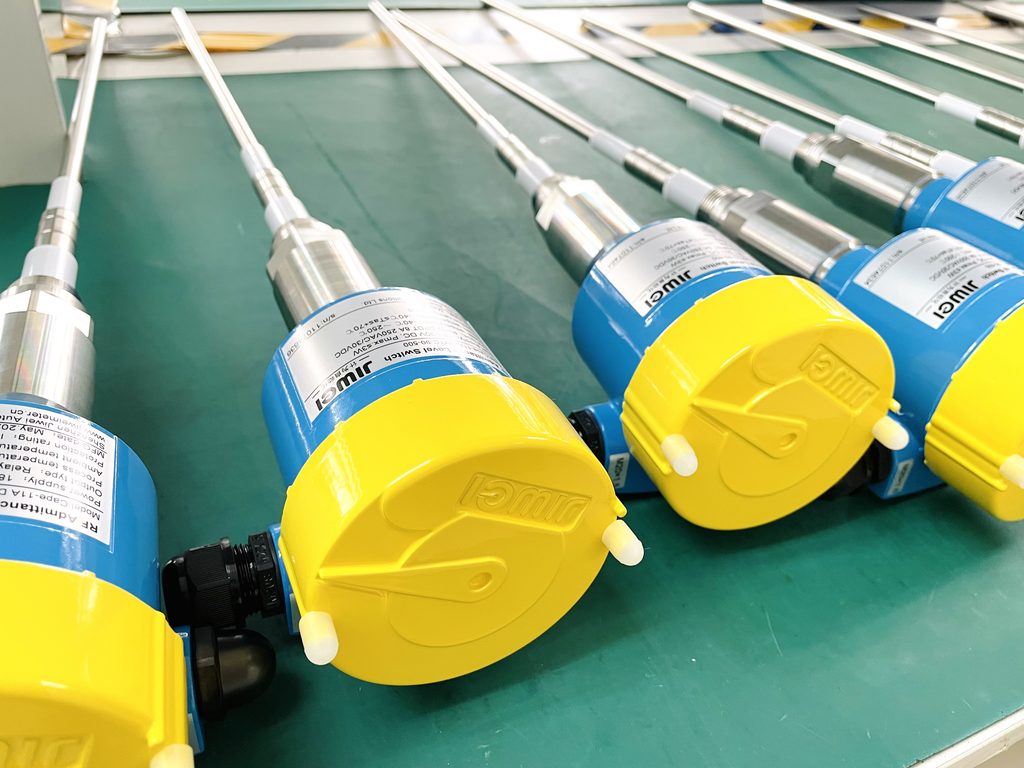
What Is a Guard Electrode in an RF Admittance Level Sensor?
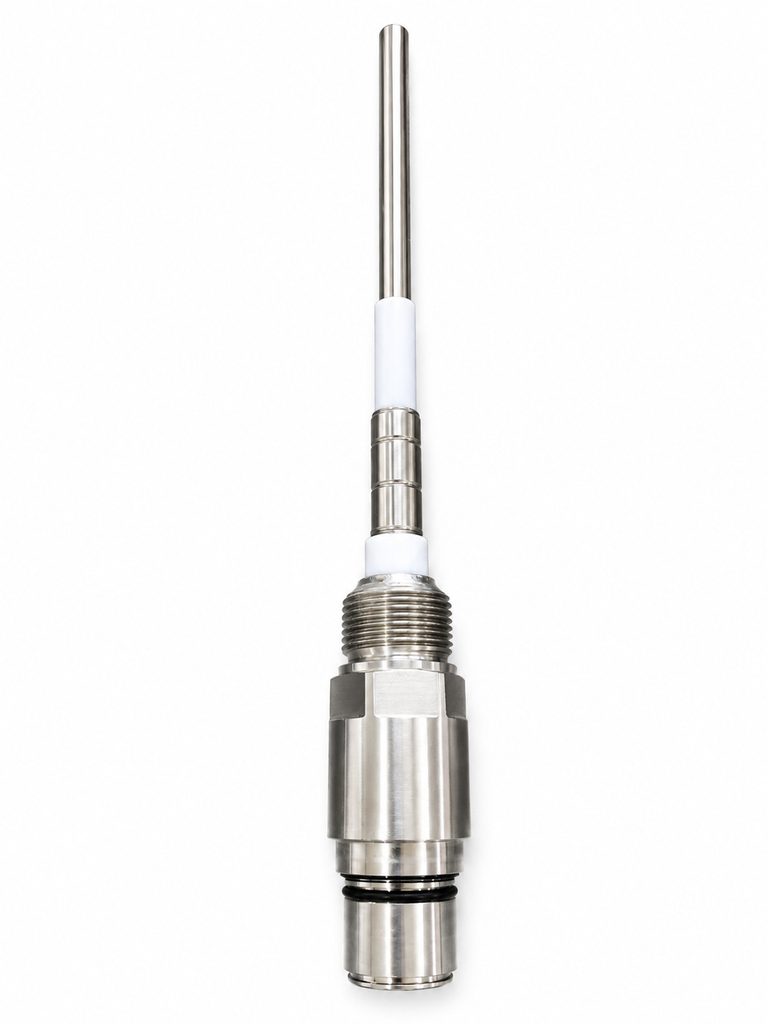
A typical RF admittance level switch or RF admittance probe usually contains more than one sensing section. Its structure commonly includes:
a sensing electrode, a guard electrode, and a ground or reference electrode.
The sensing electrode is the part that actually detects the presence of material. When the material reaches or covers the sensing electrode, electrical characteristics such as dielectric constant and conductivity change, which in turn changes the admittance between the probe and the vessel wall.
The guard electrode is usually located behind the sensing electrode or between the sensing section and the mounting connection.
Its primary purpose is not to detect level directly, but to isolate and suppress interference caused by material buildup on the probe.
In simple terms:
The sensing electrode detects the material, while the guard electrode reduces interference from material coating.
The cooperation between these two sections enables RF admittance level switches to maintain relatively stable performance under difficult process conditions.
Why Are Conventional Level Probes Easily Affected by Material Buildup?
To understand the function of the guard electrode, it is first necessary to understand why buildup can cause false switching.
Consider a probe installed in a storage silo.
When the material reaches the probe, the electrical characteristics between the probe and the vessel wall change, allowing the instrument to determine that material is present.
However, after the material level drops, some of the material may remain attached to the probe surface.
For example:
Cement powder may absorb moisture and stick to the probe.
Sludge and slurry may form a continuous coating layer.
Syrup, resin, and chemical liquids may leave a sticky film on the probe.
Moist powders may even form a partially conductive bridge between the probe and the vessel wall.
In these situations, even though the actual material level has fallen below the detection point, the residual coating may still create capacitive coupling or a resistive leakage path.
If the instrument simply detects changes in capacitance, it may interpret this coating as actual material, causing the switch to remain in the “material present” state.
This is one of the reasons conventional capacitance level switches may experience difficulties in applications involving sticky or coating materials.
How Does the RF Admittance Guard Electrode Work?
RF admittance technology does not simply measure a static capacitance value. Instead, the instrument applies a radio-frequency signal to the probe and analyzes changes in the electrical admittance of the sensing system.
From an electrical perspective, admittance is the reciprocal of impedance.
In practical applications, the detected signal may contain both capacitive and resistive components.
The key function of the guard electrode lies in its special RF-driven design.
In a typical system, an RF signal is applied to the sensing electrode. At the same time, the electronic circuit drives the guard electrode with a signal that is approximately at the same frequency, phase, and electrical potential as the sensing electrode.
As a result, the voltage difference between the sensing electrode and the guard electrode becomes very small.
When the potential difference is minimized, material buildup between these two sections cannot easily generate a significant measurement current.
In other words, the guard electrode creates an electrical shielding zone around the sensing region, helping prevent leakage signals caused by probe coating from entering the actual measurement circuit.
Therefore, the guard electrode does not physically remove material from the probe.
Instead, it helps the instrument avoid interpreting the coating as a real level signal.
This is the most important point in understanding the guard electrode.
Main Functions of the Guard Electrode
1. Reducing False Alarms Caused by Probe Coating
This is the primary function of the guard electrode.
Powders, slurries, and viscous liquids may remain on the probe even after the actual material level has dropped.
Through RF shielding and electrical isolation, the guard electrode reduces the influence of residual material on the sensing section.
This helps prevent situations where the material level has already fallen but the switch still indicates that material is present.
This function is especially important in high-level alarms, low-level alarms, blockage detection, and overflow protection.
2. Reducing Leakage Current Caused by Buildup
Some moist or electrically conductive materials can form a resistive path between the sensing section and the grounded vessel.
This leakage path changes the admittance of the measuring circuit and may lead to incorrect switching.
By keeping the coating area at nearly the same RF potential as the sensing electrode, the guard electrode helps minimize unwanted current entering the sensing circuit.
As a result, the electronics can focus more effectively on signals caused by actual changes in material level.
3. Improving Long-Term Measurement Stability
Industrial environments rarely remain clean over long periods of operation.
A level switch may work perfectly when first installed, but after several weeks or months, dust, scale, or sticky deposits may gradually accumulate on the probe.
Without proper anti-buildup design, the switching point may slowly drift over time.
The guard electrode reduces the influence of accumulated material, helping improve long-term measurement stability and reducing the need for frequent recalibration due to minor probe contamination.
4. Expanding the Application Range of RF Admittance Level Sensors
Because of their resistance to material buildup, RF admittance level switches can be used in applications where conventional capacitance switches may be less reliable.
Typical materials include:
Cement, lime, and fly ash;
Flour, milk powder, sugar, and grain;
Plastic pellets, resins, and chemical raw materials;
Coal powder, mineral powder, and bulk solids;
Sludge, slurry, and viscous liquids;
Process materials that tend to form deposits or coatings.
Actual suitability still depends on factors such as dielectric constant, electrical conductivity, temperature, pressure, probe material, and process conditions.
What Is the Difference Between the Sensing Electrode, Guard Electrode, and Ground Electrode?
Users who are new to RF admittance technology often confuse these three sections.
A simple way to understand them is as follows.
The sensing electrode acts like the “eye” of the level sensor. It detects whether material has reached the required level.
The guard electrode acts like an electrical isolation zone around the sensing section. Its main role is to reduce interference caused by coating and buildup.
The ground or reference electrode provides an electrical reference for the measurement system and helps establish a stable measurement circuit between the probe and the vessel.
Therefore, the guard electrode should not simply be understood as a grounding electrode.
In many RF admittance probe designs, the guard electrode is not connected directly to ground. Instead, it is actively driven by the electronics so that its RF potential closely follows that of the sensing electrode.
This is the key mechanism that allows the guard electrode to provide effective anti-buildup performance.
Why Is a Guard Electrode More Important Than Simply Increasing Sensitivity?
When a material is difficult to detect, users may first think about increasing the sensitivity of the instrument.
However, sensitivity adjustment alone cannot solve every buildup problem.
If sensitivity is set too high, the instrument may detect low-dielectric materials more easily, but it may also become more sensitive to dust, coatings, moisture, and environmental variations.
If sensitivity is set too low, the instrument may fail to detect the material reliably when it reaches the probe.
The guard electrode takes a different approach.
Instead of simply amplifying or reducing the measurement signal, it minimizes unwanted signals generated by buildup through probe structure and electrical design.
This makes it easier for the system to distinguish between actual material contact and residual coating.
For difficult applications, a properly designed electrode structure is often more important than simply increasing sensor sensitivity.
Does the Guard Electrode Mean RF Admittance Sensors Are Completely Immune to Buildup?
No.
A guard electrode can significantly improve resistance to material buildup, but it does not mean that RF admittance sensors will never be affected by deposits.
For example, if a very thick and continuous material bridge forms between the probe and the vessel wall, or if the probe becomes completely covered by hardened scale, measurement performance may still be affected.
Other factors can also influence reliability, including:
Improper installation position;
Installation too close to the filling point;
Direct impact of material on the probe;
Poor grounding conditions;
Large changes in material properties;
Incorrect probe material selection.
Therefore, when selecting an RF admittance level sensor, users should consider not only whether the probe has a guard electrode, but also:
Whether the material is conductive or moisture-sensitive;
Whether the material tends to form buildup or bridges;
Whether the vessel is metallic;
Whether the probe will be exposed to heavy impact;
Whether the process temperature and pressure are within specification;
Whether the probe insulation material is compatible with the process medium.
Correct selection and installation are essential for fully utilizing the advantages of RF admittance technology.
Where Are RF Admittance Guard Electrodes Commonly Used?
RF admittance technology is especially suitable for point-level detection applications such as:
High-level alarms;
Low-level alarms;
Plugged chute detection;
Material shortage detection;
Overflow protection.
For normal granular materials, the guard electrode can improve measurement stability.
For sticky powders, slurries, and viscous materials, its benefits are usually even more significant.
For example, in cement silos, probes may be continuously exposed to dust and buildup.
In the food industry, flour and milk powder may adhere to the probe surface.
In wastewater and chemical applications, sludge, slurry, and viscous liquids can form coating layers.
These applications require a level switch with strong resistance to buildup.
Conclusion: Why Is the Guard Electrode Important in RF Admittance Level Measurement?
The guard electrode may appear to be only one section of the probe, but it plays an important role in maintaining stable operation over long periods.
Its core function can be summarized as follows:
The guard electrode uses an RF signal with approximately the same frequency, phase, and potential as the sensing electrode to create electrical shielding, reducing the influence of leakage and coupling signals caused by material coating, dust, and buildup on actual level detection.
In other words, the guard electrode does not physically prevent material from sticking to the probe.
Instead, it allows the measurement system to continue identifying real changes in material level even when a certain amount of buildup is present.
In industries such as cement, chemical processing, power generation, food processing, mining, plastics, and environmental engineering, where powders, granules, slurries, or viscous materials are common, understanding how the guard electrode works can help users select RF admittance level switches more effectively and reduce false alarms and maintenance requirements.
For difficult level measurement applications, parameters such as measuring range, process temperature, pressure, and enclosure rating are important. However, the probe design, guard electrode structure, and resistance to material buildup are equally important factors to consider during sensor selection.