Reliable level control is essential in asphalt production, road construction, petrochemical processing, and waterproofing material manufacturing. A failure to detect a high level inside an asphalt storage tank can result in product overflow, equipment contamination, production interruptions, and serious safety risks.
However, measuring asphalt or bitumen is far more difficult than measuring ordinary liquids. Asphalt is hot, highly viscous, adhesive, and prone to solidification or coking when its temperature decreases. Conventional float switches, electrode level sensors, and mechanical level devices may respond slowly, become stuck, or generate false alarms after extended operation.
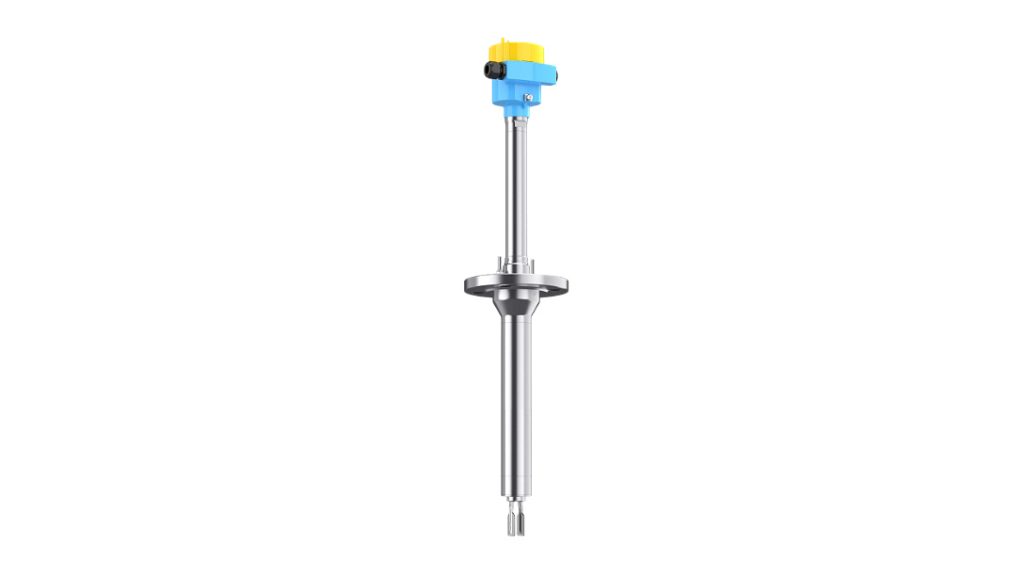
To improve the reliability of its asphalt storage tank overfill protection system, an asphalt processing facility selected the Jiwei Ring-11 high-temperature tuning fork level switch. Installed as an independent high-high level alarm, the switch provides a direct signal to the control system when asphalt reaches the predefined alarm point.
The application demonstrates how a correctly selected and installed Ring-11 level switch can support overfill prevention, pump interlocking, and safer automated operation under demanding high-temperature and high-viscosity conditions.
Application Background: Why Is Asphalt Level Detection Difficult?
The facility operates several vertical storage tanks for road-grade bitumen and asphalt-based process materials. Each tank is equipped with thermal insulation and a heating system to keep the asphalt at a temperature at which it can be stored, pumped, and transferred.
The original system relied mainly on a continuous level transmitter and routine operator inspections. Although the transmitter provided level trends and inventory information, the facility required a separate point-level device for independent overfill protection.
A high-high asphalt tank level switch was therefore installed near the top of each tank. When the asphalt reaches the alarm position, the switch sends a signal to the DCS or PLC. The control system activates an audible and visual alarm and, when required by the process logic, stops the feed pump or closes the inlet valve.
Several process conditions made instrument selection particularly challenging.
High Process Temperature
Asphalt must generally remain hot enough to maintain suitable flow characteristics. Depending on the asphalt grade and process requirements, the operating temperature may approach or exceed the temperature limit of a standard liquid level switch.
If an unsuitable instrument is used, continuous thermal exposure can accelerate the aging of its electronics, seals, wiring, and sensing components.
High and Temperature-Dependent Viscosity
Asphalt viscosity changes significantly with temperature. When the temperature decreases, the material becomes increasingly viscous and may eventually solidify.
A mechanical float or moving component can become coated or immobilized by the asphalt. This may prevent the switch from responding when the level rises or from resetting after the level falls.
Adhesion, Deposits, and Coking
Hot bitumen can adhere to probes, process connections, and the internal surfaces of an installation nozzle. If the nozzle becomes a relatively cold area, accumulated asphalt may solidify or form deposits.
The sensor may then remain covered even though the actual tank level has fallen, causing a persistent alarm or delayed reset.
Surface Disturbance and Inlet Flow
Asphalt entering a tank can create turbulence, splashing, vibration, and temporary product accumulation near the inlet. A level switch installed too close to this area may be activated by splashes rather than the actual liquid level.
The selected asphalt level sensor must therefore provide stable switching while being installed in a position protected from direct inlet impact.
The Solution: Ring-11 High-Temperature Tuning Fork Level Switch
After evaluating the process temperature, viscosity, installation space, output requirements, and safety logic, the facility selected the Jiwei Ring-11 high-temperature tuning fork level switch for point-level detection.
The Ring-11 was mounted at the high-high level position and used as an independent protection device.
It is important to distinguish a tuning fork level switch from a continuous level transmitter. The Ring-11 detects whether liquid has reached a specific point; it does not continuously measure the total amount of asphalt in the tank.
In this application, the continuous level transmitter remains responsible for inventory measurement, process monitoring, and level trends. The Ring-11 provides an independent high-high alarm and shutdown signal. Using these two technologies together creates a more complete asphalt storage tank level control and overfill protection system.
How Does the Ring-11 Detect Asphalt?
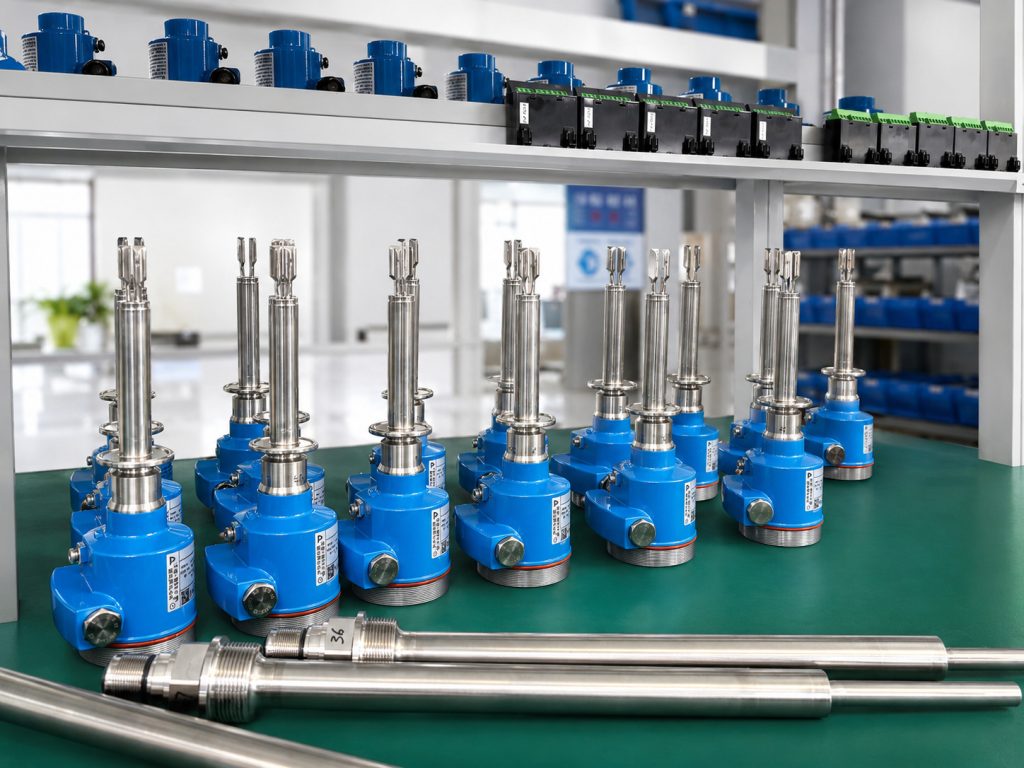
The Ring-11 works according to the tuning fork resonance principle. Piezoelectric components drive the fork at its natural resonant frequency while the electronic module continuously monitors its vibration.
When asphalt covers the tuning fork, the vibration frequency changes. The electronics detect this change and convert it into a switching output. When the asphalt level falls below the fork, the vibration returns to its uncovered condition and the switch resets according to the selected operating mode.
This measurement principle does not require a float, linkage, shaft, bearing, or other moving mechanical parts. Eliminating these components helps reduce the risk of mechanical sticking in adhesive and viscous liquids.
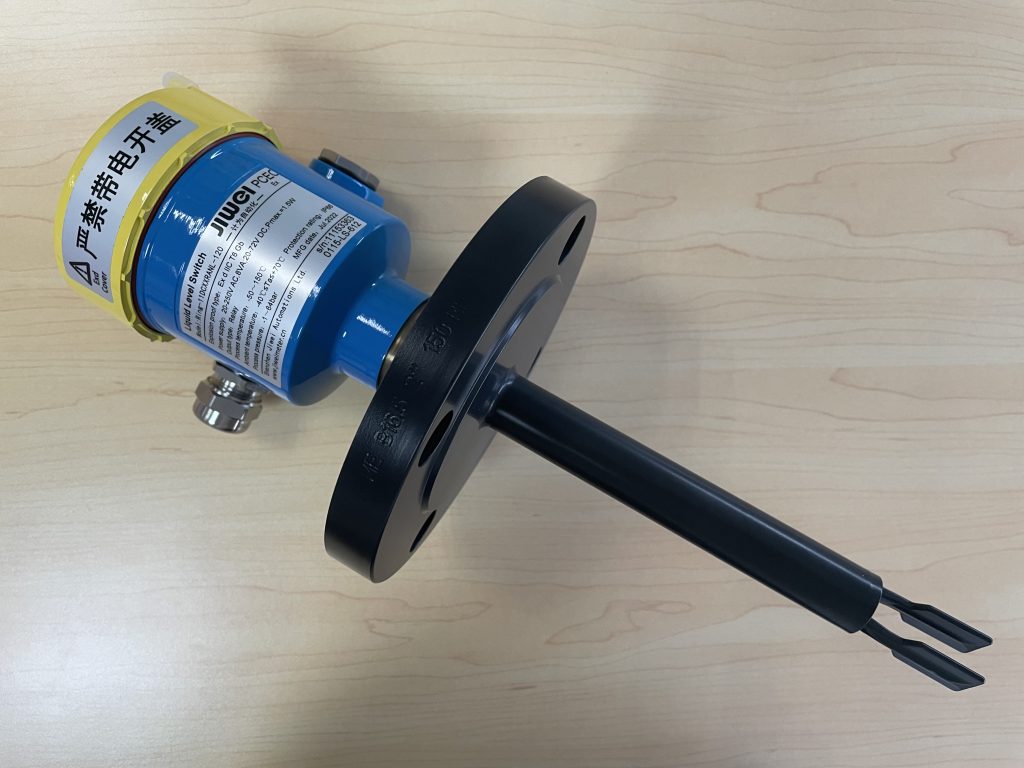
According to Jiwei’s product information, the Ring-11 has a compact 40 mm fork and can detect liquids with a density of at least 0.5 g/cm³. Its specified viscosity range is 0.1 to 10,000 mPa·s. Available outputs include relay, two-wire, NAMUR, and NPN/PNP transistor options.
The instrument also offers a process pressure range of -1 to 64 bar, ingress protection up to IP66/IP67, and several process connection and wetted-material configurations. These features allow the switch to be integrated into different storage and industrial control systems.
Why Was the High-Temperature Ring-11 Selected?
Jiwei specifies a process temperature range of -50 to 150°C for the standard-temperature Ring-11 configuration. The high-temperature version is suitable for process temperatures from -50 to 280°C, while an ultra-high-temperature version is available for applications up to 400°C.
Because asphalt storage temperatures can approach or exceed the limit of a standard level switch, the instrument must be selected according to the maximum possible process temperature—not simply the average operating temperature.
The high-temperature Ring-11 uses an extension tube between the process connection and the instrument housing. This structure increases the heat-transfer distance and helps reduce the temperature reaching the electronic components.
High-temperature-resistant piezoelectric ceramic components and internal wiring further support reliable operation under elevated thermal loads. The design makes the switch suitable for hot liquid tanks, process vessels, reactors, and pipelines.
For this asphalt storage tank application, the engineering team evaluated:
- Normal asphalt storage temperature
- Maximum operating and upset temperature
- Temperature at the proposed installation point
- Tank insulation thickness
- Process connection length
- Ambient temperature around the instrument housing
- Available ventilation and heat dissipation
- Actual asphalt viscosity at operating temperature
The selected extension length allowed the fork to reach the effective detection area while keeping the instrument housing outside the tank insulation. This prevented the electronics from being enclosed within a high-temperature insulation layer.
Installation of the Asphalt Tank Level Switch
The Ring-11 was mounted horizontally near the upper part of the tank at the required high-high alarm level. Side mounting allowed the compact fork to extend directly into the active detection area while keeping the instrument accessible for inspection and maintenance.
Several installation measures were adopted to improve long-term reliability.
1. Keep the Level Switch Away from the Inlet
The instrument was positioned away from the asphalt inlet pipe. Direct product impact, splashing, or temporary coating from the inlet flow could otherwise activate the switch before the actual liquid surface reached the alarm point.
If installation near an inlet is unavoidable, a suitable protective shield may be considered. The shield must not create a pocket in which asphalt can accumulate and remain around the fork.
2. Minimize the Length of the Installation Nozzle
The process nozzle was designed so the tuning fork extended fully into the tank. A nozzle that is too long can become a product retention area.
Asphalt trapped inside a cold or insufficiently heated nozzle may solidify around the fork. This can prevent the level switch from resetting even after the tank level has fallen.
The internal diameter of the connection should also provide sufficient clearance around the fork to reduce bridging and deposit formation.
3. Coordinate Insulation and Heat Tracing
The connection area requires suitable thermal insulation to prevent the asphalt from becoming excessively viscous or solidifying near the sensor.
However, the instrument housing must not be buried inside the tank insulation. Heat-tracing cables should also be arranged so they do not directly overheat the housing or electronic module.
The objective is to keep the wetted process connection warm while maintaining the instrument electronics within their permitted ambient temperature range.
4. Install the Fork in the Correct Orientation
The fork should be oriented according to the manufacturer’s installation instructions. Proper orientation allows viscous asphalt to drain more easily when the level falls and reduces the possibility of material collecting on the sensing element.
Correct cable entry orientation is equally important. Cable glands should be installed to prevent rainwater or condensation from entering the housing.
5. Provide Maintenance Access
Although a tuning fork level switch has no moving mechanical parts, asphalt may still leave deposits after extended operation, especially during repeated heating and cooling cycles.
The installation therefore included enough working space for removal, inspection, and cleaning. Where the process design permits, an isolation arrangement can simplify maintenance without requiring the entire tank to be emptied.
Control and Safety Interlock Design
The Ring-11 output was connected to the facility’s DCS or PLC. When asphalt covered the tuning fork, the switch generated a high-high level signal.
The control system then performed the following actions:
- Displayed a high-high level alarm in the control room.
- Activated a local audible and visual alarm.
- Stopped the asphalt feed pump.
- Closed the inlet valve where required.
- Recorded the alarm and interlock event.
The switching logic was configured according to the fail-safe requirements of the process. A power failure, cable break, or detected instrument fault should not be interpreted automatically as a normal low-level condition.
Depending on the selected output configuration, relay, two-wire, NAMUR, or transistor signals can be integrated with a DCS, PLC, safety barrier, or interposing relay. The final circuit design should reflect the facility’s safety philosophy and hazardous-area classification.
For installations in potentially explosive environments, the selected Ring-11 configuration, electrical connection method, safety barrier, cable gland, and enclosure must comply with the applicable hazardous-area requirements.
Commissioning Procedure
Before the asphalt tank was placed into normal operation, the project team completed a structured commissioning process.
First, technicians verified the instrument model, process temperature rating, output type, power supply, process connection, and wiring. They then confirmed the correct uncovered status while the fork was free from material.
A functional test was performed by simulating fork immersion. The team checked that the switch changed state correctly, that the DCS or PLC received the signal, and that the alarm message was displayed at the correct location.
The complete interlock sequence was subsequently tested. This included confirmation that a high-high level signal stopped the designated feed pump and closed the appropriate inlet valve.
Finally, the reset logic was checked to ensure that the process could not restart unintentionally after the alarm cleared.
These tests are essential because reliable overfill protection depends not only on the level switch but also on the wiring, control logic, alarms, valves, pumps, and operator procedures connected to it.
Application Results
During operation, the Ring-11 generated a stable switching signal when the rising asphalt level covered the tuning fork. The DCS responded by activating the high-high alarm and executing the configured inlet interlock.
When the asphalt level dropped and the fork became uncovered, the switch returned to its normal state according to the programmed logic.
Compared with relying only on operator observation, the new system provided a direct and independent point-level protection layer. It also reduced dependence on a single continuous level measurement device.
The compact 40 mm fork required relatively little installation space. Its short sensing element was less exposed to mechanical loads caused by tank vibration or product movement than a long insertion probe would have been.
Because the detection principle does not use moving parts, the Ring-11 also avoids common mechanical problems such as a jammed float, bent linkage, or worn bearing.
However, successful performance in asphalt service still depends on maintaining the correct process temperature and controlling deposit formation. The switch should be included in the facility’s inspection and proof-testing program rather than treated as maintenance-free.
Key Benefits of the Ring-11 in Asphalt Applications
The Ring-11 high-temperature tuning fork level switch offers several practical advantages for asphalt and bitumen storage tanks:
- Reliable point-level detection for high and high-high alarms
- High-temperature configurations for hot asphalt processes
- No moving mechanical parts
- Compact 40 mm tuning fork
- Resistance to foam, bubbles, vibration, and process disturbance
- Multiple output options for PLC, DCS, and safety circuits
- Suitable configurations for hazardous areas
- Simple integration with pump and valve interlocks
- Reduced risk of float or linkage jamming
- Suitable for independent asphalt tank overfill protection
These characteristics make the Ring-11 a practical choice for asphalt storage tanks, loading systems, heated process vessels, and other hot-liquid applications—provided that the actual viscosity and temperature remain within the selected instrument’s limits.
Important Considerations When Selecting an Asphalt Level Switch
Asphalt grade, composition, and temperature can significantly affect viscosity. A product that flows easily at one temperature may become extremely viscous or solid at a lower temperature.
The Ring-11 has a specified viscosity range up to 10,000 mPa·s. Therefore, its suitability must be confirmed using the actual viscosity at the installation point and at the lowest expected operating temperature.
If the asphalt can solidify around the fork during a shutdown, the engineering design should include appropriate insulation, heat tracing, drainage, cleaning, and restart procedures.
The following process information should be provided when selecting a bitumen level sensor:
- Asphalt or bitumen grade
- Density
- Normal operating temperature
- Maximum and minimum process temperature
- Viscosity at the lowest operating temperature
- Tank pressure
- Process connection size and type
- Installation position
- Required insertion or extension length
- Power supply and output signal
- Hazardous-area classification
- Required alarm and interlock logic
- Expected deposit or coking conditions
Providing complete process data allows the manufacturer to determine whether the standard, high-temperature, or ultra-high-temperature Ring-11 configuration is appropriate.
Conclusion
The primary challenge in asphalt tank level detection is not simply determining whether liquid is present. The real challenge is obtaining a dependable alarm signal under high-temperature, high-viscosity, adhesive, and potentially coking process conditions.
The Jiwei Ring-11 high-temperature tuning fork level switch detects point level through changes in vibration frequency and does not rely on moving mechanical components. When correctly selected and installed, it can provide reliable high-level alarms, asphalt storage tank overfill protection, and pump or valve interlocking.
Combining a continuous level transmitter with an independent Ring-11 high-high level switch creates a stronger tank protection strategy. The continuous instrument supports inventory and process monitoring, while the tuning fork switch provides a dedicated alarm at the critical shutdown point.
For each asphalt or bitumen application, the actual maximum temperature, minimum operating temperature, viscosity, installation geometry, insulation, and deposit conditions must be reviewed before final selection. With appropriate engineering and regular functional testing, the Ring-11 can provide an effective level safety solution for demanding asphalt storage and transfer systems.