Coatings, adhesives, inks, sealants, and specialty formulations are often produced in batch mixing systems. These plants handle a wide range of liquids, from low-viscosity solvents and additives to high-viscosity resins, dispersions, emulsions, and finished products.
That variability makes level measurement more complex than it first appears.
A tank that contains a clean solvent in one step may contain a foaming emulsion or sticky resin mixture in another. Agitators and dispersers create turbulent surfaces. Product changeovers introduce different dielectric behavior and viscosity. Cleaning chemicals may expose the instrument to a completely different medium from the one being manufactured.
A robust level strategy therefore needs to consider the entire production cycle.
Where Level Measurement Is Used
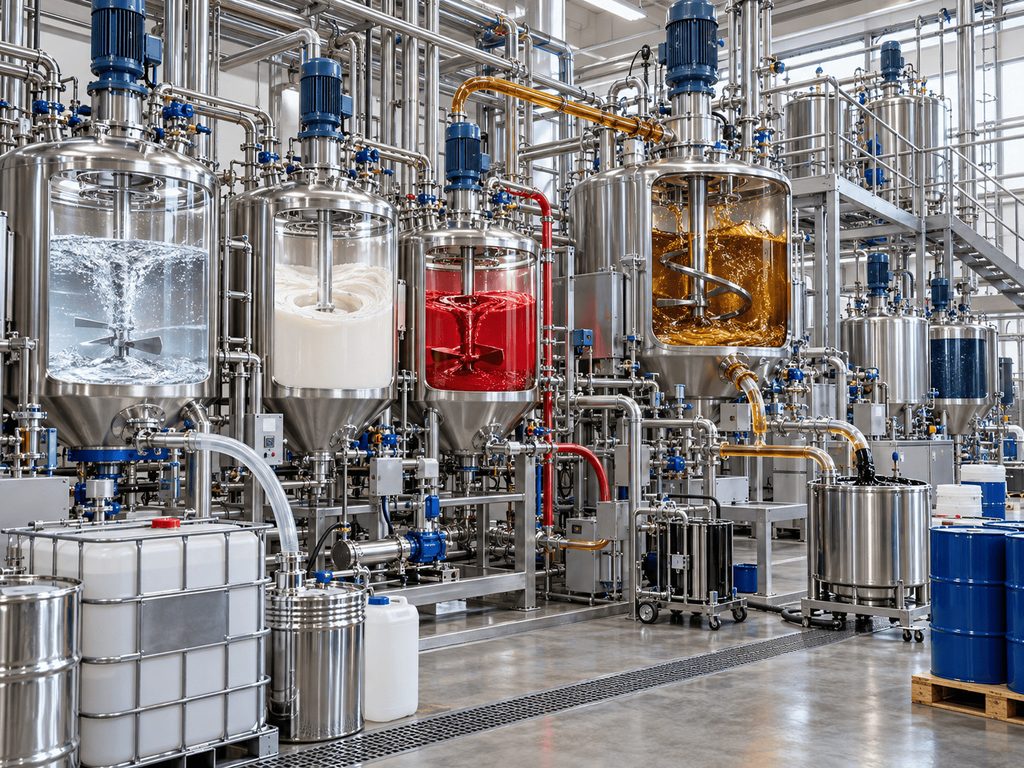
A typical coating or adhesive production area may include solvent storage tanks, resin storage tanks, pigment slurry tanks, mixing and dispersing vessels, additive dosing tanks, intermediate buffer tanks, finished-product holding tanks, cleaning-fluid tanks, and wastewater or solvent-recovery vessels.
Some of these vessels require continuous level measurement. Others only need a high-level or low-level switch.
Continuous level measurement is useful where operators need inventory, batch volume, transfer control, or trend information. Point level detection is useful where the process needs an alarm or interlock at one defined position.
Using the correct measurement task at each point can reduce both cost and complexity.
Why Mixing Tanks Are Difficult
Mixing tanks present four common measurement challenges.
The first is surface movement. High-speed dispersers and agitators can generate waves, vortices, splashing, and entrained air.
The second is foam. Water-based coatings, surfactants, emulsions, and certain additives can create persistent foam.
The third is buildup. Resins, adhesives, pigments, and high-solids products may coat tank walls and exposed instrument surfaces.
The fourth is product variation. The same vessel may process different recipes with different density, viscosity, electrical characteristics, and surface behavior.
A level sensor selected only for one recipe may perform poorly on another.
Why Non-Contact Radar Is Often Considered
Radar level measurement is attractive for mixing tanks because it can measure without inserting a long probe into the product.
This reduces direct contact with sticky or coating materials and avoids placing an additional mechanical component inside the mixing zone.
High-frequency radar also provides a narrow beam that can help avoid internal obstructions. This is particularly useful in small and medium-size vessels that contain agitator shafts, baffles, spray devices, or filling pipes.
Because radar is an electromagnetic measurement, changes in air temperature do not influence it in the same way they can influence acoustic time-of-flight measurement.
However, radar still requires a correct installation.
The sensor should not be mounted directly above the agitator shaft or filling stream. The antenna should not be recessed unnecessarily into a long, narrow nozzle. The maximum product level should remain within the permitted near-range of the instrument.
Foam: Define What You Want to Measure
Foam is one of the most misunderstood problems in level measurement.
In a coating mixing tank, the process may have a liquid layer with a foam layer above it. A radar signal may respond differently depending on the thickness, moisture content, density, and structure of that foam.
Before adjusting the sensor, determine whether the control system needs to know the liquid level or the top of the foam.
For overfill prevention, the total occupied height may matter. For batch volume, the true liquid level is usually more important.
If foam behavior changes significantly between recipes, the application should be evaluated under representative operating conditions.
A credible engineering approach does not promise that one setup will behave identically with every foam.
Viscosity and Adhesive Buildup
Adhesive production often involves materials that cling to surfaces.
Traditional contact probes may require cleaning if product accumulates on the sensing element. Non-contact radar can reduce this exposure because the measuring energy travels through the headspace rather than through an immersed probe.
Still, no top-mounted sensor is completely isolated from the process. Splash, condensation, vapor, and cleaning residue can reach the process connection.
A good installation keeps the antenna as clean as practical, avoids dead pockets in the nozzle, and allows access for inspection.
If the process uses solvent cleaning, verify that the antenna, seal, flange, and any protective coating are compatible with the cleaning solvent as well as the product.
Solvent Service and Hazardous Areas
Many coatings and inks use flammable solvents.
The level instrument must therefore be selected according to the actual hazardous-area classification and site electrical requirements. The required explosion-protection concept, wiring method, cable gland, grounding, and control-system barrier arrangement should be reviewed as part of the complete loop.
Do not assume that a product is suitable for a hazardous area simply because another version in the same family has an approval.
The exact model, electrical configuration, and certificate must match the project requirement.
Continuous Measurement with JWrada Radar
Jiwei JWrada radar level meters include models designed for liquid measurement and industrial process applications.
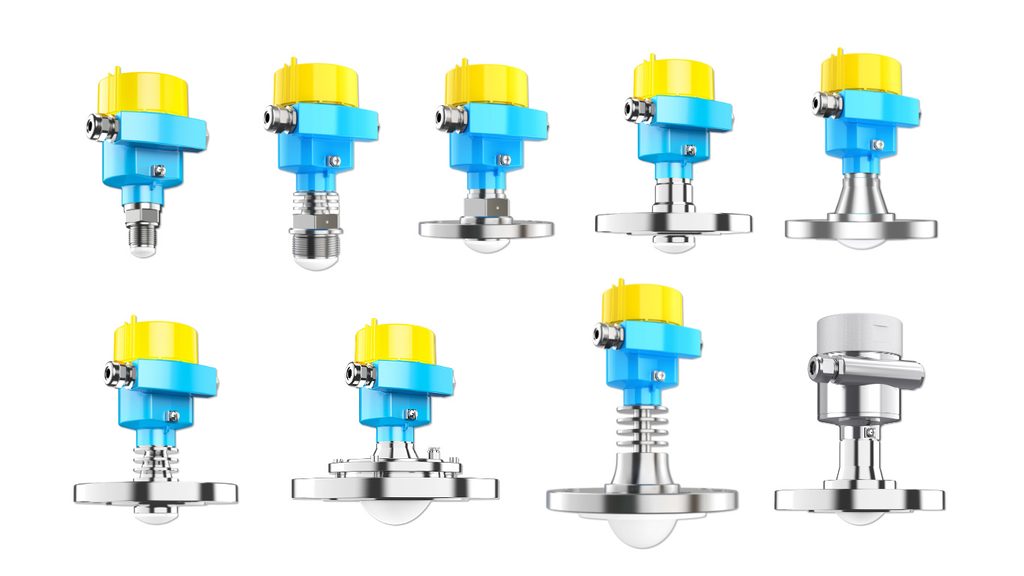
For smaller and medium-range tanks, JWrada-31 can be considered where its process limits and connection options match the application. For more complex or demanding services, other JWrada models may offer different antenna, range, temperature, or corrosion-resistant configurations.
Model selection should be based on vessel height, nozzle size, maximum and minimum level, process temperature and pressure, solvent or chemical compatibility, hazardous-area classification, required output signal, internal tank structures, and foam and agitation severity.
The model name should come at the end of the selection process, not at the beginning.
Point Level Detection for High and Low Alarms
A mixing tank may also use a tuning fork level switch.
A high-level switch can act as an alarm or part of a filling interlock. A low-level switch can protect a pump or indicate when the vessel is nearly empty.
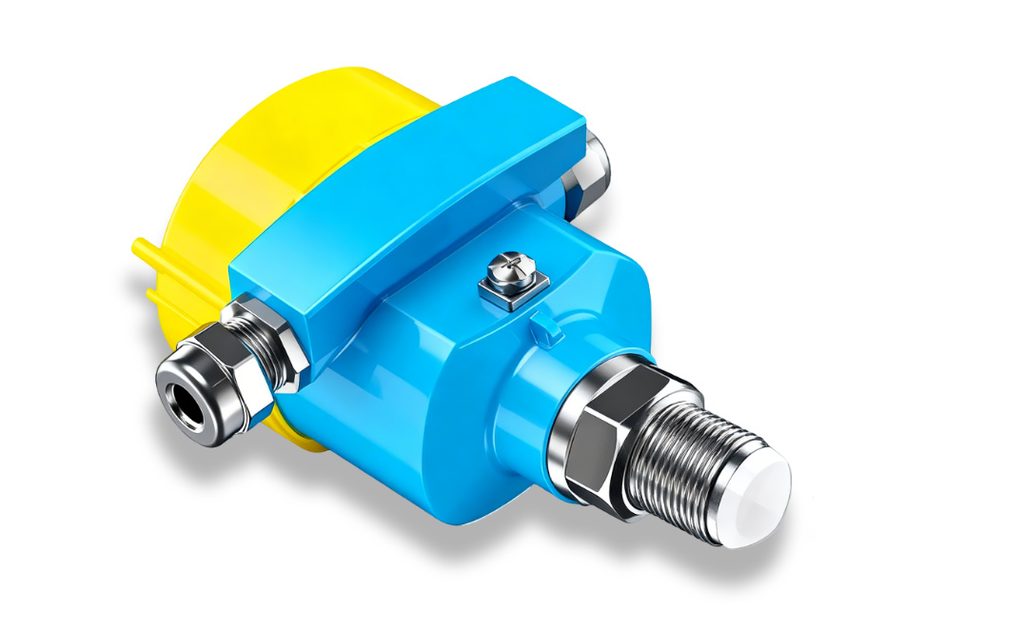
The Jiwei Ring-11 liquid level switch uses a vibration-based sensing principle and is designed for point level detection in industrial liquids.
For coating and adhesive applications, pay particular attention to viscosity and coating behavior. A tuning fork must be installed where the product can reach it predictably and where excessive buildup will not prevent the fork from returning to its normal vibration state after the level falls.
Side mounting may be useful for a defined alarm level, while top mounting with an extension may be used in other vessel arrangements. The preferred configuration depends on the vessel and process.
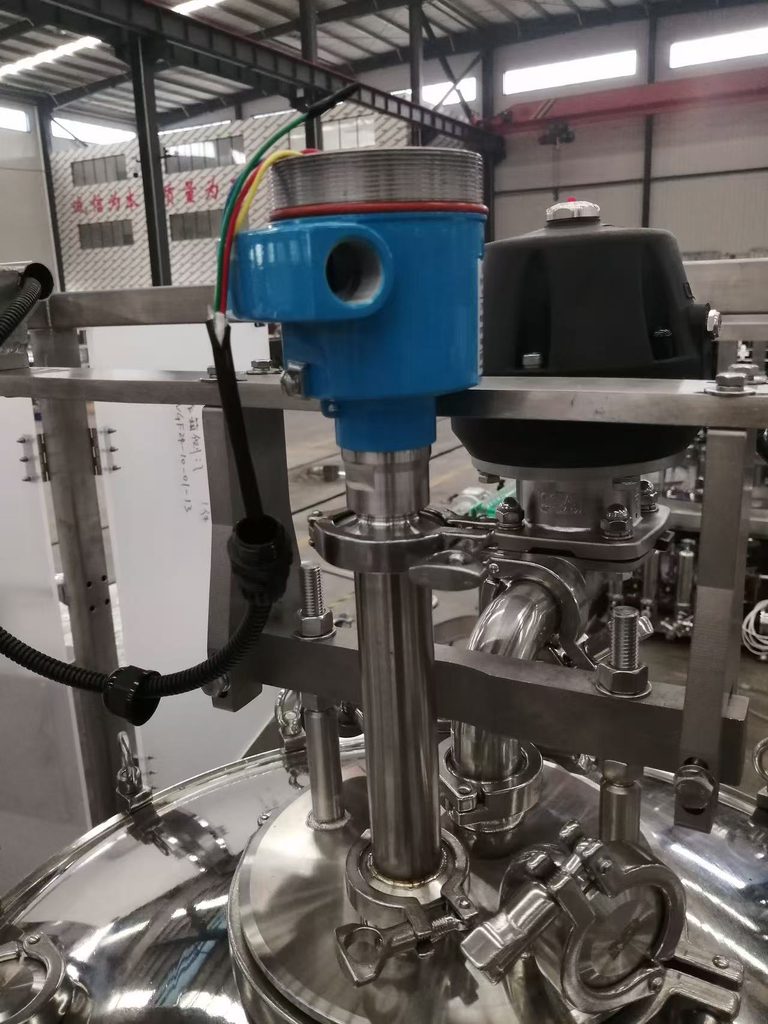
A Typical Measurement Architecture
Consider a batch mixing tank that receives solvent, resin, additives, and pigment dispersion.
The continuous radar transmitter provides the changing level value during charging and mixing.
The control system uses this signal to display level, monitor batch additions, and coordinate transfer.
A separate high-level tuning fork switch is installed above the normal operating range. If the level reaches this point, the switch provides a discrete signal that can trigger an alarm or filling interlock.
A low-level switch may be installed near the discharge zone if pump protection is required.
This architecture separates process measurement from protective switching.
Installation Recommendations
Avoid the filling stream
The incoming product can create strong reflections, splashing, and temporary false surfaces. Mount the radar away from the direct flow path.
Review agitator geometry
If the beam intersects a shaft or blade throughout the full measuring range, move the sensor to a better nozzle if possible.
Keep the antenna area clean
Avoid nozzle designs that trap condensed solvent or sticky product.
Record the empty distance
Commission the transmitter using the real vessel geometry rather than an assumed nominal dimension.
Confirm maximum level
Make sure the required top level does not enter the instrument’s unusable near range.
Use realistic damping
Set signal filtering for the actual process. High-speed filling requires faster response than a slowly changing storage tank.
Commissioning Across Multiple Recipes
If the tank is used for several products, commissioning should not end after the first batch.
Observe the level trend with low-viscosity material, high-viscosity material, foaming products, and the normal cleaning cycle.
If a recipe produces significantly different echoes, review the echo profile rather than simply increasing damping until the display looks stable.
The objective is to understand how the measurement behaves and then set the instrument so that it tracks the real process.
Maintenance Strategy
A non-contact radar level meter generally reduces contact-related maintenance, but periodic inspection is still good practice.
Inspect the process connection for buildup, verify that the instrument remains mechanically secure, check cable glands and grounding, and review diagnostics if the device reports abnormal echo conditions.
For tuning fork switches, inspect the fork when the process is opened for maintenance. Confirm that coating has not hardened around the sensing element and that the installation has not been mechanically damaged.
Conclusion
Coating, adhesive, and ink mixing tanks combine several difficult level conditions: agitation, foam, sticky buildup, solvents, and frequent product changes.
A well-selected non-contact radar transmitter can provide continuous level information without placing a long sensing probe in the mixing zone. A separate tuning fork switch can provide high- or low-level protection where required.
The key to reliable performance is not simply choosing a “radar for coatings.” It is matching the instrument to the vessel geometry, process behavior, chemical compatibility, safety requirements, and control objective.
FAQ
Is radar suitable for high-viscosity adhesive?
Radar can be a good option because it does not require an immersed measuring probe. However, the installation must still account for vapor, splash, antenna buildup, foam, and vessel internals.
Can the same radar be used for different coating recipes?
Often yes, but the operating conditions should be reviewed across the recipe range. Different foam behavior, dielectric properties, viscosity, and buildup can change the echo environment.
What is the role of a tuning fork level switch?
A tuning fork provides a discrete high- or low-level signal at its installation point. It is typically used for alarms, pump protection, and interlocks rather than continuous inventory measurement.
Should a radar sensor be mounted in the center of a mixing tank?
Not automatically. The best position depends on the agitator, filling point, internal structures, and vessel geometry. The sensor should have a clear path to a representative product surface.