Challenges of Coal Slurry Level Measurement in the Steel Industry
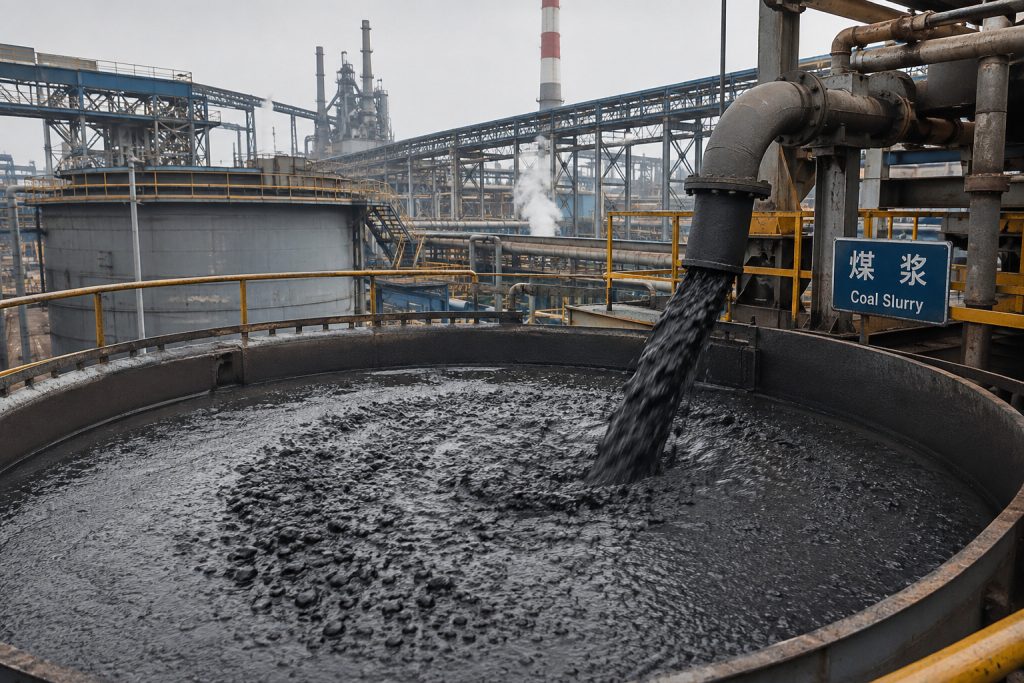
Coal slurry is widely used in steel production, particularly in blast furnace injection systems, gas purification processes, and auxiliary material handling. Composed of pulverized coal, water, and chemical additives, coal slurry is characterized by high density, high viscosity, and a strong tendency to settle. Accurate level measurement is essential for ensuring stable production, optimizing energy efficiency, and maintaining operational safety.
Coal slurry storage tanks typically present several measurement challenges:
- High-viscosity media that tend to adhere to surfaces
- Foam formation on the liquid surface
- Continuous agitation causing severe surface fluctuations
- Steam and condensation generated during transportation and mixing
- Long-term buildup of deposits on tank walls
- Hazardous areas requiring explosion-proof instrumentation
These harsh operating conditions make reliable level measurement particularly difficult. Traditional level instruments, such as float level gauges, differential pressure transmitters, and ultrasonic level meters, are often affected by medium buildup, foam, steam, and agitator interference. As a result, measurement errors, unstable readings, signal loss, and false alarms are common.
To overcome these issues, an increasing number of steel manufacturers are adopting 80 GHz radar level meters for continuous and maintenance-free coal slurry level measurement.
Project Background
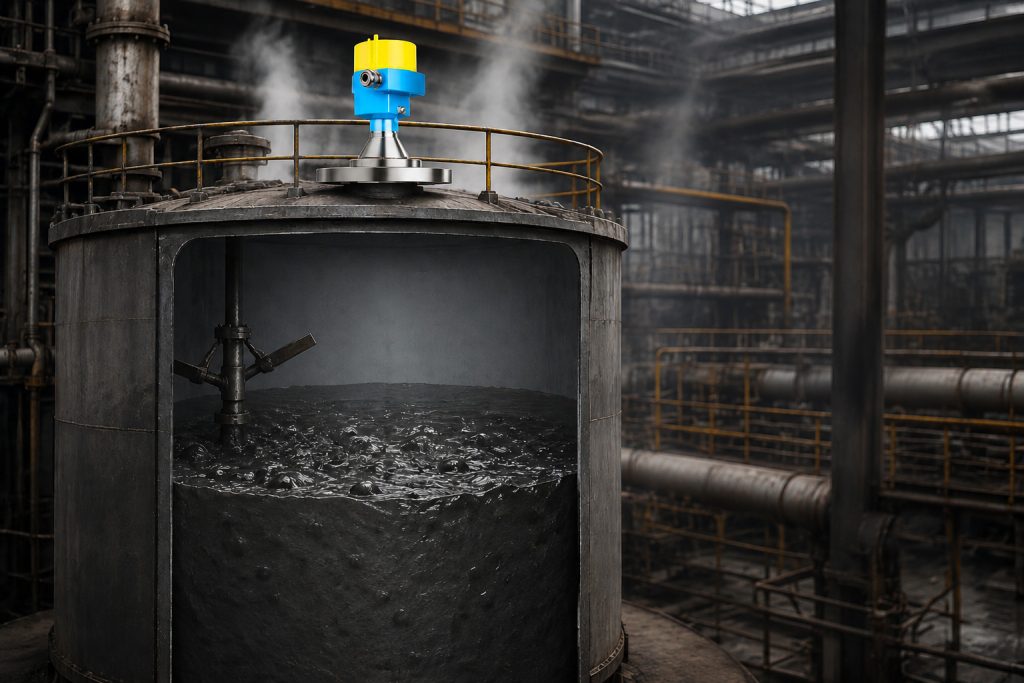
A large integrated steel plant operates several coal slurry storage tanks, each approximately 18 meters high and 10 meters in diameter. Every tank is equipped with a large mechanical agitator, while the coal slurry concentration is maintained between 55% and 65%.
Previously, the plant relied on differential pressure transmitters for level monitoring. However, long-term operation exposed several shortcomings:
- Frequent blockage of impulse lines
- Zero drift caused by slurry deposits
- High maintenance requirements
- Significant measurement fluctuations due to agitation
- Reduced measurement stability in the presence of steam
To improve process automation and measurement reliability, the plant decided to replace the existing instruments with non-contact radar level meters.
Why Choose an 80 GHz Radar Level Meter for Coal Slurry?
Compared with conventional 26 GHz radar technology, 80 GHz millimeter-wave radar offers a higher operating frequency, a much narrower beam angle, and superior target discrimination.
These advantages make it particularly suitable for coal slurry applications.
Narrow Beam Angle Minimizes Internal Interference
Coal slurry storage tanks usually contain various internal structures, including:
- Agitator shafts
- Mixing blades
- Filling pipes
- Support beams
- Internal ladders
A wider radar beam can easily produce false echoes from these structures.
The highly focused beam of an 80 GHz radar level meter effectively avoids these obstacles, allowing the instrument to receive only the true echo reflected from the slurry surface. This significantly improves measurement stability.
Superior Performance in Steam Environments
Large amounts of water vapor are generated during slurry mixing and transfer.
Ultrasonic level meters often struggle in such conditions because sound waves are attenuated by steam. In contrast, millimeter-wave radar is minimally affected by vapor, ensuring reliable measurement even in high-humidity environments.
Reliable Measurement Despite Foam
Coal slurry surfaces are frequently covered with thick foam layers.
Conventional level instruments may mistakenly detect the foam as the actual liquid level.
The JWrada-34 incorporates intelligent echo processing technology that distinguishes the genuine slurry surface from foam reflections, ensuring accurate level detection even under challenging conditions.
Non-Contact Measurement Reduces Maintenance
Coal slurry is highly adhesive.
Contact-type instruments are susceptible to:
- Material buildup
- Corrosion
- Mechanical wear
- Blockage
Since the JWrada-34 performs non-contact measurement, its antenna never comes into direct contact with the slurry, dramatically reducing maintenance requirements while improving long-term reliability.
JWrada-34 Radar Level Meter Solution
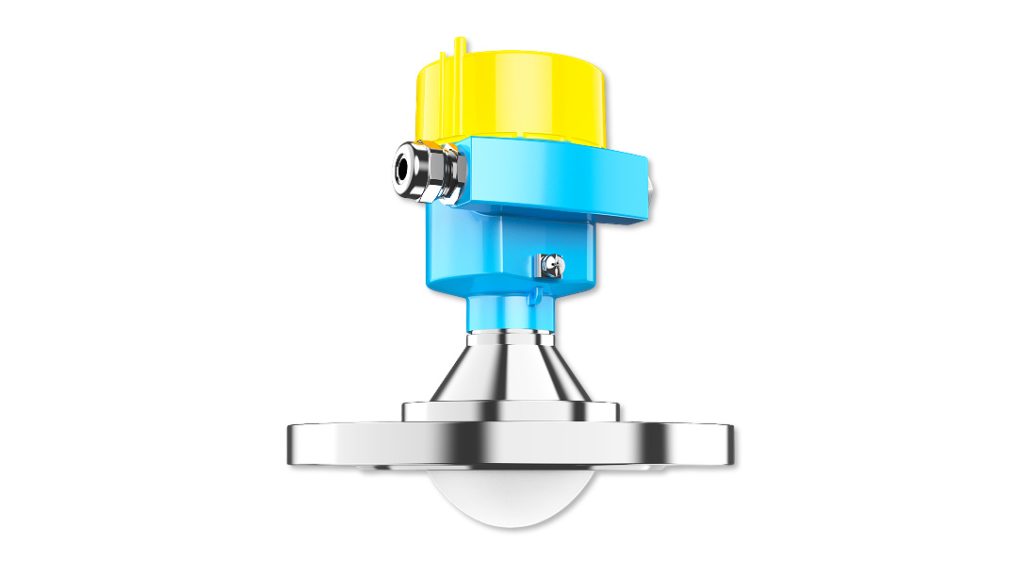
To address the demanding requirements of coal slurry storage tanks, the plant selected the JWrada-34 Radar Level Meter.
Based on advanced 80 GHz FMCW radar technology, the instrument offers a maximum measuring range of up to 120 meters with an accuracy of ±1 mm, making it well suited for continuous level monitoring in large industrial tanks.
Its key features include the following.
Advanced 80 GHz Millimeter-Wave Technology
The higher operating frequency enables stronger signal focusing and improved echo quality.
Even when measuring low-reflectivity, turbulent slurry surfaces, the radar provides clear and stable echo signals, accurately identifying the true liquid level despite waves, foam, or continuous agitation.
Intelligent Echo Learning Algorithm
Coal slurry tanks contain numerous structures that can generate false echoes.
The JWrada-34 features an intelligent echo learning algorithm capable of automatically identifying and filtering:
- False echoes
- Multiple reflections
- Fixed obstacle reflections
- Dynamic surface disturbances
The system continuously optimizes its echo profile according to actual operating conditions, ensuring stable long-term performance.
Excellent Resistance to Dust and Steam
Coal slurry handling processes are often accompanied by:
- Steam
- Dust
- Water mist
- Condensation
With its high signal-to-noise ratio and advanced signal processing capabilities, the JWrada-34 effectively suppresses interference and maintains reliable measurement under harsh environmental conditions.
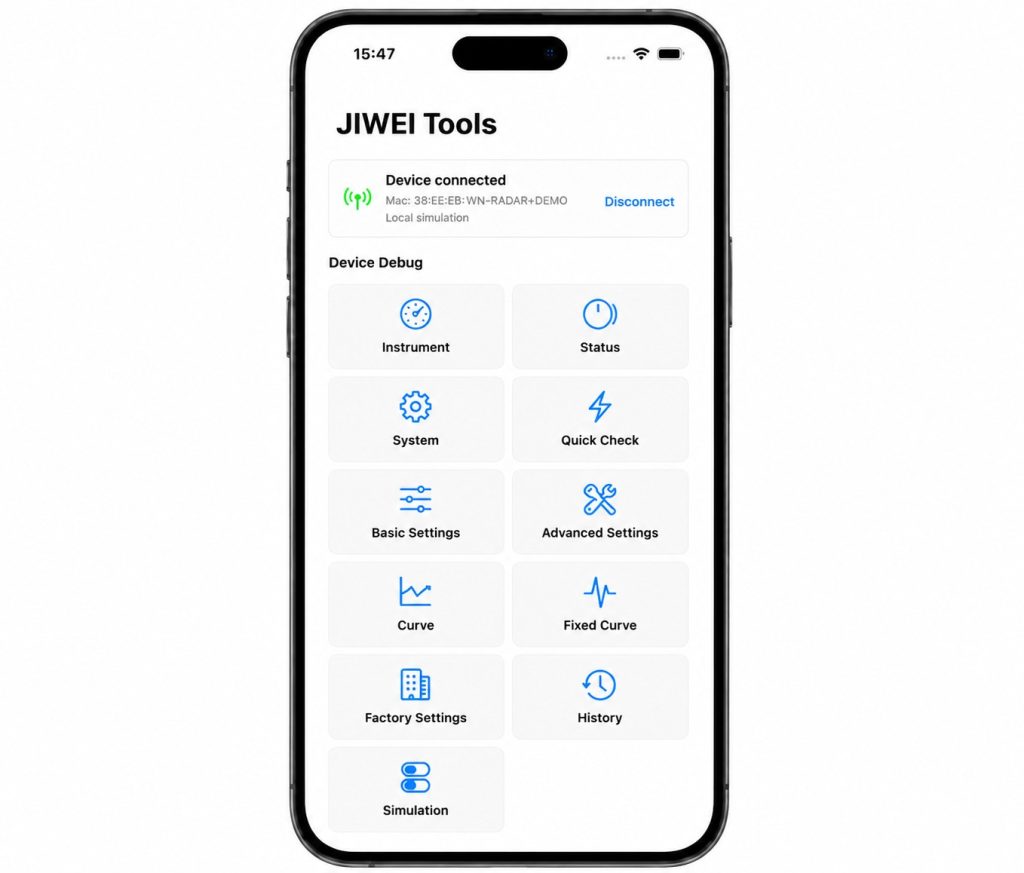
Bluetooth Wireless Commissioning
After installation, engineers can configure the instrument wirelessly via Bluetooth without opening the housing.
The Bluetooth interface supports:
- Parameter configuration
- Echo curve monitoring
- Range adjustment
- Diagnostic analysis
Wireless commissioning significantly improves maintenance efficiency while reducing the risks associated with working at height.
HART Communication Support
The radar level meter supports both 4–20 mA analog output and the HART communication protocol, allowing seamless integration into PLC and DCS systems for real-time monitoring, remote diagnostics, and intelligent process control.
Explosion-Proof Design for Industrial Safety
Coal slurry storage areas may be classified as hazardous locations.
The JWrada-34 is available with explosion-proof certifications suitable for hazardous environments, meeting the safety requirements of steel, metallurgy, power generation, and coal chemical industries.
Installation and Commissioning
To achieve optimal measurement performance, several installation practices were followed:
- Install the radar away from the filling inlet.
- Position the sensor away from the agitator shaft whenever possible.
- Avoid directing the radar beam toward ladders or reinforcing structures.
- Ensure the antenna is mounted perpendicular to the slurry surface.
- Configure the empty distance, full level, and blocking distance according to the tank dimensions.
Following installation, engineers completed parameter configuration and calibration using the Bluetooth interface.
The entire commissioning process was completed efficiently without repeatedly removing the instrument housing, substantially reducing startup time.
Operational Results
After continuous operation, the radar level meter delivered excellent performance.
Stable and Reliable Measurement
Even with continuous mechanical agitation, the measured level remained smooth and stable without significant fluctuations.
Accurate Measurement Through Foam
The radar successfully identified the actual slurry surface despite thick foam layers, effectively eliminating false alarms caused by foam accumulation.
Virtually Maintenance-Free Operation
Because the instrument operates without contacting the medium, there is no need to clean impulse lines or sensing elements regularly, greatly reducing maintenance workload and operating costs.
Improved Plant Automation
Stable level data are continuously transmitted to the DCS system, enabling:
- Automatic slurry replenishment
- Automatic pump control
- High- and low-level alarms
- Real-time inventory management
As a result, production efficiency and process reliability have both improved significantly.
Why More Steel Plants Are Choosing Radar Level Meters
As steel manufacturers continue advancing toward digitalization and intelligent manufacturing, the demand for reliable, high-performance level measurement solutions continues to grow.
Compared with traditional level measurement technologies, 80 GHz radar level meters offer several significant advantages:
- Non-contact measurement with minimal maintenance
- High measurement accuracy under complex conditions
- Excellent resistance to steam and foam
- Measurement unaffected by density variations
- Narrow beam angle suitable for tanks with internal obstacles
- Remote commissioning and intelligent diagnostics
- Easy integration into modern industrial automation systems
Consequently, 80 GHz radar level meters are increasingly becoming the preferred solution for measuring coal slurry, mineral slurry, lime slurry, and other high-viscosity process media across the steel industry.
Conclusion
Coal slurry level measurement remains one of the most challenging applications in steel production due to high viscosity, foam formation, continuous agitation, steam interference, and complex tank structures.
The JWrada-34 Radar Level Meter addresses these challenges through advanced 80 GHz FMCW radar technology, intelligent echo processing, non-contact measurement, high accuracy, and outstanding resistance to steam, foam, and process interference. With additional features such as HART communication, Bluetooth wireless commissioning, and explosion-proof construction, the instrument simplifies installation, reduces maintenance requirements, and enhances overall operational efficiency.
As the steel industry continues to embrace intelligent manufacturing and digital transformation, high-performance 80 GHz radar level meters will play an increasingly important role in challenging level measurement applications such as coal slurry, mineral slurry, and lime slurry storage. By providing accurate and reliable level data, they contribute to safer operation, improved production efficiency, optimized inventory management, and long-term process stability.