1. Project Background: Why Do Wineries Need More Reliable Level Measurement?
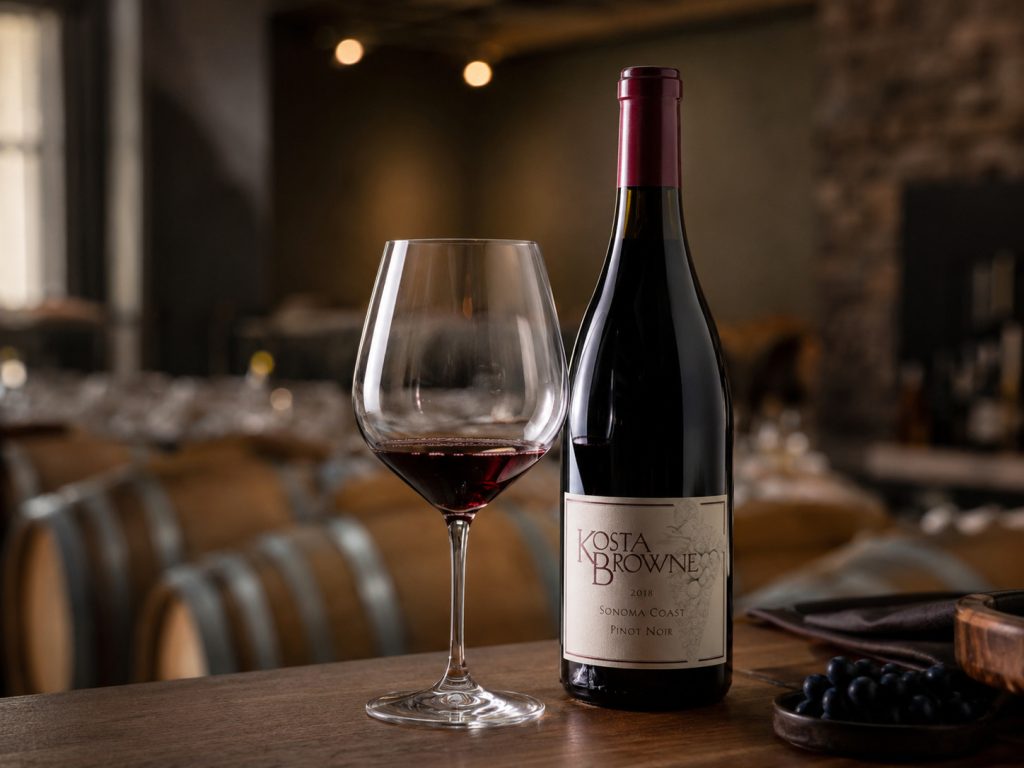
In modern wine production, level measurement is no longer just about knowing how much liquid remains in a tank. From grape crushing, pressing, clarification, fermentation, racking, aging, blending, and bottling, almost every process is closely related to level control. The accuracy of level data directly affects wine utilization, fermentation stability, storage tank safety, cleaning efficiency, and production scheduling.
During the expansion of an automated production line, a winery encountered several typical challenges. First, the winery had many fermentation tanks, making manual inspection time-consuming. Second, carbon dioxide bubbles and foam are generated during fermentation, and traditional contact-type level measurement methods are easily affected by material buildup, foam, temperature changes, and cleaning liquid residue. Third, stainless steel wine storage tanks and blending tanks require high hygienic standards, and the less the instrument contacts the medium, the better. Fourth, during CIP cleaning, high-temperature water, acid and alkali cleaning liquids, and steam environments place higher demands on instrument temperature resistance, corrosion resistance, and long-term stability.

Previously, some tanks in the winery used manual dip measurement, glass tube level gauges, or ordinary level switches for auxiliary indication. Although these methods could meet basic observation needs, they could not provide continuous level output or form a stable data loop with PLC, DCS, or MES systems. For key equipment such as fermentation tanks, storage tanks, buffer tanks, and CIP cleaning liquid tanks, the winery needed a continuous level measurement solution with high accuracy, low maintenance, low hygienic risk, easy commissioning, and remote diagnostic capability.
After evaluating the site conditions, the engineering team selected Jiwei JWrada® radar level meters for the winery’s fermentation, storage, and cleaning processes, building an intelligent level monitoring system based on 80GHz high-frequency radar measurement, the JIWEI Tools APP, and the cloud platform.
2. Application Conditions: Level Measurement Challenges in Wine Production
Level measurement in wineries may appear to be a standard liquid measurement application in the food and beverage industry, but actual working conditions are highly specific.
First, the liquid surface inside fermentation tanks is not always stable. During alcoholic fermentation, grape juice releases carbon dioxide, and the liquid surface may contain foam, gas bubbles, and slight fluctuations. In some red wine fermentation processes, grape skins, seeds, and pulp may float on the surface and form a “cap,” which can interfere with ordinary level instruments. If the instrument cannot effectively distinguish the true liquid surface from false echoes, the level data may fluctuate or jump.
Second, wine production has strict hygiene and safety requirements. Instruments that come into direct contact with wine may create problems such as cleaning difficulty, sterilization blind spots, residue buildup, and maintenance risks. For high-end wineries and large-scale wine producers, reducing direct contact between instruments and wine is an important way to lower contamination risks and maintain stable product quality.
Third, wineries often use many types of tanks with complex installation conditions. A winery may have fermentation tanks, clarified wine tanks, bulk wine tanks, blending tanks, buffer tanks, CIP acid and alkali tanks, hot water tanks, and wastewater tanks. These tanks differ in height, diameter, top structure, inlet position, agitation status, and process conditions. If each measuring point requires manual commissioning, efficiency will be low and parameter consistency will be difficult to guarantee.
Fourth, cleaning and maintenance costs can be high. Wineries frequently perform CIP cleaning, and cleaning liquids, hot water, steam, and acid-alkali environments can challenge instrument performance. If traditional instruments need frequent disassembly, cover opening, or on-site wiring for commissioning, downtime increases and maintenance in high, humid, or confined areas becomes less safe.
Therefore, wineries need more than a single level meter. They need an intelligent radar level measurement solution suitable for the food and beverage industry. Such a solution must be accurate, easy to install, convenient to commission, low-maintenance, and capable of adapting to foam, steam, cleaning processes, agitation, and multi-tank deployment.
3. Solution: Non-Contact Continuous Measurement with JWrada® Radar Level Meters
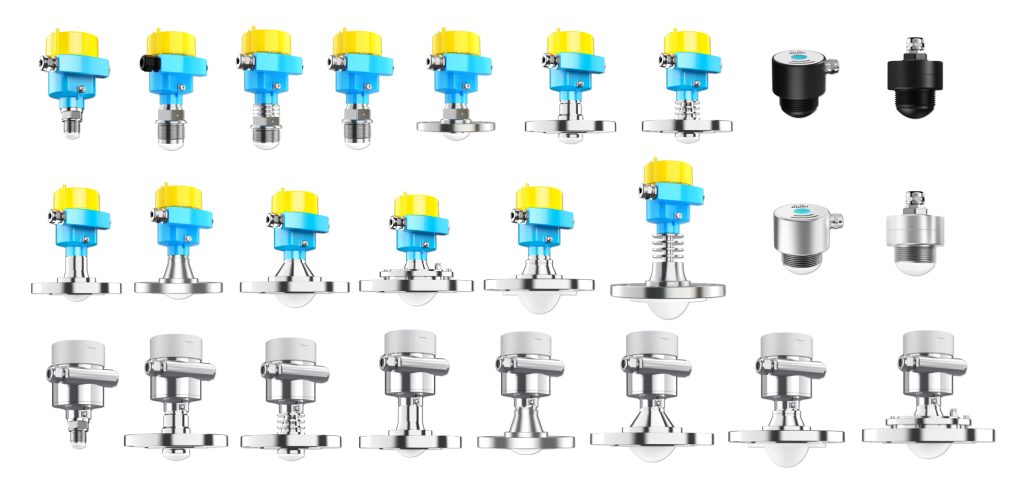
Based on the winery’s process characteristics, Jiwei recommended installing JWrada® series radar level meters on different vessels. For fermentation tanks, blending tanks, storage tanks, and other medium-range liquid measurement points, JWrada®-31 radar level transmitters can be selected. This model is suitable for continuous liquid measurement in food, pharmaceutical, energy, water treatment, and other industries. For points involving high temperature, steam, foam, corrosive cleaning liquids, or more complex conditions, JWrada®-34 level meters or JWrada®-35 level meters can be selected according to site requirements.
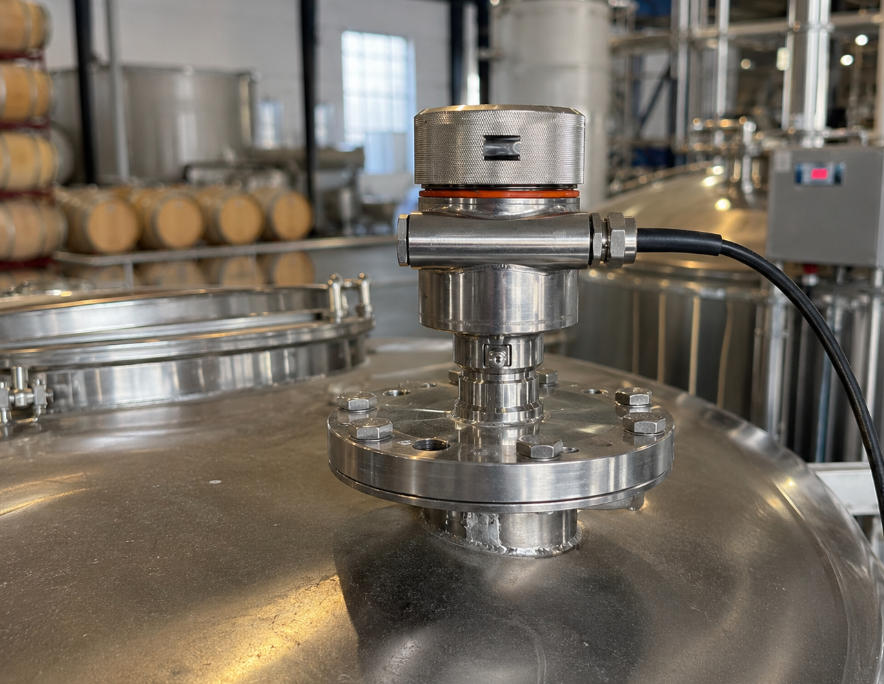
JWrada® radar level meters use 80GHz high-frequency millimeter-wave radar technology. The antenna emits electromagnetic waves toward the medium surface and receives reflected signals. Based on FMCW technology, the transmitter calculates the distance between the radar antenna and the liquid surface, then converts it into level height. Unlike contact-type measurement methods, radar level transmitters are installed on the tank top and do not need to be inserted into the wine or process liquid, helping avoid probe buildup, mechanical wear, and hygienic dead zones.
In winery applications, this non-contact measurement method is especially suitable for the following points.
First, continuous level monitoring of fermentation tanks. JWrada® radar level meters can be installed on the top of fermentation tanks to monitor the fermentation liquid level in real time, providing continuous data for fermentation control, racking operations, and overflow protection. Its intelligent echo processing capability helps identify interference caused by foam, bubbles, and internal tank structures, improving measurement stability.
Second, inventory management of wine storage tanks and clarified wine tanks. Wine often requires a long storage period, and tank level is directly related to inventory statistics, production scheduling, and bottling plans. Through 4–20mA/HART, RS485/Modbus, and other signal outputs, JWrada® radar level meters can transmit level data to automation systems for digital tank farm management.
Third, process control of blending tanks and buffer tanks. Before blending, transfer, and bottling, wineries need to accurately know the liquid level inside each tank to avoid pump dry running, overflow, or batch mixing errors. Radar level meters provide reliable data for pump start-stop control, valve interlocking, and batch management.
Fourth, level measurement in CIP cleaning liquid tanks, acid and alkali tanks, and hot water tanks. During CIP cleaning, liquid temperature, steam, and corrosive media place higher requirements on instruments. Models such as JWrada®-35 level meters provide enhanced resistance to high temperature, corrosion, and interference, helping wineries maintain stable level monitoring under complex cleaning conditions and optimize cleaning liquid replenishment and dosing control.
4. Advantage 1: Non-Contact Measurement Reduces Contamination and Maintenance Risks
Wine production places great importance on flavor stability and hygiene control. Any component that directly contacts wine may bring cleaning, sterilization, residue, and maintenance concerns. JWrada® radar level meters use non-contact measurement. The instrument is installed on the tank top and measures through electromagnetic waves without directly contacting grape juice, wine, or cleaning liquid.
This design brings three direct benefits.
First, it reduces contamination risks. Since the instrument does not extend into the wine, it helps reduce material buildup, crystallization, microbial residue, and cleaning blind spots, making it more suitable for food and beverage production.
Second, it lowers maintenance frequency. Traditional float level meters, guided wave radar instruments, or pressure-type level transmitters may require more maintenance due to material adhesion, density changes, or mechanical wear. Non-contact radar has no moving parts in contact with the liquid, making it suitable for long-term stable operation.
Third, it adapts well to multiple process media. Different stages in a winery may involve grape juice, fermenting must, bulk wine, clarified wine, blended wine, hot water, acid solution, alkali solution, and wastewater. Non-contact radar measurement is less affected by changes in medium density, viscosity, and certain process variations, reducing the need for recalibration when media change.
For wineries pursuing automation, hygiene, and refined management, non-contact radar level meters are not merely a replacement for manual observation. They upgrade level measurement from experience-based field judgment to continuous, stable, and traceable data management.
5. Advantage 2: 80GHz High-Frequency Technology Adapts to Foam, Steam, and Complex Tanks
During wine fermentation, foam and carbon dioxide bubbles are key factors affecting level measurement stability. Ordinary measurement methods may mistake foam for the liquid surface or produce unstable signals due to surface fluctuation. JWrada® radar level meters use 80GHz high-frequency millimeter-wave technology, offering a more focused beam and higher resolution. This helps obtain clearer echo signals in narrow tanks, complex top structures, and environments with multiple interferences.
In fermentation tank applications, a focused radar beam allows the instrument to better target the real liquid surface and reduce interference from tank walls, agitators, spray balls, inlet pipes, and internal supports. For winery conditions involving light foam, steam, or surface fluctuation, JWrada® radar level meters built-in intelligent echo processing algorithms help identify false echoes, separate multi-layer echoes, and dynamically track the target surface, improving the continuity and stability of level output.
In wine storage tank applications, the liquid surface is usually more stable, but the number of tanks is large and installation environments vary. Instrument consistency is therefore very important. 80GHz radar level meters provide high accuracy, strong signal-to-noise ratio, and flexible installation, meeting winery requirements for inventory level measurement, tank farm management, and batch traceability.
In CIP cleaning tank applications, high-temperature vapor, cleaning liquid evaporation, acid-alkali corrosion, and foam may exist at the same time. Models such as JWrada®-35 radar level meters are designed for enhanced performance in steam, foam, high-temperature, and corrosive environments, helping wineries maintain stable level monitoring in demanding cleaning applications.
6. Advantage 3: Bluetooth Commissioning and JIWEI Tools APP Improve Field Efficiency
Winery tanks are usually distributed across fermentation workshops, storage tank farms, and CIP stations. Some instruments are installed on tank tops or elevated platforms. Traditional instrument commissioning often requires opening the housing, wiring, using a handheld communicator, or connecting a laptop. This process is time-consuming and increases risks associated with high-altitude work and humid environments.
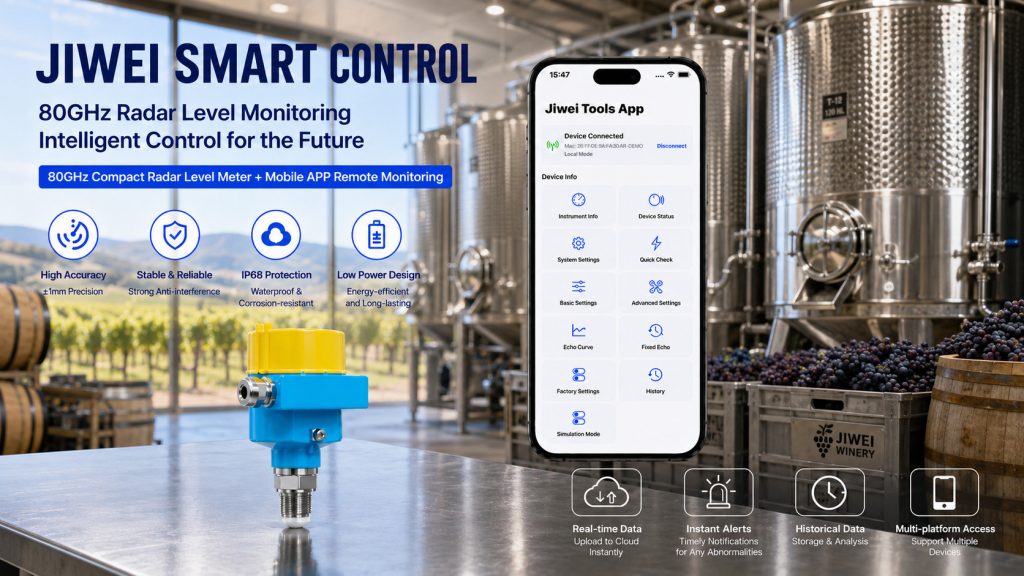
JWrada® radar level meters support Bluetooth wireless commissioning. Engineers can use the JIWEI Tools APP or Jiwei intelligent commissioning tools on smartphones or tablets to connect to the instrument, set parameters, configure ranges, view real-time levels, read diagnostic information, and monitor device status. For winery sites with multiple tank areas, this function significantly improves installation and commissioning efficiency.
For example, when deploying 20 fermentation tanks of the same type, engineers can first optimize the parameters of one instrument, including tank height, low level, high level, medium characteristics, output mode, and alarm logic. After stable verification, the APP can be used for parameter backup and duplication, allowing the same configuration to be quickly copied to other instruments on similar tanks. This reduces repeated input and lowers the chance of human error.
This “mobile commissioning + parameter duplication” method is especially suitable for winery expansion, technical renovation, and phased production projects. The winery does not need to prepare complicated tools for every commissioning task, nor does it need to repeatedly open instrument housings. Maintenance personnel can view current level, signal quality, device status, and diagnostic information from a safe distance, greatly improving the field operation and maintenance experience.
7. Advantage 4: Remote Diagnostics, Cloud Platform Support, and OTA Upgrades
One of the core competitive advantages of JWrada® radar level meters lie in Jiwei’s independently developed software ecosystem and intelligent commissioning platform. JWrada® radar level meters support not only conventional parameter settings, but also firmware updates, on-site commissioning, parameter configuration, diagnostic code viewing, remote commissioning, and OTA online upgrades. Combined with the JIWEI Tools APP and cloud platform, Jiwei engineers can remotely assist on-site personnel in analyzing radar echo curves and EFT curves to evaluate interference sources, echo quality, and instrument operating status.
For wineries, this capability is highly practical. During the fermentation season, production schedules are tight. Once level data becomes abnormal, on-site personnel need to quickly determine the cause. Is the fluctuation caused by foam? Is the installation angle incorrect? Is there interference from a spray ball? Are the parameters unsuitable? Or does the instrument require optimization?
Traditional troubleshooting usually depends on manufacturer engineers visiting the site, which can take longer and increase costs. It may also affect production progress. The JWrada® radar level meters remote commissioning platform allows on-site personnel to connect to the instrument via Bluetooth and share real-time data, echo curves, and diagnostic information with Jiwei engineers. Engineers can analyze the data remotely, assist in optimizing parameters, adjust algorithm strategies, or confirm the operating status of the device without repeated site visits.
More importantly, JWrada® radar level meters supports OTA online upgrades and firmware maintenance. As winery conditions change, tanks are modified, or new process requirements emerge, instruments do not have to remain limited to their factory configuration. Through software upgrades, they can continue to receive functional improvements and performance optimization. This turns the radar level transmitter from a single hardware device into an intelligent measurement system that is maintainable, optimizable, and continuously upgradeable.
At present, only a limited number of domestic manufacturers can provide cloud-based remote commissioning, mobile intelligent maintenance tools, independently developed algorithms, and a complete software upgrade ecosystem. Jiwei integrates Bluetooth communication, cloud platform, APP tools, and radar measurement technology, providing long-term value for food and beverage enterprises such as wineries with multiple measuring points, varied conditions, and strict hygiene requirements.
8. Field Implementation: Key Steps from Selection and Installation to Commissioning
In this winery application, the project was implemented in four main stages.
The first stage was condition confirmation. The engineering team classified fermentation tanks, wine storage tanks, blending tanks, and CIP tanks, recording tank height, diameter, top structure, mounting nozzle size, agitation status, spray ball position, temperature range, cleaning method, output signal, and protection requirements. Based on different working conditions, suitable JWrada® models were selected.
The second stage was installation position optimization. Radar level meters should not be installed directly above the inlet, as they may measure the incoming flow instead of the true liquid surface. For tanks with agitators or spray structures, instruments should be installed away from strong interference areas while ensuring that the antenna is aimed at the main liquid surface. For dome-top tanks, cone-bottom tanks, or irregular vessels, the installation position and measuring angle should be adjusted according to tank structure.
The third stage was Bluetooth commissioning. After installation, engineers connected to the devices through the JIWEI Tools APP and configured range, high and low levels, output mode, medium parameters, and echo learning settings. For tanks of the same type, parameter backup and duplication were used for batch configuration, improving overall commissioning efficiency.
The fourth stage was system verification. After JWrada® Level Meters output signals were connected to the PLC or upper-level control system, on-site tests such as water filling, liquid transfer, or simulated level changes were conducted to verify level display, alarm interlocks, pump and valve control, and data upload. For complex conditions such as fermentation tanks and CIP tanks, remote diagnostic functions can be used during early operation to further optimize parameters and ensure long-term stable performance.
9. Application Results: More Stable Level Data and Smarter Production Management
After JWrada® radar level meters were put into operation, the winery achieved improvements in several areas.
First, fermentation tank level monitoring became more continuous and stable. Non-contact radar measurement reduced the influence of foam, bubbles, material buildup, and cleaning residue, providing a more reliable data basis for fermentation control. Operators could monitor the level of each fermentation tank in real time and reduce manual tank inspections.
Second, wine storage tank inventory management became more refined. After level data was connected to the automation system, the winery could more accurately monitor the inventory status of bulk wine, clarified wine, and blended wine, supporting production scheduling, racking plans, and bottling arrangements.
Third, the CIP cleaning process became more controllable. With continuous level monitoring of cleaning liquid tanks, hot water tanks, and recovery tanks, the system could perform liquid replenishment, overflow prevention, and low-level protection based on level changes. This helped reduce cleaning liquid waste and improve CIP process safety.
Fourth, field commissioning and maintenance efficiency improved. Through Bluetooth commissioning with the JIWEI Tools APP, maintenance personnel no longer needed to frequently open housings or connect wires. They could quickly view instrument status, diagnostic information, and echo conditions. For multiple tanks of the same type, parameter duplication reduced repeated configuration time and improved parameter consistency.
Fifth, remote service capability was enhanced. When abnormal fluctuations occurred, the winery could collaborate with Jiwei engineers through the cloud platform to analyze the issue, identify the cause, and optimize settings quickly, reducing downtime and on-site service costs.
10. Why Is JWrada® Level Meters Suitable for Winery Level Measurement?
Overall, JWrada® radar level meters are suitable for winery applications for the following reasons.
First, they provide non-contact measurement suitable for the food and beverage industry. The instrument does not contact the wine, reducing contamination risks and maintenance workload while meeting winery requirements for hygiene and quality stability.
Second, 80GHz high-frequency radar technology adapts to complex conditions. Facing fermentation foam, CO₂ bubbles, steam, surface fluctuation, internal tank structures, and cleaning environments, JWrada® improves measurement reliability through high-frequency radar and intelligent echo algorithms.
Third, installation and commissioning are more efficient. Bluetooth wireless commissioning, APP-based parameter configuration, real-time monitoring, parameter backup, and batch duplication are highly suitable for multi-tank and multi-point deployment in wineries.
Fourth, remote diagnostic capability is strong. Through the JIWEI Tools APP and cloud platform, Jiwei engineers can remotely assist in analyzing echo curves, EFT curves, and diagnostic codes, helping users quickly locate problems and reduce field troubleshooting costs.
Fifth, the software ecosystem is independently developed and controllable. JWrada® Level Meter supports firmware updates, remote commissioning, OTA upgrades, and algorithm optimization. Measurement performance can be continuously improved according to actual site conditions. This software-hardware integration makes JWrada® Level Meters not just a radar level transmitter, but a level management system for smart factories.
11. Conclusion: Helping Wine Production Move from Experience-Based Management to Data-Based Management
Winemaking is an industry that combines craftsmanship, process experience, and modern engineering technology. Excellent wine depends not only on grape varieties, terroir, and winemaker expertise, but also on a stable, clean, and controllable production process. As a fundamental data source in process automation, level measurement is moving from traditional manual observation toward continuous, intelligent, and remote operation.
With 80GHz high-frequency radar, non-contact measurement, independently developed intelligent echo algorithms, Bluetooth wireless commissioning, the JIWEI Tools APP, cloud-based remote diagnostics, and OTA online upgrades, JWrada® radar level meters provide an efficient and reliable level measurement solution for fermentation tanks, wine storage tanks, blending tanks, CIP cleaning tanks, and other key winery equipment.
For wineries planning automation upgrades, choosing JWrada® radar level meters means choosing more than a high-accuracy level instrument. It means adopting a smarter, safer, and lower-maintenance production management approach. JWrada® level meters help wineries reduce manual inspection, improve level data accuracy, optimize inventory management, and ensure stable fermentation and cleaning processes. It supports the transition of wine production from experience-driven operation to data-driven management, providing a solid foundation for consistent product quality and digital factory upgrading.