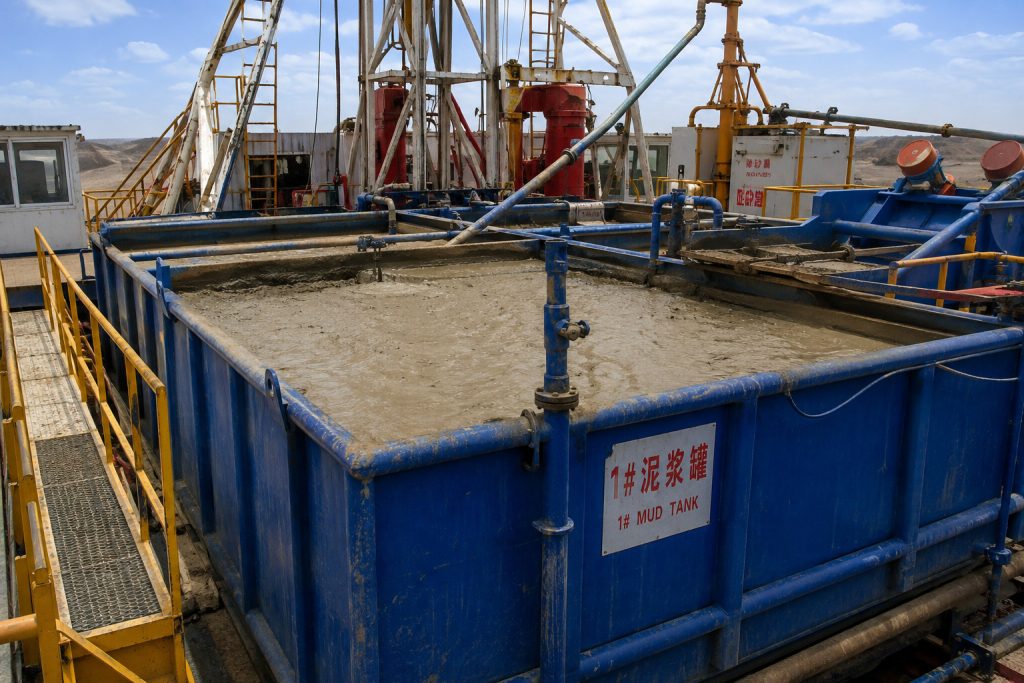
In oil and gas drilling operations, drilling mud (drilling fluid) plays a vital role in cooling and lubricating the drill bit, transporting cuttings to the surface, stabilizing the wellbore, and balancing formation pressure. As the core component of the drilling fluid circulation system, the drilling mud tank is responsible for storing, mixing, conditioning, and circulating drilling mud. Accurate and continuous level measurement within the mud tank is essential for ensuring operational safety, maintaining drilling efficiency, and enabling automated process control.
However, drilling mud presents a highly challenging measurement environment. Its high viscosity, high density, abrasive solid content, continuous agitation, and tendency to foam make conventional level measurement technologies susceptible to fouling, mechanical wear, and inaccurate readings. These issues often result in increased maintenance requirements, unreliable measurements, and unplanned downtime.
With the advancement of 80 GHz radar technology, radar level transmitters have become an ideal solution for drilling mud tank level measurement. Featuring non-contact operation, excellent resistance to harsh process conditions, minimal maintenance requirements, and superior performance in complex applications, radar level transmitters are increasingly adopted across the oil and gas industry.
Why Is Level Measurement Important in Drilling Mud Tanks?
A drilling mud circulation system typically consists of mud tanks, shale shakers, desanders, desilters, centrifuges, mud pumps, and associated processing equipment.
Within this system, mud tanks serve several critical functions:
- Storing drilling mud
- Providing buffer capacity for mud circulation
- Mixing and conditioning drilling fluids
- Adding chemicals and weighting materials
- Separating suspended solids
- Ensuring a continuous supply of drilling fluid
Reliable level monitoring is essential for:
- Preventing mud pumps from running dry
- Avoiding overflow and environmental contamination
- Enabling automatic mud replenishment
- Supporting centralized monitoring and control
- Improving drilling automation and operational efficiency
Stable level data also provides a reliable basis for process optimization and equipment protection throughout the drilling operation.
Challenges of Measuring Drilling Mud Tank Levels
Compared with conventional liquid storage tanks, drilling mud tanks operate under much harsher process conditions.
High Viscosity
Drilling mud typically contains bentonite, barite, polymers, and various chemical additives, resulting in significantly higher viscosity than ordinary liquids.
For contact-type level instruments, these materials easily adhere to probes or sensing elements, gradually affecting measurement accuracy and increasing maintenance frequency.
Continuous Agitation
Mud tanks are generally equipped with mechanical agitators and jet mixing systems that operate continuously.
Constant agitation produces:
- Turbulent liquid surfaces
- Surface waves
- Splashing
- Unstable reflections
A reliable level instrument must distinguish the true liquid surface from false echoes generated by turbulence and moving equipment.
Foam Formation
Foam is commonly generated during drilling operations due to continuous mixing and the presence of chemical additives.
Some conventional level measurement technologies may:
- Mistake foam for the liquid surface
- Fail to penetrate thick foam layers
This results in unstable or inaccurate measurements.
Heavy Contamination
Drilling mud contains abrasive particles and sticky solids that easily adhere to:
- Measuring probes
- Guide rods
- Floats
- Electrodes
Over time, these deposits reduce measurement reliability and require frequent cleaning and maintenance.
Complex Installation Environment
The top of a drilling mud tank often contains numerous structural components, including:
- Agitators
- Process piping
- Manways
- Chemical dosing ports
- Support beams
These structures create multiple unwanted reflections that can interfere with level measurements if the instrument lacks sufficient echo discrimination capability.
Why Choose an 80 GHz Radar Level Transmitter?
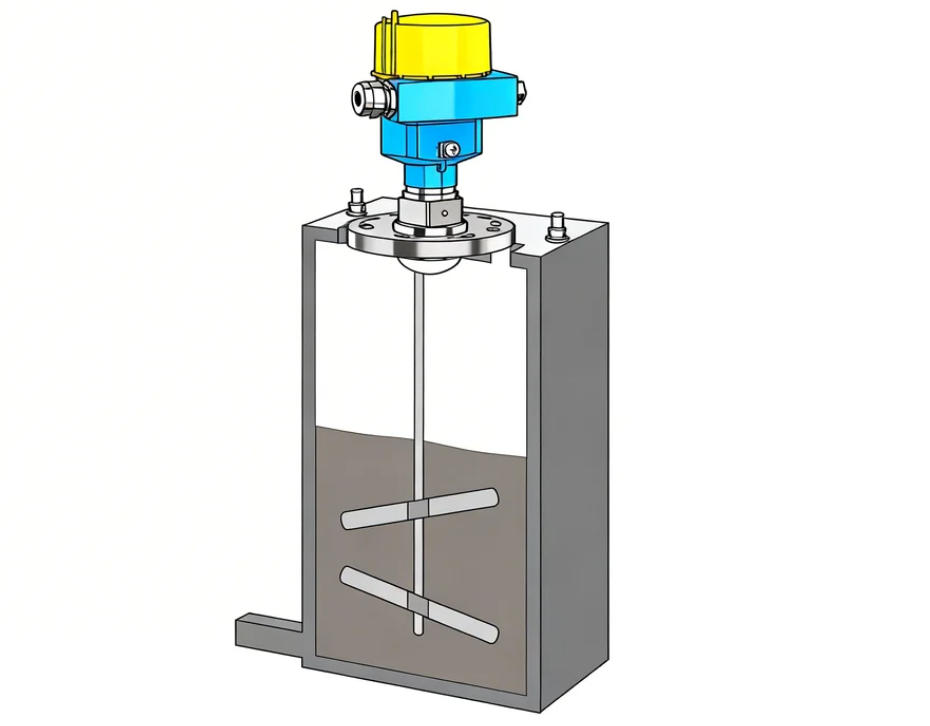
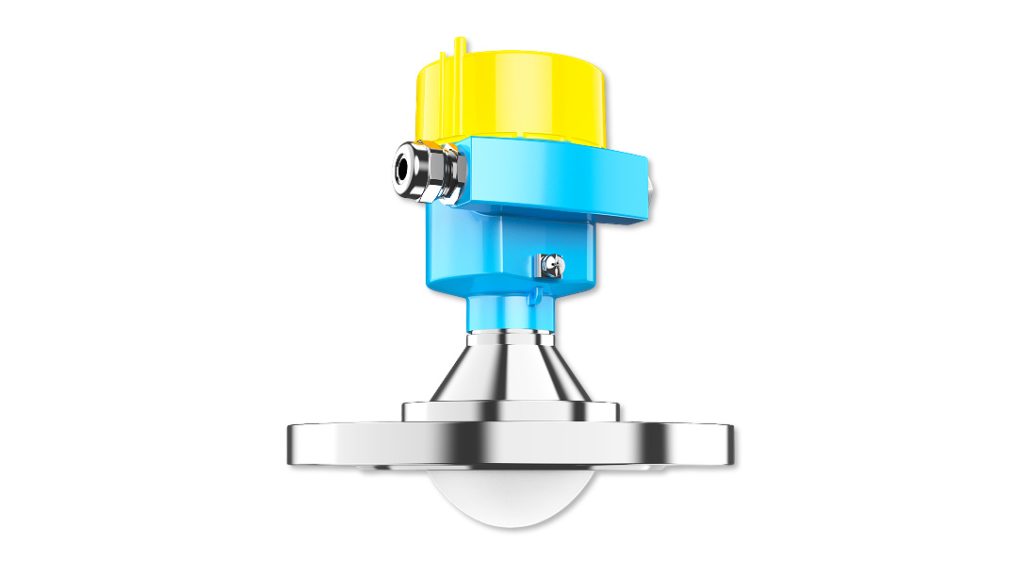
Modern 80 GHz radar level transmitters utilize high-frequency millimeter-wave technology to measure the distance between the antenna and the liquid surface.
The measurement process consists of five steps:
- The antenna emits a high-frequency radar signal.
- The electromagnetic wave travels toward the mud surface.
- The liquid surface reflects the signal.
- The reflected echo returns to the transmitter.
- The instrument calculates the distance based on the signal’s time of flight and converts it into an accurate level value.
Because the measurement is completely non-contact, the transmitter is not exposed to contamination, abrasion, or corrosion caused by drilling mud.
Advantages of Radar Level Transmitters in Drilling Mud Tanks
1. Non-Contact Measurement with Minimal Maintenance
The radar level transmitter is mounted on the top of the tank without contacting the drilling mud.
Since no sensing element is immersed in the process medium, it eliminates problems such as:
- Mud buildup on probes
- Float sticking
- Sensor corrosion
- Mechanical wear
As a result, maintenance requirements and operating costs are significantly reduced.
2. Immune to Changes in Mud Density
The density of drilling mud changes continuously as water, barite, and chemical additives are introduced during drilling operations.
Unlike some contact-based technologies, radar level transmitters measure the distance to the liquid surface rather than relying on density or pressure.
Consequently, measurement accuracy remains unaffected by variations in:
- Density
- Specific gravity
- Solid concentration
- Chemical composition
This makes radar technology particularly suitable for dynamic drilling applications.
3. Excellent Performance Under Continuous Agitation
Modern 80 GHz radar technology offers:
- Extremely narrow beam angles
- Highly concentrated microwave energy
- Superior echo resolution
These characteristics enable the transmitter to accurately identify the true liquid surface while effectively suppressing false echoes caused by turbulence, splashing, and mechanical agitation.
Stable measurement performance can therefore be maintained even under severe mixing conditions.
4. Strong Resistance to Contamination
The sticky nature of drilling mud often causes severe buildup on contact-type sensors.
Because radar transmitters operate without contacting the process medium, they are largely unaffected by mud adhesion.
Even in environments containing dust, vapor, or occasional mud splashing, advanced signal processing algorithms help ensure reliable and stable measurements.
5. Narrow Beam Angle Reduces Structural Interference
Drilling mud tanks contain numerous internal structures that can generate unwanted reflections, including:
- Agitator shafts
- Reinforcement ribs
- Ladders
- Internal piping
The narrow beam angle of an 80 GHz radar transmitter concentrates microwave energy directly onto the target surface, minimizing interference from nearby structures and improving measurement reliability.
6. High Measurement Accuracy
For continuous process control, measurement stability is often more important than absolute accuracy.
Modern 80 GHz radar level transmitters feature:
- Millimeter-level distance resolution
- High-sensitivity signal reception
- Advanced echo processing algorithms
- Intelligent false echo suppression
These capabilities provide stable, continuous level measurements for PLC, DCS, and SCADA systems, supporting reliable process automation.
Typical Drilling Mud Tank Application
A typical drilling mud tank application may include the following operating conditions:
| Parameter | Typical Value |
|---|---|
| Process Medium | Drilling Mud |
| Measurement Type | Continuous Level Measurement |
| Maximum Measuring Range | Approximately 10 m |
| Process Temperature | 0–90°C |
| Process Pressure | 0–5 bar |
| Primary Challenges | Continuous agitation, mud buildup, contamination, foam, structural interference |
Under these operating conditions, an 80 GHz non-contact radar level transmitter delivers reliable long-term performance while overcoming the limitations commonly associated with conventional measurement technologies.
Installation Recommendations
Proper installation is essential for achieving optimal measurement performance.
Avoid Installing Directly Above the Agitator
The radar beam should not be aimed directly at the agitator shaft or blades to minimize false reflections from moving mechanical components.
Keep Away from the Inlet
Installing the transmitter away from filling points reduces disturbances caused by incoming drilling mud.
Avoid Structural Obstructions
The radar beam should be positioned to avoid support beams, pipes, and other metallic structures that may produce unwanted echoes.
Observe the Instrument’s Blocking Distance
Sufficient clearance should be maintained between the antenna and the maximum liquid level according to the transmitter’s specifications.
Optimize Instrument Parameters
Functions such as false echo mapping, damping adjustment, and echo tracking should be configured according to actual site conditions to maximize measurement stability.
Comparison Between Radar Level Transmitters and Conventional Technologies
| Feature | Radar Level Transmitter | Guided Wave Radar | Ultrasonic Level Meter | Float Level Switch |
| Contact with Medium | No | Yes | No | Yes |
| Resistance to Agitation | Excellent | Moderate | Moderate | Poor |
| Resistance to Mud Adhesion | Excellent | Moderate | Good | Poor |
| Foam Immunity | Excellent | Moderate | Poor | Moderate |
| Maintenance Requirement | Low | Medium | Medium | High |
| Suitability for Drilling Mud | Excellent | Good | Fair | Not Recommended |
Among these technologies, the 80 GHz radar level transmitter provides the best overall performance for drilling mud tank applications, particularly where harsh process conditions and long-term reliability are critical.
Benefits of Radar Level Measurement
As the oil and gas industry continues to embrace digitalization and intelligent automation, continuous level monitoring has evolved from a simple measurement task into a key component of process control.
Radar level transmitters provide reliable real-time level data that supports:
- Automatic mud replenishment
- Drilling fluid circulation optimization
- Overflow prevention
- Dry-running protection for mud pumps
- Centralized DCS and PLC monitoring
- Remote diagnostics and predictive maintenance
- Improved operational safety and production efficiency
With their non-contact design, outstanding reliability, strong resistance to interference, and low maintenance requirements, 80 GHz radar level transmitters have become a preferred solution for drilling mud tank level measurement in onshore drilling rigs, offshore platforms, shale gas operations, and other demanding industrial applications.
Conclusion
Accurate level measurement in drilling mud tanks is challenging due to the high viscosity of drilling mud, continuous agitation, foam formation, contamination, and complex installation environments. Conventional contact-based level measurement technologies often struggle to maintain long-term stability under these demanding conditions.
By combining non-contact measurement, narrow beam technology, advanced echo processing, and excellent immunity to process interference, modern 80 GHz radar level transmitters provide reliable and continuous level measurement even in the harshest drilling applications.
As drilling operations become increasingly automated and intelligent, radar level transmitters will continue to play an essential role in improving process safety, reducing maintenance costs, enhancing operational efficiency, and supporting the digital transformation of the oil and gas industry.