1. Why Do Sugar Dissolving Tanks Need Stable Level Measurement?
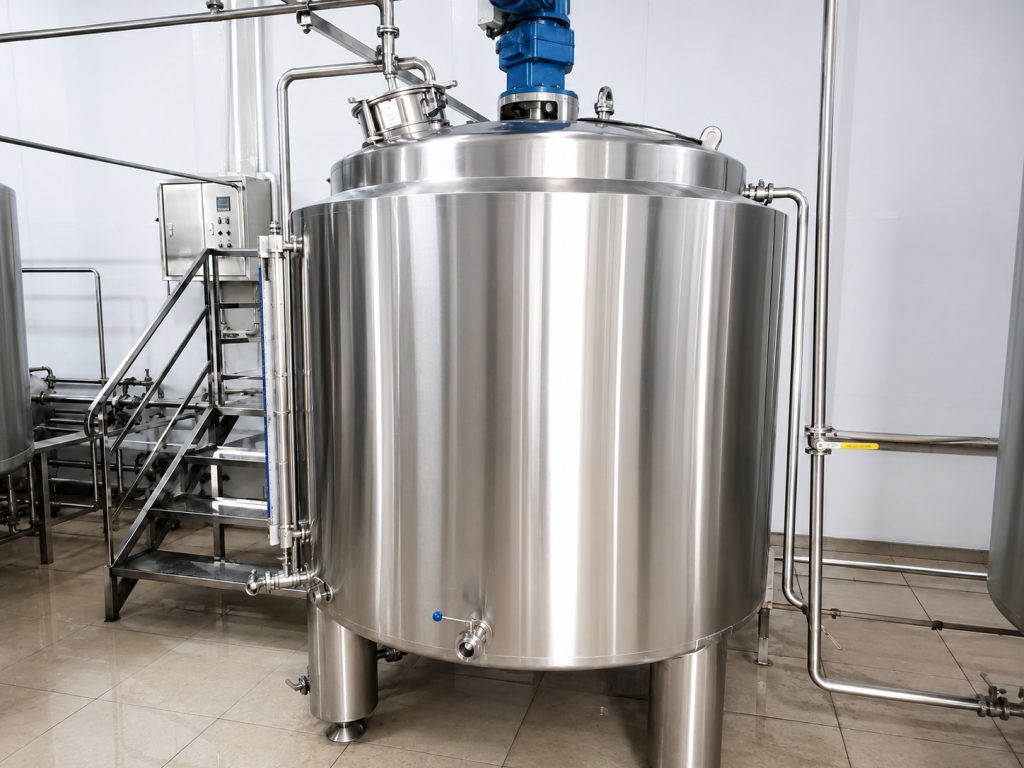
In sugar production, syrup refining and food processing, sugar dissolving tanks are essential process equipment. Raw sugar, recovered sugar or by-product sugar usually needs to be mixed with water and dissolved through heating and agitation to form a stable syrup before entering filtration, concentration, crystallization or refining processes. For continuous production systems, stable level measurement in sugar dissolving tanks directly affects material balance, production efficiency and product quality.
In real production environments, a sugar dissolving tank is not a simple static storage tank. Steam heating, continuous stirring, feeding and discharge flow, foam formation and syrup adhesion often occur at the same time. If the level data is inaccurate, it may lead to unstable feeding control, overflow, pump dry running, load fluctuation in downstream equipment, or even disruption of the entire production line.
Therefore, level measurement in sugar dissolving tanks is not only a basic monitoring task, but also a key part of automation control in the sugar industry. Choosing the right level meter can help enterprises improve level control accuracy, reduce manual inspection, and lower the risk of false alarms and shutdown maintenance.
2. What Are the Challenges of Level Measurement in Sugar Dissolving Tanks?
Sugar dissolving tanks have special operating conditions. Many conventional level meters may suffer from inaccurate measurement, signal fluctuation and frequent maintenance in this application. To solve the level measurement problem, it is important to understand the main interference factors on site.
2.1 High-Temperature Steam May Cause Signal Attenuation
During sugar dissolution, continuous heating is usually required, which produces a large amount of steam inside the tank. When steam condenses on the tank top, sensor surface or mounting nozzle, water droplets or condensate films may form. For some traditional measuring instruments, condensate can weaken signal strength, causing echo loss, measurement jumps or abnormal level display.
This problem becomes more obvious when there is a large temperature difference, limited tank-top space or poor ventilation. If the instrument is exposed to steam and condensation for a long time, measurement stability may decrease and maintenance frequency may increase.
2.2 Foam Coverage May Cause False Level Readings
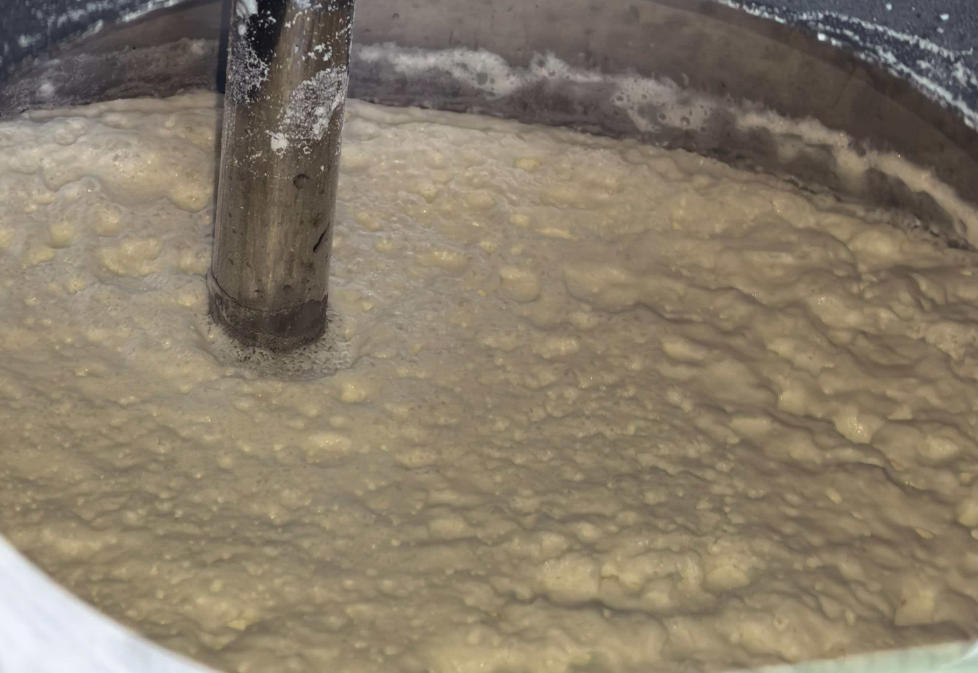
Syrup can easily generate foam during agitation, heating and circulation, especially when by-product sugar re-enters the system or material composition changes. The foam layer may become thick and cover the real liquid surface, making it difficult for some level measurement technologies to identify the true liquid level.
If the instrument mistakenly identifies the foam surface as the liquid surface, the measured value may be too high. If the signal is strongly absorbed or scattered by foam, the measurement may become unstable. In sugar production systems with multiple tanks working together, this type of error can further affect automatic control logic.
2.3 Syrup Is Viscous and Prone to Adhesion and Crystallization
Syrup has a certain viscosity and may form crystals or deposits when temperature or concentration changes. Contact-type level meters, float instruments or measuring devices with mechanical moving parts are prone to material buildup, scaling and sticking in this environment.
Once the probe or mechanical structure is covered by syrup, instrument response speed and measurement accuracy will be affected. In severe cases, shutdown, cleaning or disassembly may be required, increasing labor costs and production interruption risks.
2.4 Agitation and Continuous Flow Cause Surface Fluctuation
Sugar dissolving tanks usually operate continuously. Feeding, discharging, stirring and overflow can cause the liquid surface to fluctuate constantly. A dynamic liquid surface may generate complex echo signals. If the instrument does not have strong signal processing capability, the output data may fluctuate frequently.
For PLC, DCS or SCADA systems, unstable level data can affect the control of valves, pumps and interlocks, causing frequent adjustments and reducing production stability.
3. Why Do Traditional Level Meters Easily Fail in Sugar Dissolving Tanks?
In sugar dissolving tank applications, many enterprises have tried ultrasonic level meters, float level meters, submersible level transmitters, pressure transmitters and other contact-type instruments. However, under the combined influence of steam, foam, high viscosity and dynamic liquid surfaces, these solutions often have limitations.
Ultrasonic level meters are easily affected by steam, temperature gradients, foam and condensation, which may reduce signal propagation stability. Float instruments are simple in structure, but in syrup adhesion, crystallization and foam conditions, they may respond slowly or become stuck. Pressure-based level measurement does not depend on the tank-top space, but it can be affected by medium density changes, pipeline blockage, sediment and installation position.
Therefore, in complex working conditions such as sugar dissolving tanks, enterprises need a level measurement solution that does not directly contact the syrup, has strong anti-interference capability, requires low maintenance and is suitable for continuous operation. Radar level transmitters, especially high-frequency radar level transmitters, are an effective choice for solving these problems.
4. JWrada®-35 Radar Level Transmitter Solution
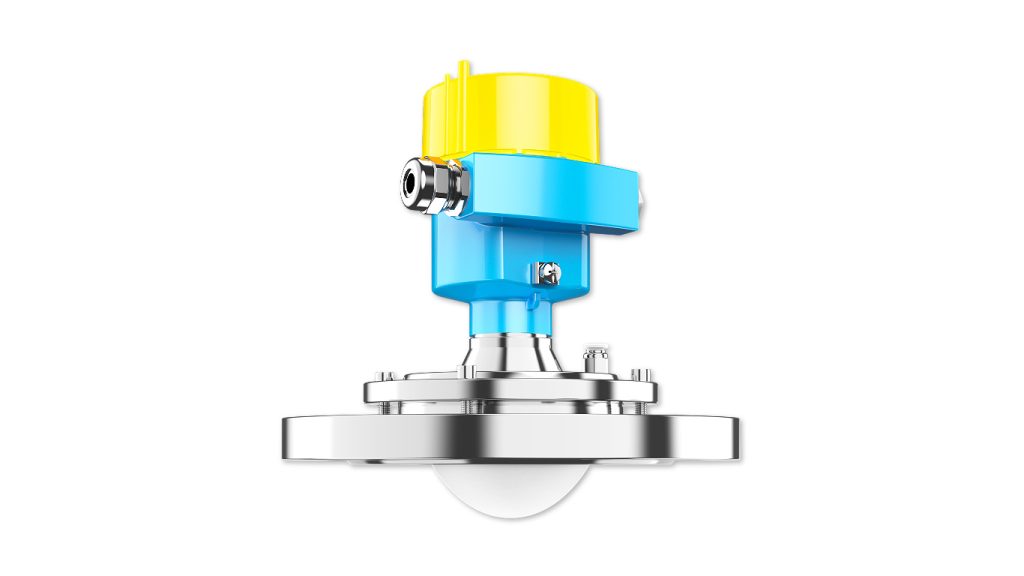
To address the level measurement challenges of sugar dissolving tanks, the JWrada®-35 radar level transmitter uses non-contact radar measurement. It transmits high-frequency radar waves toward the liquid surface and receives echo signals to calculate the distance from the instrument to the liquid surface, thereby providing real-time level data.
4.1 80GHz High-Frequency Radar for Complex Conditions
High-frequency radar level transmitters feature a narrow beam angle, concentrated energy and strong directivity. Compared with low-frequency radar or some traditional measurement methods, 80GHz radar can better focus on the target liquid surface in narrow tanks, complex internal structures and strong interference environments. It helps reduce interference from tank walls, agitator shafts, brackets, overflow structures and other internal components.
In sugar dissolving tanks, foam, steam and surface fluctuation often exist at the same time. High-frequency radar can better identify valid echoes and provide a stable signal foundation for continuous level measurement.
4.2 Non-Contact Measurement Reduces the Impact of Syrup Adhesion
The JWrada®-35 radar level transmitter is installed on the tank top or another suitable measuring position. The sensor does not need to be inserted into the syrup, and there are no floats, guide rods or cables in long-term contact with the medium. This non-contact design fundamentally reduces problems caused by syrup adhesion, crystallization, buildup and mechanical sticking.
For sugar manufacturers, the value of non-contact measurement is reflected not only in measurement stability, but also in maintenance efficiency. The instrument does not need frequent disassembly or cleaning, which helps reduce labor workload, minimize shutdown maintenance and improve continuous operation.
4.3 Intelligent Echo Algorithm Identifies the Real Liquid Surface
Inside a sugar dissolving tank, there may be agitators, overflow structures, tank wall reflections and foam echoes. The signal received by the instrument is not always a single and clear liquid surface echo. Therefore, the algorithm capability of the radar level transmitter is very important.
With intelligent echo processing and dynamic target tracking, JWrada®-35 can identify and suppress fixed interference signals while extracting level information that is closer to the real liquid surface from multiple echoes. For applications with obvious liquid surface fluctuation and changing foam layers, this signal processing capability helps reduce data jumps and improve output stability.
4.4 Bluetooth Commissioning Improves On-Site Maintenance Safety
Sugar dissolving tanks are often installed on platforms, in high-position tank areas or inside production units. On-site commissioning may involve climbing, opening covers or approaching high-temperature equipment. If the instrument supports Bluetooth wireless commissioning, maintenance personnel can complete parameter configuration, echo monitoring and status diagnosis from a safer position.
JWrada®-35 supports wireless communication for remote parameter setting, echo monitoring and fault diagnosis, helping improve on-site operation safety and maintenance efficiency.
5. Application Value of Radar Level Transmitters in Sugar Dissolving Tanks
5.1 Improving Level Measurement Stability
After the sugar dissolving tank level data becomes stable, the control system can more accurately determine the material status inside the tank. This reduces false actions caused by signal fluctuation. For processes where multiple dissolving tanks operate in sequence, stable level data helps achieve smoother continuous feeding and discharging control.
5.2 Reducing False Alarms and Shutdown Risks
In environments with foam coverage or steam condensation, traditional instruments may produce false levels or lose signals, triggering unnecessary alarms. Radar level transmitters use non-contact measurement and intelligent signal processing to reduce false alarm probability and unnecessary manual intervention.
5.3 Reducing Cleaning and Maintenance Workload
Syrup adhesion and crystallization are common problems in sugar plants. A non-contact radar level transmitter does not directly touch the syrup, reducing maintenance pressure caused by probe scaling and mechanical sticking. This is especially suitable for continuous production and applications with limited maintenance windows.
5.4 Supporting Automation Upgrades in Sugar Production
As the sugar industry moves toward automation, digitalization and refined management, field instruments need to do more than simply measure. They must provide stable and continuous data that can be used for process control. The JWrada®-35 radar level transmitter can provide reliable level signals for PLC, DCS or remote monitoring systems, helping enterprises optimize production processes and improve management efficiency.
6. Selection Points for Radar Level Transmitters in Sugar Dissolving Tanks
When selecting a level meter for a sugar dissolving tank, users should not focus only on measuring range and price. The process environment, tank structure and control requirements should also be considered.
First, confirm the tank height, installation position and measuring range. The radar level transmitter should avoid obvious obstacles and ensure that the radar beam can stably reach the target liquid surface.
Second, evaluate foam and steam conditions. If thick foam, high-temperature steam or obvious condensation exist for a long time, a high-frequency radar level transmitter is recommended, together with optimized installation position and parameter settings.
Third, consider syrup viscosity, temperature and crystallization characteristics. For media that easily adhere and crystallize, non-contact radar is usually more suitable for long-term operation than contact-type instruments.
Fourth, confirm the output signal and system interface. Common requirements include 4-20mA, HART, RS485, Modbus or other industrial communication methods. The selection should match the PLC, DCS or monitoring system on site.
Fifth, pay attention to commissioning and maintenance methods. Radar level transmitters that support local display, Bluetooth commissioning, echo curve viewing and fault diagnosis are more convenient for engineers during installation and maintenance.
7. Installation Precautions for Radar Level Transmitters
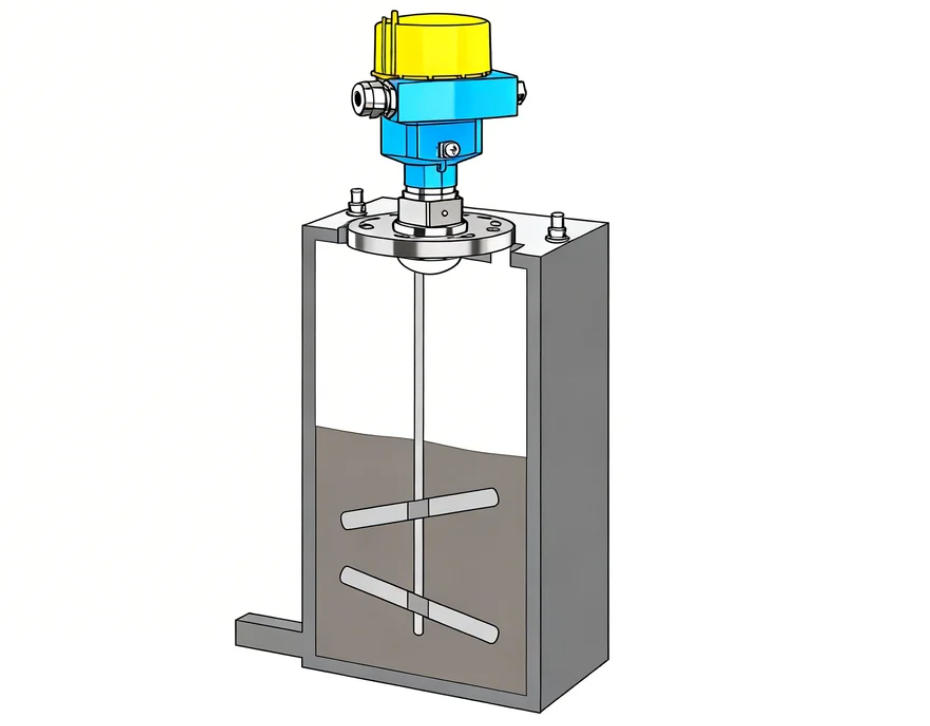
When installing a radar level transmitter on a sugar dissolving tank, avoid the feed inlet, the area directly above the agitator, the tank wall edge and positions with strong reflections from internal structures. The installation angle should be reasonable to prevent the radar beam from directly hitting the tank wall or fixed obstacles.
If there is a mounting nozzle on the tank top, pay attention to the nozzle length, diameter and internal smoothness. An unsuitable nozzle may cause strong reflections or condensate accumulation. For applications with heavy steam, anti-condensation measures can be taken according to site conditions to keep the antenna and mounting structure in good condition.
During commissioning, it is recommended to view the echo curve and optimize parameters according to signal performance under empty tank, normal operation, foam coverage and stirring conditions. For multiple similar sugar dissolving tanks, a standard parameter template can be created to improve installation and maintenance efficiency.
8. FAQ
8.1 Can Radar Level Transmitters Be Used in Sugar Dissolving Tanks?
Yes. Sugar dissolving tanks often involve foam, steam, adhesion and liquid surface fluctuation. High-frequency radar level transmitters use non-contact measurement and are well suited for continuous level monitoring in these working conditions.
8.2 Will Syrup Foam Affect Radar Level Measurement?
Foam can interfere with level measurement, but high-frequency radar level transmitters with suitable antennas and intelligent echo algorithms can better distinguish foam interference from real liquid surface echoes, improving measurement stability.
8.3 Why Are Contact-Type Level Meters Not Recommended for Sugar Dissolving Tanks?
Syrup is adhesive and can easily form deposits, crystals and buildup on contact probes, floats or mechanical structures. After long-term operation, this may cause measurement errors, mechanical sticking and higher maintenance workload.
8.4 Does a Radar Level Transmitter Need Frequent Cleaning?
A non-contact radar level transmitter does not directly contact the syrup, so maintenance is generally low. However, in sites with severe steam condensation or heavy dust, regular inspection of the mounting opening, antenna surface and wiring status is still recommended.
8.5 What Food Industry Applications Is JWrada®-35 Suitable For?
In addition to sugar dissolving tanks, JWrada®-35 can also be used, depending on site conditions, for syrup tanks, dissolving tanks, mixing tanks, storage tanks, fermentation tanks and cleaning liquid tanks in food processing applications.
9. Conclusion: High-Frequency Radar Level Transmitters Are a Reliable Choice for Sugar Dissolving Tank Level Measurement
The main challenge of sugar dissolving tank level measurement lies in complex working conditions. Steam condensation, foam coverage, syrup adhesion, crystallization, scaling and dynamic liquid surfaces can all affect the stability of traditional level instruments. If the measurement data is inaccurate, it may affect not only the operation of a single tank, but also downstream process control and the continuity of the entire production line.
With 80GHz high-frequency radar, non-contact measurement, intelligent echo recognition and Bluetooth wireless commissioning, the JWrada®-35 radar level transmitter provides a stable, accurate and low-maintenance level measurement solution for sugar dissolving tanks. It helps sugar manufacturers reduce false alarms, lower maintenance costs, improve level control stability and provide reliable data for production automation and digital upgrades.
For users looking for sugar dissolving tank level measurement, syrup level meters, radar level transmitters for the sugar industry or level measurement solutions for foaming conditions, comprehensive selection should be based on tank structure, medium characteristics, foam thickness, steam conditions, output signal and installation environment. Only by choosing a radar level transmitter suitable for the actual working conditions can long-term stable, accurate and reliable level monitoring be achieved.