
In the food, beverage, dairy, pharmaceutical, biotechnology, and fine chemical industries, level measurement is not only related to production efficiency. It can also directly affect product hygiene, cleaning effectiveness, and overall process reliability.
On storage tanks, mixing tanks, fermentation vessels, and process containers used in these industries, a process connection that looks quite different from conventional threaded or flanged connections is commonly found: the sanitary clamp connection, also known as a hygienic clamp connection.
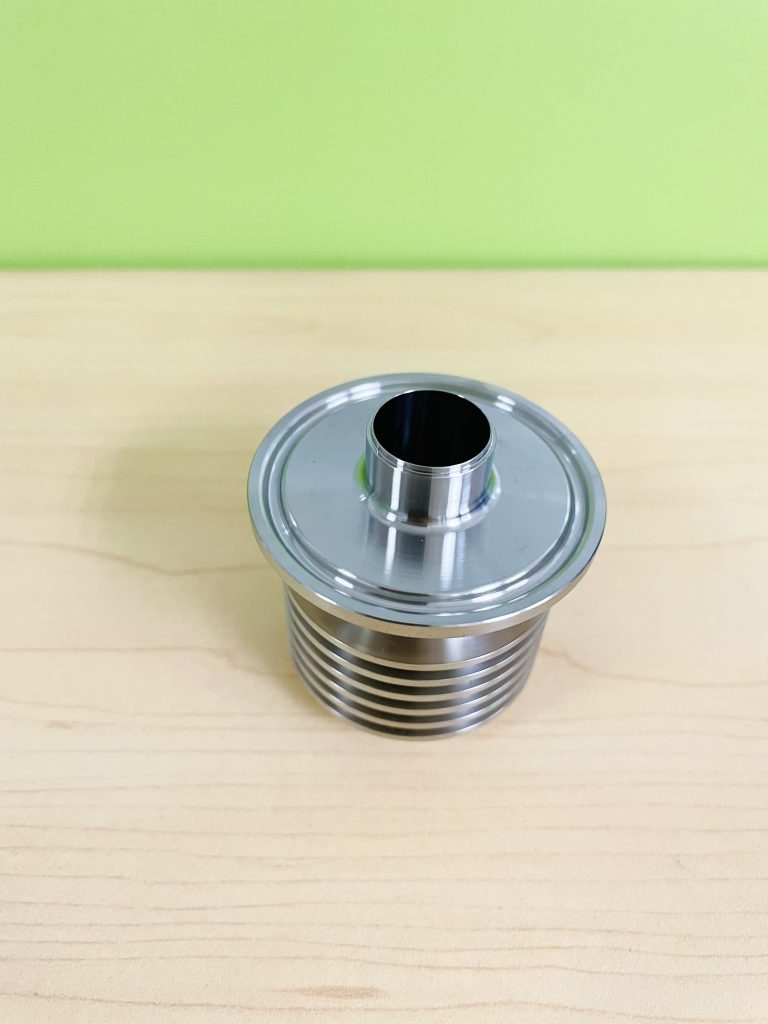
When radar level transmitters, level switches, hydrostatic level transmitters, and other process instruments are equipped with sanitary clamp connections, they can be installed and removed quickly while helping reduce areas where product residue may accumulate.
For this reason, sanitary clamp connections have become one of the most common process connection options for hygienic level measurement in food, beverage, dairy, and pharmaceutical applications.
So, what exactly is a sanitary clamp? Why do so many hygienic level instruments use clamp connections? And what should engineers consider when selecting one?
This article explains sanitary clamp connections from the perspective of practical level measurement applications.
1. What Is a Sanitary Clamp?
A sanitary clamp is a mechanical connection used to join hygienic pipes, tanks, valves, fittings, and process instruments.
In English technical literature, you may see several related terms:
- Sanitary Clamp
- Hygienic Clamp
- Tri-Clamp
- Tri-Clover Clamp
- Sanitary Tri-Clamp Connection
A typical sanitary clamp assembly generally consists of:
Two sanitary ferrules + one hygienic gasket + one clamp
The sealing faces of the two ferrules are aligned, with a sanitary gasket positioned between them. The clamp then holds the two ferrules together and applies the required compression to create a secure process seal.
Compared with conventional threaded connections, one of the major advantages of sanitary clamp connections is their simple construction and quick disassembly.
They are also easier to clean, which explains why they are widely used in food processing, dairy, beverage, pharmaceutical, and biotechnology production lines.
For level instrumentation, the sanitary clamp performs an important function:
It provides a secure connection between the level instrument and the tank or process vessel while supporting hygienic process design.
2. Why Do Level Instruments Use Sanitary Clamp Connections?
In general industrial level measurement applications, common process connections include:
- G threads
- NPT threads
- Flanges
- Welded connections
These connection types are widely used in chemical processing, water treatment, wastewater treatment, environmental engineering, and many other industries.
However, food and pharmaceutical processes have different requirements.
Consider a milk storage tank.
If the process connection of a level instrument contains deep threads, narrow gaps, cavities, or areas that are difficult to clean, milk, syrup, proteins, or other process media may remain trapped in these locations.
Over time, these residues may become a hygiene risk.
Therefore, hygienic process design is not concerned only with the question:
“Can the instrument measure accurately?”
It must also address another important question:
“Can the instrument and its process connection be cleaned effectively after installation?”
A properly designed sanitary clamp connection uses relatively smooth sealing surfaces and can help minimize unnecessary gaps, threads, and difficult-to-clean dead spaces.
It can also be disconnected quickly when inspection or maintenance is required.
This is why sanitary clamp connections are widely used with:
- Hygienic radar level transmitters
- Sanitary pressure and hydrostatic level transmitters
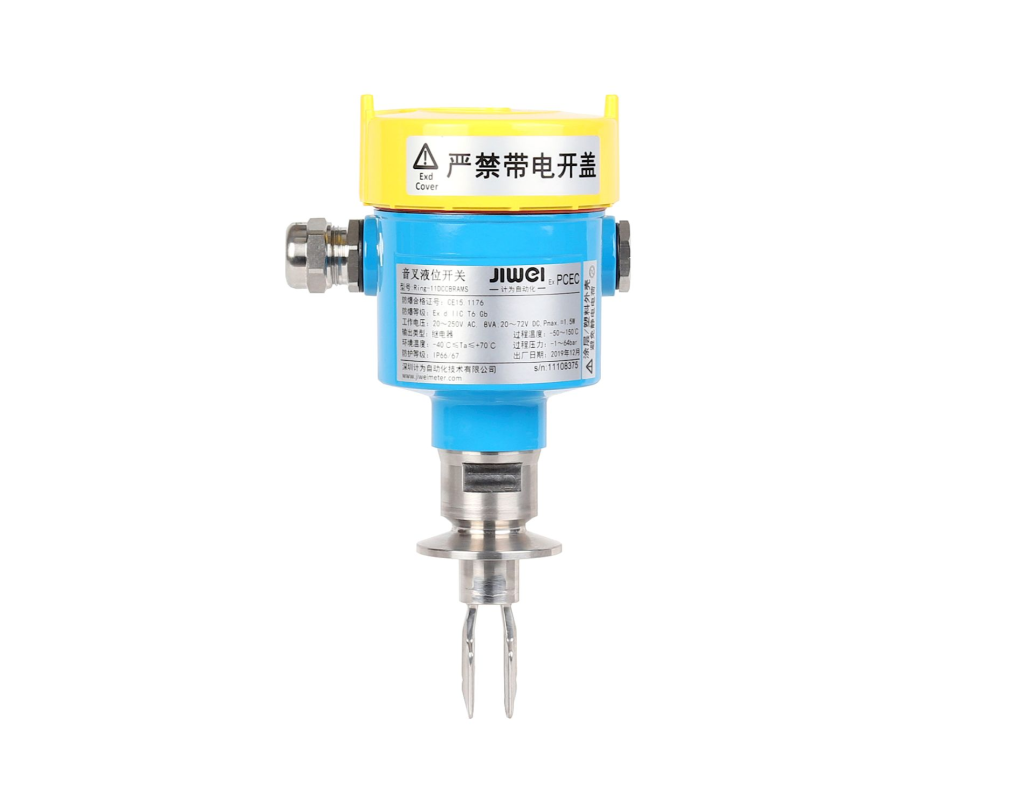
- Hygienic level switches
- Point level sensors
3. What Is the Difference Between a Sanitary Clamp and an Ordinary Clamp?
A common misunderstanding among users who are new to hygienic instrumentation is:
“If a clamp is made of stainless steel, it must be sanitary.”
That is not necessarily true.
The term sanitary or hygienic does not refer only to appearance or material.
A process connection intended for food, pharmaceutical, or biotechnology applications must typically consider several factors, including:
- Wetted materials
- Surface finish
- Mechanical design
- Gasket material
- Cleanability
- Drainability
- Hygienic standards and certifications
For example, the wetted parts of a sanitary level transmitter are often manufactured from stainless steel suitable for the process and finished to a higher surface quality than standard industrial components.
The sealing structure should also be designed to minimize crevices and areas where product residues can accumulate.
Therefore, when selecting a sanitary level transmitter, it is not enough to ask:
“Is it 304 or 316L stainless steel?”
Engineers should also confirm:
- What is the wetted material?
- What is the surface roughness?
- What gasket material is used?
- Which sanitary clamp standard is followed?
- Is the instrument suitable for CIP cleaning?
- Is it suitable for SIP sterilization?
- Are certifications such as 3-A or EHEDG required?
For food and pharmaceutical applications, these parameters can be just as important as the nominal clamp size.
4. Why Are Sanitary Clamp Connections Suitable for Food and Pharmaceutical Applications?
4.1 Quick Installation and Removal
Traditional flange connections normally require several bolts.
If equipment needs to be removed frequently for cleaning, inspection, or maintenance, technicians must loosen and tighten each bolt individually.
Sanitary clamp connections are much simpler.
Once the clamp is released, the two ferrules can usually be separated quickly.
This makes sanitary clamps particularly suitable for equipment requiring regular inspection, cleaning, or instrument replacement.
For level instruments installed on:
- Mixing tanks
- Dairy tanks
- Beverage tanks
- Pharmaceutical vessels
- Processing skids
this can significantly simplify maintenance.
4.2 Easier Cleaning
Hygienic process design pays close attention to the concept of dead spaces or dead legs.
These are areas where process media can enter but where cleaning fluids may not circulate, reach, or drain effectively.
If syrup, dairy products, protein solutions, pharmaceutical liquids, or other media remain in these areas for extended periods, contamination risks may increase.
A properly designed sanitary clamp connection helps reduce unnecessary threads, recesses, and complex internal geometries, making the process connection easier to clean.
4.3 Suitable for CIP Cleaning
Many food and beverage production lines use CIP — Clean-in-Place systems.
CIP allows piping, tanks, valves, and instrument wetted surfaces to be cleaned by circulating cleaning fluids without completely dismantling the equipment.
Therefore, a level instrument installed in a CIP system must not only provide reliable level measurement during normal operation.
It must also be able to withstand cleaning conditions such as:
- Elevated cleaning temperatures
- Acid or alkaline cleaning chemicals
- Pressure changes
- Thermal shock
- Repeated cleaning cycles
The sanitary process connection is therefore an important part of a CIP-compatible level measurement system.
4.4 Improved Maintenance Efficiency
For continuous production facilities, downtime can lead directly to production losses.
Because sanitary clamps can generally be disconnected faster than multi-bolt flange connections, they can reduce mechanical maintenance work during instrument inspection or replacement.
This advantage becomes even more significant in facilities operating dozens or hundreds of level instruments.
Standardized hygienic process connections can simplify spare parts management, installation, and long-term maintenance.
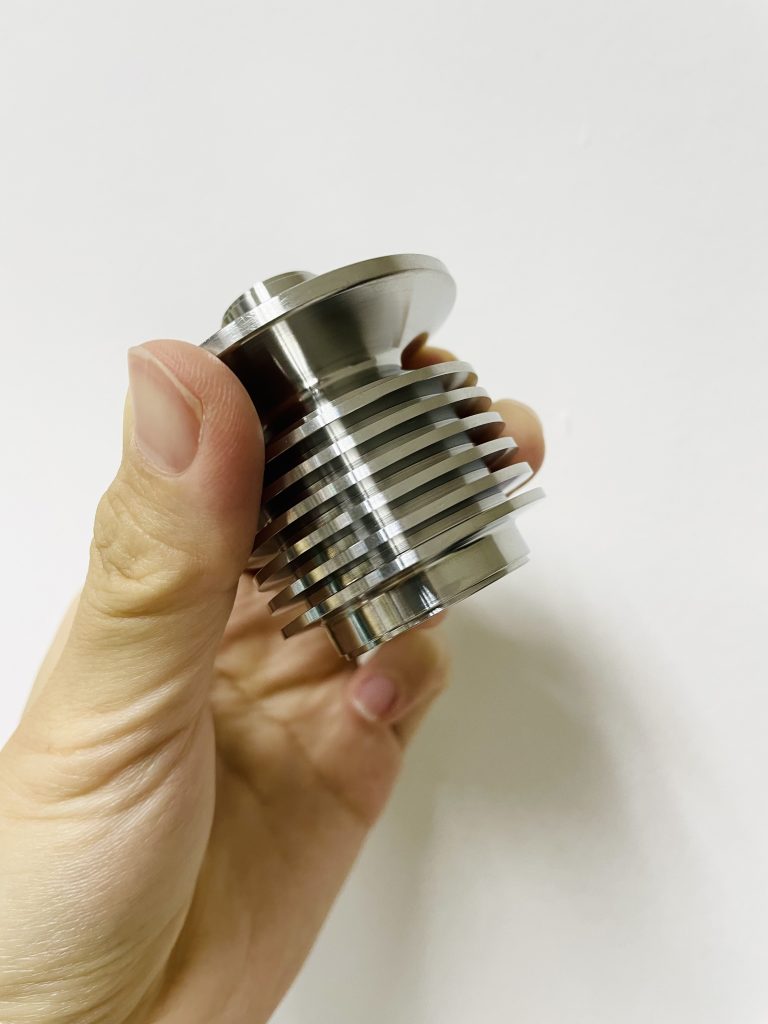
5. Which Level Instruments Commonly Use Sanitary Clamp Connections?
A sanitary clamp is not limited to one type of level measurement technology.
Many different level instruments used in hygienic processes can be supplied with sanitary process connections.
Hygienic Radar Level Transmitters
Radar level transmitters determine level by transmitting electromagnetic waves toward the product surface and receiving the reflected signal.
Because radar measurement can be non-contact, it is especially suitable for many hygienic storage and process vessels.
Typical applications include:
- Milk storage tanks
- Beverage tanks
- Juice tanks
- Syrup tanks
- Mixing tanks
- Fermentation tanks
- Pharmaceutical liquid tanks
- Purified water tanks
A sanitary clamp connection allows a radar level transmitter to be integrated more easily into hygienic process equipment.
Hygienic Pressure and Hydrostatic Level Transmitters
Liquid level can also be calculated from the hydrostatic pressure generated by the liquid column.
Because pressure-based level transmitters normally come into direct contact with the process medium, hygienic construction is particularly important.
In food and pharmaceutical applications, flush diaphragm pressure transmitters with sanitary clamp connections are commonly used to reduce the potential dead spaces associated with conventional pressure ports.
Vibrating Fork Level Switches
Vibrating fork level switches are commonly used for:
- High-level alarms
- Low-level alarms
- Overfill protection
- Pump dry-run protection
Sanitary clamp versions are frequently used on food, beverage, dairy, and pharmaceutical processing equipment.
Capacitive Level Switches
Capacitive level switches may also be equipped with hygienic process connections for detecting liquids, pastes, slurries, or powders.
Therefore:
A sanitary clamp is a type of process connection, not a level measurement principle.
6. What Are the Common Sanitary Clamp Sizes?
Common sanitary clamp sizes used with level instruments may include:
- 1″
- 1.5″
- 2″
- 2.5″
- 3″
- 4″
Among these, 1.5-inch and 2-inch sanitary clamp connections are commonly encountered in hygienic instrumentation.
However, there is one very important point:
Two connections described as the same nominal size are not automatically interchangeable.
Different sanitary standards may use different:
- Nominal pipe sizes
- Tube outside diameters
- Ferrule dimensions
- Clamp flange diameters
- Gasket geometries
Common hygienic process connection standards may include:
- ISO 2852
- DIN 32676
- ASME BPE
- Manufacturer-specific hygienic connection systems
Therefore, before purchasing a sanitary level transmitter, it is better to verify the exact process connection rather than simply telling the supplier:
“I need a 2-inch sanitary clamp.”
A more reliable specification should include:
Connection standard + nominal size + actual ferrule dimensions + gasket requirements
This can significantly reduce the risk of receiving an instrument that cannot be installed on the existing tank connection.
7. What Materials Are Used for Sanitary Clamp Connections?
Common stainless steel materials used in hygienic process equipment include:
- 304 stainless steel
- 316L stainless steel
For the wetted parts of sanitary level instruments, 316L stainless steel is particularly common.
However, material selection should not be simplified to:
“316L is suitable for every process.”
The actual selection should consider:
- Process medium composition
- pH
- Operating temperature
- CIP cleaning chemicals
- Cleaning chemical concentration
- Chloride content
- SIP or high-temperature sterilization
- Exposure time
- Corrosion conditions
If the process medium or cleaning chemicals are highly corrosive, material compatibility should be evaluated carefully.
8. Why Is the Sanitary Gasket So Important?
Although the clamp itself is the most visible part of the connection, one of the most important components for creating a reliable seal is the sanitary gasket.
Common sanitary gasket materials include:
- EPDM
- FKM
- PTFE
- Silicone
Each material has different characteristics in terms of:
- Temperature resistance
- Chemical resistance
- Elasticity
- Compression behavior
- Service life
Therefore, gasket selection must consider both the normal process medium and the cleaning medium.
For example, a level transmitter may normally measure a beverage product, while the tank is cleaned every day using alkaline or acidic CIP chemicals.
In this situation, the gasket must be compatible not only with the beverage but also with the cleaning chemicals.
Incorrect gasket selection may lead to:
- Swelling
- Hardening
- Cracking
- Loss of elasticity
- Leakage
- Reduced service life
For this reason, gasket material should never be ignored when specifying a hygienic level measurement system.
9. What Is the Relationship Between Sanitary Clamps, CIP, and SIP?
Two important terms frequently encountered in hygienic processing are:
CIP — Clean-in-Place
and
SIP — Sterilize-in-Place
They are not the same process.
CIP focuses primarily on removing process residues and cleaning equipment surfaces.
SIP generally involves higher-temperature sterilization, commonly using hot water or steam depending on the process design.
If a level transmitter is installed on equipment that undergoes CIP or SIP, engineers should not evaluate only the normal process operating temperature.
They should also confirm:
- Maximum cleaning temperature
- Maximum sterilization temperature
- Duration of exposure
- Pressure during CIP or SIP
- Thermal cycling requirements
- Gasket compatibility
For example, a level transmitter may normally operate at approximately 60°C, while the equipment may experience significantly higher temperatures for a short period during cleaning or sterilization.
If these conditions are not considered during instrument selection, they may reduce instrument service life or cause measurement problems.
10. What Should Be Considered When Installing a Sanitary Clamp Level Transmitter?
Even if a level instrument is supplied with a hygienic clamp connection, poor installation can still affect both hygiene and measurement performance.
Keep the Sealing Surfaces Clean
Before installation, inspect the ferrule sealing surfaces and gasket.
Potential problems include:
- Scratches
- Particles
- Product residue
- Damaged gaskets
- Deformed seals
Any of these may compromise the sealing performance.
Avoid Areas Where Liquid Can Accumulate
Hygienic design should allow process media and cleaning fluids to drain effectively.
The position and orientation of the process connection should therefore minimize unnecessary pockets where liquid can remain after cleaning.
Do Not Overtighten the Clamp
A sanitary clamp must provide sufficient mechanical retention and gasket compression.
However, tighter is not always better.
Excessive compression may deform or damage the gasket, potentially reducing both sealing reliability and hygienic performance.
Installation should follow the requirements of the instrument, clamp, ferrule, and gasket manufacturers.
Radar Level Transmitters Also Require Proper Mounting Position
A sanitary clamp solves the process connection requirement, but it does not automatically solve every level measurement challenge.
When installing a hygienic radar level transmitter, engineers should also consider internal tank structures such as:
- Agitators
- Heating coils
- Filling pipes
- Spray balls
- Internal supports
- Other vessel internals
These structures may generate unwanted radar reflections.
Therefore, the installation position of a hygienic radar level sensor should satisfy both:
Hygienic design requirements and radar measurement requirements.
11. How to Select a Sanitary Clamp Level Transmitter
When selecting a sanitary level transmitter for food, beverage, dairy, or pharmaceutical equipment, the following information should be confirmed.
1. What Is the Process Medium?
Is it:
- Liquid?
- Slurry?
- Paste?
- Powder?
Also consider:
- Dielectric properties
- Viscosity
- Foam
- Build-up
- Condensation
- Coating tendency
These factors may influence the most suitable level measurement technology.
2. What Is the Tank Height?
Determine the actual measuring range and allow an appropriate engineering margin.
For radar level measurement, vessel geometry and mounting position should also be considered.
3. What Is the Process Temperature?
Do not provide only the normal production temperature.
Also specify the maximum temperature that may occur during:
- CIP cleaning
- SIP sterilization
- Steam cleaning
- Hot-water cleaning
4. What Is the Process Pressure?
For closed or pressurized vessels, verify both the instrument pressure rating and the pressure rating of the hygienic process connection.
5. What Is the Connection Size and Standard?
Do not specify only:
“1.5-inch”
or
“2-inch.”
Whenever possible, provide:
- Hygienic connection standard
- Nominal size
- Ferrule dimensions
- Tank nozzle drawing
- Gasket specification
This significantly reduces the risk of process connection mismatch.
6. What Wetted Materials Are Required?
For example:
- 316L stainless steel
- Specific elastomer or gasket material
- Required surface finish
- Special corrosion-resistant materials
Material compatibility should be checked against both the process medium and cleaning chemicals.
7. Are Hygienic Certifications Required?
Projects in the food, dairy, pharmaceutical, and biotechnology industries may need to comply with specific hygienic design requirements.
Depending on the project, requirements may include:
- 3-A
- EHEDG
- ASME BPE-related specifications
- FDA-compliant wetted materials or elastomers
- Project-specific pharmaceutical documentation
If specific certifications are required, they should be confirmed during the inquiry and instrument selection stage rather than after installation.
12. Is a Larger Sanitary Clamp Always Better?
No.
The correct sanitary clamp size depends on:
- Instrument construction
- Measurement technology
- Hygienic requirements
- Mechanical installation conditions
- Tank nozzle design
A larger connection requires more installation space and may increase equipment cost, but it does not automatically improve measurement accuracy.
For example, some compact hygienic radar level transmitters can use relatively small process connections.
Other instruments may require a larger sanitary clamp because of:
- Larger antenna dimensions
- Special isolation structures
- Flush diaphragm designs
- Specific hygienic construction requirements
Therefore, the sanitary clamp size should support:
Measurement performance + hygienic requirements + mechanical installation conditions
rather than simply being selected as large as possible.
13. Which Industries Use Sanitary Clamp Level Instruments?
Sanitary and hygienic level instruments are widely used in industries where cleanability, product safety, and hygienic process design are important.
Food Processing
Typical applications include:
- Edible oils
- Sauces
- Syrups
- Chocolate
- Seasonings
- Food ingredient storage tanks
Dairy Industry
Applications include:
- Milk tanks
- Whey tanks
- Cream tanks
- Yogurt raw material tanks
- CIP solution tanks
Beverage Industry
Applications include:
- Juice tanks
- Drinking water tanks
- Carbonated beverage systems
- Syrup tanks
- Mixing and batching systems
Pharmaceutical Industry
Applications include:
- Pharmaceutical liquids
- Purified water
- Process liquids
- Mixing and formulation systems
Biotechnology
Applications include:
- Fermentation vessels
- Culture tanks
- Bioprocess vessels
- Other hygienic process containers
Cosmetics Industry
Applications may include:
- Lotions
- Creams
- Fragrances
- Liquid raw materials
- Cosmetic mixing vessels
Although the individual processes differ, these industries have one thing in common:
Reliable measurement alone is not enough. Cleanability, material selection, and hygienic equipment design are also critical.
14. What Is the Core Value of a Sanitary Clamp Level Instrument?
At first glance, a sanitary clamp may appear to be only a small mechanical connection located at the bottom of a level transmitter.
From the perspective of the complete production system, however, it connects three important requirements:
Measurement, hygiene, and maintenance.
A properly selected hygienic level measurement solution should be able to:
- Measure tank level reliably and accurately
- Minimize areas where product residues may accumulate
- Support CIP and/or SIP processes
- Allow convenient instrument removal and maintenance
- Meet required wetted material specifications
- Meet applicable hygienic design requirements
Therefore, when selecting a level transmitter for food, beverage, dairy, pharmaceutical, or biotechnology applications, engineers should not focus only on measuring range and accuracy.
The process connection is also a critical part of the complete level measurement system.
15. Conclusion
A sanitary clamp connection is a hygienic process connection widely used in food, beverage, dairy, pharmaceutical, biotechnology, and other sanitary processing applications.
For radar level transmitters, hydrostatic level transmitters, pressure transmitters, and level switches, sanitary clamp connections offer several important advantages, including:
- Simple construction
- Quick installation and removal
- Easier cleaning
- Good integration with hygienic process equipment
- Compatibility with CIP-oriented system design
- Improved maintenance efficiency
However, a truly hygienic level measurement system involves much more than simply installing a stainless steel clamp.
Reliable sanitary level measurement requires careful consideration of:
Process connection standards, wetted materials, surface finish, gasket materials, CIP/SIP conditions, installation design, process temperature and pressure, and applicable hygienic certifications.
When purchasing a sanitary level transmitter, users should provide as much process and connection information as possible.
This helps reduce specification errors, improves long-term instrument reliability, and can lower maintenance costs throughout the equipment lifecycle.
For the food and pharmaceutical industries, a good level instrument should do more than simply measure accurately.
It should also be:
Easy to clean, easy to maintain, and genuinely suitable for hygienic processing.