1. Why Is Boiler Steam Drum Level Measurement So Important?
In thermal power plants, combined heat and power systems, chemical steam systems, and large industrial boiler units, the boiler steam drum is a key piece of equipment for steam-water separation, steam buffering, and safe boiler operation. Although drum level may appear to be a simple process parameter, it directly affects steam quality, boiler efficiency, feedwater control, equipment service life, and the safety interlock of the entire system.
If the steam drum level is too high, water may be carried over with the steam into the superheater or turbine system. This can cause wet steam, pipeline water hammer, reduced heat exchange efficiency, and even serious equipment damage. If the steam drum level is too low, the heating surface may suffer from water shortage, dry burning, or even tube rupture. Therefore, boiler steam drum level measurement must not only be accurate, but also stable, responsive, and reliable for alarm and interlock protection.
In actual industrial applications, boiler steam drums usually operate under high temperature, high pressure, strong steam disturbance, and fluctuating liquid surfaces. Ordinary level instruments are easily affected by steam condensation, foam, medium fluctuation, installation limitations, and pressure changes, which may lead to measurement drift, unstable signals, or false alarms. For such complex conditions, a single instrument is often unable to meet the requirements of both continuous measurement and safety protection. A more reliable approach is to combine a continuous level meter with independent point level switches to form a dual-protection system integrating process control and safety interlock.
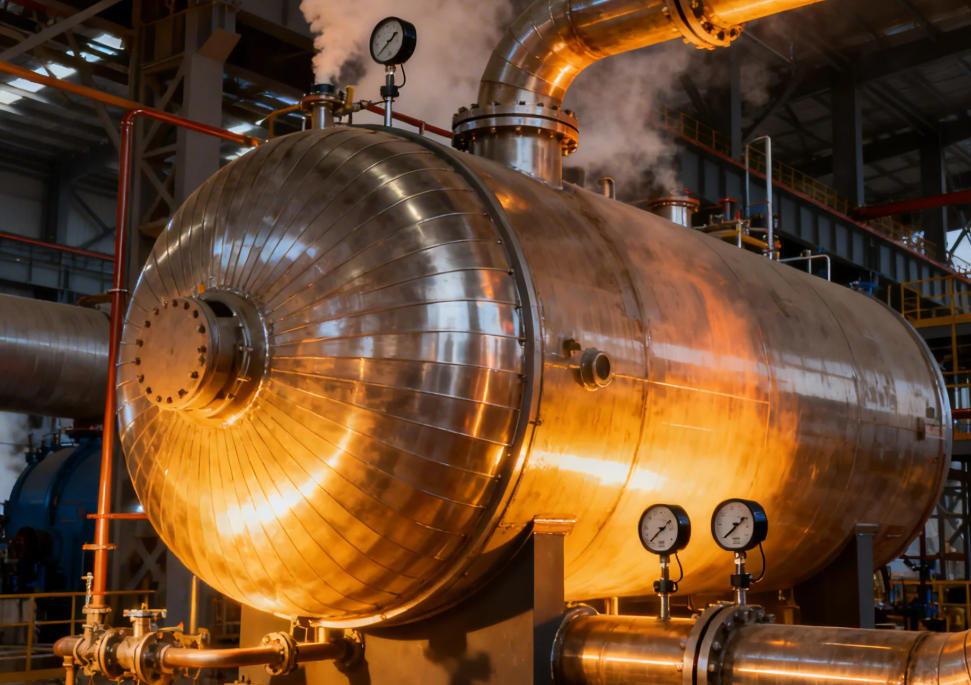
Based on years of experience in level measurement, Jiwei Automations provides a combined solution for boiler steam drum level measurement using the JWrada®-35 radar level meter and the Ring-11 high-temperature tuning fork level switch. This solution enables continuous level monitoring, high-high level alarm, low-low level alarm, and interlock protection, providing a stable and reliable level measurement solution for power, chemical, energy, and other industrial applications.
2. Typical Working Conditions and Challenges in Boiler Steam Drum Level Measurement
In a boiler system upgrade project for a large thermal power plant, the user needed continuous monitoring of boiler steam drum level and independent point level alarm devices to meet the requirements of automatic control and safety interlock. The typical application parameters included a boiler steam drum as the measured vessel, a measuring range of approximately 0–3 m, condensate water accompanied by saturated steam as the medium, and process temperatures ranging from 180°C to 400°C.
This working condition creates several challenges for level instruments.
The first challenge is high temperature and high pressure. Boiler steam drums operate for long periods under high-temperature steam and pressure. The process connection, sealing structure, sensing element, and electronic components of the instrument must have sufficient resistance to temperature and pressure. Otherwise, sealing failure, signal drift, or component aging may occur.
The second challenge is strong steam interference. High-temperature steam, condensate, foam, and surface fluctuation can affect the echo environment, causing false signals in traditional measurement methods and affecting level stability. Especially during boiler load changes, frequent feedwater regulation, or start-up and shutdown stages, drum level fluctuation becomes more obvious, requiring faster response and stronger anti-interference capability from the instrument.
The third challenge is high safety protection requirements. The boiler steam drum is a critical process device, and level measurement should not depend solely on one continuous level meter. High-high and low-low level alarms require independent switch signals to participate in alarm or interlock systems, preventing single-point failure from compromising safety protection.
The fourth challenge is maintenance cost. Power plants often have a large number of field instruments that operate continuously for long periods. If instruments require frequent cover opening, disassembly, cleaning, or on-site calibration, maintenance workload increases and continuous plant operation may be affected. Therefore, a suitable level measurement solution for boiler steam drums must combine reliability, intelligence, and low maintenance.
3. Jiwei’s Design Concept for Boiler Steam Drum Level Measurement
To address these challenges, Jiwei adopts a combined solution of continuous measurement and independent point level protection. The continuous measurement part uses the JWrada®-35 radar level meter to output real-time steam drum level changes and provide stable level data to the DCS system. The point level protection part uses the Ring-11 high-temperature tuning fork level switch for high-high and low-low level alarms, forming independent safety interlock signals.
The advantage of this solution lies in its clear division of functions. The JWrada®-35 radar level meter is responsible for continuous, non-contact, high-precision measurement, making it suitable for monitoring level trends, participating in feedwater control, and optimizing the process. The Ring-11 high-temperature tuning fork level switch is responsible for key point level detection. When the liquid level reaches the set position, it quickly outputs a switch signal for alarm, shutdown, or interlock protection.
The two types of instruments use different measurement principles, which reduces the risk of common-mode failure. When the continuous measurement signal is affected by the field environment, the tuning fork level switch can still provide reliable judgment as an independent protection device. When the system needs to analyze the trend of level changes, the radar level meter continuously provides real-time data. For boiler steam drums with high safety requirements, this redundant design better meets the reliability and safety demands of power plant applications.
4. Application Advantages of JWrada®-35 Radar Level Meter in Boiler Steam Drums
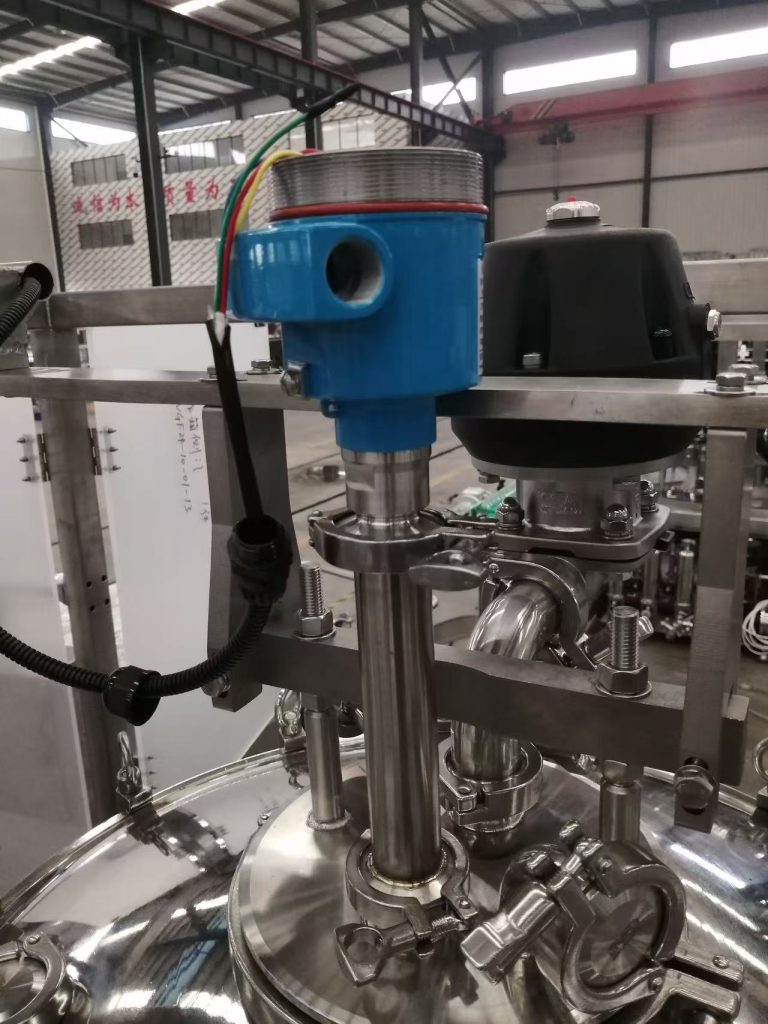
The JWrada®-35 radar level meter uses 80 GHz millimeter-wave radar technology, featuring a focused beam, high resolution, and strong anti-interference capability. It is suitable for liquid or solid level measurement under high temperature, high pressure, steam, foam, dust, and corrosive environments. In boiler steam drum level measurement, its non-contact measuring method reduces the risks of wear, buildup, and corrosion caused by direct contact with the medium, improving long-term operational stability.
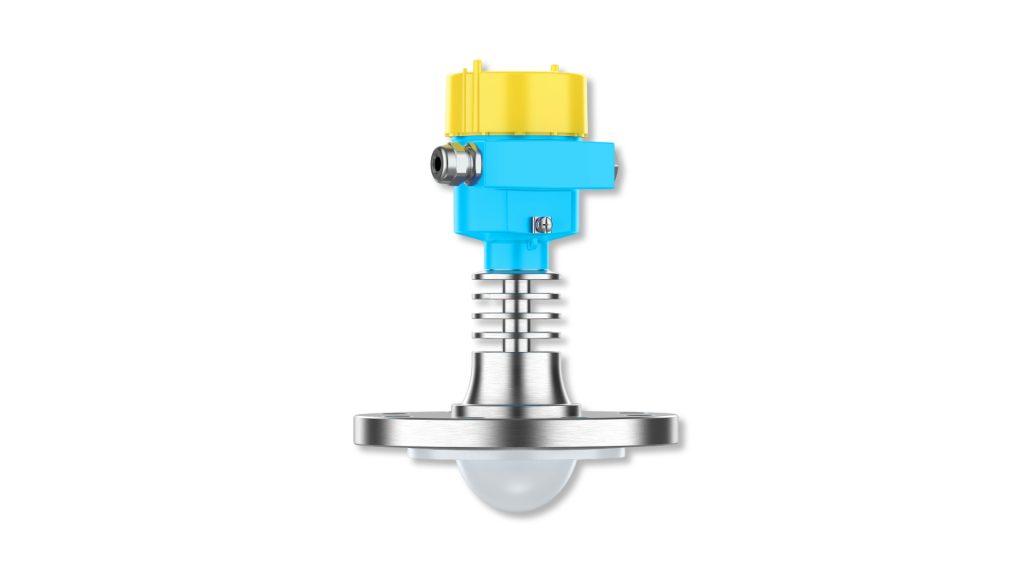
In strong steam environments, the real liquid surface echo may coexist with false echoes, making signal recognition more difficult. The JWrada®-35 is equipped with an intelligent echo processing algorithm that can learn and identify field echoes, filter false echoes, separate multiple echoes, and dynamically track the target echo. For steam disturbance, liquid surface fluctuation, and foam interference inside boiler steam drums, this algorithm helps maintain stable level output and reduces errors and signal jumps.
The JWrada®-35 also offers strong engineering adaptability. Its measuring range can meet the requirements of various large vessels and complex working conditions. It is suitable for high-temperature process environments and supports 4–20 mA/HART and RS485/Modbus signal outputs, making it easy to integrate with DCS, PLC, and other automation control systems. For projects requiring intelligent maintenance, the device supports Bluetooth commissioning and mobile operation, allowing field personnel to configure parameters, check status, and perform diagnostics without frequently opening the instrument cover. This greatly improves commissioning efficiency.
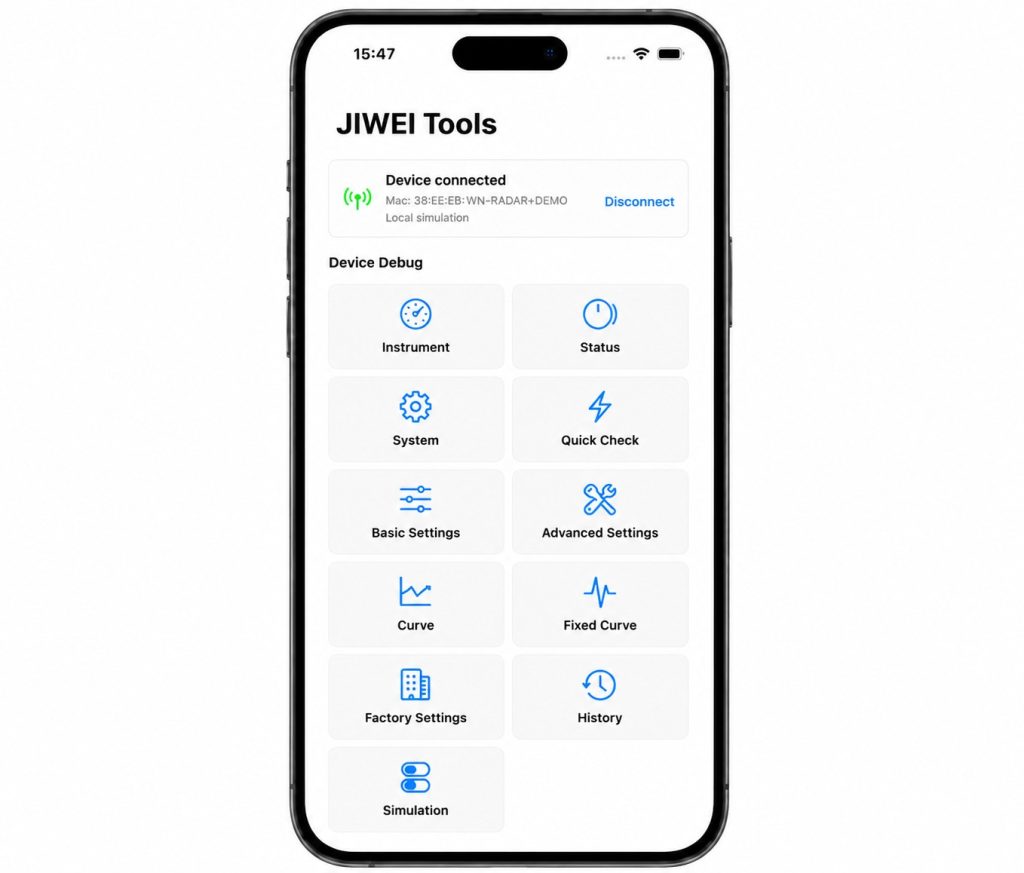
In boiler systems, stable continuous level data helps the control system regulate feedwater more accurately, reduce large level fluctuations, improve steam quality, and enhance boiler operating efficiency. Meanwhile, the non-contact radar measurement method reduces maintenance frequency, which is especially valuable for power plant sites requiring long-term continuous operation.
5. Safety Protection Role of Ring-11 High-Temperature Tuning Fork Level Switch
In a boiler steam drum level protection system, the role of a point level switch cannot be replaced. A continuous level meter provides trend data, but high-high and low-low level alarms usually require independent switch signals for interlock protection. The Ring-11 high-temperature tuning fork level switch is a reliable device designed for such critical point level detection.
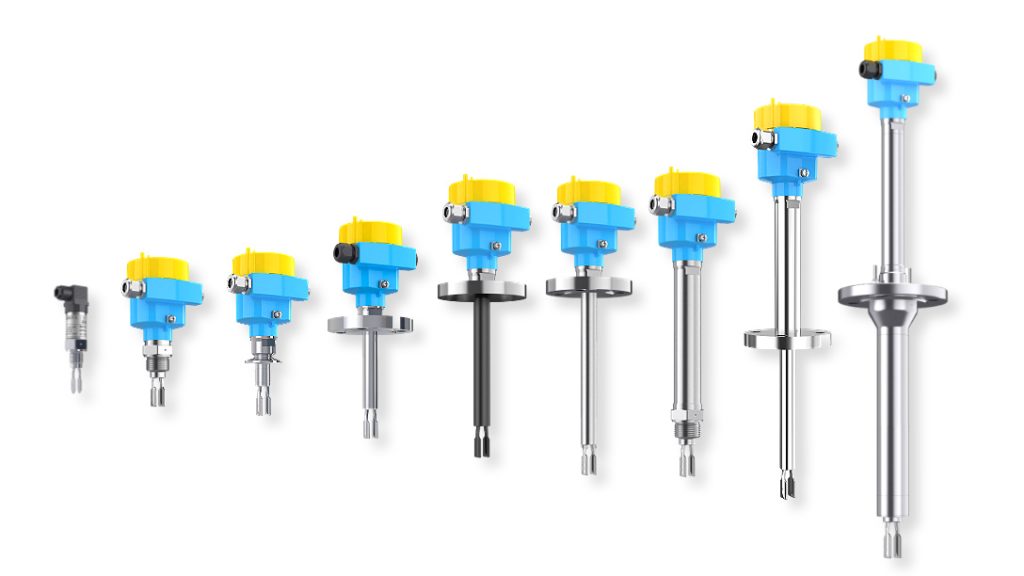
The Ring-11 high-temperature tuning fork level switch adds a cooling structure based on the standard tuning fork level switch, allowing it to adapt to ultra-high-temperature conditions up to 400°C. It determines whether the fork is in contact with liquid by detecting changes in the vibration frequency of the fork. It does not rely on the conductivity of the medium and is not easily affected by changes in dielectric constant. Therefore, even in environments with condensate, steam, foam, bubbles, and liquid surface fluctuations, the tuning fork level switch can still provide a clear and stable switch signal.
For boiler steam drum applications, the Ring-11 is usually installed at the high-high and low-low level positions. When the level exceeds the upper safety limit, the high-high level switch sends an alarm or interlock signal to prevent drum flooding, steam carryover, and damage to downstream equipment. When the level falls below the lower safety limit, the low-low level switch outputs a protection signal in time to prevent boiler water shortage and dry burning risks.
The Ring-11 high-temperature tuning fork level switch also supports multiple output methods and can be flexibly integrated into different control systems. It offers high repeatability and fast response, making it suitable for critical measurement points requiring reliable alarms. For high-temperature liquid equipment in power plants, combined heat and power plants, petrochemical plants, and energy industries, its core value lies in providing independent safety protection that does not depend on the continuous measurement loop.
6. Combining Continuous Measurement and Point Level Alarm for Dual Protection
The key to boiler steam drum level measurement is not simply choosing one instrument, but building a complete measurement and control system. The combination of the JWrada®-35 radar level meter and the Ring-11 high-temperature tuning fork level switch delivers value on three levels.
The first level is process control. The JWrada®-35 continuously outputs level signals, helping the DCS system understand steam drum level trends, optimize feedwater control, and improve boiler operating stability.
The second level is alarm indication. The Ring-11 tuning fork level switch outputs clear switch signals at critical level points. When the level rises or falls abnormally, it alerts operators to take action in time.
The third level is safety interlock. When the level deviates from the safe range and reaches the interlock condition, the independent point level switch can trigger protective actions to prevent accidents from expanding. This independent protection logic effectively reduces the risks caused by failure in a single measurement chain.
Compared with solutions using only one type of level instrument, the combination of radar level meter and tuning fork level switch is more suitable for high-risk working conditions such as boiler steam drums. It meets the need for continuous data in daily control while also satisfying the safety system’s requirements for independent, reliable, and fast-response protection.
7. Application Results: Improved Safety, Stability, and Maintenance Efficiency
After the boiler steam drum level measurement solution was put into operation, the system maintained stable performance under high temperature, high pressure, and strong steam interference. The JWrada®-35 radar level meter provided continuous level data, helping the user accurately understand drum level changes and reduce control errors caused by signal fluctuation. The Ring-11 high-temperature tuning fork level switch provided independent alarm signals at critical high and low level points, adding reliable protection for safe boiler operation.
In terms of operational safety, this solution effectively reduces the risks of drum flooding, water shortage, dry burning, and steam carryover. For power plants, the loss caused by an unplanned boiler shutdown is often much higher than the investment in instruments. Therefore, selecting highly reliable level measurement and protection instruments is essentially a way to reduce systemic operational risks.
In terms of maintenance, the JWrada®-35 supports intelligent commissioning and remote monitoring, reducing the need for on-site cover opening. The Ring-11 tuning fork level switch has a compact structure and low maintenance requirements, making it suitable for long-term critical point level detection. The combination of the two instruments helps reduce frequent inspection, calibration, and shutdown maintenance, improving field management efficiency.
In terms of engineering promotion, this solution is not only suitable for boiler steam drums in thermal power plants, but can also be applied to combined heat and power plants, waste heat boilers, heat transfer oil systems, condensate tanks, high-temperature storage tanks, petrochemical reaction vessels, and other high-temperature and high-pressure level measurement scenarios. For applications requiring both continuous level monitoring and independent high/low level protection, this solution has strong replication value.
8. Why Choose Jiwei Automations?
Jiwei Automations has long focused on the research, development, production, and sales of level measurement instruments. Its product range includes radar level meters, radar liquid level meters, tuning fork level switches, tuning fork solids level switches, vibrating rod level switches, RF admittance level switches, rotary paddle level switches, magnetic level gauges, ultrasonic level meters, float level meters, and more. These products are widely used in power, chemical, environmental protection, food, pharmaceutical, building materials, and new energy industries.
In complex industrial sites, instrument reliability is often more important than a single technical parameter. Jiwei is committed to providing highly reliable, cost-effective level measurement products that can serve as alternatives to imported brands. The company places strong emphasis on research and development, manufacturing, testing, and certification processes. For high-temperature, high-pressure, and high-risk applications such as boiler steam drum level measurement, Jiwei provides not only individual instruments, but also application-oriented system solutions tailored to actual working conditions.
The JWrada®-35 radar level meter solves the problem of continuous level measurement, while the Ring-11 high-temperature tuning fork level switch solves the problem of critical point level protection. The combination of these two products demonstrates Jiwei’s comprehensive capability in radar measurement, high-temperature tuning fork switches, and complex industrial applications. It also provides users with a domestic solution that balances safety, stability, intelligence, and cost efficiency.
9. Conclusion
Boiler steam drum level measurement is a critical part of power plant and industrial boiler systems. Under complex conditions such as high temperature, high pressure, strong steam interference, liquid surface fluctuation, and safety interlock requirements, traditional single-measurement methods often fail to meet the needs of long-term stable operation. The combined solution of the JWrada®-35 radar level meter and Ring-11 high-temperature tuning fork level switch enables dual protection through continuous level measurement and independent high/low level alarm.
This solution provides stable and accurate level trend data to the DCS system while outputting reliable switch signals under abnormal level conditions. It helps users reduce operational risks, improve boiler efficiency, and lower maintenance costs. For thermal power, combined heat and power, petrochemical, chemical, and industrial steam systems, Jiwei’s boiler steam drum level measurement solution is a safe, reliable, easy-to-integrate, and highly practical choice.
For specific selection based on boiler steam drum size, pressure rating, temperature range, installation method, and signal output requirements, the appropriate JWrada® radar level meter and Ring-11 tuning fork level switch can be configured according to actual site conditions to achieve more accurate and reliable level measurement and control.