
1. What Are Safety Barriers and Isolators?
Safety barriers and isolators are common signal protection and conversion devices used in industrial automation, process control, instrumentation systems, and electrical control in hazardous areas. They are mainly used for signal transmission, energy limitation, electrical isolation, interference suppression, and system protection between field instruments and control systems.
In industries such as petroleum, chemical processing, natural gas, pharmaceuticals, power generation, metallurgy, and water treatment, safety barriers and isolators are widely used for the acquisition and control of pressure, temperature, level, flow, valve position, and switching signals.
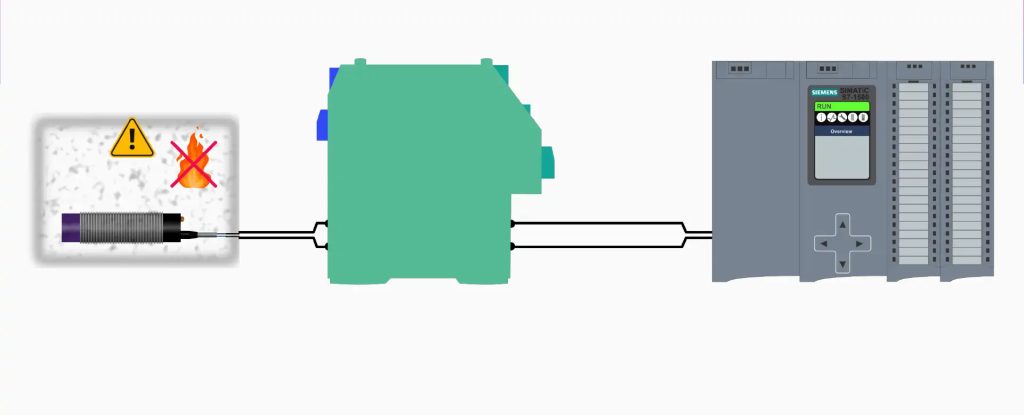
From a functional perspective, safety barriers focus more on intrinsic safety and explosion protection. Their primary purpose is to limit the voltage, current, and energy entering hazardous areas, preventing electrical sparks or thermal effects from igniting explosive gases, vapors, or dust.
Isolators, on the other hand, focus more on electrical isolation and signal processing. They are used to eliminate ground loops, improve anti-interference performance, protect control systems such as PLC, DCS, and SIS, and realize signal transmission, distribution, conversion, or amplification.
In practical engineering, safety barriers and isolators are often mentioned together, but they are not exactly the same type of device. Understanding their principles, differences, and selection methods is essential for improving the safety, stability, and reliability of industrial control systems.
2. Definition and Function of Safety Barriers
A safety barrier, also known as an intrinsic safety barrier, intrinsically safe barrier, or explosion-proof safety barrier, is an energy-limiting protection device installed between a safe area and a hazardous area. Its core function is to limit the electrical energy transmitted to field instruments in hazardous areas, ensuring that even under fault conditions, the field circuit will not generate sparks or temperatures high enough to ignite explosive mixtures.
In an intrinsically safe explosion-proof system, field instruments, sensors, actuators, and other devices located in hazardous areas usually need to meet intrinsic safety requirements. As associated apparatus, safety barriers are installed in control rooms, cabinet rooms, or other safe areas. By limiting voltage, current, power, and stored energy, they ensure that the field circuit meets intrinsic safety parameters.
Safety barriers are commonly used to connect two-wire transmitters, thermocouples, RTDs, digital inputs, digital outputs, solenoid valves, audible and visual alarms, and other field devices. Their main functions include voltage limitation, current limitation, energy limitation, signal transmission, and fault protection.
3. Definition and Function of Isolators
An isolator generally refers to a signal isolator, isolated safety barrier, power supply isolator, or signal conversion isolator. It uses magnetic isolation, optical isolation, transformer isolation, or digital isolation to achieve electrical isolation between input, output, and power supply.
The main function of an isolator is to prevent interference and mutual influence between different systems, devices, or grounding points. In complex industrial sites, sensors, transmitters, PLCs, DCS systems, frequency converters, actuators, and other equipment may be distributed in different locations. Ground potentials may vary, and the electromagnetic environment can be complicated.
If signals are directly connected without isolation, problems such as signal drift, measurement errors, false operation of equipment, or even damage to control system modules may occur.
Isolators can effectively solve these problems. In addition to isolating interference, they can also perform signal amplification, signal conversion, signal distribution, loop power supply, and linearization. For example, an isolator can convert a 4-20mA current signal into a 0-10V voltage signal, or distribute one input signal into two output signals for a PLC and a recorder respectively.
4. Working Principle of Safety Barriers
The basic principle of a safety barrier is energy limitation. It uses resistors, Zener diodes, fuses, electronic current-limiting circuits, isolation transformers, and other components to restrict the voltage and current entering hazardous areas within a safe range.
A traditional Zener safety barrier usually consists of a current-limiting resistor, Zener diodes, and a fast-acting fuse. Under normal loop voltage conditions, the signal is transmitted through the designed path. When an overvoltage occurs, the Zener diode conducts and diverts the excessive voltage to the grounding terminal. When the fault current becomes too large, the fuse disconnects the circuit, preventing hazardous energy from entering the field loop.
Zener barriers have a simple structure and relatively low cost, but they require a reliable intrinsic safety grounding system. The grounding quality directly affects both safety performance and signal stability.
An isolated safety barrier adds electrical isolation on the basis of energy limitation. Through isolated power supply, signal isolation, and electronic energy-limiting circuits, the input, output, and power supply are electrically isolated from each other.
Compared with Zener safety barriers, isolated safety barriers do not rely heavily on high-quality intrinsic safety grounding. They provide stronger anti-interference performance and are easier to install and maintain. As a result, they are more widely used in modern automation systems.
5. Working Principle of Isolators
The core principle of an isolator is isolated signal transmission. It converts the input signal into an intermediate signal that can be transmitted across an isolation barrier, and then restores it to a standard industrial signal at the output side.
Common isolation methods include optical isolation, magnetic isolation, transformer isolation, and digital isolation.
Taking a 4-20mA signal isolator as an example, the input terminal receives a current signal from a field transmitter. The internal sampling circuit converts the current signal into a voltage or digital signal. The signal is then transmitted through an isolation module to the output side and converted back into a standard 4-20mA, 0-10V, or other required signal.
Because there is no direct electrical connection between the input and output terminals, the isolator can effectively block common-mode interference, surge interference, and ground loops.
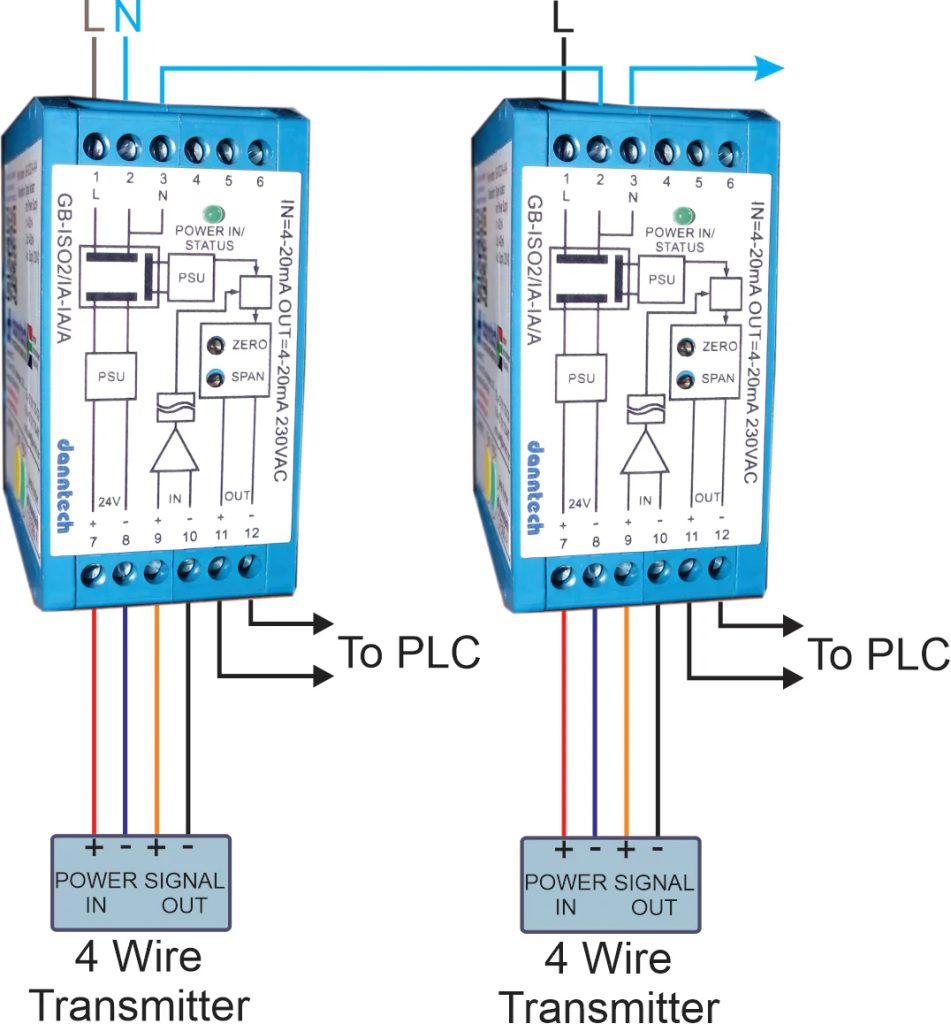
For isolators with power supply functions, the device can also provide 24VDC power to a two-wire field transmitter while collecting the returned 4-20mA signal. The isolated signal is then sent to the control system. Such products are commonly referred to as power supply isolators or isolated power distributors.
6. Main Differences Between Safety Barriers and Isolators
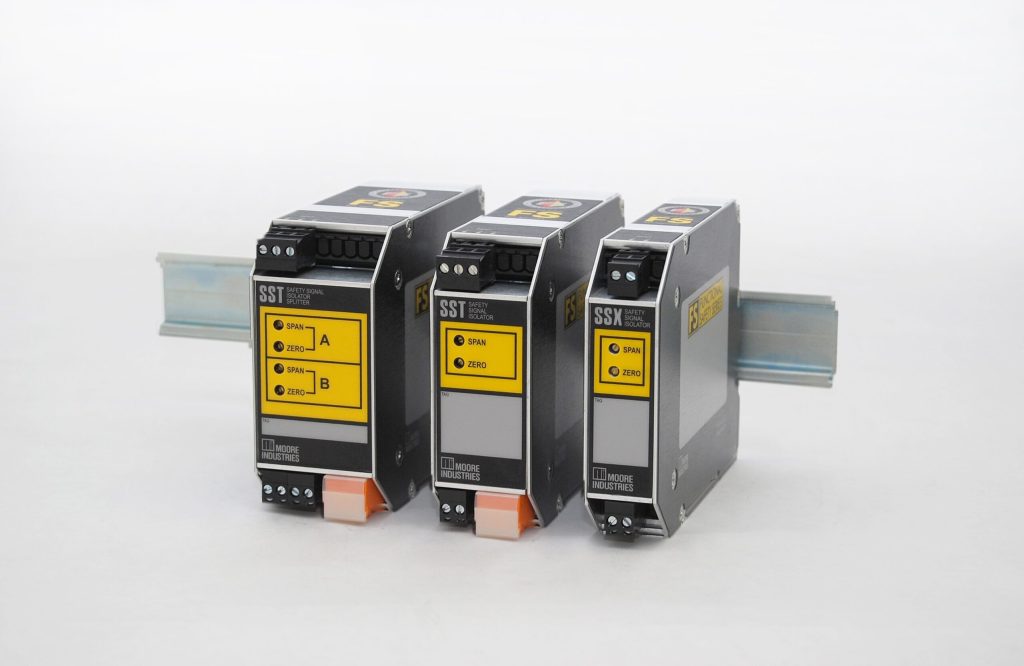
The differences between safety barriers and isolators are mainly reflected in their application purpose, explosion-proof requirements, installation environment, and certification standards.
First, the core purpose of a safety barrier is explosion-proof energy limitation. It is used in intrinsically safe circuits and focuses on whether the energy entering a hazardous area remains safe under fault conditions. Therefore, safety barriers usually require explosion-proof certification and must work together with intrinsically safe field instruments to form an intrinsically safe system.
Second, the core purpose of an isolator is signal isolation and interference suppression. It mainly solves problems related to signal stability, potential differences, ground loops, and system protection in control systems. Ordinary signal isolators do not necessarily have explosion-proof functions and cannot directly replace safety barriers in hazardous-area intrinsic safety circuits.
Third, in terms of installation location, safety barriers are usually installed in safe areas and connected to field devices in hazardous areas. Isolators can be used in ordinary industrial sites, control cabinets, PLC cabinets, DCS cabinets, and instrument panels.
Fourth, in terms of functional scope, safety barriers focus more on energy-limiting protection, while isolators focus more on signal processing. However, isolated safety barriers combine the functions of both. They can meet intrinsic safety explosion-proof requirements while also providing signal isolation. Therefore, they are very common in modern petrochemical, chemical, and pharmaceutical projects.
7. Common Types of Safety Barriers
According to structure and working principle, safety barriers can generally be divided into Zener safety barriers and isolated safety barriers.
A Zener safety barrier is a traditional type of safety barrier. It uses Zener diodes, resistors, and fuses to limit energy. It is relatively inexpensive, but it requires reliable intrinsic safety grounding and is greatly affected by grounding quality. Poor grounding may affect both safety and signal stability.
An isolated safety barrier uses isolation technology to provide electrical isolation between input, output, and power supply while also completing energy-limiting protection. It does not depend on strict intrinsic safety grounding in the same way as a Zener safety barrier. It offers better anti-interference performance and is suitable for complex industrial sites and high-reliability control systems.
According to signal type, safety barriers can also be classified as analog input safety barriers, analog output safety barriers, digital input safety barriers, digital output safety barriers, RTD safety barriers, thermocouple safety barriers, frequency signal safety barriers, and communication safety barriers.
8. Common Types of Isolators
According to function, isolators can be divided into signal isolators, power supply isolators, signal converters, signal distributors, temperature transmitter isolators, and digital signal isolators.
Signal isolators are mainly used for isolated transmission of analog signals such as 4-20mA, 0-10V, 0-5V, and 1-5V.
Power supply isolators can supply power to two-wire transmitters while providing isolated standard signal output.
Signal conversion isolators are used to convert between different signal types, such as current to voltage, voltage to current, thermocouple to current, and RTD to current.
Signal distributors can isolate and distribute one input signal into two or more output signals. They are often used when the same field signal needs to be sent simultaneously to a control system, display instrument, recorder, or safety system.
Temperature isolators are mainly used for thermocouple and RTD signal acquisition, cold junction compensation, linearization, and standard signal output.
9. Typical Applications of Safety Barriers and Isolators
Safety barriers are widely used in industrial locations with explosion hazards, such as petroleum refining units, natural gas stations, chemical production lines, oil depots, pharmaceutical workshops, coal chemical plants, spraying workshops, dust environments, and hazardous material storage and transportation systems.
In these applications, field instruments are often located in hazardous areas, while control systems are located in safe areas. The safety barrier establishes a safe intrinsically protected signal channel between the two.
Isolators are suitable for almost all industrial automation control systems. Typical applications include PLC analog input protection, DCS signal acquisition, frequency converter interference isolation, long-distance transmission of field instrument signals, signal sharing between multiple systems, instrument signal conversion, and actuator control signal isolation.
In the petrochemical industry, safety barriers and isolators are commonly used with pressure transmitters, differential pressure transmitters, temperature transmitters, flow meters, level meters, control valves, and solenoid valves.
In the power industry, they are used in thermal control systems, desulfurization and denitrification systems, turbine monitoring, and boiler control.
In the water treatment industry, they can be used for level, flow, pH, turbidity, and pressure signal acquisition.
10. Why Are Safety Barriers and Isolators Needed in Industrial Sites?
Industrial electrical environments are complex. High-voltage equipment, high-power motors, frequency converters, relays, solenoid valves, long-distance cables, and different grounding systems are common in industrial sites. These factors can easily cause electromagnetic interference, surge impact, ground potential differences, and signal distortion.
Without isolation and protection measures, measurement data may fluctuate, control systems may generate false alarms, actuators may operate incorrectly, and control modules may even be damaged.
For hazardous areas, the safety risk is even greater. In environments containing explosive gases or dust, even a small spark may cause a serious accident. Safety barriers limit electrical energy and keep field circuits intrinsically safe, making them key devices in explosion-proof design for process industries.
Therefore, safety barriers and isolators are not merely signal transmission components. They are essential elements for safety design, reliable operation, and fault isolation in industrial automation systems.
11. Selection Guide for Safety Barriers and Isolators
When selecting safety barriers and isolators, the first step is to identify the application scenario. If the device is used in an intrinsically safe circuit in a hazardous area, a certified safety barrier or isolated safety barrier should be selected. If the device is used for signal isolation and interference suppression in a non-hazardous area, a standard signal isolator may be sufficient.
Second, the signal type must be confirmed. Common signal types include 4-20mA, 0-10V, thermocouple, RTD, digital signal, frequency signal, pulse signal, and communication signal. The input and output types must match the requirements of both the field instrument and the control system.
Third, the power supply method should be considered. Some isolators require an independent 24VDC power supply, some support loop-powered operation, and some safety barriers can provide power to field transmitters. An incorrect power supply method may cause the device to fail to operate properly.
Fourth, the number of channels should be checked. Single-channel products are suitable for single-point signal transmission, while dual-channel or multi-channel products can save cabinet space and wiring costs. However, maintenance convenience and fault isolation requirements should also be considered.
Fifth, important technical specifications should be reviewed, including accuracy, response time, load capacity, isolation strength, operating temperature, electromagnetic compatibility, and installation method.
For high-precision measurement or fast control loops, products with higher accuracy and faster response should be selected.
For safety barriers, intrinsic safety parameters must be carefully checked. These parameters include maximum output voltage, maximum output current, maximum output power, allowable external capacitance, and allowable external inductance. They must match the field intrinsically safe device and cable parameters.
12. Installation Precautions for Safety Barriers and Isolators
Safety barriers and isolators are usually installed inside control cabinets or instrument cabinets. DIN rail mounting is the most common installation method. During installation, wiring should be correct, labels should be clear, heat dissipation should be sufficient, and signal cables should be kept away from strong power lines.
For safety barriers, the safe-side and hazardous-side wiring must be strictly distinguished. The hazardous side connects to intrinsically safe field devices, while the safe side connects to the control system. The cables on both sides should be routed separately to avoid incorrect wiring, short circuits, or hazardous energy entering the hazardous side.
Zener safety barriers must have proper intrinsic safety grounding. The grounding resistance and grounding method should comply with relevant standards and engineering requirements. Although isolated safety barriers rely less on intrinsic safety grounding, they should still be installed according to manufacturer instructions and engineering specifications.
When installing isolators, attention should be paid to the polarity of input, output, and power terminals to avoid reverse connection. For analog signals, shielded cables are recommended, and the shielding layer should be grounded properly to reduce field interference.
13. Common Faults of Safety Barriers and Isolators
Common faults of safety barriers and isolators include no output, low output, high output, signal fluctuation, channel alarm, power supply abnormality, and wiring errors.
No output is usually related to power failure, wiring errors, field instrument damage, loop disconnection, or blown fuse components.
Unstable output may be caused by poor grounding, electromagnetic interference, improper shielding, excessive load, or overly long cables.
Output deviation may be related to range settings, signal type mismatch, temperature drift, or device accuracy.
When troubleshooting, the power supply, wiring, input signal, output signal, load, field device, and control system module should be checked step by step. For explosion-proof circuits, safety barrier models and intrinsic safety parameters must not be changed arbitrarily. Professional verification should be conducted when necessary.
14. Development Trends of Safety Barriers and Isolators
With the continuous development of industrial automation, smart manufacturing, and process safety requirements, safety barriers and isolators are moving toward miniaturization, intelligence, high precision, multifunctionality, and digitalization.
Modern isolated safety barriers not only provide energy limitation and isolation, but may also support fault diagnosis, status indication, HART communication pass-through, parameter configuration, and remote monitoring.
Smart isolators can support more flexible input and output settings, reduce the variety of spare parts, and improve engineering efficiency.
In the context of the Industrial Internet of Things and smart factories, safety barriers and isolators are no longer simple signal relay devices. They are gradually becoming important nodes for industrial data acquisition, equipment health monitoring, and system safety protection.
15. Conclusion
Safety barriers and isolators are essential basic devices in industrial control systems. Safety barriers are mainly used in intrinsically safe circuits in hazardous areas. By limiting voltage, current, and energy, they help prevent explosion accidents.
Isolators are mainly used for signal isolation, interference suppression, signal conversion, and system protection. They improve the stability and reliability of control systems.
In practical engineering, safety barriers, isolated safety barriers, or ordinary signal isolators should be selected according to whether the site is classified as a hazardous area, the signal type, power supply method, explosion-proof requirements, system interface, accuracy requirements, and installation environment.
Correct selection, standardized installation, and regular maintenance can effectively reduce system failure rates and improve production safety.
For industries such as petrochemical, natural gas, pharmaceuticals, power generation, metallurgy, and water treatment, safety barriers and isolators are related not only to signal transmission quality, but also to equipment safety, personnel safety, and production continuity.
Understanding the principles and differences between safety barriers and isolators is an important foundation for the design and maintenance of industrial automation systems.