
Modern livestock farms are becoming increasingly automated.
Feed preparation, storage, conveying and distribution systems that once depended heavily on manual inspection are now commonly controlled through PLCs and centralized automation systems.
Feed silos may contain much more than standard pellets. Depending on the feeding formula, farms may store corn meal, bran, protein ingredients, mineral additives, grain and various lightweight powder or granular materials.
These materials can create significant dust during filling and discharge. Some may also adhere to vessel walls or sensing elements.
Under these conditions, reliable point level detection becomes essential.
A vibrating rod level switch provides an effective solution for high and low level monitoring in feed silos, particularly where dust, lightweight materials or material buildup make conventional mechanical detection more challenging.

Why Are Powdered and Lightweight Feeds Difficult to Detect?
A typical large livestock farm may operate several silos containing different feed ingredients.
One silo may store dense pellets, while another contains fine powder or lower-density feed.
During filling, lightweight material can generate large amounts of airborne dust. Over time, powder may also accumulate on the silo wall and around installed equipment.
The level sensor therefore needs to operate reliably without requiring frequent adjustment whenever the feed formulation changes.
For many applications, operators also prefer a sensor without a continuously rotating mechanical paddle.
A vibrating rod level switch meets these requirements by detecting changes in mechanical vibration rather than relying on rotating components.
How Does a Vibrating Rod Level Switch Work?
The sensing rod vibrates continuously at its natural resonant frequency.
When the rod is free from material, the vibration remains stable.
As the feed level rises and covers the sensing element, the material dampens the vibration.
The electronic circuitry detects this change and switches the output.
When the material moves away from the rod, the vibration returns to its normal state and the electrical output changes back.
Because detection is based on vibration rather than the dielectric constant of the material, the technology can handle many different bulk solids.
Changes in feed composition do not automatically require recalibration, provided the physical characteristics remain within the operating range of the instrument.
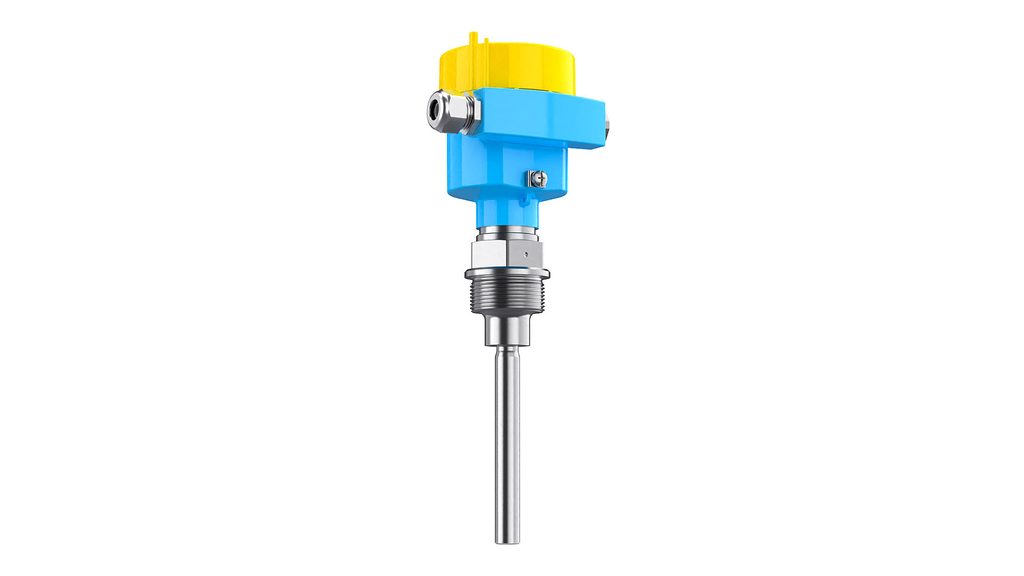
Double-Tube Vibration Technology for Low-Density Materials
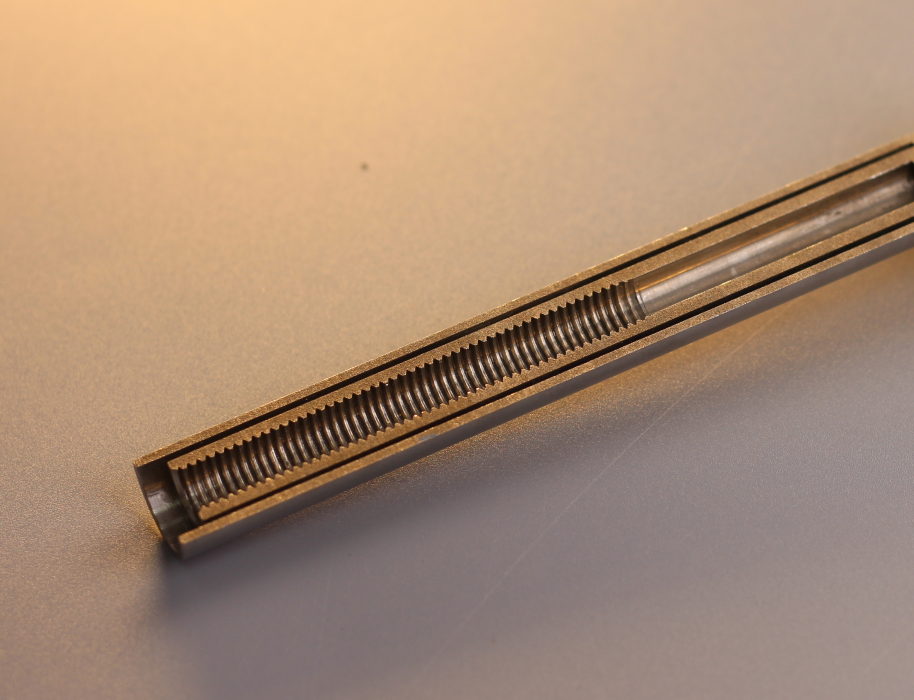
Tube-11 vibrating rod level switches use a double-tube vibration structure with an inner and outer tube forming a tuned mechanical system.
Under normal conditions, the sensing structure remains in a stable resonant state.
When bulk material contacts the outer vibrating element, the vibration characteristics change. The electronics detect this disturbance and convert it into a switching signal.
This design provides high sensitivity and can detect materials with bulk densities down to approximately 0.02 g/cm³.
That makes the technology suitable for a wide variety of livestock feed ingredients, including grains, beans, powders and lightweight granular materials.
For farms that frequently change feed formulations, the ability to detect different materials without complex field calibration can simplify operation and maintenance.
High Level Detection for Feed Silo Overfill Protection
A vibrating rod level switch installed near the upper section of a silo can serve as a high level alarm.
As the feed truck or conveying system fills the silo, the material level gradually rises.
When feed reaches and covers the vibrating rod, the sensor detects the change in vibration and sends a high level signal to the control system.
The PLC can then stop a screw conveyor, close a valve, stop pneumatic conveying equipment or trigger an alarm.
This provides an independent layer of protection against silo overfilling.
On farms with several storage silos, each high level switch can be integrated into a central control system so that operators can monitor silo status without physically checking each vessel.
Low Level Detection for Feed Refill Control
Installing another vibrating rod level switch near the lower section of the silo creates a low level monitoring point.
As feed is consumed, the level gradually falls.
Once the material moves below the sensing rod, its normal vibration returns and the electrical output changes.
The PLC can interpret this condition as a low feed alarm.
The signal can be used to notify farm staff, generate a refill request or start an automatic conveying sequence.
In systems where a silo directly supplies a screw conveyor, the low level signal may also be used as part of an equipment protection strategy.
Early detection helps prevent extended operation when there is insufficient material available.
Avoid Direct Impact From the Filling Stream
One of the most important installation rules for a vibrating rod level switch is to keep the sensor away from the main filling stream.
Feed entering from the top of a silo can fall at considerable speed.
If the vibrating rod is installed directly beneath the inlet, repeated impact from pellets or granules creates unnecessary mechanical stress.
It may also interfere with accurate point level detection.
The preferred solution is to install the switch outside the direct path of falling material.
Where this is not possible, a protective deflector can be installed above the sensing element.
The deflector absorbs direct impact and redirects the material around the sensor.
This simple installation detail can significantly increase the service life and stability of the level switch.
How Material Buildup Can Create a False Level Signal
Powdered feed can adhere to silo walls due to humidity, static electricity and material characteristics.
This creates an important installation challenge.
Imagine that the true material level in the center of the silo has fallen below the sensor, but a layer of feed remains attached to the wall around the sensing rod.
If enough material continues to surround the sensor, the instrument may still indicate that feed is present.
This condition is sometimes interpreted as a false high or false material-present signal.
For this reason, sensor location should not be determined by vessel dimensions alone.
The engineer should consider the material flow pattern, silo geometry, cone shape, angle of repose and areas where buildup is most likely to occur.
Installing the sensor away from severe buildup zones reduces the possibility of false switching.
Dusty Feed Silos May Require Explosion-Protected Instruments
Grain and animal feed handling processes can generate combustible dust.
Under certain concentrations and environmental conditions, suspended combustible dust may create a hazardous atmosphere.
For this reason, instrumentation for large feed storage or processing facilities may need appropriate explosion protection.
Tube-11 series vibrating rod switches are available in configurations intended for hazardous environments.
The exact certification required must be selected according to the actual hazardous area classification, dust characteristics and applicable local standards.
Explosion protection should never be chosen only because the application is described as a “feed silo.”
The actual zone classification, process temperature, electrical installation and enclosure requirements should all be reviewed before the final instrument is specified.
Vibrating Rod vs. Rotary Paddle Level Switch
Both technologies are widely used for bulk solids, but they address slightly different application priorities.
A rotary paddle level switch is often an economical and reliable option for free-flowing pellets or grains with suitable bulk density.
A vibrating rod level switch becomes particularly attractive where the material is relatively lightweight, where dust is significant or where operators want to avoid continuously rotating mechanical parts.
The correct choice therefore depends on the material and installation conditions rather than simply comparing instrument prices.
The best level switch is the one whose sensing principle matches the behavior of the feed inside the silo.
Point Level Detection for Automated Livestock Feeding
A vibrating rod level switch does not continuously display how many tons of feed remain inside a silo.
Its purpose is to determine whether material has reached a specific critical position.
This simple function is extremely valuable in automated feeding systems.
At the upper detection point, the sensor can stop filling before the silo becomes overfilled.
At the lower point, it can warn operators that feed is running low.
The signals can also be integrated into conveyors, feeders, alarms and central PLC systems.
The result is a simple but effective control strategy that reduces dependence on manual inspection.
Maintenance Considerations
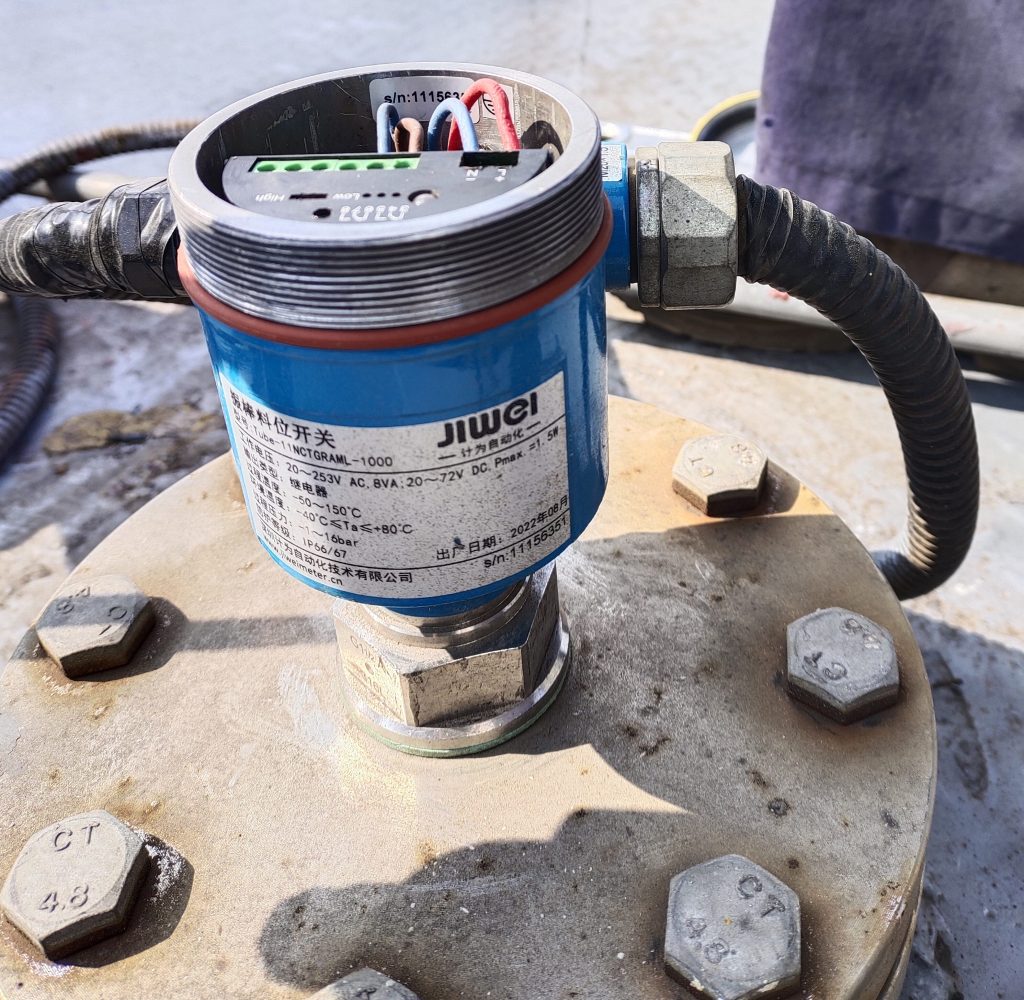
Vibrating rod level switches generally require little routine adjustment.
However, periodic inspection is still good practice.
Operators should check the sensing element for abnormal mechanical damage, excessive hardened buildup and contamination.
Electrical connections and cable seals should also be inspected, especially on outdoor silos.
A correctly installed instrument operating within its specified conditions can provide long-term point level monitoring with limited maintenance.
Conclusion
Dusty and low-density animal feed applications can create difficult conditions for point level measurement.
A vibrating rod level switch provides a practical solution by detecting changes in mechanical vibration rather than relying on a rotating paddle or the electrical properties of the material.
For powders, grains, lightweight granules and mixed feed ingredients, a sensitive vibrating rod design can provide reliable high and low level detection.
When the sensor is positioned away from direct filling impact and severe wall buildup, it can support overfill protection, low feed alarms, automatic refilling and conveyor interlocks.
For modern livestock operations seeking more reliable and automated feed silo management, vibrating rod level switches offer a robust approach to critical point level detection.