
1. What Is a Flange?
A flange, also known as a flange plate or raised edge connector, is a common connecting component used in industrial pipelines, vessels, valves, pumps, instruments, and other equipment. It is usually disc-shaped, with a central opening and bolt holes distributed around the edge. Two flanges are connected by bolts, nuts, and sealing gaskets to form a detachable and sealed connection.
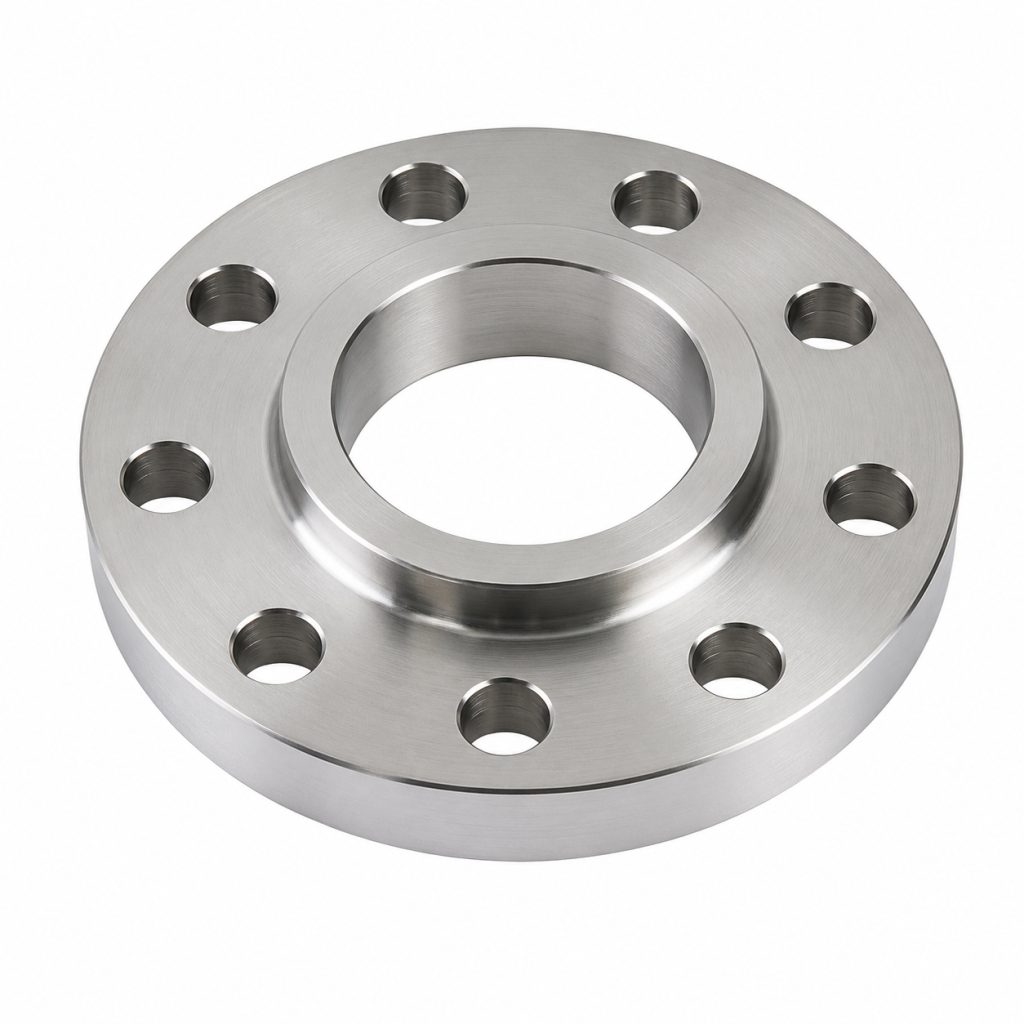
In simple terms, the function of a flange is to reliably connect two pieces of equipment, two sections of pipe, or a piece of equipment and a pipeline. Compared with welded connections, the biggest advantage of flange connections is that they are easy to disassemble, inspect, and replace. Compared with threaded connections, flange connections are more suitable for large diameters, high pressure, high temperature, or operating conditions that require frequent maintenance.
Therefore, flanges are essential basic connection components in industries such as petrochemicals, power generation, metallurgy, water treatment, food and pharmaceuticals, shipbuilding, environmental engineering, and industrial automation.
In the field of level measurement, flanges are also very important. Many liquid level meters, material level meters, and interface level meters need to be mounted on storage tanks, reactors, towers, silos, or pipelines through flanges. A flange not only affects whether the instrument is firmly installed, but also influences sealing performance, measurement stability, corrosion resistance, and ease of maintenance.
2. Basic Components of a Flange Connection
A complete flange connection usually consists of four parts: the flange body, sealing gasket, bolts and nuts, and the connected equipment or pipeline.
The flange body is the main load-bearing component. It is generally made of carbon steel, stainless steel, alloy steel, plastic-lined material, or special corrosion-resistant materials. Its size, pressure rating, sealing face type, and bolt hole arrangement must match the connected equipment.
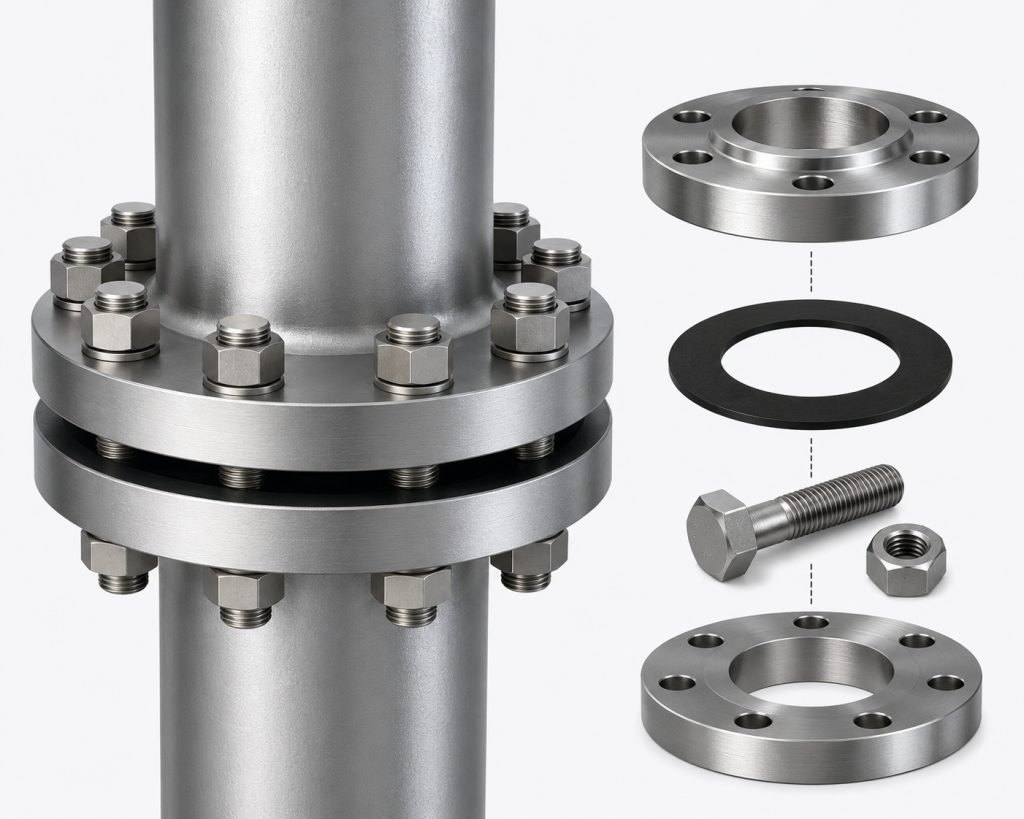
The sealing gasket is installed between two flange sealing faces. Its function is to fill small gaps and prevent medium leakage. Common gasket materials include rubber, PTFE, graphite, spiral wound gaskets, and metal ring gaskets. Different gasket materials should be selected according to medium, temperature, and pressure conditions.
Bolts and nuts provide the clamping force required to press the two flanges against the gasket and form a seal. Bolt strength, quantity, length, and tightening torque all affect the reliability of the flange connection.
The connected object may be a pipeline, valve, pump, storage tank, manhole, instrument interface, or the process connection of a level meter. For level meters, the flange is usually located at the bottom or side of the instrument and is used to connect the instrument to the tank or measuring chamber.
3. Main Functions of Flanges
The core functions of flanges are connection and sealing, but their value in real engineering applications goes far beyond that.
First, flanges provide reliable connections between equipment. Many pieces of industrial equipment are large, heavy, and operate under complex conditions. Flange connections can withstand certain pressure, temperature, vibration, and mechanical loads.
Second, flanges make disassembly and maintenance easier. For example, when a radar level meter needs calibration, antenna replacement, or seal inspection, the instrument can be removed by simply loosening the flange bolts. There is no need to cut pipelines or damage the tank structure.
Third, flanges support standardized engineering design. Industrial flanges follow mature standard systems, such as Chinese GB standards, chemical industry standards, machinery industry standards, ASME/ANSI standards, DIN standards, and JIS standards. Designers can choose standard flanges according to pipe diameter, pressure rating, and medium conditions, improving compatibility across engineering projects.
Fourth, flanges can meet different sealing requirements. By selecting different sealing faces and gaskets, flange connections can be used in normal pressure, vacuum, high pressure, high temperature, low temperature, corrosive, toxic, hazardous, flammable, or explosive environments.
4. Common Types of Flanges
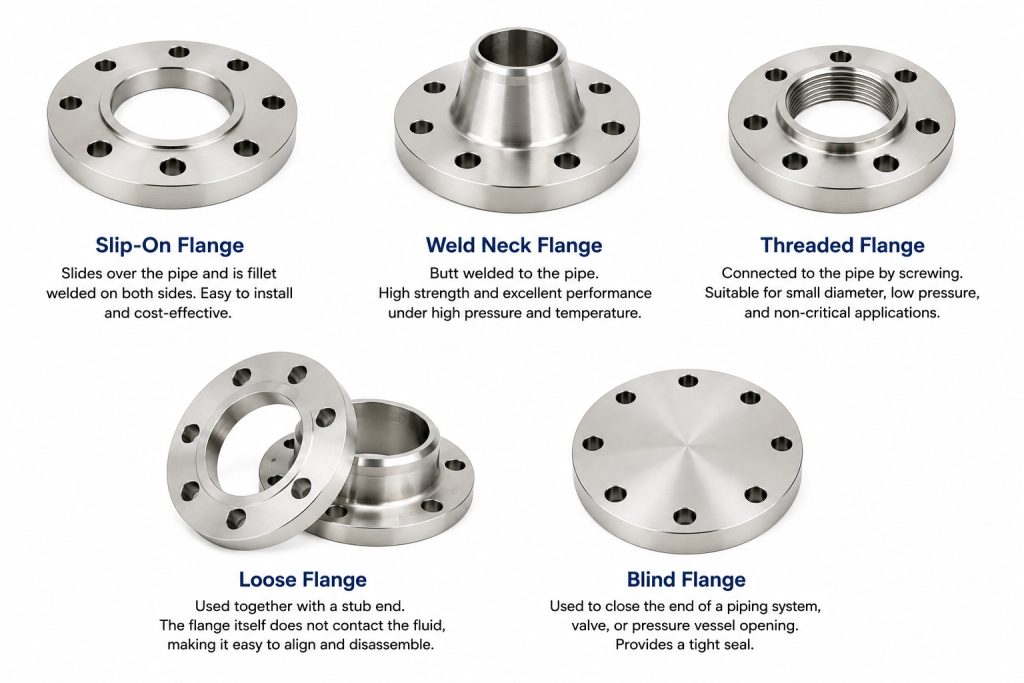
Flanges can be divided into many types according to structure and connection method.
4.1 Slip-On Flange
A slip-on flange is one of the most common flange types. It has a simple structure and relatively low manufacturing cost. It is usually used in medium- and low-pressure pipeline systems.
During installation, the pipe is inserted into the inner bore of the flange and then welded. Slip-on flanges are suitable for conditions where pressure is not high and temperature fluctuations are not severe.
In some ordinary liquid level gauges or low-pressure storage tank level meter installations, slip-on flanges are commonly used. However, for high-pressure, highly corrosive, or high-temperature applications, higher-grade flange types are usually selected.
4.2 Weld Neck Flange
A weld neck flange has a long tapered neck and is also known as a neck butt-weld flange. It is connected to the pipe by butt welding. This structure has high strength and better stress distribution, making it suitable for high-temperature, high-pressure, low-temperature, or severe operating conditions.
Weld neck flanges are commonly used in petrochemical plants, pressure vessels, reactors, and high-pressure level measurement systems. For example, high-pressure radar level meters, guided wave radar level meters, and differential pressure level transmitters often use weld neck flanges or similar high-strength structures.
4.3 Threaded Flange
A threaded flange is connected to a pipe through internal threads and does not require welding. It is easy to install and is suitable for small-diameter, low-pressure, non-hazardous medium systems.
However, threaded connections have limited sealing performance and mechanical strength. They are not suitable for severe temperature cycling, high pressure, or toxic and flammable media.
In instrument installation, small liquid level switches, float level meters, and pressure transmitter interfaces may sometimes use threaded connections. However, large level meters more commonly use flange connections.
4.4 Loose Flange
A loose flange consists of a flange ring and a stub end. The flange body can rotate, making bolt hole alignment easier during installation. It is commonly used in stainless steel, plastic, lined pipelines, or applications where expensive metal materials need to be saved.
In corrosive medium level measurement, if the equipment uses PTFE lining, rubber lining, or plastic materials, loose flanges can improve installation convenience and reduce material costs.
4.5 Blind Flange
A blind flange has no central opening and is mainly used to seal pipeline ends, equipment openings, or reserved nozzles. It is often used for maintenance isolation, pressure testing, or closing spare connections.
At a level meter installation site, if a tank has a reserved level meter connection but the instrument has not yet been installed, a blind flange is often used to seal the opening and ensure tank sealing and safety.
5. Flange Sealing Face Types
The sealing face structure of a flange directly affects sealing performance. Common sealing faces include flat face, raised face, male and female face, tongue and groove face, and ring type joint face.
Flat face flanges have a simple structure and are mostly used in low-pressure applications. Raised face flanges are widely used and offer good sealing performance, making them a common choice for many industrial pipelines and instrument interfaces.
Male and female face flanges use matching raised and recessed surfaces to limit gasket movement and improve sealing stability. Tongue and groove face flanges provide reliable sealing and are suitable for toxic, flammable, explosive, or high-sealing-requirement media. Ring type joint flanges are generally used in high-temperature and high-pressure applications and must be used with metal ring gaskets.
For level meters, the selection of flange sealing face should be based on medium characteristics. For example, when measuring acidic or alkaline solutions, the corrosion resistance of the gasket and flange material should be considered. When measuring liquefied gas, solvents, or toxic media, high-reliability sealing structures should be preferred. When measuring high-temperature steam, thermal oil, or high-pressure reactor liquid levels, flange sealing types suitable for high temperature and high pressure should be selected.
6. Common Flange Materials
Flange material should be selected according to medium, temperature, pressure, and site environment.
Carbon steel flanges are economical and have good strength. They are suitable for general media such as water, steam, air, and oil products.
Stainless steel flanges, such as 304 stainless steel flanges, have good corrosion resistance and are suitable for food, pharmaceutical, mildly corrosive, and clean working conditions.
316L stainless steel flanges have better resistance to chloride ion corrosion and are commonly used in chemical engineering, seawater, acid and alkali media, and corrosive liquids.
For strong acids, strong alkalis, organic solvents, or special corrosive media, Hastelloy, titanium, Monel alloy, duplex stainless steel, or PTFE-lined flanges may be required. In the food and pharmaceutical industries, flange surface roughness, sanitary structure, and cleanability are also important considerations.
In level meter applications, flange material must be compatible with the measured medium. If the flange is corroded, it may not only cause leakage, but also lead to instrument loosening, measurement errors, or even safety accidents. Therefore, when selecting a flange, engineers should not only consider size and pressure rating, but also check medium concentration, temperature, corrosiveness, crystallization tendency, and whether solid particles are present.
7. Flange Standards and Pressure Ratings
Industrial flanges are usually manufactured and selected according to standards. Common standard systems include Chinese GB standards, HG chemical industry standards, JB machinery industry standards, ASME/ANSI standards, DIN standards, and JIS standards.
Flanges under different standards may differ in outside diameter, number of bolt holes, bolt circle diameter, sealing face dimensions, and pressure rating. Therefore, they cannot be mixed at will.
Pressure rating is an important parameter in flange selection. Common expressions include PN and Class. PN is commonly used in Chinese and European standard systems, such as PN10, PN16, PN25, and PN40. Class is common in American standard systems, such as Class 150, Class 300, and Class 600.
It should be noted that the actual allowable pressure of a flange is related to temperature and material. The nominal pressure rating does not mean the flange can withstand that pressure under all temperature conditions.
When purchasing a level meter, flange specifications are often written as “DN80 PN16 RF 304” or “2 inch Class 150 RF 316L.” DN80 indicates nominal diameter, PN16 indicates pressure rating, RF indicates raised face, and 304 indicates material. Engineers should confirm that the level meter flange fully matches the tank interface. Otherwise, problems such as installation failure, bolt hole mismatch, or sealing face incompatibility may occur.
8. Applications of Flanges in Level Meters
Flanges are widely used in level meters. They mainly provide mounting, process sealing, pressure isolation, and easy maintenance. Different types of level meters have different flange requirements.
8.1 Flanges in Radar Level Meters
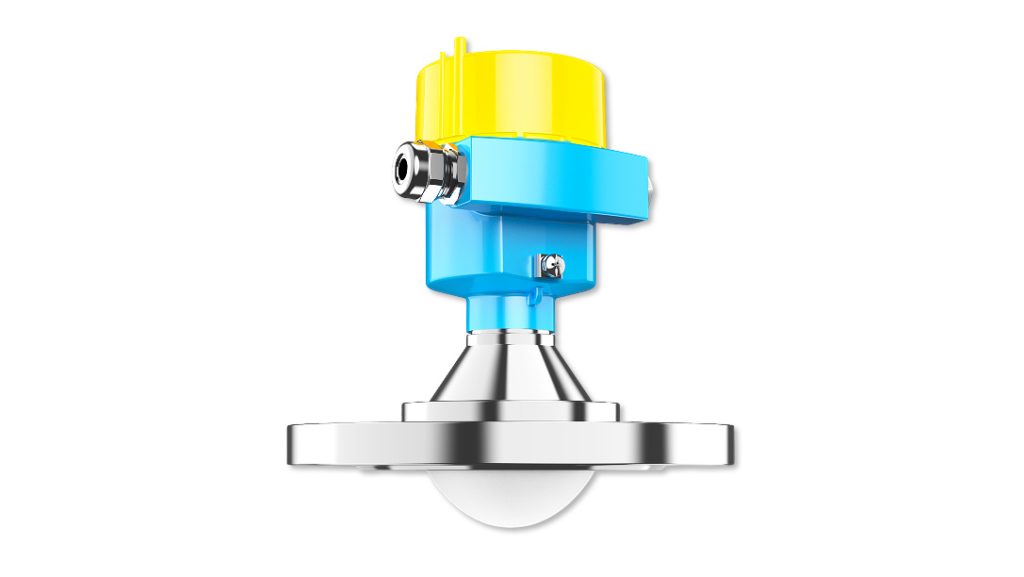
Radar level meters are often installed on the top of storage tanks and fixed to tank nozzles through flanges. Flange connection ensures that the instrument antenna remains stable and faces the liquid or material surface correctly, preventing abnormal echoes caused by installation tilt.
For non-contact radar level meters, the flange diameter must match the antenna size. Horn antenna radar level meters usually require larger flange sizes, such as DN80, DN100, or larger. Smaller lens antennas or planar antennas can use smaller flanges.
If the tank contains agitators, foam, steam, dust, or operates under high-temperature and high-pressure conditions, the flange structure and sealing materials must also meet the corresponding working conditions.
In corrosive liquid storage tanks, radar level meters often use PTFE-encapsulated antennas or anti-corrosion flange structures. In this case, the flange is not only a connection component but also an important barrier protecting the process end of the instrument.
8.2 Flanges in Guided Wave Radar Level Meters
Guided wave radar level meters use cable probes, rod probes, or coaxial probes that extend into the tank for level measurement. The flange is used to fix the probe and support its weight. This is especially important when long cable probes are used in tall silos or large storage tanks.
If the measured medium is adhesive, corrosive, or operates under high-temperature and high-pressure conditions, the flange material, sealing face, gasket, and process sealing structure of the guided wave radar level meter must be carefully selected.
For interface measurement, such as oil-water interfaces or acid-alkali layering, the flange installation position also affects probe stability and measurement reliability.
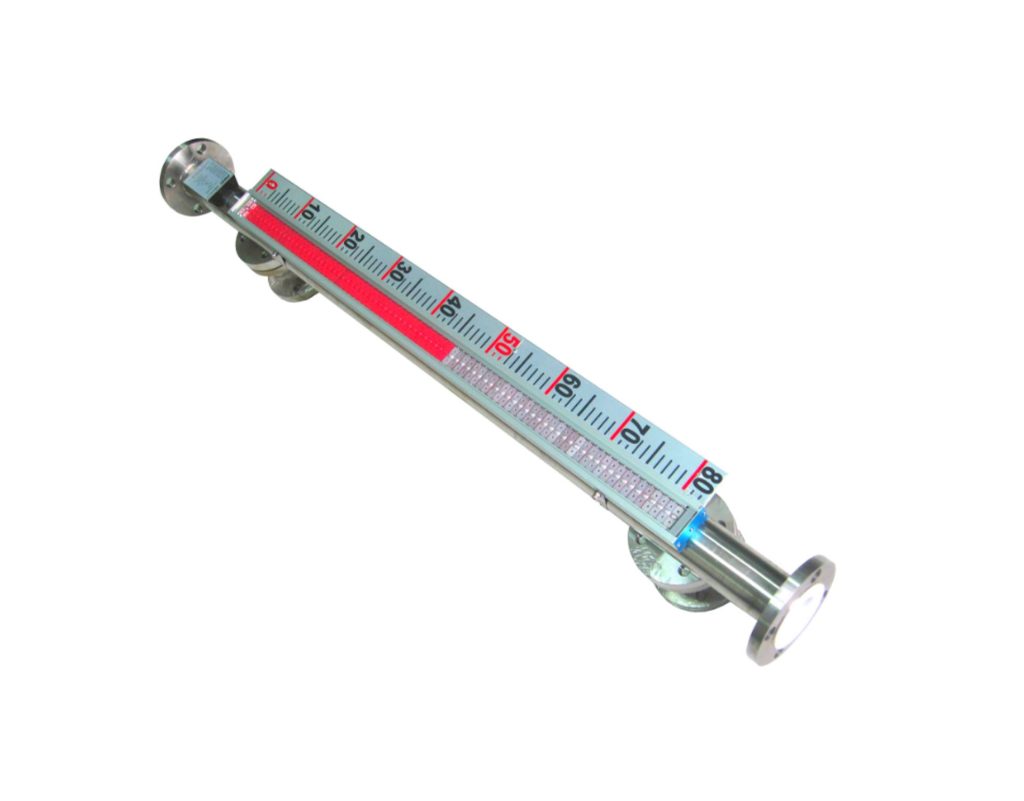
8.3 Flanges in Magnetic Level Gauges
Magnetic level gauges are usually mounted on the side of a tank and connected to the vessel through upper and lower process connections. Flange connection is one of the most common installation methods for magnetic level gauges.
The upper and lower flanges connect the gauge chamber to the gas phase and liquid phase areas of the vessel respectively, allowing the liquid level inside the gauge chamber to remain consistent with the liquid level in the vessel.
When selecting flanges for a magnetic level gauge, special attention should be paid to center-to-center distance, nominal diameter, pressure rating, and material. If the flange center distance does not match the tank interface, on-site installation will be very difficult. If the seal is poor, medium leakage may occur.
For high-temperature, high-pressure, corrosive, or crystallizing media, magnetic level gauges may also need insulation jackets, drain valves, vent valves, or anti-corrosion lining structures.
8.4 Flanges in Float Level Meters and Displacer Level Meters
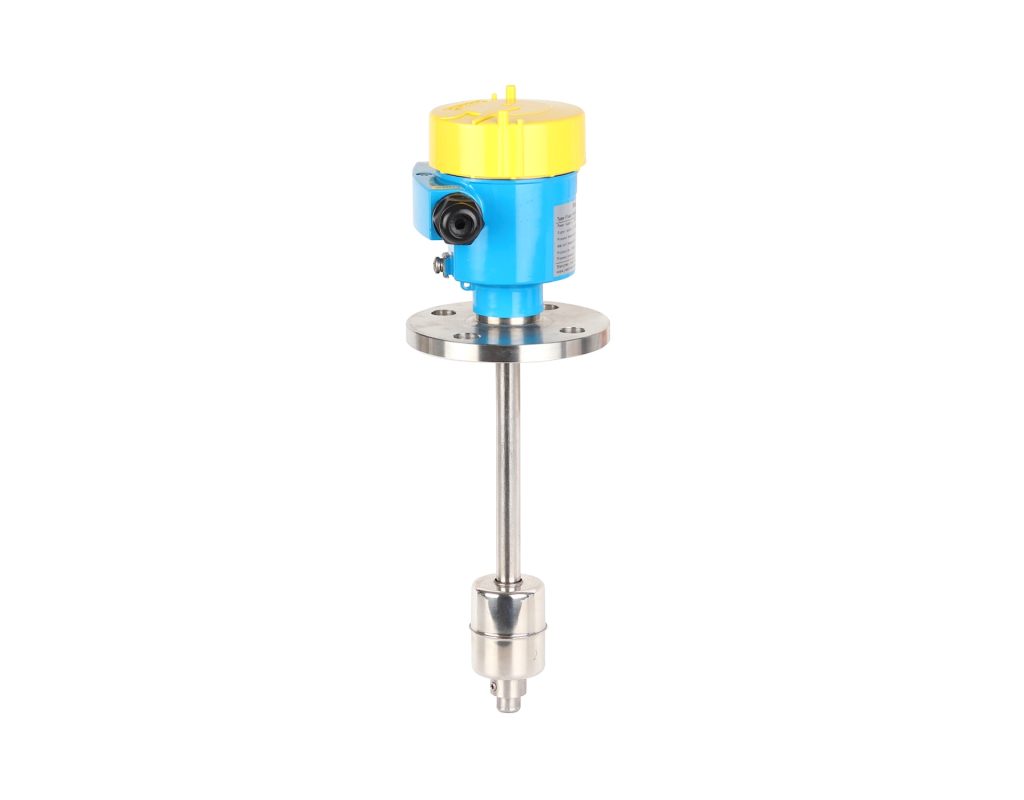
Float level meters and displacer level meters are often used for liquid level switching, continuous level measurement, or interface measurement. They can be installed from the top or side of a tank. Flanges are used to fix the float mechanism or measuring chamber.
Side-mounted float level switches are often connected to the tank wall through flanges. The float moves or flips as the liquid level changes, triggering a switch signal.
Top-mounted float level meters are fixed on the tank roof through a flange. The float moves with the liquid level and drives a rod, magnetic element, or transmitter mechanism to output a signal.
For these instruments, mechanical stability of the flange connection is very important because the float, rod, or displacer inside the tank may be affected by liquid fluctuation, flow velocity, impact, and medium viscosity.
8.5 Flanges in Differential Pressure Level Meters
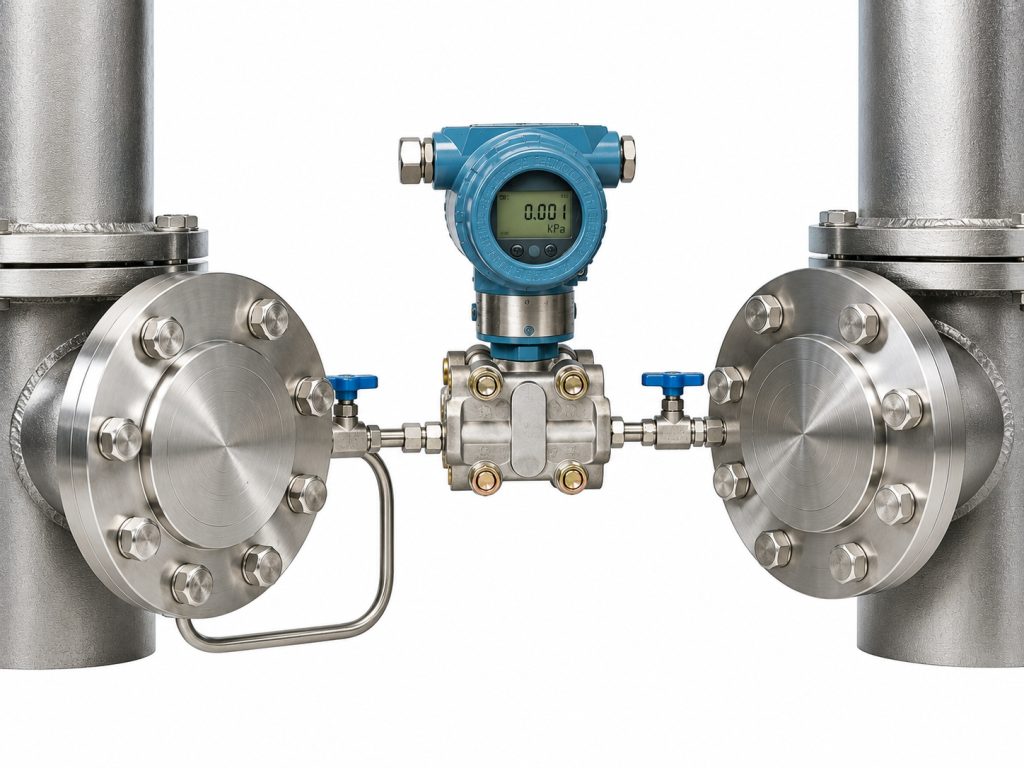
Differential pressure level meters are commonly used for liquid level measurement in closed vessels, pressure vessels, steam drums, and high-temperature and high-pressure applications. They can be connected through impulse pipes or use flange-mounted differential pressure transmitters or remote diaphragm seals.
In flange-mounted differential pressure level meters, the flange is usually combined with a diaphragm seal structure. Medium pressure is transmitted to the transmitter through a diaphragm and filling fluid. This prevents high-temperature, corrosive, viscous, or crystallizing media from directly entering the measuring chamber of the transmitter.
Remote diaphragm flanges are very common in chemical level measurement, especially for strong corrosive, high-viscosity, easy-to-block, sanitary, or high-temperature media. When selecting such instruments, it is necessary to confirm flange specifications, diaphragm material, capillary length, filling fluid type, and the influence of ambient temperature.
9. Key Points for Selecting Level Meter Flanges
Flange selection for level meters should consider multiple factors.
The first factor is diameter. The flange diameter must meet the installation and measurement requirements of the instrument. For example, radar level meter antennas need sufficient opening size, magnetic level gauges must match tank nozzles, and remote diaphragm flanges must meet diaphragm size and response performance requirements.
The second factor is pressure rating. The flange pressure rating must meet or exceed the design pressure of the vessel, while also considering the influence of temperature on pressure-bearing capacity. Selection should not be based only on normal operating pressure. Startup, shutdown, purging, pressure fluctuations, and safety margins should also be considered.
The third factor is material. Flanges, gaskets, diaphragms, and wetted parts must be compatible with the medium. For highly corrosive media, suitable materials such as 316L, Hastelloy, titanium, or PTFE lining should be prioritized.
The fourth factor is sealing face type. Raised face flanges can be used for common working conditions. For high sealing requirements, flammable and explosive media, or toxic media, male and female faces, tongue and groove faces, or ring type joint faces may be considered.
The fifth factor is installation direction. Top mounting, side mounting, bypass chamber mounting, and guided wave probe mounting all have different flange structure requirements. Improper installation direction may cause false echoes in radar level meters, float jamming, abnormal magnetic level gauge indication, or differential pressure measurement errors.
The sixth factor is maintenance convenience. Level meters need regular inspection, cleaning, calibration, or replacement. A well-designed flange connection can reduce maintenance costs and improve production continuity.
10. Flange Installation Precautions
Flange installation quality directly affects sealing performance and safety. Before installation, check whether the flange specification, pressure rating, sealing face type, material, and bolt holes match.
The sealing surface should be kept clean and free from scratches, rust, dents, or impurities. When installing the gasket, make sure it is centered and not tilted. Damaged gaskets should not be reused.
When tightening bolts, use a diagonal, step-by-step, and even tightening method to avoid uneven stress, flange deformation, or uneven gasket compression. For high-temperature, high-pressure, or important medium systems, tightening should be performed according to the specified torque. Retightening may be required after hot operation.
When installing a level meter, attention should also be paid to instrument orientation. The flange of a radar level meter should be kept as horizontal as possible so that the antenna points vertically toward the liquid or material surface. The upper and lower flanges of a magnetic level gauge should be vertically aligned. The capillary of a remote diaphragm flange should avoid sharp bends, compression, and large temperature differences. The probe of a guided wave radar level meter should avoid contact with tank walls, agitators, or internal structures.
11. Frequently Asked Questions
11.1 What Is the Difference Between a Flange Connection and a Threaded Connection?
Flange connections are more suitable for large-diameter, high-pressure, and maintenance-intensive applications. Threaded connections are simple in structure and are mostly used for small-diameter, low-pressure instrument interfaces. For large level meters or important storage tank level measurement, flange connections are more common.
11.2 Must a Level Meter Be Installed with a Flange?
Not necessarily. Some small level meters can be installed with threaded connections, clamps, sanitary fittings, or brackets. However, in industrial storage tanks, pressure vessels, corrosive media, and high-temperature and high-pressure conditions, flange installation is more reliable and safer.
11.3 What Causes Flange Leakage?
Common causes include incorrect gasket selection, uneven bolt tightening, damaged sealing surfaces, flange material corrosion, excessive pressure or temperature, installation misalignment, excessive vibration, or reuse of old gaskets.
When leakage occurs at a level meter flange, the medium should first be isolated or the equipment should be shut down safely. Then the sealing surface, gasket, and bolt condition should be inspected.
11.4 How Should a Level Meter Flange Be Selected?
The selection should confirm the medium name, temperature, pressure, density, corrosiveness, installation method, tank nozzle standard, diameter, sealing face type, and material.
For radar level meters, antenna size and nozzle height should also be confirmed. For magnetic level gauges, the center-to-center distance between upper and lower flanges must be confirmed. For differential pressure level meters, diaphragm material and remote seal structure must be checked.
12. Conclusion
A flange is an indispensable connecting and sealing component in industrial systems. It is widely used in pipelines, valves, pumps, pressure vessels, and automation instruments. Although it may look like a simple circular connector, it directly affects equipment installation, operational safety, sealing reliability, and maintenance efficiency.
In level meter applications, the importance of flanges is even more obvious. Whether used with radar level meters, guided wave radar level meters, magnetic level gauges, float level meters, or differential pressure level meters, flanges play a key role in fixing instruments, connecting vessels, isolating media, and ensuring sealing performance.
Selecting the correct flange specification, material, pressure rating, and sealing face type can improve level measurement stability and reduce leakage, corrosion, installation mismatch, and maintenance problems.
Therefore, when selecting a level meter or designing an engineering system, it is not enough to focus only on instrument range, accuracy, and output signal. Flange connection parameters must also be carefully considered. A suitable level meter flange is often an important foundation for accurate measurement, safe production, and long-term stable operation.