1. Why Nickel Sulfate Pipeline Level Monitoring Matters
Nickel sulfate is an important process medium widely used in new energy battery materials, nickel salt production, electroplating, hydrometallurgy, ternary precursor production, and fine chemical processes. With the rapid development of the new energy industry, nickel sulfate is being used more frequently in batching, reaction, transportation, filtration, crystallization, and storage processes. As a result, higher requirements are being placed on field level monitoring and automatic process control.
In actual production, nickel sulfate solution is usually transported through pipelines between storage tanks, reactors, metering tanks, filtration systems, pump units, and downstream process equipment. Whether there is liquid in the pipeline, whether the liquid transfer is continuous, whether the pump inlet is short of liquid, and whether the outlet pipeline is blocked can directly affect the stable operation of the entire production line.
If nickel sulfate pipeline level monitoring is inaccurate, it may cause pump dry running, mechanical seal damage, pipeline no-flow conditions, process interruption, abnormal material ratio, false interlock actions, equipment shutdown, and production loss. Therefore, installing a reliable level detection instrument in a nickel sulfate transfer system is essential for equipment protection, process stability, and automated interlock control.
2. Key Challenges in Nickel Sulfate Solution Level Detection
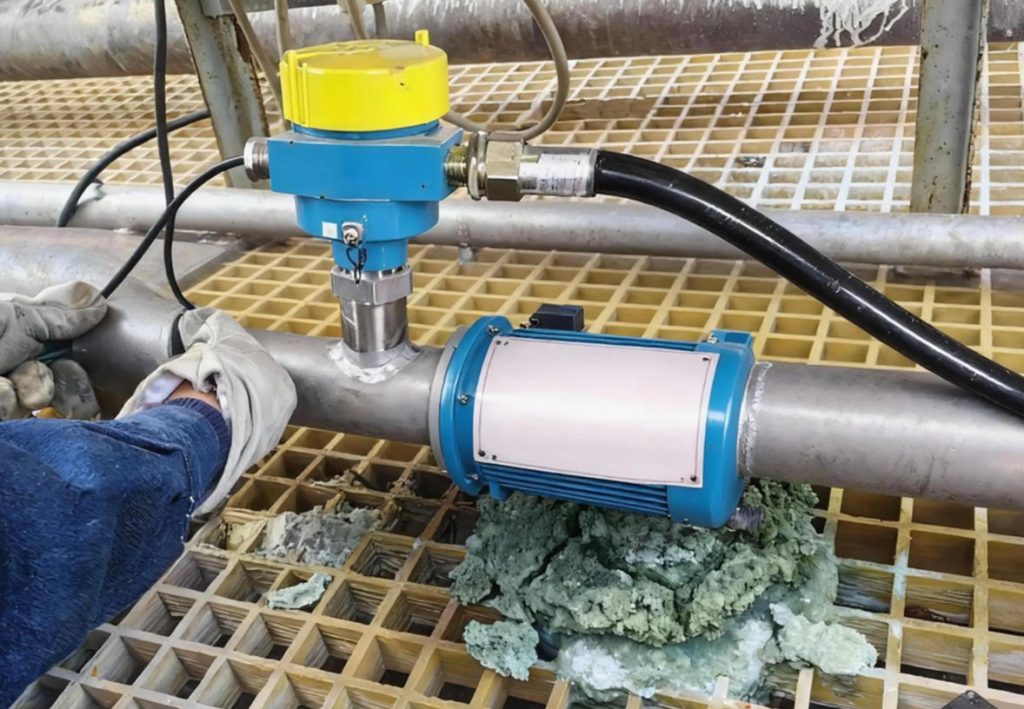
Although nickel sulfate solution usually appears as a green or blue-green liquid, its industrial working conditions are far from simple. Its properties may change with concentration, temperature, pressure, impurity content, and process stage. These changes can directly affect the stability of a level switch.
First, nickel sulfate solution is corrosive. Under higher concentration, higher temperature, or acidic conditions, nickel sulfate may corrode ordinary metal materials, seals, and wetted parts of instruments. If the material of the level switch is not properly selected, long-term operation may lead to probe corrosion, seal failure, signal drift, or shortened service life.
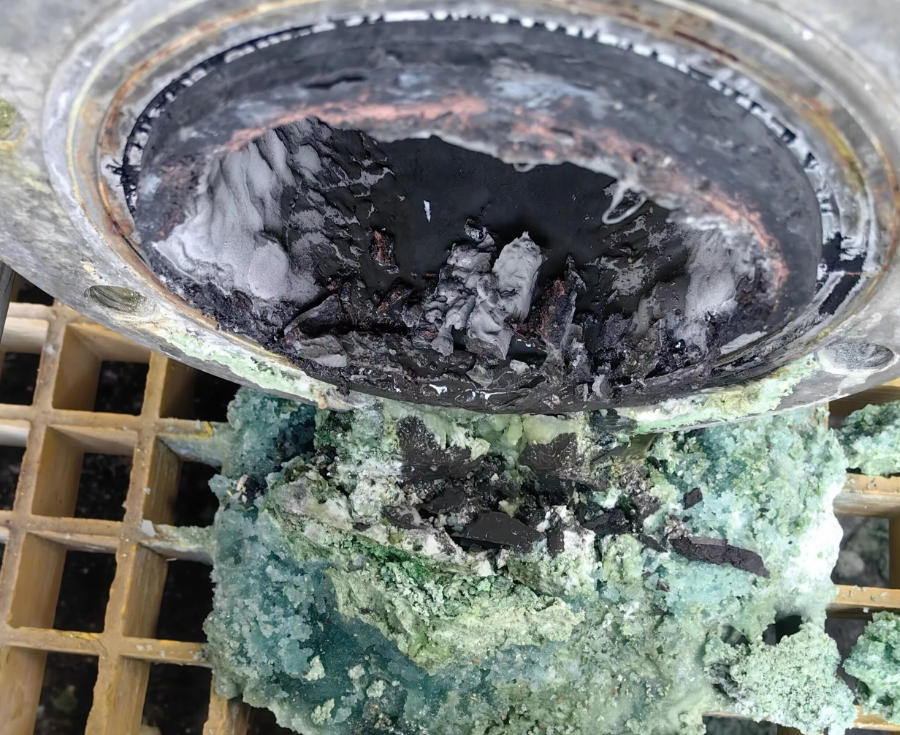
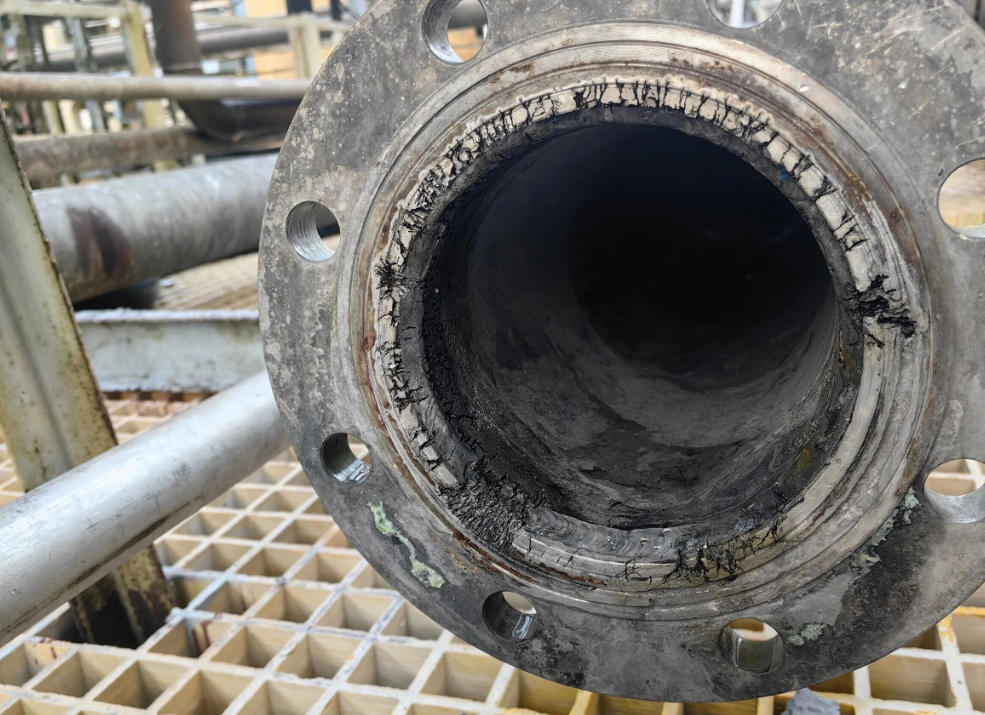
Second, nickel sulfate solution may crystallize or adhere to surfaces. When the temperature drops, concentration rises, or process conditions fluctuate, nickel sulfate may form crystals or deposits on pipe walls, valves, filters, and instrument probes. For float switches, conductive level switches, or mechanical level switches, crystallization and adhesion can cause float jamming, electrode passivation, delayed mechanical movement, false alarms, or missed alarms.
Third, bubbles, foam, and turbulence are common during pipeline transfer. Pump start-stop cycles, pipe bends, valve throttling, liquid return, and flow rate changes may all generate bubbles or turbulence inside the pipeline. If the level switch has poor anti-interference capability, it may mistakenly identify bubbles as no liquid, or its output may fluctuate frequently due to liquid disturbance.
Fourth, installation space is often limited. Detection points in nickel sulfate transfer systems are usually located at pump inlets, pump outlets, storage tank outlet pipes, reactor discharge pipes, return lines, and before or after filters. These areas may already be occupied by valves, flanges, supports, and other instruments. A suitable level switch must therefore be compact, easy to install, flexible in mounting, and convenient to maintain.
3. Limitations of Traditional Level Switches in Nickel Sulfate Pipelines
In some older projects, nickel sulfate pipeline level detection may use float level switches, electrode level switches, mechanical switches, or simple conductive detection devices. These instruments may work in clean water, ordinary liquids, or simple applications, but they often show obvious limitations in complex chemical media such as nickel sulfate.
A float level switch works by relying on the movement of a float as the liquid level rises or falls. When the medium crystallizes, deposits, or adheres to the float, the float may become stuck, causing delayed or failed switching. In small-diameter pipelines, horizontal pipelines, or applications with changing flow velocity, float structures can also be difficult to install and maintain reliably.
An electrode level switch depends on the conductivity of the medium. However, the conductivity of nickel sulfate solution may vary with concentration, temperature, and impurities. After long-term operation, the electrode surface may become scaled, corroded, polarized, or passivated, resulting in reduced sensitivity and unreliable detection.
Mechanical instruments are also easily affected by pipe vibration, fluid impact, and material adhesion. In applications requiring pump protection, no-flow alarm, and automatic interlock control, slow response or false triggering may cause pump dry running, production interruption, or incorrect control system judgment.
For nickel sulfate pipeline level monitoring, companies need a detection solution that is simple in structure, fast in response, strong in anti-interference performance, low in maintenance, and suitable for corrosive liquids and complex process conditions. A tuning fork level switch is an ideal choice for such applications.
4. Working Principle of the Ring-11 Tuning Fork Level Switch
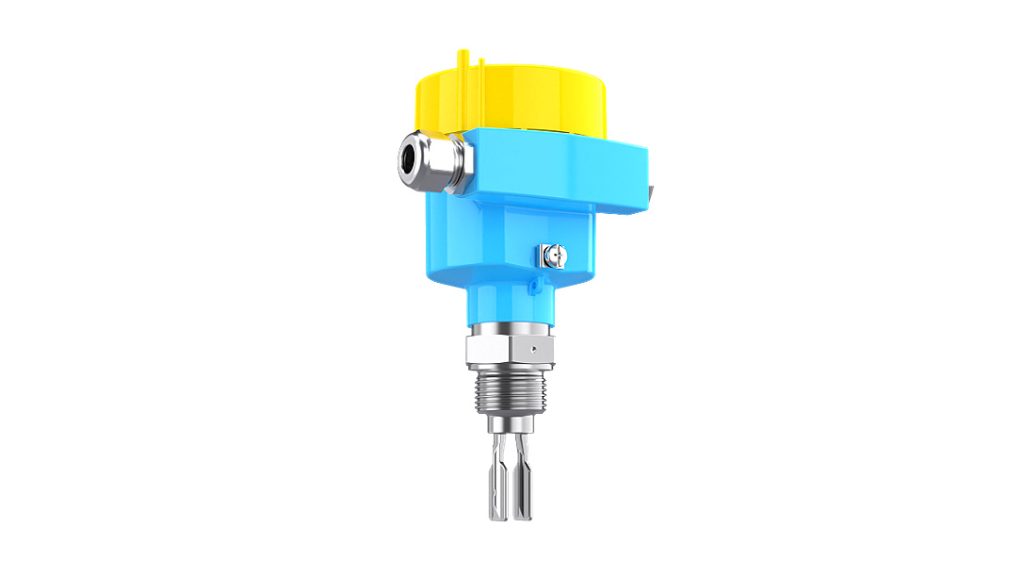
The Ring-11 tuning fork level switch is a point level detection instrument based on the vibration principle. Its core sensing element is a tuning fork probe. After the instrument is powered on, the electronic unit drives the tuning fork to vibrate at a fixed frequency. When the fork is in air, the vibration remains stable. When liquid contacts the fork, the medium creates damping on the vibration, causing a change in vibration frequency or amplitude. The instrument detects this change and determines whether liquid is present at the measuring point, then outputs a corresponding switch signal.
Unlike float, electrode, or mechanical level switches, a tuning fork level switch does not rely on buoyancy, has no moving mechanical parts, and does not depend on the conductivity of the medium. As long as liquid touches the tuning fork probe, the instrument can determine whether the pipeline is wet or dry. This makes the Ring-11 tuning fork level switch especially suitable for nickel sulfate solution, acid and alkali liquids, salt solutions, emulsions, liquids containing bubbles, and chemical media with potential adhesion.
In nickel sulfate pipeline level monitoring, the Ring-11 tuning fork level switch can be used to detect whether liquid is present in the pipe. When the pipeline is short of liquid, experiencing no-flow conditions, or the liquid level falls below the installation position, the instrument can promptly output an alarm signal or interlock signal, helping the control system stop the pump, switch valves, or activate protection logic.
5. Core Advantages of the Ring-11 Tuning Fork Level Switch for Nickel Sulfate Monitoring
5.1 Reliable Structural Design for Complex Chemical Sites
The Ring-11 tuning fork level switch adopts precision tuning technology and a stable fork structure, allowing it to maintain reliable vibration performance under complex working conditions. Its structural design helps improve detection sensitivity and anti-interference capability, making it suitable for nickel sulfate pipelines, storage tanks, reactors, and pipelines before or after transfer pumps.
For nickel sulfate solution, which may involve corrosion, crystallization, adhesion, and bubbles, a stable level switch structure is particularly important. The Ring-11 has no float, rotating shaft, or other moving mechanical parts, reducing the risk of mechanical jamming, lowering maintenance frequency, and improving long-term operational reliability.
5.2 Capable of Detecting Low-Density Liquids
The Ring-11 tuning fork level switch can detect low-density liquids and is suitable for media with density as low as 0.5 g/cm³. This feature allows it to be used not only for nickel sulfate solution, but also for various acid and alkali liquids, solvents, chemical liquids, cleaning fluids, and process liquids.
In real production environments, the density of nickel sulfate solution may vary due to different batches, concentrations, or temperatures. A level switch with broad media adaptability can help reduce false triggering caused by changes in liquid density.
5.3 Suitable for High-Temperature Applications
In some nickel sulfate production or supporting processes, the medium temperature may be relatively high, especially during reaction, evaporation, concentration, or heated transfer. In these cases, the level instrument must have good temperature resistance. The Ring-11 tuning fork level switch can be used in high-temperature applications up to 400°C, meeting the requirements of more demanding industrial environments.
For pipeline level monitoring applications with significant temperature fluctuations, a high-temperature-resistant design not only helps extend instrument service life, but also improves the safety of system operation.
5.4 Resistant to Installation Position, Pressure, Temperature, Foam, and Viscosity Influences
Nickel sulfate pipeline systems often involve changes in flow velocity, bubbles, light foam, pressure fluctuation, and adhesion. The Ring-11 tuning fork level switch has strong adaptability to process conditions and is not easily affected by installation position, pressure, temperature, foam, or viscosity. It can maintain stable detection under complex operating conditions.
This advantage is particularly valuable for pump inlet pipelines, circulation lines, and return pipelines where bubbles or turbulence are common. A stable switch signal helps reduce false alarms, avoid frequent start-stop actions, and improve the reliability of automatic control.
5.5 Flexible Output Options for PLC and DCS Integration
The Ring-11 tuning fork level switch offers multiple output options, including relay, two-wire, NAMUR, and transistor outputs. This makes it easy to connect with different field control systems.
In nickel sulfate production lines, level switches often need to be connected to PLC systems, DCS systems, field alarms, pump control cabinets, or safety interlock systems. Flexible output options can meet different wiring and control requirements, making the instrument suitable for both new projects and retrofit applications.
5.6 Certified for Safety-Critical Applications
The Ring-11 tuning fork level switch has passed SIL2/3 functional safety certification, CE certification, and explosion-proof certification requirements. It is suitable for industrial applications with high safety and reliability demands.
In chemical, new energy battery material, and nickel salt production industries, level switches not only perform process detection, but may also participate in pump protection, no-flow alarm, overflow prevention, and safety interlock control. Instruments with recognized safety certifications are more suitable for critical measuring points and help improve the safety level of the entire system.
5.7 Hygienic-Grade Surface Finish
The fork surface of the Ring-11 tuning fork level switch can achieve a surface roughness of Ra < 0.5 μm, meeting hygienic-grade application requirements. Although nickel sulfate is a chemical medium rather than a food-grade product, a high-quality surface finish still helps reduce material adhesion, crystal residue, and cleaning dead zones.
For nickel sulfate solution that is prone to crystallization or deposition, a smoother surface is beneficial for reducing material buildup on the probe, lowering cleaning difficulty, and improving long-term instrument stability.
5.8 Gas-Tight Welded Sleeve Design for Enhanced Protection
The Ring-11 tuning fork level switch adopts a gas-tight welded sleeve design, which helps prevent high-pressure or corrosive liquid from entering the electronics chamber through the probe section. This improves the instrument’s safety and protection capability under hazardous media and demanding operating conditions.
Nickel sulfate solution has a certain level of corrosiveness. If the sealing structure is unreliable, long-term operation may lead to medium ingress, electronic component damage, or safety risks. The gas-tight welded design further enhances instrument sealing performance and operational reliability.
6. Typical Applications in Nickel Sulfate Pipeline Level Monitoring
6.1 Pump Inlet Dry-Run Protection
In nickel sulfate transfer systems, the presence of liquid at the pump inlet directly affects pump safety. If the inlet pipeline is short of liquid, the pump may run dry, causing mechanical seal failure, pump body overheating, motor overload, or equipment damage.
Installing the Ring-11 tuning fork level switch on the pump inlet pipeline allows real-time detection of whether liquid is present. When the liquid falls below the detection position or a no-flow condition occurs, the instrument immediately outputs a signal, allowing the interlock control system to stop the pump and prevent dry running.
6.2 Storage Tank Outlet No-Flow Alarm
During nickel sulfate discharge from a storage tank, downstream processes may experience material interruption if the outlet pipe is blocked, the valve is not opened, crystallization occurs at the tank bottom, or the tank level is insufficient. The Ring-11 tuning fork level switch can be installed at the tank outlet pipe or discharge pipe to detect whether material is being discharged normally.
When there is no liquid in the pipeline or the liquid flow is interrupted, the system can issue an alarm in time, prompting operators to check tank level, valve status, pump operation, or pipeline blockage.
6.3 Reactor Discharge and Batching System Monitoring
In new energy battery material production, nickel sulfate is often used as a key raw material for batching and reaction. If discharge is discontinuous or flow is abnormal, it may affect the reaction ratio and product consistency.
By installing a tuning fork level switch on the reactor discharge pipe, metering tank outlet, or batching pipeline, the system can confirm whether the liquid has reached the required position. This supports automatic process control and reduces manual inspection and human error.
6.4 Return Line and Circulation Line Status Confirmation
In circulation cooling, filtration circulation, reaction circulation, and return systems, whether liquid continues to flow through the pipeline is an important indicator of normal operation. The Ring-11 tuning fork level switch can be used for liquid presence detection in circulation and return pipelines.
Once no-flow, air blockage, or insufficient liquid occurs, the instrument can output a timely signal, helping the control system activate alarms or interlock measures and preventing process abnormalities from expanding.
6.5 Liquid Status Detection Before and After Filters
Filters are commonly used in nickel sulfate transfer systems to remove impurities or crystalline particles. Filter blockage may cause reduced flow, pipeline no-flow, or abnormal pump load. Installing tuning fork level switches before and after filters can help determine whether liquid is passing through normally and improve the reliability of the filtration system.
7. Selection Suggestions for Nickel Sulfate Level Switches
To ensure stable operation of the Ring-11 tuning fork level switch in nickel sulfate pipeline level monitoring, several factors should be considered during selection.
First, confirm the concentration, temperature, pressure, and corrosiveness of the nickel sulfate solution. Different concentrations and temperatures place different requirements on instrument materials and sealing structures. If the medium is highly corrosive, suitable wetted materials and process connections should be selected.
Second, define the installation position. Fluid conditions vary at pump inlets, pump outlets, storage tank outlet pipes, return lines, reactor discharge pipes, and before or after filters. Installation angle and probe insertion length should be selected according to actual site conditions.
Third, choose the output type according to the control system. If the level switch is used for general alarm, the output should match the alarm system. If it is used for safety interlock or pump protection, signal stability, response speed, and safety level should be given priority.
Fourth, consider whether the medium is prone to crystallization or adhesion. For nickel sulfate solutions that crystallize easily, pipe insulation, regular flushing, proper installation angle, and a smooth probe surface can help reduce long-term crystal buildup.
Fifth, pay attention to explosion-proof and safety certification requirements. If the site is classified as a hazardous area, or if the level switch participates in safety interlock control, products with corresponding explosion-proof certification and functional safety certification should be preferred.
8. Practical Value of Using the Ring-11 Tuning Fork Level Switch
Using the Ring-11 tuning fork level switch for nickel sulfate pipeline level monitoring is not merely about obtaining a simple switch signal. More importantly, it improves the safety, stability, and automation level of the entire production system.
For equipment protection, accurate no-flow detection can prevent pump dry running and reduce the risk of mechanical seal damage and equipment shutdown. For process control, stable level signals help the system detect material interruption, blockage, air lock, and transfer abnormalities in time. For automated production, reliable switch output can be integrated into PLC, DCS, and interlock systems to support unattended or reduced-manpower operation. For plant operation, a low-maintenance and reliable instrument helps reduce downtime inspections, lower maintenance costs, and improve production efficiency.
In the new energy battery material industry, production continuity and product consistency are extremely important. As a key raw material, the stable transfer of nickel sulfate directly affects downstream batching, reaction, and crystallization processes. By providing accurate and reliable wet/dry detection, the Ring-11 tuning fork level switch supplies timely field signals and helps improve overall process reliability.
9. Conclusion
Nickel sulfate pipeline level monitoring faces multiple challenges, including corrosion, crystallization, adhesion, bubbles, foam, temperature fluctuation, pressure changes, and limited installation space. Traditional float, electrode, or mechanical level switches may suffer from jamming, false alarms, missed alarms, or frequent maintenance under such complex conditions.
The Ring-11 tuning fork level switch uses a vibration-based detection principle. It does not rely on medium conductivity, has no moving mechanical parts, and offers fast response, strong anti-interference capability, excellent adaptability to complex working conditions, flexible output options, complete safety certifications, and low maintenance requirements. Whether used for nickel sulfate pipeline no-flow alarm, pump inlet dry-run protection, storage tank outlet monitoring, reactor discharge detection, or automatic interlock control in new energy battery material production lines, the Ring-11 tuning fork level switch provides a stable and reliable level monitoring solution.
For companies seeking nickel sulfate level detection, chemical pipeline no-flow alarm, pump dry-run protection, or new energy battery material level monitoring solutions, choosing the Ring-11 tuning fork level switch can help improve equipment safety, reduce maintenance costs, lower production risks, and provide more reliable field data for continuous and intelligent production.