Introduction
Choosing a level meter for a pulp and paper mill is more complicated than selecting an instrument according to measuring range alone.
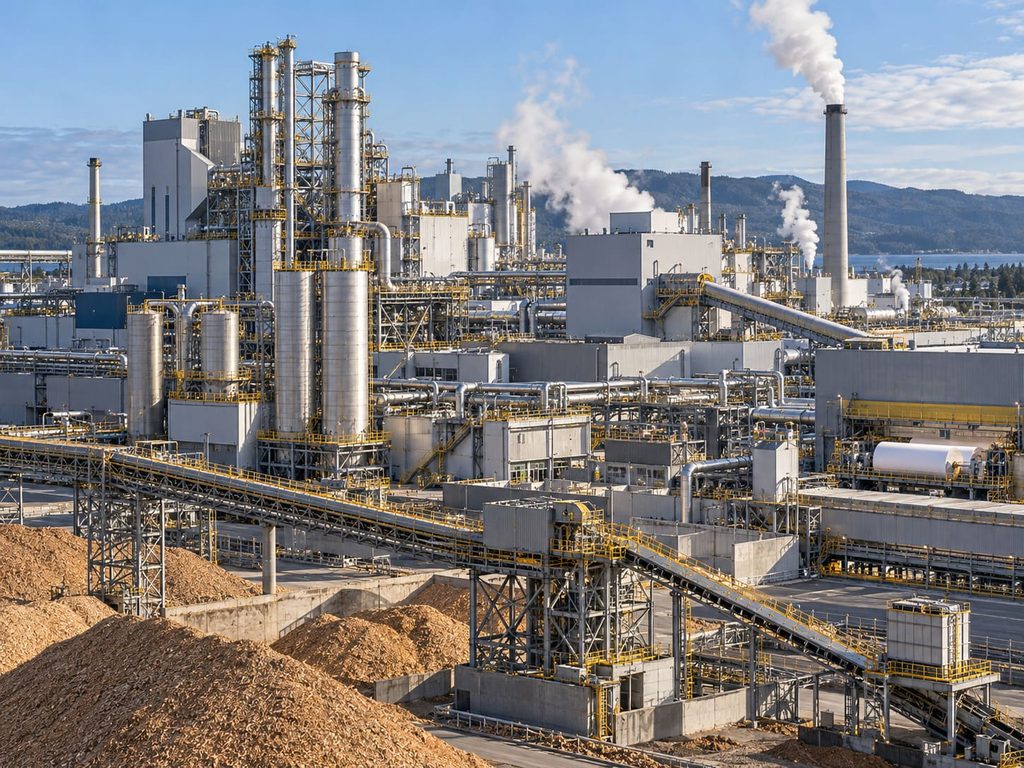
A modern pulp and paper plant may contain clean-water tanks, pulp chests, broke chests, white water systems, black liquor tanks, white and green liquor vessels, chemical additive tanks, wastewater pits, sludge storage tanks, wood chip silos, and mineral filler storage.
Although all of these applications require some form of level measurement, their operating conditions are completely different.
Pulp contains fibers and is often heavily agitated. White water can contain fines and foam. Black liquor may involve vapor and deposits. Chemical tanks can contain sticky, viscous, or corrosive products. Wastewater may contain suspended solids and aeration, while wood chips and mineral powders create dust and irregular solid surfaces.
For this reason, there is no single level measurement technology that is automatically the best choice for every part of a paper mill.
The correct approach is to start with the process medium, understand the required measurement function, evaluate the vessel and operating conditions, and then select the most appropriate technology.
This guide compares radar level meters, ultrasonic level meters, vibrating fork level switches, magnetic level indicators, and reed level transmitters for common pulp and paper applications.
1. Start with the Process Medium
The first question should not be:
“What measuring range do I need?”
It should be:
“What exactly am I measuring?”
The properties of the medium often determine which measurement principles should be considered.
Clean Liquids
Examples include:
- Clean water
- Service water
- Cooling water
- Some filtrates
- Relatively clean process liquids
These are generally among the easiest level applications in a paper mill.
Depending on tank conditions, radar, ultrasonic, hydrostatic, float-based, or other technologies may all be practical.
There is usually no reason to specify the most complex instrument if a simpler technology can provide reliable measurement.
Process Water and White Water
Process water may contain fibers, fillers, suspended solids, foam, or entrained air.
White water in particular should not be treated as ordinary clean water.
Common challenges include:
- Foam
- Fine fibers
- Suspended solids
- Turbulence
- Changing composition
- Humidity and condensation
Non-contact radar is often attractive in difficult white water applications, while ultrasonic measurement may remain practical where conditions are relatively mild.
Pulp Slurry
Pulp chests, machine chests, broke chests, mixing chests, and storage chests are among the most demanding liquid-level applications in paper production.
Typical problems include:
- Fibers
- Material buildup
- Agitation
- Foam
- Changing stock consistency
- Agitator shafts and internal structures
Because submerged sensing elements can accumulate fibers, non-contact radar is frequently considered for continuous pulp level measurement.
Viscous and Sticky Liquids
Prepared starch, some sizing chemicals, coatings, polymers, and other additives can be viscous or adhesive.
A contact probe or moving float may become coated over time.
Non-contact measurement can reduce direct exposure of the sensing element to these materials.
However, radar selection should still consider foam, dielectric behavior, antenna buildup, tank dimensions, and installation geometry.
Corrosive Chemicals
Paper mills may handle alkaline liquors, acids, cleaning chemicals, bleaching-related chemicals, and other aggressive media.
For these applications, measurement principle alone is not enough.
Engineers must confirm:
- Exact chemical
- Concentration
- Temperature
- Pressure
- Process connection material
- Sealing material
- Wetted materials
- Cleaning chemicals
A sensor described as “corrosion resistant” should never be assumed to be universally compatible with every chemical.
Powders and Bulk Solids
Paper mills also store solid materials such as:
- Wood chips
- Calcium carbonate
- Clay
- Starch powder
- Lime
- Other mineral fillers
Bulk solids introduce a different set of problems:
- Dust
- Uneven material surfaces
- Filling peaks
- Discharge cones
- Rat-holing
- Long measuring distances
- Internal silo structures
High-frequency radar is particularly useful in many of these applications because a narrow beam can be directed toward a selected area of the material surface.
2. Define What the Measurement Must Do
After identifying the medium, define the measurement function.
This step is important because a continuous level transmitter, a point level switch, and a local level indicator perform different jobs.
Continuous Level Measurement
Continuous instruments provide a real-time level value over the operating range.
They may be used for:
- PLC or DCS indication
- Pump control
- Valve control
- Inventory monitoring
- Process trends
- Automatic refill control
Radar, ultrasonic, reed-based transmitters, and other continuous technologies can be considered depending on the process.
High-Level Alarm
A high-level switch detects when material reaches a specific point.
It may be used for:
- High-level warning
- High-high alarm
- Overflow protection
- Interlock functions
In important applications, a point level switch may be installed independently of the continuous transmitter.
Low-Level Alarm
Low-level detection can support:
- Pump dry-run protection
- Empty-tank alarms
- Chemical refill warnings
- Process interlocks
Local Visual Indication
Some process vessels require operators to confirm liquid level directly at the tank.
A magnetic level indicator can provide local visual indication without relying only on a control-room display.
Inventory Measurement
Storage silos and tanks may require level primarily for inventory management rather than fast process control.
The required accuracy and measurement behavior may therefore differ from a small process tank where the signal directly controls a pump.
3. When Should a Radar Level Meter Be Used?
Radar has become one of the most versatile technologies for industrial level measurement.
A radar level meter transmits electromagnetic waves toward the material surface and calculates the distance from the returned signal.
For pulp and paper mills, radar is particularly useful where operating conditions are difficult.
Typical applications include:
- Pulp chests
- Broke chests
- Black liquor tanks
- White water tanks
- Chemical additive tanks
- Wastewater tanks
- Wood chip silos
- Powder storage
Main Advantages of Radar
Non-Contact Measurement
The antenna is normally installed above the material.
This reduces direct exposure to fibers, sticky products, sludge, or aggressive liquids.
Suitable for Vapor Conditions
Radar uses electromagnetic waves rather than sound.
It is therefore generally less dependent on gas-space temperature and vapor conditions than ultrasonic measurement.
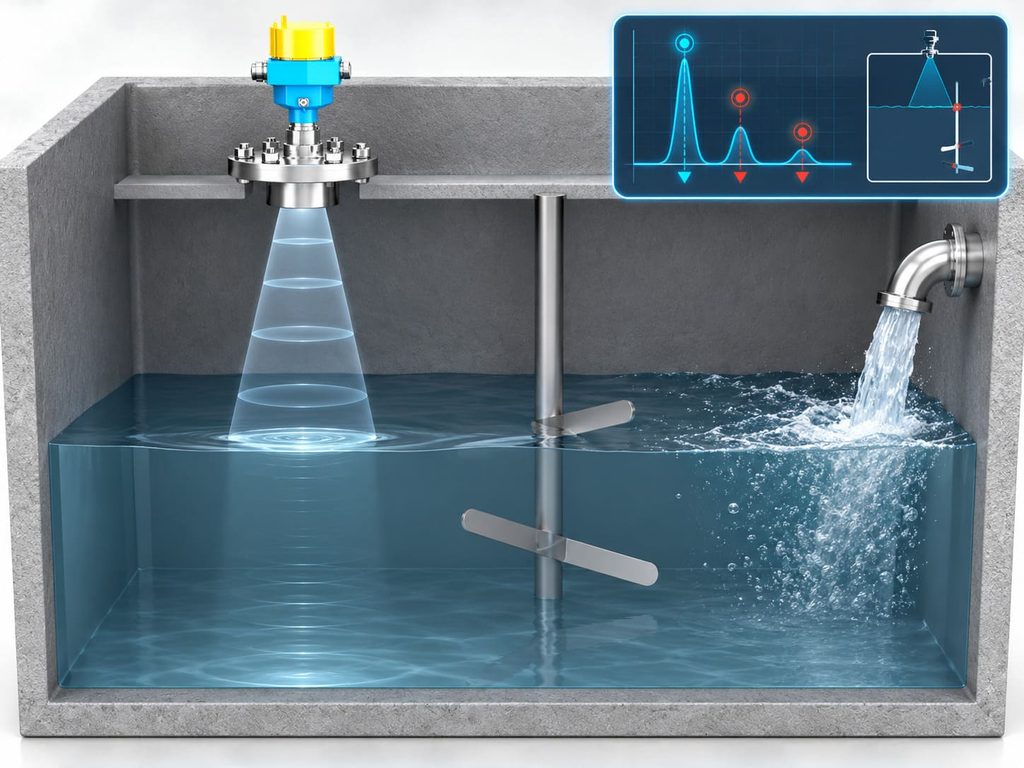
Narrow Beam with 80 GHz Radar
Modern 80 GHz radar can provide a focused measuring beam.
This is useful where tanks contain:
- Agitator shafts
- Pipes
- Support structures
- Nearby tank walls
- Internal equipment
A narrow beam can help avoid these structures before false-echo processing is required.
Useful for Bulk Solids
Radar can also measure powders and granular materials where dust and uneven surfaces make other technologies more difficult to apply.
However, radar should not be described as universally unaffected by foam, buildup, condensation, or poor installation.
Correct mounting remains essential.
4. When Is an Ultrasonic Level Meter a Good Choice?
Ultrasonic level meters also provide non-contact measurement, but they use sound waves rather than electromagnetic waves.
Ultrasonic technology can be an economical solution for relatively simple applications such as:
- Clean-water tanks
- Open wastewater tanks
- Collection pits
- Some process-water tanks
- Mild utility applications
Its main advantages can include simple installation and good cost-performance for suitable measuring conditions.
However, acoustic measurement can be affected by conditions that influence sound propagation.
These may include:
- Strong temperature gradients
- Heavy vapor
- Condensation
- Certain foam conditions
- Obstructions
- Severe air movement
For a simple open water tank, ultrasonic measurement may be entirely appropriate.
For a hot process vessel containing vapor, heavy foam, or complex internal structures, radar may provide greater measurement flexibility.
The important point is that 80 GHz radar is not automatically the correct choice simply because it is a more advanced technology.
The application should determine the instrument.

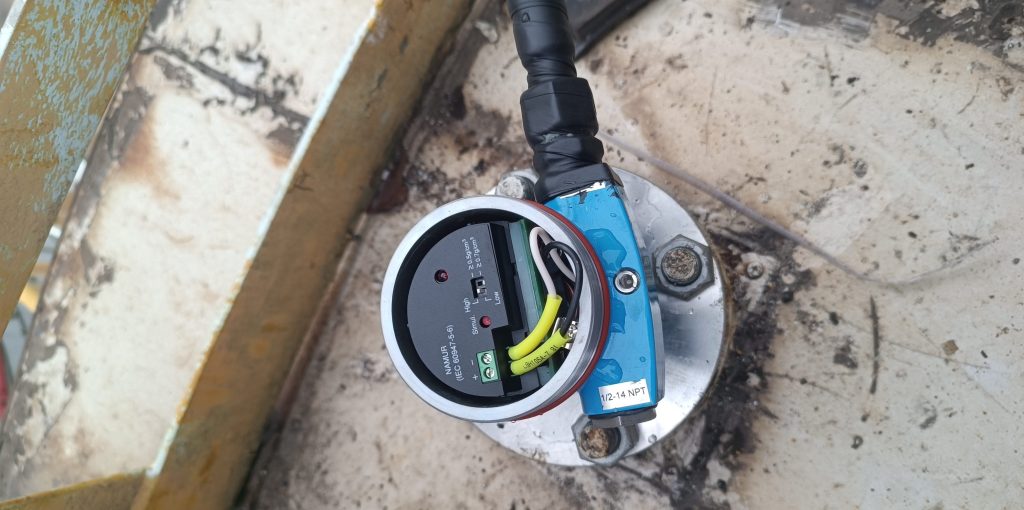
5. When Should a Vibrating Fork Level Switch Be Used?
A vibrating fork level switch is designed for point-level detection, not continuous level measurement.
It is useful when the control system only needs to know whether material has reached a specific position.
Typical paper mill applications include:
- Tank high-level alarm
- High-high overflow protection
- Low-level alarm
- Pump dry-run protection
- Chemical tank protection
- Selected liquid or bulk-material applications
For example, a chemical tank may use a radar transmitter for continuous measurement and a separate vibrating fork switch for independent high-high protection.
The two instruments perform different functions.
The radar provides the normal operating level.
The fork switch provides a separate switching signal when the defined limit is reached.
This arrangement can provide a more robust measurement strategy than relying on one device for every control and protection function.
6. When Should a Magnetic Level Indicator Be Used?
A magnetic level indicator is useful when direct local indication is required.
A typical design uses a side-mounted chamber containing a magnetic float. As the vessel level changes, the float moves and operates the external indicator.
Potential applications include:
- Closed process tanks
- Chemical storage vessels
- Utility tanks
- Recovery-area tanks
- Process vessels requiring local indication
Depending on configuration, the instrument may also provide:
- Remote transmission
- High-level switches
- Low-level switches
Magnetic level indicators can therefore combine local visibility with automation functions.
However, they are contact-type instruments.
The float and chamber are exposed to the process medium.
Before using an MLI, consider:
- Liquid density
- Viscosity
- Suspended solids
- Crystallization
- Scaling
- Chemical compatibility
- Temperature
- Pressure
A clean process liquid may be well suited to an MLI, while a highly fibrous or heavily fouling pulp slurry may not be.
7. When Can a Reed Level Transmitter Be Useful?
Reed level transmitters provide another option for continuous liquid-level measurement.
A typical float-based design uses a magnetic float that moves with the liquid level and interacts with a reed-chain sensing system.
This technology can provide a practical solution where:
- The liquid is relatively clean
- Float movement remains reliable
- Continuous electrical output is required
- Tank geometry is suitable
- Direct-contact measurement is acceptable
Compared with non-contact radar, a float-based transmitter has moving and wetted components.
For this reason, heavy pulp fibers, sticky starch, severe sludge, or crystallizing products may require additional consideration.
However, for appropriate liquid applications, reed transmitters can provide a straightforward alternative to more complex technologies.
8. Level Meter Selection by Paper Mill Application
The following table provides a practical starting point.
| Application | Main Measurement Challenge | Measurement Requirement | Typical Technology |
|---|---|---|---|
| Pulp chest | Fibers, agitation, foam | Continuous | Radar |
| Broke chest | Fibers, foam, changing furnish | Continuous | Radar |
| White water | Foam, fines, turbulence | Continuous | Radar / Ultrasonic |
| Clean water | Relatively simple liquid | Continuous | Radar / Ultrasonic |
| Black liquor | Vapor, deposits, temperature | Continuous | Radar |
| White / green liquor | Corrosion, vapor, scaling | Continuous / Local | Radar / MLI |
| Starch tank | Viscosity, coating, agitation | Continuous | Radar |
| Chemical tank | Chemical compatibility | Continuous / Point | Radar / MLI / Fork |
| Wastewater tank | Foam, solids, contamination | Continuous | Radar / Ultrasonic |
| Pump station | Variable level, overflow risk | Continuous / Point | Radar / Ultrasonic / Switch |
| Wood chip silo | Dust, uneven surface | Continuous | 80 GHz Radar |
| PCC / filler silo | Dust, powder surface | Continuous | 80 GHz Radar |
This table should be treated as a starting point rather than a final product specification.
Two tanks containing the same medium may still require different instruments because of differences in temperature, pressure, dimensions, internal structures, process connections, or installation location.
9. Questions to Ask Before Ordering a Level Meter
A reliable instrument recommendation requires more information than tank height.
Before requesting a quotation, prepare the following information:
- What is the exact medium?
- Is it a liquid, slurry, powder, or bulk solid?
- What is the tank or silo height?
- What is the tank diameter?
- What are the minimum and maximum operating levels?
- What is the normal temperature?
- What is the maximum temperature?
- What is the operating pressure?
- Is foam present?
- Is there agitation?
- Is vapor or condensation present?
- Is dust present?
- Is the product corrosive?
- Can buildup occur?
- Are there pipes, mixers, heating coils, or other internal structures?
- What is the existing nozzle or process connection?
- What output signal is required?
- Is PLC or DCS communication required?
- Is local visual indication required?
- Is an independent high- or low-level alarm required?
- Is hazardous-area approval required?
- What problem exists with the current instrument?
Tank photographs and vessel drawings are also extremely useful.
They can reveal installation problems that cannot be identified from measuring range alone.
10. Why the Highest Specification Is Not Always the Best Choice
Industrial instrument selection should be application-driven rather than specification-driven.
A level meter with a longer maximum measuring range is not automatically better for a small tank.
For example, if a process vessel is only four meters high, selecting an instrument primarily because it can measure extremely long distances does not necessarily improve the application.
The same principle applies to measurement technology.
An 80 GHz radar can provide important advantages in a difficult pulp chest containing agitation and internal structures.
But a relatively simple open clean-water tank may be measured reliably with a more economical ultrasonic instrument.
Similarly, a radar transmitter cannot replace an independent point level switch when the objective is separate high-high overflow protection.
Good engineering means selecting enough performance for the application without adding unnecessary complexity.
This approach can improve both technical reliability and lifecycle cost.
11. How to Send an Application Request to Jiwei
When contacting Jiwei for a paper mill level measurement application, provide as much process information as possible.
Useful information includes:
- Medium name
- Tank or silo photograph
- Vessel drawing
- Tank height and diameter
- Minimum and maximum level
- Existing nozzle dimensions
- Temperature
- Pressure
- Foam or agitation conditions
- Internal structures
- Required output
- Hazardous-area requirement
- Current measurement problem
For chemical-service applications, also provide the exact chemical name, concentration, and operating temperature.
For bulk-solid applications, describe the material, dust conditions, filling position, discharge arrangement, and expected surface profile.
This information allows the instrument configuration and mounting position to be selected according to the actual process rather than simply matching a measuring range.
Choosing the Right Jiwei Level Measurement Technology
Different areas of a pulp and paper mill can require different measuring principles.
For difficult continuous liquid applications, Jiwei radar level meters can be considered where fibers, agitation, vapor, deposits, or complex tank structures make measurement challenging.
For wood chips, mineral fillers, and other solid storage applications, high-frequency radar can provide a focused beam for dusty and uneven material surfaces.
Where conditions are relatively simple, a Jiwei ultrasonic level meter may provide an economical non-contact alternative.
For independent high- or low-level detection, a vibrating fork level switch can complement the continuous transmitter.
Where operators require direct local visual indication, a magnetic level indicator can be considered if the liquid properties and material compatibility are suitable.
A reed level transmitter can also provide practical continuous measurement for selected clean-liquid applications.
The objective should not be to install the same technology throughout the entire mill.
The objective is to select the most suitable measurement principle for each process point.
Conclusion
Selecting a level meter for a pulp and paper mill begins with understanding the process rather than choosing a product model.
A clean-water tank, pulp chest, black liquor tank, starch vessel, wastewater pit, and wood chip silo may all require level measurement, but they present very different operating conditions.
Radar is particularly useful for difficult continuous applications involving pulp fibers, agitation, vapor, dust, irregular surfaces, or complex vessel internals.
Ultrasonic technology can provide a cost-effective solution for simpler open tanks and water applications.
Vibrating fork switches are valuable for independent point-level alarms and pump protection.
Magnetic level indicators provide direct local indication where process conditions permit, while reed transmitters can provide continuous float-based measurement for suitable liquids.
The best instrument is therefore not necessarily the one with the highest specification.
It is the instrument whose measurement principle, construction, process connection, materials, range, and installation arrangement correctly match the application.
Before selecting a level instrument, provide the medium, tank dimensions, temperature, pressure, foam, agitation, dust, corrosion conditions, internal structures, nozzle information, output requirements, and required control function.
A well-defined application allows the level measurement system to be selected correctly before installation—and reduces the need to solve avoidable problems after commissioning.
Frequently Asked Questions
Which level meter is best for pulp?
Non-contact radar is a strong option for many pulp chests because the measuring element does not remain immersed in the fibrous stock. Agitation, foam, tank geometry, internal structures, and installation position should still be evaluated.
Is 80 GHz radar always better than ultrasonic?
No. 80 GHz radar provides important advantages in demanding applications, particularly where vapor, internal structures, dust, or difficult surfaces are present. Ultrasonic measurement can still be an economical and reliable choice for simpler tanks.
What level sensor should be used for a paper mill chemical tank?
The correct technology depends on the exact chemical, concentration, temperature, viscosity, corrosion characteristics, tank design, and required measurement function. Radar, magnetic level indicators, and point level switches may all be considered for different applications.
Can one radar model be used throughout a paper mill?
Normally not. Different applications may require different measuring ranges, antennas, process connections, materials, temperature ratings, and installation configurations.
Is radar suitable for both liquids and solids?
Industrial radar can be used for many liquid and bulk-solid applications. The appropriate configuration depends on the material, measuring range, surface conditions, vessel geometry, and installation requirements.
Should a tank use both a continuous transmitter and a level switch?
For important applications, this can be a useful strategy. The continuous transmitter provides the normal process measurement, while an independent high-high or low-low switch can provide an additional alarm or protection function.
What information is needed before requesting a quotation?
Provide the medium, vessel dimensions, temperature, pressure, measuring range, process connection, internal structures, foam or dust conditions, required output, and existing measurement problem. Photographs and vessel drawings are also highly useful.