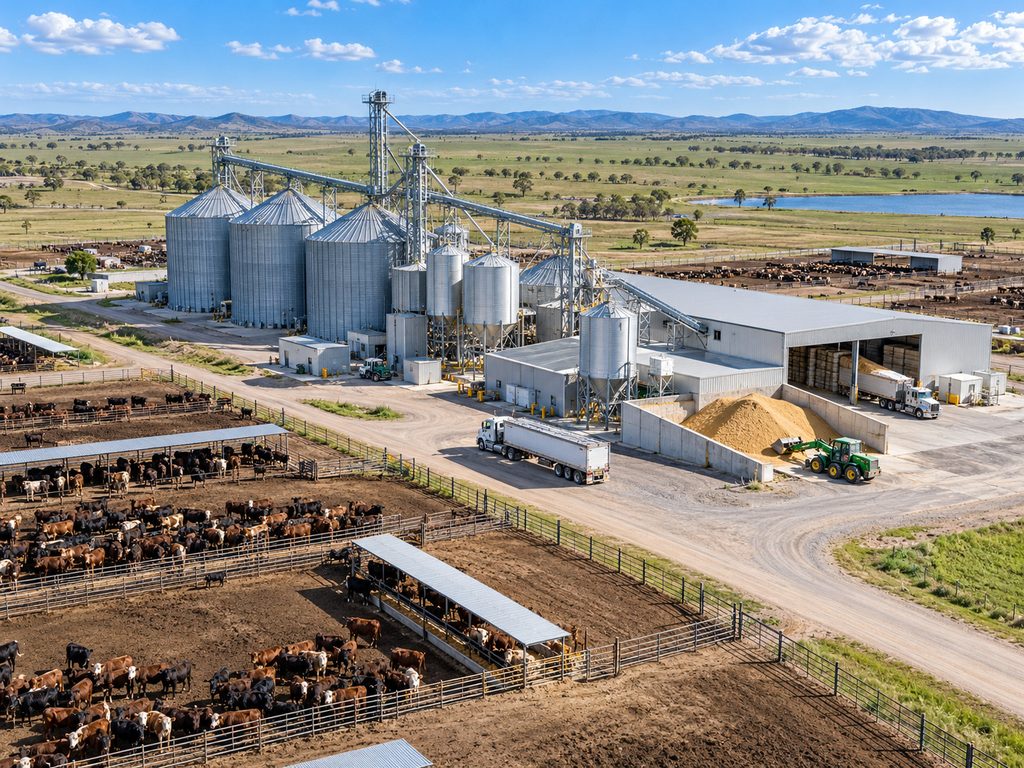
Feed storage on a modern livestock farm often involves several different types of bulk solids.
In addition to conventional pellet feed, silos may contain grain, beans, powdered additives, fine granular ingredients and lightweight mixed feed.
Some of these materials have relatively low bulk density and small particle size. During pneumatic or mechanical conveying, they may also generate significant amounts of dust.
These characteristics create additional challenges for level detection.
If a point level switch is not sensitive enough to detect lightweight material, or if the sensing element is easily affected by buildup, unreliable signals can disrupt filling, conveying and automatic feeding operations.
For applications involving fine granules and low-density powders, a tuning fork level switch provides a sensitive and reliable method for detecting high and low material levels.
Why Are Lightweight Feed Materials More Difficult to Detect?
Consider an automated feed preparation system on a large livestock farm.
One storage silo contains standard pellets, while another contains a lightweight powdered or fine granular ingredient.
The second material has relatively low bulk density and produces considerable dust during filling.
The farm requires two detection points: one to prevent the silo from being overfilled and another to provide an early warning when material is running low.
The level switch must reliably detect lightweight material, tolerate dusty conditions and transmit a simple on/off signal directly to the PLC.
It should also avoid frequent recalibration when different batches of feed have slightly different electrical properties.
A tuning fork level switch is well suited to this type of application.
How Does a Tuning Fork Level Switch Detect Material?
A tuning fork level switch uses a mechanically vibrating fork as its sensing element.
Piezoelectric components drive the fork at a defined resonant frequency.
When the fork is not covered by material, it vibrates freely.
As powder or fine granular material reaches the fork, the material dampens its vibration and causes the vibration amplitude to decrease.
The electronic circuit detects this change and switches the output signal.
When the material level falls and the fork becomes uncovered, normal vibration resumes and the output returns to its original state.
The instrument therefore does not measure the distance between the sensor and the material surface.
Instead, it determines whether material is present at the installation point.
This makes tuning fork technology particularly suitable for high level alarms, low level alarms and equipment interlocks.
What Does a Minimum Density of Approximately 0.008 g/cm³ Mean?
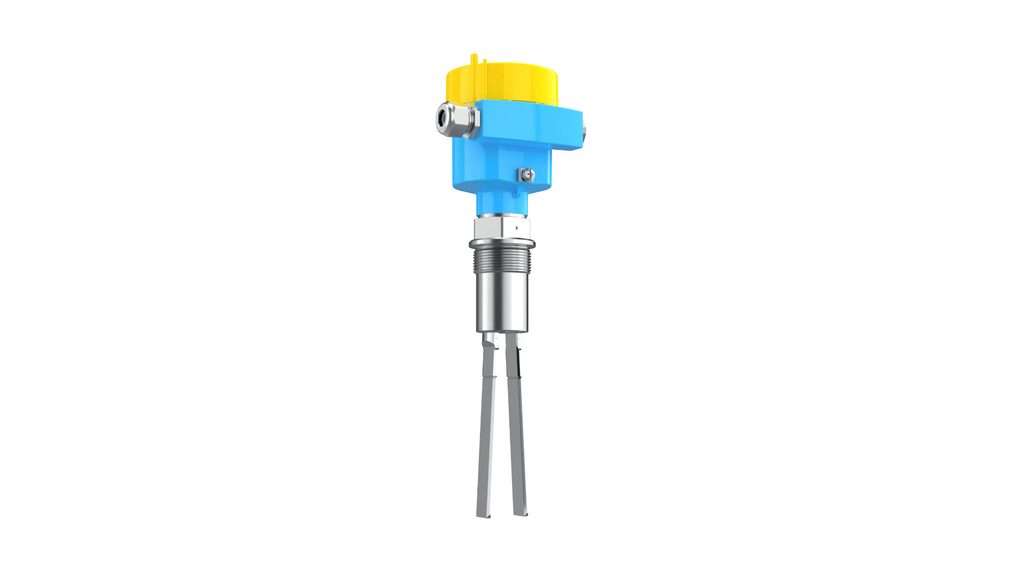
Fork-11 tuning fork level switches are designed for powders and fine granular materials.
By optimizing the effective sensing area of the fork and precisely tuning the vibration system, the instrument can detect materials with bulk densities as low as approximately 0.008 g/cm³.
Typical applications include flour, grain, beans and a wide range of powdered or fine granular solids.
This high sensitivity is particularly useful in feed silo applications where the stored material is much lighter than conventional dense pellets.
When the feed consists of lightweight powder or fine additives, the material may not generate the same mechanical resistance as heavier granules.
A sensitive vibration-based switch can therefore provide an effective alternative to point level technologies that depend on relatively large mechanical resistance.
High Level Detection Protects Feed Silos From Overfilling
A tuning fork level switch installed near the upper section of the silo can provide independent high level detection.
During filling, material gradually rises inside the vessel.
When the feed reaches the fork, the vibration is dampened and the sensor changes its electrical output.
The PLC can use this signal to stop the filling conveyor, close a valve or activate an alarm.
This creates a straightforward overfill protection system.
The arrangement is particularly useful where several feed silos are filled from a common conveying system.
Each silo can have its own high level signal, allowing the central controller to determine when a specific vessel has reached its safe filling limit.
This reduces dependence on manual inspection and improves process consistency.
Low Level Detection Supports Proactive Feed Replenishment
A second tuning fork level switch can be installed near the lower section of the feed silo.
As feed is consumed, the material level falls.
Once the fork is no longer covered, it returns to its normal vibration condition and the output signal changes.
The control system interprets this as a low level condition.
Instead of waiting until the silo is completely empty, farm operators receive an early warning that additional feed should be ordered or transferred.
The low level signal can also be incorporated into an automatic refill sequence.
In a fully automated system, it may initiate material transfer from another storage vessel or activate a conveying system.
This changes feed management from a reactive process into a more proactive and controlled operation.
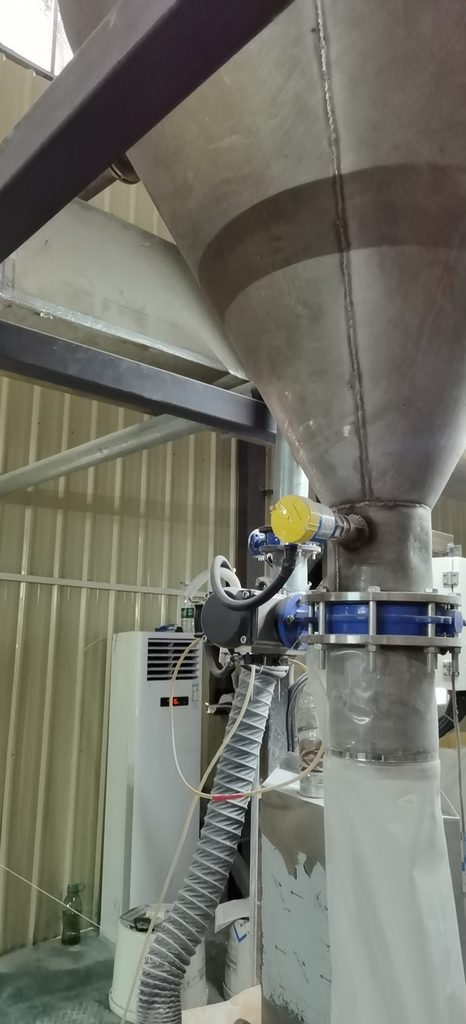
Do Not Install the Tuning Fork Directly Under the Filling Inlet
Although a tuning fork switch does not contain a continuously rotating paddle, it is still a contact level switch.
The sensing fork is exposed directly to the stored material.
If it is installed directly beneath the silo inlet, falling pellets or granules can repeatedly strike the fork.
Continuous mechanical impact can affect measurement stability and unnecessarily increase mechanical stress.
The preferred installation position is therefore away from the main falling material stream.
If silo geometry makes this impossible, a protective shield or deflector may be installed above the level switch.
The feed hits the protective plate first and is redirected around the sensing element.
This protects the fork while still allowing it to detect the true material level.
Preventing False Signals Caused by Wall Buildup
Fine powders are particularly susceptible to buildup.
Humidity, electrostatic effects and the characteristics of the material itself can cause feed to stick to the inner wall of a silo.
This creates a possible source of measurement error.
The actual material level in the center of the silo may have fallen, while a layer of feed remains attached to the wall.
If the tuning fork is installed inside this buildup zone and remains surrounded by material, the sensor can continue indicating that feed is present.
The instrument is correctly detecting local material around the fork, but the local condition no longer represents the average level inside the silo.
To minimize this problem, engineers should consider material flow patterns and likely buildup areas when selecting the mounting point.
The silo cone, angle of repose, filling direction and discharge behavior should all be taken into account.
For side-mounted tuning forks, the orientation of the fork should also encourage material to fall away from the sensing area instead of accumulating between the fork tines.
Dust Hazards Should Be Considered During Instrument Selection
Animal feed and grain handling systems often generate airborne dust.
Certain combustible powders can form hazardous atmospheres when suspended in air at suitable concentrations.
As a result, instrumentation installed in some feed silos may require explosion-protected designs.
Fork-11 tuning fork switches are available in configurations intended for hazardous applications.
However, the exact instrument specification should always be selected according to the actual hazardous area classification, process conditions and applicable regulations.
Engineers should confirm factors such as explosion protection certification, ambient temperature, process temperature, enclosure protection, electrical connection and process connection before finalizing the product configuration.
Does a Tuning Fork Level Switch Require Maintenance?
A tuning fork level switch contains no continuously rotating sensing paddle and normally does not require complicated field calibration.
This can be advantageous for outdoor silos or installations where regular access is difficult.
However, low maintenance should not be confused with zero maintenance.
Periodic visual inspection remains good engineering practice.
Operators should check whether the fork has suffered mechanical damage, whether excessive hardened buildup has formed around the sensing element and whether the cable glands and electrical connections remain properly sealed.
Outdoor feed silos are continuously exposed to dust, weather and temperature changes, making routine inspections useful for maintaining long-term reliability.
Rotary Paddle, Vibrating Rod or Tuning Fork?
There is no single point level technology that is best for every feed silo.
For free-flowing pellets and grains with moderate bulk density, a rotary paddle level switch remains a simple and economical solution.
For dusty materials, lightweight granules or applications where continuously rotating mechanical components are undesirable, a vibrating rod level switch can provide greater flexibility.
For very light powders and fine granular materials, a tuning fork level switch offers high sensitivity and can detect extremely low-density products.
The decision should therefore be based on the physical properties of the feed rather than the assumption that one sensing technology is universally superior.
Bulk density, particle size, flowability, buildup tendency, process temperature and installation conditions should all be considered.
Point Level Switches as Part of Feed Silo Automation
A tuning fork level switch may be a relatively small component in a livestock feeding system, but its signal can have a significant impact on process reliability.
A high level switch can prevent overfilling.
A low level switch can warn of an approaching feed shortage.
The same signals can also be used to control conveyors, initiate refill sequences, activate alarms and protect downstream equipment.
By converting a simple physical condition—material present or material absent—into a reliable electrical signal, tuning fork switches support the automation of feed storage and handling systems.
Conclusion
As livestock farming becomes more automated, accurate point level detection is increasingly important for reliable feed storage and conveying.
Low-density powders, fine granules and lightweight feed ingredients can be particularly challenging for conventional level detection methods.
A tuning fork level switch provides a sensitive vibration-based solution for these materials.
With a minimum detectable density of approximately 0.008 g/cm³ in suitable configurations, the technology can handle a broad range of fine and lightweight bulk solids.
Correct installation remains essential. The sensor should be positioned away from direct filling impact and areas where severe wall buildup is likely to occur.
When properly selected and installed, tuning fork level switches can provide reliable high level protection, low level alarms and automation signals for livestock feed silos, helping farms reduce feed shortages, prevent overfilling and improve the reliability of automated feeding systems.