Introduction
Pulp slurry is one of the most challenging materials to measure in a paper mill.
At first glance, a pulp chest may look like an ordinary liquid tank. In reality, the material inside behaves very differently from clean water. Radar Level Meter
Pulp contains large quantities of suspended fibers. Mechanical agitation continuously changes the surface. Air entrainment can create foam. Fiber bundles can adhere to equipment, while tank interiors often contain agitators, pipes, beams, and other structures.
A level measuring instrument installed in this environment must therefore deal with several problems simultaneously.
For many modern applications, 80 GHz radar level technology has become an attractive solution.
But why?
Understanding the answer requires looking at both the characteristics of pulp slurry and the operating principle of high-frequency radar.
What Is Pulp Slurry?
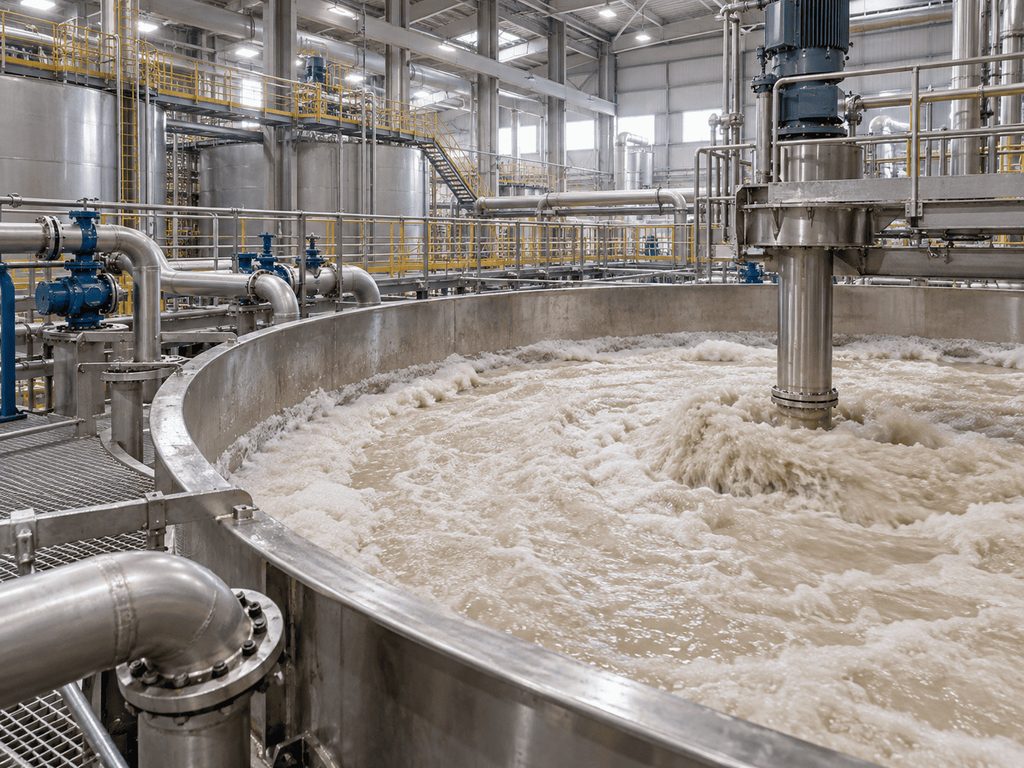
Pulp slurry is a suspension of cellulose fibers in water.
Depending on the stage of production, it may also contain fillers, recycled fibers, process chemicals, additives, fines, and other suspended material.
Consistency varies from one process stage to another.
Some pulp applications behave relatively close to water, while others are visibly thick and fibrous.
This means that level measurement conditions can differ substantially between:
- Machine chests
- Mixing chests
- Broke chests
- Storage chests
- Blend chests
- Pulp towers
- Stock preparation tanks
It is therefore important to evaluate the real process rather than treating all pulp applications as identical.
Why Is Pulp Level Measurement Difficult?
Fibers Can Accumulate on Contact Sensors
Long fibers can wrap around probes or mechanical sensing elements.
Over time, this can create buildup and change sensor response.
Cleaning requirements may increase, particularly in continuous production lines where pulp remains in the tank for long periods.
Non-contact radar avoids immersing a measuring probe in the slurry.
The Surface Is Constantly Moving
Most pulp tanks use agitation to prevent fibers from settling and to maintain uniform consistency.
Agitation creates waves, vortexes, peaks, and depressions.
A level meter does not simply see a perfectly flat surface.
The measurement system must track the overall material level while filtering short-term disturbances.
Foam Can Affect the Return Signal
Foam may develop when pulp, water, and chemicals are mixed.
Radar performance depends on the characteristics of the foam.
Wet, dense foam behaves differently from light, dry foam.
Rather than assuming that radar always ignores foam, an engineer should consider:
- Foam thickness
- Foam density
- Moisture
- Stability
- Actual pulp reflection
Internal Structures Create False Echoes
Pulp tanks commonly contain:
- Agitator shafts
- Mixer blades
- Inlet pipes
- Support members
- Reinforcing structures
- Cleaning systems
These components can reflect radar energy.
A wide measurement beam may encounter several objects simultaneously.
This is one reason why high-frequency radar can be advantageous.
What Is 80 GHz Radar Level Measurement?
An 80 GHz radar level meter uses high-frequency electromagnetic waves to determine the distance between the sensor and the material surface.
In an FMCW radar system, the transmitted signal changes frequency continuously across a defined range.
The instrument compares the transmitted and reflected signals and calculates the distance to the target.
Because the operating wavelength is relatively short, modern 80 GHz radar antennas can create a narrow, highly focused beam.
This is one of the most important advantages for pulp tank applications.
Advantage 1: Narrow Beam Angle
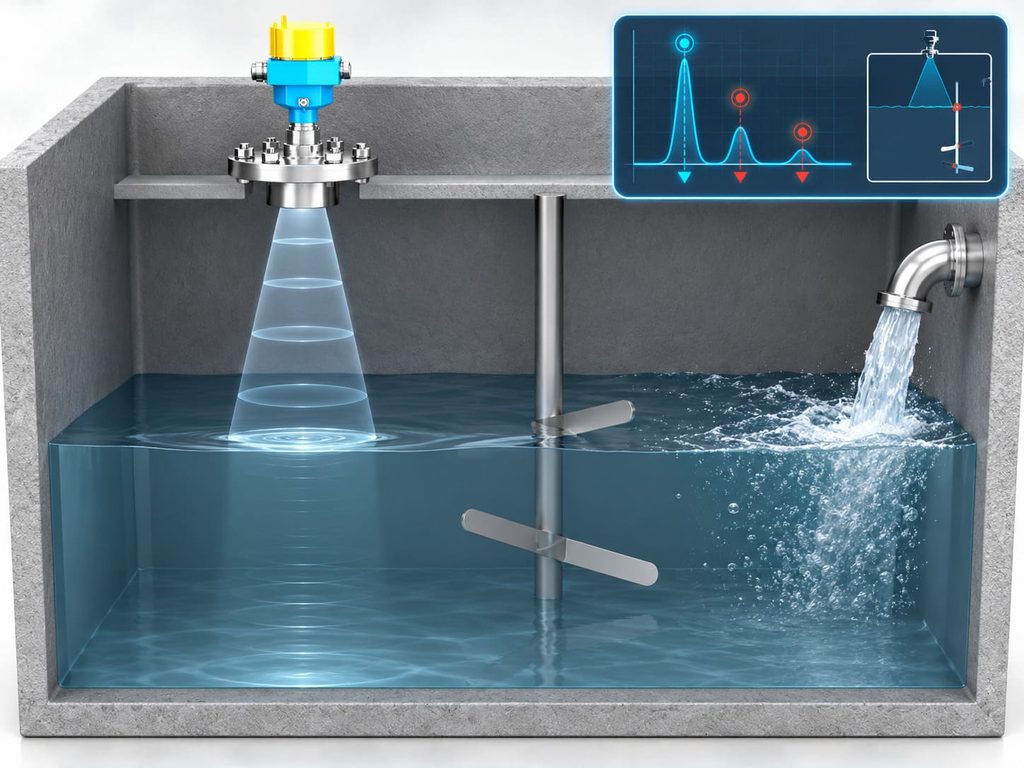
Imagine a pulp chest containing an agitator shaft in the center and several pipes near the wall.
A wide beam can illuminate the pulp surface, agitator, wall, and pipes at the same time.
Each object may create a reflection.
The sensor then has to determine which echo represents the true material level.
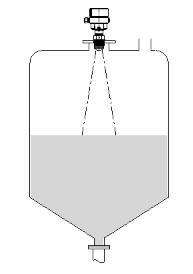
A narrow beam allows the installer to aim the radar toward a relatively clear part of the surface.
This reduces unwanted reflections before signal processing is even required.
For existing paper mills where tank interiors are crowded, this can be a major advantage.
Advantage 2: Non-Contact Measurement
The radar antenna is normally mounted above the process surface.
It does not need to remain immersed in the pulp.
As a result, the measuring system is less exposed to:
- Fiber wrapping
- Mechanical wear
- Pulp deposits
- Contamination
This can reduce cleaning requirements compared with technologies where a sensing element remains continuously submerged.
Non-contact measurement is particularly useful where maintenance access is difficult.
Advantage 3: Good Resolution
High-frequency FMCW radar provides strong distance resolution.
In real pulp applications, process stability is normally more important than laboratory-level precision.
The practical objective is to provide a reliable signal that correctly follows the real rise and fall of the pulp level.
Good target resolution helps the system distinguish the real process surface from surrounding reflections.
Advantage 4: Advanced Echo Processing
Modern industrial tanks rarely provide a single clean radar echo.
Multiple reflections may appear simultaneously.
Echo processing can identify fixed interference signals and distinguish them from the moving material surface.
For example, an agitator support remains at a fixed distance from the sensor, while the pulp level rises and falls during operation.
An intelligent measurement system can use this difference to improve target tracking.
However, signal processing should complement good installation practice rather than replace it.
80 GHz Radar vs. Ultrasonic Measurement for Pulp
Ultrasonic level meters transmit sound waves.
They can perform well in suitable applications and may provide a cost-effective solution.
However, sound propagation depends on the gas space above the liquid.
Temperature changes, heavy vapor, condensation, and certain foam conditions can affect acoustic measurement.
Radar uses electromagnetic waves instead.
It is therefore generally less dependent on the properties of the air or vapor space.
For demanding pulp environments, this can make radar a more robust choice.
That does not mean ultrasonic technology is unsuitable for every paper mill application.
Simple tanks with mild conditions may still be appropriate for ultrasonic measurement.
The application should determine the technology.
Where Can 80 GHz Radar Be Used in a Paper Mill?
Typical applications include:
Machine Chests
Continuous level measurement supports stable stock supply to the paper machine.
Broke Chests
Recovered paper broke creates a fibrous, agitated slurry requiring reliable level control.
Mixing Chests
Multiple pulp streams and additives create changing surface conditions.
Storage Chests
Reliable continuous level information supports inventory and pump management.
Pulp Towers
Large vessels may require long measuring range and careful antenna positioning.
White Water Tanks
Radar can also be considered for recycled process-water applications containing fibers and foam.
How Should the Radar Be Installed?
Installation is a critical part of successful measurement.
Avoid the Agitator
The sensor should not point directly toward an agitator shaft or mixer assembly.
Avoid the Filling Stream
Material entering the tank can temporarily create strong reflections and unstable surfaces.
Whenever possible, do not install the radar directly above the inlet.
Check the Beam Path
Knowing the beam angle allows engineers to estimate how wide the measuring area becomes at the material surface.
No major obstacle should be located within this path.
Consider the Nozzle
Long or narrow mounting nozzles can influence the radar signal.
The correct process connection and antenna arrangement should be selected according to the vessel geometry.
Perform Echo Mapping
After installation, fixed false echoes can be identified and stored during commissioning.
This helps improve measurement stability.
What Information Should Be Supplied to the Instrument Manufacturer?
For pulp slurry applications, provide:
- Tank height
- Tank diameter
- Minimum level
- Maximum level
- Pulp type
- Approximate consistency
- Agitator type
- Agitator position
- Foam conditions
- Inlet location
- Internal structures
- Temperature
- Pressure
- Process connection
- Output requirement
- Hazardous-area classification
A photograph or vessel drawing can also be valuable.
When May Radar Still Have Difficulty?
No industrial level technology is completely unaffected by every process condition.
Very thick foam can weaken the useful reflection.
Heavy material buildup on the antenna can also influence performance.
An incorrectly positioned instrument may receive stronger echoes from internal structures than from the pulp itself.
For this reason, good engineering should avoid statements such as “radar is never affected by foam” or “installation position does not matter.”
Reliable measurement comes from combining the correct instrument, suitable antenna configuration, proper installation, and commissioning.
Jiwei Radar Solutions for Pulp Applications
Jiwei’s JWrada series is designed for industrial non-contact level measurement.
For conventional pulp tanks, slurry vessels, and stock preparation applications, the radar configuration can be selected according to measuring range, temperature, process connection, internal structure, and environmental conditions.
80 GHz technology provides focused beam characteristics that are particularly useful where agitators and tank internals limit available measuring space.
When selecting a radar level meter, the goal should not simply be choosing the longest measuring range.
The correct instrument is the one that matches the actual vessel and operating conditions.
Conclusion
Pulp slurry level measurement combines several difficult conditions: fibers, buildup, agitation, foam, and complex tank structures.
80 GHz radar addresses many of these challenges through non-contact measurement, narrow beam focusing, good target resolution, and modern echo processing.
However, successful application still depends on correct instrument selection and installation.
For paper mills planning a new project or upgrading an unstable existing level system, the most useful first step is to provide detailed process information and tank drawings.
This allows the radar configuration and installation location to be evaluated before commissioning.
FAQ
Can 80 GHz radar measure high-consistency pulp?
It can be suitable for many pulp applications, but actual pulp consistency, foam, surface behavior, and tank geometry should be evaluated.
Does pulp fiber stick to radar sensors?
Because radar normally measures from above the material, it reduces direct contact with fibers. Buildup on the antenna can still occur in some environments.
Can radar measure through pulp foam?
Sometimes, but not under every foam condition. Foam density, moisture, and thickness affect radar reflection.
Where should radar be installed on a pulp chest?
Choose a location with a clear view of the pulp surface and avoid agitator shafts, inlet streams, pipes, and structural members.