Introduction
Level measurement is an essential part of automation in the pulp and paper industry. From raw material storage and pulp preparation to chemical recovery, papermaking, wastewater treatment, and finished process utilities, dozens of tanks, chests, silos, and vessels require reliable level information.
Unlike a simple clean-water tank, many paper mill applications present difficult measuring conditions. Pulp contains fibers and suspended solids. White water may contain foam and fine fibers. Black liquor can be hot, corrosive, and prone to deposits. Chemical additives vary considerably in viscosity and corrosiveness. Wood chips and mineral fillers create entirely different challenges because they are bulk solids rather than liquids.
For these reasons, there is no single level measurement technology that is ideal for every location in a paper mill.
A successful measurement solution begins by understanding the process, medium, vessel design, temperature, pressure, installation space, and control objective.
This guide explains the major level measurement applications in pulp and paper plants and how engineers can select suitable instruments for each operating condition.
Why Is Level Measurement Important in a Paper Mill?
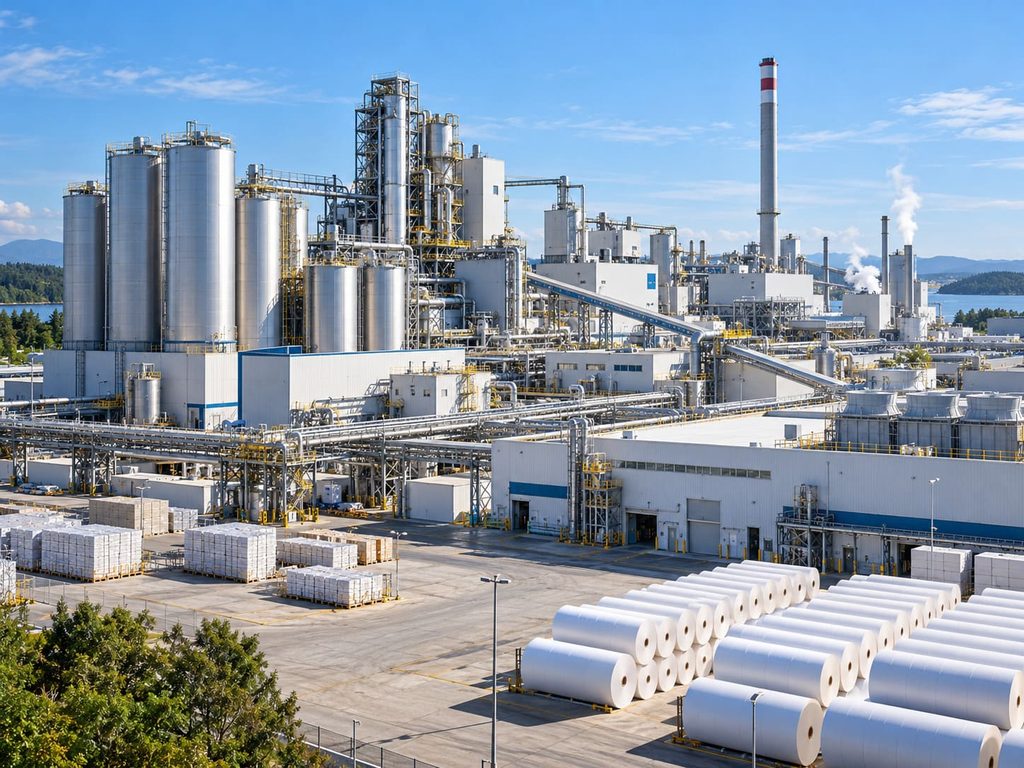
Modern paper manufacturing depends on continuous material flow.
Pulp must move from one process stage to another at a controlled rate. Water must be available when required. Chemicals must be stored and dosed correctly. Recovery processes must maintain suitable liquid levels, while storage vessels must be protected against overflow and pump dry-running.
An unreliable level signal may create several operational problems.
For example, a low level in a pulp chest can cause a discharge pump to lose suction. Excessively high levels can lead to overflow. Incorrect chemical tank readings may disrupt dosing. Poor silo level information can make raw-material inventory planning difficult.
Continuous level measurement can therefore support:
- Process stability
- Pump protection
- Overflow prevention
- Inventory monitoring
- Automatic valve control
- DCS and PLC integration
- Production continuity
- Maintenance planning
Point level switches can also provide independent high-level or low-level alarms where additional protection is required.
Main Level Measurement Applications in Pulp and Paper Plants
1. Pulp Chests and Stock Tanks
Pulp chests are among the most recognizable level measurement applications in a paper mill.
Typical vessels include machine chests, mixing chests, broke chests, storage chests, blend chests, and other stock preparation tanks.
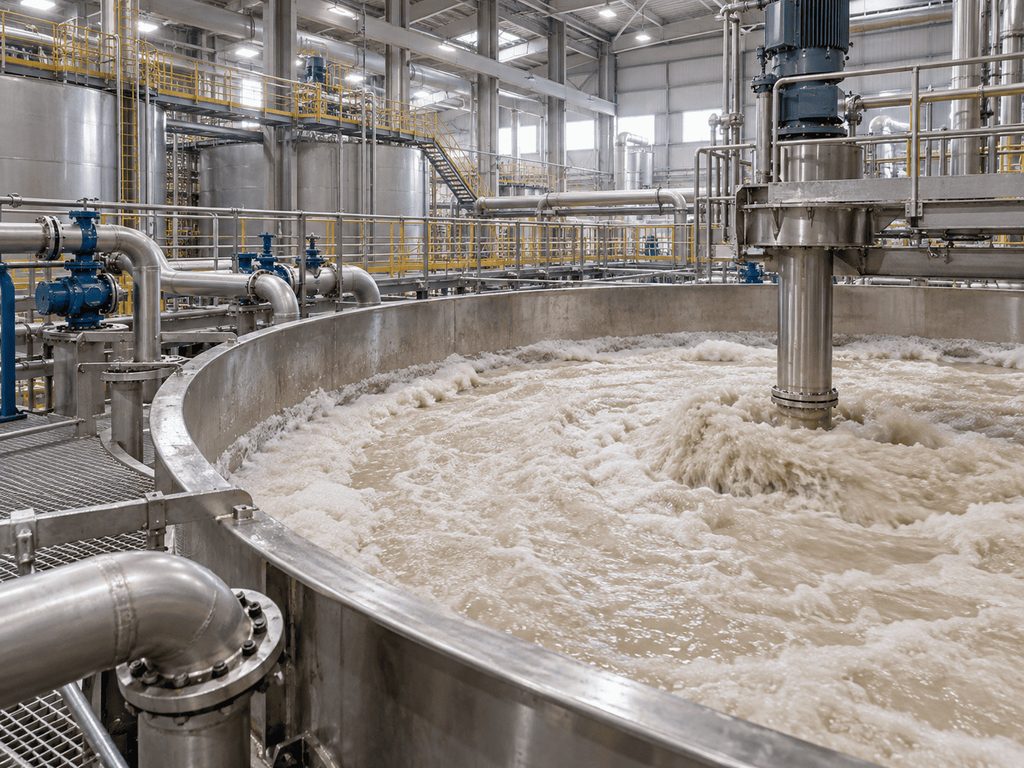
The primary challenge is that pulp is not a clean liquid. It contains fibers, suspended solids, and sometimes chemical additives. Agitators continuously move the surface, while foam may form above the pulp.
Contact-type sensors can also be affected by fiber accumulation.
Non-contact radar level measurement is therefore frequently considered for these applications because the measuring antenna can remain above the process material.
Correct installation remains important. The radar beam should avoid agitator shafts, inlet pipes, tank walls, and structural members whenever possible.
2. White Water Tanks and Chests
White water is recovered from the paper machine forming section and normally contains water, fibers, fillers, and other suspended materials.
Reliable white water level measurement supports water reuse and stable paper machine operation.
The main challenges may include:
- Foam
- Surface turbulence
- Suspended fibers
- Variable consistency
- Tank internals
Radar technology can be useful where a non-contact continuous level signal is preferred.
3. Black Liquor Storage
Black liquor is an important process medium in chemical pulping and recovery systems.
Depending on the production stage, liquor temperature, concentration, and process conditions can vary substantially.
Potential measurement challenges include:
- High temperature
- Vapor
- Deposits
- Corrosive atmosphere
- Changing density
- Foam
The measuring technology should therefore be selected carefully according to the specific liquor concentration, tank design, temperature, pressure, and installation arrangement.
Non-contact radar can reduce direct exposure of the measuring element to the process liquid.
4. Green Liquor and White Liquor Tanks
Chemical recovery systems also contain green liquor and white liquor tanks.
These alkaline process liquids place additional demands on wetted materials and instrument construction.
A level instrument should be selected with particular attention to:
- Chemical compatibility
- Temperature
- Vapor
- Tank pressure
- Process connection material
- Sealing materials
Radar level meters, magnetic level indicators, and other technologies may be considered depending on the application.
5. Chemical Additive Tanks
Paper mills use many process chemicals, such as:
- Starch
- Sizing agents
- Retention aids
- Coagulants
- Dyes
- Defoamers
- Wet-strength chemicals
- Bleaching chemicals
- Acids and alkalis
These tanks can range from small dosing vessels to large bulk storage tanks.
Because the properties of these liquids are very different, sensor selection should not be based on the words “chemical tank” alone.
Engineers should consider viscosity, corrosiveness, dielectric properties, temperature, foam, crystallization, and possible material buildup.
6. Wastewater and Sludge Systems
Paper manufacturing generates wastewater containing fibers, suspended solids, organic materials, and process chemicals.
Level instruments may be installed in:
- Equalization tanks
- Wastewater pits
- Pump stations
- Clarifier feed tanks
- Sludge tanks
- Chemical dosing systems
Non-contact measurement can be advantageous because the sensor is less exposed to contamination.
7. Wood Chip Silos
Wood chip storage is a bulk solid application.
Unlike liquids, the material surface inside a chip silo is often uneven. Filling and discharge can create slopes, peaks, and valleys.
Dust may also be present.
For these applications, focused radar beams are useful because they allow the instrument to measure a relatively small target area while reducing unwanted reflections from silo walls and structures.
8. Mineral Filler Storage
Paper production may use materials such as calcium carbonate, clay, and other mineral fillers.
Depending on the plant, these materials may be stored as dry powder or slurry.
Powder storage can involve:
- Heavy dust
- Uneven surfaces
- Low dielectric properties
- Long measuring distances
High-frequency radar technology is particularly attractive for many dusty silo applications.
What Makes Paper Mill Level Measurement Difficult?
Fibers and Material Buildup
Paper pulp contains fibers that can accumulate around probes, floats, mechanical components, and exposed sensor surfaces.
This can increase maintenance requirements.
Non-contact measurement helps reduce this type of direct buildup.
Foam
Foam is common in pulp chests, white water systems, wastewater tanks, and some chemical applications.
It is incorrect to assume that every radar will simply measure through every type of foam.
Foam density, thickness, moisture content, and stability all influence the returned radar signal.
Application evaluation is therefore necessary.
Agitation
Agitators produce continuously changing surfaces.
A sensor must distinguish between normal surface movement and actual level changes.
Modern radar signal processing can help produce a more stable process trend, but correct mounting remains essential.
Steam and Vapor
Hot process tanks may contain significant vapor.
Because radar uses electromagnetic waves rather than acoustic waves, it can offer advantages over ultrasonic technology in applications where temperature gradients or vapor affect sound propagation.
Corrosion
Chemical recovery and bleaching systems may involve aggressive liquids.
Instrument materials must be compatible with the measured medium.
Non-contact radar reduces the amount of equipment exposed directly to the liquid, but process-facing materials and seals must still be evaluated.
Radar vs. Ultrasonic Level Measurement in Paper Mills
Both technologies provide non-contact measurement, but their operating principles are different.
Ultrasonic instruments transmit sound waves.
Radar instruments transmit electromagnetic waves.
Ultrasonic measurement can be economical for relatively simple tanks, but sound propagation may be influenced by temperature gradients, heavy vapor, condensation, or certain foam conditions.
Radar is often preferred for more difficult industrial environments.
High-frequency radar also provides a narrow beam, which is useful in tanks containing agitators, pipes, supports, and other internal structures.
However, instrument selection should always depend on the real application rather than simply choosing the highest specification available.
Continuous Level Measurement vs. Point Level Detection
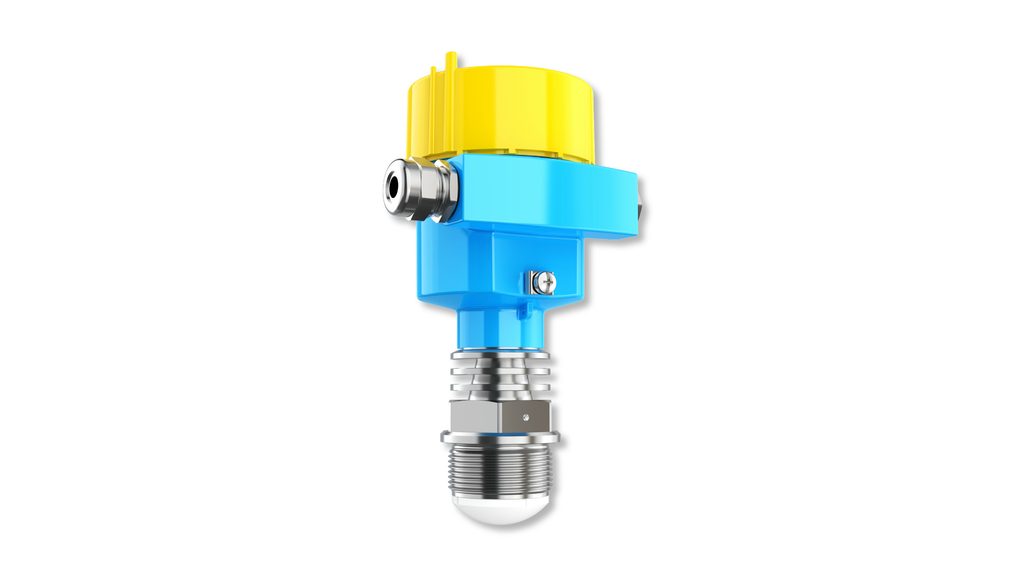
Continuous level transmitters provide an ongoing measurement value.
Typical outputs can be used by PLC or DCS systems for:
- Level indication
- Pump control
- Valve control
- Inventory monitoring
- Process trends
Point level switches perform a different function.
A high-level switch may act as an independent overflow alarm, while a low-level switch can protect a pump against dry running.
In critical applications, using continuous measurement together with an independent point level switch can create a more robust protection strategy.
How to Select a Level Instrument for a Paper Mill
Before selecting a level meter, collect the following information:
- Medium name
- Liquid, slurry, powder, or bulk solid
- Tank or silo height
- Normal measuring range
- Temperature
- Pressure
- Foam conditions
- Agitation conditions
- Material buildup
- Internal structures
- Process connection
- Required output
- Hazardous-area requirements
- Required accuracy
- Installation restrictions
This information is often more important than simply specifying a measurement range.
Why 80 GHz Radar Is Increasingly Used
Modern 80 GHz FMCW radar instruments provide a relatively narrow measurement beam.
This can be particularly useful in paper industry tanks where:
- Installation space is limited
- Agitators are present
- Inlet pipes create false echoes
- Tank walls are close to the sensor
- Material surfaces are unstable
A focused beam makes it easier to direct radar energy toward the desired measuring area.
Advanced echo processing can further help distinguish the real process surface from fixed interfering reflections.
Installation Is Just as Important as Sensor Selection
Even a high-performance level instrument can provide poor results when installed incorrectly.
For radar measurement, avoid placing the instrument directly above:
- Agitator shafts
- Filling streams
- Structural beams
- Large internal pipes
The antenna should have a clear path toward the process surface whenever possible.
A poor mounting location should not automatically be compensated for through software.
Selecting a better installation position is normally the first step toward reliable measurement.
Conclusion
Level measurement in the pulp and paper industry covers a wide variety of applications, from pulp slurry and process water to corrosive chemicals and bulk solids.
Each measurement point has different operating conditions.
For simple applications, several level technologies may provide acceptable performance. For more difficult environments involving fibers, agitation, vapor, dust, or complex internal structures, non-contact radar measurement can offer significant advantages.
Jiwei provides multiple level measurement technologies for pulp and paper applications, including radar level meters, level switches, magnetic level indicators, and continuous level transmitters.
The most reliable solution begins with a detailed understanding of the process.
When selecting an instrument, provide the medium, vessel dimensions, operating temperature, pressure, foam conditions, internal structures, and control requirements. This allows the measurement technology and configuration to be matched to the actual application.
FAQ
What is the best level sensor for a pulp tank?
Non-contact radar is frequently suitable for pulp tanks because it reduces direct contact with fibers, but the final selection depends on pulp consistency, foam, agitation, tank structure, and installation conditions.
Can radar measure pulp slurry?
Yes. Radar can be used for many pulp slurry applications. Correct antenna position and echo configuration are important where agitation, foam, or internal structures are present.
Can radar level meters work with steam?
Radar uses electromagnetic waves and is generally less dependent on vapor conditions than acoustic measurement technologies.
Which level sensor is suitable for wood chip silos?
High-frequency radar is commonly considered because of its narrow beam and suitability for dusty, uneven bulk-solid surfaces.
Should a paper mill use both a transmitter and a level switch?
For critical tanks, continuous measurement and an independent high- or low-level switch can provide complementary process control and protection.