1. What Are Tube-11 and Fork-11?
In industrial automation, reliable level detection is essential for silos, storage tanks, hoppers, ash bins, powder containers, and sedimentation tanks. A level switch detects whether material has reached a preset position and outputs a switching signal for high-level alarm, low-level alarm, conveying control, pump and valve interlock, or overflow prevention.
Jiwei Tube-11 vibrating rod level switch and Fork-11 tuning fork level switch are both vibrating level switches designed for solid materials, powders, fine particles, and complex industrial working conditions.
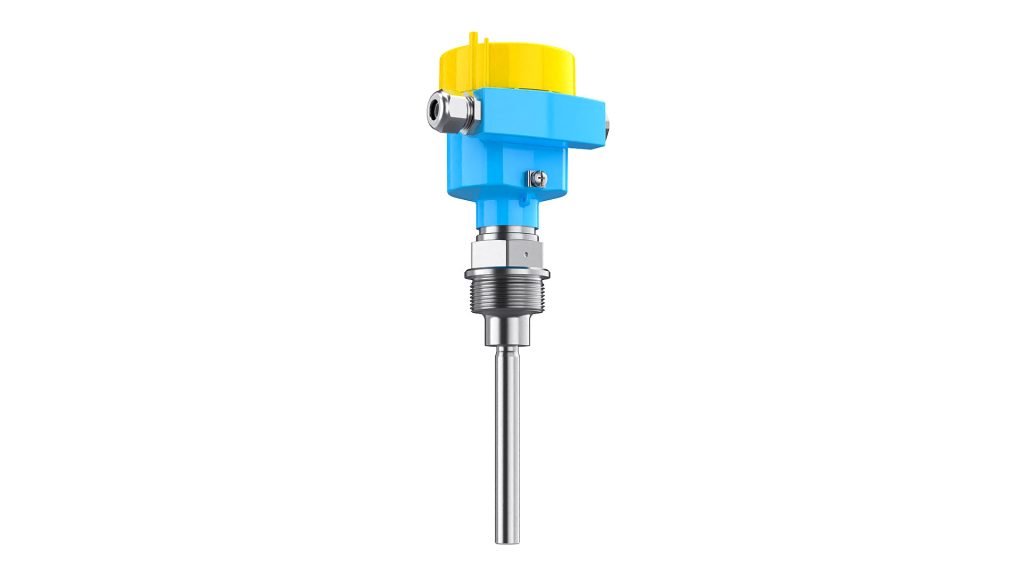
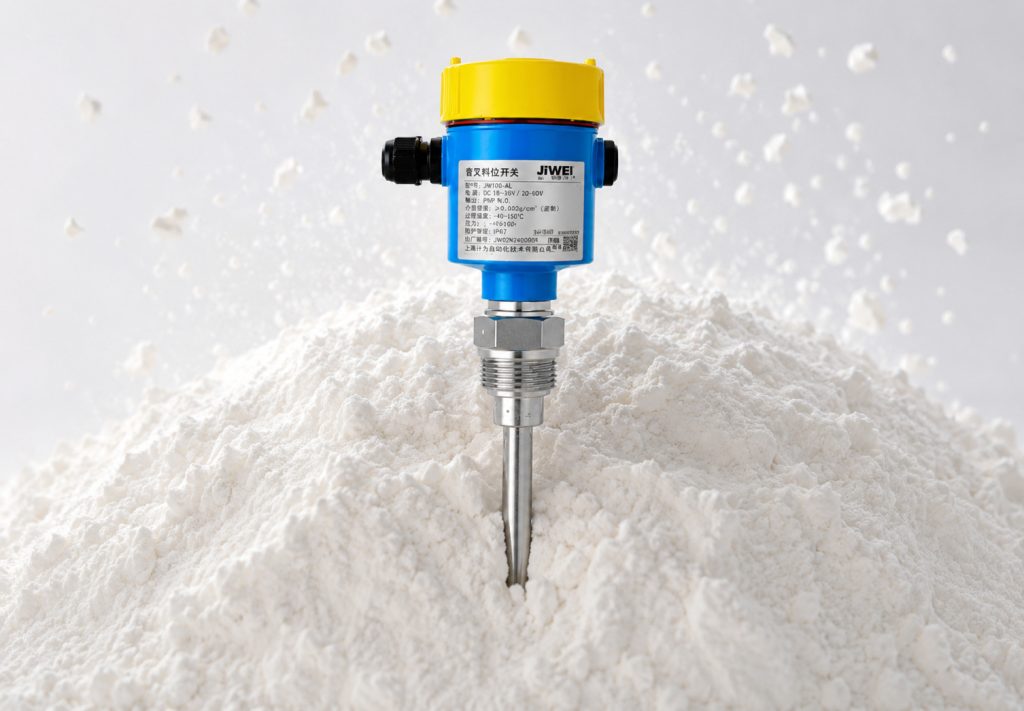
Tube-11 is a vibrating rod level switch featuring a dual-tube vibrating probe structure. A piezoelectric element drives the probe to vibrate. When material comes into contact with the vibrating rod, the vibration amplitude and resonance state change. The intelligent circuit detects this change and outputs a switching signal. Tube-11 is mainly used for granular and powdery solid materials, such as PVC granules, lime, sand, coal powder, fly ash, sugar, grains, beans, dust collector ash, and other bulk solids.
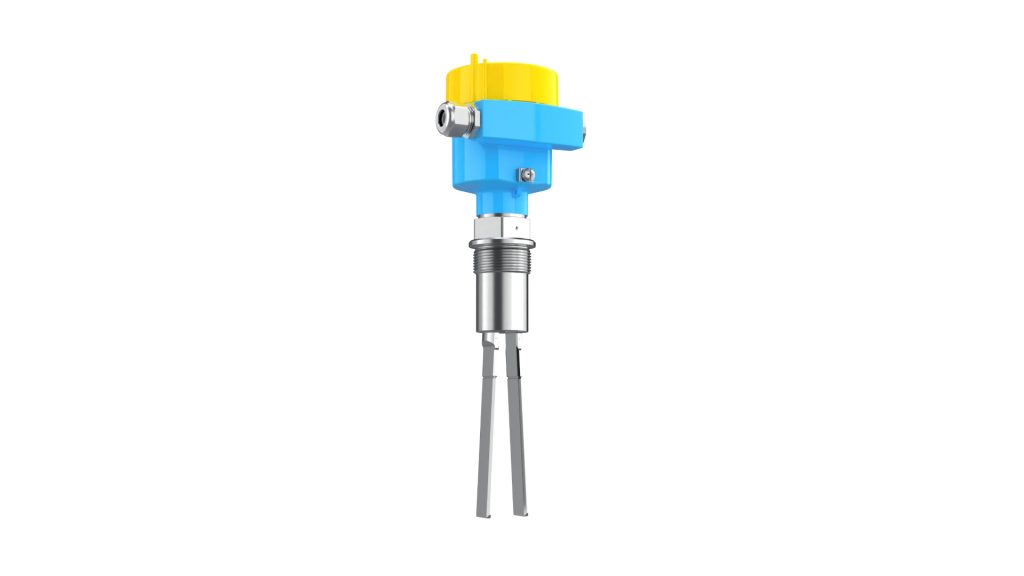
Fork-11 is a tuning fork level switch. Its probe adopts a fork-shaped structure and is driven by a piezoelectric element to vibrate at its resonant frequency. When powder or fine particles contact the fork, the vibration amplitude decreases significantly. The electronics then determine whether the material has reached the set level and output a switching signal. Fork-11 is especially suitable for low-density powders and fine particles, such as flour, salt, powdered sugar, chemical powders, fumed silica, EPP/EPS particles, pharmaceutical powders, fine sand, and mineral powder.
2. Product Features of Tube-11 Vibrating Rod Level Switch
The main advantage of Tube-11 lies in its dual-tube probe design. The inner and outer vibrating tubes are precisely tuned to form stable resonance. When material touches the outer tube, the resonance state is disrupted, producing a clear signal change and enabling reliable level detection.
Compared with traditional mechanical level switches, Tube-11 has no rotating parts. This makes it more reliable and less likely to fail due to dust, material blockage, or mechanical wear.
In practical applications, Tube-11 is suitable for most granular and powdery solid materials. It offers high sensitivity, can detect relatively low-density solid materials, and has good resistance to material buildup. It is widely used in power plant ash hoppers, pneumatic ash conveying systems, coal powder silos, PVC storage bins, grain silos, building material powder silos, and similar applications.
Tube-11 can be used for high-level alarm, low-level protection, conveying start-stop control, and bin pump interlock. The series also provides strong adaptability to different working conditions. According to site requirements, users can choose standard-temperature, high-temperature, ultra-high-temperature, explosion-proof, or cable-extension versions.
For high-temperature powders, deep silo installation, combustible dust environments, or limited installation space, Tube-11 can be selected based on process temperature, installation method, material density, silo height, and explosion-proof requirements.
3. Product Features of Fork-11 Tuning Fork Level Switch
The most outstanding feature of Fork-11 is its high sensitivity. The fork probe is precisely tuned, and its optimized fork area improves response to lightweight materials. Therefore, Fork-11 is especially suitable for powders, fine particles, and ultra-low-density media.
In applications where powder easily accumulates, material density is low, flowability is high, or particle size is very fine, Fork-11 usually provides more accurate and stable detection.
Typical applications of Fork-11 include flour, powdered sugar, and salt in the food industry; fine powder raw materials in the chemical industry; pharmaceutical excipients in the pharmaceutical industry; mineral powder, zircon sand, petroleum coke, and fumed silica in metallurgy and related industries.
For these materials, ordinary level switches may not be sensitive enough, resulting in missed alarms, false alarms, or unstable detection. Fork-11 tuning fork level switch offers a better solution for these demanding applications.
Fork-11 also supports multiple versions for different working conditions, including standard-temperature, high-temperature, ultra-high-temperature, explosion-proof, and cable-extension types. The high-temperature version uses an extension tube and heat-resistant components to keep the transmitter housing away from the hot process environment. The ultra-high-temperature version can adopt air-cooling or water-cooling structures to meet more demanding temperature conditions.
The explosion-proof version is suitable for hazardous areas in petrochemical, coal powder, pharmaceutical, and dust explosion-proof applications, providing stable level signals in high-dust and high-risk environments.
4. Key Differences Between Tube-11 and Fork-11
4.1 Different Probe Structures
Tube-11 adopts a vibrating rod structure with a dual-tube probe. It determines material contact by detecting changes in the resonance state of the inner and outer tubes.
Fork-11 adopts a tuning fork structure. It detects material level by monitoring changes in the vibration amplitude of the fork.
Simply put, Tube-11 uses a rod-shaped vibrating probe, while Fork-11 uses a fork-shaped vibrating probe.
4.2 Different Material Suitability
Tube-11 is more suitable for granular and powdery solid materials. It has a wide application range and is especially suitable for PVC granules, coal powder, fly ash, lime, grain, sand, and building material powders.
Fork-11 is more suitable for powders, fine particles, and ultra-low-density materials. It is especially effective for flour, powdered sugar, salt, pharmaceutical powder, lightweight chemical powder, and fumed silica, where higher detection sensitivity is required.
4.3 Different Detection Sensitivity
From a selection perspective, Fork-11 is more sensitive to low-density powders and is suitable for lighter, finer, and more difficult-to-detect materials.
Tube-11 also offers good sensitivity, but it is more focused on general-purpose granular and powder material level detection.
If the material density is very low, the particles are extremely fine, or a standard vibrating rod switch cannot respond reliably, Fork-11 is usually the better choice. If the material is ordinary granules, powder, or mixed solids, Tube-11 often provides better general applicability.
4.4 Different Typical Installation Scenarios
Tube-11 is commonly used in silos, ash hoppers, bin pumps, ash conveying systems, storage bins, and packaging line hoppers.
Fork-11 is commonly used in powder silos, fine-particle storage bins, food powder tanks, pharmaceutical powder tanks, chemical fine powder silos, and ultra-low-density material applications requiring high sensitivity.
Both products can be side-mounted or top-mounted. Cable-extension versions are also available for tall tanks, deep silos, or long-distance installation requirements.
4.5 Different Selection Logic
If the user is focused on general solid level detection, granular materials, coal ash, PVC, grain, or building material powders, Tube-11 is often the more direct choice.
If the user is focused on ultra-low-density powder, fine particles, fumed silica, flour, pharmaceutical powder, powdered sugar, or high-sensitivity level detection, Fork-11 is more suitable.
5. Common Advantages of Tube-11 and Fork-11
Although Tube-11 and Fork-11 have different probe structures, both are vibrating level switches and share many advantages.
First, both products require no complicated calibration. After installation, they can output stable switching signals and can be easily connected with PLC, DCS, pumps, valves, audible and visual alarms, and other automation systems.
Second, both products have no rotating parts that may become jammed. Compared with rotary paddle level switches, they require less maintenance in dusty, granular, sticky, or complex material environments.
In addition, Tube-11 and Fork-11 can both be used in high-temperature, explosion-proof, heavy-dust, and corrosive working conditions. For projects requiring domestic alternatives to imported instruments, these products can also offer advantages in delivery time, maintenance, service response, and overall cost.
In industries such as power generation, chemical processing, food, pharmaceuticals, environmental protection, metallurgy, and building materials, vibrating level switches have become an important solution for solid level detection.
6. Typical Application Scenarios
6.1 Power and Environmental Protection Industries
In thermal power plants, dust collection systems, desulfurization systems, and ash conveying systems, Tube-11 can be used in ash hoppers, bin pumps, fly ash silos, and coal powder silos for high- and low-level alarms and conveying control.
Fork-11 can be used for low-density powders or fine particles to improve detection sensitivity.
In sewage treatment, sedimentation tanks, and industrial water treatment, both products can also be used for sediment interface detection, helping the system determine the position of sludge, sediment, or solid-liquid separation layers.
6.2 Chemical and Petrochemical Industries
The chemical industry commonly handles powders, granules, resins, plastic chips, catalysts, lightweight powders, and combustible dust.
Tube-11 is suitable for most chemical granules and powder silos. Fork-11 is suitable for lighter, finer, and more difficult-to-detect powder materials.
Explosion-proof versions can be used in hazardous areas to improve production safety.
6.3 Food and Pharmaceutical Industries
Materials such as flour, powdered sugar, salt, grains, and beans require stable and reliable level detection.
Tube-11 is suitable for grains, granules, and general powders, while Fork-11 is better suited for low-density powders and fine particles.
In the pharmaceutical industry, powders such as lactose, starch, and pharmaceutical excipients can often be better detected with Fork-11 tuning fork level switch.
6.4 Metallurgy and Building Materials Industries
In metallurgy, mining, cement, ceramics, and building materials industries, media such as lime powder, cement powder, fly ash, mineral powder, sand, gravel, petroleum coke, and ceramic raw materials are often dusty, abrasive, or high-temperature. These harsh conditions require reliable and durable level detection instruments.
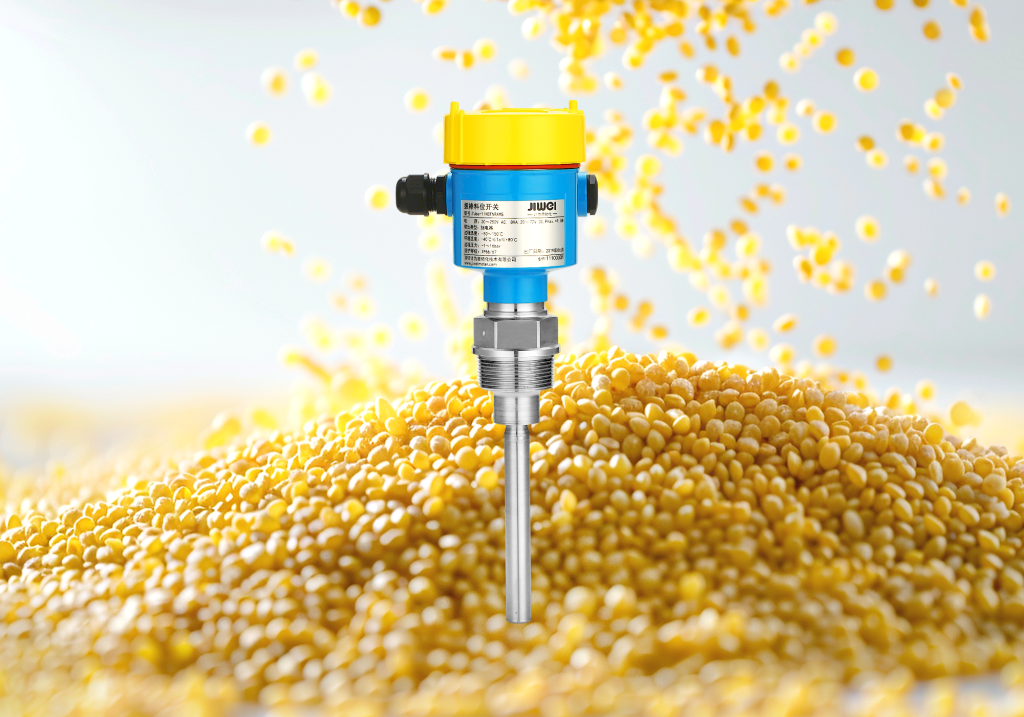
Tube-11 vibrating rod level switch is suitable for general powder and granular materials in silos, hoppers, ash bins, and storage tanks. It can be used for high-level alarm, low-level alarm, blockage detection, and conveying control.
Fork-11 tuning fork level switch is better suited for fine powders, lightweight particles, and low-density materials, such as mineral powder, zircon sand, petroleum coke, and ceramic powder. For high-temperature or hazardous areas, high-temperature and explosion-proof versions can be selected to improve safety and reliability.